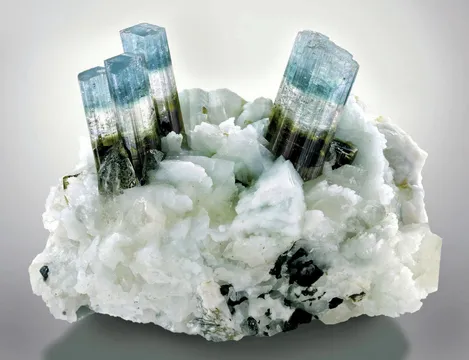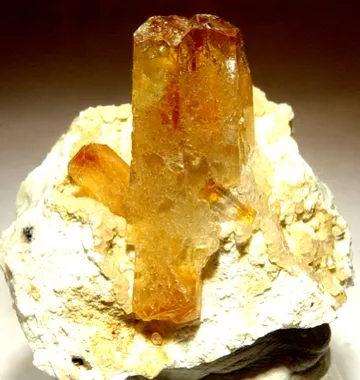
Monteponi Mine, Sardinia — renowned locality for phosgenite, anglesite, cerussite and other Pb-Zn-Ag minerals; classic crystals and mining heritage.
Key facts
Monteponi is one of the great European names in secondary lead mineralogy: a classic Sardinian Pb-Zn-Ag mine whose best specimens are not simply “from Italy,” but from a very particular geological machine on the outskirts of Iglesias. The mine worked the famous Metalliferous Ring of the Iglesiente, where carbonate rocks of the Early Cambrian Gonnesa Formation host steep, columnar ore bodies of galena, sphalerite and their supergene descendants. Repeated oxidation, karst development, water-table movement and metal remobilization turned massive lead-zinc ore into pockets of phosgenite, anglesite, cerussite, smithsonite, hydrozincite, hemimorphite and a suite of rarer lead, zinc, mercury and cadmium species.
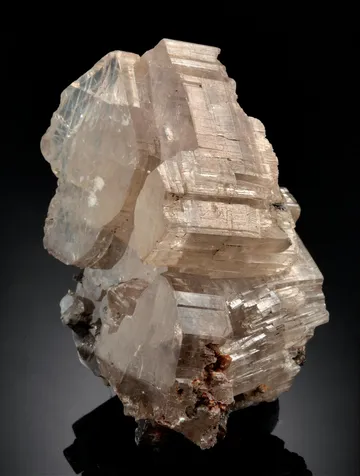
For collectors, Monteponi’s signature is phosgenite: transparent to smoky, pale honey, grey or nearly colorless tetragonal crystals, commonly seated in black galena and accompanied by anglesite or cerussite. The finest pieces have the old-world dignity of true classics—thick, lustrous crystals that look almost too fragile and too heavy at the same time, with adamantine faces, internal veils, sharp terminations and, in the best examples, strong daylight presence as well as longwave yellow fluorescence. Anglesite and cerussite from the same oxidized lead zones add another layer to the locality’s importance, while smithsonite and the “calamine” ores speak to Monteponi’s central role in Sardinia’s zinc-mining history.
Historically, Monteponi bridges almost every chapter of Sardinian mining: ancient and Roman exploitation of silver-bearing lead outcrops, medieval continuation under the Pisans and Spaniards, then industrial development from the mid-nineteenth century into one of Italy’s principal mining centers. Its shafts, galleries, washing plants, red tailings and workers’ village are now part of the industrial landscape of the Sardinian geomining heritage; its specimens, meanwhile, are scattered through museum and old private collections across Europe and North America.
Regional View
Country View

Photo: Wikimedia Commons


Photo: Wikimedia Commons
Search for specimens: View all specimens from Monteponi Mine, Italy
Monteponi lies immediately outside Iglesias in southwestern Sardinia, in the heart of the Iglesiente, long regarded as Sardinia’s principal lead-zinc mining district and one of the major historic Pb-Zn provinces of Europe. The ore system belongs to the carbonate-hosted lead-zinc mineralization of the Iglesiente Metalliferous Ring, developed chiefly in the Gonnesa Formation, the old “Metallifero” of the Italian literature. These Cambrian dolostones and limestones form a carbonate ring around the Iglesias Valley syncline; at Monteponi the useful ore was concentrated in steeply dipping, column-like bodies that were followed from surface oxidized outcrops downward into sulphide ore.
The Monteponi “columns” are the essential geological fact behind the specimens. Rather than a single simple vein, they are described as sets of centimetric to metric veins filled with Pb-Zn minerals, separated by low-grade or nearly barren carbonate rock. They strike about N 160° and dip steeply eastward, and in section they could be immense: individual column systems reached horizontal areas measured in thousands of square metres. Near the surface the host is the yellow dolomite, a metasomatic dolomite after the original carbonate facies; at depth the columns pass into grey dolomite and waxy limestone. The upper oxidized parts carried zinc “calamine” ores—chiefly smithsonite with hydrozincite and hemimorphite—while the lead-rich parts produced galena, anglesite, cerussite and the phosgenite that made the mine immortal to collectors.
The deposit is usually discussed with Mississippi Valley-type and carbonate-hosted Pb-Zn systems, modified by intense supergene alteration. Primary galena and sphalerite were repeatedly exposed to oxidizing waters as karst networks opened and water tables shifted over geological time. This is why Monteponi could produce both massive economic ore and superb secondary crystals. Lead sulphide altered to sulphate, carbonate and chloride-carbonate phases; zinc sulphide generated carbonate and silicate “calamine”; iron released from sulphides and Fe-bearing dolomite produced limonitic and goethitic material that stained and complicated the zinc ores. The mine’s red tailings are not incidental scenery: they are the residue of treating iron-rich oxidized zinc ores from the district, and they remain one of the visual emblems of Monteponi.
Mining began long before the modern company town. The outcropping lead-silver ores of the Monteponi area were worked in antiquity; Roman miners systematically exploited the richest outcrops and, along some of the most valuable columns, their shafts are reported to have descended as much as 100 metres from the surface. Medieval Pisan and Spanish work continued especially on the silver-rich oxidized lead ores. By 1324 the locality appears in historical documentation under the name Monte Paone, and in 1725 a smelter was built north of Iglesias along the Rio Canonica. The truly modern period, however, began in 1850, when entrepreneurs led by Paolo Antonio Nicolay obtained the concession for the Società di Monteponi Regia Miniera presso Iglesias.
The nineteenth-century expansion changed Monteponi from a set of old workings into an industrial mining landscape. Under engineers and administrators including Adolfo Pellegrini and Carlo Baudi di Vesme, the company developed shafts, washing plants, transport systems and major drainage works. The Villamarina Gallery was driven in 1852 at 174 metres above sea level and connected the two principal shafts, Sella and Vittorio Emanuele. The Vittorio Emanuele shaft dates from the 1860s, while the Sella shaft was built in the 1870s and named for Quintino Sella. A private railway linked the mine to the coast at Portoscuso, with Porto Vesme named in honor of Baudi di Vesme. In 1889, the long Umberto I drainage adit, more than four kilometres in length, solved one of the most persistent problems of the mine: water removal from the lower workings.
The best-known specimen ground within the mine was the Scavi Cungiaus area, the oxidized outcrops of the Monteponi columns. There, beginning in 1867, rich calamine bodies were discovered and mined in large open pits. The Scavo Biscia, the largest of these excavations, is described at its maximum development as an elliptical funnel about 250 metres long, 150 metres wide and 80 metres deep; together the Cungiaus works removed more than one million cubic metres of material, with Scavo Biscia alone accounting for roughly three quarters of it. These were not merely ore pits. They were the source of oxidized Pb minerals in perfectly crystalline habits, sometimes in giant associations, which entered museum collections and established Monteponi’s reputation among collectors.
The deeper workings matter too. Geological field accounts note that beautiful lead carbonate and lead sulphate crystals were collected abundantly in the lowest stopes around 150 metres below sea level, a reminder that the supergene story did not end at shallow gossan levels. The mine eventually reached a total vertical development of about 500 metres, with industrial underground mining descending below sea level. Modern studies note extraction of galena and sphalerite until 1984, while the zinc electrolytic plant at Monteponi treated oxidized zinc ores from 1926 to 1983. After the postwar decline of Sardinia’s Pb-Zn industry, the complex followed the fate of the district’s major mines and closed as an industrial producer in the late twentieth century.
Today Monteponi is not an open collecting locality in the old sense. It is a protected industrial and geomining heritage site, much of it under public or regional management through IGEA and local cultural-tourism bodies. The Villamarina Gallery is visited by guided tour with limited numbers for safety, and access to underground or restricted mine areas is controlled. Collectors should regard field collecting at Monteponi as off-limits unless explicit, current permission has been obtained from the responsible authorities. The specimens circulating on the market are overwhelmingly old mine pieces, older European collection material, estate specimens, or post-closure finds made by local specialists in cavities and oxidation zones before access tightened.
Monteponi phosgenite is the locality’s calling card and one of the benchmark European expressions of the species: thick tetragonal crystals, commonly short-prismatic to blocky and sometimes nearly doubly terminated, ranging from small thumbnail crystals to multi-centimetre individuals and museum pieces; documented examples include crystals around 3 cm, a 3.2 x 3.2 x 3.5 cm transparent study crystal, 4–5 cm collector crystals, and larger groups such as an 8 cm museum specimen and an 11.5 x 11 cm Folch Collection piece. Color runs from water-clear and pale grey to smoky, honey-brown or darker grey-brown, most characteristically on black galena with anglesite, cerussite, calcite or quartz; the best pieces show sharp form, high adamantine to glassy luster, strong transparency or translucency, clean terminations and a visually balanced perch on galena rather than dull embedded masses or scratched, cleaved crystal sections. Longwave yellow fluorescence, often bright, is a useful added attraction on some pieces, but daylight quality—size, integrity, transparency and old Monteponi matrix—is what separates the true classics.
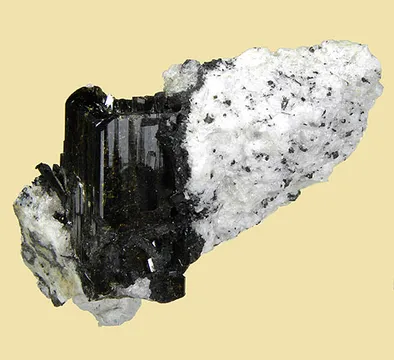
Anglesite from Monteponi is a classic oxidized-zone lead mineral, usually appearing as colorless, white, cream, pale grey or faintly smoky crystals on dark galena-rich matrix, locally with spear-point terminations, elongated prismatic forms or more equant lustrous crystals in quartz- and carbonate-lined openings. Mindat photo data show galena as by far its most frequent association, with phosgenite, native sulphur, cerussite and smithsonite also recorded, and verified specimen descriptions include matrix pieces with sharp individual crystals around 12 mm to 2 cm. Fine Monteponi anglesites are not judged by flamboyant color but by sharpness, luster, freedom from dull alteration to cerussite, contrast against black galena, and a clean old Sardinian look; ordinary pieces tend to be granular white coatings or indistinct sulphate patches that lack the crisp terminations and architectural placement collectors want.
Monteponi cerussite belongs to the same oxidized lead suite as the phosgenite and anglesite, and its best specimens are sharp, lustrous, colorless to pale grey or creamy crystals, commonly twinned, developed in cavities in altered galena and limonitic carbonate ore. Documented examples include small but highly finished twins around 22 x 15 x 10 mm, and the locality is also specifically noted for zinc-bearing cerussite, a reflection of the intimate lead-zinc supergene chemistry in the Monteponi columns. Good pieces stand out for glassy luster, clear twinning, undamaged edges and convincing association with galena, anglesite or phosgenite; lesser specimens are more opaque, bruised, chalky or difficult to separate visually from pale anglesite without context and testing.
At Monteponi, galena is both ore and stage: the primary lead sulphide that attracted miners for its silver content and the dark matrix from which the finest secondary lead minerals emerged. It occurs as fine-grained primary sulphide in the Pb-Zn columns and also as secondary spathic galena in the oxidized surface bodies, where it may be associated with anglesite, phosgenite, cerussite, minium, baryte and calcite. Collector-quality galena from Monteponi is usually valued less as isolated cubic crystals than as the authentic black host for phosgenite or anglesite; the most desirable pieces retain enough galena to tell the genetic story while not overwhelming the secondary crystals, whereas massive ore chunks without crystallized lead carbonates, sulphates or chlorocarbonates are chiefly historical or study specimens.
Smithsonite at Monteponi represents the zinc side of the same supergene engine: the “calamine” ore produced by oxidation of sphalerite in carbonate host rock, especially in the Cungiaus workings where rich bodies discovered in 1867 drove major open-pit development. The mine’s calamine was dominated by smithsonite with subordinate hemimorphite and abundant limonitic impurity, and later studies of the Monteponi red muds also recognize smithsonite with hydrozincite and hemimorphite. As cabinet specimens it is generally less famous than the phosgenite and anglesite, but good examples show botryoidal, crustiform or crystalline ZnCO3 with attractive pale, beige, yellowish, brownish or whitish surfaces, ideally with hydrozincite, hemimorphite, cerussite or rare monteponite associations; ordinary pieces are earthy limonitic calamine ore and are more historically interesting than aesthetically competitive.
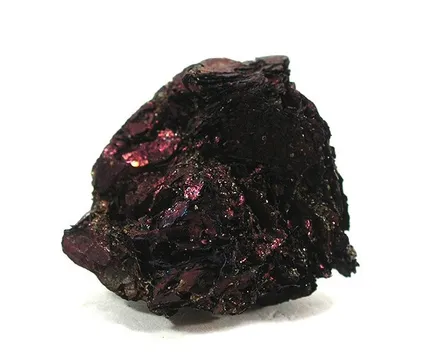
Beyond the five headline species, Monteponi has a compact but important recorded mineral list for a classic Pb-Zn mine: aragonite, aurichalcite, baryte, calcite, cinnabar, dolomite, gaspéite, goethite, hemimorphite, hydrozincite, lanarkite, leadhillite, melanterite, minium, native mercury, native sulphur, pyrite, pyromorphite, siderite, siderotil, sphalerite and zincite are all documented. The locality’s single type-locality mineral is monteponite, CdO, named for Monteponi and reported from the Genarutta mine area as tiny black crystals and coatings associated with calamine; its presence gives the mine special interest for systematic collectors, even though display-quality monteponite is necessarily microscopic or near-microscopic. The mercury-bearing species, cadmium oxide, leadhillite, lanarkite and native sulphur are the kind of rarities that make careful old labels from Monteponi worth reading closely.
Monteponi specimens carry three recurring authenticity issues: confusion among pale lead minerals, old-label locality ambiguity, and outright misattribution. Phosgenite, anglesite and cerussite can all occur as pale, lustrous crystals on galena, and older labels may simply say “Sardinia,” “Iglesias,” “Monte Poni,” “Monteponi,” “Carbonia-Iglesias,” or “Cagliari,” reflecting changing administrative geography rather than a different mine. A Princeton University collection entry formerly catalogued as anglesite from Monteponi is specifically noted as actually phosgenite, a useful warning that even institutional labels can preserve historic identifications rather than modern determinations. Conversely, a reported oversized “phosgenite” from the Caldbeck Fells in England was flagged in the Journal of the Russell Society because its matrix matched classic Monteponi material, illustrating how distinctive Sardinian galena-matrix specimens can expose a bad locality.
Condition is central. Phosgenite is soft, dense and cleavable; bruised terminations, contact marks, edge chips, internal fractures and scratches are common. Many Monteponi crystals grew partly embedded in galena or in tight cavities, so natural contact faces are not automatically damage, but a collector should distinguish honest growth/contact from fresh cleaving or sawing. Anglesite and cerussite are also dense, brittle lead minerals, easily abraded on edges; white crusts can hide repairs or contacts, and galena matrix can shed black residue. Always inspect old Monteponi pieces under strong side lighting for repaired crystals, glued matrix joins and modern trimming around classic old crystals.
Fluorescence is a legitimate bonus but not a substitute for morphology. Monteponi phosgenite may fluoresce bright yellow under longwave ultraviolet, often weaker under midwave and poor to absent under shortwave; this response can help support identification but is not universal enough to authenticate a specimen alone. Do not heat, flame-test, acid-test or grind phosgenite specimens: apart from the obvious damage to a classic mineral, modern thermal studies show phosgenite decomposes at elevated temperature into other lead oxychloride phases, and all lead-bearing dust or residues should be treated as toxic. Handle with clean dry hands or gloves, wash after handling, and keep specimens away from children.
Market availability is steady but selective. Small phosgenites on galena and old anglesite or cerussite pieces appear from European collections with some regularity; truly fine multi-centimetre gemmy phosgenites, balanced matrix pieces, and specimens with early labels command strong classic-locality premiums. Smithsonite and calamine specimens from Monteponi are less in demand aesthetically unless well crystallized or associated with rare species, but they are important for collectors who want the full Pb-Zn story of the mine. Specimens with labels from nineteenth- and early twentieth-century collections are especially desirable, as Monteponi’s best production predates much of the modern specimen trade.
The most vivid Monteponi stories begin not in a specimen cabinet but on a hill that was gradually eaten away. At Scavi Cungiaus, the oxidized outcrops of the Monteponi columns were so rich and so broad that mining did not simply follow veins underground; it removed the top of the hill. The largest excavation, Scavo Biscia, became an elliptical funnel about 250 metres long, 150 metres wide and 80 metres deep. More than one million cubic metres of material came out of the Cungiaus works, and roughly three quarters of that volume came from Scavo Biscia alone. This was the ground where limonitic calamine, silver-bearing galena and crystallized lead minerals met: dirty ore for the mill, but also the source of the perfect oxidized Pb crystals that made their way into museums.
The Roman chapter has the hard, practical feel of ancient mining rather than romance. The Romans were drawn by silver-rich galena at the surface and worked the outcrops by open-pit methods; along the richest columns, their shafts are recorded as reaching depths of 100 metres from the surface. That figure matters. It tells us Monteponi was not merely scratched by ancient prospectors. The Romans followed the ore downward with enough persistence to anticipate, in miniature, the later industrial pursuit of the same steep bodies. Medieval Pisans and Spaniards continued the work, especially on the oxidized lead ores rich enough in silver to justify the effort.
The nineteenth-century transformation reads like a catalogue of industrial ambition. In 1850, Paolo Antonio Nicolay and his partners obtained the concession that launched the Società di Monteponi Regia Miniera presso Iglesias. The Villamarina Gallery was driven in 1852, high on the mine at 174 metres above sea level, to connect the two principal shafts. The Vittorio Emanuele shaft moved people and ore; the Sella shaft was designed for the stubborn water that blocked mining. Water became one of the mine’s defining enemies. The eventual answer was the Umberto I drainage gallery, completed in 1889 and extending for more than four kilometres, a civil-engineering solution to a geological problem that had followed miners downward for generations.
Monteponi was also a company village. Around the industrial buildings grew a settlement that housed as many as a thousand workers, with a hospital, school, nursery and a church dedicated to Santa Barbara. The Palazzo Bellavista, built between 1865 and 1866 by Adolfo Pellegrini, still gives the place its nineteenth-century administrative face: not just a mine office, but the architectural symbol of a company that intended to organize labor, transport, water, ore dressing and village life around one hill of lead and zinc.
Then there are the red muds, perhaps the most unsettling visual legacy of Monteponi. From 1926 to 1983 the electrolytic zinc plant treated oxidized Zn ores with sulphuric acid, FeSO4 and MnO2. The tailings—Fanghi Rossi—were heaped below the plant, their strong red color produced by iron oxides and hydroxides left from treating iron-rich calamines. They became part of the local landscape, at once industrial scar, heritage feature and environmental problem. Even after disposal, the red muds still contained about 9 wt% zinc, enough to tempt repeated recovery proposals, yet their stability and pollutant release made preservation and remediation inseparable.