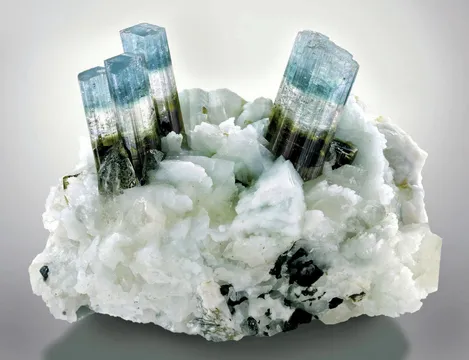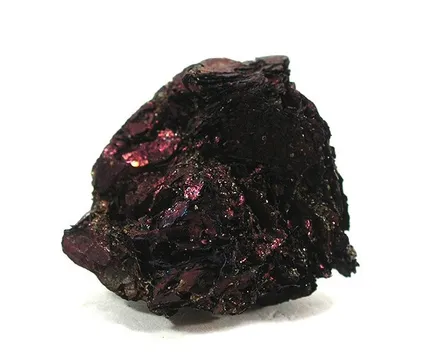
Silius, Italy – a premier Sardinian vein locality known for banded fluorite-barite-galena veins, sharp fluorite cubes, baryte, calcite, and rare REE minerals.
Key facts
Silius is one of the great modern vein localities of Sardinia: an industrial-scale fluorspar deposit that also produced a distinctive specimen suite of honey-yellow to amber baryte, lilac to green fluorite, white to bluish calcite, galena, marcasite, pyrite, sphalerite, quartz, and a surprisingly important REE-bearing carbonate gangue. The collecting name “Silius” usually refers to the connected Muscadroxius–Genna Tres Montis mine complex west of the village, in the Gerrei district of southeastern Sardinia, where post-Variscan hydrothermal veins cut Paleozoic metamorphic and metavolcanic rocks. To specimen collectors the locality matters because it is not merely another European fluorite mine: it is a large, deeply worked, banded fluorite-barite-galena vein system whose old production years released sharp barite crystals, bright cubic fluorite, metallic galena, and calcite-marcasite combinations with a look quite unlike the better-known Alpine, Spanish, or English fluorspar districts.
Regional View
Country View
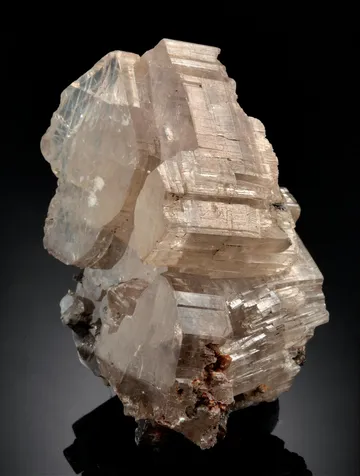
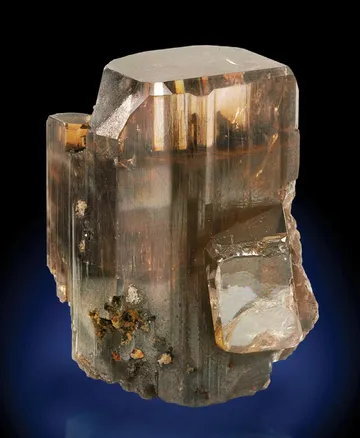
The best Silius specimens tend to be cabinet and small-cabinet pieces rather than loose single crystals. Classic baryte comes as chisel-shaped to tabular, parallel-growth, and sometimes doubly terminated crystals in yellow, honey, amber, pale pink, or grey-white tones, commonly on calcite, fluorite, galena, quartz, or marcasite-rich matrix. Fluorite appears as sharp cubes, often lilac, pale green, yellowish, grey-green, or color-zoned, locally with marcasite “cockscomb” coatings or pyrite dusting. Calcite is important both as gangue and as display mineral: white rhombohedra, bluish crystals, scalenohedra, and twinned crystals can give Silius pieces their contrast, especially where they sit with sulphides and baryte.

Photo: Fabre Minerals

Photo: Fabre Minerals
Silius also has a second identity, now increasingly prominent in the literature: the mine’s carbonate gangue contains rare-earth minerals, chiefly synchysite-(Ce) and xenotime-(Y), and recent work has shown that the deeper sulphide-rich parts of the system include Ni-Co-Fe arsenide and sulpharsenide assemblages. That gives the locality unusual breadth: a collector locality, a major European industrial-mineral deposit, and an active case study in how old fluorspar districts may carry by-product critical metals.
Search for specimens: View all specimens from Silius, Italy
The Silius deposit is a post-Variscan hydrothermal vein system in the Gerrei mining region of southeastern Sardinia. It is developed in Paleozoic lithotypes, including metamorphic schists, metasediments, metavolcanic rocks, and the “porphyroids” that are a conspicuous part of the local basement. Official and academic descriptions treat Silius as one of the most important fluorite-barite-galena mineralizations in Sardinia and, during its most productive period, one of Europe’s major fluorspar mines. In specimen labels the locality appears under several overlapping names: Silius; Genna Tres Montis; Genna Tres Montes; Muscadroxiu; Muscadroxius; and the combined Muscadroxius–Genna Tres Montis Mine. The modern mine complex unites what older collectors often understood as two closely related workings, Genna Tres Montis and Muscadroxiu.
The ore is hosted by a vein system made up of two principal veins, San Giuseppe and San Giorgio, with multiple generations of fluorite, baryte, carbonate minerals, galena, and quartz. The veins are banded and structurally controlled; published descriptions give widths around 7–8 m where exposed at the surface and 15–20 m at depth, where the veins are interconnected. The upper part of the system is richer in baryte, with fluorite, baryte, and galena grades reported around 35%, 10%, and 3%, respectively. In deeper zones baryte drops sharply, while fluorite and galena may rise to roughly 50% and 6%. This vertical change is important for collectors: much of the attractive baryte and baryte-calcite material belongs to the more baryte-bearing parts of the vein system and to older production material, whereas deeper and more recent economic attention has focused strongly on fluorite, galena, REE-bearing carbonates, and sulphide-rich assemblages.
Mining history began with reconnaissance long before the modern fluorspar era. The municipal account records the first mining searches in 1871, a first working permit in 1907 for antimony and copper, and galena exploration in the Su Spinosu and Ortu areas in 1916–1917. The modern industrial story begins in the 1950s, when Mineraria Silius of Genoa worked the Muscadroxiu and Genna Tres Montis sites; Mineraria Ichnusa followed in the 1960s, and Fluorsid was founded in 1969 with its origins tied to the Genna Tres Montis mine and the downstream fluorochemical industry. Through the 1970s and 1980s, favorable fluorspar markets made Silius a major employer and producer, with peak employment given at nearly 600 workers locally and mine output over 450,000 tonnes of run-of-mine material in the strongest years.
The mine was an underground operation served by shafts and levels. The municipal description names the San Gabriele vertical shaft system and a main level at level 200, about 450 m below the surface, used for transport, haulage, and primary crushing. It also lists the GTM shaft for personnel, the central extraction shaft, the Skaba shaft for personnel, and the S’Acqua Frida shaft for equipment supply; the Skaba shaft commemorates engineer Henry Skaba, who died in the mine in March 2001. Modern Mineraria Gerrei descriptions add a new phase of shaft rehabilitation and infrastructure replacement, including the Riccardo shaft for raw ore transport, refurbished Muscadroxiu personnel access, and an Acqua Frida system for heavy equipment movement.
The downturn came from changing fluorochemical markets, the CFC crisis, low fluorspar prices, and a complicated sequence of regional ownership, state-aid disputes, liquidation, and attempts to preserve jobs and infrastructure. Nuova Mineraria Silius was put into liquidation in July 2006, and the mine remained in maintenance rather than normal production for many years. Mineraria Gerrei, founded in 2018, is the modern concessionaire and has been carrying out a major relaunch aimed at producing high-purity fluorspar and galena concentrate, with the company’s 2025–2026 public material describing new processing infrastructure, closed-loop water use, backfilling of process by-products, and a planned production target around 70,000 tonnes per year of high-purity fluorspar.
For collectors, Silius is now essentially an old-production and collection-dispersal locality. The mine is an industrial, rehabilitated underground operation, not a public collecting site, and no responsible collector should treat shafts, levels, dumps, or mine yards as accessible field ground. Most good mineral specimens in circulation come from material saved by miners, local collectors, and Italian mineral dealers during the active years, especially the late twentieth century. Well-provenanced old pieces are particularly desirable when they specify Muscadroxiu or Genna Tres Montis rather than simply “Silius,” because the two labels can correspond to subtle differences in baryte habit, matrix, and associated minerals.
The most admired specimen finds include transparent honey baryte crystals with amber phantoms, long chisel-shaped barytes, pink and zoned barytes, baryte with bluish calcite, baryte on lilac cubic fluorite, fluorite with marcasite coatings, and galena crystals on calcite or fluorite. Documented collection pieces include baryte crystals to several centimeters, large tabular baryte crystals reported to around 11 cm, fluorite cubes to several centimeters, a photographed 6.5 cm-edge fluorite group, and specimen plates in the 10–25 cm range. Good Silius pieces are not simply large: the prize is a combination of undamaged transparent baryte, strong color zoning or amber terminations, contrasting white or blue calcite, clean lilac-green fluorite, and a matrix that shows the mine’s sulphide-rich character without overwhelming the display.
Barite from Silius is the collector-facing name often used for the locality’s BaSO4 specimens, and the best examples are honey-yellow to amber, pale pink, greyish, or color-zoned crystals from the Muscadroxiu–Genna Tres Montis vein system. Habits include chisel-shaped crystals, parallel groups, elongated prisms, and tabular clusters, with documented pieces ranging from small crystals of a few millimeters to display crystals of several centimeters and exceptional tabular individuals around hand size in older collections. Associations are central to value: transparent or semi-transparent barite on lilac fluorite, calcite-rich matrix, galena, quartz, or marcasite has far more locality character than loose or massive material. The most desirable pieces show glassy luster, amber phantom-like zoning or darker terminations, undamaged thin edges, and a sculptural arrangement on matrix; ordinary Silius barite is duller, cleaved, massive, or crowded into broken vein fragments.
Baryte is the IMA spelling for the same BaSO4 mineral, and at Silius it is one of the locality’s signature specimen species because the upper parts of the vein system were baryte-bearing and produced bright, sharply formed crystals during underground mining. Classic Silius baryte is yellow to honey-brown, amber-tipped, pale rose, grey-white, or locally slightly bluish, with chisel, bladed, tabular, and doubly terminated habits; older Italian collection records document crystals from about 1–3 cm through 4–5 cm, with larger plates and long individuals also known. Fine pieces commonly sit on calcite, fluorite, galena, quartz, or marcasite-bearing matrix, and some baryte-calcite combinations are reported as fluorescent. Superior examples are transparent enough to show internal zoning, balanced on a contrasting matrix, and free of the chipped terminations that plague thin baryte; mediocre pieces lack contrast, are edge-worn, or carry only isolated broken blades without the Muscadroxiu–Genna Tres Montis visual signature.
Calcite from Silius is both the dominant carbonate gangue and a display mineral in its own right, especially where it forms white rhombohedra, bluish crystals, scalenohedral groups, or twins with galena, marcasite, fluorite, and baryte. In the ore it belongs to a carbonate gangue assemblage with ferroan dolomite and ankerite, and it is the host environment for microscopic REE minerals such as synchysite-(Ce) and xenotime-(Y); on specimens, however, its value is usually aesthetic, providing bright contrast to sulphides, yellow baryte, or pastel fluorite. Documented Silius calcite specimens include twinned crystals around 2.5 cm, white groups to about 25 mm, scalenohedra with marcasite grains, and calcite-covered matrix supporting baryte or galena. The best calcite pieces are clean, lustrous, and visibly crystallized rather than merely vein carbonate, and they gain considerably when paired with cubic galena, marcasite sprays, or transparent baryte.
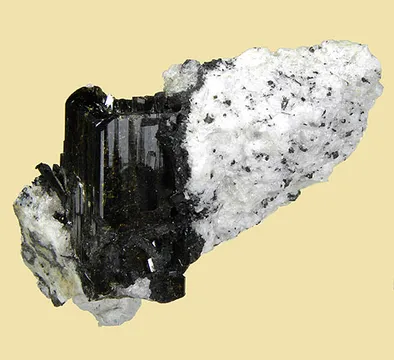
Beyond baryte and calcite, Silius is documented for ankerite, chalcopyrite, dolomite, fluorite, galena, marcasite, pyrite, quartz, sphalerite, synchysite-(Ce), and xenotime-(Y). Fluorite is the economic backbone of the deposit and a serious specimen species here, with lilac, pale green, yellow, and grey-green cubic crystals, sometimes fluorescent and often associated with marcasite or pyrite. Galena can form sharp cubic crystals and sulphide-rich matrix pieces, while marcasite is common as coatings, small crystals, and “cockscomb” textures on fluorite and calcite. The scholarly rarities are small rather than showy: synchysite-(Ce) and xenotime-(Y) occur in carbonate gangue as REE-bearing phases, and recent studies of deeper sulphide-rich material have reported nickeline, rammelsbergite, gersdorffite, cobaltite, and arsenopyrite as part of a Ni-Co-As-Bi mineral association that expands Silius beyond the older “simple” fluorite-barite-galena model.
Silius specimens reward locality precision. A label reading only “Silius, Sardinia” is common and not necessarily wrong, but the better label records Muscadroxiu, Genna Tres Montis, or Muscadroxius–Genna Tres Montis. Older labels may use Cagliari Province, Metropolitan City of Cagliari, South Sardinia Province, “Sardegna,” “Sardinia,” “Genna Tres Montes,” or “Gennas Tres Montis”; these administrative and spelling variants should not be treated automatically as errors. The more meaningful distinction is between a true Silius mine specimen and a generic Sardinian baryte or fluorite specimen assigned to Silius because the name is familiar.
The main authenticity issue is not a famous fake industry but imprecision: baryte/barite spelling duplication, old mine-name variants, and confusion with other Sardinian fluorspar-barite occurrences. For baryte, ask for matrix and association details. Silius pieces with honey crystals on calcite, fluorite, galena, quartz, or marcasite-rich matrix are more persuasive than loose crystals lacking provenance. For fluorite, Silius cubes are generally more subdued than showier Spanish or English fluorites, so unnaturally vivid color or improbable perfection should invite extra scrutiny, especially if the label is vague.
Condition is the decisive value factor for Silius baryte. Thin chisel and tabular crystals chip easily, and many old pieces have bruised terminations, cleaved edges, or repaired matrix contacts. Transparent honey baryte with intact edges is much scarcer than cloudy or damaged material. Calcite may be bruised, etched, or dulled by mine storage; marcasite can tarnish and, if unstable, may decay in humid conditions. Keep marcasite-bearing pieces dry, avoid washing them aggressively, and store them away from high humidity and acid vapors.
Fluorescence is worth checking. Some Silius fluorites are reported fluorescent under longwave and shortwave UV, and some baryte-calcite specimens have been described as fluorescent or phosphorescent. Do not, however, buy Silius solely on UV response: visible quality, sharpness, damage, and documented provenance matter more. Galena-bearing specimens should be handled with normal lead-mineral hygiene: wash hands after handling, do not trim or grind without protection, and keep fragments away from children.
Market availability is intermittent. Ordinary small fluorite, baryte, calcite, and sulphide pieces surface from Italian collections, but high-quality Silius baryte with transparency, color zoning, and matrix is far less common. The best pieces are often old-collection specimens from miners, Sardinian collectors, or European dealers active in the 1980s and 1990s. With the mine under modern industrial redevelopment, collectors should not expect new legal underground collecting material to enter the market casually.
The human story of Silius reads like a Sardinian mining novel because the mine never simply closed; it paused, fought, reorganized, and returned again and again to the edge of production. In the boom years the mine was a regional employer of real scale. Then the fluorochemical market turned, the CFC crisis hit, prices fell, and the underground operation that had supported hundreds of families became a political and industrial burden. By the 1990s the extraction side and the transformation side had been separated, and the mine’s fate was tied not only to geology but also to European markets, regional public ownership, and the hard arithmetic of who paid to keep the levels dry and safe.
The 2007 occupation is the most vivid episode. Tore Melis described a mine trapped between liquidation and revival: more than 100 miners had been sent into short-term mobility, their monthly income dropping from about €1,400 with thirteenth and fourteenth salary payments to about €900 without them, while roughly fifty remained to carry out ordinary maintenance. The promise had been that the concession change would be closed in 90 days; eight months later, families were missing about €600 a month. Then the new company, Fluorite Silius spa, sent the remaining workers a letter announcing dismissal and mobility. Melis’ judgment was blunt: “Roba da fine ’800.”
The consequence was immediate. If the miners walked away, the active extraction level would flood within roughly two weeks, damaging installations and supports. On the morning of May 25, 2007, twenty miners barricaded themselves in the shafts. Administrative offices, the first flotation plant, warehouses, and workshops were occupied by others. Access points were picketed. In the village, the municipal building was occupied by wives and children. The mine dispute was no longer a file in Cagliari or Brussels; it was a whole community physically holding the mine open. After negotiations, the Region committed to respecting the 2006 agreements and to hiring the workers by the following June. The final line of that account could stand for much of Silius’ modern history: “Ancora una volta la lotta ha pagato.”
A striking echo came in June 2023, when miners again occupied two wells at Genna Tres Montis as the site approached transfer into the new private redevelopment phase. News reports described workers underground at 500–600 m depth, pressing for wage arrears, job certainty, safety guarantees, and an end to proposed transfers hundreds of kilometers away from the mine. In one widely circulated video, two workers appeared masked and wearing sunglasses to avoid recognition. “Siamo figli di un Dio minore,” one said from the darkness underground. The episode ended with a bridge agreement: workers would remain with Igea until the end of the year and receive arrears, while the relaunch under Mineraria Gerrei moved forward.
The present revival has its own physical drama, less theatrical but equally concrete. Modern Silius is not being reopened with nostalgia and hand tools; it is being rebuilt with shaft replacements, raise-bored infrastructure, compact underground machinery suited to narrow 3–3.2 m-high workings, electric personnel transport, a new treatment plant, and backfilling designed to reduce surface tailings. The old fluorspar mine has become a test of whether a European critical-mineral deposit can be restarted inside an old mining landscape without repeating the old environmental and social failures. For collectors, that industrial rebirth gives old specimens added meaning: a honey baryte or lilac fluorite from Silius is not just a mineral from a closed chapter, but a crystallized fragment of a mine whose story is still being written.