Somma-Vesuvius Complex, Italy - a historic locality yielding vesuvianite, leucite, and diverse skarn/marble assemblages; famed type-locality value and classic…
Key facts
Somma-Vesuvius is not a mine in the usual collector’s sense, and that is precisely why its specimens have such authority. They are mineralogical fragments of a volcano: skarn and marble xenoliths torn from carbonate wall rocks, leucite-bearing lavas and tephrites, sanidinite and syenitic ejecta, scoria cavities, and fragile fumarolic crusts laid down during historic eruptions. The locality is the broken volcanic edifice southeast of Naples, where the older Monte Somma caldera wraps around the younger Gran Cono of Vesuvius. For collectors, “Vesuvius” is shorthand for a whole mineral province whose specimens can carry both classic cabinet appeal and type-locality importance.
The great collecting fame of the district rests on two parallel traditions. One is the old type-locality suite: vesuvianite, leucite, davyne, monticellite, cuspidine, forsterite, montesommaite, microsommite and many others belong to the scientific history of Monte Somma and Vesuvius. The other is the visual specimen tradition: dark olive-brown to green vesuvianite in skarn cavities with garnet, diopside, phlogopite, wollastonite, sodalite or humite-group minerals; white to grey trapezohedral leucite crystals set like pale dice in dark volcanic matrix; and tiny, sometimes brilliantly coloured fumarolic salts and copper minerals that record individual eruptive episodes. The best pieces have an unmistakable old-European character: dense, dark matrix, sharp but often small crystals, complex associations, and labels that may be as important as the specimen itself.
Regional View
Country View
The mineralogy is unusually diverse because the volcano has sampled and modified several environments at once. Explosive eruptions brought up blocks from the conduit system and carbonate basement; these became the source of many skarn and marble assemblages. Effusive eruptions produced leucite-rich lavas and lava cavities. Fumaroles, especially in historic lavas and around vents, deposited volatile-rich chlorides, sulfates, copper minerals, lead minerals and other unstable sublimates. In modern inventories the complex exceeds 300 valid mineral species and includes roughly seventy type-locality species, placing it among the most important mineral localities in Europe by scientific record rather than by volume of collectable material.
Search for specimens: View all specimens from Somma-Vesuvius Complex, Italy
The Somma-Vesuvius Complex is a composite alkaline volcano on the Campanian plain, built from the older Monte Somma stratovolcano and the younger Vesuvius cone that grew inside the Somma caldera. Its present form records repeated Plinian and sub-Plinian explosive events, open-conduit activity, lava effusion, and fumarolic alteration. The older Somma edifice is preserved as an arcuate caldera wall north of the modern cone; the depression between them includes the Valle del Gigante, with the Atrio del Cavallo to the west and Valle dell’Inferno to the east. The modern cone has been quiet since the 1944 eruption, but it remains an active, monitored volcano with low-level seismicity and fumaroles.
For specimen purposes, the most important “deposit type” is not ore but volcanic ejecta. Carbonate wall rocks and related basement fragments were caught up by ascending alkaline magma and ejected as blocks. Many of these blocks are skarns or thermally metamorphosed marbles: dense, hard, pale to grey or brown rocks with cavities lined by high-temperature minerals. Typical zoned skarn ejecta contain diopsidic to hedenbergitic clinopyroxene, fassaitic augite, phlogopite, F-bearing vesuvianite, wollastonite, gehlenite, meionite, forsterite, clinohumite, anorthite, calcite, spinel, magnetite, perovskite, baddeleyite, apatite and various REE-, U-, Th-, Zr- and Ti-bearing accessory phases. Fluid-inclusion work on these skarns points to formation through interaction between contaminated alkaline magma, carbonate rocks, CO2-rich vapor and saline melts at high temperature, rather than through late, low-temperature groundwater circulation.
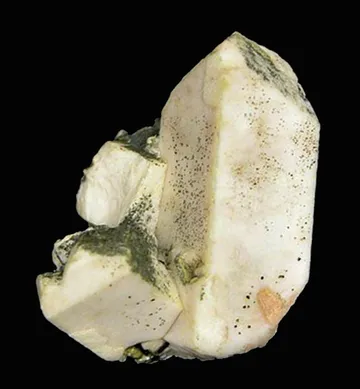
The leucite-bearing side of the locality is represented by lavas, tephrites, leucitites, leucotephrites, volcanic bombs and pyroclastic material. Leucite is a rock-forming feldspathoid in the potassium-rich, silica-undersaturated magmas of Vesuvius and Somma, and it can appear as white to greyish, pseudocubic trapezohedra in dark matrix. Some specimens are simple volcanic hand pieces with scattered leucite phenocrysts; better collector pieces show sharp, discrete crystals, sometimes partly altered to analcime or kaolinite while preserving the leucite form.
The fumarolic and pneumatolytic mineralization is equally important but much less durable. Historic eruptions from 1631 onward produced lava flows, fissures, scoria and sublimates carrying chlorides, sulfates, copper compounds, lead compounds, iron oxides, and soluble salts. Halite, sylvite, aphthitalite, thenardite, cotunnite, palmierite, tenorite, atacamite, paratacamite, euchlorine, chalcocyanite, chalcanthite and related species belong to this tradition. Such material is often microcrystalline, highly associated, and sensitive to moisture; it is usually studied today in historical museum collections rather than collected fresh.
There are no ore bodies at Somma-Vesuvius in the commercial mining sense. Copper, lead, zinc and iron minerals occur in small, scientifically important quantities as fumarolic products, alteration products, sulfides in ejecta, or accessory phases in skarn and sanidinite assemblages. Their value is mineralogical, not economic. Even when copper minerals are abundant enough to colour a crust, the occurrence is a volcanic sublimate or alteration association, not a mineable copper deposit.
Historically, specimens came from ravines, lava fissures, pyroclastic slopes and quarries opened in volcanic material. Classic locality names include Monte Somma, Mount Vesuvius, the Pollena quarries, San Vito quarry near Ercolano, Le Novelle quarry, Trapolino Quarry or Cava Nuova at Somma Vesuviana, Lagno di Pollena, Vallone di San Sebastiano, Vallone Molaro, Fosso Grande, Fosso Cancherone, and the Terzigno area. The old quarries and natural gullies were productive because erosion, quarrying and rain exposed fresh ejecta; collectors could split skarn blocks and search cavities for vesuvianite, garnet, wollastonite, feldspathoids, zeolites and rare accessories.
The collecting situation today is fundamentally different. Vesuvius National Park was established to protect the volcanic, natural and cultural landscape, and collecting minerals or rocks within the protected area is prohibited except under proper scientific authorization. Many old quarry faces are closed, rehabilitated, unstable or inaccessible. For serious collectors, legitimate specimens therefore come mainly from old collections, historical dealer stock, museum deaccessions where lawful, and material collected before modern restrictions. Provenance matters: a precise sublocality such as Pollena quarries, San Vito quarry, Monte Somma, or Vesuvius 1906 fumarole material is far more useful than a vague “Vesuvio” label.
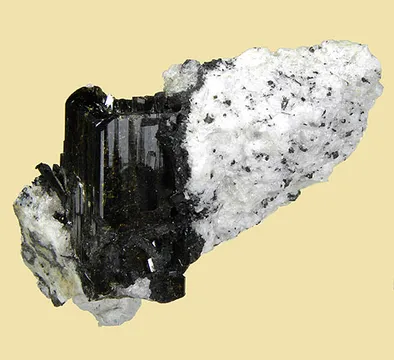
Vesuvianite is the emblematic collector mineral of the complex and a type-locality species for Monte Somma–Vesuvius. Here it is a high-temperature skarn and marble mineral, not the Alpine rodingite-style material familiar from some other Italian localities. It occurs in ejected carbonate-derived blocks, commonly in geodes or cavities with grossular-andradite garnet, diopside or fassaite, phlogopite, wollastonite, sodalite, meionite, forsterite, humite-group minerals, spinel, davyne and cuspidine. Colour ranges from yellow-green and olive-green through reddish brown and dark brown to nearly black; good examples show lustrous, short-prismatic to blocky tetragonal crystals standing free in cavity space rather than granular skarn aggregates. Most specimens are miniature to small-cabinet scale, with individual crystals commonly modest, but the finest pieces combine sharp crystal form, glossy faces, contrasting pale skarn or dark matrix, and a credible old Monte Somma, San Vito, Pollena or related sublocality label.
Leucite from Somma-Vesuvius is classic because Monte Somma is the type locality and because the mineral is woven into the volcano’s alkaline petrology. It appears as colourless, white, greyish or turbid pseudocubic trapezohedra in leucite-bearing lavas, tephrites, leucotephrite blocks, lapilli and volcanic bombs, as well as in some ejected blocks where it may be associated with augite, sanidine, mica, meionite, sodalite or other feldspathoids. Collectors should expect matrix pieces rather than isolated gemmy crystals: common specimens show pale leucite spots or embedded trapezohedra in dark volcanic rock, while better pieces have well-defined, sharp, complete crystals with clean outlines and minimal replacement. Large, complete trapezohedral crystals from the type locality are uncommon and desirable, especially when accompanied by an old label; altered examples preserving the leucite form as analcime or kaolinite pseudomorphs are also part of the locality’s collecting tradition.
Beyond vesuvianite and leucite, Somma-Vesuvius is a locality where the supporting cast can be as important as the headline species. Type-locality and historically significant minerals include davyne, microsommite, monticellite, cuspidine, forsterite, humite, clinohumite, periclase, meionite and montesommaite, with later work continuing to add or clarify rare species from old material. Montesommaite, for example, is a zeolite first described from tiny colourless crystals in scoria vesicles from the Pollena quarries. Sanidinite and skarn ejecta have yielded baddeleyite, zircon, perovskite, fluorite, apatite, REE-bearing phases, spinel and complex feldspathoid assemblages, while fumarolic collections preserve a separate miniature world of halides, sulfates, copper minerals and lead minerals linked to particular eruptions.
The principal authenticity problem at Somma-Vesuvius is not enhancement but provenance. Old labels may say “Vesuvius,” “Vesuvio,” “Monte Somma,” or “Naples” without distinguishing whether a specimen came from the Somma caldera wall, the modern Vesuvius cone, Pollena, San Vito, Trapolino, Terzigno or another sublocality. For type-locality collecting, that difference matters. A vesuvianite simply labelled “Vesuvius” may still be historically meaningful, but a specimen with a traceable Monte Somma or quarry label is more useful. For leucite, similar-looking Italian volcanic localities such as Roccamonfina can be confused with Somma-Vesuvius material, so old collection history and matrix style deserve scrutiny.
Tourist material from the volcano area should be treated cautiously. Loose lava fragments, souvenir “volcanic rock” boxes, unlabeled crystals, and dramatic geodes sold to casual visitors are not equivalent to documented mineral specimens. Some may be ordinary local scoria, some may be from other volcanic districts, and some may be assembled or misrepresented curiosities. Serious Vesuvian material should have a credible chain of custody, a mineralogical identification that fits the assemblage, and ideally a sublocality. Analysis has also shown that old labels can be mineralogically wrong: specimens historically called humite, garnet, schorl, idocrase or other names may require modern confirmation.
Condition is locality-specific. Vesuvianite in skarn ejecta is usually robust, but crystals may be dark, crowded, chipped at terminations, or partly embedded in tough matrix. Good cleaning is conservative: aggressive acids can attack associated calcite or delicate skarn textures, and heavy mechanical trimming can remove the context that makes the piece Vesuvian. Leucite commonly alters or pseudomorphs; sharp form is more important than glassiness, and matrix stability should be checked because some lava pieces shed grains or weathered rind. Fumarolic specimens require the most care. Many salts and sulfates are soluble, hygroscopic or alteration-prone, so they should be stored dry, handled minimally, and kept away from washing, humid display cases and repeated temperature cycling.
Collectors should also be aware of fibrous amphibole issues in some Somma-Vesuvius ejecta studies, including fluoro-edenite identified from old Le Novelle quarry material. This does not make ordinary historic Vesuvian specimens dangerous by default, but it does argue for sensible handling: avoid sawing, grinding, drilling or blowing dust from unidentified fibrous or friable matrix, and keep micromount preparation controlled.
Market availability is uneven. Ordinary leucite-bearing lava pieces and small vesuvianite skarn specimens appear periodically, often at modest prices when labels are vague. Fine vesuvianite from the type locality with bright lustre, attractive association, and old European provenance is scarcer. Well-documented historical fumarolic material, type-mineral micromounts, and specimens tied to classic quarries or specific eruptions are specialist pieces, more likely to circulate among micromount collectors and Italian locality specialists than in general mineral retail.
In the older collecting era, Somma was a place where weather did some of the collecting for you. Albert Pelloux’s 1927 account describes the ejected limestone blocks as scattered in the tuffs of Monte Somma and “easily collected in the ravines of the volcano, especially after long periods of rain.” That single observation explains much of the old material on the market: collectors were not mining a vein but walking the gullies after storms, looking for newly freed blocks whose interiors might contain vesuvianite, garnet, forsterite, spinel, davyne, humite or other high-temperature minerals. The Italian word often encountered in old locality discussions, cupe, refers to those ravines and cuts in the volcanic slopes where blocks, lava cracks and quarry exposures once supplied specimens.
The scientific story began early and became almost bibliographic. Teodoro Monticelli and Nicola Covelli published the first volume of Prodromo della mineralogia vesuviana in Naples in 1825, with nineteen engraved plates. It was intended as part of a broader treatment of Vesuvian mineralogy, but Covelli died in 1829, and the project never developed as planned. Even so, the book became a cornerstone. It reported dozens of species new to Vesuvius and several then thought wholly new, including names such as cotunnite, davyne and biotite. Some names survived, some were later corrected, and some became tangled in the changing mineral nomenclature of the nineteenth century. For collectors, that history explains why an old Vesuvian label may carry a name that is scientifically obsolete but historically important.
A particularly good example of that afterlife is afghanite. The mineral was formally described in 1968 from Sar-e-Sang in Afghanistan, yet specimens from the Vesuvius area had been collected more than a century earlier. In 1910 the Vesuvian material had been partly described under the name “natrodavyne,” then it effectively disappeared into the literature and collections. In 1996 Gian Carlo Parodi, Paolo Ballirano and Adriana Maras showed that the lost Vesuvian material was afghanite. It is a neat reversal of collector instinct: a mineral named for Afghanistan had been sitting, unrecognized, in the older Vesuvian record.
The fumarolic specimens tell a different kind of story, one tied to individual eruptions. Pelloux recorded excellent halite and sylvite crystals in a leucotephrite block ejected in 1906, sellaite as needles and microscopic crystals in a conglomeratic block enclosed in the lava of 1872, and several extremely rare salts known from particular years such as 1850, 1855, 1868, 1872, 1906 and 1919. These are not timeless pocket finds. They are mineralogical weather reports from a cooling volcano: chlorides, sulfates, copper compounds and lead minerals formed as gases escaped, reacted, cooled and then began to disappear under moisture and rain.
The last eruption, in March 1944, closed the most recent open-conduit chapter of Vesuvius. It destroyed or damaged communities including San Sebastiano al Vesuvio and Massa di Somma and left the volcano in its present quiescent state. For mineral collectors, the importance of 1944 is not that it produced a famous specimen pocket, but that it marks the end of the historic eruptive cycle that supplied much of the modern fumarolic and lava context. Since then, the collector’s Vesuvius has increasingly become an archive locality: its best new discoveries often come from re-examining old specimens, old labels and old museum material with modern analytical tools.