A collector's guide to Sardinia, Italy: its geology, mining history and notable minerals, illustrated with the 47 specimens documented from this locality on EarthWonders.
Key facts
Sardinia is not a single mine locality so much as a mineral province: a rugged Mediterranean island whose collecting reputation rests on several distinct ore districts, each with its own personality. The great lead-zinc-silver fields of the Sulcis-Iglesiente and Guspinese-Arburese districts in the southwest are the classic heart of the island, developed in Cambrian carbonates and Paleozoic basement and reworked by long episodes of tectonism, karst, oxidation, and supergene enrichment. From those old workings came the island’s most famous cabinet classics: phosgenite and anglesite from Monteponi, bright cerussite and smithsonite from oxidized lead-zinc ores, blue-green copper-zinc secondary minerals, galena and sphalerite masses, and the pyrite-bearing assemblages of the carbonate-hosted ore bodies.
For specimen collectors, Sardinia’s name also immediately calls up one extraordinary exception to the lead-zinc story: Calabona, near Alghero in northwestern Sardinia. This small old copper mine, developed on a porphyry-copper occurrence, produced the island’s most coveted covellite—thin metallic blades and rosette-like aggregates with a deep indigo to violet-blue iridescence, commonly sparked by small brassy pyrite crystals. Good Calabona covellite has the aura of an old European classic: scarce, visually unmistakable, and far more often encountered in museum cases or old collections than in newly mined lots.
Regional View
Country View
The island’s deeper mineralogical importance is scientific as well as aesthetic. Monteponi gave its name to monteponite, CdO. Rosas, near Narcao, is the type locality of rosasite, the blue-green copper-zinc carbonate familiar to collectors from many later localities but first recognized in the Sardinian Sulcis. At Punta de Su Seinargiu near Sarroch, a small Mo-Bi prospect in granitic rocks has become one of Europe’s remarkable modern micromineral localities, yielding a suite of new molybdates and bismuth molybdenum oxides, including sardignaite, gelosaite, tancaite-(Ce), ichnusaite, nuragheite, mambertiite, suseinargiuite, and cabvinite.

Photo: Rob Lavinsky, iRocks.com, via Wikimedia Commons
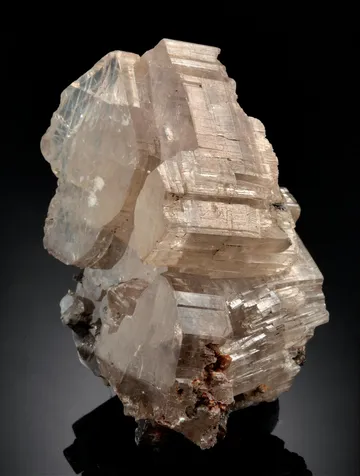
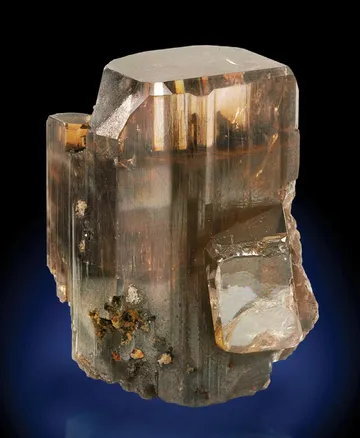
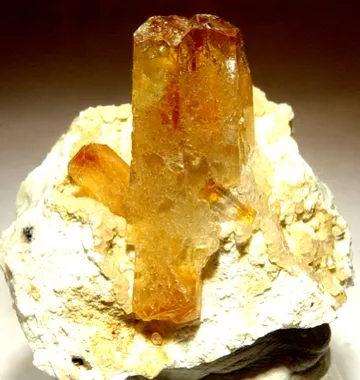
The finest Sardinian specimens tend to look unmistakably “old”: dense galena matrix with lustrous lead carbonates and sulfates; honey, smoky, or colorless phosgenite emerging from dark ore; creamy anglesite on massive galena; and, from Calabona, compact covellite-pyrite plates whose blue metallic surfaces flash almost like oil on water. Modern collecting is limited, but old labels from Monteponi, Montevecchio, San Giovanni, Rosas, Calabona, and Sarrabus remain highly desirable because they tie a specimen to a mining culture that shaped Sardinia’s landscape for centuries.
Search for specimens: View all specimens from Sardinia, Italy
Sardinia’s collectible mineral output is spread across several districts, but the backbone of its classic specimen history is southwestern Sardinia. In the Iglesiente-Sulcis, the major Pb-Zn-Ag-Ba deposits are hosted in Lower Paleozoic carbonate sequences, especially Cambrian dolostones and limestones traditionally associated with the “metalliferous ring” around Iglesias. The ore geology is complex because stratabound sulfide and barite mineralization, carbonate-hosted replacement bodies, paleokarst cavities, and later remobilized veins all overlap. The resulting ores are dominated by galena, sphalerite, pyrite, marcasite, and barite, with oxidized zones rich in smithsonite, hemimorphite, hydrozincite, cerussite, anglesite, and, locally, phosgenite.
Monteponi, just outside Iglesias, is the iconic collector’s mine of this province. Its carbonate-hosted lead-zinc bodies were worked on a major scale, and its oxidized galena cavities produced phosgenite, cerussite, anglesite, lanarkite, leadhillite, smithsonite, hemimorphite, and related secondary minerals. Monteponi specimens are particularly prized when the lead minerals are perched on dark galena matrix: the contrast between smoky phosgenite or creamy anglesite and the black metallic ore is the classic look. Phosgenite from Monteponi is among the world standards for the species, and old specimens with 19th-century or early 20th-century labels carry a premium because the best cavities belong to the historic working period rather than to any modern production.
San Giovanni, at Bindua near Iglesias, is another important Iglesiente locality. The mine is very old, with exploitation attributed to Roman and Pisan periods and industrial work beginning in the 19th century under the Gonnesa Mining Company Ltd. Its geology includes Cambrian waxy limestone and yellow silicified dolomite, karst voids, and Pb-Zn mineralization. The mine is also known for the Grotta di Santa Barbara, a spectacular cave discovered during mining in 1952, whose barite-lined walls remind collectors that Sardinia’s mines are as much about cavities and late fluids as about massive ore. For specimen purposes, San Giovanni is notable for lead-zinc assemblages and unusual pyrite habits, including acicular to skeletal-looking pyrite crystals reported from the Contatto Ovest stope.
Montevecchio-Ingurtosu-Gennamari, in the Guspinese-Arburese district, belongs to a different style of Sardinian classic. Its mineralized vein system extends roughly east-west for about ten kilometers, with locally very thick galena-rich lodes. The gangue is principally quartz, and the ore suite includes galena, sphalerite, pyrite, iron oxides, carbonates, and silver-bearing galena. The mining history is long, but the modern chapter began in 1848 when Giovanni Antonio Sanna obtained the concession and developed what became one of Italy’s great mining enterprises. Later ownership and management included Montecatini, Montedison, SOGERSA, SAMIM, and SIM, reflecting the broader transformation of Sardinian mining from private industrial venture to state and regional management before final decline. Montevecchio closed definitively in 1991.
Calabona, near Alghero in Sassari Province, is the locality behind Sardinia’s celebrated covellite. The deposit is a porphyry-copper occurrence with oxidized minerals and regenerated copper sulfides capping primary mineralization hosted in a porphyrite dike; skarn-like Pb-Zn mineralization at contacts with Paleozoic limestones was also worked locally. Historical accounts and modern locality summaries emphasize that the mine exploited rich oxidized copper lenses and secondary copper sulfides, and that its covellite specimens were already famous enough to enter museum collections. The workings are long abandoned, and fine pieces are overwhelmingly old-stock specimens rather than new production.
The Sarrabus-Gerrei district in southeastern Sardinia adds another flavor: silver-bearing vein systems with galena, sphalerite, pyrite, chalcopyrite, barite, fluorite, and sulfosalts, as well as important antimony history at Su Suergiu. Sarrabus silver ores were historically noted for unusually high silver values in lead concentrates, and the district attracted feverish 19th-century prospecting around mines such as Monte Narba, Masaloni, Giovanni Bonu, Tuviois, and Baccu Arrodas. These localities are less common on the international specimen market than Monteponi or Calabona, but their labels matter to specialists in Italian ore minerals and sulfosalts.
Punta de Su Seinargiu near Sarroch is small in mining terms but disproportionately important mineralogically. There, Mo-Bi mineralization occurs as vein systems in Variscan leucogranite porphyry hosted by metamorphosed Ordovician-Silurian shales. The locality has old adits and molybdenite-bearing quartz veins, but its fame rests on micromineralogy: the oxidation and alteration of primary Mo-Bi minerals generated an exceptional suite of rare secondary molybdates and Bi-Mo oxides. These are not showy cabinet pieces; they are research-grade microscopic crystals, commonly measured in millimeters or micrometers, and they are the reason Su Seinargiu is now a reference locality for unusual molybdenum mineralogy.
Collecting access today is restricted by a combination of safety, ownership, heritage protection, and environmental law. Many mining sites now sit within the Parco Geominerario Storico e Ambientale della Sardegna or are managed as industrial-archaeology attractions, with guided visits at places such as Montevecchio, Porto Flavia, San Giovanni–Grotta di Santa Barbara, Rosas, and related sites. Abandoned adits, dumps, and shafts are commonly unsafe and may be fenced, sealed, privately owned, or under public heritage management. Coastal collecting is also a special concern: Sardinia prohibits removal, possession, and trade of sand, pebbles, stones, and shells from coastal and marine environments without authorization, with significant administrative fines. Serious collectors should acquire Sardinian minerals through documented old collections, reputable dealers, museum deaccession channels where legal, or field collecting only with explicit permission from the landowner or managing authority.
Sardinian covellite means Calabona: steel-gray to indigo-blue metallic covellite from the old Calabona Mine near Alghero, typically as thin bladed crystals, lamellar aggregates, or indistinct rosette-shaped clusters on ore matrix, commonly accompanied by small brassy pyrite crystals and other copper sulfides such as djurleite. The best pieces show saturated blue to violet iridescence, sharp lamination, and visible hexagonal or rosette structure rather than dull massive sulfide; individual bladed clusters around the centimeter scale are especially desirable, and small-cabinet pieces with rich coverage are far scarcer than their size might suggest. Good Calabona covellite is judged less by bulk than by surface quality: fresh metallic luster, undamaged blades, lively color play, and a balanced association with pyrite separate a serious old Sardinian specimen from ordinary dark copper ore.
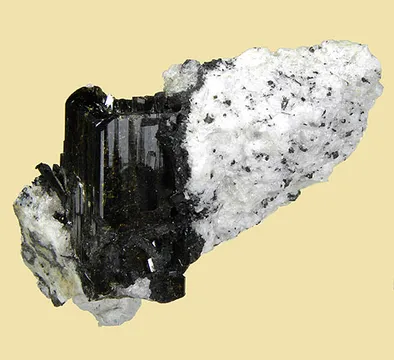
Pyrite is widespread through Sardinia’s ore districts, but collector-grade Sardinian pyrite appears in several distinct contexts: as brassy companion crystals with Calabona covellite; as massive, disseminated, and vein pyrite in the lead-zinc ores of Monteponi, Montevecchio, and other Iglesiente-Guspinese mines; and as unusual needle-like to skeletal-looking crystals from the San Giovanni Mine, especially the Contatto Ovest stope, where pyrite has been described in acicular habits on carbonate-rich matrix. The most appealing Sardinian pyrite specimens are not large Spanish-style cubes but locality-character pieces—bright gold pyrite crystals contrasting with blue covellite at Calabona, lustrous sprays or skeletal crystals on pale calcite or siderite from San Giovanni, or historically labeled sulfide specimens tied to major mines. Ordinary massive pyrite is common in the ores; well-crystallized, undamaged, well-labeled Sardinian pyrite is the collectible material.
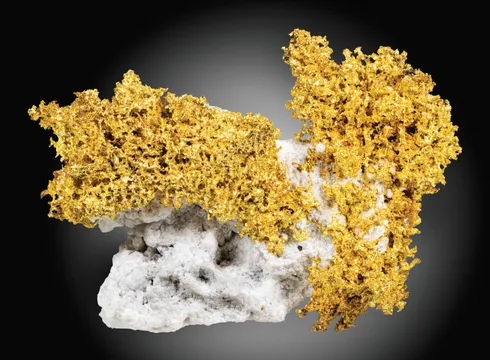
Other Sardinian minerals give the island unusual depth. Monteponi is a classic source of phosgenite, anglesite, cerussite, smithsonite, hemimorphite, galena, sphalerite, and the type mineral monteponite. Rosas is the type locality of rosasite, found in the oxidized zone of a Zn-Cu deposit with aurichalcite, brochantite, greenockite, malachite, and siderite. Su Seinargiu is the island’s modern rare-species powerhouse, with type-locality sardignaite, gelosaite, tancaite-(Ce), ichnusaite, nuragheite, mambertiite, suseinargiuite, and cabvinite among its microscopic Mo-Bi-Th-REE assemblage. Collectors also prize Sarrabus labels for silver-bearing galena, barite, fluorite, and sulfosalts; Su Suergiu for antimony minerals; and Montevecchio-Ingurtosu for historically important Pb-Zn-Ag vein material.
The first rule with Sardinia is locality discipline. “Sardinia” alone is too broad for serious specimen work; a meaningful label should name the mine or district—Calabona, Monteponi, San Giovanni, Montevecchio, Ingurtosu, Rosas, Sarrabus, Su Seinargiu, Su Suergiu, or another specific site. The island’s mineral districts are geologically diverse, and a Calabona covellite, a Monteponi phosgenite, and a Su Seinargiu molybdate micromount are not interchangeable Sardinian curiosities. They belong to different deposit systems, different eras of collecting, and different markets.
No well-documented modern wave of fabricated Sardinian covellite or phosgenite appears in the specialist literature I found, but mislabelling is a real practical issue. Calabona covellite should not be confused with blue-purple covellite from Montana, Peru, Serbia, or other copper districts; good Sardinian examples are normally old, compact, and associated with pyrite on a dense ore matrix. The iridescent color must be natural metallic covellite, not a treated “peacock ore” surface on chalcopyrite or bornite. For uncertain blue copper sulfides, especially massive or polished material, visual identification is not enough; djurleite, chalcocite, covellite, and related copper sulfides can be difficult to separate without analysis.
Monteponi lead minerals deserve careful handling. Phosgenite, cerussite, anglesite, galena, and related lead species are dense and chemically lead-bearing; do not cut, grind, lick, or ultrasonic-clean them, and wash hands after handling friable specimens. Phosgenite is relatively soft, heavy, and brittle enough that exposed crystals chip easily; old crystals often show bruised edges, cleavage marks, or internal fractures. The best Monteponi pieces preserve sharp terminations, glassy to adamantine luster, and clear association with galena matrix. Phosgenite from Monteponi may fluoresce yellow under longwave UV, with weaker response under midwave and little to no useful shortwave response on documented examples, so UV can add interest but should not be treated as a sole identification test.
Sardinian pyrite can create the usual sulfide-storage concerns. Massive pyrite or marcasite-rich material from damp mine environments may oxidize, shed iron sulfate, or stain labels and boxes if stored in humid conditions. Keep pyrite-bearing Sardinian ore specimens dry and ventilated; isolate unstable pieces from carbonates and paper labels. Secondary sulfates such as melanterite at abandoned pyrite mines are water-soluble and environmentally sensitive, and they are not robust cabinet minerals.
Rarity varies sharply by species and locality. Calabona covellite is scarce in genuinely good, old, display-quality specimens. Monteponi phosgenite and anglesite appear periodically from old European collections, but the finest crystals are classic pieces rather than repeatable finds. San Giovanni acicular pyrite is unusual and should be bought for locality and habit, not for size. Su Seinargiu rare minerals are almost entirely micromount or analytical material; names such as ichnusaite, nuragheite, suseinargiuite, and cabvinite belong in the realm of specialist micro collections and type-suite reference material, not general show cabinets.
Field collecting in Sardinia should be approached conservatively. Many former mine sites are protected industrial heritage, managed tourist properties, dangerous abandoned workings, or under IGEA/public management. Beach collecting is especially risky because regional rules prohibit removal of sand, pebbles, stones, and shells from Sardinian coastal and marine environments without authorization, with fines commonly cited in the hundreds to thousands of euros. A specimen purchased with an old mine label from a reputable source is usually a better collecting decision than an unauthorized field-collected rock from a protected dump, beach, or adit.
At Monteponi, the romance of the specimen label is inseparable from the heavy industrial reality behind it. This was not a small collector’s dig but a major mine complex outside Iglesias, where oxidized lead-zinc ore bodies, karst cavities, and dark galena opened into some of Europe’s most admired lead-mineral pockets. One old phosgenite specimen now illustrated on Wikimedia carries a detail collectors love: it came with a Dr. A. E. Foote label, linking it to the famous 19th-century dealer who died in 1895 and is said to have obtained Monteponi pieces on a trip to the mine in the 1870s. That is exactly the kind of provenance that makes a Monteponi specimen feel like more than a mineral—it is a surviving object from the age when European mine classics were entering the first great private and museum collections.
The most cinematic Sardinian mining story is Porto Flavia. The problem was brutally practical: ore from the Masua district had to be moved from steep coastal mines to ships, and the old system relied on small boats, repeated handling, weather delays, and high cost. Engineer Cesare Vecelli solved it by driving the port into the cliff itself. Two superposed tunnels, roughly 600 meters long, were cut into the limestone above the sea, with vertical storage silos between them and a conveyor system that could extend out toward a waiting ship. The portal was not merely functional; it was dressed with a theatrical façade facing the Pan di Zucchero sea stack, and the name Porto Flavia was placed above the opening in honor of Vecelli’s daughter. For a collector standing there today, the view is startling: the same coastline that tourists photograph for its blue water and white limestone was once an engineered mineral chute, built to move Sardinian lead and zinc into the world market.
At San Giovanni, the most memorable discovery came not from a specimen pocket but from a wall that miners broke through in 1952. During excavation of an ascending tunnel near the Carolina shaft area, workers opened into a hidden natural cavern. What lay beyond was the Grotta di Santa Barbara, a glittering underground chamber whose walls are lined with dark brown tabular barite crystals between Lower Cambrian waxy limestone and yellow silicified dolomite. The cave had been sealed inside the mountain, unknown to science until mining intersected it. Today visitors reach it by a mine train, an elevator, and a spiral stair, but its origin story still has the shock of a pocket find magnified to cathedral scale: a miner’s ordinary working face giving way to a mineral-lined chamber hundreds of millions of years in the making.
The Buggerru story is darker, and it belongs in any honest account of Sardinian mining. In the early 20th century the town was nicknamed “Petite Paris,” a mining settlement where foreign managers and their families supported a small elite world of offices, a theater, a cinema, and social clubs. Beneath that veneer were the miners of the Malfidano operation, working under punishing conditions in the hills above the western coast. On 4 September 1904 a labor protest over working hours and conditions ended when troops fired on the workers. Three miners were killed, and the episode became known as the Eccidio di Buggerru. It helped trigger what is remembered as Italy’s first general strike. For collectors, the lesson is sobering: Sardinian ore specimens are beautiful, but their labels often come from places where labor history, industrial ambition, and geology were tightly bound together.
Montevecchio tells a different long arc: ambition, mechanization, consolidation, decline. Giovanni Antonio Sanna’s 1848 venture grew into one of Italy’s great mining enterprises, eventually a complex of villages, shafts, galleries, washing plants, a hospital, school, church, and management buildings. The ore lodes were large enough to shape towns and transport systems, and the operation modernized repeatedly—steam, washing plants, electricity, inclined planes, flotation, teleferiche, compressed-air systems, and eventually mechanized haulage. In the 1960s, the mine even produced a locally invented fast mucking train associated with workshop chief Letterio Freni; the design was important enough that Atlas Copco acquired the patent and commercialized it. By the time the mine closed in 1991, Montevecchio had passed from private venture to public-sector management and then into the difficult afterlife of heritage tourism. The landscape left behind is a collector’s map made architectural: mine mouths, headframes, washing plants, and villages spread across the same ground that once supplied galena, sphalerite, pyrite, and silver-bearing ore.
Pagano, R., and Wilson, W. E. (2014). “The Monteponi Mine, Iglesias, Sardinia, Italy.” The Mineralogical Record, 45(6), 625–641, 644–645, 651–657, 662–672. A major modern collector-oriented treatment of Monteponi’s history and classic mineral specimens.
Bernhardini, G. P., Corsini, F., and Tanelli, G. (1973). “Djurleite from Calabona, Sardinia.” Mineralogical Magazine, 39, 25–29. The key published reference tied to the Calabona copper-sulfide assemblage associated with the famous covellite occurrence.
Lovisato, D. (1908). “Rosasite, nuovo minerale della miniera di Rosas (Sulcis, Sardegna).” Atti della Reale Accademia dei Lincei, Serie 5, Rendiconti, Classe di scienze fisiche, matematiche e naturali, 17, secondo semestre, 723–728. The original description of rosasite from the Rosas Mine in the Sulcis.
Mindat Type Locality Report for Monteponi Mine, Iglesias, Sardinia. Documents Monteponi as the type locality for monteponite.
Orlandi, P., Biagioni, C., Moëlo, Y., Langlade, J., and Faulques, E. (2015). “Suseinargiuite, (Na0.5Bi0.5)MoO4, the Na-Bi analogue of wulfenite, from Su Seinargiu, Sardinia, Italy.” European Journal of Mineralogy, 27(5), 695–699. Describes one of the rare Su Seinargiu type minerals and its relationship to wulfenite.
Orlandi, P., Biagioni, C., Pasero, M., Demartin, F., Campostrini, I., and Merlino, S. (2015). “Mambertiite, BiMo5+2.80O8(OH), a new mineral from Su Seinargiu, Sardinia, Italy: occurrence, crystal structure, and relationships with gelosaite.” A type-mineral description from the Su Seinargiu Mo-Bi assemblage.
“Nuragheite, Th(MoO4)2·H2O, the second natural thorium molybdate and its relationships to ichnusaite and synthetic Th(MoO4)2.” American Mineralogist, 100, 267–273. Describes nuragheite from Su Seinargiu and places it in context with ichnusaite.
Mauro, D., Biagioni, C., and Orlandi, P. (2021). “Micro-Raman spectroscopy of selected Mo minerals from Su Seinargiu (Sardinia, Italy).” Periodico di Mineralogia, 90, 229–237. A useful analytical paper on Su Seinargiu molybdenum minerals, including sardignaite, gelosaite, mambertiite, tancaite-(Ce), ichnusaite, nuragheite, and suseinargiuite.
Gatta, G. D., Guastella, G., Pipitone, C., Capelli, S. C., Ienco, A., and Costantino, F. (2026). “Reinvestigation of the crystal chemistry of phosgenite, Pb2CO3Cl2.” Mineralogical Magazine, 90(2), 408–416. A modern crystal-chemical study using phosgenite from Monteponi.
Bechstädt, T., and Boni, M. “Base Metal Ores in the Lower Paleozoic of Southwestern Sardinia.” In Carbonate-Hosted Lead-Zinc Deposits. A geological treatment of the carbonate-hosted Pb-Zn ore systems underlying the classic Iglesiente-Sulcis mines.
Naitza, S., et al. “Post-Collisional Tectonomagmatic Evolution, Crustal Reworking and Ore Genesis along a Section of the Southern Variscan Belt: The Variscan Mineral System of Sardinia (Italy).” Minerals, 14(1), 65. A broad modern synthesis of Sardinian mineral systems, including the major pre-Variscan and Variscan ore events.
“Sardegna: le attività minerarie dismesse 16/04/2022” — RaiPlay / Ulisse: il piacere della scoperta. An 11-minute Italian television segment on Sardinia’s abandoned mining landscapes, including the Iglesias and Porto Flavia area.
“Pelle di mulo. Buggerru e Montevecchio storie di miniera” — Rai Scuola. A documentary-style program using testimony and historical narrative to connect Montevecchio, Buggerru, labor history, and mine closure.
“Phosgenite from the Monteponi Mine, Sardinia, Italy” — Fluorescent Mineral Society FMDB. A media record showing normal-light and UV response of a Monteponi phosgenite specimen.
Mindat — Sardinia, Italy Broad mineral locality database entry for the island, useful for drilling down to districts, mines, species lists, and photo galleries.
Mindat — Calabona Mine, Alghero, Sardinia Essential locality page for the classic Calabona covellite-pyrite copper-sulfide occurrence.
Mindat — Covellite from Calabona Mine Focused occurrence page for Calabona covellite, including associated minerals and references.
Mindat — Monteponi Mine, Iglesias, Sardinia Key reference for Monteponi species, history, monteponite notes, and classic lead-mineral associations.
Mindat — Phosgenite from Monteponi Mine Focused occurrence page for one of Sardinia’s great classic mineral species.
Mindat — Pyrite from Sardinia, Italy Useful island-wide entry point for documented Sardinian pyrite occurrences.
Miniere di Sardegna — Calabona Mine Historical and geological context for the old Calabona copper mine.
Miniere di Sardegna — Montevecchio Mine Detailed Italian-language history of Montevecchio, including ore bodies, operators, mine infrastructure, and closure.
Iglesias Turismo — Santa Barbara Cave and San Giovanni Mine Official visitor information and history for the San Giovanni Mine and its famous barite-lined cave.
Parco Geominerario Storico Ambientale della Sardegna Official park resource for Sardinia’s mining heritage landscapes and protected geosites.
Regione Autonoma della Sardegna — beach protection rules Current regional guidance on the prohibition against removing sand, pebbles, stones, and shells from Sardinian beaches.
Punta de Su Seinargiu — Vena Mineraria Accessible Italian-language overview of the Su Seinargiu Mo-Bi locality and its rare type minerals.
Wikimedia Commons — Phosgenite from Monteponi Public image page for a classic old-time Monteponi phosgenite specimen.