






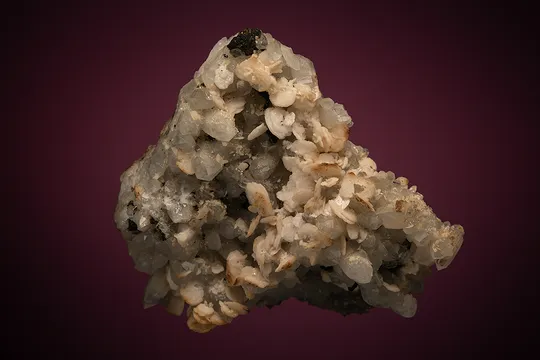
Camp Bird Mine, USA — Colorado’s classic locality for rich gold-in-quartz and notable scheelite pockets, with galena, sphalerite, and chalcopyrite; valued for…
Key facts
Camp Bird is one of the essential Colorado mine names: a high-San Juan gold producer that became, in specimen terms, a classic for rich gold in quartz, handsome base-metal sulfide groups, and Colorado’s most celebrated scheelite occurrence. The mine lies in Imogene Basin, south of Ouray, in the Sneffels mining district, where Tertiary volcanic rocks and the underlying Telluride Conglomerate host a compound vein-and-replacement system. Its reputation rests on two linked but visually different specimen families. From the Camp Bird vein came gold-bearing quartz, quartz crystal groups, and the famous scheelite pockets. From the replacement orebodies in the conglomerate came sharp galena, sphalerite, and chalcopyrite associations with quartz, calcite, fluorite, epidote, barite, and other gangue minerals. The best pieces are unmistakably San Juan: bright metallic cubes or cuboctahedra, black to greenish sphalerite, brassy chalcopyrite, white quartz, and in exceptional cases brown scheelite crystals perched on sugary quartz and sparkling fluorite.
Historically, Camp Bird is far more than a specimen locality. Thomas F. Walsh’s 1896 discovery made the mine one of Colorado’s legendary gold producers, and the mine continued, in one form or another, through the twentieth century as ore character shifted from high-grade Au-Ag-Cu ores to deeper Ag-Pb-Cu-Zn production. For collectors, that long productive life matters because the mine was open during several modern collecting and mineral-dealing eras. Old labels may refer to Camp Bird Limited, Camp Bird Colorado, Camp Bird Ventures, Federal Resources, or simply “Camp Bird, Ouray”; good labels with level, orebody, stope, or collection history add real value.
Regional View
Country View
Camp Bird specimens reward close reading. A massive white quartz vein fragment with fine visible gold tells one part of the mine’s story; a cabinet plate of galena, sphalerite, chalcopyrite, and epidote tells another; a scheelite on quartz with fluorite tells the brief, spectacular 1980s chapter that made the locality famous among tungsten-mineral specialists. The mine’s geology is not a single simple lode but a compound system in which vein filling, brecciation, late bull quartz, and replacement at favorable horizons all produced different collector material.
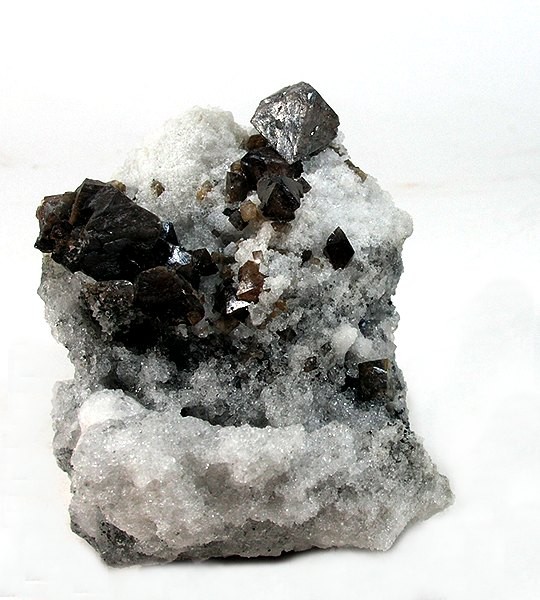
Photo: Wikimedia Commons

Photo: Wikimedia Commons

Photo: Wikimedia Commons
Search for specimens: View all specimens from Camp Bird Mine, USA
The Camp Bird Mine is in Imogene Basin, about six miles south to southwest of Ouray, in the Sneffels mining district of Ouray County, Colorado. The workings are on private patented ground within the broader National Forest landscape, a crucial distinction for collectors: public scenery and public roads nearby do not make the mine dumps, portals, or tailings open collecting ground. Modern records and mining-property descriptions place the mine at roughly 9,800 feet elevation, while upper workings climb dramatically toward the high Imogene country.
Geologically, the locality belongs to the mineralized western San Juan volcanic field. The stratigraphic stack is important. Paleozoic and Mesozoic sedimentary rocks lie beneath the Tertiary Telluride Conglomerate, and volcanic eruptions then built thick piles of San Juan Formation rocks and related volcanic units above them. The productive Camp Bird system exploited both structural and lithologic traps. The famous Camp Bird vein cuts through the volcanic pile, while the porous and reactive Telluride Conglomerate became a receptive host for replacement orebodies, especially where mineralizing fluids could move along veins such as the Orphan and Gordon.
The principal gold producer was the Camp Bird vein, an east-west structure dipping steeply south. Mineralogists describe it as a compound vein with three main stages. The early quartz-sulfide stage contains quartz with galena, chalcopyrite, sphalerite, pyrite, and locally tetrahedrite, plus accessory calcite, chlorite, rhodonite, rhodochrosite, fluorite, ankerite, and scheelite. A later gold-quartz breccia stage carried native gold with minor tellurides such as petzite and hessite, and in deeper levels specular hematite became a conspicuous companion. The final bull-quartz stage is typically barren of ore minerals but locally opens into vugs lined with milky quartz crystals.
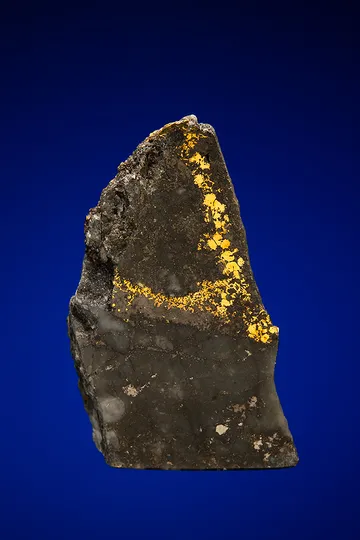
That paragenesis explains the collector material. Gold specimens are not usually “wire gold” showpieces; the characteristic Camp Bird gold is fine-grained to rich buttery yellow in white quartz or in dark sulfide-quartz bands. Quartz specimens range from milky cockscomb masses to distinct crystals in vugs. The best sulfide specimens come from replacement orebodies where galena, chalcopyrite, and sphalerite replaced the matrix and clasts of the Telluride Conglomerate. These pieces can show miniature to cabinet-scale clusters of black spinel-law twinned sphalerite, gunmetal galena cuboctahedra, bright chalcopyrite, colorless quartz, white calcite, and green epidote. Epidote is especially useful in reading these pieces because it is characteristic of the contact/replacement environment rather than the simple vein-quartz habit.
Thomas F. Walsh discovered the rich Camp Bird ore in 1896, consolidated the property, and developed it into one of Colorado’s great gold mines. Early production centered on high-grade gold-silver-copper ore. Walsh sold the mine to British interests in 1902 for $5.2 million, and the new ownership continued developing a large industrial operation in the canyon. The mine’s later history includes intermittent operations, leasing, rebuilding, deeper base-metal mining, and twentieth-century ownership changes. By the mid-twentieth century, production increasingly emphasized lead-zinc-copper-silver ore, and in the 1970s much of the mined ore came from Pb-Cu-Zn replacement bodies rather than the original rich gold shoots.
The specimen era overlaps those later operations. Camp Bird produced “hundreds of fine mineral specimens,” especially native gold and quartz from the Camp Bird vein, sulfide groups from the replacement orebodies, and the celebrated 1987 scheelite pocket. Scheelite is reported from the east Camp Bird workings, and locality records specifically associate it with levels 5 through 7; specimen labels may also cite more detailed internal mine references from later mining and collecting. The June 1987 vug in the Camp Bird vein is the standout documented find, producing brown lustrous scheelite crystals that were widely regarded as the finest then known from Colorado.
Today, collecting should be treated as permission-only. The property has had modern environmental, regulatory, and ownership activity, including tailings stabilization work and ongoing mining-permit context. Road access into the Camp Bird/Yankee Boy/Imogene country is also seasonal, rugged, and subject to rockfall, avalanche, and closure. For the serious collector, the practical route to Camp Bird material is the secondary specimen market: old Colorado collections, 1970s–1990s dealer stock, pieces with Rosemeyer-era or Kosnar-family provenance, and modern resale of scheelite and sulfide specimens that left the mine legally during operations or authorized collecting.
Quartz is the backbone of the Camp Bird specimen suite, appearing both as ore gangue and as collectible crystals. In the Camp Bird vein it ranges from gold-bearing white quartz to brecciated quartz-sulfide material and late bull quartz, with vugs that can contain milky white crystals to about 4 inches; in the replacement orebodies it forms sharp colorless to white crystals and needles associated with sphalerite, galena, chalcopyrite, calcite, epidote, fluorite, and pyrite. The best Camp Bird quartz specimens are not merely white vein chunks: they either carry visible native gold, show open-space cockscomb or vug crystallization, or provide a bright architectural matrix for sulfides or scheelite. Ordinary pieces are massive, barren bull quartz; desirable ones preserve lustrous undamaged crystals, contrasting sulfides, or the distinctive fine gold-in-quartz texture for which the mine is historically famous.
Sphalerite from Camp Bird is most admired from the Pb-Cu-Zn replacement orebodies, especially the Orphan replacement orebody, where it may be the predominant ore mineral and occurs as both translucent green material and dark, nearly opaque iron-rich crystals. Fine specimens show black to very dark brown, complexly twinned or spinel-law twinned crystals, commonly with galena cuboctahedra, golden chalcopyrite, quartz, calcite, epidote, and pyrite; small examples may be only a few centimeters, while strong cabinet pieces from the replacement environment can reach well over 10 cm. The collector premium goes to sharp, lustrous, damage-free crystals with visible greenish or amber translucency on thin edges, clear association with galena and chalcopyrite, and old mine or collection provenance. Dull massive sphalerite ore is common by comparison; crystallized, well-composed replacement-body specimens are the classic Camp Bird look.
At Camp Bird, chalcopyrite appears both in the early quartz-sulfide stage of the Camp Bird vein and as one of the principal minerals of the later Pb-Cu-Zn replacement orebodies. The most collectible material is not massive brassy ore but bright, sharp, golden crystals scattered among black sphalerite and steel-gray galena, with white calcite, colorless quartz, and green epidote providing contrast. Documented specimens include miniature groups with chalcopyrite crystals around the centimeter scale on sphalerite-quartz-pyrite matrix, and the finest pieces have the same balance that makes San Juan sulfide specimens so attractive: fresh metallic luster, clean separation from associated galena and sphalerite, and a matrix that tells the replacement-body story. Tarnish, bruised sulfides, and excessive massive ore lower desirability, while bright chalcopyrite sitting proud on dark sphalerite is the sweet spot.
Scheelite is Camp Bird’s signature rarity for Colorado collectors, especially the material from the June 1987 vug in the Camp Bird vein, widely cited as the finest scheelite find in the state. The crystals are typically brown to dark brown, lustrous, and tetragonal, commonly perched on sugary white quartz and in prized examples associated with sparkling colorless fluorite; documented specimens show crystals to about 2.5 cm, and some are doubly terminated. Locality records place scheelite in levels 5–7 of the east Camp Bird workings, and additional labeled specimens from the 1970s–1980s carry more specific mine-level and stope information. The best pieces combine sharp crystal form, glossy wet-looking luster, minimal edge damage, strong aesthetics on quartz, and the expected blue-white fluorescence under shortwave ultraviolet light. Scheelite without matrix is less characteristic; scheelite on quartz with fluorite is the association most collectors immediately recognize as top Camp Bird.
Camp Bird galena is chiefly valued as part of the replacement-orebody sulfide association rather than as isolated cubes. Good specimens show lustrous gray to gunmetal cuboctahedral crystals, sometimes to around 1 cm or a little more on miniature pieces, embedded among black sphalerite and bright chalcopyrite with quartz, calcite, and epidote. The Orphan and Gordon vein replacement environments supplied the most attractive material, because the sulfides replaced the conglomerate matrix and produced open, collectible crystal groups rather than simple massive ore. Strong Camp Bird galena has clean faces, sharp corners, lively metallic luster, and balanced association; it is especially desirable when chalcopyrite and sphalerite are both present and the matrix is not visually dead. As with most galena localities, bruising, edge wear, and dull oxidation are the usual condition problems.
Fluorite at Camp Bird is an accessory mineral in both the quartz-sulfide vein assemblage and the replacement orebody suite, but it becomes collector-important when it partners with scheelite. The most memorable specimens show a thin druse of colorless, sparkling fluorite over white quartz, with brown lustrous scheelite crystals perched above it; this association is unusual enough that it helps separate the better scheelite pieces from ordinary tungsten specimens. Fluorite is also documented with calcite, sphalerite, quartz, and other replacement-body minerals, generally as small pale to colorless crystals rather than large standalone cubes. Fine Camp Bird fluorite specimens are therefore judged by association and texture: brilliant drusy sparkle, clean coverage, contrast with scheelite or sulfides, and lack of bruising. A piece labeled only “fluorite, Camp Bird” deserves careful scrutiny unless the supporting quartz-scheelite or sulfide context is visible.
Calcite is common enough in the Camp Bird system to appear in the early vein assemblage, wall-rock alteration, and the replacement orebodies, but it is most collectible when it completes a sulfide association or forms attractive crystals on quartz. Specimens show white to colorless calcite with quartz, sphalerite, galena, chalcopyrite, epidote, fluorite, pyrite, and chlorite-group minerals; a documented cabinet-size example fluoresces bright red, a useful reminder that Camp Bird calcite can be interesting under ultraviolet light even when it is not the dominant species. The best calcite pieces from the mine are clean, undamaged, and compositionally important—either perched on quartz, nestled among sharp sulfides, or providing color contrast in replacement-body material. Massive carbonate gangue is common and rarely specimen-worthy; crystallized calcite with fresh sulfides and verified Camp Bird provenance is the collector target.
Other documented Camp Bird minerals include native gold, altaite, anglesite, anhydrite, ankerite, baryte, bornite, cerussite, chlorite-group minerals, clinochlore, dickite, digenite, dolomite, epidote, ferrimolybdite, fluorapatite, greenockite, gypsum, hematite, hessite, hübnerite, magnetite, muscovite, orthoclase, petzite, piemontite, pyroxmangite, pyrite, pyrrhotite, rhodochrosite, rhodonite, sericite, siderite, and tetrahedrite-group minerals. The rarities that matter most to advanced collectors are the tellurides and gold-stage accessories—especially petzite, hessite, and altaite—plus the manganese silicates and carbonates that record the complex hydrothermal evolution. Camp Bird is not primarily collected as a type-locality suite; it is collected as a classic Colorado orebody whose unusual strength is the combination of gold-quartz ore, replacement-body sulfides, and scheelite.
Camp Bird is a label-sensitive locality. There are other “Camp Bird” mine names in the western United States, and locality records have explicitly warned that some references belong to a different Camp Bird Mine in another county. A reliable label should tie the specimen to Ouray County, the Sneffels district or Imogene Basin, and ideally the Camp Bird Mine itself rather than a vague “Camp Bird, Colorado.” Better labels may include the vein, orebody, level, stope, lease, collector, or operating company.
For sulfide specimens, condition is the main value separator. Galena corners abrade easily, sphalerite cleavages chip and bruise, and chalcopyrite can dull or tarnish. Examine high points under strong light and magnification: fresh chips on black sphalerite and rounded galena edges are common on older material that has passed through many collections. Sphalerite with genuine translucency at thin edges or broken corners can be attractive, but obvious fresh damage should not be mistaken for a natural “window.”
Scheelite specimens require two checks. First, confirm fluorescence: Camp Bird scheelite should show the expected blue-white response under shortwave ultraviolet light. Second, evaluate whether the association makes sense. The most desirable locality pieces are brown scheelite on white quartz, commonly with colorless fluorite druse. Loose brown scheelite crystals, unattributed tungsten specimens, or pieces lacking quartz-fluorite context need stronger paperwork.
Gold-in-quartz from Camp Bird is historically important but easy to over-describe. Much of the gold is fine-grained or present in narrow bands with sulfides, not sculptural leaf or wire gold. Rich white quartz with visible buttery yellow gold is desirable, especially with old Colorado or museum provenance, but collectors should be wary of vague “Camp Bird gold” claims on polished or cut material without documentation.
Calcite may fluoresce red, scheelite fluoresces strongly under shortwave UV, and some fluorite may add a subtle response or sparkle, but ultraviolet behavior should be treated as supporting evidence rather than a standalone locality proof. Handle all sulfide-rich specimens with normal care: keep them dry, avoid acidic cleaning, do not soak mixed sulfide-carbonate pieces unnecessarily, and wash hands after handling lead-bearing galena or dusty old ore.
Market availability is uneven. Small sulfide miniatures and quartz-rich pieces appear periodically from old collections. Good scheelite-on-quartz specimens are scarcer and command a premium, particularly those with fluorite, sharp crystals over 1 cm, and 1980s-era provenance. Gold-quartz specimens with visible native gold are always sought after, and the best examples tend to remain in Colorado-focused collections for long periods.
The Camp Bird story begins with a phrase that became family legend: “Daughter, I’ve struck it rich!” Thomas F. Walsh had spent years in the hard school of western mining, but the 1896 discovery in Imogene Basin changed his life almost overnight. The ore was rich enough that Camp Bird soon became one of the great names in Colorado gold, and Walsh’s fortune carried his family from the San Juans into national high society. The same mine that produced gold in white quartz also financed a world of Washington mansions, European travel, and, through Walsh’s daughter Evalyn Walsh McLean, the long American chapter of the Hope Diamond.
Even the mine’s name has a practical mountain-camp charm. “Camp birds”—the bold gray jays of the high country—were notorious for helping themselves to miners’ lunches. A mine that would become synonymous with wealth was named, in effect, for the birds that stole food from working men in the basin.
Walsh sold the property in 1902 for $5.2 million, a figure that still gives the story its Gilded Age shine. The new owners left architectural evidence as well as mine workings: the large Queen Anne-style mine manager’s house, built in 1903, stood as an oddly genteel presence beside the tailings ponds and industrial plant. The contrast is pure San Juan mining history—refined domestic architecture at the edge of mills, dumps, aerial tramways, snow, mud, and hard rock.
The mine was remembered not only by owners and engineers but by writers. David Lavender, born in Telluride and later a major historian of the American West, worked at Camp Bird in the 1930s and drew on that experience in One Man’s West. His memory of the mine world was not simply machinery and exhaustion; later accounts emphasize his attention to the small sensory facts of “rock and ice and snow,” the texture that makes the San Juans feel less like a backdrop and more like an active force in every mining story.
Modern visitors who saw Camp Bird under authorized circumstances remembered its scale. In 1999 the Mining History Association field trip, led by Tom Rosemeyer, brought participants to the mine office, the manager’s house, the Level 14 adit, the tailings ponds, and the remnants of the mill. Their notes capture the vertical drama of the place: Level 1 lay near the summit of Imogene Pass at more than 13,000 feet, while ore trains on Level 14 once carried ore to the mill far below. By then the mine was already a historical landscape as much as an industrial one—portals weathered by winters and runoff, foundations exposed, and the enormous tailings ponds still marking the canyon floor.
The specimen story has its own dramatic pocket: June 1987. A vug in the Camp Bird vein opened to brown scheelite crystals of a quality Colorado collectors had not seen before. The best examples carried lustrous tetragonal crystals on white quartz, in some cases with sparkling fluorite druse. For a mine already famous for gold and sulfides, the find added a new collector identity: Camp Bird became not only Walsh’s gold mine, but Colorado’s classic scheelite locality.
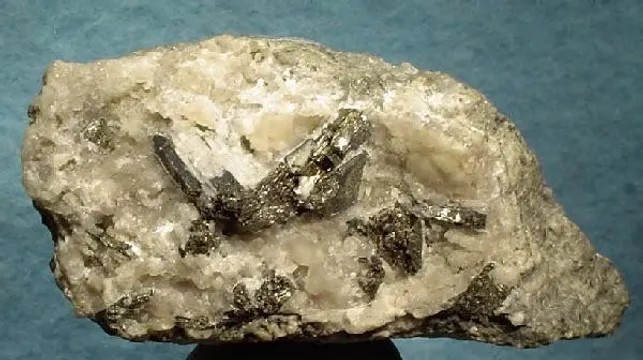
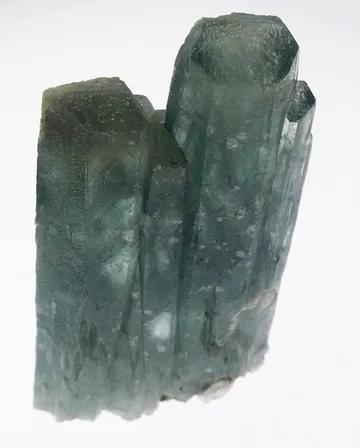


_1_(17127300226).jpg)