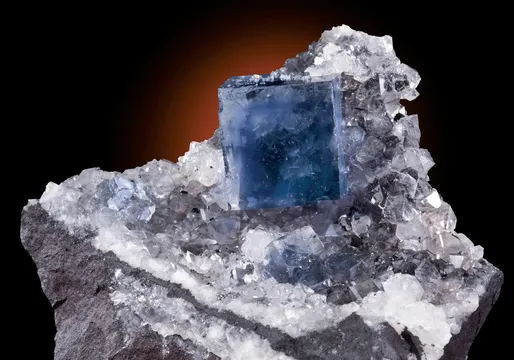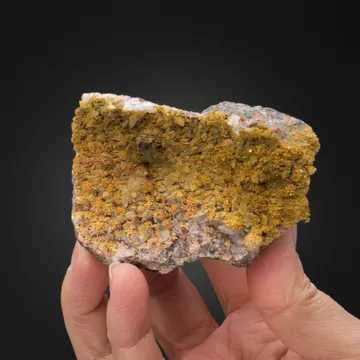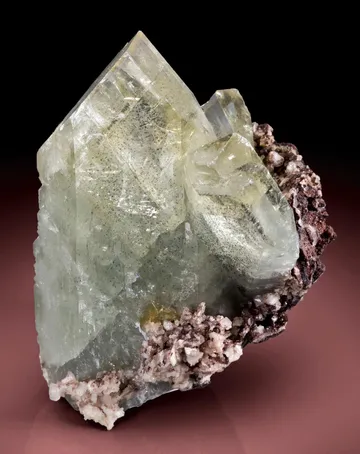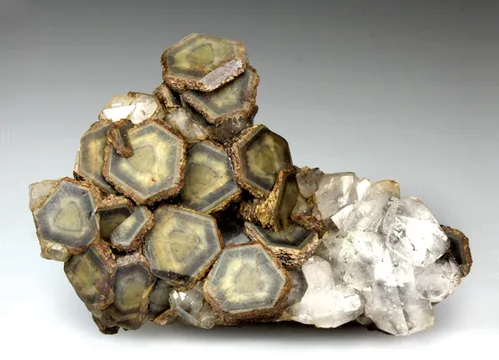
Blackdene Mine, UK — Weardale classic for purple fluorite cubes with galena and calcite; famed cabinet pieces and finite supply since the mine closed.
Key facts
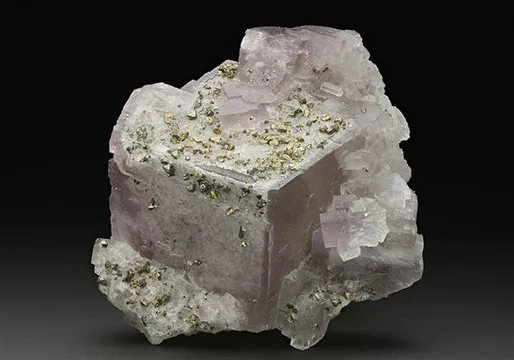
Blackdene Mine is one of the classic Weardale names that serious fluorite collectors learn early. It lies just north of the River Wear between St John’s Chapel and Ireshopeburn, in the central fluorite-rich part of the Northern Pennine Orefield, where steep hydrothermal veins cut the Carboniferous limestone–sandstone–shale succession of the Alston Block. Its best-known mineralization followed the Blackdene Vein and, later in the mine’s life, connected workings on the Slitt and Silverdykes ground. The collector significance is not simply that Blackdene produced a great deal of fluorspar: it produced a highly recognizable style of specimen, especially purple to lavender fluorite cubes and elongated stepped “floater” forms, often with bright modified galena, small brassy chalcopyrite, white to cream calcite, quartz, and occasional pyrite.
The mine began as a lead producer, then became part of the twentieth-century fluorspar industry that supplied metallurgical flux to British steelmaking. That dual identity explains the look of many Blackdene specimens. The cabinet classics are not sparse single-species plates, but robust vein pieces: lustrous purple fluorite, gunmetal galena cubo-octahedra, sparkling quartz druse, calcite overgrowths, and pepperings of chalcopyrite or pyrite. The finest pieces have depth of colour, sharp crystal form, minimal bruising, and the unmistakable Weardale ultraviolet response; ordinary pieces tend to be more massive, opaque, edge-worn, or visually crowded by late carbonate.
Regional View
Country View
Blackdene also matters because it captures a short but important period in British collecting history. During commercial fluorspar mining, specimens came out in quantity through miners, local collectors, and dealers, especially in the 1960s and 1970s. Today the mine is closed, the later incline workings are flooded, and no comparable new production exists. As a result, fine Blackdene material is a finite, historical resource: pieces with old labels, miner provenance, or documented collection history carry real added weight.
Search for specimens: View all specimens from Blackdene Mine, UK
Blackdene Mine is an inactive lead and fluorspar mine at Ireshopeburn, in the civil parish of Stanhope, County Durham. The recorded position is in upper Weardale, north of the River Wear, with the mine grouped geologically and historically within the Northern Pennine Orefield. The locality is usually described in specimen labels as Blackdene Mine, Ireshopeburn, Weardale, County Durham, England; older labels may shorten this to “Blackdene Mine, Weardale” or use the older “Co. Durham” style.
The deposit belongs to the hydrothermal Pb-Zn-F vein and replacement system of the Alston Block. In the Northern Pennines, mineralized fissure veins cut a cyclic Carboniferous succession of limestones, sandstones, shales, and thin coals, with ore shoots strongly controlled by competent beds and by reactive limestone horizons. In places, the veins widen or pass laterally into “flat” replacement bodies in limestones. The Blackdene system worked fluorspar-rich ground in and below named stratigraphic horizons that recur in Northern Pennine mining records, including the Three Yard Limestone, Scar Limestone, Single Post Limestone, Six Fathom Hazel, Coal Sill Hazel, Pattinson Sill, and locally the Whin Sill interval.
The main Blackdene workings followed the Blackdene Vein northeastward from near the River Wear and connected with ground associated with Elmsford Mine and the Slitt Vein. Silverdykes was worked from its own level and is commonly discussed with Blackdene because of the underground relationships and specimen attribution. The Blackdene Vein was fluorite-rich, with purple fluorite the principal gangue mineral in the most collectible material. Galena was the main lead ore mineral, with sphalerite locally present and chalcopyrite generally subordinate but aesthetically important. Calcite, quartz, siderite, and ankerite formed much of the carbonate-silica gangue and late pocket lining.
The early mine was a lead venture. The Beaumont Company developed the Blackdene Vein in the early nineteenth century, and records for the 1818–1864 period give 14,198 tons of lead concentrate, including some production attributed to Elmsford during 1824–1832. The figure is especially meaningful to collectors because it shows that Blackdene was not merely a later fluorite specimen locality grafted onto old workings; it was a substantial lead mine before fluorspar became economically important.
Fluorspar mining followed the change in industrial demand after fluorspar became valuable as a flux. The vein was worked for fluorspar between 1906 and 1939 in connection with Elmsford operations, and J. V. Peart also worked Blackdene ground through the Allercleugh Level before collapse to surface ended that phase in 1939. United Steel Companies acquired the mine in 1949 and undertook major reopening, pumping, exploration, and development. By the mid-1950s, old workings had been cleared and investigated, and new levels below Blackdene Level were driven at several depths. Later ownership passed into the British Steel era; by the early 1970s the commercial Blackdene Vein reserves were considered essentially exhausted, and a new incline was driven to reach Slitt Vein ore.
The twentieth-century fluorspar mine produced the specimens that define Blackdene today. Purple fluorite cubes commonly came in the small-cabinet to cabinet range, with individual crystals often a few centimetres across; exceptional crystals were much larger but usually more opaque. The characteristic Blackdene “towers” and elongated floater forms, with stepped faces and purple to lilac colour, are among the most distinctive Weardale habits. Some pockets yielded modified galena crystals on fluorite, while others produced calcite-coated fluorite, quartz-encrusted fluorite, or chalcopyrite-dusted plates. Silverdykes material is less common on the market and may include straw-yellow to amber-toned fluorite, sometimes with green cores or delicate zoning.
Access today should be treated as closed-mining-ground access, not a collecting destination. The commercial mine closed in 1987, the later incline workings are flooded, and surviving underground areas are not appropriate for casual entry. Specimens available to collectors come overwhelmingly from old production, old collections, dealer stock, and occasional estate dispersals. Labels, dates, and provenance matter at Blackdene because several visually similar Weardale mines produced purple fluorite with galena and calcite, and because Blackdene, Slitt, and Silverdykes material can be confused when labels are vague.
Fluorite is the collector species at Blackdene: typically purple, lilac, lavender, or pale purple-white cubic CaF2, ranging from small gemmy crystals on quartz to large opaque masses and occasional superb cabinet plates. The best-known habits include stepped elongated “floater” crystals and towers, lustrous cubes with honey-brown or greyish internal tones, twinned crystals, and rarer straw-yellow to amber material from Silverdykes-related ground. Common associations are modified galena, quartz, calcite, chalcopyrite, pyrite, sphalerite, siderite, and ankerite. Collectors prize pieces that combine good transparency, sharp cube edges, colour zoning, visible phantoms, strong fluorescence, and balanced metallic contrast; large Blackdene fluorites are impressive, but the finest quality is often in smaller crystals with glassier faces and less internal opacity.
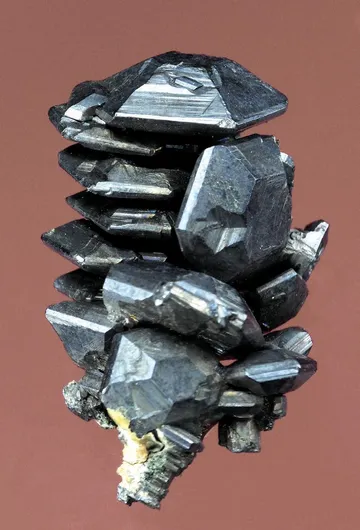
Galena from Blackdene is one of the mine’s great supporting acts and, in the finest examples, a principal display species in its own right. It occurs as bright metallic grey to silvery modified cubes, cubo-octahedra, octahedral-looking aggregates, compound crystals, and occasional ex-matrix clusters, commonly perched on pale to medium purple fluorite and sometimes accompanied by quartz, calcite, chalcopyrite, or pyrite. Individual crystals in documented specimens range from small accent crystals to several centimetres across, with notable cabinet pieces carrying large modified crystals on fluorite. The most desirable examples show clean metallic lustre, sculptural crystal grouping, crisp modification rather than crude massive ore, and an aesthetic fluorite association; pieces with flattened, bruised, dull, or heavily tarnished galena are less compelling unless the provenance is exceptional.
Calcite at Blackdene is varied and often late, commonly coating or partly obscuring earlier fluorite and quartz rather than forming isolated showpieces. The classic habits include cream to milky white nail-head crystals, flattened pseudohexagonal plates, poker-chip-like crystals, stacked pagoda-like aggregates, paper-spar plates, curved-faced forms, and larger milky crystals on siderite-bearing matrix. It is especially attractive when the calcite rests lightly on purple fluorite, leaving colour visible through the association, or when it forms sharp cream crystals with pyrite sparkles and fluorite beneath. Good Blackdene calcite specimens are judged by freshness, contrast, and architecture: thin, bright, well-placed calcite can elevate a fluorite plate, while thick massive coatings can reduce the visual value even where the mineralogy is entirely correct.
Chalcopyrite at Blackdene is usually an accessory species, but it is one of the details that makes a specimen immediately attractive. It occurs as small brassy metallic crystals and grains, commonly scattered across light purple to white fluorite, quartz-encrusted fluorite, or galena-fluorite combinations; documented examples include chalcopyrite crystals around 2 mm richly covering fluorite surfaces and larger cabinet plates where its sparkle provides the colour accent. The finest Blackdene chalcopyrite pieces are not necessarily those with the largest chalcopyrite, but those in which the brassy crystals are fresh, bright, and evenly dusted across fluorite or clustered around galena without overwhelming the purple ground. Dull, tarnished, or sparse chalcopyrite is common, so well-lit, aesthetically placed coverage commands more attention.
Quartz from Blackdene is usually present as a matrix or coating mineral rather than the dominant collectible species, but it is central to the locality’s best combination pieces. It forms sparkling druse, small transparent to milky crystals, crusts over fluorite, and crystallized beds beneath calcite or fluorite; some specimens show fluorite almost completely covered by lustrous quartz except at the edges and vertices, while others carry colourless to pale purple fluorite cubes on quartz matrix. Blackdene quartz is at its best when it creates bright texture and contrast without hiding the fluorite, or when it supports galena and chalcopyrite in a balanced cabinet composition. Pure quartz plates from the mine are less sought after than fluorite-bearing pieces, but quartz-rich Blackdene specimens with strong provenance can be very desirable as pocket-context examples.
Pyrite is a minor but distinctive Blackdene species, usually appearing as tiny brassy crystals or sparkly coatings associated with fluorite, calcite, galena, and quartz. In some specimens it dusts calcite or fluorite, while in others it selectively coats galena faces or occurs as small cubic clusters with chalcopyrite and galena. The most attractive pieces use pyrite as a glittering accent, particularly on cream nail-head calcite over purple fluorite, where the colour contrast is strong and the scale is intimate. Collectors should look for bright, stable-looking pyrite with no powdery alteration; because much Blackdene material is old, a careful check for dullness, rusting, or degradation around pyrite-rich zones is worthwhile.
Other documented Blackdene minerals include sphalerite, siderite, ankerite, and aragonite. Sphalerite is important historically and mineralogically, with rare reports of large rounded “balls” from the mine, but it is far less familiar on the specimen market than the fluorite-galena-calcite suite. Siderite and ankerite occur as widespread carbonate gangue, including cream to tan curved crystals and coatings; they are especially relevant to pieces from Slitt-related workings. Aragonite is a minor recorded species, usually as beige crusts or associated growths on fluorite-quartz material. No Blackdene type-locality species are part of the standard documented mineral list; the mine’s distinction lies instead in the quality and recognizability of its fluorite and galena assemblage.
Blackdene specimens are common enough that a determined collector can usually find an example, but fine, undamaged, well-provenanced pieces are much harder. The usual market entry point is a small to miniature fluorite-galena or fluorite-calcite specimen; better cabinet pieces with glassy purple fluorite, modified galena, chalcopyrite dusting, or strong old labels move into a more competitive class. Exceptional large plates, elongated “tower” fluorites, and highly aesthetic galena-on-fluorite combinations are now historical classics rather than renewable production.
The main authenticity issue is not widespread faking but locality confidence. Blackdene material is often visually close to other Weardale fluorites, especially specimens from Boltsburn, Heights, Frazer’s Hush, Cambokeels, and other Slitt-related or upper Weardale workings. Blackdene labels should be examined for older wording, collection history, miner or dealer provenance, and whether “Slitt Vein,” “Silverdykes,” or “Blackdene Vein” is specified. Be especially cautious with vague labels such as “Weardale fluorite” later upgraded to “Blackdene” without documentation.
Condition is the largest practical concern. Fluorite cleaves readily and Blackdene pieces often came from industrial mining, so edge bruising, corner chips, sawed or broken matrix, and contact damage are common. Elongated floater crystals may have hidden knocks on their projecting ends. Calcite coatings can be chipped or bruised; galena may show dull oxidation, edge impacts, or cleavage scars; pyrite-bearing zones should be inspected for rusting or instability. Large, heavy galena-rich specimens should be stored securely and not allowed to abrade adjacent fluorite.
Fluorescence is a real attraction. Blackdene fluorite typically responds strongly under longwave ultraviolet light with a violet to bluish-lilac glow, and some specimens show a visible colour shift or daylight fluorescence effect. Calcite may fluoresce salmon-orange on some pieces, while exposed fluorite gives bluish to lilac patches. UV response supports the Weardale character of a specimen but should not be treated as proof of Blackdene attribution, because strong fluorescence is common across the district.
Handling is straightforward but should be careful. Keep fluorite away from harder minerals that can scratch it, avoid acid cleaning because calcite and carbonate gangue may be part of the specimen’s identity, and do not over-clean quartz- or chalcopyrite-dusted surfaces. Galena is lead sulphide, so normal collector hygiene applies: wash hands after handling, avoid generating dust, and keep specimens away from children.
One of the most vivid Blackdene collecting accounts comes from the era when the mine was still alive with belts, crushers, shifts, and underground haulage. The story begins not with a planned scientific visit but with collectors driving past the works and noticing white flashes of quartz and calcite riding the belts toward the crusher. That was the signal. They returned later, waited for the afternoon shift to come out of the decline, left beer for the night watchman, and slipped into the workings.
Inside, an exploratory drive was following a quartz stringer that had opened into a continuous run of cavities. The description is unforgettable: a cavity four feet high and up to three feet wide, its walls lined with huge fluorite crystals up to a foot on edge and crusted with quartz. The loose breccia in the middle was not waste in the normal sense. It was specimen material already detached by nature and mining, pieces that could be wrapped and carried rather than chiselled out.
The work went through the night. One collector worked forward while four companions wrapped specimens and carried them back through the mine. The calcite was sharp enough to cut skin; by morning his hands and arms were gashed, his fingers numb, and he had driven roughly fifteen yards along the pocket with more still ahead. Then came the sudden realization that the morning shift was arriving. The last bags were dragged up the decline just as the miners came down. The collectors tipped their hats forward, kept walking, and escaped across the car park to the Land Rovers.
A separate miner’s recollection gives the same mine a different light. After nearly fourteen years at Blackdene, he remembered cavities large enough that “you could walk into it like a room,” their walls covered with millions of small fluorspar cubes. He described a hollow ball of lead made of cubes, enormous “loughs” that returned colours at every angle under a cap lamp, and pieces of spar so large they took two men to carry. He also remembered the odd melancholy of the place: millions of pounds’ worth of spar had left the dale, and he had not kept a collection until after he left the mine.
That same memory leads into the Weardale spar-box tradition. After seeing Doreen Egglestone’s large spar box, later associated with Killhope, he decided to make his own. The first attempt failed, but the second became a labour of patience, built from green cubes because he had always liked green. Another box used material from about eighteen different localities, with something from every quarry around the dale, even if only a single quartz crystal. When lights were fitted, his daughter said it looked like a Christmas tree. For a collector, that is the emotional bridge Blackdene still offers: industrial fluorspar, miners’ side finds, pocket colour, and domestic display all bound into one Weardale culture.