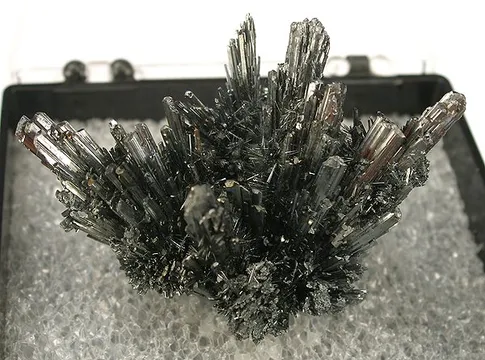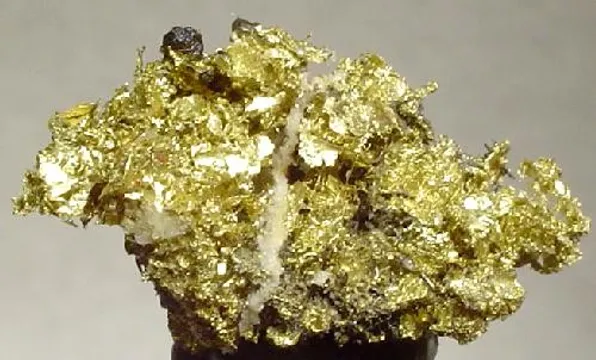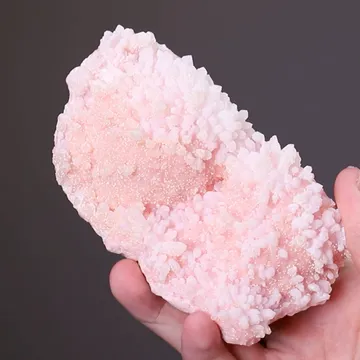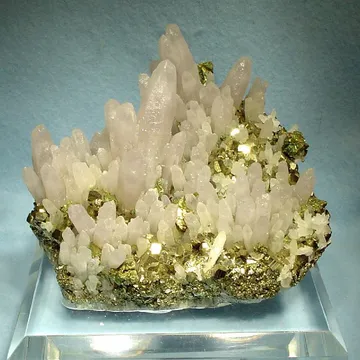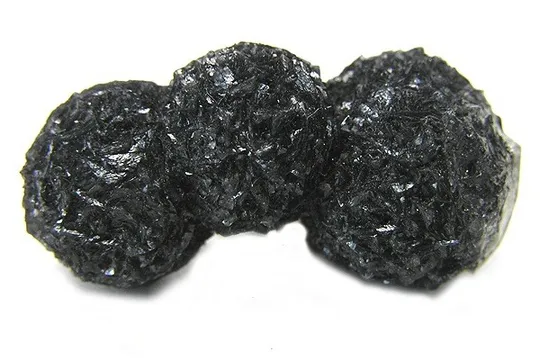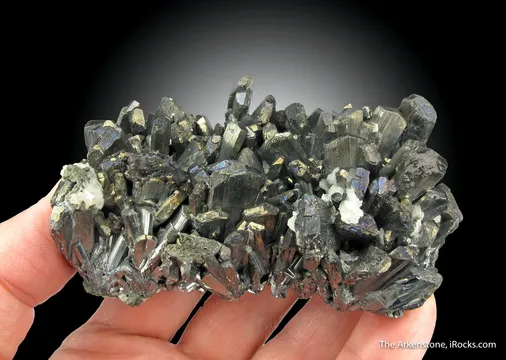
Baia Sprie, Romania - a famed European polymetallic vein locality yielding stibnite sprays, barite, realgar, and scheelite; sculptural, old-European crystals p…
Key facts
Baia Sprie, historically Felsőbánya or Mons Medius, is one of the great European polymetallic vein localities: a Maramureș mining town on the southern edge of the Gutâi Mountains, where Neogene volcanic rocks were cut by a large epithermal hydrothermal system rich in lead, zinc, copper, silver, gold, antimony, arsenic, barium, tungsten, and a remarkable suite of sulfosalts and secondary sulfates. To collectors, the name immediately evokes lustrous gray stibnite sprays studded with colorless barite, red realgar crystals on pale carbonate matrix, transparent to rose-red realgar-included barite, sharp little bournonite “cogwheels,” blue-gray scheelite bipyramids, and quartz-sulfide combinations that have the unmistakable look of the old Baia Mare district.
The deposit belongs to the Baia Mare metallogenic district of the Eastern Carpathians and is built around a vein system rather than a single simple lode. Its famous Principal Vein is a major structure—reported as more than 5 km long, locally very thick, and vertically extensive—accompanied by the Southern/Nou Vein, the Diagonal Vein, branches, and stockworks around Dealul Minei, “Mine Hill.” The mineralogy changes through the system: earlier cupriferous and tungsten-bearing assemblages with quartz, chalcopyrite, scheelite, wolframite/ferberite, chlorite, ankerite, and barite give way to the main Pb-Zn-Au-Ag stage with sphalerite, galena, pyrite, tetrahedrite-group minerals, stibnite, quartz, calcite, and barite. Later oxidation and acid mine drainage environments added a suite of delicate sulfates and antimony oxides, several of them historically important.
Regional View
Country View
The best Baia Sprie specimens have a distinctly old-European balance: not just isolated crystals, but sculptural associations. A classic cabinet stibnite can show compact rosettes or radial bursts of steel-gray blades, with thin transparent barite plates perched like frost across the metallic aggregate. A top red barite is not merely pink; its color is caused by fine realgar inclusions, producing zoning from nearly colorless edges to saturated salmon-red or brick-red interiors. The celebrated 2005 realgar find from Shaft 5 supplied brilliant red prismatic crystals, some partly hollow or hoppered, on chalky white carbonate matrix with stibnite, pyrite, quartz, and minor sulfides—pieces that instantly separated themselves from the older, more familiar Romanian stibnite-barite material.
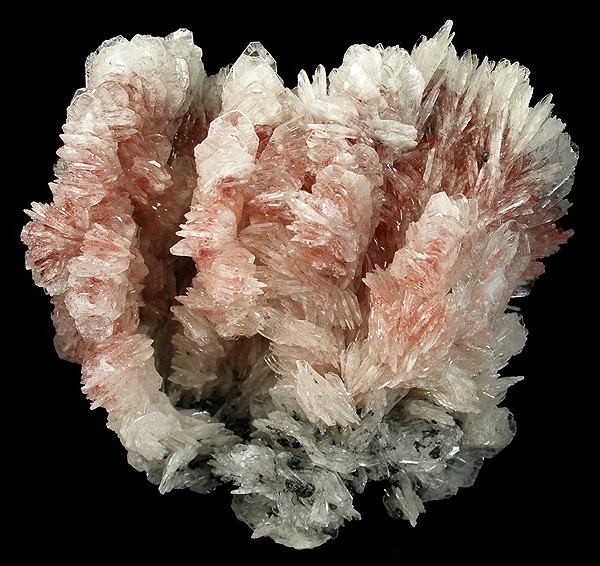
Photo: Wikimedia Commons

Photo: Wikimedia Commons

Photo: Wikimedia Commons
Search for specimens: View all specimens from Baia Sprie, Romania
Baia Sprie lies about 10 km east of Baia Mare, in Maramureș County, northern Romania, at the southern margin of the Gutâi volcanic mountains. The ore field is hosted by Neogene volcanic and sedimentary rocks of the Baia Mare district, with mineralization related to the Miocene volcanic evolution of the Oaș–Gutâi–Țibleș chain. In structural terms, the mine is tied to an east-west volcano-tectonic alignment and a graben-like setting bounded by major fractures. The main ore structures developed along these fractures, especially where andesitic volcanic bodies and dykes helped focus hydrothermal flow.
The deposit is best described as a low- to intermediate-sulfidation epithermal polymetallic vein system with Au-Ag-Pb-Zn-Cu-Sb-As-Ba-W mineralization. The Principal Vein, on the northern side of the structure, is the great collector-relevant artery of the mine: it is described in geological field-guide literature as more than 5 km long, 0.5–22 m thick, and vertically continuous for more than 800 m. The Nou or Southern Vein is smaller but still important, and the Diagonal Vein and subsidiary branches produced additional pockets and mineralogical variation. In the upper western part, around Dealul Minei, the system becomes especially complex, with branches and stockwork-style zones.
Two broad mineralizing stages are useful for collectors. The earlier stage is more copper- and tungsten-bearing, with pyrite, chalcopyrite, magnetite, hematite, scheelite, wolframite/ferberite, quartz, chlorite, ankerite, and barite. That is the paragenetic home of many of the scheelite, wolframite/ferberite, chalcopyrite, quartz, and carbonate combinations. The main later stage is the classic Baia Sprie collector suite: pyrite, sphalerite, galena, stibnite, tetrahedrite-group minerals, quartz, calcite, and barite, with bournonite, jamesonite, boulangerite, realgar, orpiment, semseyite, and related sulfosalts appearing in selected zones and pockets. Secondary oxidation products around stibnite and sulfide-rich rock include antimony oxides and sulfates, while the Minei Hill open pit and old mine surfaces are important for acid-sulfate efflorescences.
Mining at Baia Sprie is medieval in origin and deeply interwoven with the identity of the town. The settlement was documented in 1329 under the Latin name Mons Medius, and the name Baia itself reflects the old Romanian use of “baie” for mine. Under Hungarian royal, later Habsburg, and modern Romanian administrations, the mines worked precious and base metals over many centuries. The district’s older history includes German, Slovak, Hungarian, Romanian, Armenian, and Jewish communities, while the modern period saw state mining, postwar expansion, and then sharp decline after 1990. Underground mining ended in the 2000s; geological heritage sources describe the underground works as abandoned by 2006, while local mining-park sources note that many operations in the area were abandoned in 2007.
The mine produced ore both underground and, in places, from surface workings at Minei Hill. A field-guide source reports approximately 5.7 million tonnes of ore extracted up to 1957, while later environmental literature rounds the pre-1957 extraction to about 6 million tonnes. Baia Sprie was not only an ore producer but also a scientific locality: it is the type locality for several mineral species, including andorite, semseyite, felsőbányaite, dietrichite, klebelsbergite, and szmikite. Those names anchor the locality in the formal mineralogical literature, not merely in the specimen trade.
For collectors, the most frequently encountered production is old mine material, especially stibnite with barite, red realgar-included barite, quartz-sphalerite-calcite combinations, bournonite on pyrite, and smaller scheelite or ferberite/wolframite associations. Notable collecting episodes include the 1980s stibnite output, the 2001 Level XIV find of realgar-included barite with boulangerite and stibnite, and the late-2005 Shaft 5, 280-meter-level realgar pocket that sent hundreds of fine specimens into the international market just in time to create a sensation at the 2006 Tucson show. Older labels may use Felsőbánya, Felsobanya, Felsöbánya, Baia Sprie, Mine Hill, Minei Hill, Shaft 5, Mine No. 5, Mine No. 6, or Level XIV; all require careful interpretation.
Collecting access today is restricted by the realities of a closed, unstable mine. The underground workings are not generally accessible, and official heritage sources warn of falling-rock hazards around old shafts and ruins. The modern Mines Park project on Mine Hill has created marked geo-mining routes, and some historic galleries can be visited only with specialized guidance. Dumps, surface exposures, and old open-pit areas have been used for educational visits and limited sample collecting, but serious specimen recovery from the classic pockets is effectively historical. Contemporary availability comes from old collections, European dealer stock, and occasional recycled specimens from Romanian, German, French, and Austrian collections.
Baia Sprie barite is famous in two contrasting styles: thin colorless to white tabular plates intergrown with stibnite, and richly colored red to salmon-pink aggregates whose color comes from realgar inclusions rather than surface staining. The finest red pieces show transparent to translucent bladed or dendritic groups with strong zoning—paler tips, red cores, and sometimes dark boulangerite-rich zones—while the best stibnite associations carry bright barite blades perched cleanly on steel-gray antimony sulfide. Most collector pieces are small cabinet to cabinet size, commonly with individual barite crystals in the millimeter to low-centimeter range, but older labels document specimens around 8–15 cm overall. The 2001 Level XIV find is especially important for realgar-included barite with boulangerite and stibnite; ordinary pieces are dull, broken, iron-stained, or overly massive, while good Baia Sprie barite has color, transparency, obvious crystal form, and a crisp association that instantly identifies the locality.
Quartz from Baia Sprie is the structural and visual backbone of many mixed sulfide specimens rather than a locality famous for isolated museum-quality single crystals. It occurs as drusy coatings, milky to colorless prismatic crystals, chalcedonic layers, and, in better combinations, upright sprays associated with sphalerite, calcite, pyrite, chalcopyrite, scheelite, and occasionally stibnite or realgar-bearing assemblages. Classic pieces may show taller quartz crystals rising from a carpet of smaller quartz and calcite with dark sphalerite beneath, typically in miniature to cabinet sizes; Mine No. 6 material has been described with scepter quartz frosted by rhombic calcite, on crystalline chalcopyrite with small scheelite. The most desirable Baia Sprie quartz is not merely clean quartz but quartz that frames the ore mineral story—sharp crystals carrying bright sulfides, calcite overgrowths, scheelite, or chalcopyrite in a balanced composition.
Stibnite is the emblem species of Baia Sprie, occurring as lustrous steel-gray to battleship-gray blades, acicular sprays, radial clusters, short flattened prisms, and dense metallic rosettes, most characteristically with transparent or white tabular barite and, less commonly, calcite, quartz, siderite, pyrite, realgar, marcasite, dolomite, sphalerite, or antimony alteration products. Fine specimens from older production and the 1980s commonly fall in the 5–13 cm range, with individual blades from a few millimeters to several centimeters; dealer and museum records describe crystals around 3 cm on compact pieces and larger old specimens with blades to about 8 cm. The best pieces have high metallic luster, minimal bruising, three-dimensional sprays, and clean barite contrast; lesser specimens are massive, crushed, oxidized to yellowish Sb minerals, or too dense and dark to display the crystal form.
Realgar from Baia Sprie occurs both as discrete vivid red to orange-red crystals and as microscopic to fine inclusions coloring barite. The finest known modern specimens came from the November–December 2005 pocket in Shaft 5 on the 280-meter level, where sharp brilliant red blocky prisms to about 7 cm, some hoppered or partly hollow, were found on chalky white carbonate matrix with quartz, pyrite, stibnite, and minor sulfides. Older and smaller realgar had appeared intermittently for decades, but the 2005 pocket elevated Baia Sprie to world-class status for the species. Collectors should value saturated color, glassy luster, intact crystal terminations, visible matrix contrast, and clear association with the Baia Sprie sulfide suite; dull orange crusts, degraded pararealgar surfaces, repaired crystals, and pieces kept too long in light are distinctly less desirable.
Scheelite is a rarer but highly sought Baia Sprie species, tied to the earlier tungsten-bearing stage with quartz, chalcopyrite, wolframite/ferberite, calcite, dolomite, pyrite, and carbonate-rich matrix. Specimens show sharp tetragonal bipyramids, often gray, smoky, brownish, or bluish in daylight, and some crystals display an attractive deep blue appearance when backlit; documented crystals are typically small, from several millimeters to around 1.5–1.7 cm, with occasional fine pieces noted from early-2000s finds and older collections. The species is strongly collectible here because it is not merely present but occurs in sharp, isolated crystals on attractive matrices, and because Baia Sprie scheelite has been highlighted in regional museum holdings. Good pieces have obvious bipyramidal form, transparency or translucency, strong luster, and a bright UV response; ordinary pieces are embedded, contacted, or lost visually among pale carbonates.
Baryte is the mineralogical spelling most often used in European literature for the same BaSO4 species that many American collectors call barite, and Baia Sprie deserves mention under both names because the locality’s baryte habits define much of its specimen identity. Documented habits include plates and prisms, colorless to white blades, and red realgar-included crystals; the most classic assemblages are baryte with stibnite, baryte with realgar and jamesonite or boulangerite inclusions, and baryte with siderite or spherosiderite. Museum and dealer examples range from compact miniatures to substantial cabinet specimens around 10–15 cm, with the best showing clean, transparent crystal edges, strong zoning, and architectural sprays rather than matted white plates. The finest baryte specimens from Baia Sprie are recognizable by the combination of delicacy and density: heavy, sharply bladed BaSO4 visually lifted by red inclusions or metallic antimony minerals.
Baia Sprie bournonite is a classic sulfosalt accessory rather than an abundant ore-show mineral, but the mine produced attractive specimens with sharp cogwheel twins and prismatic crystals on pyrite-rich matrix. Good examples have been documented from Mine No. 6 with bournonite crystals around 8–11 mm, associated with pyrite, sphalerite, quartz, and abundant hairlike jamesonite; some specimens show jamesonite partly replacing or overgrowing bournonite. The finest pieces are cabinet or small-cabinet matrices sprinkled with multiple bright, well-defined twins, not just isolated dark grains. Collectors should look for crisp cyclic twinning, metallic luster, separation from the pyrite groundmass, and visible associations; matrix-only pyrite pieces with obscure bournonite are commoner and far less compelling.
Siderite at Baia Sprie appears both as a carbonate gangue mineral and as distinctive spherosiderite-style aggregates, commonly in association with baryte, quartz, calcite, pyrite, pyrrhotite-related material, and the broader Pb-Zn-Sb assemblage. The Baia Mare Mineralogy Museum specifically notes baryte-spherosiderite as one of the characteristic Baia Sprie intergrowths, and Mindat photo data strongly associate siderite with both baryte and stibnite from the mine. Most specimens are valued as combinations rather than pure siderite showpieces: brown, tan, or buff rhombohedral to rounded carbonate masses that set off brighter baryte, sulfides, or quartz. Superior Baia Sprie siderite has well-defined rounded or rhombohedral form, attractive color contrast, and stable matrix; ordinary material is massive brown carbonate with little display architecture.
Pyrite is widespread through the Baia Sprie vein system, present in early and later stages and serving as the metallic ground for many bournonite, realgar, quartz, calcite, sphalerite, and baryte specimens. It occurs as druses, crystalline matrix, small cubes or modified crystals, and fine-grained sulfide-rich masses; on collector pieces it is often less the headline mineral than the sparkling base that makes bournonite “cogwheels,” red realgar, or white carbonate stand out. The best Baia Sprie pyrite specimens are those in which pyrite is bright, fresh, and compositionally integrated with sharper species—bournonite on pyrite from Mine No. 6 is a particularly desirable style—while dull brassy crusts, oxidized surfaces, or unstable pyrite-rich matrix are common condition concerns.
Calcite is an important late gangue and pocket mineral at Baia Sprie, occurring as white rhombohedral coatings, lenticular crystals, chalky carbonate matrix for the 2005 realgar pocket, and pale overgrowths on quartz, sulfides, and chalcopyrite. It is present with quartz, scheelite, chalcopyrite, sphalerite, stibnite, baryte, pyrite, and manganese-bearing calcite or other carbonates in the final epithermal assemblages. Fine Baia Sprie calcite is usually collected as a stage-setting mineral: frosted rhombs on scepter quartz, white carbonate contrasting brilliant realgar, or unusual lenticular coatings on chalcopyrite-rich matrix. Quality depends on freshness, crystal definition, and whether the calcite improves the specimen’s architecture; chalky, bruised, or iron-stained calcite can quickly make an otherwise interesting Baia Sprie piece look tired.
Sphalerite from Baia Sprie belongs to the main Pb-Zn stage and commonly occurs as dark brown to black, lustrous crystals or crystalline masses with quartz, calcite, pyrite, chalcopyrite, tetrahedrite-group minerals, bournonite, jamesonite, and stibnite. Old European specimens may show sharp sphalerite crystals with quartz and later calcite coatings, and research on the Baia Mare district has identified low-iron sphalerite as well as unusual colloform sphalerite at Baia Sprie, deposited late on and even corroding idiomorphic stibnite. Collector-grade sphalerite is most attractive where crystals are sharp, glassy to resinous, and visually distinct from the dark sulfide matrix; undifferentiated black ore masses are common, but old specimens with clean quartz contrast and good labels are much more desirable.
Chalcopyrite is characteristic of the copper-bearing stage at Baia Sprie and appears in sharp bronze-yellow crystals and crystalline matrix with quartz, calcite, scheelite, wolframite/ferberite, pyrite, and later carbonates. Fine older specimens from the mine have been described with twinned chalcopyrite crystals around 2–2.5 cm on quartz or with white lenticular calcite coatings, while scheelite-chalcopyrite-quartz combinations are among the better tungsten-bearing display pieces. Good Baia Sprie chalcopyrite is sharply formed, bright, and not merely disseminated ore; the most collectible examples either carry a strong scheelite association or show well-isolated crystals with clean quartz or calcite contrast. Tarnish, edge wear, and indistinct massive chalcopyrite reduce value sharply.
Dolomite is a subordinate but real carbonate associate in Baia Sprie specimens, especially in the tungsten- and sulfide-bearing assemblages where it may accompany scheelite, pyrite, baryte, stibnite, calcite, and quartz. The most visually important examples are not standalone dolomite specimens but dolomite-rich matrices with sharp scheelite or sulfides, including museum-displayed scheelite with dolomite from Baia Sprie. In hand specimen, dolomite may appear as pale cream to buff rhombohedral coatings or granular carbonate, easily confused with calcite unless tested or supported by provenance. Collectible Baia Sprie dolomite needs association value—scheelite, stibnite, baryte, pyrite, or quartz—because plain carbonate from the mine is mineralogically valid but rarely memorable.
Beyond these headline species, Baia Sprie is exceptionally important for sulfosalts and secondary species. The locality is tied to andorite, semseyite, felsőbányaite, dietrichite, klebelsbergite, and szmikite as type-locality minerals, and the broader documented assemblage includes galena, tetrahedrite-group minerals including silver-bearing tetrahedrite/freibergite-like compositions, jamesonite, boulangerite, zinkenite, berthierite, bismuthinite, cosalite, lillianite-gustavite-series minerals, heyrovskýite, cinnabar, native mercury, orpiment, pararealgar, stibiconite, valentinite, senarmontite, marcasite, pyrrhotite, rhodochrosite, ankerite, ferberite/wolframite, chalcedony, gypsum, rozenite, bianchite, voltaite, and other sulfate efflorescences from the oxidizing mine environment. For a systematic collector, Baia Sprie is not merely a source of pretty stibnite and barite; it is one of the key European localities where ore-stage mineralogy, late epithermal pocket minerals, and post-mining oxidation species all intersect.
Baia Sprie labels deserve careful reading. Older specimens may be labeled Felsőbánya, Felsobanya, Felsöbánya, Mons Medius, Baia Sprie, Minei Hill, Mine Hill, No. 5 Mine, Shaft 5, Mine No. 6, or simply Maramureș. Confusion with nearby Herja, Cavnic, Băiuț, and other Baia Mare district mines is common in old collections, especially because the same regional dealers, museums, and miners handled material from multiple mines. Herja is geographically in the Baia Mare area but has historically been mislabeled in some contexts as Chiuzbaia/Kisbánya, and Chiuzbaia administratively belongs to Baia Sprie; that creates a persistent label trap for stibnite, galena, baryte, and calcite specimens.
The most frequent authenticity question concerns red “barite.” Genuine Baia Sprie red barite/baryte owes its color to realgar inclusions, commonly with color zoning and sometimes dark boulangerite inclusions. A natural piece should show the color internal to the blades rather than painted on the surface, and broken edges or transparent tips can be revealing. Because dyed red barite exists in the broader fake-mineral market, unusually uniform cherry-red surfaces, red dye in cracks, or a lack of locality-consistent associations should raise suspicion. The best provenance for red barite is old European stock, documented 1960s–1980s labels, the 2001 Level XIV material, or dealer records that specifically note realgar inclusions.
Realgar requires special care. Baia Sprie realgar from the 2005 Shaft 5 pocket can be spectacular, but realgar is light-sensitive and may alter toward yellow-orange pararealgar and powdery degradation if displayed under strong light. Store it in the dark, avoid prolonged sunlight or intense display lighting, and handle it as an arsenic sulfide: wash hands after handling, avoid dust, do not trim or grind it casually, and keep it away from children and pets. Brilliant red color is a value driver, so storage history matters; “fresh-looking” red crystals command a premium over faded orange or friable surfaces.
Stibnite specimens are mechanically fragile. Baia Sprie blades and sprays are often sharp, brittle, and easily bruised at terminations. Look for old contacts, broken blade tips, and repaired sprays, especially on larger cabinet specimens. Some stibnite alters to yellowish, flaky antimony oxidation products; that alteration may be mineralogically interesting when it is klebelsbergite, valentinite, stibiconite, or related material, but it reduces the appeal of a stibnite showpiece unless the alteration is part of a well-documented rare-species specimen. Avoid cleaning stibnite aggressively, as bright metallic surfaces can be scratched or dulled.
Scheelite from Baia Sprie is much rarer than stibnite or barite and should be checked carefully. Good crystals are generally small and may be gray, bluish, smoky, or brownish on carbonate-quartz-sulfide matrix. A shortwave UV lamp is useful: scheelite typically fluoresces blue-white to blue, and some Baia Sprie dealer records note response under both longwave and shortwave UV. Fluorescence supports identification but does not by itself prove locality; association, matrix, and label remain important.
Market availability is uneven. Stibnite with barite and red realgar-included barite still appear regularly from old collections, though fine undamaged examples are no longer plentiful. Realgar from the 2005 pocket is scarcer and has become more desirable as the supply has dispersed into collections. Bournonite, semseyite, good scheelite, ferberite/wolframite combinations, and well-documented rare type-locality species are significantly less common. Routine quartz, calcite, pyrite, and sphalerite combinations are available but vary widely in quality; the best pieces are those with old labels, documented mine levels, strong associations, and unmistakable Baia Sprie aesthetics.
The most repeated modern specimen story from Baia Sprie begins underground in late 2005, in Shaft 5 on the 280-meter level. For decades, realgar had appeared from time to time in the old Felsőbánya workings, usually enough to keep the locality on serious collectors’ radar but not enough to dominate a major show. Then, in November and December 2005, miners opened a large pocket that yielded hundreds of fine realgar specimens. The crystals were not modest coatings: they were sharp, brilliant red, blocky prisms, some hoppered or partly hollow, reaching about 7 cm, usually on chalky white carbonate with quartz, pyrite, and stibnite. Many pieces passed first through local hands, then to France, then to the United States. At Tucson in 2006, the find became one of the show sensations, the kind of discovery that changes how a locality is represented in cabinets. Pierre Clavel reportedly bought many pieces directly at a miner’s home near the mine and had the memorable experience of cracking open a lump of massive realgar and stibnite to find bright realgar crystals inside a hidden vug.
A quieter but equally Baia Sprie story unfolded on Mine Hill when heritage work began exposing old workings. The hill was found to be riddled with dozens of galleries, many originally dug by hand toward the main gold-bearing vein. Some of the workings were estimated at 300–400 years old. Four collapsed coastal galleries were marked only by remnants such as wooden supports, but one remained open. It ran about 30 meters before intersecting the vein; beyond it, a drift following the vein was explored for about 200 meters with the help of speleologists. The methods preserved there belong to an older mining world: fire set against the rock, sudden cooling to crack it, then chisel and hammer work. In the drift, observers could still see evidence of gold-silver ore extraction and nests of native gold.
Baia Sprie’s mining history also has a darker 20th-century chapter. Between 1950 and 1955, the mine operated as a forced-labor site for political prisoners under Romania’s early communist regime. A small chapel and Maramureș-style cross now stand at the entrance to the former mine as a memorial. Tourism sources state that more than 600 prisoners were held there, including intellectuals, teachers, writers, philosophers, priests, former officers, peasants, and other detainees from Maramureș and elsewhere in Romania. Accounts of the lead-mine camps describe hot, stuffy underground conditions, long workdays, quotas, limited contact with families, and illness, including widespread eczema. One episode from Easter 1951 is particularly stark: priests in the camp celebrated liturgy on Easter night; the following day, the warden Zoltán Szabó locked them in cells, and the other prisoners reportedly struck in solidarity for ten days.