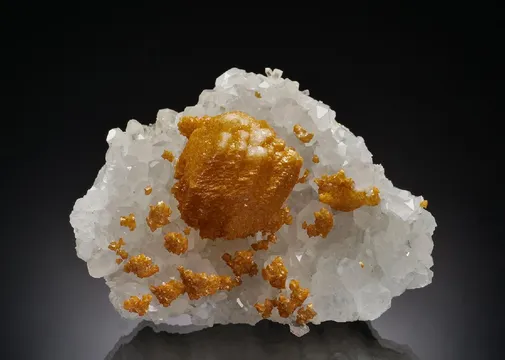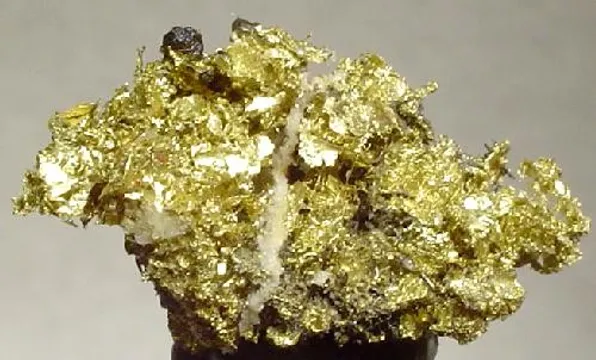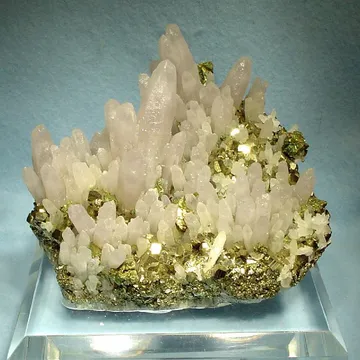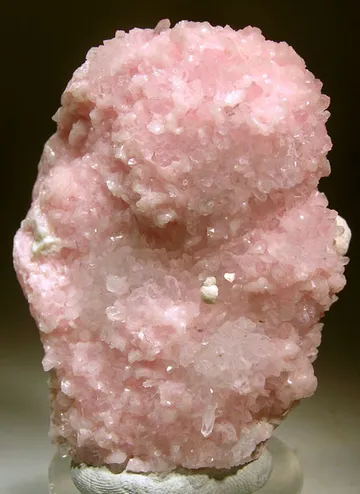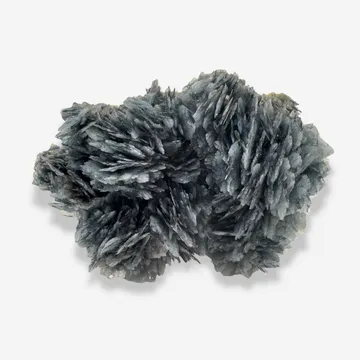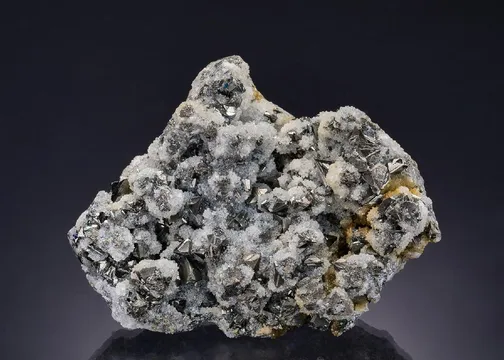
Cavnic Mine, Romania - classic Transylvanian locality known for cabinet-quality sulfides and carbonates, including tetrahedrite, rhodochrosite, fluorite.
Key facts
Cavnic is one of the classic mineral names of the old Transylvanian mining world: Kapnikbánya to Hungarian labels, Kapnik to many older German and dealer labels, and Cavnic today in Maramureș County, northern Romania. The mine belongs to the Baia Mare metallogenic district of the Eastern Carpathians, a Neogene volcanic belt famous for epithermal gold-polymetallic veins. In collector terms, Cavnic matters because it combines serious ore geology with specimens of real cabinet quality: metallic tetrahedrite and chalcopyrite on white quartz, sparkling pyrite over quartz and carbonate, pink rhodochrosite rosettes, yellow to honey calcite, transparent to colored baryte, fluorite on quartz, and a long suite of sulfosalts and late-stage arsenic minerals.
Geologically, Cavnic is a low-sulfidation, adularia-sericite epithermal vein system. Its veins cut a complex volcanic and sedimentary setting in the Gutâi Mountains, controlled by NE-SW fractures related to the broader Baia Mare fault architecture. The ore system is not a single simple lead-zinc vein: it records repeated pulses of fluid, boiling, brecciation, cooling, and changing chemistry. The paragenesis runs from early iron-tungsten and copper-rich stages through lead-zinc-manganese carbonate stages into antimony-rich sulfosalt assemblages and local gold-silver enrichment. That is why a single good Cavnic specimen can carry quartz, calcite, pyrite, sphalerite, chalcopyrite, rhodochrosite, tetrahedrite, bournonite, siderite, baryte, or gypsum in meaningful combinations rather than as accidental accessories.
Regional View
Country View
The look of the best Cavnic specimens is immediately recognizable. Quartz tends to be the architectural mineral: drusy, prismatic, skeletal, milky, smoky, or locally amethystine, often forming bright white stages on which later sulfides and carbonates sit. Rhodochrosite appears as pink platy rosettes, botryoidal crusts, or banded masses, and it is especially important here because Cavnic is treated as the type locality for the species. Tetrahedrite is the aristocrat of the locality: steel-gray to black, sharply tetrahedral, lustrous, and often placed against pale quartz or calcite so the geometry reads cleanly. Calcite, meanwhile, can be sculptural and curving, sometimes honey colored or coated by later glittering calcite, giving specimens a warm, distinctly Romanian aspect.
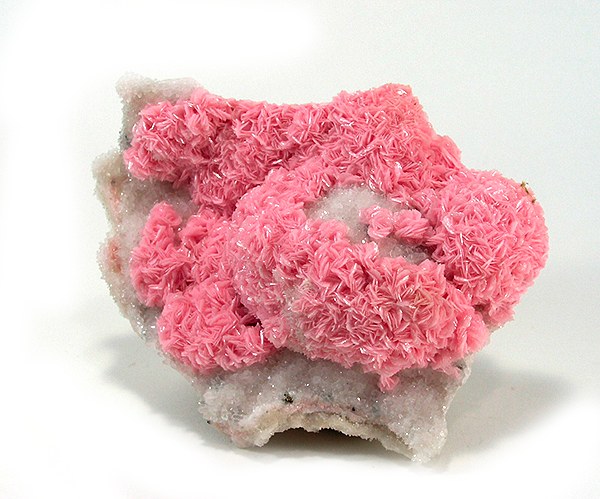
Photo:

Photo: Wikimedia Commons
Search for specimens: View all specimens from Cavnic Mine, Romania
Cavnic lies in Maramureș County, about 26 km from Baia Mare, within the historic Baia Mare mining district. The Mindat locality is the Cavnic Mine at Cavnic, recorded at approximately 47° 39′ 50″ N, 23° 51′ 41″ E, with older names including Capnic, Kapnik, and Kapnikbánya. For collectors, those older names are not incidental: many fine 19th- and early-20th-century specimens entered European collections under Kapnik or Kapnikbánya, sometimes with the broader regional designation “Hungary” on antique labels from the Austro-Hungarian period.
The deposit is a vein-type epithermal Au-Ag-Cu-Pb-Zn system. Published geological work describes fourteen principal veins, about 400 to 1,500 m long, generally 1 to 8 m thick, and with more than 900 m of vertical development. The system is controlled by NE-SW fractures and is spatially linked to a lineament interpreted as a second-order structure of the major Dragoș Vodă fault system. The veins are hosted mainly by Neogene volcanic rocks, with deeper and middle levels involving Paleocene-Miocene sedimentary formations and Pannonian dioritic bodies. District-scale geophysical interpretations have also invoked a large underlying magmatic body as a heat and metal source for the hydrothermal system.
The Cavnic paragenesis is one of the reasons the locality is so rewarding to study specimen by specimen. Early stages include iron- and tungsten-bearing assemblages, followed by copper-rich deposition with chalcopyrite, pyrite, covellite, chlorite, and rare gold. Later base-metal events introduced sphalerite and galena in quartz, adularia, clay minerals, and calcite. A manganese-rich stage produced rhodonite and rhodochrosite, then passed into kutnohorite and antimony-bearing minerals such as bournonite, tetrahedrite, stibnite, and associated sulfosalts. Realgar and orpiment occur in the system as late arsenic minerals, while gold and electrum were concentrated locally, especially in the upper parts of the deposit.
Fluid-inclusion studies show the hydrothermal system cooling from roughly 315–320 °C in early stages to about 200 °C in late base-metal and manganese-rich stages, with broader district values down to about 150 °C in late gold-silver mineralization. Salinities vary widely, from dilute fluids to values around 21 wt% NaCl equivalent. Evidence for boiling is important: boiling and pressure fluctuation during vein dilation would have helped precipitate metals, create open space, and generate the repeated drusy and banded textures that make Cavnic specimens so attractive.
Historically, Cavnic is ancient ground. Mining in the town is documented by medieval sources, and several geological authors describe the deposit as probably worked since Roman times. The modern town’s identity, however, is bound especially to medieval, Habsburg, Austro-Hungarian, Romanian state, and communist-era mining. The locality grew around gold, silver, lead, zinc, and copper extraction; by the 20th century Cavnic was one of the important producers of complex polymetallic ore in the Baia Mare district. Published reserve figures for the deposit cite about 20 million tonnes of ore with grades near 1 g/t Au, 30 g/t Ag, 1–2% Pb, 1–3% Zn, and about 1% Cu.
The main modern mining units of the Cavnic deposit include Bolduț and Roata, and these names appear frequently on specimen labels. They should be read carefully. Some specimens are labelled simply “Cavnic Mine,” while others are specifically “Bolduț Mine,” “Roata Mine,” or “Cavnic mining area.” Because older trade labels sometimes used Cavnic broadly, and because Mindat separates several sublocalities under the town, provenance at the pocket or mine-unit level is often less precise than the mineral itself. For a serious cabinet, an old Kapnik label, a Bolduț label, or a Roata label can be meaningful documentation rather than mere decoration.
Specimen production has come from both old workings and mine-associated material, especially during periods when underground access and mining operations exposed cavities. Modern collecting access is fundamentally different: Cavnic is not an open collecting locality in the casual rockhounding sense. Underground workings and mine infrastructure are closed, conserved, or controlled, and any access requires legal permission and professional safety procedures. The majority of collector-quality material on today’s market comes from older mine production, old collections, dealer stock, museum duplicates, and specimens released from Romanian and European collections.
Quartz is the dominant display framework for Cavnic specimens, occurring as white drusy crusts, prismatic sprays, milky and smoky crystals, occasional amethyst, and distinctive sceptred crystals in the mine’s open-space epithermal veins. It is most often associated with calcite, pyrite, dolomite, sphalerite, chalcopyrite, siderite, rhodochrosite, aragonite, tetrahedrite, baryte, galena, gypsum, bournonite, fluorite, and late arsenic minerals. The best Cavnic quartz specimens are not judged only by crystal size; they win by architecture and contrast: snow-white quartz carrying pink rhodochrosite rosettes, steel-gray tetrahedrite, yellow chalcopyrite, brassy pyrite, honey calcite, or pale dolomite in sharp, undamaged combinations. Ordinary pieces are simply quartz-coated ore fragments; good pieces have open vugs, clean terminations, sculptural form, and enough matrix to tell the Cavnic paragenesis at a glance.
Calcite from Cavnic is one of the locality’s most variable display minerals, occurring as rhombs, curved and “melted” forms, honey-yellow cabinet pieces, white to colorless crystals, and manganese-bearing pinkish calcite in the late carbonate assemblage. It sits naturally in the lead-zinc-manganese stage of the veins and is commonly associated with quartz, pyrite, chalcopyrite, sphalerite, dolomite, baryte, marcasite, galena, tetrahedrite, siderite, and rhodochrosite. The best Cavnic calcites are three-dimensional and textural: curving aggregates with sparkling secondary calcite, clean rhombs on white quartz, or pale to warm-colored crystals contrasting with dark sulfide matrix. Lesser pieces are abundant but can be visually flat; the desirable examples combine bright luster, intact edges, rich matrix association, and the warm Romanian color palette that separates Cavnic calcite from more generic European vein calcites.
Rhodochrosite is historically and mineralogically central at Cavnic, which is recognized as the type locality of the species and a world-class occurrence for collector specimens. Cavnic rhodochrosite is not the large transparent rhombohedral style of some modern American localities; its classic expression is pink, lustrous, platy aggregates, flower-like rosettes, nubby spherical clusters, botryoidal to banded crusts, and manganese-carbonate layers with quartz, calcite, pyrite, tetrahedrite, sphalerite, siderite, dolomite, chalcopyrite, marcasite, galena, gypsum, bournonite, fluorite, baryte, and kutnohorite. Good specimens are judged by color saturation, lively sparkle, rosette definition, and contrast against clean white drusy quartz; the best examples show several generations of growth, with dense banded rhodochrosite beneath later brighter pink rosettes and quartz points.
Tetrahedrite is the signature metallic mineral of Cavnic and the subject of a dedicated collector literature because the mine produced sharp, bright, steel-gray to black crystals with classic tetrahedral geometry. Many older labels simply say tetrahedrite, while modern analytical work and current nomenclature may place some specimens in the tetrahedrite subgroup or specifically as tetrahedrite-(Zn), so precise naming is worth checking on important pieces. Cavnic examples occur with quartz, pyrite, calcite, rhodochrosite, chalcopyrite, sphalerite, bournonite, marcasite, siderite, dolomite, galena, gypsum, and baryte. Fine pieces have crisp triangular faces, modified edges, bright metallic luster, and an uncluttered setting on white quartz or calcite; ordinary examples lose much of their appeal when the crystals are dull, embedded, abraded, or visually swallowed by dark sulfide matrix.
Pyrite is abundant at Cavnic and appears throughout the ore assemblage, most memorably as bright brassy crystals sprinkled over quartz, calcite, dolomite, sphalerite, chalcopyrite, tetrahedrite, rhodochrosite, baryte, gypsum, and other vein minerals. It occurs in simple cubic or pyritohedral crystals, small sparkling druses, and as a visual accent on white quartz and pale carbonate, where even modest crystal size can give a specimen a lively surface. The best pyrite-bearing Cavnic pieces are combination specimens rather than pure pyrite showpieces: pyrite balancing pink rhodochrosite, steel-gray tetrahedrite, honey calcite, or dark sphalerite. Condition is critical, because small pyrite crystals can tarnish, dull, or become visually noisy; well-preserved, bright pyrite with sharp edges and no oxidation staining is noticeably better than the common oxidized ore fragments.
Sphalerite is a major ore mineral at Cavnic and an important visual member of the quartz-carbonate-sulfide combinations, typically appearing as dark brown to black, locally reddish translucent crystals or massive to crystalline base-metal matrix. It belongs chiefly to the lead-zinc stages, with common associations including quartz, calcite, pyrite, chalcopyrite, dolomite, rhodochrosite, tetrahedrite, baryte, siderite, galena, bournonite, aragonite, and gypsum. Cavnic sphalerite rarely competes with the great transparent gem sphalerites from other localities; its strength is association and contrast. The most desirable examples show distinct lustrous crystals, sometimes with reddish internal flashes, supporting white quartz, brassy chalcopyrite, bright pyrite, or pink manganese carbonates. Dense black sphalerite masses are common; sharply crystallized, well-composed specimens with clean companion minerals are far scarcer and more collectible.
Barite from Cavnic, usually recorded mineralogically as baryte, is valued for tabular to lamellar crystals that may be colorless, yellow, honey, reddish, bluish, greenish, or included by other minerals, depending on growth episode and impurities. It is a late gangue mineral in the complex vein system and commonly occurs with quartz, calcite, pyrite, chalcopyrite, dolomite, sphalerite, stibnite, bournonite, siderite, marcasite, galena, rhodochrosite, hematite, aragonite, and realgar. Fine pieces show sharp transparent blades or plates on a quartz-carbonate matrix, with color and luster strong enough to stand apart from ordinary pale tabular barite. Cavnic barite is especially appealing when the plate geometry is clean, the crystals are not bruised along their thin edges, and the matrix association is visibly from the classic Cavnic suite rather than a generic baryte-on-quartz combination.
Baryte is the same BaSO4 species as barite, but the Cavnic name is often encountered in European-style labels and museum catalogues, so the spelling itself can carry useful provenance context. Cavnic baryte specimens include transparent to translucent tabular plates, lamellar groups, and colored crystals on quartz, dolomite, calcite, pyrite, chalcopyrite, sphalerite, stibnite, bournonite, siderite, marcasite, galena, rhodochrosite, aragonite, and realgar. The locality’s best barytes have strong plate definition and an attractive matrix: yellow plates on quartz and dolomite from the Cavnic mining area are especially recognizable, while pieces with realgar inclusions or sulfide accents have added mineralogical interest. Because baryte cleavage is perfect and the plates chip easily, intact edges and natural terminations are decisive in separating a cabinet-grade Cavnic baryte from a merely representative one.
Chalcopyrite is one of the defining copper-stage minerals at Cavnic and appears both as brassy crystals and as massive to crystalline ore matrix with quartz, calcite, pyrite, sphalerite, dolomite, siderite, galena, baryte, bournonite, aragonite, tetrahedrite, stibnite, rhodochrosite, gypsum, covellite, chalcostibite, and late arsenic minerals. Many attractive Cavnic pieces rely on chalcopyrite for color: golden flashes among white quartz needles, small crystals on calcite, or brassy matrix supporting black stibnite and pale quartz. Good chalcopyrite specimens from Cavnic are sharp, lustrous, and compositionally balanced; the mineral should read as a deliberate feature rather than a dull ore smear. Iridescent tarnish may be natural or age-related, but excessive darkening, bruised crystal tips, or heavy oxidation stains reduce the appeal of otherwise classic combinations.
Beyond the main collector species, Cavnic is important for a broad and sometimes subtle mineral list. Documented minerals include aragonite, dolomite, siderite, kutnohorite, fluorite, galena, bournonite, boulangerite, chalcostibite, covellite, stibnite, zinkenite, tennantite-(Zn), tetrahedrite-(Zn), ferberite, scheelite, ilvaite, magnetite, native bismuth, native gold and electrum, realgar, orpiment, rhodonite, gypsum including selenite, kaolinite, adularia, illite, and hematite. Rhodochrosite is the principal type-locality mineral tied to Cavnic in modern listings, while historical literature also discusses old priority issues around manganese minerals from Kapnik, including the obsolete local name “kapnikite” for rhodonite. For rarity collectors, the small sulfosalts, tellurides, and manganese silicates are the most rewarding part of Cavnic, but they often require analysis and careful locality documentation.
Cavnic specimens are common enough that representative quartz-calcite-pyrite or quartz-dolomite-sulfide pieces remain available, but the truly fine classics are no longer casual purchases. High-grade tetrahedrite with sharp, bright crystals; rich rhodochrosite rosettes on clean quartz; sculptural calcite; colored baryte; and well-balanced multi-mineral combinations are increasingly old-collection material. Expect a wide price spread: small attractive combinations are accessible, while cabinet-size specimens with old Kapnik provenance, museum history, or exceptional species quality can be much more competitive.
The greatest authenticity issue is not usually outright fakery but labeling. “Cavnic,” “Cavnic Mine,” “Cavnic mining area,” “Bolduț,” “Roata,” and old “Kapnik” labels are not always equivalent. Some trade specimens from the broader Cavnic area have been sold under the most recognizable name, and old Austro-Hungarian labels may say Kapnik, Hungary even though the locality is modern Romania. For serious specimens, preserve every label and note whether the piece is specifically from Cavnic Mine, Bolduț Mine, Roata Mine, or only the Cavnic district. A good old label can add value, but it can also obscure modern sublocality distinctions.
Species names also require attention. Tetrahedrite-group specimens may be labelled tetrahedrite, tetrahedrite subgroup, or tetrahedrite-(Zn), and older “schwazite,” “fahlore,” or broad tetrahedrite labels may not reflect current nomenclature. “Barite” and “baryte” are spelling variants of the same species, but marketplace databases sometimes separate them. Pink carbonate should not automatically be assumed to be rhodochrosite: manganese-bearing calcite and kutnohorite occur at Cavnic and may need testing or analysis when the habit is ambiguous. Likewise, dark sulfide matrix can hide sphalerite, tetrahedrite, tennantite, bournonite, galena, and chalcostibite in mixtures that are not reliably identified by eye.
Condition issues are typical of epithermal vein specimens but important. Rhodochrosite rosettes are delicate and easily bruised; baryte has perfect cleavage and thin plates that chip along the edges; calcite cleaves readily and may show repaired-looking natural cleavage faces; quartz points can be contacted in dense druses; and sulfides may tarnish or oxidize if stored poorly. Pyrite from Cavnic is generally collectible, but any specimen showing active oxidation, powdering, sulfurous odor, or new efflorescence should be isolated and kept dry until stable. Realgar- and orpiment-bearing specimens should be kept out of strong light, handled with care, and stored away from heat and abrasion.
No widely documented Cavnic-specific fake industry is evident in the standard locality literature, but assembled-looking combinations should always be inspected under magnification. Watch for suspicious glue lines between sulfide crystals and quartz, unusually clean contacts on otherwise dirty matrix, or mismatched patina between a “floating” crystal and its base. Treatments are not commonly central to Cavnic collecting, but acid cleaning of calcite-bearing pieces, overzealous iron-stain removal, and oiling or wetting to enhance dark sulfides can affect appearance. Natural old-collection patina, intact labels, and a coherent mineral association are the best safeguards.
Cavnic’s mineral history begins before the specimen market had a language for “classic localities.” Medieval documents already place mining at the center of the town, and local historical accounts point to formal mining organization in the 14th century. The old name Kapnikbánya is not just a quaint label: it is the name under which specimens traveled through Habsburg and Austro-Hungarian collections, crossing borders long before modern Romania existed. A Cavnic tetrahedrite or rhodochrosite with an old Kapnik label carries that political geography in miniature.
One of the starkest early traces of life underground is a German inscription found in an old gallery, dated 1511: “Hier hats erschlagen Jacob Hüber.” In plain English, it records that Jacob Hüber was killed there. It is a small line of text, but for a mining town it is as direct as a shaft bell. Long before Cavnic’s rhodochrosite and tetrahedrite became cabinet minerals, the same veins were work, danger, taxation, and royal revenue.
The town also keeps the memory of invasion. Cavnic was destroyed by Ottoman forces in 1460 and later by Tatars in 1717. Local tradition preserves the Tatar episode around the so-called Tatar Pole or Written Rock, a monument associated with the point reached by the invaders. In a locality guide, such stories matter because specimens from Cavnic are not anonymous ore-body products; they come from a mountain town repeatedly rebuilt around its mines.
A much darker 20th-century chapter belongs to the forced-labor camp at Cavnic. In the early 1950s, communist Romania used lead and polymetallic mines in Maramureș as prison labor sites, including Baia Sprie, Cavnic, and Nistru. The Cavnic labor camp was created in 1951 with detainees transferred from Baia Sprie. These were not ordinary mine hands seeking ore: they were political prisoners, many drawn from Romania’s imprisoned intellectual, political, military, and religious worlds.
The most dramatic Cavnic episode took place on the night of June 6, 1953, when fourteen prisoners escaped. The escape was not imagined by its participants as an easy return to ordinary life. Ion Ioanid later remembered it as an act of protest more than a practical bid for freedom; the prisoners expected capture and understood that the consequences could be “very grave and definitive.” They remained free for more than three months before being recaptured, with Ioanid the last to be caught. For collectors, that history sits uneasily beside the beauty of the specimens, but it is part of the mine’s full record: the same underground world that made quartz, rhodochrosite, tetrahedrite, and baryte famous also held men forced to work under a political regime.