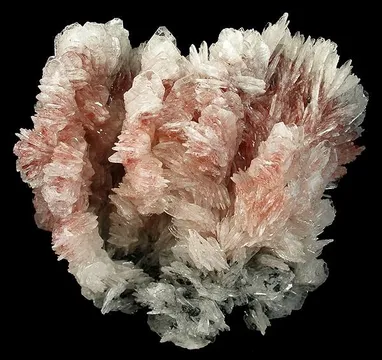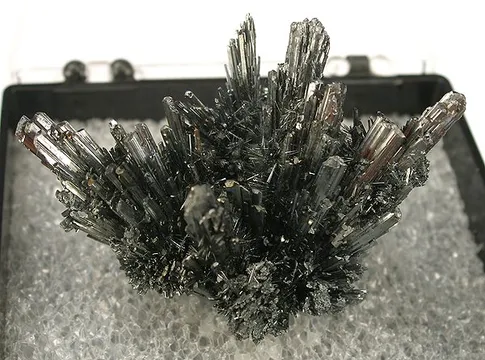
Maramureș County, historic mining district yielding stibnite, baryte, galena and rare sulfosalts; Baia Sprie type localities boost collector appeal and value.
Key facts
Maramureș County is one of Europe’s great old specimen provinces: a compact mining landscape in the northwestern Eastern Carpathians where Neogene volcanic activity and epithermal hydrothermal systems produced a chain of gold–silver and base-metal vein deposits around Baia Mare, Baia Sprie, Cavnic, Herja, Săsar, Ilba, Nistru, Băiuț, and related camps. For collectors, “Maramureș” is not a single pocket or mine style but a whole vocabulary of mine flowers: Baia Sprie stibnite with baryte, Herja galena and sulfosalts, Cavnic quartz–calcite–rhodochrosite–sulfide plates, Băiuț stibnite and fragile post-mining sulfates, and a remarkable suite of rare Pb-Ag-Sb sulfosalts and sulfate species tied to historic type localities.
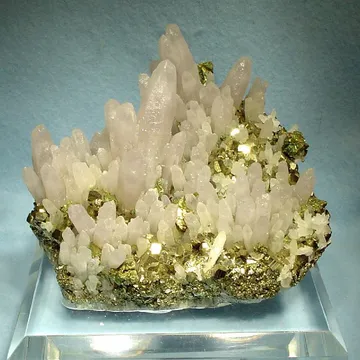
The county’s best specimens have a distinct Eastern European grandeur. Stibnite may occur as lustrous steel-gray sprays and radial aggregates rather than the spear forests familiar from Japan or China; baryte ranges from colorless transparent tabs to yellow, blue, red, and dark varieties; Cavnic pieces often combine quartz points, brassy chalcopyrite, sphalerite, galena, pyrite, calcite, and pink rhodochrosite in dense, architectural plates. Much of the classic material reached collectors during the late communist and early post-communist mining years, when active underground work and miners’ informal collecting saved thousands of specimens that would otherwise have gone to the mill.
Regional View
Country View
The scientific importance of Maramureș equals its collector appeal. Baia Sprie alone is a major type-locality name in European mineralogy, and the broader Baia Mare district has yielded a line of rare sulfosalts, secondary sulfates, and complex ore minerals that continue to be revised with modern analytical work. This is a locality where labels matter: older specimens may carry Hungarian or German names such as Felsőbánya for Baia Sprie, Kisbánya for Chiuzbaia/Herja, Kapnikbánya for Cavnic, or Nagybánya for Baia Mare, and those historical names are often not errors but keys to the specimen’s collecting period.

Photo: Wikimedia Commons
Search for specimens: View all specimens from Maramureș County, Romania
The specimen localities grouped under Maramureș County belong chiefly to the Baia Mare metallogenic district in the Gutâi Mountains and adjoining parts of the Eastern Carpathians. The classic collector mines are hydrothermal vein deposits related to Neogene intermediate volcanism: low- to intermediate-sulfidation epithermal systems carrying Pb-Zn-Cu-Au-Ag-Sb-W mineralization. Cavnic, Baia Sprie, Herja, Săsar, Ilba, Nistru, Șuior, Băiuț, and Dealul Crucii are best understood as related but not identical parts of this volcanic-hydrothermal province, with each mine expressing different structural controls, vertical levels, gangue minerals, and ore stages.
At Cavnic, the system is built from numerous generally parallel veins hosted by Neogene volcanic rocks and Paleogene–Miocene sedimentary units cut by Pannonian dioritic bodies. Published descriptions separate the district into stages beginning with Fe-W assemblages such as quartz, pyrite, magnetite, hematite, scheelite, and chlorite, followed by Cu stages with chalcopyrite and pyrite, then Pb-Zn-Au assemblages dominated by sphalerite, galena, quartz, adularia, and carbonates, and finally Mn-Sb-bearing assemblages with rhodochrosite, rhodonite, tetrahedrite, bournonite, stibnite, realgar, orpiment, and precious-metal phases. This succession explains why Cavnic specimens can show such layered complexity: quartz and calcite as framework, sulfides and sulfosalts as metallic accents, and manganese carbonates or baryte as late color.
Baia Sprie is the classic “mine flower” locality of Maramureș. The deposit sits on the Mine Hill area above the town, with long-lived work on the principal vein system and associated open cuts, shafts, and adits. It is famous to collectors for stibnite, baryte, realgar, scheelite, quartz, bournonite, tetrahedrite, semseyite, and several rare sulfate species. The finest Baia Sprie stibnites are not merely ore specimens but sculptural miniatures: divergent clusters of bright striated blades, commonly accompanied by transparent tabular baryte. The mine’s old labels may read Felsöbánya or Felsőbánya, the Hungarian form of the locality name, and those labels are especially desirable when they can be tied to pre-closure collections.
Herja, near Chiuzbaia in the Baia Mare area, is another collector cornerstone. Its best-known output is lustrous galena—often with sphalerite, calcite, siderite, pyrrhotite, marcasite, and sulfosalts—but it also produced distinctive stibnite and berthierite associations. Herja stibnite tends to appear as compact radial or fan-shaped groups of short, deeply striated prismatic crystals rather than the longer, more open Baia Sprie sprays. Labels are frequently tangled: Herja may appear with Chiuzbaia, Kisbánya, Baia Mare, or Baia Sprie in older dealer stock, and careful locality interpretation is part of collecting the district well.
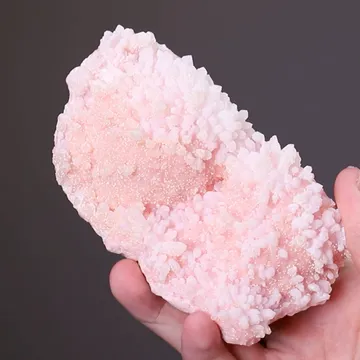
Cavnic was among the most productive specimen sources while the mines were active. The Boldut and Roata sectors, together with related workings, yielded the familiar Cavnic aesthetic: quartz, calcite, dolomite, rhodochrosite, baryte, fluorite, sphalerite, galena, chalcopyrite, pyrite, marcasite, tetrahedrite, freibergite, gypsum, and occasional stibnite or realgar combinations. Fine pieces are often crowded but balanced, with sparkling quartz or calcite giving air to heavy metallic sulfides. Cavnic’s manganese-rich assemblages—particularly pink rhodochrosite on quartz or carbonate matrix—are among the most attractive Romanian cabinet specimens.
Băiuț, including Breiner, Văratec, Johan Hell, and nearby workings, has a dual identity. During active mining it was less celebrated for conventional cabinet specimens than Baia Sprie, Herja, or Cavnic, though Băiuț stibnite has its own short, stout, columnar habit. After mine closure, however, collectors and mineral photographers documented spectacular secondary mineral growths in accessible old workings: melanterite stalactites and stalagmites, halotrichite-group “hairs,” gypsum, rozenite, and other efflorescent sulfate minerals formed by oxidation of sulfide ores under humid underground conditions. Such material is mineralogically fascinating but often highly unstable outside the mine environment.
The mining history is long enough that the district reads like a palimpsest. Baia Sprie was documented in 1329 as Mons Medius and developed as a mining town tied to gold, silver, and base metals; Baia Mare and Baia Sprie appear together in medieval privileges that regulated mining and miners’ rights. Habsburg, Hungarian, Romanian, state, and postwar industrial phases all left their imprint. In the twentieth century, the mines were incorporated into Romania’s state non-ferrous mining structure, with REMIN Baia Mare and associated enterprises operating regional precious- and base-metal mines and processing facilities. By the mid-2000s the economic era had effectively ended: the mines around Baia Mare, Baia Sprie, Cavnic, Herja, and Băiuț were closed, flooded, sealed, stripped of headframes, or left without maintenance.
Collecting access today is therefore radically different from the active-mining years. The underground mines are not commercial collecting sites; many are state property, sealed, flooded, unstable, oxygen-poor, contaminated, or otherwise hazardous, and entry without authorization is neither safe nor appropriate. Some surface heritage areas, such as Baia Sprie’s Mine Hill and Mines Park, now emphasize history and geotourism rather than specimen recovery. Modern collector material on the market comes overwhelmingly from old mine production, miners’ saved specimens, Romanian and Hungarian collections, European dealer stocks, museum duplicates, and occasional legally obtained surface or dump material. The practical rule is simple: buy the specimen, the label, and the history together.
Maramureș stibnite is a district classic because the habits vary sharply from mine to mine: Baia Sprie is known for lustrous, striated, steel-gray prismatic to acicular blades in radial sprays, commonly with transparent tabular baryte and less commonly with realgar, marcasite, quartz, or carbonates; Herja typically gives shorter prismatic crystals in fan-shaped or radial aggregates, often with calcite, baryte, dolomite, berthierite, galena, or other sulfides; Cavnic is more likely to show short acicular crusts or small sprays on carbonate-sulfide matrix; and Băiuț has distinctive short to columnar crystals, including compact stellate groups. Documented Baia Sprie crystals may reach cabinet scale, with long prismatic examples reported to around 120 mm, though many ordinary pieces are much smaller and denser. The best specimens are bright, undulled, visibly terminated, and three-dimensional, with enough matrix or associated baryte to anchor the spray; ordinary examples tend to be massive, crushed, oxidized, heavily broken at the tips, or too crowded to show individual crystal form.
Other documented Maramureș minerals make the county far more than a stibnite locality. Baia Sprie is a type locality for important rare species including andorite, semseyite, felsőbányaite, dietrichite, szmikite, and klebelsbergite, and it is also associated in the literature with senandorite and historically problematic names or varieties. Herja/Chiuzbaia is the type locality for fizélyite and a classic source for galena, berthierite, cronstedtite, semseyite, pyrrhotite, siderite, calcite, sphalerite, marcasite, and complex Pb-Sb sulfosalts. Dealul Crucii at Baia Mare is the type locality of fülöppite, while Săsar has yielded the recently approved sulfosalt baiamareite. Cavnic is indispensable for collector-quality rhodochrosite, tetrahedrite, freibergite, chalcopyrite, quartz, calcite, baryte, fluorite, gypsum, and sulfide combinations, and the wider county includes notable vivianite from Ilba, scheelite and wolframite from Baia Sprie, and fragile modern secondary sulfate assemblages from abandoned Băiuț-area workings.
Maramureș specimens reward locality literacy. The most common problem is not deliberate fakery but historical mislabelling: “Baia Mare,” “Maramureș,” “Romania,” or an old Hungarian name may conceal a more precise source. Baia Sprie/Felsőbánya, Herja/Kisbánya/Chiuzbaia, Cavnic/Kapnikbánya, Băiuț/Erzsébetbánya, and Baia Mare/Nagybánya appear in different combinations on old labels. A vague “Baia Mare” label is acceptable for inexpensive representative pieces but weak for rare sulfosalts, major stibnite, or high-end Cavnic combinations where mine-level attribution affects value.
Stibnite from the county is especially vulnerable to condition problems. The crystals are soft, brittle, and strongly cleavable, so bruised edges, broken terminations, crushed sprays, and rubbed high points are common. Dense Romanian clusters can hide damage well; always inspect the tallest crystals, the outermost fans, and the back of the specimen under a loupe. A little damage is normal on old mine pieces, but a fine Baia Sprie or Herja stibnite should still show bright faces, readable terminations, and an overall intact silhouette.
Associations also require care. Baryte tabs from Baia Sprie and Cavnic chip readily. Calcite, dolomite, and gypsum cleave or bruise, and rhodochrosite can show edge wear that is harder to see under strong pink color. Realgar-bearing specimens must be kept away from strong light, heat, and display cases with prolonged direct illumination; old orange-red realgar may alter to yellowish pararealgar if abused. Fresh secondary sulfates from Băiuț-area abandoned workings—melanterite, halotrichite-group fibers, rozenite, and related efflorescences—are best treated as scientific curiosities rather than durable cabinet minerals unless stabilized by careful storage in controlled humidity.
Fluorescence is worth checking but should not be assumed. Baia Sprie scheelite is strongly fluorescent and can be very attractive on quartz, chalcopyrite, or carbonate matrix. Some calcites from Baia Sprie and other Maramureș mines show fluorescence under long- or short-wave UV, while most sulfides and sulfosalts do not. For handling, treat all sulfide-rich specimens as heavy, brittle, and potentially staining: avoid washing fragile old pieces, keep realgar and secondary sulfates dry and dark, and do not store pyrite- or marcasite-rich specimens in humid cases.
Market availability has tightened since the mine closures. Representative Romanian stibnite, Cavnic quartz-sulfide plates, Baia Sprie baryte, and Herja galena still circulate regularly because so much material was saved during active mining, but fresh production is not replacing it. The most desirable pieces are now old-collection specimens with precise labels, good aesthetics, and minimal repairs. Major Baia Sprie stibnite with baryte, large Herja galena, fine Cavnic rhodochrosite or tetrahedrite, high-grade scheelite, and true type-locality rare species should be regarded as finite classics.
In the old collecting economy of Cavnic, the mine gate was a marketplace as much as an industrial boundary. During the active years, miners brought out specimens from the underground workings every week, sometimes by the hundreds, and buyers waited close to the mine exit for whatever had been saved from the ore stream. That informal traffic preserved many of the Cavnic pieces now in collections: quartz and dolomite with rhodochrosite, calcite with pyrite or chalcopyrite, galena-sphalerite combinations, gypsum plates, and the dense sulfide bouquets that give Cavnic cabinets their unmistakable look. When the mines shut down, that living supply line vanished almost overnight; headframes came down, shafts flooded, and the places that had produced so much mineral beauty became sealed ruins and dangerous adits.
Baia Sprie tells its history in layers visible on Mine Hill. The town’s medieval name, Mons Medius, belongs to a mining community already important enough in 1329 to receive royal privileges. By 1435, miners at Baia Sprie were organized enough to force concessions after a workers’ movement; by 1540, a German traveler, Jeorg Vagner, could still distinguish the place by the skill and customs of its miners. The evolution underground was equally tangible: early miners descended into galleries with leather aprons and oil lamps, ore moved in wooden troughs and buffalo-hide sacks, wooden mine carts appeared in the sixteenth century, carbide lamps came much later, and electric lamps marked the end of the nineteenth-century world of hand mining. For collectors, that long continuity explains why one locality can yield both medieval mine heritage and specimens that look entirely modern.
The post-closure underground became a different mineral world. In the Băiuț area, abandoned workings at Breiner, Văratec, and Johan Hell began to show spectacular secondary mineral growths where sulfide-rich walls met water, air, timber, and time. Explorers documented blue-green melanterite stalagmites in the lower Breiner level, red iron-rich water in flooded passages, rusted carts, old wooden ore chutes, and ceilings covered with halotrichite-group fibers in the drier upper levels. In Johan Hell, a preserved mechanical control center lies about 2 km from the entrance, while deeper wet sections pass into dry warm zones where long, hairlike sulfate minerals grow from the walls and ceiling. The beauty is real, but so is the fragility: one field account pauses over the practical question of how to carry out freshly collected, hair-fine specimens without reducing them to powder, answering with a special backpack system improvised for the purpose.
The most haunting Maramureș collecting scenes are not underground but in abandoned miners’ houses around Băiuț. Photographers found rooms that looked as if their owners had simply gone to work and failed to return: old furniture, photographs, glasses, a box iron, even minerals left beside household objects. Small mineral displays in miners’ homes were once a familiar local habit, a private version of the “mine flower” culture that fed museums and dealers alike. In those rooms the district’s specimen history becomes intimate: not only shafts, veins, and ore stages, but families, pride, side collections, and the sudden silence that followed the end of mining.
Damian, G. (2003). “The genesis of the base metal ore deposit from Herja.” Studia Universitatis Babeș-Bolyai, Geologia, 48(1), 85–100. DOI: 10.5038/1937-8602.48.1.8. A key modern paper on Herja as a low-sulfidation epithermal base-metal deposit.
Grancea, L., et al. (2002). “Fluid evolution in the Baia Mare epithermal gold/polymetallic district, Inner Carpathians, Romania.” Mineralium Deposita, 37, 630–647. Important district-scale study of Baia Mare epithermal fluids, mineral stages, and Cavnic–Baia Sprie–Săsar comparisons.
Udubașa, G., et al. (2009). “Tellurides occurrences in the Baia Mare region, Romania.” Carpathian Journal of Earth and Environmental Sciences, 4(2), 89–100. Useful for Cavnic mineralization stages and the Au-Ag-telluride context of the district.
Ilinca, G., & Makovicky, E. (1998). “Chalcostibite from Baia Sprie, Romania.” Acta Mineralogica-Petrographica, 39, 13–20. A focused study of a rare sulfosalt occurrence from Baia Sprie.
Ilinca, G. (2005). “Stibnite crystals from the Baia Mare area.” In GEO 2005 Proceedings, Annual Scientific Session of the Geological Society of Romania. Short but useful publication distinguishing Baia Sprie, Herja, and Băiuț stibnite morphology types.
Brukenthal Acta Musei, Natural History, 2004: study of stibnite specimens from the Baia Mare region in the Babeș-Bolyai University Mineralogical Museum collection. Documents the comparative habits and collection statistics for Baia Sprie, Cavnic, Herja, and Băiuț stibnite.
Buzatu, A., et al. (2015). “Efflorescent sulfates from Baia Sprie mining area (Romania) — Acid mine drainage and climatological approach.” Science of the Total Environment. Environmental-mineralogical study relevant to secondary sulfate formation at Baia Sprie.
Topa, D., et al. (2023). “Baiamareite, Ag4Pb12Fe4Sb20S48, a new mineral species from the Săsar mine, Baia Mare, Romania.” European Journal of Mineralogy, 35, 891–895. Type-mineral record for the recently described sulfosalt baiamareite.
de Finály, I., & Koch, S. (1929). “Fülöppite, a new Hungarian mineral of the plagionite-semseyite group.” Mineralogical Magazine, 22, 179–183. Original description of fülöppite from the Kereszthegy/Dealul Crucii area of Baia Mare.
Papp, G., Szakáll, S., & Kovács, Á. (2024). “Mineral- and Rock Type Localities in Romania and Their Potential Geoheritage Value.” Geoheritage. Summarizes Romania’s mineral type localities, including Baia Sprie, Chiuzbaia/Herja, Baia Mare, Cavnic, and Săsar.
Muzeul Județean de Mineralogie “Victor Gorduza” Baia Mare — Mineral collection. Museum collection notes highlighting exceptional Maramureș species, large crystals, color varieties, and characteristic mine associations.
Maramureș County, Romania — Mindat locality page Broad mineral inventory and hierarchy for the county and its many sublocalities.
Baia Sprie mine, Baia Sprie, Maramureș County — Mindat Essential locality page for the county’s most important type locality and classic stibnite-baryte source.
Herja Mine, Baia Mare, Maramureș County — Mindat Core reference for Herja galena, stibnite, berthierite, sulfosalts, and label variants.
Cavnic mining area, Maramureș County — Mindat Useful starting point for Cavnic sublocalities, including Boldut and Roata material.
Secondary minerals from Maramureș, Romania — Spirifer Minerals, Part I Field-photo account of post-closure mines, Baia Sprie access, Cavnic ruins, and Băiuț-area secondary minerals.
Secondary minerals from Maramureș, Romania — Spirifer Minerals, Part II Detailed photographic account of Breiner Mine secondary sulfate formations.
Secondary minerals from Maramureș, Romania — Spirifer Minerals, Part III Văratec and Johan Hell mine report, including fragile halotrichite-group growths and primary quartz pockets.
Muzeul Județean de Mineralogie “Victor Gorduza” Baia Mare The central museum for seeing Maramureș mine flowers and regional ore specimens in context.
Baia Sprie Mines Park Heritage site presenting Baia Sprie’s mining landscape and Mine Hill history.
Baia Sprie official history page Local historical source for medieval mining privileges and the town’s development.
Tourism Baia Sprie — Mine Flowers Accessible overview of Baia Sprie’s mine-flower heritage for visitors.