A collector's guide to Aurangabad Division, India: its geology, mining history and notable minerals, illustrated with the 287 specimens documented from this locality on EarthWonders.
Key facts
Aurangabad Division, now officially Chhatrapati Sambhajinagar Division, is one of the great modern zeolite-producing districts of the Deccan Traps: not a single mine in the usual metallic-ore sense, but a broad Marathwada collecting province where basalt, road cuts, quarries, wells and construction work have opened amygdaloidal cavities filled by late hydrothermal minerals. For collectors, its importance rests on a distinctive Deccan assemblage—stilbite, thomsonite, heulandite, mesolite, mordenite, scolecite, calcite, quartz, chalcedony, fluorite, apophyllite and rarer associates—formed in vesicular tops of basalt flows and in cavity systems where silica, calcium-rich zeolites and late carbonate or apophyllite crystallized in sequence.
Regional View
Country View
The best Aurangabad specimens are immediately recognizable: lustrous stilbite bow ties rising from pale zeolite matrix; rounded thomsonite and mesolite balls perched like soft, mineralized fruit; sea-blue chalcedony stalactites dusted with white mordenite; and uncommon yellow to gold, sometimes lavender-tinged fluorite on quartz and calcite. The material often has more sculptural drama than the older “flat plate” Deccan zeolites: a strong specimen from this division stands on its own geometry, with radial balls, stalactitic silica, bladed stilbite and sparkling druse arranged in three dimensions.

Photo: Wikimedia Commons
The division is also historically interesting because mineral collecting here intersects with older geological observation. Nineteenth-century accounts of the Aurangabad region already noted agate, jasper, zeolites and calcite in nallas and hills, while modern mineralogical work on the Deccan Traps provides the framework collectors use today: zeolite-bearing zones, cavity paragenesis and the role of circulating fluids moving through stacked basalt flows. Aurangabad’s reputation surged again in the 2000s with Bidkin green apophyllite and the now-famous thomsonite–mesolite sphere finds that entered the international show circuit.
Search for specimens: View all specimens from Aurangabad Division, India
Aurangabad Division lies within the Deccan Trap volcanic province of Maharashtra, in the Marathwada region. The collecting localities are developed in basaltic lava flows rather than in a conventional vein mine or stratiform ore deposit. The key rock for specimens is amygdaloidal basalt: a former gas-rich flow top in which vesicles were later lined or filled by silica, zeolites, calcite and related hydrous minerals. In district-scale geological descriptions, the flows are generally horizontal and compound, with massive, compact basalt forming lower portions and vesicular to amygdaloidal, zeolitic basalt toward flow tops. Red and green bole horizons may separate flow units, and the same porosity and fracture systems that make the rocks important aquifers also provided pathways for mineralizing fluids.
The “ore bodies” here are better understood as pockets, cavities and zeolitized horizons. Collectors should picture discontinuous mineralized zones in basalt: cavities lined first by green celadonite or related alteration minerals, then chalcedony, agate, quartz or amethyst, then zeolites such as heulandite, stilbite, scolecite, mesolite, mordenite and thomsonite, and finally later calcite, apophyllite and in some pockets okenite or gyrolite-like hydrous calcium silicates. The exact sequence varies by pocket and by position in the lava pile, but the classic Deccan model explains the broad pattern: laumontite at deeper or warmer levels, scolecite–mesolite in an intermediate zone, and heulandite–stilbite–mordenite with abundant chalcedony in higher, more hydrous and silica-rich settings.
The division-level locality includes several named specimen-producing places. Vaijapur is noted for confirmed Stilbite-Ca, including attractive bow-tie specimens and associations with apophyllite-group minerals, heulandite and powellite. Bidkin Well, near Paithan, is the celebrated source of green apophyllite, rhombohedral calcite, celadonite, heulandite-group minerals and pink leafy stilbite; it was a well-pocket discovery rather than a mine in the usual sense. The Aurangabad–Jalna area has produced the distinctive blue chalcedony and opal-associated mordenite material often mistaken in commerce for okenite on chalcedony. Kannad is documented for mesolite, heulandite, mordenite, epistilbite and related zeolites. Soegaon appears in the locality record for thomsonite-subgroup material. Ajanta, better known to the world for its basalt-cut caves, is also the named source of unusual fluorite with quartz, calcite and opal.
Mining history is therefore a patchwork of opportunistic specimen recovery from wells, road work, quarries and construction exposures. Aggregate and building-stone quarrying in Deccan basalt around Maharashtra created many opportunities for collecting, but Aurangabad’s best specimen pockets have often been small, temporary and rapidly exhausted. The Bidkin green apophyllite cavern complex, discovered at the bottom of a well in late 2006, is the classic example: an accidental opening rather than a planned specimen mine. The 2005–2009 thomsonite and mesolite sphere material reached collectors through Indian dealers at international shows, including Denver, and was later clarified by Raman testing in at least some cases.
Access today should be treated as limited, variable and permission-dependent. Many historic pockets were in wells, road cuts, quarries or private construction areas, not public collecting grounds. Names such as “Aurangabad,” “Aurangabad District,” “Aurangabad Division” and “Chhatrapati Sambhajinagar Division” also appear interchangeably in older and newer labels, and many dealer labels are approximate. Serious collectors should preserve old labels, but should also treat unanalysed “thomsonite,” “mesolite,” “scolecite,” “mordenite” and “okenite” labels from this region with caution, because several of the visually similar fibrous zeolites and hydrous calcium silicates can be misidentified.
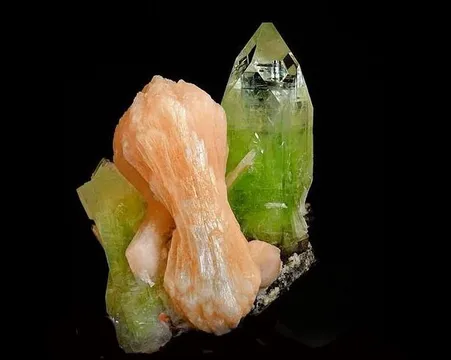
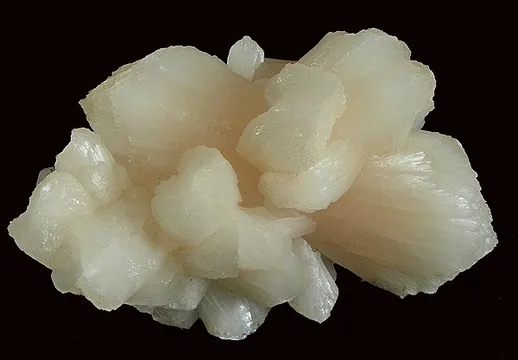
Aurangabad Division stilbite is most admired as lustrous bow-tie or sheaf-like aggregates, commonly white, cream, pale peach or pink, and locally as tiny leafy pink crystals in the Bidkin assemblage. Vaijapur pieces can show especially handsome paired bow ties on basaltic matrix, with individual sprays reported to several centimeters and one well-known larger bow tie around 7 cm; Bidkin material tends to be more intimate, with stilbite subordinate to green apophyllite, calcite and heulandite-group minerals. The finest examples have bright pearly faces, clean separation of the sheaves and strong association value—thomsonite balls on pink stilbite, mordenite perched on stilbite, or apophyllite rising from stilbite—whereas ordinary pieces are flat, bruised, chalky, or simply crowded by indistinct zeolite crust.
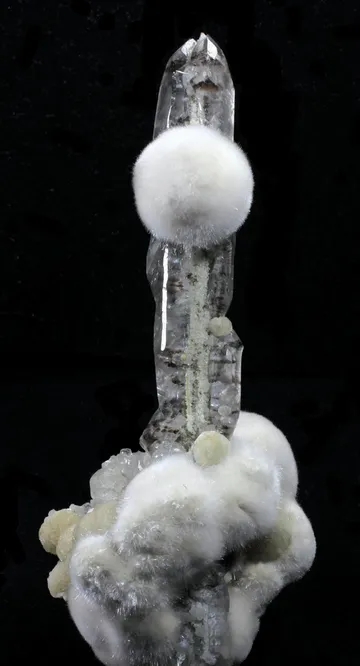
The celebrated Aurangabad thomsonites are radial spheroids and hemispheres rather than the compact lapidary thomsonite familiar from Lake Superior; they occur as smooth to subtly velvety balls, commonly white, cream, pale pink, lilac or reddish brown, perched on basalt, stilbite or heulandite-bearing matrix. Older show material introduced around 2005 produced intergrown globes several centimeters across, while later dealer descriptions record individual balls around 2–3 cm and, in larger specimens, rounded aggregates to about 5 cm. Association and identity matter here: the most desirable specimens show clean, undamaged, evenly colored thomsonite balls on contrasting bladed stilbite or pink heulandite, while glittering yellow-brown radiating spheres with white whiskers from the Aurangabad area have in some cases tested as mesolite rather than thomsonite.
Aurangabad heulandite is usually a matrix and association mineral rather than the sole star of the specimen, appearing as pale pink, peach, cream or colorless platy crystals in basalt cavities with stilbite, mesolite, thomsonite, mordenite and apophyllite. The habit is the familiar coffin-shaped to tabular Deccan heulandite, and in the Aurangabad pieces it often provides the warm-toned base on which spherical mesolite or thomsonite sits. Good pieces are judged by contrast and freshness: sharp, lustrous, unfaded peach or pink plates under a clean radial ball are far more desirable than dull, crowded coatings where heulandite and stilbite merge into an ambiguous zeolite crust.
Aurangabad amethyst belongs to the silica stage of the Deccan basalt cavities: violet quartz crystals and drusy coatings developed over chalcedony or within agate-lined amygdules, typically in modest sizes rather than the large gem points of classic vein amethyst localities. Its significance here is paragenetic and aesthetic—purple quartz adds color to zeolite-calcite cavities and to agate material from the nallas, hills and flow-top cavities of the district. The better specimens show saturated lavender to purple crystal faces, crisp quartz sparkle and pleasing association with calcite or zeolite minerals; weakly colored druse, broken geode margins and iron-stained or weathered cavity linings are commoner and less collectible.
Calcite is widespread in Aurangabad basalt cavities and ranges from colorless rhombohedra at Bidkin to light golden, complex crystals on snowy quartz and sculptural rhombs penetrated or overgrown by blue chalcedony and white mordenite. In the Deccan paragenesis it is generally a late, volatile-bearing mineral, often deposited over earlier silica and zeolite stages, which explains why it can cap or partly engulf delicate associations. Fine Aurangabad calcite is transparent to translucent, sharply formed, and visually integrated with quartz, chalcedony or mordenite; mediocre pieces are common when the calcite is cleaved, etched, limonite-stained or merely forms massive cavity fill.
Fluorite from Aurangabad Division is unusual precisely because it comes from a basaltic Deccan cavity environment where collectors more readily expect zeolites, calcite and silica. The best-documented pieces, especially from Ajanta and division-level Aurangabad labels, include rounded to botryoidal or octahedral-looking fluorite in yellow, gold, reddish, pink and occasionally lavender-grey tones, commonly on quartz with calcite and sometimes opal. Good specimens are translucent to gemmy when backlit and show clean contrast against sparkling quartz; many are not sharply cubic in the classic fluorite sense, so form, color zoning, translucency and locality credibility carry more weight than textbook crystal habit.
Aurangabad scolecite occurs as white to colorless acicular crystals, sprays and divergent bundles in zeolite cavities, with transparent lustrous crystals reported to about 70 mm in Aurangabad District material associated with stilbite. It belongs to the same visual family as mesolite and natrolite, so unanalysed labels are not always secure, but the best scolecite specimens show separate, glassy needles with clean terminations rather than fuzzy, matted masses. Strong pieces combine the needle sprays with stilbite, heulandite or thomsonite in a balanced composition; damaged tips, collapsed sprays and dusty quarry surfaces quickly reduce value because the charm of the species here is delicacy and brightness.
Quartz in Aurangabad Division appears both as crystalline druse and as the larger silica family of agate, chalcedony and amethyst in basalt cavities. Colorless, gemmy quartz crystals provide a sparkling base for unusual fluorite and calcite specimens, while drusy quartz may line cavities before or after zeolite growth depending on local chemistry. The better quartz specimens from this division are rarely about crystal size alone; they succeed when quartz acts as a clean, bright stage for yellow fluorite, light golden calcite, apophyllite or mordenite, whereas plain quartz-lined basalt cavities are common and usually of local rather than international collector interest.
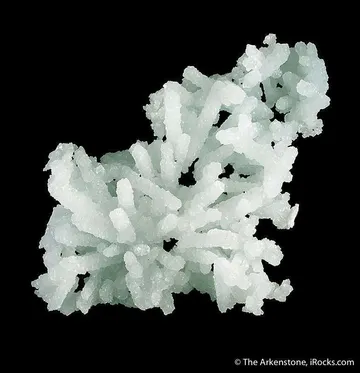
The most distinctive Aurangabad chalcedony is the sea-blue to powder-blue stalactitic material from the Aurangabad–Jalna area, where worm-like, parallel-growth pseudostalactites may be partly covered with snow-white mordenite sprays or spheres and, in some specimens, linked with calcite. These pieces are among the most sculptural Deccan silica-zeolite associations: coral-like blue forms, white acicular mordenite and occasional transparent calcite combine in true 360-degree display specimens. Quality is set by saturated blue color, intact stalactites, undamaged mordenite and believable identification; ordinary or problematic examples include pale broken fragments, heavy contact damage and specimens sold too casually as “okenite on chalcedony” when the white mineral is actually mordenite.
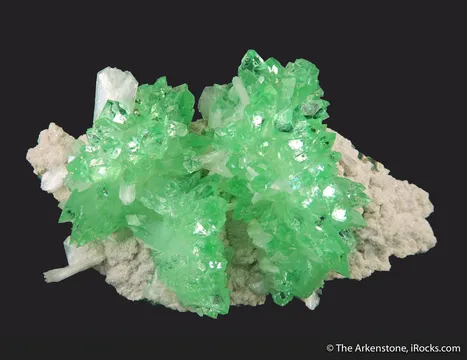
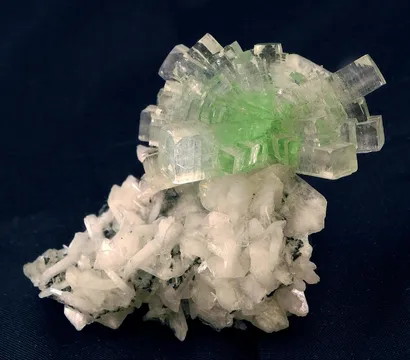
Aurangabad apophyllite is anchored by the Bidkin Well discovery, where green apophyllite crystals were recovered from a cavern system opened at the bottom of a well near Bidkin, about 25 km from Aurangabad. The material includes green divergent sprays and fluorapophyllite-(K) associated with rhombohedral calcite, celadonite, heulandite-group minerals and pink stilbite, with the best crystals showing fresh mint-green color, translucency and undamaged terminations. Fine Bidkin pieces are valued far above generic Indian apophyllite because the locality story and assemblage are specific; ordinary examples lose force when the green color is weak, the crystals are bruised, or the label has been broadened simply to “Maharashtra.”
Okenite is a problematic but attractive Aurangabad label: snow-white puffballs and cottony sprays have been sold on blue chalcedony from the Aurangabad area, yet the Aurangabad–Jalna blue chalcedony material is specifically documented as mordenite on blue opal or chalcedony in important locality records, with a warning against the common “okenite on chalcedony” interpretation. True okenite, where present, should be treated as a delicate late-stage calcium silicate forming white fibrous balls or sprays, but collectors should demand strong provenance or analytical support for Aurangabad pieces. The best-looking examples are undamaged white puffballs on saturated blue chalcedony; the best-documented examples, however, may belong under mordenite rather than okenite.
Barite is a minor rarity in the Aurangabad Division suite, documented from the Chittegaon well area near Paithan and appearing in specimen records as divergent green sprays rather than as the common tabular desert-rose style familiar from sedimentary barite deposits. Its appeal is locality and association value: a true Aurangabad barite is a small, uncommon component in a zeolite-calcite-silica collecting province, not a mass-market barite specimen. Good pieces should show identifiable spray habit, fresh color, secure Chittegaon or Aurangabad provenance and minimal abrasion; because barite is sparse here, vague “Maharashtra barite” labels deserve extra scrutiny.
Other documented minerals from Aurangabad Division include mesolite, mordenite, natrolite, laumontite, epistilbite, stellerite, celadonite, opal, agate, dendritic agate, moss agate, fluorapophyllite-(K), powellite, saponite and iron-bearing saponite. The division also includes the Chandakapur meteorite locality in Jalna District, an L5 ordinary chondrite with minerals and phases such as olivine of the fayalite-forsterite series, pyroxene, chromite, troilite, taenite, kamacite, plessite, glass, merrillite and native iron. No major IMA type-mineral fame attaches to the zeolite pockets of Aurangabad in the way it does to some classic European or North American localities, but the division has produced significant modern reference material for thomsonite–mesolite identification, Bidkin apophyllite, Valunj-area stellerite and the rare powellite-on-stilbite style noted in mineral show literature.
Aurangabad labels need careful reading. Older pieces may say Aurangabad, Aurangabad District, Aurangabad Division, Marathwada, Maharashtra, or now Chhatrapati Sambhajinagar; all may refer to the same administrative region at different levels of precision. Conversely, some “Aurangabad” labels are too broad and may hide material from nearby Nashik, Jalgaon or Ahmadnagar/Ahilyanagar districts. Because the Deccan Traps yield visually similar zeolite assemblages over a large area, a serious collector should prize old dealer labels, mine or village names such as Bidkin, Vaijapur, Kannad, Soegaon, Ajanta or Chittegaon, and any analytical notes.
The most important authenticity issue is not outright fakery but misidentification. Aurangabad thomsonite, mesolite, scolecite, natrolite and mordenite can be confused, and at least one widely distributed Aurangabad-area “thomsonite” find was later reported by Mineralogical Record show coverage as mesolite after Raman spectroscopy. Blue chalcedony specimens dusted with white fibrous minerals are another trap: pieces are often sold as okenite on chalcedony, but the Aurangabad–Jalna material is specifically associated with mordenite, sometimes on blue opal or chalcedony. Stilbite-Na from Bidkin is also a questioned identification in locality records; “stilbite subgroup” or confirmed Stilbite-Ca is safer unless analysis is available.
Condition is central. Zeolite sprays crush easily, mordenite and scolecite needles shed, okenite-like puffballs mat or darken when handled, and thomsonite or mesolite spheres can bruise on their high points. Stilbite bow ties commonly have edge nicks along the bladed terminations; examine them under side light. Calcite may be cleaved or etched, fluorite may have contacts on rounded surfaces, and blue chalcedony stalactites often show small breaks at the tips or along attachment points. Many specimens were collected from well or quarry pockets under difficult conditions, so perfect pieces command a premium.
Fluorescence is worth checking but should not be assumed. Some dealer descriptions note long-wave fluorescence for thomsonite-on-stilbite material, and opal, calcite or associated silica may respond under UV in individual specimens. Use low heat, avoid ultrasonic cleaning, and do not soak delicate fibrous zeolites or okenite-like material. Gentle air puffs and a soft brush are safer than water for mordenite, scolecite and thomsonite balls.
In the market, Aurangabad material is available but uneven. Common stilbite and mixed zeolite specimens remain affordable, while fine thomsonite balls, confirmed mesolite spheres, Bidkin green apophyllite, blue chalcedony with intact mordenite, unusual fluorite on quartz and well-provenanced barite or powellite associations are notably scarcer. The best pieces are those that combine locality specificity, distinctive habit and intact three-dimensional composition.
In late 2006, a well near Bidkin changed the reputation of Aurangabad apophyllite. At the bottom of the well, collectors encountered a cavern complex lined with green apophyllite crystals—an accidental mineral room beneath an ordinary village water source. The find sat about 25 km from the old city of Aurangabad and was important enough to earn a dedicated article in The Mineralogical Record. The specimens were not simply loose crystals; they were pocket pieces from a well environment, green apophyllite associated with calcite, heulandite-group minerals, celadonite and pink stilbite. Bidkin became one of those locality names that means more than a dot on a map: it means a specific pocket style, a limited discovery, and the kind of Deccan surprise that appears only when basalt is opened in just the right place.
Another Aurangabad episode played out not underground but on the mineral-show circuit. Around the 2009 Denver Show, Indian dealers brought large, attractive new spheres labelled “thomsonite” from a prospect pit near Aurangabad. The specimens looked convincing at first glance: pale yellow-brown balls and hemispheres of radiating acicular crystals, many on stilbite-coated matrix. But Raman spectroscopy by Bob Downs of the University of Arizona showed that some of the show material was mesolite. That correction matters because Aurangabad had already produced true thomsonite balls in earlier finds, and the two styles were easy to mix commercially. The distinction became part of the locality’s collecting lore: smoother, duller white thomsonite spheres from the 2005 debut on one hand, glittering mesolite balls with white whiskers from later material on the other.
The older story belongs to the sky. On June 6, 1838, a meteoritic stone fell at or near Chandakapur, now placed in Jalna District within the division. Decades later, H. L. Bowman and H. E. Clarke examined a large piece in the University Museum at Oxford. The stone had once weighed 3329.5 grams before being cut in 1899, with a portion exchanged to J. R. Gregory for representative meteorites and thin sections prepared for study. Today Chandakapur is classified as an L5 ordinary chondrite, and its mineral list—olivine, pyroxene, troilite, taenite, kamacite, chromite and glass—sits in striking contrast to the soft zeolite aesthetic of the surrounding Deccan basalt country. Aurangabad Division is therefore a locality guide with two scales of time: vesicles filled by warm groundwater in ancient lava flows, and one documented stone from space falling into the same region in 1838.