






Zacatecas, Mexico — renowned mining district with Ag-Pb-Zn-Cu-Au veins, historic silver ores, silvery wire on calcite, azurite-malachite, and Electric Opal.
Key facts
Zacatecas is not a single specimen locality so much as a mineral province in miniature: a high, dry piece of north-central Mexico where volcanic mesas, old caldera architecture, carbonate horizons, and long-lived crustal structures concentrated silver, lead, zinc, copper, gold, and a remarkable secondary suite. For ore-deposit geologists, the classic Zacatecas mining district around the city is a polymetallic Ag-Pb-Zn-Cu-Au system dominated by intermediate-sulfidation epithermal veins, with important skarn and replacement expressions in the broader state. For collectors, the name covers several distinct specimen traditions: old ruby-silver ores from the Zacatecas and Fresnillo camps, silvery wire and sheet silver on calcite from silver-rich veins, gemmy blue azurite with malachite from Concepción del Oro, calcite and sulfide combinations from Sombrerete and San Martín, and the modern Electric Opal material—daylight-fluorescent hyalite opal from an eroded volcanic-tuff layer on a mesa in Zacatecas State.
The historical weight is enormous. Zacatecas was founded after the 1546 discovery of rich silver ore near La Bufa, and by the colonial period it had become one of the great silver engines of New Spain. The lodes of San Bernabé, Pánuco, Veta Grande, Mala Noche, El Bote, Cantera, and related systems built a city whose pink-stone churches, steep streets, and mine-linked urban plan still betray its mineral origin. Later scientific work gave collectors a paragenetic vocabulary for the ores: early pyrite and sphalerite, quartz and base-metal sulfides, then argentite/acanthite and silver sulfosalts such as pyrargyrite, proustite, stephanite, and polybasite, followed in many veins by calcite. That sequence matters at the specimen scale; the finest pieces often preserve the late open-space moments—ruby-red sulfosalts in quartz cavities, silver curling through calcite, or calcite perched over metallic sulfides.
Visually, the best Zacatecas specimens are rarely bland. The hyalite opal forms water-clear to greenish, bubbly, glassy botryoids that can appear nearly colorless indoors but glow green under ultraviolet and even in shaded daylight. Concepción del Oro azurites can be electric blue, gemmy, and sharply bladed, often scattered over gossanous or quartzose matrix with malachite. Silver pieces are most desirable when the metal is free-grown—wires, curls, sheets, or arborescent forms—rather than merely massive ore. Calcite ranges from small, bright rhombs to translucent scalenohedral groups and matrix plates carrying sulfides. Pyrargyrite and related sulfosalts are the connoisseur’s material: dark red to ruby-metallic crystals, beautiful when fresh and protected, but often altered or blackened in old collections.
Regional View
Country View
The collector should treat “Zacatecas, Mexico” as a locality that needs context. A label may mean the city district, the broader state, the Fresnillo district, Sombrerete, Concepción del Oro, Jalpa, Mazapil, or an intentionally generalized Electric Opal source. That is not a weakness—Zacatecas is a legitimate collecting umbrella—but the best labels separate the famous sublocalities. “Electric Opal Claim, Zacatecas” means something very different from “Bote Mine, Zacatecas,” “San Martín Mine, Sombrerete,” or “Concepción del Oro.”


Search for specimens: View all specimens from Zacatecas, Mexico
The Zacatecas mining district lies in central Zacatecas State near the boundary between the Sierra Madre Occidental and the Mesa Central, within the Central Mexican Silver Belt. The major vein systems are controlled by long-lived northwest- to east-southeast–trending structures, with later north-south structures locally carrying more gold-rich, lower-sulfidation mineralization. In the Zacatecas city district, the main ore style is Ag-dominant polymetallic intermediate-sulfidation epithermal veining with zinc, lead, copper, minor gold, and abundant quartz-carbonate gangue. Skarn and carbonate-replacement mineralization are also important in the broader region, especially where intrusive rocks and reactive carbonate horizons interacted with hydrothermal fluids.
The district geology includes older metamorphic and sedimentary rocks overlain by Jurassic-Cretaceous volcanic and volcano-sedimentary units, including the Chilitos Formation in the Zacatecas area. Intrusive rocks include gabbro, diorite, and felsic bodies, and the region is overprinted by Eocene to Oligocene volcanic and hydrothermal events. Modern geochronology has separated several mineralizing pulses: older Cu-rich skarn mineralization near Eocene felsic magmatism, Ag-rich intermediate-sulfidation epithermal veins around 42 Ma, and a younger Oligocene Au-Ag low-sulfidation event in the El Orito system. This helps explain why the Zacatecas label can cover very different-looking specimens: dark polymetallic silver ores, quartz-amethyst-sphalerite assemblages, carbonate-hosted skarn pieces, and later oxidized copper-carbonate specimens are all plausible products of the province.
Around Zacatecas city, the principal vein systems include Mala Noche, El Bote-Cantera, Veta Grande, Pánuco, and El Orito. Veta Grande is a major northwest-striking system with fault-fill veins, vein splays, and veinlet arrays; in places the veins pinch and swell from narrow stringers to large brecciated widths. The ore assemblage is typically silver minerals, sphalerite, galena, chalcopyrite, pyrite, quartz, calcite, dolomite, adularia, barite, and local amethyst or chalcedony. Historical miners naturally followed the richest oxidized and supergene silver zones first, but the hypogene veins are the source of many of the classic sulfosalt associations recognized in museum and old private collections.
The state-wide Zacatecas collecting picture broadens quickly. Fresnillo, northwest of Zacatecas city, is one of Mexico’s most important silver districts and has produced notable pyrargyrite and complex silver-sulfosalt ores. Sombrerete and the San Martín-Sabinas district are known to collectors for calcite, fluorite, stibnite-group associations, jamesonite, native silver, pyrite, chalcopyrite, and other vein minerals. Concepción del Oro is the classic Zacatecas source for fine azurite and malachite, with gemmy blue azurite on gossan, quartz, and malachite-bearing matrix; old specimens from this district are a recognizable collecting category in their own right. Jalpa, at the Leonera Mine, is mineralogically important as the type locality for jalpaite, Ag3CuS2, a rare silver-copper sulfide.
Mining history is continuous enough here that the line between “classic” and “current” can be misleading. Zacatecas began as a colonial silver camp in the sixteenth century; it remained important through the nineteenth century and continues as one of Mexico’s leading mining states. Modern operators in the state include large companies and projects such as Newmont at Peñasquito, Fresnillo plc at Fresnillo-region mines, Capstone Copper at Cozamin near Zacatecas city, Pan American Silver at La Colorada, and other active or exploration-stage holdings along the same mineral belts. These are industrial operations, not collecting destinations. Contemporary collector material reaches the market mainly through old collections, mine employees and contractors where legally permitted, dealer lots, and small-scale recovery from historic dumps or old workings when access and ownership allow.
Collecting access should be approached conservatively. Much of the best-known ground is either active mine property, private concession ground, urbanized, dangerous old workings, or historically protected terrain. The El Edén mine in Zacatecas city is accessible as a tourist mine, but that is not the same as collecting permission. Electric Opal material came from a limited opal-bearing volcanic-tuff layer at the Electric Opal Claim/Knob; published and collector accounts describe the productive layer as small and later mined out, so the good material in circulation is essentially a finite modern classic. In practice, Zacatecas is a marketplace locality: serious collectors buy carefully labeled specimens and rely on comparison with documented sublocality material.
The Zacatecas opal that transformed the modern market is not fire opal but hyalite, specifically daylight-luminescent Opal-AN from the Electric Opal Claim or Electric Opal Knob in Zacatecas State. It occurs as colorless to greenish, transparent, glassy botryoidal coatings and free-standing bubble-like drupelets on brown-gray rhyolitic tuff and locally chalcedonic silica; documented specimens range from small thumbnails under 2 cm to cabinet pieces around 10 cm across, with the most prized examples showing thick, lustrous, undamaged bubbles and a vivid green response in daylight as well as under longwave and shortwave ultraviolet. The material formed in a porous, poorly welded volcanic tuff near the base of a knob on a mesa, and its glow is tied to trace uranyl in the opal and associated uranium-bearing minerals in the host rock; good pieces are judged less by conventional opal fire, which this material lacks, and more by transparency, wet-looking botryoidal form, daylight fluorescence, and the sculptural independence of the larger globules.
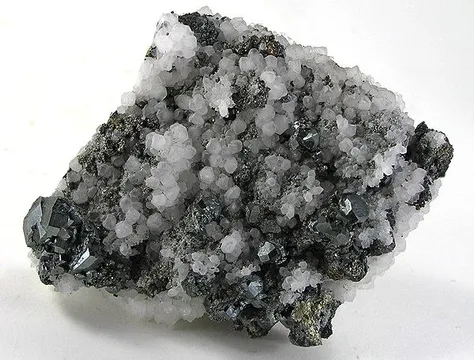
Calcite is the great late-stage gangue and display mineral of Zacatecas, appearing in the classic silver veins around Zacatecas city, in Sombrerete and San Martín-Sabinas assemblages, and in native-silver combinations where white to translucent carbonate gives the metal its contrast. In the San Martín Mine, documented calcite includes lustrous white simple rhombs to several millimeters associated with stibnite and berthierite, while collector pieces from the broader Sombrerete-San Martín district also show translucent off-white scalenohedral groups with pyrite, chalcopyrite, fluorite, jamesonite, or silver minerals. The strongest Zacatecas calcites are not necessarily the largest; they are the pieces with sharp faces, bright luster, undamaged terminations, visible sulfide or silver associations, and enough matrix architecture to show that the carbonate is part of a real silver-base-metal vein rather than a detached, anonymous calcite.
Native silver from Zacatecas belongs to the old Mexican silver-mining tradition of wires, sheets, curls, and metallic masses in calcite or quartz-carbonate vein material, with notable occurrences in the Zacatecas city district, Sombrerete, San Martín-Sabinas, Fresnillo-region ores, and the Leonera Mine at Jalpa. Historical descriptions of the Zacatecas ores distinguish oxidized “red ores” and chloride-rich silver zones from darker sulfide ores, and collector specimens often preserve silver with acanthite, calcite, galena, sphalerite, bornite, or chalcopyrite. The finest pieces are those in which silver is visibly native and sculptural—curled wire on pale calcite, arborescent sheets emerging from vugs, or naturally burnished metallic forms—whereas massive gray ore with only minor silver specks is far more common and far less desirable.
Quartz is the structural fabric of many Zacatecas specimens: open-space vein quartz in the Zacatecas district, vuggy quartz matrix for pyrargyrite and other silver sulfosalts, amethyst and blue-white chalcedony associated with high-grade Veta Grande silver mineralization, and botryoidal chalcedony beneath some Electric Opal material. In the ore veins it ranges from massive white quartz and breccia cement to crystal-lined cavities, amethystine bands, and chalcedonic coatings intergrown with calcite, sphalerite, galena, pyrite, chalcopyrite, acanthite, pyrargyrite, and polybasite. Good Zacatecas quartz is valued less as a stand-alone quartz locality and more as a carrier of ore history: clean vugs with ruby-silver crystals, banded amethyst-sulfide textures, or sparkling chalcedony supporting azurite, malachite, or hyalite opal make the quartz integral rather than incidental.
Pyrite is a fundamental Zacatecas ore mineral, appearing early in the classic Zacatecas paragenesis and persisting through skarn, polymetallic vein, and gold-bearing assemblages across the state. In the Zacatecas district it is associated with sphalerite, galena, chalcopyrite, quartz, calcite, acanthite, pyrargyrite, and other silver minerals; in the San Martín and Sombrerete material it can form sharp brassy crystals beneath or beside translucent calcite, fluorite, stibnite, jamesonite, and chalcopyrite. The best collector pieces use pyrite as sparkle and contrast—small, sharp, lustrous crystals in balanced association—whereas massive sulfide pyrite, even if economically important, is usually only of locality interest unless it preserves unusually clear paragenetic texture.
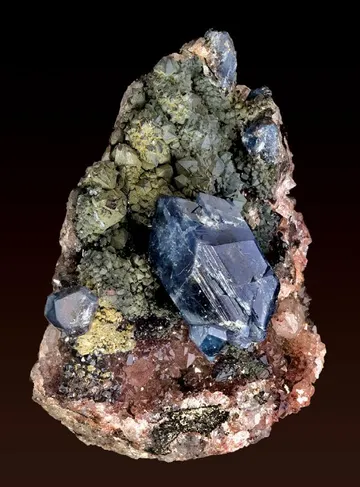
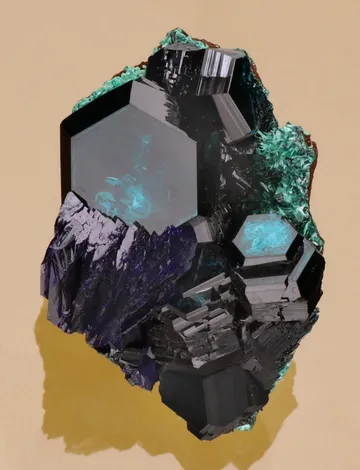
Zacatecas azurite is anchored by Concepción del Oro, including the El Cobre and Aranzazú area, where old specimens display vivid blue, lustrous, gemmy crystals on gossanous, quartzose, or malachite-rich matrix. Documented pieces include crystal rosettes and well-formed blue crystals to several millimeters, and top cabinet specimens around 10 cm with individual azurites approaching 1 cm; one notable 1986 find associated with Jimmy Vacek is described as a floater with sharply defined rosette growths and intense color. Good Concepción del Oro azurite is immediately recognizable: electric-blue blades or rosettes, high luster, translucency at the edges, green malachite contrast, and minimal bruising on the crystal tips separate the classics from ordinary blue crusts.
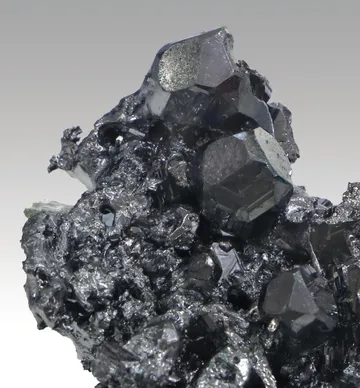
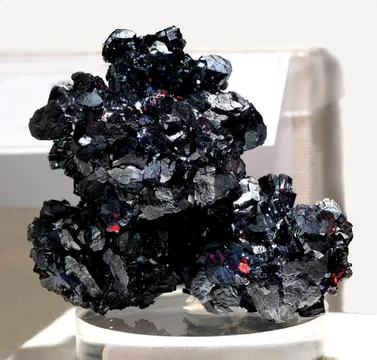
Pyrargyrite, Ag3SbS3, is one of the signature silver sulfosalts of Zacatecas, documented from the Bote, Refugio, Cantera, Quebradillas, and related Zacatecas district mines as well as from Fresnillo and Jalpa. At Bote it occurs in quartz-associated specimens, while Fresnillo material is regarded as especially significant, with pyrargyrite appearing among calcite, quartz, polybasite, tetrahedrite-group minerals, miargyrite, jamesonite, sphalerite, chalcopyrite, and other silver minerals. The collector ideal is fresh, lustrous ruby-red to dark-red crystals with visible translucency on edges or in transmitted light; blackened, granular, or light-damaged material may still be important ore, but it lacks the visual drama that makes fine Zacatecas pyrargyrite a classic Mexican silver specimen.
Jamesonite from Zacatecas is best understood through the San Martín-Sabinas and Sombrerete-style antimony-rich vein assemblages, and through complex Fresnillo silver ores where it occurs as acicular aggregates with miargyrite, tetrahedrite-group minerals, pyrargyrite, quartz, and calcite. Mineralogical Record indexing notes Zacatecas material from Noche Buena or San Martín as hairlike crystals to 3 cm on pyrite, and San Martín photo associations include calcite, fluorite, stibnite, chalcopyrite, quartz, tetrahedrite-group minerals, native silver, and other sulfides. Good pieces show intact silky needles, sprays, or matted tufts with metallic gray sheen and minimal crushing; most damage occurs because the crystals are fine, flexible-looking, and easily flattened in shipment or by careless cleaning.
Malachite from Zacatecas is most collectible when tied to the Concepción del Oro copper-oxidation suite, especially as green botryoidal, velvety, lenticular, or pseudomorphous growths with azurite, quartz, chalcedony, calcite, hematite, and gossan. Documented Concepción del Oro specimens include malachite microcrystals of lenticular habit with two green tones on quartz and botryoidal chalcedony, botryoidal malachite in sparkling quartz-lined vugs, and old malachite after azurite on translucent to gemmy calcite. The best examples are crisp and tactile-looking without being abraded: saturated green, fine velvet or botryoidal texture, strong color contrast against white quartz or blue azurite, and clear evidence of pseudomorph or growth habit rather than featureless green coating.
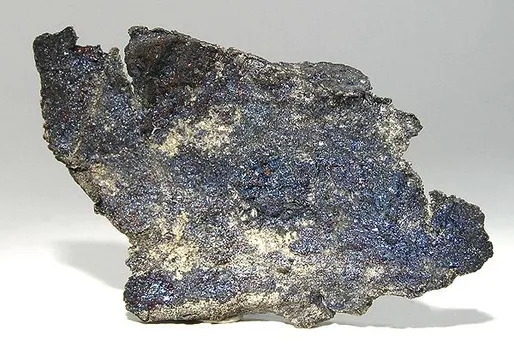
Chalcopyrite is a widespread hypogene copper mineral in Zacatecas polymetallic veins and skarns, recorded in the Zacatecas city district, San Roberto mine associations, San Martín-Sabinas specimens, La Colorada ores, and the Mala Noche skarn-overprinted system. It occurs with pyrite, sphalerite, galena, quartz, calcite, fluorite, jamesonite, stibnite, tetrahedrite-group minerals, bornite, and silver sulfosalts, generally as brassy metallic grains or crystals rather than as the dominant display species. Good Zacatecas chalcopyrite specimens depend on association: sharp brassy crystals on calcite, glittering grains with fluorite or quartz, or clear skarn-vein relationships are more desirable than massive chalcopyrite ore, and natural iridescence should be distinguished from the artificial acid-induced “peacock ore” finish sometimes seen in the broader mineral trade.
Other documented Zacatecas minerals deepen the locality far beyond the ten species above. The state includes the type locality of jalpaite, Ag3CuS2, at the Leonera Mine near Jalpa, where it is associated with acanthite, native silver, pyrargyrite, stephanite, quartz, calcite, chlorargyrite, and other silver-copper sulfides. The Zacatecas city district also records native copper, native gold, acanthite, sphalerite, galena, stibnite, molybdenite, proustite, bournonite, stephanite, polybasite, iodargyrite, bromargyrite, chlorargyrite, fluorite, goethite, cuprite, litharge, massicot, smithsonite, and malachite. La Colorada adds a well-studied Ag-Zn-Pb suite with acanthite, adularia, baryte, galena, miargyrite, pearceite, polybasite, proustite, pyrargyrite, pyrite, quartz, rhodochrosite, sphalerite, and tetrahedrite-tennantite minerals; Concepción del Oro contributes the oxidized copper display suite that made its azurites famous. For rarity-minded collectors, Zacatecas is especially rewarding when labels are precise enough to separate type-locality jalpaite, classic ruby silvers, old Concepción del Oro azurite, and Electric Opal hyalite.
The chief authenticity issue with Zacatecas is not usually outright forgery but locality vagueness. “Zacatecas, Mexico” may be correct as a state label, but it can hide very different sources and values. A hyalite opal from the Electric Opal Claim, a pyrargyrite from Bote, an azurite from Concepción del Oro, a calcite from San Martín, and a jalpaite from Leonera are not interchangeable. When possible, preserve every old label and ask for mine-level provenance; the difference between “Zacatecas” and “Concepción del Oro, Zacatecas” can be the difference between a generic Mexican copper mineral and a recognized classic.
Electric Opal is commonly marketed for its daylight fluorescence, but collectors should understand what that means. It is not precious opal and should not show play-of-color like Querétaro fire opal; the appeal is its glassy hyalite habit and green luminescence caused by uranyl activation. Stronger material appears nearly colorless to pale yellow-green indoors, then shows green fluorescence in shaded daylight, stronger green under 365 nm longwave UV, and often very strong response under 254 nm shortwave UV. Some specimens have been measured as mildly radioactive by hobby counters, but published gemological work treats the radiation level as not a normal handling concern. Sensible handling still applies: do not grind or inhale dust, do not store radioactive-labeled specimens against film or sensitive materials, and wash hands after handling matrix.
Pyrargyrite, proustite, and some silver halides are light-sensitive or prone to darkening. Old ruby-silver specimens should be displayed away from direct sunlight and intense case lighting. Fresh fractures or unusually bright red surfaces on old specimens may indicate recent trimming or exposure; that is not automatically bad, but it should be considered when judging condition and originality. Native silver tarnishes naturally and may be found cleaned, lacquered, or brightened; avoid pieces with suspiciously uniform polish or chemical-cleaning residues unless the treatment is disclosed.
Calcite from Zacatecas is vulnerable to bruising, cleaving, and acid damage. Fine calcite-silver and calcite-pyrite combinations should be inspected for repaired cleavages, broken terminations, and etched faces. Concepción del Oro azurite and malachite are generally more durable visually than physically; azurite tips chip easily, malachite velvet abrades, and old gossan matrix can shed grains. Avoid soaking copper-carbonate specimens, and never clean them with acids.
Market availability is mixed. Electric Opal appeared in quantity after the 2013 discovery and was widely traded, but better pieces with thick, freestanding, daylight-glowing botryoids are no longer common. Concepción del Oro azurites of high quality are classic old Mexican specimens and command strong prices when sharp, gemmy, and well provenanced. Zacatecas native silver, calcite, pyrite, chalcopyrite, and quartz combinations appear regularly but vary greatly in quality. Pyrargyrite, jamesonite, and jalpaite are specialist minerals: fine specimens are far scarcer than the species lists suggest, and the best examples are usually in old collections or sold with sublocality labels.
In 1546, Juan de Tolosa reached the country beneath the unmistakable crest of La Bufa and carried away three or four loads of ore. The first metallurgical test was not glamorous: the ore was taken to Nochistlán, where Tolosa, Miguel de Ibarra, and Diego de Ibarra struggled to smelt it without bellows, working the charge “a soplillo”—by blowing air as best they could—until lead and silver came out. That small proof changed the map of New Spain. Tolosa and his companions returned at their own cost and risk, bringing people into what contemporary testimony described as hostile country; by 1548 the richer lodes of La Albarrada, San Bernabé, and Pánuco had been found, and the mining camp of Zacatecas began to harden into a city.
The city still looks like a mine camp that became monumental before it ever became easy. It is not laid out as an ideal grid on a flat plain; its streets are forced by the steep valley between La Bufa and El Grillo, by the routes between mines, haciendas, ore-working sites, churches, and houses. The silver did not merely enrich a few shafts—it dictated urban form. The cathedral, built from 1730 to 1760, rises from that mining wealth in carved pink stone, while older religious complexes and secular buildings occupy a topography shaped by extraction. For a collector, that matters because Zacatecas specimens are not isolated curiosities. They are pieces of the same mineral system that built one of the great colonial mining cities of the Americas.
The Electric Opal story is much younger and more intimate. In October 2013, five weathered pieces of botryoidal opal rough reached Ruben Avila of Gemimex, the El Paso–Juárez importer well known for Mexican mineral and lapidary material. Indoors, the rough could look almost colorless or pale yellow. Outside in indirect sunlight it turned startling green. The effect was so strong that the material soon drew gemological attention, and testing showed that it was not precious opal at all but Opal-AN, hyalite—amorphous, glassy hydrated silica—activated by trace uranyl. The best pieces looked like drops of liquid glass frozen on volcanic tuff, and the trade name “Electric Opal” was accurate in spirit even if it described fluorescence rather than play-of-color.
The geology of that opal occurrence was as important as the glow. The productive layer lay near the base of an elongated knob on a mesa, in a porous, poorly welded, crystal-rich rhyolite tuff beneath more resistant welded volcanic rock. That protective cap mattered: comparable soft tuff across the mesa had likely eroded away, and with it any opal it once carried. The famous occurrence was therefore a preserved remnant, not a broad field. Collectors sometimes talk about mined-out localities casually, but here the phrase has substance: a small opal-bearing layer, many fine specimens recovered between about 2013 and 2018, and then a finite supply entering collections.
Concepción del Oro supplies a different kind of collector memory. Old azurite specimens from this district have the saturated blue that makes even experienced collectors slow down at a case. The best are not thick blue paint on rock; they are gemmy, lustrous crystals—blades, rosettes, and sprays—on rusty gossan or quartzose matrix, often with malachite in green contrast. One documented cabinet specimen from the old material measures 10.4 x 7.0 x 3.0 cm and carries blue azurites to 9 mm; others from the district are described as rosettes with very well-defined forms and intense color. These are the specimens that made Concepción del Oro a recognizable name even among collectors who otherwise specialize in Tsumeb, Touissit, Milpillas, or Bisbee.
_2_(25904079264).jpg)
