Fresnillo, Mexico — premier silver locality with Ag-Pb-Zn epithermal veins; coveted sulfosalts like pyrargyrite, acanthite, stephanite, polybasite on calcite.
Key facts
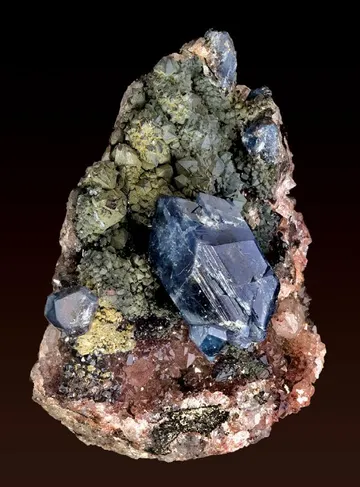
Fresnillo is one of the great names in Mexican silver mineralogy: a five-century mining district built around Cerro Proaño, where Ag-Pb-Zn mineralization occurs as epithermal veins, mantos, chimneys, stockworks, and replacement bodies in deformed Mesozoic marine sedimentary and volcanic rocks cut by Oligocene intrusions. For collectors, the name means far more than bullion. Fresnillo specimens are classic dark-metallic silver minerals: ruby-red pyrargyrite in sharp prisms, sculptural acanthite, lustrous stephanite, broad pseudohexagonal polybasite, and contrasting white to honey calcite and quartz. The best pieces have a distinctly Mexican elegance—bright black sulfosalt blades or blocky crystals posed on pale gangue, with enough matrix to tell the story of a vein rather than simply showing a detached ore crystal.
Regional View
Country View
The collector locality usually appears on labels simply as “Fresnillo, Zacatecas,” but finer labels may specify Proaño Mine, San Luis shaft, San Guillermo vein, San Carlos vein, Santo Niño vein, Judas Shaft, Mina Grande, Plateros, or other parts of the greater Fresnillo municipality. These distinctions matter. Santo Niño is scientifically famous for its silver sulfosalt mineralogy and zonation; Proaño and San Luis are the labels most often seen on cabinet-quality sulfosalts; Plateros is mineralogically important as the type locality for bromargyrite, AgBr.

Photo: Rob Lavinsky, iRocks.com via Wikimedia Commons
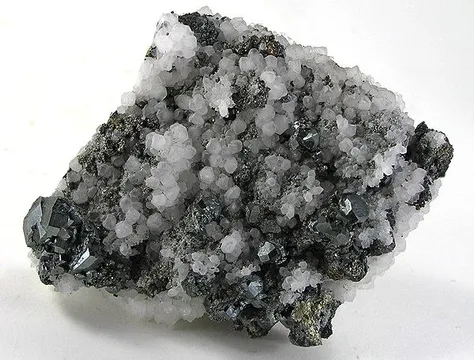
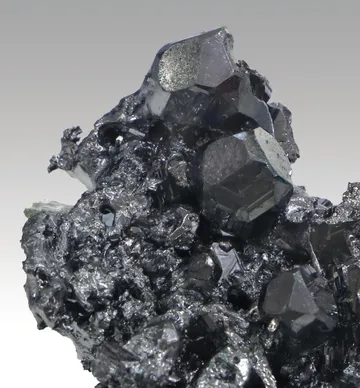
This small-cabinet specimen from Judas Shaft captures the locality’s appeal: lustrous black polybasite and stephanite set off by sparkling calcite. Fresnillo silver sulfosalts are rarely gaudy in a casual sense; their beauty is in edge sharpness, metallic reflectivity, crystal architecture, and the collector’s recognition that these are the crystallized face of one of the world’s most important silver systems.
Search for specimens: View all specimens from Fresnillo, Mexico
Fresnillo lies in central Zacatecas, in the Mexican Silver Belt, and has been mined since the mid-sixteenth century. The district is centered on Cerro Proaño and the city of Fresnillo de González Echeverría, with the modern Fresnillo Mine—historically also known as the Proaño Mine—still operating as an underground mine with a flotation plant. Fresnillo plc lists the operation as 100% owned, operational since 1554, and still producing silver with gold, lead, and zinc byproducts.
Geologically, Fresnillo is not a simple single-vein locality. The district includes shallow Ag-Pb-Zn epithermal veins, deeper Cu-Zn-Pb-Ag replacement bodies, mantos, chimneys, and near-surface stockwork mineralization. The host sequence includes Lower Cretaceous greywackes and shales of the Proaño Group, mafic volcanic rocks of the Chilitos Formation, and younger continental and volcanic units. These rocks were folded, faulted, and later intruded by quartz monzonitic to granodioritic bodies, with mineralization related to hydrothermal activity during the late Eocene to Oligocene. The Servicio Geológico Mexicano describes the district’s mineralized structures as mantos, chimneys, stockworks, and veins containing Au, Ag, Pb, and Zn, with ore minerals including sphalerite, arsenopyrite, galena, chalcopyrite, bornite, argentite/acanthite, pyrargyrite, polybasite, pyrrhotite, and silver-lead sulfoantimonides.
The Santo Niño vein is the best-studied collector-relevant orebody. It was discovered by drilling in 1975 about two kilometers southeast of the previously known veins, became a major producer, and has been described as a vein more than 2.5 km long with more than 500 m of vertical extent. Its widths range from less than 10 cm to more than 4 m, averaging about 2.5 m in published descriptions. The vein records multiple episodes of opening and sealing: brecciation, cockade textures, crustiform banding, cockscomb quartz, calcite, and repeated deposition of sulfides and silver sulfosalts. That repeated opening is exactly the kind of structural rhythm collectors hope for, because it provides voids and late-stage cavities where euhedral crystals can form.
The sulfide-sulfosalt assemblage at Santo Niño is complex but unusually well documented. Pyrite, sphalerite, galena, pyrargyrite, polybasite, chalcopyrite, arsenopyrite, tetrahedrite, acanthite, stephanite, marcasite, proustite, pyrrhotite, and selenian polybasite have all been recorded in paragenetic studies. Quartz, chalcedony, calcite, chlorite, montmorillonite, kaolinite, mixed-layer chlorite-smectite, and illite or sericite form the principal gangue assemblage. Oxidized fractures contain iron and manganese oxides, malachite, azurite, and native silver. In practical specimen terms, the productive collector pockets are those where black silver minerals escaped complete crushing and remained perched on quartz or calcite rather than locked in massive ore.
Mining history at Fresnillo is unusually deep. Silver was discovered on Cerro Proaño in 1553, and mining of near-surface oxidized stockwork began in 1554. Early work focused on silver oxides; sulfide ores became important later, with mining and milling of sulfide ores initiated in the twentieth century. Historical accounts record interruptions caused by flooding, water problems, cholera, capital shortages, changing ownership, and later modernization. The district passed through Spanish colonial, government, foreign-company, and Mexican corporate phases; by the late twentieth century Industrias Peñoles had acquired control, and the modern Fresnillo plc operation descends from that mining lineage.
Depth is another part of Fresnillo’s character. Geological map reports describe exploitation to roughly 1,100–1,200 m in parts of the district, with vertical shafts, inclined workings, ramps, crosscuts, glory holes, and other workings in the Proaño area. More than ten mineralized structures have been mapped in two principal systems, including NW-SE and NE-SW orientations. Individual structures are tabular to lenticular, may include breccia-fill and drusy, banded, crustiform, or sigmoidal textures, and range in thickness from narrow seams to meter-scale ore.
For collectors today, Fresnillo should be treated as an active industrial mining district, not a casual field-collecting destination. The working mine, shafts, dumps, and mineral rights are controlled, and access requires permission from landowners and operators. The specimens that reach the market generally come through miners, old collections, historical dealer inventories, and occasional dispersed pocket lots. Labels with precise shaft or vein information are worth preserving; they can distinguish an ordinary “Fresnillo” silver from a specimen tied to a known structural zone or documented find.
Documented specimen-producing episodes include acanthite from the San Carlos vein, notably sharp cubo-octahedral material appearing on the market around 2016; a 2018 Proaño pyrargyrite on scalenohedral calcite published as a new discovery in Mineral Up; stephanite from the San Luis shaft; blocky stephanite from the Proaño Mine’s C Block, 425 Level, seen in a small lot at Tucson in 2002; and major polybasite-calcite-stephanite combinations from Judas Shaft. Such occurrences explain why Fresnillo is not merely an ore locality in collector memory: it has repeatedly yielded discrete, displayable silver-mineral specimens at thumbnail, miniature, and small-cabinet scale.
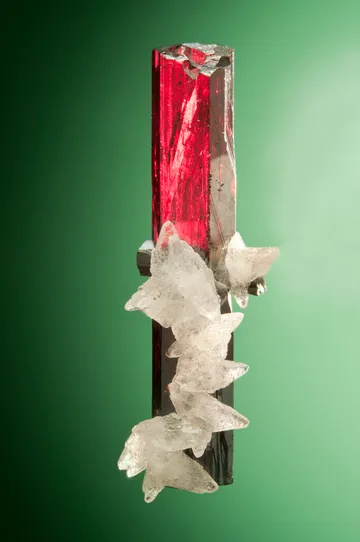
Pyrargyrite is the signature collector mineral of Fresnillo, where it occurs as lustrous dark-red to nearly black prismatic crystals, short prismatic clusters, rounded aggregates of small prisms, and sharp doubly terminated crystals on quartz or calcite. In the Santo Niño vein it is the most abundant silver sulfosalt and belongs to the pyrargyrite-proustite solid-solution system, but most collectible specimens are appreciated visually rather than analytically: the best show crisp hexagonal-looking outlines, brilliant metallic-to-adamantine faces, red internal reflections when thin edges catch light, and attractive placement on contrasting white quartz or scalenohedral calcite. Proaño and San Luis labels are especially desirable; known specimens range from sub-centimeter crystals on thumbnails to clusters several centimeters across, with exceptional pieces combining pyrargyrite with polybasite, stephanite, calcite, or quartz.
Fresnillo acanthite is a classic Mexican silver sulfide occurrence, best seen as sharp black cubo-octahedral to elongated cubo-octahedral crystals, sometimes with hopper or window-growth faces, and also as pseudomorphs after earlier silver sulfosalts. The San Carlos vein at Proaño produced especially attractive specimens around 2016, including elongated, bright crystals with well-defined edges; another important Fresnillo habit is acanthite after polybasite, preserving broad hexagonal or skeletal polybasite morphology in dark acanthite. Better pieces stand out by sharpness and luster, since ordinary acanthite from many districts can be dull, massive, or formless; at Fresnillo, the prized examples retain architectural crystal form and may be aerial rather than buried in matrix.
Stephanite from Fresnillo is one of the locality’s great connoisseur minerals: black to gunmetal-gray, highly lustrous, and often developed as complex orthorhombic crystals, blocky clusters, or sharply individualized crystals on quartz, pyrite, polybasite, or calcite-bearing matrix. In the Santo Niño paragenesis it is a minor, late-stage hypogene phase and may be associated with or replacing polybasite; on the specimen market, San Luis shaft, Proaño Mine, Mina Grande, and generic Fresnillo labels are all encountered. Good specimens are judged by mirrorlike luster, freedom from bruising, distinct crystal edges, and separation from other black sulfosalts; because stephanite can resemble acanthite, polybasite, or dark pyrargyrite at a glance, analyzed or well-provenanced pieces are especially prized.
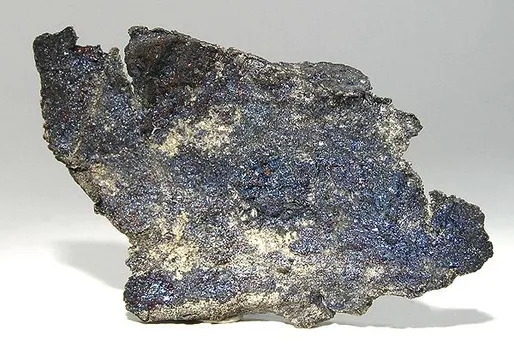
Polybasite at Fresnillo forms black metallic pseudohexagonal plates, blades, and sharp tabular crystals, locally robust enough to be mistaken at first sight for hematite from a completely different deposit. In the Santo Niño vein it is the second most abundant silver sulfosalt series after pyrargyrite and occurs with pyrargyrite, tetrahedrite, galena, sphalerite, chalcopyrite, quartz, calcite, and locally stephanite; rare selenium-bearing polybasite has also been documented analytically. The best collector examples are broad, lustrous, and visibly crystalline, especially those with contrasting calcite or quartz and those carrying precise labels such as San Guillermo vein, San Luis shaft, Judas Shaft, or Santo Niño vein; ordinary examples are small black plates lost in massive sulfide, whereas the finest pieces show isolated, sharp, display-quality blades.
Calcite is not the reason most collectors seek Fresnillo, but it is one of the minerals that makes Fresnillo silver specimens visually successful. It occurs as pale scalenohedral crystals, drusy coatings, and gangue associated with quartz, pyrargyrite, polybasite, stephanite, and other sulfides and sulfosalts. On Proaño specimens, calcite may carry a single aerial pyrargyrite crystal or frame metallic polybasite blades; at Judas Shaft, sparkling calcite provided unusually strong contrast with polybasite and stephanite. The most desirable calcite-bearing pieces are not calcite specimens in the usual sense but balanced silver-mineral combinations in which the calcite is fresh, undamaged, and compositionally important to the pocket aesthetic.
Beyond these five collector staples, Fresnillo is documented for a broad Ag-Pb-Zn-Cu-As-Sb-Hg mineral suite. Recorded species include native silver, native gold as electrum, galena, sphalerite, chalcopyrite, arsenopyrite, pyrite, pyrrhotite, tetrahedrite-group minerals, proustite, aguilarite, pavonite, matildite, stibnite, cinnabar, calomel, eglestonite, chlorargyrite, and bromargyrite. Plateros, within Fresnillo Municipality, is the type locality for bromargyrite, AgBr, making the municipality important not only for spectacular sulfosalts but also for the mineralogy of silver halides. San Onofre is notable for mercury minerals such as calomel and eglestonite, and Santo Niño is scientifically notable for selenian polybasite and the detailed study of sulfosalt solid solutions and zonation.
Fresnillo silver minerals reward careful buying. Many specimens are visually similar: black, lustrous, metallic, and soft. Stephanite, acanthite, polybasite, and dark pyrargyrite can be confused, especially on old labels that simply read “silver ore,” “silver sulfosalt,” or “Fresnillo.” A good Fresnillo label should be kept with the specimen, and analysis is valuable for high-priced stephanite, polybasite, and unusual acanthite pseudomorphs. Dealer descriptions that mention Proaño, San Luis shaft, San Guillermo vein, San Carlos vein, Santo Niño vein, Judas Shaft, or a documented collection history are stronger than vague “Mexico” labels.
No widely documented, locality-specific fake industry is known for Fresnillo specimens, but misidentification is a real risk. Acanthite after polybasite, stephanite with polybasite, and pyrargyrite with polybasite all require careful distinction. Fresnillo polybasite may form broad, sharp black plates that can look surprisingly like hematite to a casual eye; conversely, unrelated black metallic plates should not be accepted as Fresnillo polybasite without provenance. Modern market pieces sometimes come with analytical notes, and those are worth retaining.
Condition is critical. The principal Fresnillo collector minerals are soft and brittle: acanthite, pyrargyrite, stephanite, and polybasite are all vulnerable to edge bruising, rubbing, and contact damage. Bright metallic luster is a major part of value, so avoid specimens with abraded high points unless the piece has exceptional size or provenance. Pyrargyrite is also light-sensitive; prolonged strong light can darken ruby-silver specimens and diminish their red internal glow. Store fine pyrargyrite away from direct sunlight and avoid unnecessary hot display lighting.
Cleaning should be conservative. Do not use acids casually on calcite-bearing combinations, and do not try to “improve” tarnish or dark coatings on silver sulfosalts with chemical dips. Many Fresnillo specimens are best left exactly as collected, with minor clay, quartz, or calcite context intact. Ultrasonic cleaning is risky for delicate crystal groups, pseudomorphs, and specimens with hidden fractures.
Availability is intermittent. Fresnillo is still a major mining district, but specimen supply is not steady in the way it is from mines worked primarily for collectors. Fine pyrargyrite and acanthite appear with some regularity from older holdings and occasional mine-connected lots. Fine stephanite and large, aesthetic polybasite are much scarcer. A thumbnail with superb form may be more desirable than a larger but massive specimen, and precise provenance can move a piece from “good Mexican silver” into genuinely classic Fresnillo territory.
The founding story of Fresnillo has the spare drama of a prospector’s field note. In the early 1550s, Diego Fernández de Proaño was searching the Zacatecas region for a legendary mineralized hill. He found a hill that did not quite match the legend but did show rich mineralization, and the name Cerro Proaño remained attached to it. The discovery did not immediately ignite the district. The hill was reported and then, for a time, largely neglected.
A second party gave the place its enduring name. On September 2, 1554, an expedition led by the very young Francisco de Ibarra reached a freshwater spring bordered by a small ash tree—a fresno. The place became the “Ojo de Agua del Fresnillo,” the spring of the little ash, and the mining settlement that followed eventually took the name Fresnillo. The municipal coat of arms still preserves the essential elements of that origin story: a spring, a young ash tree, Cerro Proaño in the background, and the pick and shovel of the miners. Its motto translates as “A people that from its foundation prays and works,” a phrase that fits a town where religion, labor, and silver mining became inseparable.
The early district also had a darker practical problem: water. Mining continued through the seventeenth and eighteenth centuries, but by 1757 shafts had reached roughly fifty meters and flooding became severe enough to help force abandonment. Later accounts describe the mines becoming government property in 1830, reopening with prison labor in 1833, and then halting again because of cholera and lack of capital. When an English company took over operations in 1835, it installed two Cornish pumps—an industrial detail that tells the story plainly. Fresnillo’s wealth was never simply lying loose in the hill; it had to be fought for, meter by meter, against water, depth, disease, and finance.
A modern collector’s story from Judas Shaft has a different kind of charm. A major polybasite-calcite-stephanite specimen appeared outside the usual high-end channels, reportedly coming directly from a Mexican miner to a small show. Its black metallic crystals were so robust and sharp that an experienced dealer initially took the bait and thought of Swiss hematite rather than Mexican silver sulfosalt. The trick was visual, not fraudulent: broad black polybasite blades with sparkling calcite produced a contrast so unusual for Fresnillo that the specimen seemed to belong to another mineral world. Dr. Terry Wallace later examined it and confirmed the locality context, noting the special circumstance of the small shaft adjoining two slightly different deposits—the geological accident that put calcite and polybasite together so handsomely.
There is also a memorable Tucson moment in the record of Fresnillo stephanite. At the 2002 Tucson Gem & Mineral Show, Dave Bunk had a small lot of blocky stephanite crystals labeled from the C Block, 425 Level, Proaño Mine. One documented example was a blocky crystal measuring about 20 x 18 x 15 mm. For stephanite, that is a serious crystal, and the level information gives the specimen the kind of underground address collectors love. Fresnillo labels can be frustratingly broad, but this one placed the specimen in the mine’s three-dimensional architecture.