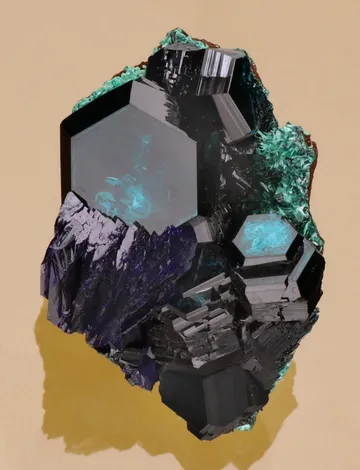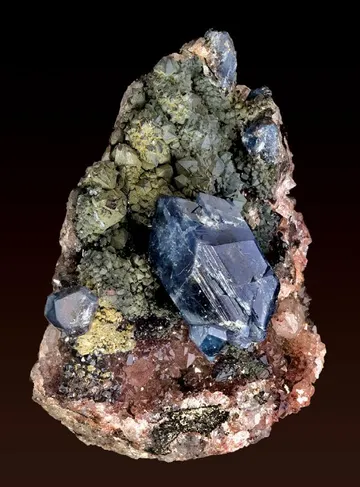
San Martín Mine, Mexico — Zacatecas locality famed for native silver sheets and wires on iridescent bornite, with apophyllite pockets and bold skarn specimens.
Key facts
San Martín is one of the great Mexican names where ore geology and specimen aesthetics meet cleanly. The mine lies in the San Martín-Sabinas district near Sombrerete, Zacatecas, on the southeastern part of a large polymetallic sulfide skarn system developed around the Cerro de la Gloria intrusive center. Economically it has been worked for copper, zinc, lead, and silver; for collectors it is best known for a far more particular look: thick sheets and wires of native silver lying in or on iridescent bornite, pastel pink apophyllite from small late pockets, fluorite-and-calcite combinations, stibnite sprays, and sulfide-rich skarn specimens that are unmistakably Zacatecan.
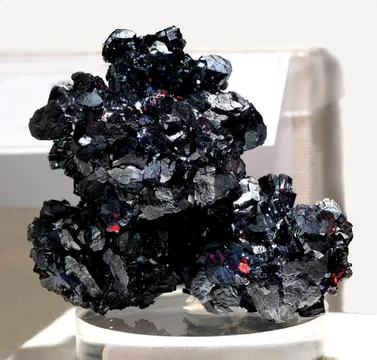
The finest San Martín native silver specimens are not the delicate, hairlike wires of Batopilas, nor the sculptural arborescences of Kongsberg. They are typically sturdy, burnished leaves, sheets, strings, and coarse wires, commonly with a peacock-purple to blue-bornite skin that gives the metal a dark, oil-slick brilliance. Good examples have three things ordinary examples lack: unambiguous silver relief, fresh iridescent bornite rather than dull black sulfide, and enough calcite, quartz, or matrix to set the metal off visually.
Regional View
Country View
San Martín’s importance is sharpened by its relationship to the nearby Sabinas Mine. The two operations exploit the same district-scale skarn system, separated more by ownership and mine boundaries than by mineralogical character. San Martín reached depth earlier, so many of the upper-level specimen styles associated with the district — apophyllite, stibnite, and stilbite-type zeolites — appeared in San Martín material before comparable finds became familiar from Sabinas. This is one reason old San Martín labels deserve careful attention: similar mineralization, adjacent workings, and decades of dealer shorthand have left a trail of Sabinas, San Martín, “La Noria,” and even misspelled “Sabino” attributions in circulation.

Photo: Rob Lavinsky, iRocks.com, via Wikimedia Commons

Photo:
Historically, the district belongs to the old silver geography of north-central Mexico. Mining at San Martín is traced to the sixteenth century, and modern company reports describe twentieth-century operations beginning in 1949. Before the modern skarn operation dominated the locality, narrow, high-grade silver-bearing veins cutting the skarn were worked for generations. Those veins remain important to understanding the specimens: the classic silver-bornite pieces are not random curiosities, but late native silver introduced into copper-rich sulfide zones of a long-lived hydrothermal system.
Search for specimens: View all specimens from San Martín Mine, Mexico
San Martín is in the municipality of Sombrerete in northwestern Zacatecas, near the town of San Martín and roughly 17 kilometers from Sombrerete. The mine is an underground operation with a flotation plant, historically and presently tied to base-metal concentrates carrying significant silver. The modern property is held through Industrial Minera México, S.A. de C.V. under the Grupo México/Southern Copper corporate structure, and company filings describe a large concession package surrounding the mining complex.
Geologically, the deposit is a polymetallic Zn-Pb-Cu-Ag-Au sulfide skarn. The principal carbonate host is the Upper Cretaceous Cuesta del Cura limestone, a shallow-marine limestone with black chert, overlain by shales and fine-grained clayey limestones of the Indura Formation. Mineralization formed around the Cerro de la Gloria intrusive body, described in geological literature as a quartz monzonite to granodiorite stock. Prograde garnet-pyroxene skarn was followed by retrograde sulfide mineralization and, locally, by peripheral subepithermal to epithermal veins. This multipulse history is precisely why San Martín specimens can range from skarn silicates and massive sulfides to late calcite, fluorite, apophyllite, zeolites, silver, and antimony minerals.
The principal modern ore structures include the San Marcial, Ibarra, and Gallo-Gallina vein systems, oriented broadly parallel to the intrusive contact. Company summaries describe vein thicknesses from less than a meter to several meters and horizontal extents reaching about a kilometer away from the intrusion. The ore occurs as veins, replacement bodies, and massive to disseminated sulfides in skarn. Important ore minerals include chalcopyrite, sphalerite, galena, bornite, tetrahedrite-group minerals, native silver, pyrite, arsenopyrite, and stibnite. At depth, particularly below the eighteenth level as described in locality notes, narrow feeder structures can be dominated by chalcopyrite and bornite, locally laced by late native silver — the geological setting of the most recognizable collector pieces.
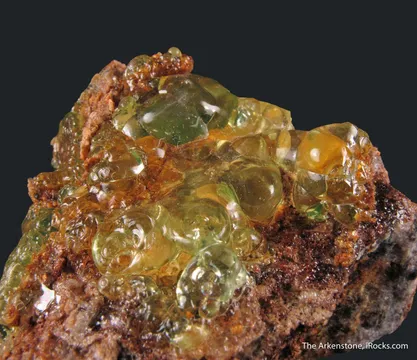
Oxidation reached roughly the upper 150 meters of the system. Much of that oxidized ore was mined early, but surface pits and small prospects around the district have produced or preserved secondary copper, lead, arsenate, carbonate, and molybdate species. The documented suite includes chrysocolla, azurite, adamite, conichalcite, cerussite, and, in small recent numbers, wulfenite. These are far less available to collectors than the primary silver-bornite, calcite, fluorite, and stibnite material, but they matter because they trace the changing chemistry outward from copper-rich sulfide zones toward lead-zinc and skarn-contact environments.
Mining history at San Martín is unusually long. Spanish-period silver exploitation is recorded from the mid-1500s, while twentieth-century modern operations began in 1949. Exploration from the early 1950s onward included extensive surface and underground drilling, and technical-report summaries cite large cumulative tonnages mined from the district. The operation was closed amid labor unrest from 2007 until the company regained control and restarted activities in 2018–2019. Current public filings describe San Martín as an operating underground mine; labor sources and Mexican government documents also record continuing legal and union disputes connected with the long strike, so the modern access picture is not merely a matter of asking at a gate.
For collectors, access should be treated as closed. This is an active industrial mine, not a fee-collecting locality, and underground collecting is not an option for visiting mineral collectors. Specimens reach the market through old collections, historic mine-connected material, dealer dispersals, and occasional pieces from district production. The most desirable labels are specific: San Martín Mine, level information where known, a dated find, or a clear old collection provenance. “San Martín-Sabinas district” is useful geological context, but it is not the same thing as a mine-specific label.
The notable specimen-producing episodes include the classic silver-bornite pieces that appeared strongly on the market in the late twentieth century and early 2000s; the pink apophyllite pockets around 2004–2006; older stibnite and berthierite-associated stibnite from upper levels; and recurring fluorite-calcite-quartz-sulfide combinations from the skarn and vein system. Recent documentation has also added small but intriguing rare-species notes, including XRD-confirmed datolite with löllingite and a scattering of wulfenite from oxidized zones.
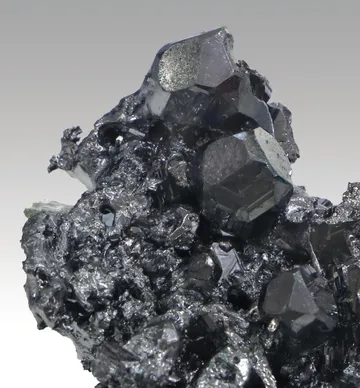
San Martín native silver is the mine’s signature collector mineral, most often seen as sturdy leaves, sheets, coarse wires, curled ribbons, or stringers enclosed by or resting on iridescent bornite, with calcite, quartz, chalcopyrite, or sulfide matrix as accents; documented specimens range from small miniatures to cabinet pieces over 13 cm across, and the best show thick, three-dimensional silver with a bright burnished surface rather than flat dull smears. Level-specific material is especially prized: one well-known specimen from Level 17 measures 6.3 x 4.2 x 3.7 cm and shows clusters and stringers of silver in purple bornite with a white calcite vein, while later auction examples describe large silver “sheets” with peacock-bornite iridescence that are surprisingly robust rather than fragile. Ordinary pieces are dark bornite with only tiny silver flecks; fine pieces make the silver visually dominant while retaining the distinctive bornite skin that marks the locality.
Bornite at San Martín is both an ore mineral and the dramatic stage on which the native silver performs: massive to granular copper-rich sulfide, commonly iridescent purple, blue, and bronze, forms matrix, coatings, and microcrystalline surfaces around silver leaves and wires, with quartz, calcite, and chalcopyrite as frequent companions. The bornite-bearing silver pieces are associated with copper-rich deep ore zones and feeder structures, and locality records note that massive chalcopyrite-bornite sulfide below the eighteenth level can be locally laced by late native silver. Good bornite specimens here are judged less as standalone bornite crystals than as color-and-contrast combinations: a fresh peacock surface, obvious silver relief, and a solid sculptural mass make a San Martín bornite far more desirable than dull black sulfide ore with only hidden metallic specks.
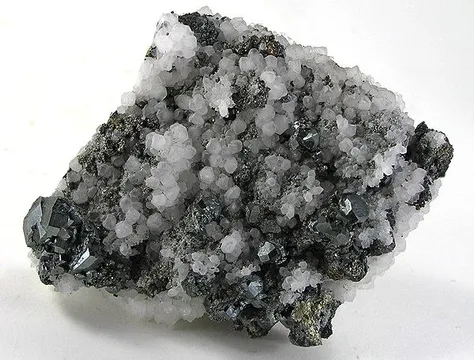
Calcite from San Martín appears in several distinct specimen roles: white rhombs and small lustrous crystals contrast with stibnite and berthierite, gray-purple dogtooth crystals can be overgrown by fluorite and later tan calcite, and older records note more substantial lustrous twinned scalenohedrons to about 4.5 cm and colorless transparent prisms to about 5 cm in clusters. Collector-grade calcite from this mine is not merely matrix filler; the better pieces use calcite structurally and aesthetically, framing fluorite cuboctahedrons, setting off native silver and bornite, or forming sharp sprays around sulfides. Fluorescent response has been documented in San Martín calcite-fluorite combinations, including tan secondary calcite with orange fluorescence, so ultraviolet behavior can add interest, but form, balance, and undamaged terminations still separate serious examples from common white carbonate crusts.
San Martín fluorite is a classic supporting species of the skarn-vein assemblage, occurring as purple, lavender, green, colorless, and zoned crystals, commonly cubic, dodecahedral, octahedral, or cuboctahedral, with calcite, quartz, chalcopyrite, galena, pyrite, and jamesonite. Fine pieces include purple dodecahedrons around 2.5 cm, lavender cubes to about 1.5 cm on matrix with pyrite, twinned crystals with blue cores, and striking etched cuboctahedrons whose green outer layer has been partly removed to reveal colorless cores. The best San Martín fluorites are valued for sharp modified forms, transparency, zoning, and lively associations — especially white calcite, quartz points, and brassy sulfides — while ordinary pieces are small, incomplete, or too heavily coated to show the fluorite geometry.
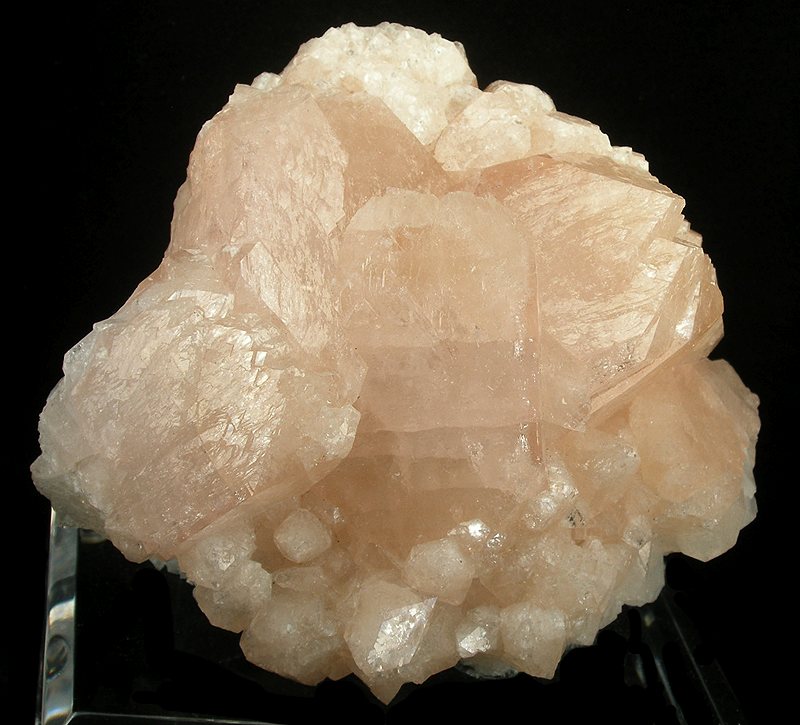
San Martín apophyllite is best represented by pink fluorapophyllite-(K), often still traded under older apophyllite labels, and it is among the most charming surprises of this sulfide skarn locality: pastel pink, glassy, translucent tabular to blocky tetragonal crystals, commonly in plates and clusters, emerged from small finds around 2004–2006 and from earlier sparse production. Documented cabinet pieces reach about 10.8 x 9.8 x 5.7 cm, with individual crystals to 5 cm in the finest examples; another 6.7 cm specimen shows 1.5–2 cm crystals and a doubly terminated crystal over 3 cm. Good examples are even pink, lustrous, and minimally bruised, because larger San Martín plates were often damaged; small pointy crystals are more available, but the broad, tabular, pastel plates remain the important Mexican apophyllite style from this mine.
San Martín stibnite is an upper-level antimony expression of the system, occurring as gray to bright silvery acicular sprays, radiating clusters, and terminated prisms to several centimeters, often with calcite and sometimes with berthierite. A representative documented specimen measuring 5.7 x 3.2 x 2.2 cm shows two bright sprays of acicular crystals in a jackstraw pattern on a thin matrix plate, while other material shows brown berthierite epitaxy on stibnite crystals, an association noted from early 1980s market material. Fine San Martín stibnite is airy, metallic, and undamaged, with separated sprays and visible terminations; lesser pieces are tangled, oxidized, bent, or so matrix-poor that they become fragile rather than displayable.
Chalcopyrite is a major San Martín ore mineral and an important accessory on collector specimens, occurring as massive copper sulfide with bornite at depth, as brassy crystals with calcite, fluorite, quartz, galena, and tetrahedrite-group minerals, and as sharp thumbnail to miniature sphenoidal crystal groups. One documented 2.2 x 1.9 x 1.5 cm specimen consists of lustrous brassy sphenoidal crystals to 1.5 cm, nearly pristine, while other San Martín combinations place chalcopyrite against lilac fluorite, white calcite, quartz points, or galena. The best chalcopyrite examples are bright, sharply crystallized, and compositionally tied to classic San Martín associations; ordinary pieces are simply massive ore without the crystallographic definition or contrasting matrix that makes the species collectible from this locality.
Beyond the headline species, San Martín has an unusually instructive documented suite. Skarn silicates include andradite, grossular, hedenbergite, ferrosalite, wollastonite, vesuvianite, epidote, tremolite-actinolite, and axinite-group minerals; ore and late sulfide minerals include sphalerite, galena, pyrite, arsenopyrite, pyrrhotite, molybdenite, tetrahedrite-group minerals, famatinite, bournonite, jamesonite, berthierite, stephanite, proustite, pyrargyrite, xanthoconite, and native copper. Datolite with löllingite has been reported as a new XRD-confirmed discovery, and scolecite, powellite, scheelite, baryte, quartz, and zeolite-group minerals add further collector and paragenetic interest. No type-locality mineral is verified from the San Martín Mine itself; the recently approved sombrereteite is tied to the separate Sombrerete meteorite in the same municipality, not to the mine.
The central authenticity problem at San Martín is not widespread fakery; it is locality precision. The adjacent Sabinas Mine exploits the same district-scale system, and specimens from the two mines can be mineralogically indistinguishable without reliable provenance. Labels reading “San Martín-Sabinas district” may be honest but imprecise. Labels reading “La Noria” or “La Noria de San Pantaleón” require special caution, particularly on post-1975 material, because many such labels circulated through dealers even when the specimens almost certainly came from Sabinas or San Martín rather than the old La Noria workings. A label that includes a mine level, collection history, acquisition date, or miner/dealer provenance is much more valuable than a broad district attribution.
Silver-bornite specimens are the most recognizable and most often misdescribed. True San Martín pieces tend to be thick, sturdy sheets or wires with bornite iridescence; they should not look like flimsy foil glued to ore. Examine the contact between silver and bornite under magnification. Natural pieces show the silver entering the sulfide, crossing cavities, or following seams; suspect pieces show bright metal perched unnaturally on sawed or broken ore. Avoid aggressive cleaning, acids, or polishing: the bornite sheen and natural silver patina are part of the value, and chemical cleaning can turn a superb old piece into a harsh, stripped object.
Condition standards vary sharply by species. Silver-bornite pieces are relatively durable for native silver, but protruding wires can still bend, and bornite surfaces scratch easily. Stibnite is brittle and should be handled by matrix only; never trim, grind, or blow dust from stibnite, as antimony sulfide dust is not something to inhale. Apophyllite has perfect basal cleavage and bruises readily, which is why large undamaged San Martín pink plates are scarce. Fluorite cleaves, calcite bruises and reacts with acid, and quartz-sulfide-fluorite combination plates often hide small contacts among the white calcite sprays.
Fluorescence can add interest but should not be oversold. Some San Martín calcite-fluorite combinations show fluorescent calcite, including orange response in secondary calcite overgrowths, and some fluorites may respond as well. Test gently, record the wavelength if known, and do not infer mine identity from fluorescence alone; the district contains several visually similar calcite-fluorite assemblages.
Market availability is episodic. Commonest are old-stock silver-bornite pieces, small fluorite-calcite combinations, stibnite miniatures, and occasional chalcopyrite or calcite specimens from collection dispersals. Fine cabinet silver sheets over 10 cm, undamaged pink apophyllite plates with crystals several centimeters across, sharp fluorite combinations with strong zoning, and well-provenanced stibnite-berthierite pieces are much scarcer. Auction results in 2024–2025 show solid cabinet silver-bornite specimens still appearing, but usually as single old-collection pieces rather than abundant new production.
The most repeated San Martín story begins with a name on a label: La Noria. For decades, collectors encountered San Martín-Sabinas district specimens — silver in bornite, fluorite, stibnite, apophyllite — carrying the romantic old label “La Noria” or “La Noria de San Pantaleón.” The name has real historical weight. La Noria was a small mine colony by the old Noria shaft, and the largest veins in the district were worked there for centuries. But the label became a trap. By the late twentieth century the settlement was largely abandoned; by 1999, locality notes describe only one or two habitable buildings remaining. Meanwhile, the Sabinas shaft and ramp lay more than a kilometer from the Noria shaft, and Sabinas workings were not accessed through La Noria. Material sold in the 1990s and later as “La Noria” often belonged instead to the active San Martín-Sabinas system. For a collector, the correction is not pedantry — it changes whether a specimen is from an old colonial vein mine, a modern skarn operation, or a neighboring mine within the same mineralized body.
Another San Martín story is told in levels. A well-known Level 17 silver-bornite specimen, formerly in the Wes Parker collection, is only 6.3 cm across, but it captures the locality in miniature: burnished silver wires scattered in clusters and stringers through iridescent purple bornite, cut by a thin white calcite vein. Level information of that kind is rare on market specimens. When it appears, it gives the piece a geological address inside the mine, not merely a country and state. It also supports the broader interpretation of the silver-bornite style: late native silver in copper-rich sulfide zones, not a random secondary coating.
The pink apophyllite find of the mid-2000s was a different kind of surprise. San Martín had long been a sulfide-and-silver locality in collectors’ minds, so pastel pink apophyllite plates from a Mexican skarn mine seemed almost improbable. The best documented pieces from about 2004–2006 are not little glitter patches; they are cabinet plates around 10 cm across with glassy tabular crystals to 5 cm. The catch was condition. Contemporary specimen descriptions stress how few large plates of that caliber survived intact, and how many were either smaller or significantly damaged. That scarcity is why a broad, undamaged, even-pink San Martín apophyllite is still a serious Mexican specimen rather than a pretty curiosity.
There is also the labor story, inseparable from the modern mine. San Martín stopped in 2007 during a long labor conflict. In August 2018, company filings say control was resumed after eleven years of stoppage; Mexican labor and press sources describe the same reopening through a more contentious lens, with police, soldiers, union claims, and federal labor rulings all becoming part of the record. Production was restored in 2019 according to company filings, but the dispute did not vanish from public life. For collectors, the practical consequence is straightforward: San Martín is not a casual collecting destination with predictable access. It is an operating industrial mine with a complicated modern social history, and most collector specimens properly belong to old collections, mine-connected channels, or dealer dispersals rather than field collecting by visitors.