A collector's guide to Proaño Mine, Mexico: its geology, mining history and notable minerals, illustrated with the 45 specimens documented from this locality on EarthWonders.
Key facts
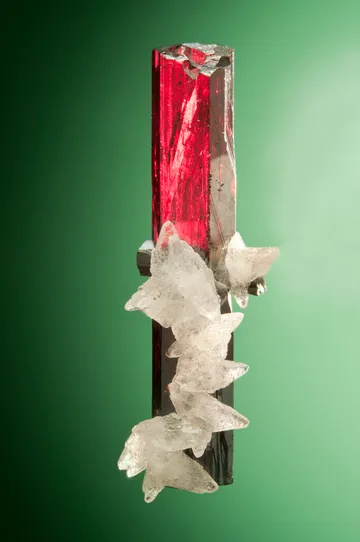
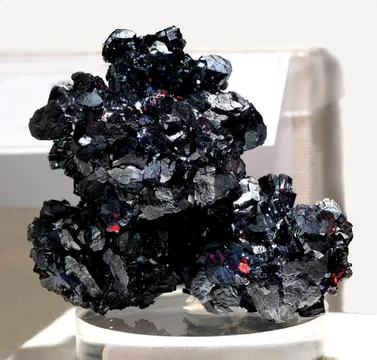
Proaño Mine is the specimen name most collectors use for the great Fresnillo silver mine at Fresnillo, Zacatecas: a centuries-old underground silver system built into and beneath Cerro Proaño, the discovery hill of one of Mexico’s most important silver districts. For collectors, its fame rests not on colorful secondary minerals but on primary and near-primary silver species of exceptional crystallization—acanthite, pyrargyrite, polybasite, stephanite, native silver, and their quartz-calcite-pyrite-sphalerite-galena associations. The best pieces have the unmistakable look of high-grade Mexican silver ore opened in pockets: black to gunmetal metallic acanthite in sculptural, pseudo-cubic and cubo-octahedral groups; deep red pyrargyrite prisms that glow when backlit; and lustrous, dark, blocky stephanite crystals that are far rarer on the market than the ruby silvers.
Geologically, Fresnillo is a world-class silver district developed in Mesozoic sedimentary and volcanic rocks cut by Tertiary intrusions and later epithermal vein systems. The old Cerro Proaño stockwork and the later blind vein discoveries, especially the Santo Niño-style silver-rich veins, are central to understanding why the locality produced both enormous tonnages of ore and collector-quality specimens. The deposit is not a simple “one-vein” locality: it includes mantos, chimneys, disseminated mineralization, stockwork, and veins, with silver richness increasing in the distal epithermal parts of the system and base-metal content becoming more important in other zones and at depth.
Regional View
Country View
Historically, Fresnillo belongs with Guanajuato, Pachuca-Real del Monte, and Zacatecas among the foundational Mexican silver names, but Proaño has a different collector personality. Guanajuato is the classic source of large acanthite pseudomorphs after argentite; Batopilas is the native silver legend; Fresnillo-Proaño is the great sulfosalt mine. In good specimens, the locality often announces itself through a combination of silver-black luster, stout but complex crystal habits, and associations with quartz and white to pale calcite rather than gaudy oxidized copper color.
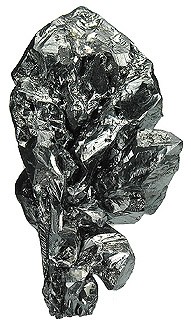
Photo: Wikimedia Commons

Photo: Wikimedia Commons
Search for specimens: View all specimens from Proaño Mine, Mexico
Proaño Mine is at Fresnillo, in central Zacatecas, and is also widely called the Fresnillo Mine or Fresnillo Silver Mine. The mine lies just outside the city, around Cerro Proaño, at the heart of the Fresnillo district. Modern corporate sources treat Fresnillo as an operating underground silver-primary mine; collector and locality databases retain the older and historically meaningful name Proaño for the mine and its famous specimen-producing workings.
The host stratigraphy is dominated by Mesozoic marine sedimentary and volcanic rocks, notably greywacke, shale, calcareous and carbonaceous units of the Proaño Group and related units, together with the Chilitos volcanic rocks and overlying Tertiary volcanic rocks. A small quartz-monzonite stock and related intrusive activity are important in the district’s earlier base-metal and replacement mineralization, while the later silver-rich veins are epithermal. In practical collector terms, this geology explains why one specimen may be a massive sulphide ore association with sphalerite, galena, chalcopyrite, and pyrite, while another from the same broader mine district is a clean pocket piece of pyrargyrite, acanthite, polybasite, stephanite, quartz, and calcite.
Published geological work divides the Fresnillo mineralization into several styles: silver-rich oxide stockwork in the Cerro Proaño area; light sulphide mineralization rich in acanthite and ruby silvers, especially the Santo Niño-style veins; and heavy sulphide mineralization dominated by argentiferous galena, sphalerite, pyrite, and related base-metal sulphides. The Santo Niño-style ore is especially important to collectors because it is the mineralogical environment in which acanthite, pyrargyrite, polybasite, and stephanite occur together in the high-grade silver assemblage. These veins are blind: instead of cropping out as obvious surface ore, they top out well below the modern surface and were discovered through mining and exploration, not by casual collecting.
The mine’s principal mineralized structures include northwest-trending and east-west to west-northwest vein systems, together with mantos, chimneys, stockwork, and disseminated zones. The old Cerro Proaño zone includes stockwork and veins near the historic hill, while the San Luis Shaft, San Guillermo Vein, San Carlos Vein, Santo Niño Vein, and Cueva Santa area appear repeatedly on well-documented specimen labels. Reported specimen levels include the 425, 475, 530, 580, 600, and 630 levels, reflecting the fact that fine crystals were recovered from deep underground operations rather than surface dumps.
Mining history at Proaño is unusually long. The Cerro Proaño discovery is traditionally tied to Diego Fernández de Proaño in the early 1550s, and Fresnillo’s colonial history begins in the same decade with Francisco de Ibarra’s arrival at the “Ojo de Aguas del Fresnillo.” Formal and sustained exploitation developed through the colonial period, with later major chapters under the Zacatecano-Mexicana company in the nineteenth century, the Fresnillo Company in the early twentieth century, Mexicanization and Peñoles control in the twentieth century, and Fresnillo plc as the modern corporate operator. Flotation of sulphide ores began in the 1920s, a key change because the richest visible silver-oxide ores of the old workings were no longer the whole story; deeper sulphide ore became the economic engine.
A particularly important turning point came in the 1970s, when operations were approaching exhaustion under the old view of the district. The discovery of the blind Santo Niño vein revived and transformed Fresnillo, shifting attention to concealed, silver-rich light-sulphide veins. Later discoveries such as San Carlos and nearby Saucito and Valdecañas expanded the district concept still further. For mineral collectors, these discoveries matter because many of the celebrated modern acanthites and silver sulfosalts come from the same deep, high-grade vein environments that gave the mine its late twentieth- and twenty-first-century vitality.
Collecting access today should be understood conservatively. Proaño/Fresnillo is an active industrial underground mine, not a public collecting site. There is a tourist and heritage component associated with Cerro Proaño and the mine area, but that is not equivalent to permission to collect ore or enter workings. Specimens reaching the market have generally come through miners, mine-associated channels, old collections, or dealer lots from specific finds. Serious collectors should value specimens with precise vein, shaft, and level data, because “Fresnillo” and “Proaño” have sometimes been used broadly or inconsistently on labels.
The notable pocket production that built the locality’s specimen reputation includes acanthite from Proaño and San Carlos, pyrargyrite from the San Guillermo Vein and San Luis Shaft, and stephanite from the Proaño mine including 425-level material. Documented specimens include 2.8 cm arborescent pseudo-cubic acanthite from the 580 level, a 2.5 cm San Guillermo pyrargyrite group from the 425 level, 2.1 cm doubly terminated pyrargyrite with quartz, calcite, and pyrite, and blocky stephanite crystals around 20 x 18 x 15 mm from C Block on the 425 level. Those sizes are not incidental: for these species, a sharp, complete, lustrous, damage-free crystal over a centimeter from Proaño is already serious material, and a fine multi-centimeter example belongs in an advanced silver suite.
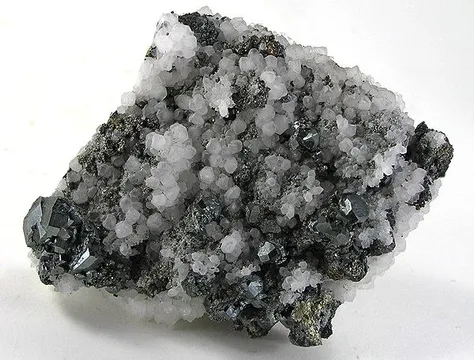
Acanthite from Proaño is the mine’s most recognizable modern collector mineral, occurring as metallic black to gunmetal-grey pseudo-cubic, cubo-octahedral, octahedral, hopper, skeletal, and branching arborescent crystals, commonly interpreted as low-temperature acanthite preserving higher-temperature argentite forms. Well-documented pieces come from the Proaño Mine proper and from named workings such as the San Guillermo Vein, San Luis Shaft, San Carlos Vein, and levels including the 580 level; reported sizes range from small thumbnails through miniatures and, in exceptional modern finds, sculptural small-cabinet pieces with individual crystals approaching several centimeters. Quartz, calcite, chalcopyrite, polybasite, pyrargyrite, stephanite, galena, sphalerite, and pyrite are the associations to watch for, but the finest acanthites here do not need a showy matrix: they are judged by sharpness, metallic luster, three-dimensional completeness, crystallographic complexity, and absence of rubbing on edges or pocket-contact bruising.
Proaño pyrargyrite is the classic “ruby silver” of the district: black-red to dark metallic on the surface, but capable of a deep blood-red glow when fresh edges or thinner crystals are backlit. The best examples occur as sharp hexagonal to short prismatic crystals, doubly terminated crystals, rounded aggregates of prismatic crystals, and lustrous crystal groups on quartz and calcite, with pyrite, chalcopyrite, polybasite, jamesonite, tetrahedrite-group minerals, sphalerite, arsenopyrite, galena, and stephanite among documented companions in the broader Fresnillo assemblage. Especially desirable labels include the San Guillermo Vein and San Luis Shaft, with published and photographed examples from the 425, 530, and 630 levels; ordinary pieces are dark massive ruby silver or incomplete clusters, while superior Proaño pieces show bright faces, obvious prism form, complete terminations, and enough translucency at an edge to prove the red color collectors prize.
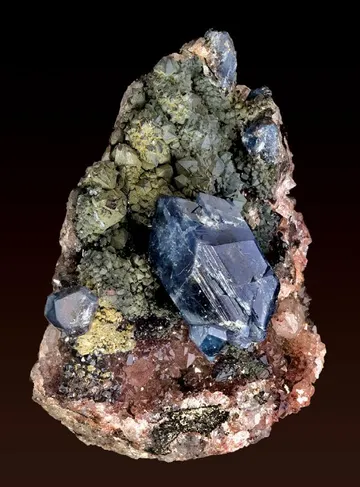
Stephanite from Proaño is considerably scarcer than acanthite and pyrargyrite, and its best specimens are dark gunmetal to black, lustrous, blocky to pseudohexagonal crystals rather than bright red “ruby silver” showpieces. Documented Proaño examples include well-crystallized metallic groups around 15 to 23 mm, a 20 x 18 x 15 mm blocky crystal from C Block on the 425 level, clusters associated with pyrargyrite and polybasite, and rare pocket combinations in calcite with individual stephanite crystals to several millimeters. Fine pieces are separated from routine material by crisp crystal outlines, strong metallic luster, three-dimensional isolation, and trustworthy identification, because dark silver sulfosalts from Fresnillo can look deceptively similar without context or analysis.
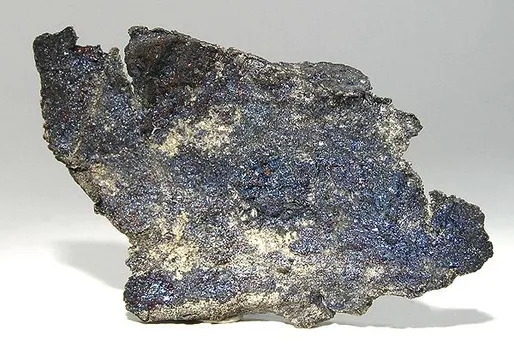
Other documented Proaño minerals include polybasite, native silver, chalcopyrite, galena, sphalerite, pyrite-bearing associations, quartz, calcite, baryte, and fluorite. Polybasite is the most important non-featured collector species from the mine and may occur as lustrous pseudohexagonal crystals with calcite, quartz, stephanite, and pyrargyrite; it is also a key mineral in the Santo Niño silver-sulfosalt paragenesis. Current locality listings for the exact Proaño Mine do not flag a valid type-locality mineral, although the broader Fresnillo municipality is historically important enough to include type-locality material for bromargyrite and a far larger regional suite. For Proaño itself, the real rarity is not a long species list but the quality of its silver sulphides and sulfosalts in named, level-specific pocket specimens.
Proaño silver minerals are dense, relatively soft, and often brittle at protruding crystal edges. Acanthite bruises and brightens on high points if handled carelessly; pyrargyrite and stephanite can show edge wear, contacted terminations, and cleaved or broken prisms that are difficult to see in poor lighting because the crystals are so dark. Strong, glancing light and magnification are essential when evaluating luster, faces, and damage. Do not judge pyrargyrite only under frontal light: the best pieces reveal their identity and quality when a crystal edge or thin termination transmits a red glow.
The most important authenticity issue is locality and species precision rather than a well-known plague of fabricated Proaño fakes. Labels reading “Fresnillo,” “Proano,” “San Luis,” “Santo Niño,” “San Guillermo,” or “San Carlos” may refer to different levels of specificity within the district; a specimen simply labeled “Fresnillo” may be excellent, but a specimen with vein, shaft, level, date, and old collection data is more valuable. Mindat records also note confusion with a “Fresnillo Mine” mislocation in the Pinos District, so labels should be checked against the famous Fresnillo Municipality silver district rather than accepted blindly.
Species misidentification is a real concern. Massive dark pyrargyrite, stephanite, polybasite, and acanthite can be visually treacherous, especially in small thumbnails. Pyrargyrite should show red internal color on thin edges or fresh broken areas; acanthite is typically more purely metallic black to grey, often in pseudo-cubic or octahedral forms; stephanite tends to form stout, dark, blocky or pseudohexagonal crystals; and polybasite commonly appears tabular to pseudohexagonal. For expensive specimens, analytical confirmation or a strong chain of provenance is worth seeking, particularly when the label claims stephanite or a rare association.
There are no special fluorescence expectations for the principal silver minerals here; they should be treated as non-fluorescent display specimens. More important is light sensitivity and surface preservation. Pyrargyrite, like other ruby silvers, should be protected from prolonged intense light that may dull or darken surfaces over time. All three featured species should be kept dry, handled minimally, and stored away from sulfurous or chemically active environments that can alter silver-mineral surfaces.
Market availability is intermittent. Small acanthites from old collections appear with some regularity, while exceptional modern acanthites from limited finds can be expensive and are quickly absorbed into advanced collections. Fine pyrargyrite remains available but competitive when well crystallized, translucent red, and from a named vein or level. Good stephanite is the hardest of the three featured species to replace: even small but sharp Proaño stephanite groups are significant, and large, lustrous, damage-free examples should be considered premium silver-sulfosalt specimens.
The Proaño story begins with a hill. In the early 1550s Diego Fernández de Proaño was moving through the Zacatecas region in search of mineral wealth when he found a hill with mineral showing at the surface. He named it Cerro de Proaño, reported it, and moved on. The hill did not immediately become the great mine one might expect from hindsight; it lingered as a landmark, a mineralized promise on the road north. Then, on September 2, 1554, Francisco de Ibarra’s expedition reached a spring bordered by a small ash tree. From that “fresnillo,” the little ash, the city took its name. The human geography and the mineral geography fused: a spring, a hill, a colonial mining route, and eventually one of the richest silver districts in the world.
The nineteenth-century revival has the texture of an industrial drama. The old Proaño mines had been crippled by water, war, and the difficulty of drainage. Zacatecas governor Francisco García Salinas moved to reactivate the abandoned workings around 1830, and English-backed Zacatecano-Mexicana capital followed. By 1836 steam technology had arrived: two steam engines from England were installed for dewatering, one of the turning points in the mine’s ability to work below the old flooded levels. Hacienda Proaño, built in the 1840s, became part of the industrial landscape, with machinery for crushing ore and patio-process amalgamation. Yet the mine’s progress was repeatedly interrupted—cholera, the U.S. invasion, the Reform War, and the French intervention all left marks on production.
Modern geology supplied its own twist. By the early 1970s, Fresnillo was nearing the end of what miners then understood. The old mine looked tired. The district’s future changed when the blind Santo Niño vein was found in the mid-1970s, concealed below cover and below the obvious surface expressions of ore. That discovery did more than add reserves; it rewrote the district model. High-grade silver did not have to announce itself at the surface. The richest veins could top out hundreds of meters down, swell rapidly from thin calcite structures into meter-scale ore, and continue laterally for kilometers. The specimen consequence is visible in the cabinets of collectors: deep-level ruby silvers and silver sulphides that owe their existence on the market to exploration success, not to surface collecting luck.
One of the most satisfying collector episodes is preserved in specimen records from the 2002 Tucson show. A small lot of blocky stephanite from Proaño, including C Block, 425-level material, appeared through Dave Bunk. Individual crystals around 20 x 18 x 15 mm may not sound large to a quartz collector, but for stephanite from a classic Mexican silver mine they are emphatic: dark, metallic, sharply present, and scarce. Those pieces helped remind collectors that Fresnillo was not merely a pyrargyrite and acanthite locality; it could also produce cabinet-worthy examples of one of the more elusive silver-antimony sulfosalts.
The scientific story is just as memorable. Fluid-inclusion work on the Fresnillo system showed that the district’s silver was carried by unusually metal-rich brines tied to the great magmatic and volcanic history of western Mexico. One model estimated that roughly 1.8 km3 of brine could have transported the district’s enormous silver inventory, and that under high-flow conditions the effective silver-charging pulses could have been astonishingly brief on geological timescales. It is a rare case where a collector can hold a small black acanthite or red pyrargyrite crystal and connect it directly to a district-scale picture: pulses of hot brine moving through fractured rock, boiling, reacting, and leaving behind enough silver to build both a city and a mineralogical legend.