Xikuangshan Sb Deposit, China - a supergiant antimony locality famed for stibnite-calcite contrasts, mirror-bright blades, and classic collecting appeal.
Key facts
Xikuangshan is the antimony locality by which many modern collectors learned what Chinese stibnite could be. The deposit lies at Lengshuijiang in central Hunan, within the Xiangzhong Basin, where Upper Devonian carbonate and shale units were folded, fractured, silicified, and replaced by antimony-bearing hydrothermal fluids. In ore-deposit terms it is a supergiant sediment-hosted antimony system; in specimen terms it is the source of some of the most recognizable stibnite-calcite combinations of the last half-century.
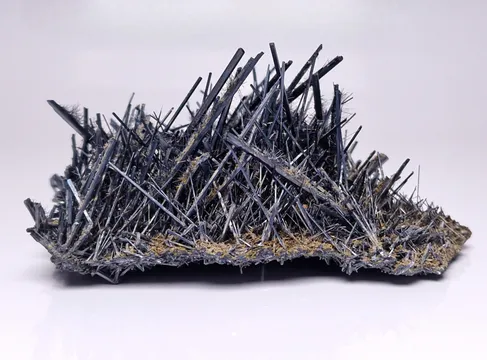
The mineralogy is deceptively simple. Stibnite is the ore mineral, with quartz and calcite as the dominant gangue; barite, fluorite, dolomite, talc, pyrite, sphalerite, pyrrhotite, and a suite of secondary antimony minerals occur in lesser amounts. That simplicity is part of Xikuangshan’s collector appeal. The best pieces do not rely on a crowded species list: they rely on contrast, architecture, and preservation. A fine Xikuangshan specimen may show mirror-bright steel-gray stibnite blades crossing a pale calcite rhomb, dark needles imprisoned inside honey-colored calcite, or a spray of striated metallic crystals rising from white barite or quartz.
Historically, Xikuangshan has an industrial weight few specimen localities can match. The Chinese name is associated with “tin mine mountain,” yet the district became famous as the “World Antimony Capital.” Modern antimony mining began in the late nineteenth century and continues under large-scale industrial operators. For collectors, the most memorable wave of specimens came through commercial mineral channels in the late 1990s and especially around the 2000s, when stibnite-calcite combinations from Xikuangshan began appearing at shows and in dealer inventories with a style distinct from the older classics of Japan, Romania, Bolivia, and Europe.
Regional View
Country View
The finest cabinet pieces from Xikuangshan have a taut, graphic quality: dark metallic stibnite, usually slender rather than thick, set against translucent calcite or pale gangue. Terminated, lustrous blades are the obvious attraction, but sophisticated collectors look just as hard at the mineral sequence. Stibnite piercing or included in calcite is the signature. Barite-bearing pieces, especially complete translucent tabular baryte crystals with stibnite or stibiconite, are less commonly encountered and can be more locality-specialist than “showy” at first glance.
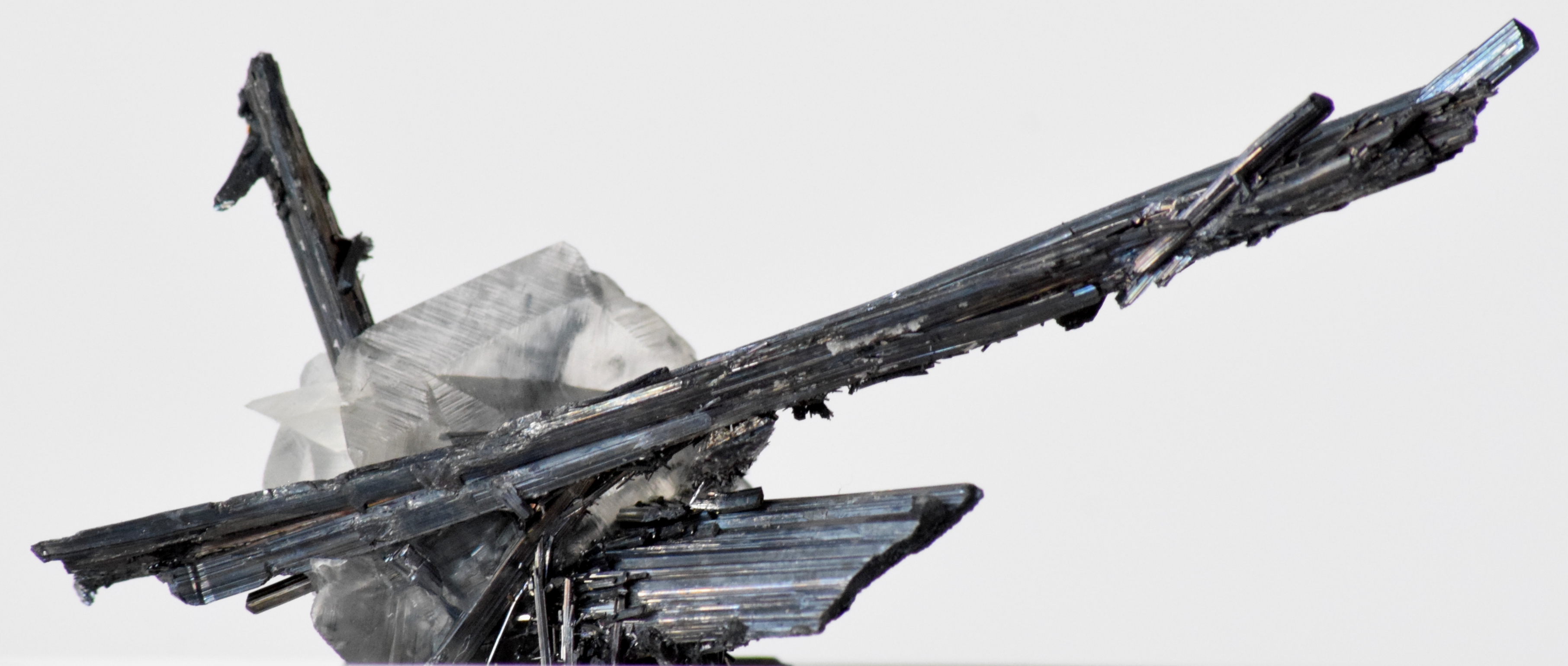
Photo: Wikimedia Commons / Klaproth

Search for specimens: View all specimens from Xikuangshan Sb Deposit, China
Xikuangshan is a structurally and stratigraphically controlled antimony deposit in Lengshuijiang County, Loudi, Hunan Province. Modern geological papers place it in the central Hunan, or Xiangzhong, Basin and describe the principal host rocks as Devonian carbonate and shale sequences, particularly the Shetianqiao Formation and the overlying Xikuangshan Formation. The ore-bearing interval is especially associated with silicified limestone beneath shale-rich horizons, a setting that helped focus ascending hydrothermal fluids into favourable beds and fractures.
The deposit is arranged around a complex anticline system and its subsidiary folds. Published descriptions commonly name the principal ore blocks as Laokuangshan, Tongjiayuan, Feishuiyan, and Wuhua, with Daocaowan also treated in recent work as part of the broader ore field. The F75 fault and associated interlayer fractures are repeatedly identified as important fluid pathways and ore controls. At the hand-specimen scale, this structural control expresses itself as massive, brecciated, disseminated, drusy, network-like, and vein-style ore textures rather than as a single neat vein.
The most important ore style is quartz-stibnite mineralization, with late calcite-stibnite veins forming the association most familiar to mineral collectors. Modern studies distinguish early quartz-stibnite, fluorite-quartz-stibnite, and barite-quartz-stibnite assemblages from later calcite-stibnite assemblages. Quartz-stibnite ore accounts for the overwhelming bulk of the antimony reserve in recent geological treatments, but the late calcite-bearing material is disproportionately important to the specimen trade because it produced the dramatic included, piercing, and freestanding stibnite-calcite pieces.
Orebodies are generally stratiform to lens-like in the mine-scale descriptions, parallel to favourable Devonian strata but internally composed of veinlets, replacement zones, and networks. Reported dimensions vary by ore block, but published summaries describe individual orebodies extending tens to hundreds of metres along strike, far more down dip, and commonly metres thick, locally reaching much greater thickness where structure and silicification were especially favourable. The ore is simple but rich in visual texture: stibnite is the economic mineral; quartz and calcite are the main gangue; barite, fluorite, talc, dolomite, pyrite, sphalerite, and pyrrhotite are subordinate.
The mining history is long and unusually well documented for a mineral-specimen locality. Xikuangshan is described in company sources as discovered in the sixteenth century and formally mined from 1897 onward. Twentieth- and twenty-first-century production turned the district into China’s dominant antimony centre, and modern company information for Hsikwangshan Twinkling Star Antimony describes an integrated enterprise engaged in mining, beneficiation, smelting, research, and antimony-product manufacture. China Minmetals materials and industry reports identify the operation as part of a major national antimony platform.
Collecting access today should be regarded as closed in practical terms. Xikuangshan is an active industrial mining and smelting district, not a public collecting site. Fine specimens reach collectors through Chinese and international dealer networks, old mine lots, dispersed private collections, auction listings, and occasional newer commercial releases. Serious labels should read Xikuangshan Sb deposit or Xikuangshan antimony deposit, Lengshuijiang, Loudi, Hunan, China; vague “China stibnite” labels are not acceptable for locality-focused collecting.
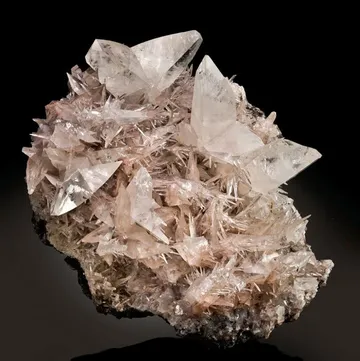
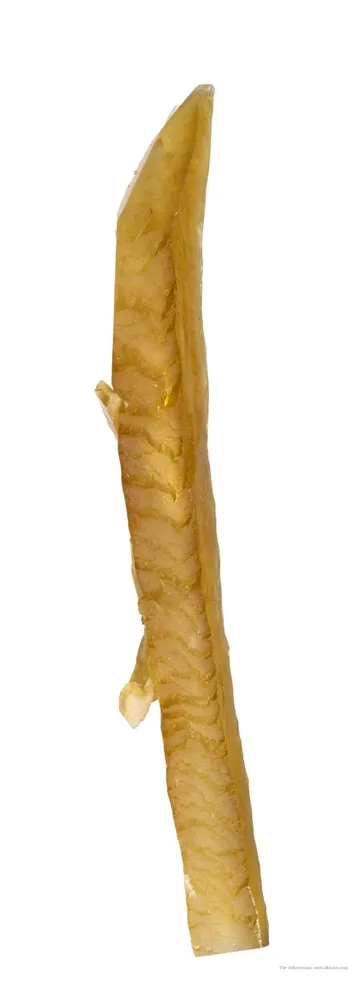
The notable specimen periods reflected in dealer and gallery records include late-1990s material and a particularly visible 2009–2010 wave of stibnite-calcite and baryte-stibnite specimens. Pieces from those finds include transparent to honey-yellow flattened calcite crystals with stibnite included near the base, tabular or lenticular calcite carrying stibnite needles, stibnite sprays accented by tiny calcite rhombs, and unusual baryte floaters with implanted stibnite. Older barite and stibiconite material is also known, including specimens where stibnite has been partly or wholly replaced by yellowish to ocher antimony oxides while preserving the original bladed form.
Stibnite from Xikuangshan is typically steel-gray to silver-black, highly metallic, strongly striated, and bladed to prismatic, ranging from thumbnail single crystals and small sprays to large cabinet clusters; documented collector pieces include slender blades over 10 cm and museum-style examples far larger, though intact aesthetic crystals are a small fraction of the mined ore. The classic habits are divergent sprays, parallel bladed groups, isolated spears, acicular aggregates, and crystals piercing or enclosed by calcite. It occurs chiefly with calcite and quartz, with barite, baryte, fluorite, dolomite, native sulfur, valentinite, stibiconite, and other secondary antimony minerals on some pieces. The most desirable examples combine bright, unoxidized luster, sharp terminations, visible longitudinal striation, sculptural openness, and undamaged tips; ordinary material is usually massive, broken, dull, or overly dense, reflecting Xikuangshan’s primary identity as a large ore deposit rather than a specimen mine.
Calcite is the defining companion mineral for Xikuangshan stibnite specimens, especially the late calcite-stibnite style that brought the locality into many modern collections. It occurs as translucent to transparent flattened rhombs, lenticular crystals, discoidal twins, scalenohedral groups, and pale to amber-yellow tabular forms, commonly with stibnite needles included within the calcite, piercing through it, coating parts of it, or perched along contact zones with the matrix. Dealer records from the 2009 find describe calcite crystals from roughly thumbnail to more than 5 cm across, while a large auctioned combination had flattened lenticular calcite to more than 10 cm. Better pieces show clean, sharp calcite with visible internal stibnite, honey or pale yellow color, bright faces, and a balanced contrast between carbonate and sulfide; lesser pieces tend to be bruised, milky, heavily included without transparency, or dominated by massive stibnite rubble.
Barite at Xikuangshan is geologically minor compared with quartz and calcite but important to locality collectors because it appears in early barite-quartz-stibnite mineralization and in distinctive specimen combinations. It may form white crystallized coatings on metallic stibnite, blocky colorless crystals in quartz-coated breccia, or pale yellow to smoky golden tabular crystals associated with quartz, stibnite, dolomite, and stibiconite. Notable specimens include large stibnite clusters partly coated by white barite, barite on quartz with corroded stibnite remnants, and older material showing stepped glossy barite over earlier white barite. The best barite pieces are not merely “barite present” labels: they show identifiable, lustrous, undamaged crystals with the antimony association still readable, preferably with stibnite or stibiconite proving the Xikuangshan paragenesis.
Quartz is one of the two principal gangue minerals at Xikuangshan and is fundamental to the ore system, particularly in quartz-stibnite veins, quartz-calcite-stibnite ore, and stockwork or brecciated textures. In collector specimens it is usually less celebrated than calcite because much Xikuangshan quartz is massive, vein-like, fine-grained, drusy, or present as a pale matrix rather than as isolated show crystals. Still, quartz-bearing pieces can be very satisfying when clear quartz points, quartz-coated breccia, or a lustrous quartz plate frames metallic stibnite, blocky barite, or dolomite. The best quartz specimens from the locality make the hydrothermal texture visible without overwhelming the stibnite; ordinary examples are simply quartz gangue with scattered or broken ore.
Stibiconite from Xikuangshan is a secondary antimony oxide-hydroxide most valued when it forms pseudomorphs after stibnite, preserving the bladed or prismatic shape of the original sulfide while changing the surface to yellowish, ocher, brown, or earthy tones. It is tied especially to oxidized material and mixed sulfide-oxide zones, commonly appearing with relict stibnite, baryte or barite, valentinite, cervantite, senarmontite, native sulfur, and sometimes gypsum. Collector records include small yellow stibiconite replacements on native sulfur specimens, stibnite crystals altered to stibiconite and enclosed in baryte, and large pseudomorphs after stibnite from the district. Good Xikuangshan stibiconite is judged by crystal-form preservation, completeness, association, and the visibility of the replacement story; unattractive material is powdery, shapeless, or only a thin dull alteration film on damaged stibnite.
Baryte, the British and IMA spelling of barite, is represented at Xikuangshan by the same BaSO4 species but often appears in specimen descriptions for the more aesthetic tabular and floater pieces. Fine examples may be colorless, translucent, smoky golden, glossy, stepped, or blocky, with stibnite crystals implanted on a complete baryte floater or stibiconite occupying the underside and cavities. A well-documented 2009 baryte-with-stibnite specimen measured 7.7 x 6.2 x 3.2 cm, with bright stibnite on a complete tabular baryte crystal, while other older baryte pieces show overgrowth textures and minor valentinite or stibiconite. The locality’s best baryte specimens are scarce because baryte is a minor gangue mineral here; collectors prize crystal completeness, transparency, color, and unmistakable antimony association over sheer size.
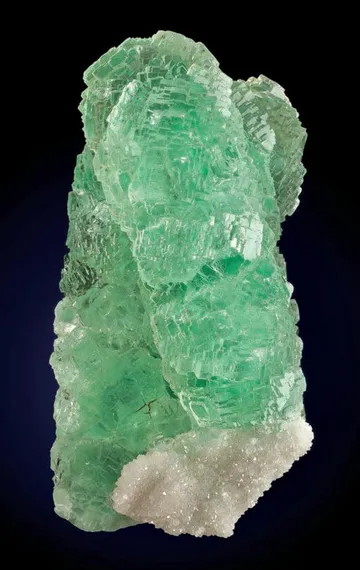
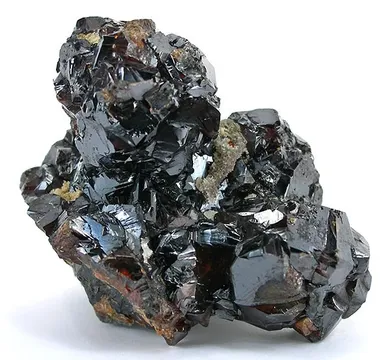
Other documented minerals from Xikuangshan include fluorite, dolomite, talc, pyrite, pyrrhotite, sphalerite, native sulfur, valentinite, cervantite, senarmontite, kermesite, gypsum, and other oxidation products of the antimony ore. The locality is not principally collected for type-mineral status; its rarities are instead paragenetic and preservation stories. Native sulfur with stibnite and stibiconite, valentinite sprays or coatings on stibnite, senarmontite on altered stibnite, and cervantite-valentinite pseudomorphs after sharp stibnite crystals are all specialist Xikuangshan pieces that broaden the locality beyond the familiar silver-black blade on calcite.
The main authenticity issue is mislabelling, not elaborate fabrication. Xikuangshan stibnite can be confused in the market with stibnite from Lushi and Wuning in China, with Romanian stibnite-barite combinations, and with older Japanese material from Ichinokawa or other classic localities. The Xikuangshan label should be supported by the typical Hunan stibnite-calcite association, provenance through a reputable dealer or older collection, and preferably specific wording such as “Xikuangshan Sb deposit, Lengshuijiang, Loudi, Hunan.” Be cautious with vague “Hunan stibnite,” “Chinese stibnite,” or “Xikuangshan style” descriptions when paying locality premiums.
Condition is critical. Stibnite has perfect cleavage, is relatively soft, and forms brittle, splintery blades that chip, bend, and lose terminations easily. Many Xikuangshan specimens show at least minor tip damage or edge bruising, especially on open sprays. Excellent examples are those where the eye reads motion and sharpness before it finds the unavoidable nicks. Bright metallic luster is a major value driver; dull gray, granular, or heavily oxidized surfaces belong in study or locality suites unless the alteration itself is the specimen’s point.
Stibnite should be handled with mineralogical respect. Do not wash aggressively, scrub, oil, lacquer, or acid-clean it. Keep it dry, avoid repeated touching, and wash hands after handling. Antimony sulfide is not a panic mineral in a closed display cabinet, but broken splinters and dust should be avoided, and specimens should be kept away from children, pets, food-preparation areas, and humid storage. Calcite-bearing pieces add their own vulnerability: calcite cleaves, scratches, and reacts with acids, so even weak household acids are inappropriate.
Fluorescence is not a major reason to buy Xikuangshan material, though some dealer records note minor shortwave response in calcite. Treat any fluorescence as a bonus rather than an identifying feature. For stibiconite, valentinite, and other secondary antimony minerals, stability varies with surface texture; friable yellow or white alteration products should be kept in covered flats or boxes where vibration and abrasion are minimized.
Market availability remains good for modest stibnite and stibnite-calcite pieces because the district was so productive, but high-grade examples are much scarcer than the mine’s enormous industrial scale might suggest. The most available specimens are small to miniature metallic blades on calcite or matrix, often with some damage. Better small-cabinet pieces with transparent calcite and well-terminated stibnite command stronger prices, and large, undamaged, sculptural clusters with strong provenance are genuinely difficult. Baryte, stibiconite pseudomorphs, valentinite, native sulfur, and well-composed quartz-barite-stibnite associations are more specialized and often appear intermittently through old collections rather than as steady mine-run supply.
Xikuangshan’s first story is a joke written by geology itself: “tin mine mountain” became the world capital of antimony. The old name held on, but the metal that made the district famous was not tin at all. By the late nineteenth century, organized antimony mining had begun, and over the next 120-plus years the place became an industrial landscape of shafts, concentrators, smelters, laboratories, ore piles, and company towns. Modern company literature still leans into that identity with the phrase “World Antimony Capital,” a title that sounds promotional until one looks at the reserve and production figures behind it.
The mine district is also a story of scale that is hard to reconcile with the delicacy of its best specimens. A collector may hold a 6 cm spray of stibnite and calcite in one hand, while the same ore system is described in geological papers as a multi-kilometre field of stratiform orebodies, anticlines, fault pathways, silicified limestone, and industrial reserves measured in millions of tonnes of contained antimony metal. That contrast is part of the Xikuangshan fascination: the elegant specimen is not from a little pocket in an obscure hillside prospect but from one of the great antimony engines of the mineral world.
A second story belongs to the 2000s specimen wave. Dealers and collectors remember the Xikuangshan stibnite-calcite combinations as a distinctive arrival: thin, metallic, gunmetal to stainless-steel stibnite blades crossing, piercing, or floating inside flattened calcite. Some calcites were pale and glassy; others were yellow to honey colored. A few had phantoms, discoidal twins, or internal “nebula” effects made by included stibnite. The best pieces looked almost constructed: dark needles locked inside carbonate windows, as if the ore stage and the late calcite stage had been frozen mid-conversation.
Then there are the oxidation pieces, less glamorous at first glance but more geological in their drama. Stibnite is supposed to be dark and metallic; at Xikuangshan, some of it survived as form rather than substance. Blades and prisms were altered into stibiconite, valentinite, cervantite, or mixtures of secondary antimony minerals, sometimes with native sulfur adding tiny yellow crystals. A good pseudomorph lets the collector read both events at once: the original sulfide grew as a sharp blade, and later oxygen-rich fluids unmade it chemically while sparing its outline.
The modern field story is not romantic collecting access but industry and environmental legacy. Recent scientific work on the Xikuangshan area repeatedly returns to antimony in waters, soils, sediments, mine waste, and smelting residues. That is a sobering part of the locality’s identity. The same mineralizing system that produced world-class stibnite also produced one of the most intensively studied antimony-contamination landscapes in China. For collectors, it is a reminder that Xikuangshan specimens are artifacts of a working mining district, not casual souvenirs from an open hillside.