Wheal Unity, Cornwall — oxidized copper-arsenate minerals on quartz; prized for the old Cornish look, fibrous olivenite textures, and its historic collecting l…
Key facts
Wheal Unity is one of the old copper-arsenate names that serious Cornish collectors learn to treat with care. It is not a broad romantic label for Cornwall in general, nor the similarly named Wheal Unity at Mullion on the Lizard; the classic specimen locality is Wheal Unity, Gwennap, in the St Day–Gwennap mining ground west of Truro and close to Poldice, Wheal Gorland, Carharrack, and Wheal Maid. In mineralogical terms it belongs to the celebrated Camborne–Redruth–St Day belt, where granite-related hydrothermal lodes cut Devonian country rocks and were later deeply oxidized, leached, and enriched. That geological history made Wheal Unity a copper and tin mine, but for collectors its reputation rests on the oxidized copper-arsenate suite: olivenite, liroconite, clinoclase, cornwallite, chalcophyllite, chenevixite, pharmacosiderite, parnauite, scorodite, and mimetite, usually on quartz-rich veinstone and iron-brown gossan.
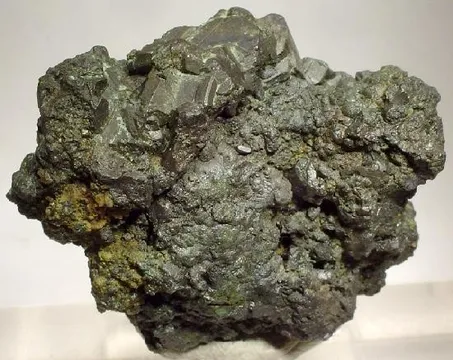
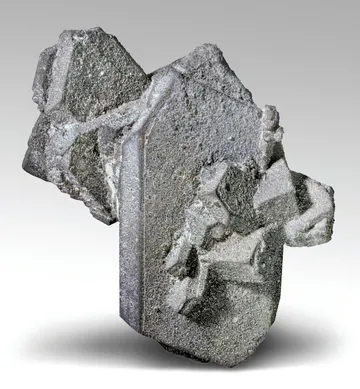
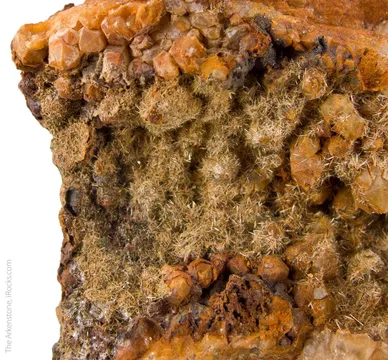
The finest Wheal Unity specimens have the unmistakable old Cornish look: dark green acicular olivenite in lustrous mats, wood-like fibrous olivenite with banding and chatoyancy, turquoise to green copper arsenates on smoky or milky quartz, and occasional pale brownish to yellowish mimetite in vugs. The best pieces are not judged by large single crystals in the modern pegmatite sense. They are judged by richness, preservation, and surface. A small cabinet specimen completely encrusted with sharp, glossy olivenite on rusty quartz can carry more locality weight than a larger but meagre matrix; a good “wood copper” olivenite is valued because its fibrous banding, undulating surface, and historical label place it squarely in the earliest tradition of Cornish mineral collecting.
Regional View
Country View
Wheal Unity also matters because it sits within one of the formative landscapes of mineralogy. Gwennap and St Day were not merely productive mining districts; they were places where early collectors, mine captains, dealers, and natural philosophers encountered new and bewildering secondary copper minerals in quantity. Nearby Wheal Gorland and Carharrack are type-locality names of international importance, and Wheal Unity shared the same mineralizing environment and, in some cases, extensions of the same lode systems. Old labels may therefore read “Wheal Unity,” “St Day United,” “Poldice,” “Gwennap,” or simply “St Day,” and the quality of the specimen and label history matter as much as the modern grid reference.
Search for specimens: View all specimens from Wheal Unity, UK
Wheal Unity lies in Gwennap, Cornwall, close to St Day, in the old “Copper Kingdom” of the Camborne–Redruth–St Day mining district. The classic mineral locality is recorded as a disused mine at approximately 50°14'34" N, 5°10'32" W, UK National Grid reference SW736430. It should not be confused with Wheal Unity, also known as Trenance Mine or Ghostcroft Mine, at Mullion on the Lizard Peninsula; that is a different Cornish mine and a different mineralogical setting.
The deposit is a granite-related Cornubian lode system. Regionally, the metalliferous belt between Camborne and St Day is tied to the Carnmenellis Granite and its satellite intrusions at Carn Brea and Carn Marth, with numerous elvan dykes and hydrothermal veins occupying fractures in the country rock. The lodes of the district are typically steep east-north-east to west-south-west structures, later cut or displaced by crosscourses. They were formed by repeated pulses of mineralizing fluids, followed by oxidation, leaching, and secondary enrichment near surface. At Wheal Unity this produced the collector’s suite of copper arsenates and phosphates in the gossanous upper workings, while deeper and less oxidized portions carried the more prosaic ores: chalcopyrite, chalcocite, bornite, cassiterite, arsenopyrite, galena, sphalerite, pyrite, and quartz.
Economically, Wheal Unity was worked for copper, tin, and tungsten, with arsenic becoming important later. It formed part of the St Day United Mines, also known in part through the Poldice Mines association. Poldice was an ancient and important tin mine, but the district shifted strongly toward copper as copper became more valuable in the eighteenth and early nineteenth centuries. Wheal Unity itself was one of the richest mines in Gwennap; by 1798 it had reportedly made profits of more than £100,000, mainly from copper ore. Soon afterwards it was amalgamated with Poldice. By the mid-nineteenth century the Unity–Poldice concern was increasingly dependent on arsenic production, a familiar pattern in the district as copper declined and arsenic became a valuable by-product for pigments, pesticides, glass manufacture, and other industries.
The mine was also connected to some of the great engineering systems of Gwennap. The Great County Adit, begun in 1748 to drain Poldice and then extended through the district, ultimately became an enormous gravity-drainage network serving more than 100 mines. A branch from Poldice reached Wheal Unity by the 1790s. The dressing floors for Wheal Unity were in the valley bottom below Unity Wood and required reliable water; the chosen supply came by a leat from Pednandrea Mine in Redruth, a distance described in local mining interpretation as six miles. This is a reminder that a Cornish “locality” is not just a shaft collar: it is a working landscape of shafts, adits, dumps, dressing floors, leats, tramways, arsenic works, and mineral storage.
For collectors, the productive specimen environment was the oxidized copper vein material: vuggy quartz, cellular quartzose veinstone, brecciated quartz, limonitic gossan, and partly altered sulphide ore. Mimetite is historically recorded from a copper vein, mostly on quartz and sometimes on chalcocite. Olivenite occurs as ordinary acicular to prismatic crystals and as the old varietal form “wood copper,” in which fibrous, banded olivenite resembles wood grain or wood tin. Chalcophyllite, chenevixite, cornwallite, clinoclase, liroconite, parnauite, pharmacosiderite, scorodite, and later-recognized rarities such as philipsbornite add the analytical and micromount interest that has kept Wheal Unity relevant long after the mine closed.
Collecting access today must be approached conservatively. Wheal Unity is a disused historic mine site in a landscape of old shafts, capped or walled features, contaminated mine waste, and mixed land ownership. Visible remains include features such as walled shafts and the Lemon’s West Shaft area, but the mine is not an open collecting quarry. Any visit requires permission from the relevant landowner or manager, and no underground exploration should be attempted. The old dump material is also environmentally sensitive: arsenic-rich waste, unstable ground, and historically contaminated soils are a real part of the Poldice–Unity landscape. Most serious collecting today is therefore from old collections, museum holdings, dealer stock, estate material, and carefully provenanced specimens that left the mine long ago.
Olivenite is the defining Wheal Unity collector mineral. It occurs here as olive-green to dark green acicular and short prismatic crystals on rusty, quartz-rich veinstone, commonly in radiating clusters, sparkling mats, and vug linings; good individual crystals on documented specimens are on the order of several millimetres, with one modern market description noting uniform crystals about 5 to 7 mm long covering the top of a 4.1 x 5.7 x 3.2 cm quartz vein section. The locality is also valued for olivenite var. wood copper, a fibrous, banded, multi-hued green form with a wood-like structure and sometimes fine chatoyancy; one well-known old-time specimen, ex Richard Barstow and assigned to Wheal Unity, measured about 8.3 x 6.0 x 5.4 cm and showed banded olivenite beneath an undulating carpet of acicular crystals on brecciated quartz-olivenite matrix. The best Wheal Unity olivenites are dense, lustrous, and undamaged, preferably with strong contrast against iron-stained quartz or with the unusual “wood copper” structure clearly visible; ordinary examples are thinner green coatings or scattered needles with little continuity across the matrix.
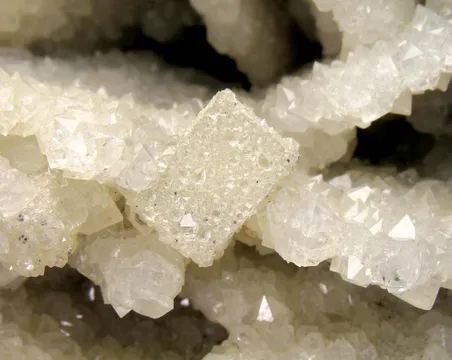
Quartz at Wheal Unity is the essential stage on which the copper arsenates are displayed rather than a stand-alone show mineral. It appears as milky quartz crystals, pyramidal quartz sections, vuggy quartz veinstone, cellular quartz, smoky quartz, and iron-stained lode material, with cavities that hosted olivenite, mimetite, scorodite, pharmacosiderite, chenevixite, and other secondary minerals. Old descriptions and dealer records repeatedly place Wheal Unity olivenite and mimetite on milky or rusty quartz, and one Barstow catalogue entry describes small needly olive-green wood-copper masses scattered on one side of a large iron-stained sharp milky pyramidal quartz crystal. The best quartz-associated specimens from Wheal Unity are not judged by quartz perfection alone, but by how the quartz frames the rarer species: bright white or smoky crystals partly encrusted with sharp green olivenite, clean vug walls carrying pale mimetite, or brecciated quartz matrices showing mineralization on multiple faces.
Native copper is a documented but secondary attraction at Wheal Unity, reflecting the mine’s identity as a copper lode rather than a native-copper locality in the Lake Superior sense. It is best understood here as part of the oxidized and enriched copper assemblage, occurring with copper oxides, sulphides, carbonates, and arsenates in quartzose and gossanous matrix; Mindat photo data record native copper from Wheal Unity with associated minerals, and the species was already listed in early nineteenth-century mineralogical sources for the locality. Collectors should expect small metallic showings, irregular blebs, films, or modest dendritic to hackly pieces rather than large sculptural copper masses. The most desirable examples are those with unmistakable metallic copper visible in an old Cornish matrix and accompanied by locality-typical minerals such as cuprite, malachite, quartz, or secondary arsenates; isolated dull specks in brown gossan are far less compelling and should be labelled cautiously.
Mimetite from Wheal Unity is a classic accessory species of the copper vein environment and has been recorded specifically as occurring mostly on quartz and sometimes on chalcocite. The best documented collector habit is elongated hexagonal crystals on milky quartz or quartz veinstone, generally pale brownish, yellowish, honey, or greenish-brown rather than the intense orange or yellow associated with some later world localities. A Richard Barstow list described Wheal Unity mimetite as pale brownish lustrous elongated hexagonal crystals to 8 mm scattered on milky quartz crystal sections and quartz veinstuff, which is an excellent mental image for the locality. Superior specimens have sharp, lustrous, discrete crystals in clean vugs or on contrasting quartz, especially with associated chenevixite, philipsbornite, or scorodite; ordinary pieces are sparse, corroded, or too iron-stained for the crystals to read clearly.
Beyond these four, Wheal Unity is especially important for its broader copper-arsenate and rare secondary assemblage. Liroconite, clinoclase, chalcophyllite, cornwallite, cornubite, chenevixite, connellite, pharmacosiderite, scorodite, parnauite, mixite, strashimirite, libethenite, linarite, pyromorphite, wulfenite, torbernite, zeunerite, and uraninite have all been documented from the locality or its immediate sublocalities, along with primary or hypogene species such as cassiterite, arsenopyrite, chalcopyrite, chalcocite, bornite, galena, sphalerite, molybdenite, pyrite, and wolframite-group minerals. Philipsbornite is a particular modern rarity for the locality: the first British occurrence was reported from Wheal Unity in 2005, associated in photo-documented specimens with mimetite and scorodite. The mine also appears in records for liskeardite and parnauite, both of interest to advanced arsenate collectors even when present only as micromount-scale or crude crystal material.
Wheal Unity specimens reward provenance work. The first authenticity question is locality, not species: old labels may say “Wheal Unity,” “Poldice,” “St Day United,” “St Day,” “Gwennap,” or “Cornwall,” and neighboring mines such as Wheal Gorland, Carharrack, Wheal Muttrall, Poldice, Wheal Maid, and Wheal Unity Wood are close enough in geography and mineralogy that labels can drift over generations. A second trap is the name Wheal Unity itself. The Gwennap mine is the classic olivenite–mimetite–copper-arsenate locality; Wheal Unity at Mullion is a separate locality with a different mineral assemblage. Any high-value specimen should have old labels, collection history, or dealer documentation that resolves this ambiguity.
No well-established treatment tradition is associated with Wheal Unity specimens, and there is no famous modern fake style specific to the mine comparable to dyed agates or assembled “gold on quartz.” The risks are subtler: misattributed St Day material, overconfident visual identifications of green arsenates, and historic labels using obsolete names. “Wood copper” is olivenite, not native copper. “Copper mica” on an old label may refer to chalcophyllite or related platy copper arsenates depending on context. Green crusts may require analytical confirmation, especially where cornwallite, cornubite, chenevixite, clinoclase, pseudomalachite, and chrysocolla-like material occur together.
Condition is critical. Wheal Unity olivenite needles and mimetite crystals are easily bruised, and many specimens sit on friable gossan or quartz veinstone that has been handled for more than a century. Check high points under magnification for rubbed luster, broken acicular terminations, and old glue repairs to matrix. Rich, uninterrupted surfaces of lustrous olivenite or clean mimetite-lined vugs are worth paying for. Dark iron staining is normal and often desirable, but heavy dirt, wax, or old consolidant can hide damage and make species identification harder.
Handling should be sensible rather than theatrical. Many Wheal Unity collector minerals contain arsenic, lead, or uranium as essential chemical constituents or associated species: olivenite, mimetite, scorodite, pharmacosiderite, chenevixite, and philipsbornite are examples, and torbernite, zeunerite, and uraninite are also recorded from the locality. Do not trim, saw, grind, or ultrasonically clean these pieces without appropriate precautions. Wash hands after handling friable material, keep dust out of display cases and drawers, and store any uranium-bearing specimen separately, labelled clearly and monitored if it is more than a micro occurrence. Chalcophyllite and some hydrated arsenates should be kept in stable, moderate humidity and away from unnecessary heat.
In the market, Wheal Unity is available but not abundant. Ordinary micro or thumbnail material appears periodically, especially olivenite on quartz or gossan, but fine small-cabinet specimens with old labels are scarce. Wood-copper olivenite is much rarer and has a specialist following. Good mimetite from Wheal Unity is less common than olivenite and is desirable when the crystals are sharp and clearly visible. Liroconite, chalcophyllite, philipsbornite, parnauite, and attractive mixed arsenate assemblages are collector-grade rarities; they should be bought for verified locality, mineralogical interest, and preservation rather than size alone.
In the old Gwennap mining world, mineral specimens were not always treated as curiosities to be catalogued politely. The rare copper arsenates had value, and the miners knew it. Local mining interpretation for the Poldice–Unity area records that chalcophyllite, olivenite, mimetite, and liroconite were tempting enough to be smuggled from the mine. The method is a distinctly Cornish one: specimens could be hidden in soft white clay found underground, and bal maidens were sometimes enlisted to conceal precious pieces in the folds of their voluminous skirts. That small image — green and blue arsenates tucked into clay and clothing before they could be taken by the mine owners — explains why so many important Cornish specimens entered early private collections with short, sometimes cryptic labels.
Wheal Unity’s wealth was not an abstraction. By 1798 the mine had made profits of more than £100,000, mainly from copper ore, an extraordinary figure for a single Gwennap concern. Sir William Lemon, one of Cornwall’s great mineral lords, held a quarter share in Wheal Unity. The money from mines like Unity reshaped estates, gardens, local infrastructure, and the social map of the district. The mineral specimen in a drawer and the country-house landscape are two ends of the same story: one a glittering green crust on quartz, the other the visible architecture of copper profits.
Water was the enemy that tied Wheal Unity to one of Cornwall’s grandest engineering achievements. The Great County Adit was begun in 1748 under the Poldice enterprise and grew into nearly 40 miles of interconnected drainage tunnels serving more than 100 mines. In 1839 it discharged about 66 million litres of water per day. Local accounts emphasize the scale by noting that more steam engines were pumping into its course than were then used by the whole of continental Europe and America combined. A branch from Poldice had reached Wheal Unity by the 1790s, making the mine part of this hidden underground river system.
The adit could be dangerous even after workings were abandoned. In 1872 a blockage in the old Wheal Damsel workings threatened to flood Poldice. Four men sent to investigate barely escaped when the obstruction failed. The released water poured down the shaft “with a roar like that of the Falls of Niagra.” The spelling may be old-fashioned, but the image is immediate: a drowned mine system suddenly clearing its throat, the sound magnified through shaft and level, and the men scrambling away from a force no engine house could argue with.
The surface story was no gentler. By the arsenic era, Poldice and its associated mines had become part of a poisonous industrial landscape. Arsenic fumes from calciners were drawn through labyrinthine flues where arsenic condensed as a white soot on the walls. Workers swept it off and shovelled it out after stopping the furnaces and opening iron doors in the flues. Their protection was rudimentary: cotton wool in the nostrils, cloth over the mouth, and strict washing rules. Skin rashes and sores were common, especially in warm weather. The pale heaps known as “The Sands” remained so arsenic-rich that they were described as nearly vegetation-free even after around 80 years, supporting only specialized bryophytes. The same arsenic chemistry that gives collectors olivenite, mimetite, pharmacosiderite, and scorodite also left the valley with a toxic afterlife.