A collector's guide to Cornwall, UK: its geology, mining history and notable minerals, illustrated with the 101 specimens documented from this locality on EarthWonders.
Key facts
Cornwall is one of the great old names in mineral collecting: not a single mine, but a whole metallogenic province wrapped around the western end of the Cornubian Batholith. Its specimens record a long, chemically restless system of Permian granite cupolas, greisen veins, elvan dykes, lodes, skarns, “floors,” supergene copper zones, and kaolinized granite. Tin and copper made the county famous industrially; cassiterite, liroconite, botallackite, clinoclase, cornwallite, chalcophyllite, torbernite, fluorapatite, quartz, and an army of rarities made it famous in cabinets.
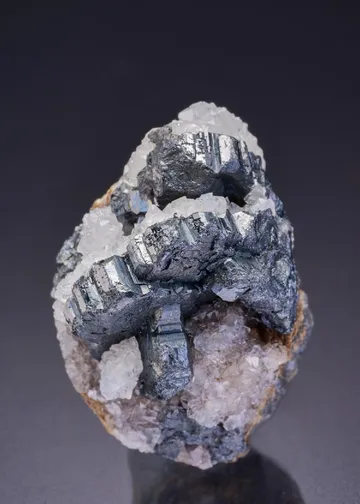
The collector’s Cornwall is visually distinctive. Fine cassiterite is typically black to deep brown, adamantine, heavy in the hand, and often twinned into sharp “spear” or “drill-bit” forms on quartz, tourmaline, chlorite, or greisen. Copper-zone specimens from St Day, St Just, and related districts can be jewel-like rather than large: electric blues and greens of liroconite, clinoclase, cornwallite, olivenite, chalcophyllite, brochantite, and malachite sitting in rusty gossan and quartz cavities. The granite and china-clay districts add another Cornish look altogether: feldspar-rich pegmatitic pieces, pale apatite, schorl, muscovite, kaolinized matrix, and quartz-lined cavities from altered granite.
Regional View
Country View
For collectors, Cornwall’s importance is inseparable from its documentation. The county was being described in mineralogical literature while many classic mines were still active, and Philip Rashleigh’s late-18th- and early-19th-century illustrated volumes fixed Cornish minerals in the European collecting imagination. Later, Dines, Embrey, Symes, Russell, Kingsbury, Tindle, Golley, Williams, and a large community of British collectors and museum mineralogists turned Cornwall into one of the best-recorded historic mineral provinces anywhere. Many pieces now circulating are old-time specimens, often with antique labels; locality precision can range from a particular lode or shaft to the broad and sometimes frustrating “Cornwall.”

Photo: Wikimedia Commons

Photo: Wikimedia Commons
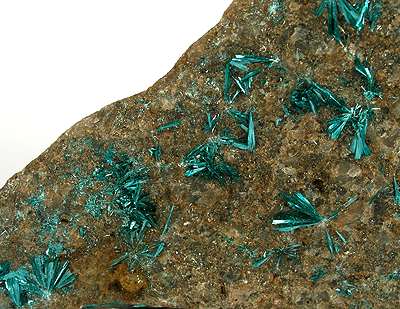
Photo: Wikimedia Commons
Search for specimens: View all specimens from Cornwall, UK
Cornwall occupies the western part of the Cornubian orefield, whose mineralization is closely tied to the Cornubian Batholith: a chain of late Variscan granitic intrusions extending across southwest England. The main Cornish granite masses include Land’s End, Carnmenellis, St Austell, Bodmin Moor, and related smaller cupolas and bosses such as St Michael’s Mount, Carn Brea, St Agnes, Cligga Head, Kit Hill, and others. Devonian and Carboniferous sedimentary and volcanic rocks, locally called killas when metamorphosed and cleaved, were folded and intruded by these granites; the granite margins and roof zones became the plumbing system for metalliferous fluids.
The dominant collector-grade ore settings are hydrothermal lodes, greisen-bordered sheeted veins, altered elvan dykes, skarn and replacement bodies, and supergene oxidation zones. The broad zonation is classic: tin, tungsten, arsenic, quartz, tourmaline, topaz, mica, and fluorite are concentrated in and close to the granites; copper and arsenic become important in the adjacent country rocks; farther out are lead, zinc, silver, fluorite, and baryte-bearing crosscourses. The old miners’ language is still useful. A “lode” may be a fissure vein repeatedly opened and mineralized; “capel” is altered wall rock; a “carbona” is a rich localized replacement mass; and a “floor” is a flat-lying or gently dipping cassiterite-bearing body, especially well known in the St Just–Pendeen ground.
The county’s tin was first worked from stream and surface deposits of cassiterite, then increasingly from underground lodes as shallow alluvial resources were exhausted and drainage, pumping, and winding technology improved. Cornwall and Devon together are estimated to have produced millions of tonnes of tin metal over their long history. Tin output peaked in the early 1870s, later revived in the 20th century at operations such as Wheal Jane and South Crofty, and the last historic Cornish tin mine, South Crofty near Pool, closed in March 1998 after a closure announcement the previous year. As of September 2026, South Crofty is again being advanced as a permitted underground tin project by Cornish Metals, with dewatering, shaft, winder, surface-infrastructure, and processing-plant work underway and first tin production targeted for the late 2020s rather than constituting an active specimen source.
The great specimen districts each have their own character. St Just, including Botallack, Wheal Cock, Wheal Owles, Wheal Edward, Levant, Geevor, and nearby ground, is famed for tin-copper lodes, skarn assemblages, cassiterite, native copper, copper chlorides, uranium species, and the extraordinary coastal geology of lodes running out beneath the Atlantic. Botallack’s Crowns section shows copper-zone mineralization near surface and tin at depth, while Grylls Bunny exposes “tin floors” in metasomatized hornfels and metabasic rocks. Cligga Head, near Perranporth, is one of Britain’s finest greisen localities, with subparallel quartz veins in granite carrying cassiterite, wolframite, stannite, arsenopyrite, molybdenite, and related oxidation products. The St Day–Gwennap–Camborne–Redruth area is legendary for secondary copper arsenates and phosphates, above all the Wheal Gorland suite. The St Austell district is the home of large-scale kaolinization of granite and the china-clay industry, but it also has pegmatitic and greisen-related mineralization producing feldspar, quartz, apatite, mica, tourmaline, fluorite, topaz, cassiterite, and rarities in and around clay pits and granite quarries.
Most of the old metal mines are long closed, collapsed, flooded, built over, protected, or on private land. Some mine landscapes are accessible as footpaths, National Trust sites, museums, or World Heritage landscapes, but that is not the same thing as collecting permission. Many important Cornish mineral localities are Sites of Special Scientific Interest, Geological Conservation Review sites, Scheduled Monuments, or part of the Cornwall and West Devon Mining Landscape World Heritage Site. Serious collectors should treat Cornwall as a conservation landscape first: obtain explicit permission, avoid hammering protected exposures, do not enter underground workings, and assume old dumps, adits, shafts, arsenic residues, and unstable coastal cliffs are hazardous. Modern collecting is largely opportunistic and low-impact: old labels, estate collections, dealer stock, legitimate ex-collections, and occasional surface material from permitted sites or natural erosion are far more realistic than expecting to reopen a classic 19th-century pocket.
The notable old finds were often highly localized. Wheal Gorland produced the kind of secondary copper mineral pockets that built whole museum trays: liroconite, clinoclase, cornwallite, chenevixite, olivenite, chalcophyllite, and later-recognized kernowite in gossanous quartz cavities. Botallack and its neighbors yielded native copper, botallackite, atacamite-group minerals, connellite, cassiterite, fluorapatite, and uranium minerals, but commonly as small, rare pieces rather than abundant show specimens. Cligga Head produced important greisen assemblages and later a celebrated modern botallackite find from coastal material outside the mine workings. Wheal Jane and related mines yielded modern-era quartz, pyrite, chalcopyrite, sphalerite, cassiterite, and tin-base-metal assemblages. The St Austell clay pits and quarries supplied feldspar, quartz, mica, fluorapatite, topaz-granite minerals, and unusual phosphate and rare-element species from pegmatitic, greisenized, and kaolinized granite.
Quartz is Cornwall’s great matrix mineral as well as a collectible species in its own right: it lines lodes, greisen veins, elvan-hosted pockets, skarn replacements, and base-metal cavities across the county. The most characterful pieces range from milky vein quartz with cassiterite, schorl, chlorite, wolframite, chalcopyrite, pyrite, or sphalerite, to slender transparent crystals from modern tin-base-metal mines such as Wheal Jane and Geevor, to amethystine quartz from Redruth-area localities such as Wheal Uny. Good Cornish quartz is judged less by isolated perfection than by geological storytelling: sharp free-standing crystals with sulfides, chlorite-green internal casts, hematite staining, cassiterite twins, or a named mine label are far preferable to ordinary barren vein quartz, which is abundant throughout the county.
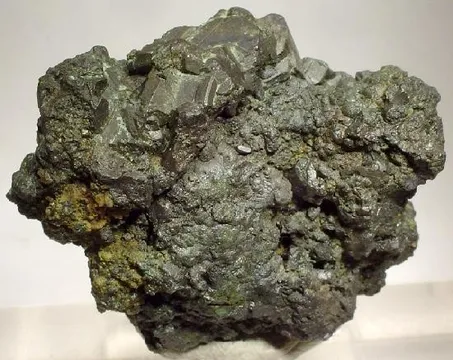
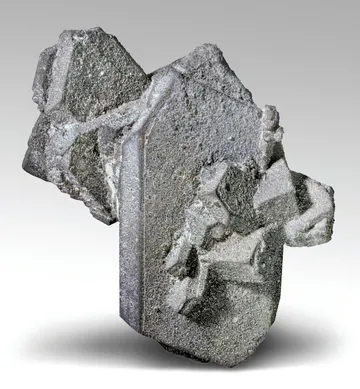
Cassiterite is the emblematic Cornish mineral and the principal tin ore, occurring in stream gravels, quartz-tourmaline-chlorite lodes, greisen-bordered veins, altered elvans, carbonas, stockworks, and tin floors. Classic collector specimens are deep brown to black, highly lustrous, and heavy, with sharp tetragonal crystals or cyclic twins on quartz, tourmaline, chlorite, muscovite, or greisen; St Agnes, St Just, Botallack, Wheal Cock, Cligga Head, Wheal Jane, South Crofty, and many Redruth–Camborne mines are among the names most often associated with good pieces. The best examples show well-separated crystals or sculptural twins rather than massive “black tin,” and old 19th-century material with a precise mine, district, or lode label commands a premium because modern production of fine matrix specimens is tiny compared with the historic output.
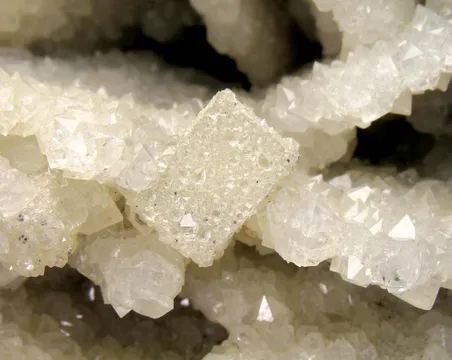
Orthoclase is a collector mineral in Cornwall chiefly through its role in the granites, pegmatites, china-stone bodies, and miarolitic cavities of the Cornubian Batholith rather than through the metal lodes themselves. The best-known aesthetic pieces come from granite and pegmatitic settings such as Chywoon Quarry, Mabe, and the St Austell-area china-clay and china-stone workings, where pale cream to pinkish feldspar crystals and twins occur with quartz, albite, muscovite, schorl, fluorapatite, fluorite, and rare beryllium or rare-element species. Good Cornish orthoclase should have recognizable crystal form, preferably twinning and clean terminations, and associations that tie it to a named pegmatite or kaolinized granite locality; dull feldspar masses from ordinary granite are far less collectible unless they carry an important old label or pseudomorph story.
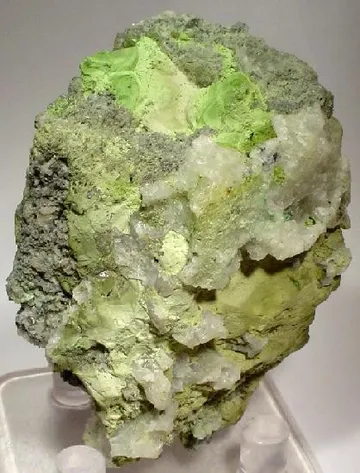
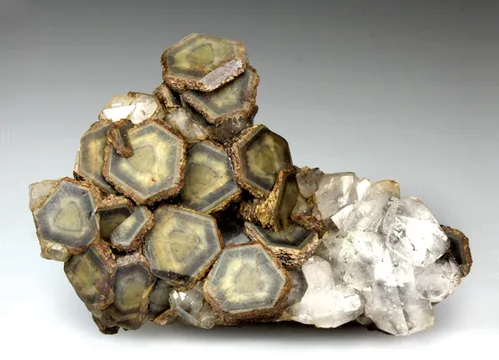
Fluorapatite in Cornwall is a small but rewarding specialty, especially from granite, greisen, skarn, and mine-cavity settings where apatite-group minerals occur with quartz, feldspar, mica, tourmaline, cassiterite, fluorite, topaz, axinite, garnet, magnetite, sulfides, and copper minerals. Cornish material may appear as pale bluish-green hexagonal crystals in pegmatitic granite, as brown to yellowish carbonate-rich fluorapatite or “francolite” in cavities at St Just localities such as Levant, Wheal Cock, and Botallack, or as small tabular crystals in base-metal quartz-sulfide assemblages at Redruth-area mines. The best pieces are not usually large; they are matrix specimens with distinct hexagonal crystals, good lustre, and a precise old locality, particularly when perched on quartz or feldspar or enclosed in a classic Botallack–Levant assemblage.
Kaolinite is Cornwall’s great industrial clay mineral, formed by alteration of feldspar in granite and worked on a vast scale in the St Austell china-clay district, with additional kaolinized granite and china-stone occurrences elsewhere in the county. As a cabinet specimen it is usually collected as context rather than as flashy crystals: white to cream clayey masses, kaolinized granite, soft feldspar-alteration material, or specimens carrying quartz, feldspar, mica, tourmaline, fluorite, apatite, cassiterite, and other granite minerals from named clay pits or china-stone quarries. Good examples are clean, well-labelled, and geologically informative, especially if they preserve the transition from solid granite or feldspar into soft white kaolin, because the value lies in representing the Cornish china-clay province rather than in crystal display.
Native copper is a classic but relatively uncommon Cornish collector species, best known from copper-zone lodes and coastal St Just localities such as Botallack, Wheal Cock, Levant, and related workings, where it occurs with quartz, gossan, chalcocite, cuprite, malachite, brochantite, atacamite-group minerals, connellite, botallackite, and other secondary copper species. Specimens are commonly small and irregular: wires, plates, hackly masses, grains, or cavity fillings rather than the large sculptural native copper familiar from Lake Superior. Better Cornish pieces show recognizable metallic copper with contrasting green or blue secondary minerals, are not merely copper-stained rock, and carry a precise mine attribution; vague “Cornwall copper” labels deserve caution because many old copper-coloured slags, furnace products, and misidentified sulfide pieces circulate from mining landscapes.
Other Cornish minerals are so numerous that they define whole collecting subfields. Wheal Gorland alone is central to liroconite, clinoclase, cornwallite, chenevixite, kernowite, olivenite, chalcophyllite, and related copper arsenates and phosphates. Botallack is the name behind botallackite and is associated with paratacamite, atacamite, connellite, native copper, and uranium species in the wider St Just assemblage. Penberthy Croft is important for bayldonite and lead-copper arsenates; Hingston Down Consols is the type locality for arthurite; Fowey Consols is associated with langite and rhabdophane-(Ce); Cligga Head is the type locality for ferrokesterite and has a classic tin-tungsten greisen assemblage. Cornwall also supplies collectible torbernite, autunite, pyromorphite, mimetite, bournonite, tetrahedrite-group minerals, chalcopyrite, sphalerite, arsenopyrite, wolframite, topaz, fluorite, schorl, and an array of micromount rarities whose true value depends heavily on exact mine provenance.
Cornwall rewards label discipline. A specimen labelled only “Cornwall” may still be desirable, especially if old, but it should be priced and catalogued differently from a piece tied to Wheal Gorland, Botallack, Wheal Cock, Cligga Head, Levant, Wheal Jane, Chywoon Quarry, or a particular St Austell clay pit. Many old Cornish mines share similar mineral suites, and broad district names can hide important differences in paragenesis, rarity, and value. Preserve every scrap of old paper: mine name, parish, dealer, collection number, handwriting, and spelling variants such as Wheal/Huel, Bottalack/Botallack, or Pendarves/Pendaves may be more valuable than a modern polished label.
The most serious locality-authenticity warning is the documented A.W.G. Kingsbury problem. Kingsbury was an influential British collector whose reported localities for numerous rare species in southwest England were later shown to include falsified or unreliable attributions. This does not taint all Cornish specimens, nor all material that passed through his hands, but it does mean that rare species from Cligga Head, St Just, Wheal Gorland, and other Cornish localities should be treated carefully when the attribution rests only on an old Kingsbury claim and has not been duplicated or analytically confirmed. For rare Cornish micromounts, “ex-Kingsbury” can be historically interesting but is not, by itself, proof.
Mislabelling is common in several practical ways. Massive cassiterite can be confused with goethite, hematite, rutile, wolframite, dark sphalerite, cuprite, or smelting products; its high density, hardness, streak, and associations are key. Green and blue copper minerals from Cornwall are often visually overcalled: malachite, brochantite, clinoclase, olivenite, cornwallite, chenevixite, botallackite, and liroconite can be misassigned without analysis or strong morphology. “Apatite” labels may conceal fluorapatite, carbonate-fluorapatite, or other apatite-group compositions. Feldspar labels also need care: orthoclase, microcline, albite, perthitic alkali feldspar, pseudomorphs, and altered china-stone material are not interchangeable for a systematic collection.
Condition problems are locality-specific. Cornish gossan matrices may be soft, friable, or arsenic-bearing; handle dusty material with care and avoid grinding or trimming indoors. Kaolinite-rich specimens shed and stain easily. Copper arsenates and copper chlorides can be delicate, often occurring as tiny crystals in limonitic cavities; they should be stored dry and handled minimally. Some old sulfide-rich matrix specimens may develop acid alteration or efflorescence if kept damp. Uranium-bearing Cornish minerals such as torbernite, autunite, uraninite, and associated secondary species require sensible radioactive-mineral handling: labelled storage, dust control, no licking or washing, distance from long-term occupied spaces, and awareness that dehydration can alter some species.
Fine Cornish classics are genuinely scarce on today’s market. Old-time cassiterite with sharp twins, rich Wheal Gorland liroconite, crystallized clinoclase or chalcophyllite, good botallackite, named-mine native copper, and aesthetic fluorapatite are not replaceable stock. More ordinary pieces—quartz veinstone, massive cassiterite, mine-run copper secondaries, small pyrite/chalcopyrite/sphalerite pieces, and kaolinized granite—are available, but the jump from “representative” to “museum-grade Cornish” is steep. The best buying strategy is to value provenance, old labels, and matrix context as highly as aesthetics.
The most romantic Cornish mine may be Wherry Mine at Penzance, because it began not on a cliff or a moor but out in Mount’s Bay. At low tide the reef off Wherrytown looks like a seaweed-covered shoal, but in the 18th century it supported a tin mine reached by a timber trestle from shore. The mine lay about 210 yards out from land, opposite Wherry Town. Contemporary accounts and later mineralogical writing treated it as almost fantastical: a rich mine “in the very sea,” engineered by a poor working miner named Thomas Curtis, with carts and ore moved across the wooden bridge while water surrounded the workings. Its mineralogical fame comes from cassiterite impregnating a pinkish quartz-feldspar porphyry, cut by Black Lode, and from the sheer boldness of a submarine Cornish tin venture before modern mining infrastructure.
At Botallack the drama is vertical, marine, and geological. The Crowns engine houses stand on the cliff, but the lodes did not stop at the shoreline. Wheal Cock was famously worked far out beneath the Atlantic, and 18th-century descriptions record mining “under the sea.” The geology is as memorable as the image: copper at the coast and near surface, tin deeper and inland, with lodes crossing the granite-killas contact. At Grylls Bunny, miners pursued near-horizontal tin floors—irregular bodies only a few metres across but one to four metres thick—where cassiterite and tourmaline followed favourable layers in altered hornfels and metabasic rock. The collector who sees only a black cassiterite twin misses the larger story: the crystal is the small surviving token of a system that changed chemistry with depth, rock type, structure, and distance from granite.
Levant Mine carries one of Cornwall’s starkest human stories. On 20 October 1919, during the Monday afternoon shift change, between 130 and 150 miners were using the man engine, the reciprocating apparatus that carried men up and down the deep shaft. A link between the rod and beam failed, and the machinery collapsed down the shaft. Thirty-one miners were killed, many more were injured, and rescue workers from neighbouring mines laboured for days to recover the dead and wounded. Miner Robert Penluna remembered that “the smash gave a terrible shook to us all.” The man engine was never repaired, and Levant’s deepest levels were not worked again. For collectors, Levant labels often conjure fluorapatite, copper minerals, tin, and St Just geology; they also belong to a landscape where mineral specimens and industrial danger are inseparable.
Philip Rashleigh of Menabilly gave Cornish minerals another kind of afterlife. In 1797 and 1802 he published his illustrated Specimens of British Minerals, selecting specimens from a collection built during the period when many Cornish mines were producing their finest oxidized-zone material. The books were extraordinary for their time: colour plates, careful descriptions, and the eye of a connoisseur rather than just an ore-minded observer. Rashleigh’s collection later became foundational for the Royal Cornwall Museum’s mineral holdings, and the name still carries weight because it links specimens to the moment when Cornwall’s mines, science, and private collecting were all flourishing together.
Wheal Gorland’s story is smaller in scale but enormous in collector consequence. It was a working mine near St Day, but its afterlife is in the little cavities of its oxidized copper ore. From that ground came liroconite, clinoclase, cornwallite, chenevixite, olivenite, chalcophyllite, strashimirite, and ultimately kernowite. The best pieces were not simply ore; they were miniature landscapes of blue and green crystals in rust-brown gossan. The later recognition of kernowite is a perfect Cornish twist: a specimen collected roughly two centuries earlier, long thought to be related to liroconite, was re-examined with modern methods and proved to be a new mineral species. Cornwall was still producing new mineralogy from old drawers.