A collector's guide to Wheal Coates, UK: its geology, mining history and notable minerals, illustrated with the 45 specimens documented from this locality on EarthWonders.
Key facts
Wheal Coates is one of those rare localities whose reputation rests on two completely different kinds of drama: a ruinous cliff-top tin mine above the Atlantic, and a suite of small, intensely collectible pseudomorphs that have fascinated mineralogists since the early nineteenth century. The mine lies on the north Cornwall coast at St Agnes Head, just above Chapel Porth, within the St Agnes–Perranporth–Porthtowan mineral belt. Geologically it sits close to the St Agnes Granite, in metamorphosed killas cut by quartz-feldspar porphyry elvan and hydrothermal tin-copper lodes. Its collector fame is not for ordinary Cornish cassiterite crystals, but for granular cassiterite, commonly mixed with quartz and decomposed granitic material, preserving the sharp external form of orthoclase feldspar — especially Carlsbad twins.
Regional View
Country View
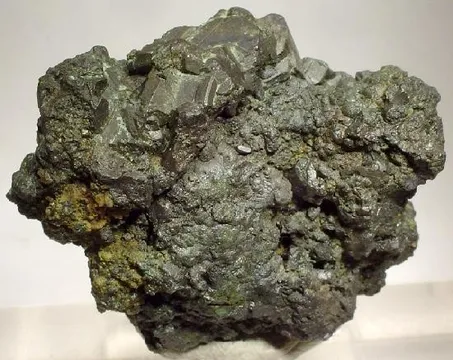
The best Wheal Coates specimens have the look of feldspar crystals translated into tin ore: tabular, twinned, smoky-grey to nearly black pseudocrystals with a granular or slightly sugary surface, sometimes still showing pale quartzose or kaolinized material where replacement was incomplete. They are small by cabinet-mineral standards but large in historical importance. A fine single Carlsbad-twinned pseudomorph of 25–40 mm is a classic; examples over 45 mm are exceptional, and the best-known museum-quality groups reach into the mid-centimetre range.

Photo: Rod Allday / Wikimedia Commons
Historically, Wheal Coates matters because it is both a mineral locality and a preserved industrial landscape. The standing engine houses, calciner, dressing-floor remains, shafts, opencuts and cliff workings record several episodes of nineteenth- and early twentieth-century mining, while the pseudomorphs record a much more specific mineralizing event at about adit level where a sandy, decomposed granitic or elvan material intersected the tin lode system. For collectors, this makes Wheal Coates a locality where the label is almost as important as the specimen: “cassiterite after orthoclase, Wheal Coates, St Agnes” is one of the classic phrases of British mineral collecting.
Search for specimens: View all specimens from Wheal Coates, UK
Wheal Coates is a granite-related hydrothermal tin-copper vein locality in the St Agnes orefield of north Cornwall. The mine workings are in metamorphosed killas — dark-grey hornfels with psammitic bands — cut by an elvan dyke and lying above the St Agnes Granite. The principal structure was Towanwrath Lode, exposed in the cliffs north of Chapel Porth and directly associated with the famous Towanroath Shaft engine house. In the cliff section the lode follows the footwall of a quartz-feldspar porphyry elvan dyke; underground it is described as a quartz lode with hematitic staining, pyrite, clay minerals, cassiterite and tourmaline.
The geology is unusually instructive because the lode dips south, unlike much of the regional St Agnes pattern. The Geological Conservation Review interpretation treats the elvan not simply as a channel for ore fluid, but as a structural and chemical influence on the movement of mineralizing solutions. The Towanwrath Lode trends roughly ENE–WSW, and the lode width reported from mine descriptions ranges from narrow seams to several metres, with cassiterite distributed patchily rather than evenly. The richest tin was in altered hangingwall killas, locally converted to dark tourmaline schist and cut by interlaced veinlets of cassiterite, especially where clay was abundant. Footwall veinlets were less extensive. Small near-vertical branch lodes, locally called “droppers,” consist of thin quartz veins with tourmaline fringes and red hematitic alteration.
The celebrated pseudomorphs came from a much more restricted situation than the mine’s romantic reputation sometimes suggests. They were found about adit level where tongues of coarse-grained granitic rock, or decomposed granite/elvan, were cut by the lode. The original crystals were orthoclase feldspar, commonly Carlsbad twinned; the replacing material is fine-grained cassiterite with variable quartz and altered feldspathic residue. Contemporary and later accounts describe a light-red sandy vein, narrow enough to be remembered as the “sand lode,” in which these feldspar forms had been replaced in place. The resulting pseudomorphs vary from pale grey and brownish grey to anthracite-black according to how completely cassiterite replaced the original feldspar and how much quartz or decomposed granite remains.
Mining at Wheal Coates has roots before the modern engine-house landscape. Records indicate mining in the area by the late seventeenth century, but the mine normally cited as Wheal Coates opened in 1802 and came into more substantial nineteenth-century operation in the decades that followed. The mine worked intermittently and was repeatedly troubled by water and by the difficulty of raising ore from workings that extended seaward. In 1872, when the later deep-working phase was under way, the site had three engine houses for pumping, winding and stamping; Historic England records the mine at that time as operating to 90 fathoms and employing about 70 people. Other accounts give peak employment at a higher figure during the mine’s best-known period.
Production was never as dependable as the mine’s modern fame implies. Published geological summaries record 335 tons of 9% copper ore and about 700 tons of black tin for the principal recorded periods in 1836 and 1861–1889. When the mine was dewatered and batch sampled in 1911, output was only 10–14 pounds of black tin per ton, and 1912 production was recorded at 17.5 tons of black tin. The mine closed in 1889 during the difficult late nineteenth-century contraction of Cornish tin mining, was tried again in the 1911–1913 period, and finally ceased work in 1914. Company names attached to the later commercial history include Wheal Coates Tin Mining Co. Ltd, Wheal Coates United Tin Mines Ltd and Wheal Coates Mine Co.; nineteenth-century stock information also records a cost-book company operating a St Agnes tin property under the Wheal Coates name.
The site today is a heritage landscape in the care of the National Trust, with the best-known remains including Towanroath pumping engine house, the Old Whim and New Whim engine-house remains, a stamps house, calciner and associated dressing-floor features. The area is also part of the Cornwall and West Devon Mining Landscape World Heritage Site, with scheduled-monument and Grade II listed-building protections applying to the mining complex and structures. Public footpaths give excellent views of the mine buildings and cliff scenery, but this is not a modern collecting field in the old sense. The lower geological exposures are tidal, cliff-bound and hazardous, and the historic fabric must not be disturbed. Any collecting, digging, hammering or removal from protected structures, dumps or cliff exposures should be assumed inappropriate unless explicit permission and all legal permissions have been obtained; loose beach pebbles and old specimens already in circulation are the practical collector’s route to the locality.
Most specimens now available are historic, old-collection pieces. Good examples passed through Victorian and Edwardian collections, through museum teaching sets, and through the British and European dealer trade. A typical Wheal Coates pseudomorph is under 25 mm, often incomplete or granular; a superior piece preserves clean feldspar morphology, visible twinning, complete terminations and a convincing dense cassiterite-rich surface. Matrix examples are scarcer and especially desirable when they show the red sandy or quartzose context of the replacement.
Cassiterite from Wheal Coates is prized above all as pseudomorphs after orthoclase rather than as free-grown tetragonal tin-stone crystals: the classic pieces are granular grey, brownish black or nearly black replacements of single and twinned feldspar crystals, especially Carlsbad twins, with most specimens around 2.5 cm or less and exceptional examples known around 5.6 cm; the best came from the sandy, decomposed granitic or elvan material near adit level where the lode cut coarse feldspathic rock, and good pieces are separated from ordinary fragments by sharp feldspar outline, undamaged terminations, clear twinning, high cassiterite content and freedom from the crumbling, under-replaced quartz-kaolin patches that make lesser examples look dull or sandy.
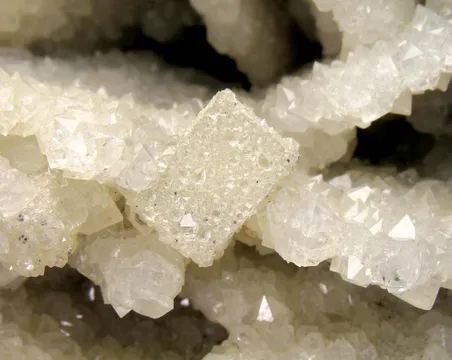
Orthoclase is the essential ghost species of Wheal Coates: the locality’s fame depends on original K-feldspar crystals, commonly Carlsbad twinned and locally occurring as more complex macled forms, that were enclosed in decomposed granitic or elvan material near the lode and then partly to almost completely replaced by cassiterite, quartz and altered feldspathic residue; collectible “orthoclase” material from Wheal Coates is therefore usually valued not as fresh pink or cream feldspar crystals, but as the preserved feldspar morphology within cassiterite pseudomorphs, with the finest specimens retaining crisp feldspar geometry, penetration-twin form and enough residual pale material to demonstrate the replacement without obscuring the cassiterite-rich surface.
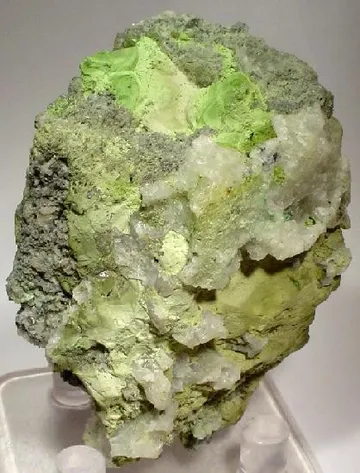
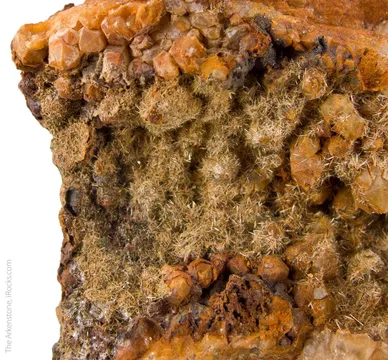
Beyond cassiterite and orthoclase, Wheal Coates has a compact but mineralogically interesting list reflecting tin, copper, bismuth and wall-rock alteration. Documented species include quartz, schorl or tourmaline, hematite, goethite, andalusite, arsenopyrite, pyrite, chalcopyrite, cuprite, tenorite, native copper, bismite, bismutite, agardite-(Ce), melanterite and wood tin. The copper species are tied especially to copper-bearing lodes such as Kitty Lode and to small blocks of hematite-stained killas on old dumps. The bismuth record is historically important because old “eulytine” or “agnesite” identifications from St Agnes and Wheal Coates were later re-examined; modern treatment regards the Wheal Coates material as bismutite rather than eulytine, and “agnesite” is not a valid modern species. Svanbergite has also appeared in older literature for andalusite schist at Wheal Coates, but current locality lists treat it cautiously as an erroneous or doubtful entry rather than a collecting target.
The first authenticity issue for Wheal Coates is not locality confusion but outright nineteenth-century fakery. The classic cassiterite-after-orthoclase specimens were so desirable that imitations were made by shaping folded or cut lead sheet into feldspar-like forms and coating it with glued granular cassiterite. Some were convincing enough to enter old collections, and their age can make them seem respectable until examined closely. Warning signs include an unnaturally thin shell-like construction, exposed grey metallic lead at broken edges, swelling or flaking along seams, and a surface that looks sprinkled on rather than integrally granular. A genuine specimen should feel coherent and mineralogical, not like a fabricated armature, and magnification should reveal replacement texture rather than an adhesive crust.
Mislabelling is common in a gentler form. Many old labels simply say “St Agnes,” “Huel Coates,” “Wheal Coates,” “cassiterite after feldspar,” or “tin ore pseudomorph,” and not every cassiterite-after-feldspar pseudomorph from Cornwall is automatically Wheal Coates. Similar but much rarer material has been reported from other Cornish localities, so provenance matters. On the other hand, Wheal Coates is by far the classic locality, and the characteristic small grey-black Carlsbad-twinned forms in old British collections are often correctly attributed.
Condition is crucial. These are not hard, glassy cassiterite crystals with sharp tetragonal faces; they are replacement aggregates. Edges abrade, terminations chip, sandy patches crumble and old glue or putty may be present where specimens were mounted in teaching collections. Avoid aggressive cleaning. Water, ultrasonic cleaning and acids can loosen decomposed feldspathic matrix or expose weakness in granular surfaces. A soft brush, minimal handling and stable storage are preferable. Pieces with old labels should be kept together with the specimen; the label may represent a substantial part of the value.
There is no meaningful fluorescence story for the classic pseudomorphs. The important examination tools are a hand lens, a scale, density by feel, surface texture and provenance. A genuine cassiterite-rich replacement will usually feel surprisingly heavy for its size compared with feldspar, though quartz and decomposed granite content can lower density substantially. Very light pieces deserve scrutiny, but low density alone does not prove fakery because many Wheal Coates pseudomorphs are mixtures rather than pure cassiterite.
Market availability is sporadic. Small incomplete examples appear from old collections and dealer backstock, but attractive, complete Carlsbad twins with strong provenance are genuinely scarce. The best specimens are now usually recycled from historical collections rather than newly found. Large examples over 4 cm, matrix pieces, and specimens with nineteenth-century labels command strong prices, particularly when the form is sharp and obviously twinned.
In 1828, the discovery that made Wheal Coates a mineral-collecting classic came from an unpromising little seam of light-red sand. Stephen Davey’s 1832 notice placed Huel Coates about 300 fathoms north-west of St Agnes Beacon and described the adit level as roughly 55 fathoms below the surface and five fathoms above high water. The mine, he said, had not been worked more than a few feet below that level. The famous crystals were not found in a grand pocket lined with showy crystals, but in a small vein of sandy, decomposed material. The first examples were “small and imperfect”; then, as the miners moved toward the centre of the bunch, the forms improved, becoming larger and better defined, before dwindling again toward the far side.
That is one of the great pocket descriptions in Cornish mineralogy because it describes the shape of a find rather than simply naming it. The pocket was zoned: poor on the edges, best in the middle, then poor again. Modern collectors looking at a sharp Wheal Coates Carlsbad twin should picture not a vast cavern, but a narrow red sandy lode in which feldspar shapes had survived the chemical transformation to tin ore. Nearby, Davey recorded similar sandstone-like feldspar forms that contained no tin, extending through decomposed granite north of the vein for about two feet in width and fifty fathoms in length — a geological control panel left beside the ore-bearing replacement.
The old mine itself was never an easy romantic ruin when it was alive. The workings ran toward and beneath the sea, and water was a constant adversary. The engine house at Towanroath Shaft, now the postcard silhouette of the locality, represents the practical answer to that problem: pumping. Historic accounts place the shaft at about 600 feet deep, with the engine keeping deeper levels workable. At high tide, visitors have long noticed the strange soundscape of the place — the Atlantic below the cliff, shafts and cavities underfoot, and the sense that the mine is still breathing through the ruined masonry.
There is also a wonderfully human, slightly fraudulent afterlife to the pseudomorphs. By the Victorian period, collectors wanted Wheal Coates examples badly enough that a small trade in false specimens developed. The recipe was crude but clever: shape lead sheet into a feldspar-like form, fold it, glue it and coat it with ground cassiterite. In a cabinet, especially under nineteenth-century light and with a good story attached, such a thing could pass. Time is the detective. Lead swells, edges split, cassiterite grains flake away, and the “pseudomorph” reveals itself as a pseudo-pseudomorph — an artifact of collector demand as much as mineral replacement.