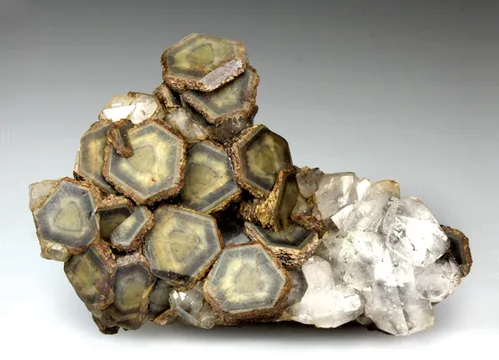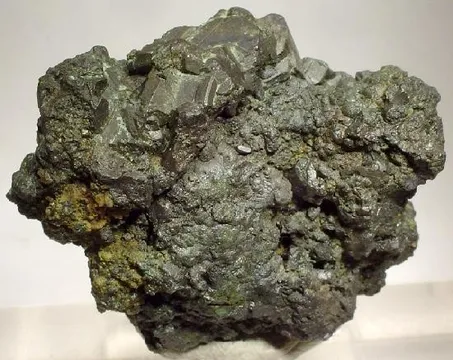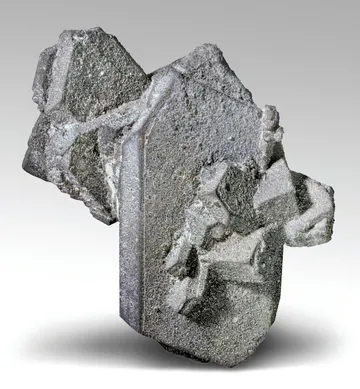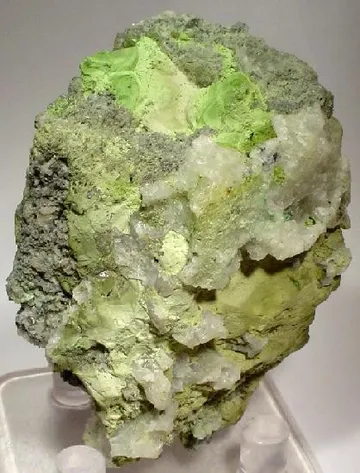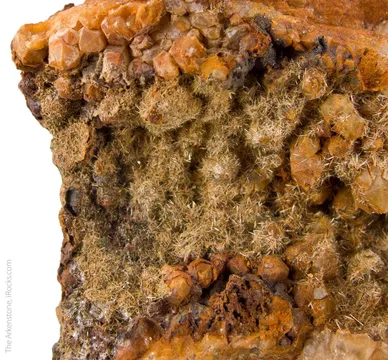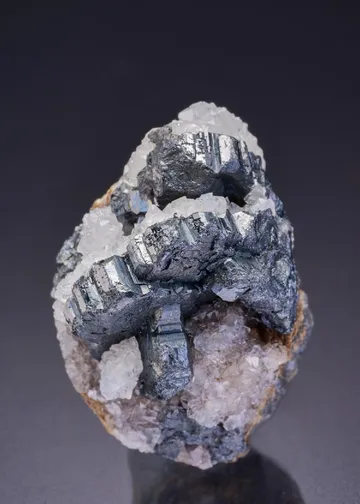
Herodsfoot Mine, UK: historic Cornish locality yielding bournonite and tetrahedrite on quartz; classic cabinet pieces prized by collectors.
Key facts
Herodsfoot Mine is one of the defining names in British mineral collecting: a Cornish silver-lead mine whose reputation rests less on tonnage than on the extraordinary sulphosalt specimens raised during its nineteenth-century peak. The mine lay west of the village of Herodsfoot, near Lanreath and St Pinnock, in the upper West Looe River valley of south-east Cornwall. Geologically it belongs to the north-south “crosscourse” lead-silver vein systems on the southern margin of the Cornubian metalliferous province, rather than to the classic east-west tin-copper lodes that dominate much of Cornish mining mythology. Its lodes carried argentiferous galena in quartz-carbonate gangue, with siderite, pyrite, sphalerite, baryte and dolomite in vughs, and the minerals that made Herodsfoot immortal among collectors: bournonite, tetrahedrite and chalcopyrite on bright quartz.
The best Herodsfoot specimens have a very recognizable look. They are old-time cabinet and miniature pieces in which gunmetal-grey, metallic bournonite cogs or sharply formed tetrahedrite masses stand on milky to glassy quartz, often with brassy chalcopyrite, small pyrite and occasional galena or siderite. The bournonite crystals are the mine’s signature: twinned, cogwheel-like, lustrous and heavy for their size, with many historic examples passing through the hands of Richard Talling, the great Lostwithiel mineral dealer who supplied museums and elite private collectors. Herodsfoot was not the type locality for bournonite—that honor belongs to Wheal Boys in St Endellion parish—but the Herodsfoot material became the standard by which classic bournonite specimens were judged.
Regional View
Country View
The mine’s historical importance is also local and social. In the 1840s Herodsfoot changed from a small wooded valley settlement into a mining village, its population drawn by rich lead and silver lodes; the ecclesiastical parish was created in 1851 in response to that growth. The lodes were worked to deep levels, the mine employed hundreds of people at mid-century, and its surface remains—engine-house ruins, chimney, dumps, tracks and streamside workings—still mark the valley landscape. For collectors, however, the enduring image is not machinery but contrast: dark sulphosalt crystals set against pale quartz, the whole piece carrying the unmistakable nineteenth-century Cornish pedigree.

Photo: Rob Lavinsky / iRocks.com via Wikimedia Commons


Search for specimens: View all specimens from Herodsfoot Mine, UK
Herodsfoot is a lead-silver crosscourse deposit. The productive vein system trends roughly north-south on the west side of Herodsfoot village and was followed for more than 1,300 metres of strike. In the regional framework of south-east Cornwall, it sits among the Herodsfoot, Menheniot and Bere Alston lead-silver vein centres, a belt noted for low-temperature Pb-Ag-Zn-F style mineralization; Herodsfoot itself is distinctive in lacking fluorite as a normal gangue mineral, a point useful when judging old Cornish labels. The lode occupied steep fractures in the Devonian slaty country rocks of the district and was reported up to about 1.22 metres wide, dipping steeply from westward to eastward in different workings.
The primary ore was argentiferous galena. Historical summaries describe strings, bunches and aggregates of galena through quartz-rich veinstone, with saccharoidal and chalcedonic quartz, siderite and pyrite making up much of the gangue. Vughs held sphalerite, baryte and dolomite, while bournonite, tetrahedrite, chalcopyrite and stibnite belonged to the richer sulphosalt assemblage that made the mine famous. Nearer surface, oxidation produced lead secondary minerals including cerussite, anglesite and pyromorphite, along with minor copper secondaries such as malachite and linarite. The assemblage is compact but extremely characterful: quartz, galena and carbonates as the structural framework; sulphosalts and chalcopyrite as the collector’s reward.
The mine is commonly treated as Herodsfoot Mine or North Herodsfoot Mine, and it should be distinguished from South Herodsfoot, a separate silver-lead working in nearby Duloe. Historical spellings and labels vary—Herodsfoot, Herod’s Foot, Herdsfoot and Lanreath all occur—and old specimen labels may use broader district names such as Liskeard. The collector should read such labels carefully, because “Herodsfoot” in the specimen market normally means the North Herodsfoot locality famous for bournonite and tetrahedrite, not simply any lead mine in the wider Liskeard district.
Mining at Herodsfoot is recorded from at least the early eighteenth century, with intermittent earlier working and a short revival in 1831, but the classic period began with reopening in 1844–1845. By 1851 the mine was equipped with a substantial pumping installation and a workforce recorded in the hundreds. The deepest workings eventually reached more than 200 fathoms, and nineteenth-century statistics give production in the order of tens of thousands of tons of lead ore with very large silver recovery. One modern summary gives more than 19,000 tons of lead ore and more than 600,000 ounces of silver over the principal nineteenth-century working life; parish history records the silver high point as nearly 40,000 ounces in 1867 alone.
Operators and ownership changed over time. Directory and list-of-mines records name the Herodsfoot Lead Mining Co. and later the Herodsfoot or Herdsfoot Adventurers, with Peter Tenby or Temby listed as captain in the early 1880s and W. F. Atkinson associated with the mine in the 1884 list. North Herodsfoot Mining Co. also appears in late records. The mine closed in 1884, by which time its great specimen era had already passed.
The specimens that matter most were raised mainly between the 1850s and early 1870s. Contemporary and later accounts emphasize a burst of exceptional bournonite and tetrahedrite specimens during the 1858–1868 interval, with broader collector production usually stated as about 1850–1875. The best pockets yielded cogwheel bournonite on quartz, sometimes with chalcopyrite and pyrite, and tetrahedrite groups coated or accented by chalcopyrite. Classic examples went directly from miners to Richard Talling, then to collectors such as Henry Ludlam and to institutions including the British Museum, now the Natural History Museum, London. This early removal and distribution explain why many of the finest Herodsfoot specimens are locked into old institutional and historic private pedigrees.
Collecting today is tightly constrained. The workings and dumps are on private land, with old shafts, unstable masonry, contaminated mine waste and dense vegetation. Organized visits have taken place with the permission of the landowners, and modern field reports show that worthwhile material can still be found, but usually as micromounts, small crystals, massive sulphosalt fragments, siderite pockets or quartz after baryte rather than cabinet classics. Serious collectors should assume that legitimate field collecting requires advance permission; old Herodsfoot material in the market remains the normal route to acquiring representative specimens.
Quartz is the essential Herodsfoot matrix mineral, not a mere accessory: the lode filling was dominated by saccharoidal, chalcedonic and crystalline quartz, and the classic sulphosalt specimens owe much of their visual strength to bournonite, tetrahedrite, chalcopyrite and galena rising from pale quartz druse. Good pieces show lustrous milky to colorless pyramidal crystals, commonly in tight beds over quartzose veinstone, and the most desirable quartz specimens carry sharp metallic companions rather than isolated quartz alone. Herodsfoot is also known for quartz pseudomorphs after baryte, including thin tabular or “tombstone” baryte forms replaced by quartz; these are particularly attractive when associated with bournonite or galena and are much more locality-specific than ordinary drusy quartz from the dumps.
Bournonite is the mineral that made Herodsfoot a world-class locality: dark steel-grey to gunmetal metallic crystals, usually twinned into cogwheel forms, perched on quartz or embedded in quartz-siderite-pyrite veinstone, with documented crystals to about 11 cm and cogwheel groups to about 6 cm. The classic finds came from the nineteenth-century lead-silver workings, especially the 1858–1868 pocket era associated with Richard Talling, and the finest pieces combine strong three-dimensional cogs, bright but natural metallic lustre, undamaged rims, pale quartz contrast and old provenance. Ordinary examples are small, dull, massive or bruised; great Herodsfoot bournonite has immediately legible cog morphology and the heavy, architectural presence that made “cog-wheel ore” one of the celebrated names of Cornish mineralogy.
Herodsfoot chalcopyrite occurs as brassy to lightly iridescent crystals and coatings with quartz, tetrahedrite, bournonite, galena and siderite, and it is especially important as a visual accent on the classic sulphosalt pieces. Fine examples show sharp, lustrous crystals around the centimetre scale on quartz, sometimes with charcoal-grey tetrahedrite and crystallized galena beneath; old descriptions also note chalcopyrite disseminated or scattered through siderite-quartz matrix. The best collector pieces are not massive chalcopyrite ore but balanced combinations, where clean brassy crystals bring color and sparkle to otherwise dark metallic sulphosalts without overwhelming the Herodsfoot identity of the specimen.
Tetrahedrite from Herodsfoot is one of the mine’s great historic associations, often appearing as dark grey to black metallic tetrahedrite-subgroup crystals or masses with chalcopyrite, galena, quartz and siderite. Nineteenth- and twentieth-century literature repeatedly notes the mine for spectacular tetrahedrite, and collector specimens commonly show tetrahedrite partly coated or accented by chalcopyrite, giving a dark-and-brassy surface that is highly characteristic. Top pieces have sharp form, visible crystal faces, strong contrast against quartz or galena, and an old Cornish pedigree; lesser pieces may be difficult to distinguish visually from massive bournonite or other dark sulphosalts without context or analysis.
Galena was the ore mineral of Herodsfoot, and the mine’s economic importance came from silver-bearing galena rather than from the sulphosalts prized by collectors. In specimens it occurs as bright to lead-grey masses, strings, small cubes or crystallized areas with quartz, siderite, bournonite, tetrahedrite and chalcopyrite; some classic museum pieces show galena replacing or overgrowing earlier bournonite or associated with quartz pseudomorphs after baryte. The best galena specimens from Herodsfoot are valuable less for giant isolated cubes than for paragenetic interest and association—silver-bearing ore on the same matrix as the famous bournonite-tetrahedrite assemblage, ideally with old labels tying the piece to the nineteenth-century workings.
Siderite is a fundamental Herodsfoot gangue mineral, present with quartz and pyrite through the lode and locally forming pockets of sharp brown rhombohedral crystals. Modern field reports from the dumps record small siderite pockets, and older dealer records describe lustrous light-brown rhombs richly covering quartz matrix with glassy pyramidal quartz. The most appealing Herodsfoot siderite pieces are those with clean rhombs, fresh luster and association with sulphosalts or pyrite; ordinary siderite is common enough as brown carbonate matrix, but well-crystallized siderite helps anchor a specimen to the mine’s true lead-silver vein assemblage.
Calcite is documented at Herodsfoot as a carbonate gangue and collector mineral, but it is more subordinate here than quartz and siderite. Old specimen descriptions include lustrous cream “nail-head” calcite crystals around half an inch scattered over translucent pyramidal quartz on quartzose veinstone, with galena and massive bladed bournonite also present. Good Herodsfoot calcite therefore depends on association and habit: cream, stepped or nail-head crystals on quartz, ideally with ore minerals visible, are far more desirable than isolated carbonate coatings that could have come from many Cornish or British lead localities.
Pyrite is part of the primary lode assemblage at Herodsfoot, occurring with quartz and siderite and appearing in specimens as small cubes, brassy grains, coatings and occasional sharper crystals with bournonite, chalcopyrite or siderite. Field reports from modern permitted collecting record small pyrite cubes and pyrite in association with siderite pockets and bournonite-bearing material, while older descriptions mention golden pyrite accompanying tabular bournonite sections on matrix. The best pyrite from Herodsfoot is not showy pyrite for its own sake but contextual pyrite: crisp, bright crystals that add scale and contrast to sulphosalt-quartz specimens without masking the bournonite, tetrahedrite or galena.
Other documented Herodsfoot minerals include anglesite, ankerite, aragonite, baryte, cerussite, cuprite, dolomite, erythrite, ferberite, gypsum, leadhillite, linarite, malachite, marcasite, molybdenite, native sulphur, pyrargyrite, pyromorphite, pyrostilpnite, sphalerite and stibnite. The rarities are part of the mine’s appeal to advanced collectors: silver sulphantimonides such as pyrargyrite and pyrostilpnite fit the argentiferous lead system, while secondary lead minerals such as cerussite, anglesite, leadhillite and pyromorphite reflect shallow oxidation. Baryte is especially important because Herodsfoot quartz pseudomorphs after baryte are recorded on historic specimens, and the absence or presence of fluorite has been used as a practical clue in separating Herodsfoot material from superficially similar Menheniot-district lead-silver specimens.
Herodsfoot specimens are classics, and the market treats them accordingly. Fine bournonite on quartz—especially old, aesthetic cogwheel material with Talling-era or museum provenance—is scarce and expensive. Presentable miniatures can command serious prices, while top cabinet examples are often institutionally held or deeply buried in old private collections. Tetrahedrite with chalcopyrite, chalcopyrite on quartz, and association pieces with galena or siderite are more obtainable than major bournonite, but good examples are still far from common.
The main authenticity risk is not a notorious modern fake industry but mislabelling, over-optimistic attribution and confusion with other Cornish localities. Bournonite’s type locality is Wheal Boys, not Herodsfoot, and old labels may conflate the fame of the species with the fame of Herodsfoot. Conversely, “Liskeard,” “Lanreath,” “Herdsfoot,” and “Herodsfoot” labels may all refer to the same classic North Herodsfoot source, while “South Herodsfoot” should be treated separately. Material rich in fluorite should be questioned as Herodsfoot unless the label or analysis is compelling, because fluorite is not characteristic of the Herodsfoot lodes and points more naturally toward other lead-silver deposits in the district.
Condition is critical. Bournonite is soft enough to bruise, nick and edge-wear, and cogwheel rims are vulnerable. Many old specimens have passed through several collections, so check for repaired cogs, glued matrix joins, concealed contacts, trimmed bases and old wax or adhesive. A naturally bright Herodsfoot bournonite can look superb, but a suspiciously over-bright surface may indicate aggressive cleaning; the most desirable examples retain a deep metallic lustre and historic patina without looking stripped. Tetrahedrite and chalcopyrite can tarnish, pyrite may dull, and siderite can chip along rhombohedral faces.
Handling should be conservative. Keep sulphides dry, avoid repeated washing, and do not soak old labelled pieces or friable quartz-siderite matrix. Bournonite, tetrahedrite and galena are lead-bearing sulphides or sulphosalts, so normal hygiene applies: wash hands after handling, keep dust out of the specimen box, and never grind or trim indoors. Herodsfoot is not a fluorescence locality in the way that some fluorite- or calcite-rich districts are; collector value here lies in metallic crystal form, association, provenance and locality identity.
For buying, insist on clear locality wording and, where possible, a chain of ownership. A modest specimen with an old handwritten label may be more desirable than a brighter but unprovenanced piece. The most convincing Herodsfoot bournonites show cogwheel or bladed twinned habit on quartz, often with pyrite, chalcopyrite, galena or siderite. Tetrahedrite pieces should be judged by crystal form and association, not simply by dark metallic mass. Quartz after baryte, bournonite with quartz pseudomorphs, and combination pieces with documented publication history are particularly worth pursuing.
The Herodsfoot story begins with a valley that became a mining village almost in a rush. Shallow adits had worked the hillside in earlier times, but by the early 1840s deeper shafts were needed to reach the lodes. Some galena ores were reported to contain up to 80 percent metallic lead, and the silver content soon turned an obscure valley into a place of industrial importance. Hundreds of miners arrived. The village had no church close at hand, and a contemporary report in the Royal Cornwall Gazette on 20 April 1849 complained that “a large population has been brought together” more than two miles from the nearest parish church. The response was practical and Victorian: a new church on the hillside, its foundation stone laid in April 1849, consecrated on 1 October 1850, and followed by the creation of the parish in 1851.
The mineral-collecting story is inseparable from Richard Talling. In 1858, the Herodsfoot workings produced spectacular bournonite with the cogwheel habit that miners and collectors immediately understood as special. Talling, working from Lostwithiel, acquired the finest specimens from the miners and sent them outward into the great collecting world. Museums and private collectors across Britain, Europe and beyond received Herodsfoot pieces through his hands. One Royal Cornwall Museum specimen is thought to have come in December 1858 as part of a group purchased from Talling for £8.10s—a sum that bought material now considered part of Cornwall’s mineral patrimony. The later collector’s irony is sharp: what miners treated as specimen material alongside ore became rarer, more coveted and more historically resonant than the lead they were paid to extract.
One of the great Herodsfoot bournonites travelled even farther. The Australian Museum’s Albert Chapman specimen, a 6.5 x 9 x 5 cm bournonite with quartz, was collected between 1858 and 1868 from a vugh in the upper levels of the mine and sold to the British Museum. Albert Chapman saw it there in 1973, when the institution was still known as the British Museum of Natural History, and wanted it badly enough to negotiate an exchange. The museum resisted at first. Only after the Keeper of Minerals saw the specimens Chapman offered—including Broken Hill alabandite and Tasmanian crocoite—did the exchange go ahead. The Herodsfoot bournonite then entered the Chapman Collection in Australia, carrying with it a history that began in a Cornish lead mine, passed through Talling’s nineteenth-century network, sat in one of the world’s great museums, and crossed hemispheres in a twentieth-century collector’s trade.
Modern field visits show how much the old mine can still stir collectors, even when the age of great pockets is long over. On Sunday 19 May 2013, Russell Society members collected on the Herodsfoot dumps by permission of Richard Humphrey, who owned the property, lived in the former count house and was working to restore the mine area. The dumps were old, vegetated and difficult, but a JCB had cut a trench about 10 metres by 3 metres into one of them. Early finds were modest: massive galena, bournonite or tetrahedrite, sphalerite, chalcopyrite, sub-millimetre tetrahedrite, 2 mm bournonite crystals, small pyrite cubes and a few siderite pockets. Then, close to leaving time, Steve King pulled a large piece of rubble from the trench. It was muddy, but small bournonite crystals and green copper staining showed on the surface. He and Steve Plant broke it down and found bournonite veining and crystals in small pockets with tiny quartz groups. Some crystallized areas reached more than 1 cm, and several vugs also carried quartz pseudomorphs after thin baryte crystals. A second piece reportedly found later that afternoon by Tony Lee and Richard Humphrey also yielded excellent bournonite crystals. For a collector, finding recognizable bournonite at Herodsfoot itself—after the mine’s classic supply had supposedly vanished into history—was enough to send the group home elated.
Another Russell Society visit, on 15 August 2015, has the more intimate feel of modern collecting on private historic ground. Four members arrived under clear blue skies, found the private driveway, and were welcomed near an open barn with warm drinks, biscuits and cakes. The digging fee was £10 per person. Before the collecting began, Richard Humphrey showed specimens, including bournonite, and explained the cogwheel habit for which the mine is famous. A recently excavated pit was large enough for only two diggers at a time; others searched nearby, later joined by more members and, memorably, a small black-and-white cat. Not everyone found bournonite cogs, but the day produced massive bournonite, calcite, chalcopyrite, galena, gypsum, quartz, siderite, sphalerite and tetrahedrite. Humphrey added a valuable detail about the ground itself: the count house had been home to the Lobb family for more than 100 years, the mine buildings had later been used for farming, the boiler house and crusher house remained fully roofed until the late 1960s, and the tips had not been turned over in that time. Highlights from recent work included quartz after baryte with small bournonite crystals and a single cog perched on quartz and pyrite matrix.