A collector's guide to Orange River, Namibia: its geology, mining history and notable minerals, illustrated with the 218 specimens documented from this locality on EarthWonders.
Key facts
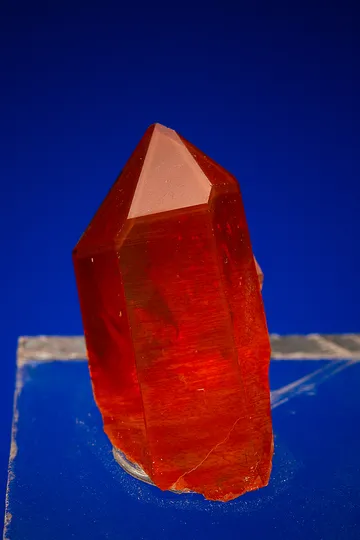
Orange River quartz is one of southern Africa’s great modern specimen stories: a dry, hard, borderland belt of quartz-bearing veins and pegmatitic bodies along the lower Orange, south of Warmbad in Namibia’s ǁKaras Region, that began yielding striking collector quartz in quantity only in the late 1990s. The name is regional rather than a single mine name, and that matters: the productive ground straddles the Namibia–South Africa border, with specimens historically labelled “Orange River,” “Oranje River,” “Warmbad,” “Karas,” or simply “Southern Africa.” The best Namibian pieces are unmistakable in style even when their exact pocket is not: glassy quartz crystals carrying brick-red to orange hematite, sharp internal phantoms, amethystine caps, smoky or colorless overgrowths, and, in the choicest examples, doubly terminated or sceptered architecture that gives the crystals the look of small, fiery constructions rather than ordinary iron-stained quartz.
Regional View
Country View
Geologically, the collectible material belongs to vuggy hydrothermal quartz-carbonate and quartz–K-feldspar vein systems developed in the older crystalline terrane near the river, with strong late epithermal and supergene overprinting. The visual signature is hematite introduced during pauses and resumptions of quartz growth: in some crystals the red oxide forms coatings on earlier quartz faces, in others it is trapped as internal phantoms or dense ferruginous zones, and in the most complex pieces it alternates with clear, smoky, or purple quartz generations. Fluorite is a valued accessory, occurring as colorless, yellowish, lavender, purple, or zoned crystals and crusts on quartz, but good quartz remains the locality’s principal prize.

Photo: Wikimedia Commons
What separates Orange River material from generic “hematoid quartz” is not merely orange color. Fine pieces show readable growth history: a red phantom hanging in a transparent crystal, a clean scepter head on a pink hematitic stalk, or a cabinet-sized cluster in which every crystal repeats the same internal zoning. The locality also occupies an important place in the modern collecting literature because the sudden appearance of amethyst/eisenkiesel quartz from Namibia around 2000 brought the Orange River area to serious international attention, and because later collections—especially those assembled by Africa specialists—established a premium for well-provenanced Namibian examples.
Search for specimens: View all specimens from Orange River, Namibia
The Orange River locality used by collectors covers a broad mineralized belt rather than a single shaft or named mine. Mindat treats the wider Orange River occurrence as a mining area extending roughly over a very large tract of the lower river country, and specimen literature narrows the Namibian collecting label most usefully to the Orange River area south of Warmbad. The productive Namibian ground lies in the Warmbad–Karasburg region, where older granites, gneisses, schists, pegmatites, and quartz-rich bodies are exposed near the river and in adjacent farms. Historic geological mapping of the Warmbad district described a barren, low-rainfall landscape, deeply dissected near the Orange River, with old crystalline rocks exposed in hilly tracts and pegmatitic quartz bodies noted in the river valley.
For specimen purposes, the “ore body” is best understood as a network of vuggy hydrothermal quartz-carbonate veins and quartz–K-feldspar veins rather than a metal mine. Cavities in these veins allowed quartz to grow freely into open space. Later iron oxide events—principally hematite, with goethite and lepidocrocite also reported in the assemblage—colored or coated crystal faces and then were sealed by further quartz growth. That sequence produced the locality’s most desirable architecture: red phantoms under glassy outer quartz, red cores with clear tips, purple amethyst caps on lighter stalks, and scepter forms with multiple visible generations. Fluorite occupies the same vein environment as an accessory phase, appearing locally as crusts or individual crystals on quartz.
Mining and collecting history here is small-scale and specimen-driven. Before the late 1990s, quartz crystals from the Orange River belt were known only sporadically and did not have the broad collector recognition enjoyed by Brandberg or Goboboseb quartz. The late-1990s finds changed that, and the February 2000 Lapis article by Ludi von Bezing and Jens Gutzmer introduced the amethyst/eisenkiesel quartz from the Namibian Orange River area to a specialist German-speaking audience. Subsequent work by von Bezing, Bode, and Jahn in the Namibia locality literature helped stabilize the preferred Namibian label and placed the finds in the larger context of Namibia’s quartz and pegmatite localities.
Named localities and pockets give collectors some of the best handles on otherwise regional material. Girtis Farm 109, in Karasburg East, is especially important: it lies on or near the Orange River borderland and produced pale to dark amethyst before the major late-1990s finds. The celebrated “Kalkgat pocket” on Girtis yielded superb, large, intense reddish-brown crystals, some as floater groups and some on pink albite. Documented Girtis pieces include hematitic quartz with violet amethyst windows, and Girtis is also recorded for fluorite, hematite, quartz, amethyst, cordierite, and corundum. Other Orange River specimens entered the market under broader labels, and the South African side—especially Pella, Onseepkans, Goodhouse–Vioolsdrift, and Riemvasmaak—has contributed enough similar material that careful provenance is essential.
Access today should be approached as a legal and ethical collecting issue, not as an open public rockhounding area. The productive sites are on farms, conservancy or private land, and mineral rights in Namibia are regulated. Quartz, including amethyst, rock crystal, rose quartz, agate, chalcedony, and related varieties, falls within Namibia’s semi-precious stones group; mining claims are reserved for Namibian citizens, and private collectors or researchers need the appropriate Ministry of Mines and Energy documentation for material collected or purchased. Export of mineral specimens requires proper permits, and collectors should also be alert to the extra sensitivity of the lower Orange River landscape: permanent water, archaeology, conservation lands, farms, and border controls all overlap in this sparsely populated district.
Quartz from the Namibian Orange River area is prized for form and internal structure: bright vitreous crystals, commonly small-cabinet to cabinet size but with individual crystals ranging from thumbnail scepters of only a few centimeters to crystals 6–8 cm and larger in fine groups, show brick-red hematite inclusions, red-orange phantoms, clear tips, smoky or amethystine caps, and repeated generations of growth. The finest pieces are three-dimensional rather than flat, with sharp terminations, strong luster, undamaged tips, and color that is included or phantomed inside the quartz rather than merely smeared on broken surfaces. Girtis Farm and the Kalkgat pocket are key Namibian references, while 2017-style finds of doubly terminated scepters with pink hematitic stalks and smoky-amethyst heads show how sophisticated the habit can become here.
Hematite at Orange River is overwhelmingly a specimen-making mineral within quartz rather than a stand-alone metallic-hematite species display: it occurs as red to brick-red inclusions, phantom coatings, thin internal films, and locally darker nearly black specks or zones suspended near prism faces and terminations. Its importance is aesthetic and genetic, because the best hematite marks earlier quartz surfaces that were later overgrown by clearer quartz, giving Orange River crystals their depth, zoning, and ember-like color. Good examples show crisp red phantoms, directional or repeated growth layers, and enough transparency to read the hematite in three dimensions; ordinary examples are dull, muddy, too opaque, or simply iron-stained without the sharp internal geometry that collectors expect from the locality.
Amethyst from Orange River, Namibia is less common than red hematitic quartz and is best known in scepter crystals, caps, and zones rather than as large conventional purple geodes or plates. The color can be pale lavender, smoky-lavender, blush purple, or, rarely, strong grape-purple, often combined with red hematite inclusions or phantoms that give the crystals a layered purple-and-red glow under backlighting. The most desirable pieces are well-balanced sceptered groups or doubly terminated crystals with clean luster, intact terminations, and visible multistage growth—white or colorless quartz first, then amethyst with hematite, and sometimes a later clear quartz generation—whereas pale, bruised, or merely stained specimens are far more common and command less attention.
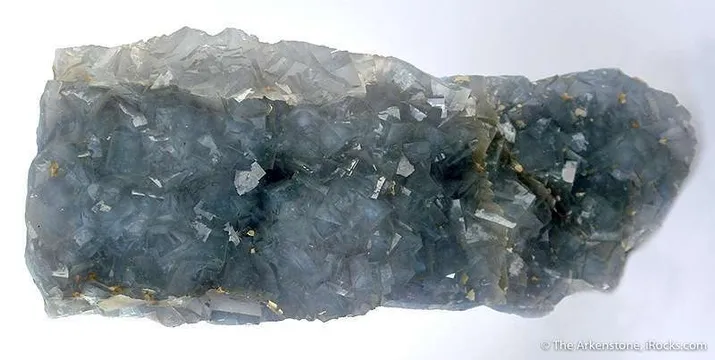
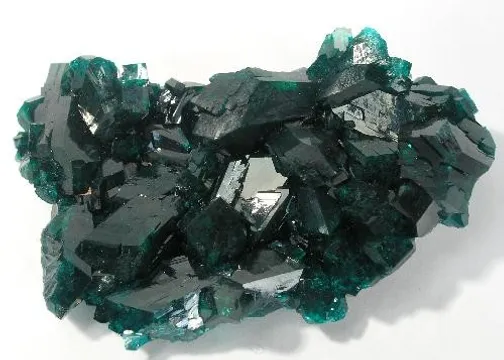
Fluorite is a scarcer but highly collectible companion to Orange River quartz, occurring in the quartz area as colorless to purple rounded crystals and crusts, and on Girtis Farm specifically as purple to pale yellow octahedra reported to about 4 cm on quartz. Better specimens show gemmy lavender, purple-zoned, honey-yellow, or pale cubo-octahedral fluorite positioned on hematite-included quartz rather than isolated, damaged crusts; small fluorite crystals on red phantom quartz can be more desirable than larger but shapeless masses because the combination records the same open-vein growth environment. Attribution is especially important for fluorite, since many Orange River fluorites in circulation may have come from the South African side, and only well-documented Namibian pieces should be sold as Orange River, Warmbad, Karas Region, Namibia.
The wider Orange River assemblage documented in the mineralogical record includes albite, calcite, clinochrysotile, epidote, goethite, lepidocrocite, magnetite, malachite, martite, microcline, muscovite, native copper, orthoclase, and varieties such as eisenkiesel and ferruginous quartz. Girtis Farm adds cordierite and corundum to the locality picture, while the broader Orange River pegmatite belt includes additional species from South African sublocalities that should not be casually transferred onto Namibian labels. No accepted type-locality mineral is established for Orange River, Namibia itself; its fame rests instead on a distinctive hematite-quartz style and on named pocket material such as Kalkgat.
The first authenticity issue is locality precision. “Orange River” is often used as a broad trade label for visually similar quartz and fluorite from both sides of the Namibia–South Africa border, and experienced Namibian collectors have noted that there are no simple visual features by which all Namibian quartz can be separated from South African Orange River quartz. Specimens with old labels naming Warmbad, Girtis Farm, Karas Region, or a specific Namibian farm/pocket carry a premium over pieces merely labelled “Orange River.” Conversely, attractive quartz from Pella, Onseepkans, Riemvasmaak, or Goodhouse–Vioolsdrift should not be upgraded to Namibia without provenance.
The second concern is confusion with treated or artificially coated quartz. Orange River quartz is naturally colored by hematite inclusions, internal films, phantoms, and coatings, but the commercial abundance of “tangerine,” “hematoid,” heat-altered, and dyed quartz means the buyer should look closely. Natural Orange River pieces commonly show hematite following former crystal-growth surfaces under later quartz, with transparent windows, clean terminations, and phantoms that make geometric sense. Acid-cleaned or abraded specimens may lose surface iron and look patchy; artificially enhanced pieces may show color concentrated in cracks, broken areas, or suspiciously uniform outer films without internal growth zoning. A good label and good optics matter.
Condition is a major value driver. The crystals are hard, but scepters, thin terminations, projecting side crystals, and fluorite attachments are vulnerable. Many otherwise excellent cabinet specimens have small edge dings, bruised tips, or peripheral crystal damage; the market will tolerate minor edge wear on important pocket pieces, but pristine, well-composed clusters are substantially scarcer. Repaired dings occur in the trade, and because the red hematite color can mask small chips, inspection under strong side-lighting is worthwhile. Fluorite combinations need gentler handling than quartz-only pieces, and fluorite surfaces can be scratched or cleaved during trimming.
Fluorescence is not the main reason to buy Orange River specimens, but hyalite opal has been documented on some amethyst-quartz-hematite pieces and may fluoresce strongly under ultraviolet light. If a specimen carries opal or delicate crusts, avoid aggressive cleaning and prolonged soaking. Hematite-stained quartz itself is generally stable, though collectors should avoid unnecessary chemical cleaning because the very coatings and films that make the specimen desirable can be diminished.
Market availability is moderate for quartz and much thinner for top-grade amethyst and fluorite combinations. Small to mid-sized red quartz clusters appear regularly, including newer Namibian-side finds, but the best pieces—large, lustrous, three-dimensional, damage-free, and strongly phantomed—are not common. Provenanced ex-collection material, especially pieces linked to Charlie Key, Richard Hauck, Neil Prenn, Heini Soltau, or well-documented dealer archives, deserves special attention because locality ambiguity has become part of the Orange River collecting problem.
The Orange River quartz boom has the pleasing strangeness of a late-arriving classic. Before the late 1990s, these crystals were at best a trickle—known to a few Africa specialists, not yet a standard cabinet item. Then the finds began to appear: red quartz with internal phantoms, amethyst scepters with hematite, and odd multigeneration pieces from a borderland where exact farm names were not always preserved in trade. The German title of the 2000 Lapis article captured the mood: “Spektakulärer Neufund,” a spectacular new find. For a locality now familiar to collectors, it is easy to forget how abruptly Orange River quartz entered the serious market.
One of the best collecting stories is the Charlie Key story. Key, a legendary Africa-specialized dealer, built an Orange River quartz suite over decades by cherry-picking through material as it surfaced from the 1990s and 2000s. Later auction descriptions of his pieces refer to a display collection of more than 500 specimens from the region—an extraordinary private concentration of one locality style. One 11.5 x 11.4 x 7.3 cm Orange River amethyst from his collection was described as having sharp crystals to 6.0 cm and unusually intense grape-juice color, a level of purple considered rare for Orange River. The same description notes that Key’s material was acquired around 2012 with Marshall Sussman, carrying the locality from field diggings into one of the better-known circuits of high-end African quartz collecting.
The Girtis Farm material has its own pocket legend. The “Kalkgat pocket” is remembered not for producing masses of average quartz, but for large, intense reddish-brown crystals, commonly on pink albite or as floater groups. That combination—deep ferruginous color, crystallized quartz, pink feldspar, and minimal attachment damage—is exactly the sort of pocket identity serious collectors want on a label. A documented MIM Museum specimen from Girtis Farm, weighing 130 g and measuring 5 x 4.5 x 7.5 cm with a 6.2 cm main crystal, shows the locality’s layered personality in one object: a doubly terminated hematitic quartz crystal on microcrystalline quartz, orange-brown through the body, with violet amethyst “windows” near the top, and ex Heini Soltau provenance.
There is also a cautionary field story embedded in the labels. Orange River is a river, a border, a district name, and a trade name. In the early 2000s much material circulating as Orange River came from localities on the South African side; fluorite suffers the same ambiguity. The result is a locality that collectors recognize instantly by style but cannot always prove by eye. That tension—spectacular appearance, imperfect geography—is part of why old labels naming Warmbad, Girtis, Karas, or a precise farm carry real value.