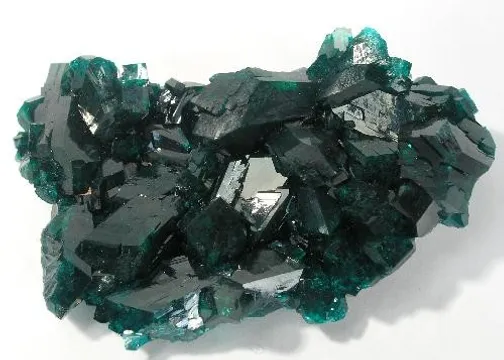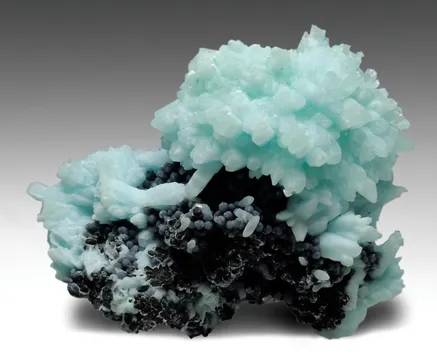
Karas Region, Namibia — a collector-focused locality highlighting Rosh Pinah and Skorpion zinc districts, Ysterputs blue lace agate, and hematite-included quar…
Key facts
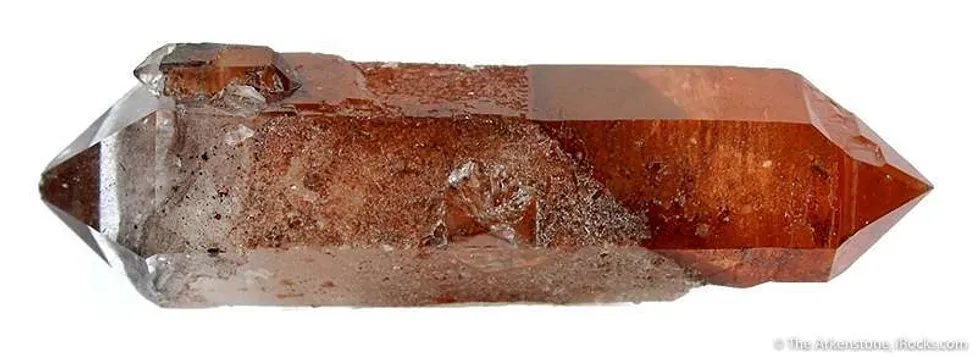
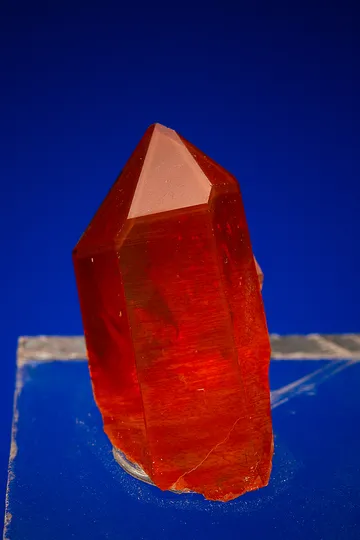
Karas Region is the mineral-collector’s Namibia in its southern, desert-hardened key: not the copper-arsenate theater of Tsumeb, but a set of highly distinctive occurrences tied to the Orange River margin, the Gariep Belt, Karoo-age dolerites, and zinc deposits around Rosh Pinah. Its specimens divide into several recognizable families. From the Rosh Pinah and Skorpion zinc district come sulfide and supergene assemblages—golden bladed baryte, marcasite, galena and sphalerite, plus the unusual zinc-oxide and zinc-phosphate suite of smithsonite, hemimorphite, hydrozincite, tarbuttite, scholzite and skorpionite. From Ysterputs near Karasburg West comes the famous blue lace agate: banded, soft sky-blue to lavender-blue chalcedony, often in lapidary slices but also as collectible vuggy or pseudomorphic specimens. Along the Orange River and Warmbad area, collectors prize hematite-included quartz and small, elegant fluorite-on-quartz pieces, typically pastel violet to smoky-lavender, perched on quartz rather than forming the large fluorite masses of Namibia’s better-known northern deposits.
Regional View
Country View
The region matters historically because several of its specimen-producing localities are also important economic or scientific localities. Rosh Pinah was discovered in 1963 and has been mined for zinc, lead and silver since 1969. Skorpion, about 25 km north of Rosh Pinah, became a landmark non-sulfide zinc operation and the type locality for skorpionite. Ysterputs supplied the market with blue lace agate for more than half a century and has recently become more than a lapidary locality: detailed work has shown its agate to be a hydrothermal vein system, with some chalcedony pseudomorphs now interpreted as probably after melanophlogite rather than fluorite.

Photo: Wikimedia Commons

Photo: Wikimedia Commons

Photo: Wikimedia Commons
Search for specimens: View all specimens from Karas Region, Namibia
For collectors, “Karas Region” should be read as a regional label covering several different geological environments, not a single mine. The Rosh Pinah district lies in the Gariep Belt near the Orange River and is dominated by stratabound to stratiform Zn-Pb-Ag mineralization hosted in the Neoproterozoic Rosh Pinah Formation. The main Rosh Pinah ore is sulfide-rich, with sphalerite, galena, pyrite and chalcopyrite as principal ore minerals, plus baryte, marcasite and a suite of less common Ag-Cu-Ba phases in pockets. Those pockets are not continuous specimen zones; they were encountered sporadically during underground mining, which is why fine Rosh Pinah baryte and marcasite specimens have always been scarcer than their reputation suggests.
Skorpion is geologically different and was important enough to give its name to skorpionite. It is a supergene non-sulfide zinc deposit, developed by oxidation of an earlier sulfide protore and precipitation of zinc minerals in open spaces, fractures, breccias and altered metasedimentary rocks. The ore assemblage is dominated by non-sulfide zinc minerals, especially sauconite, hemimorphite and smithsonite, with subordinate hydrozincite, tarbuttite, scholzite, hetaerolite and related species. This is the setting that produced the best-known Karas tarbuttite specimens: pale green to blue-green sheaves or fanlike aggregates, commonly with hemimorphite and, in rare cases, colorless to white acicular skorpionite.
Rosh Pinah’s mining history begins with regional prospecting and mapping. The deposit was discovered in 1963 by Dr. Michael McMillan during work for Moly Copper Mining and Exploration, and production began in May 1969. The mine has operated for zinc, lead and silver, with ownership and operating structures changing over time; the modern mine is associated with Rosh Pinah Zinc Corporation, and the RP2.0 expansion has been a major recent chapter in the operation. Skorpion’s modern mine history is later: construction and mining began in the early 2000s, the operation was officially opened in 2003, and it became known as one of the world’s unusual commercial non-sulfide zinc operations. It was later acquired by Vedanta, and both mine and refinery were placed on care and maintenance from 1 May 2020 after geotechnical pit instabilities and slope-failure risk.
The Karasburg West–Ysterputs occurrence is a separate collector world. The Blue Lace Agate Mine exploited a hydrothermal vein deposit on Ysterputs Farm 254, where banded chalcedony occupies a shear zone and associated fractures in a Jurassic dolerite sill intruded into Permian marine sediments. The principal seam averages only about 5 cm in width, dipping steeply, but it produced the soft blue-and-white banded agate that became the commercial standard for “Namibian blue lace.” Collector specimens include banded agate, vugs lined with drusy blue chalcedony, quartz or calcite, and the much-discussed cubic to cuboid chalcedony pseudomorphs. The mine was worked for decades, first by hand and later mechanically; published accounts state that exploitation continued until 2017.
The Orange River and Warmbad area adds a third specimen identity. Here, quartz is the visual anchor: clear to smoky or hematite-included crystals and clusters, some carrying small lavender to purple fluorite crystals. These are usually cabinet and small-cabinet aesthetics rather than ore-specimen curiosities—fluorite as translucent cubes or modified crystals on quartz, sometimes with feldspar, hematite staining, calcite or sulfide traces. The older Warmbad fluorite occurrences also include small fluorspar deposits in Precambrian gneiss and breccia settings, with quartz, calcite, barite, galena and chalcopyrite recorded in association.
Collecting access should be treated conservatively. Rosh Pinah and Skorpion are industrial mine sites, not open collecting grounds; Skorpion is also in the wider restricted diamond-field environment of southwestern Namibia, and mine access is controlled. Ysterputs is private land and a licensed mining locality, with published warnings and current uncertainty around formal collecting access. Orange River and Warmbad specimens on the market generally come from older collecting or dealer stock, and any field collecting in the region requires landowner permission, attention to mineral rights, and serious desert logistics.
Fluorite from Karas Region is best known to collectors from the Orange River–Warmbad quartz fields and small Warmbad-area fluorspar occurrences rather than from large commercial fluorite mining comparable to Okorusu. The most collectible pieces are small, sharp, translucent lavender to purple fluorite crystals perched on quartz, commonly in miniature to small-cabinet sizes; some show modified cubic forms and a delicate pastel contrast against clear, smoky, or hematite-tinted quartz. In the broader Orange River quartz area, fluorite occurs only occasionally, so the best specimens are those with isolated, undamaged crystals elevated on aesthetic quartz matrix rather than crusty or incomplete fluorite coatings. Older Warmbad and Karasburg pieces may also show calcite, sphalerite or minor sulfides, but for specimen quality the key is placement, transparency and the visual balance between the fluorite and quartz.
Karas chalcedony is dominated by Ysterputs blue lace agate, a banded blue-and-white to lavender-blue hydrothermal chalcedony from veins and fractures in dolerite on Ysterputs Farm 254. The classic material is rhythmic, lace-like banding in a narrow seam, long prized as lapidary rough, but collectors look for natural vug linings of bright drusy blue chalcedony, banded vein sections on host rock, and especially cubic to cuboid chalcedony pseudomorphs with sharp edges and tiled, slightly concave faces. The best pieces retain crisp form, natural color and convincing Ysterputs provenance; ordinary material is often simply polished slice or tumbled agate without specimen structure. The most interesting modern interpretation is that the cubic pseudomorphs once thought to be after fluorite are probably after melanophlogite, making them more mineralogically distinctive than a simple “blue agate” label suggests.
Karas Region tarbuttite is a Skorpion Mine specialty and one of the locality’s signature rare-species specimens. It occurs as pale green to blue-green fanlike sprays, sheaves and rosettes in the supergene zinc-phosphate assemblage, commonly associated with hemimorphite, smithsonite, hydrozincite, hydroxylapatite and the type-locality species skorpionite. Specimen sizes range from thumbnails with millimetric crystals to small-cabinet pieces several centimeters across, with the best material showing intact, sculptural sheaves, a pleasing pastel green color and visible associations rather than massive, granular phosphate. Some specimens show orange fluorescence under longwave and midwave UV, but identifications in this suite can be tricky because coatings or replacements by hydroxylapatite or hemimorphite may be present; good pieces are those backed by analysis, old reliable labels, or clearly documented provenance from the 2000s Skorpion finds.
Quartz from Karas Region appears in several distinct specimen styles. The Orange River–Warmbad material is the collector classic: clear, smoky, amethystine, or hematite-included quartz clusters, sometimes carrying lavender fluorite, and often appreciated for sculptural form and reddish internal hematite phantoms. At Ysterputs, quartz is part of the agate vein system, occurring as macrocrystalline quartz intergrown with chalcedony and as later crystals in vugs with carbonate minerals. At Rosh Pinah and Skorpion, quartz is mostly a gangue and secondary association rather than the principal aesthetic species. The best Karas quartz specimens therefore tend to be Orange River pieces with sharp terminations, clean luster, hematite color zoning or fluorite accents; broken iron-stained clusters and unattributed “Namibian quartz” pieces are far more common and less desirable.
Smithsonite from Karas Region is most significant at Skorpion and in the oxidized parts of the Rosh Pinah zinc system. At Skorpion it is one of the principal non-sulfide zinc minerals and occurs in the same supergene environment as sauconite, hemimorphite, hydrozincite and tarbuttite. Collectible smithsonite is typically botryoidal or crystalline, white to pale blue or greenish blue, commonly on a sparkling hemimorphite-coated matrix and sometimes with tarbuttite. The best pieces have distinct rounded smithsonite aggregates, clean pastel color and visible contrast with hemimorphite; lower-grade pieces can be difficult to distinguish visually from hemimorphite, hydrozincite or pale carbonate crusts. Provenance matters because Skorpion smithsonite is often collected as part of the mine’s unusual non-sulfide zinc story rather than as a stand-alone world-class smithsonite occurrence.
Under the American spelling, barite from Karas Region is essentially the Rosh Pinah baryte story: lustrous yellow, golden-orange to deep orange bladed crystals from sporadic pockets in the underground Zn-Pb-Ag mine. Classic pieces show “book”-like blades and radiating groups on dark sulfide-rich matrix, commonly associated with galena, sphalerite and marcasite. Documented specimens include crystals around 1 cm in older “What’s New in Minerals” reports, but matrix specimens and sprays can be much larger, with some fine examples described in cabinet sizes. The best barite pieces are bright, glassy, richly colored and undamaged on matrix; ordinary pieces are single broken blades or dull, iron-stained fragments without the characteristic golden translucence.
As baryte—the international spelling used in most mineralogical literature—the Rosh Pinah material is one of southern Namibia’s most recognizable base-metal mine specimens. It occurs in mineralized pockets in the stratabound Rosh Pinah deposit, with sphalerite, galena, marcasite, pyrite and carbonate gangue, and has been described as among the finest baryte-marcasite specimen material from Namibia and southern Africa. Good Rosh Pinah baryte has a warm orange to honey-yellow color, high luster and bladed, tabular or radiating habit; exceptional pieces preserve sprays or books of crystals standing free on contrasting matrix. Because pockets were only occasional, older labels, intact matrix and association with sulfides add both authenticity and value.
Other documented minerals from Karas Region include major Rosh Pinah sulfides such as sphalerite, galena, pyrite, chalcopyrite and marcasite; Skorpion supergene species including hemimorphite, hydrozincite, sauconite, scholzite, hetaerolite and skorpionite; Ysterputs carbonates and sulfates such as dolomite, ankerite, calcite and gypsum; and Orange River quartz-field accessories such as hematite and feldspar. The most important rarity for systematic collectors is skorpionite, Ca3Zn2(PO4)2(CO3)(OH)2·H2O, described from the Skorpion Mine as its type locality. Karas Region also has unusual type-locality footnotes outside the main specimen trade, including stercorite from the former guano workings of Ichaboe Island and magnesio-hornblende from Lüderitz sand-dune material.
Karas specimens reward careful locality discipline. “Namibia” alone is not enough: an Orange River fluorite-on-quartz, a Skorpion tarbuttite, a Ysterputs blue lace agate and a Rosh Pinah baryte are geologically and aesthetically unrelated, and broad labels can hide important differences in value. For older pieces, preserve every label, even dealer tags that use obsolete districts such as Lüderitz District or older spellings such as Karas, ǁKaras, //Karas, or ǁKharas.
The most common identification problems involve the Skorpion zinc-phosphate and zinc-silicate suite. Pale green tarbuttite, hydroxylapatite coatings, hemimorphite, hydrozincite and rare skorpionite can be intergrown on the same small specimen. Some Skorpion material has circulated with uncertain “apatite,” “fluorapatite,” “hydroxylapatite,” “tarbuttite,” or “skorpionite” labels; analysis by Raman, XRD or SEM-EDS is desirable for expensive rare-species pieces. Skorpionite should be expected as tiny colorless to white acicular crystals, commonly in cavities or on tarbuttite, not as large showy crystals.
Ysterputs blue lace agate has its own pitfalls. Much of the market material is cut, polished, tumbled or made into decorative objects, which is legitimate if sold as lapidary material, but not equivalent to a natural specimen with vugs, matrix or pseudomorphic form. Dyed blue chalcedony and agate from other localities may be sold loosely as “blue lace agate,” so high-end Ysterputs pieces should show credible provenance and natural banding rather than overly saturated, uniform blue color. Some chalcedony pseudomorph specimens from Ysterputs have had brittle coatings mechanically removed, and published accounts note deliberately acid-etched matrix on some pieces; that does not necessarily make a specimen fraudulent, but it should be disclosed when visible.
Rosh Pinah baryte is commonly fragile along cleavage and blade edges. Look closely for repaired sprays, trimmed sulfide matrix, bruised crystal tips and dull abrasion on the blade faces. Fine orange-yellow Rosh Pinah baryte on sulfide matrix is not abundant; many good pieces are older, and the best examples tend to move through established collections rather than appearing in quantity.
Orange River and Warmbad fluorite-on-quartz is typically small and delicate. Fluorite corners bruise easily, and quartz clusters often have old contact points from extraction. The best pieces are not necessarily the largest; they are the ones in which the fluorite is sharp, undamaged, naturally perched and clearly associated with the Orange River quartz style. Be cautious with vague “Orange River” labels, because the river is a long geographic feature straddling Namibia and South Africa, and specimens may be sold under regional rather than precise mine or farm names.
Fluorescence is worth checking but should not be used as a sole identification tool. Tarbuttite from Skorpion can fluoresce orange under longwave and midwave UV, while associated materials may show green, blue-white or white responses depending on coatings and activators. Some Ysterputs opaline crusts fluoresce under shortwave UV, but the chalcedony pseudomorphs themselves have been reported as non-fluorescent. UV response is therefore a useful clue, not a substitute for mineralogical confirmation.
The Ysterputs story is one of those mineral tales in which a famous commercial stone came first, and the science arrived decades later. George Swanson found the source of blue lace agate around 1962 and turned a narrow desert seam on Ysterputs Farm 254 into the world’s standard name for soft blue banded agate. At first the work was by hand; from 1977 onward, mechanized mining took over. The seam was not a broad, forgiving orebody. The principal band averaged about 5 cm wide, sometimes narrowing to roughly 1 cm and sometimes swelling past 10 cm, dipping steeply at 70–85 degrees to the northwest. The agate was partly hand-cobbed at the mine and then taken back to Swanson’s yard in Springbok, South Africa, where it was worked down to a more saleable size.
The landscape around Ysterputs is as severe as the stone is gentle. The mine sits about 80 km north of the South African border at the Orange River, roughly 10 km west of the B1 national road and near the margin of Blinkpan. Summer temperatures can reach 45°C; winter nights can drop below freezing. The blue lace sits at the foot of dark dolerite hills, in fractures created by a shear zone, a setting that seems almost too austere for the calm, wavy blue-and-white bands that made the locality famous.
A second seam, later marketed as “Ellensbury,” lies about 150 m northwest of the main deposit. It was reportedly the first blue lace agate mined and sold by George Swanson, the name echoing Ellensburg in the United States, another locality known for blue chalcedony. Ellensbury material is typically darker blue but less visibly layered, and large specimen pieces are seldom found. About 1 km south of the main mine is the “Crazy Lace” area, a harder, more mixed-up stone with flecks of blue chalcedony, attractive to lapidaries but too vuggy and irregular to be commercially dependable.
The pseudomorph story at Ysterputs is especially satisfying because it overturns a neat, easy assumption. For years, blue cubic chalcedony from the mine was described as pseudomorphs after fluorite. It made visual sense: blue cubes, silica replacement, a classic collector label. But the more detailed work found a different explanation. Small cubes up to about 3 mm came from clay-filled pockets in the main mine excavation, while larger cubes up to about 9 mm came from a large pocket farther south along the same shear-zone strike in the Crazy Lace area. Their faces are slightly concave and “tiled,” and the microstructure led researchers to argue that the precursor was probably melanophlogite, not fluorite. That makes a good Ysterputs cube plate more than a pretty blue pseudomorph—it is a small, sharp-edged record of a rare silica-clathrate transformation.
Rosh Pinah has a different kind of drama: a mine town built around base metal, repeated changes in ownership, and specimen pockets that appeared only when mining happened to cut the right cavity. The deposit was discovered in 1963 by Dr. Michael McMillan during regional mapping, and production began in May 1969. In 1993, a steep fall in the zinc price pushed the mine into liquidation; after negotiation, Rosh Pinah Zinc Corporation was formed in December 1998. Against that industrial backdrop, the coveted collector pieces—golden bladed baryte, marcasite, galena and sphalerite—were never the mine’s purpose. They were rare aesthetic accidents inside an orebody.
Skorpion’s story is both industrial and mineralogical. The mine became famous because it was not a normal zinc mine in the specimen collector’s sense: it exploited non-sulfide zinc ore, a supergene assemblage built by meteoric waters oxidizing earlier sulfides and redepositing zinc as carbonates, silicates, phosphates and clays. That unusual chemistry gave collectors tarbuttite sheaves, pale smithsonite and hemimorphite, and eventually skorpionite, a new calcium-zinc phosphate-carbonate named for the mine. The operation was placed on care and maintenance from 1 May 2020 after geotechnical pit instabilities, freezing the great specimen question collectors always ask of active mines: whether another pocket-bearing zone will ever be exposed.
Borg, G., Kärner, K., Buxton, M., Armstrong, R. and van der Merwe, S.W. (2003). “Geology of the Skorpion Supergene Zinc Deposit, Southern Namibia.” Economic Geology, 98(4), 749–771. Foundational paper on the Skorpion non-sulfide zinc deposit and its supergene mineral assemblage.
Krause, W., Effenberger, H., Bernhardt, H.-J. and Medenbach, O. (2008). “Skorpionite, Ca3Zn2(PO4)2CO3(OH)2·H2O, a new mineral from Namibia: description and crystal structure.” European Journal of Mineralogy, 20, 271–280. Original description of skorpionite from the Skorpion Mine type locality.
Welman-Purchase, M., Wicht, J., Miller, D. and Roelofse, F. (2024). “Blue lace agate and chalcedony pseudomorphs from Ysterputs in southern Namibia.” Journal of African Earth Sciences, 212, 105211. Modern mineralogical and geological study of the Ysterputs blue lace agate deposit and its chalcedony pseudomorphs.
Wicht, J. and Miller, D. (2020). “Blue Lace Agate from Ysterputs, Southern Namibia.” Cape Town Gem & Mineral Club / Mineral Chatter reprint. Readable collector-oriented account of the Ysterputs mine, geology, associated minerals and local collecting context.
Wicht, J. and Miller, D. (2021). “Blue chalcedony pseudomorphs from Ysterputs, southern Namibia.” Mineral Chatter, October 2021. Focused discussion of Ysterputs cubic chalcedony pseudomorphs and the evidence against a simple fluorite precursor.
Cairncross, B. and Fraser, A. (2012). “The Rosh Pinah Lead-Zinc Mine, Namibia.” Rocks & Minerals, 87(5), 398–409. Important collector and geological treatment of the Rosh Pinah deposit and its specimen minerals.
King, V.T. and Robinson, G.W. (1989). “What’s New in Minerals? Sixteenth Annual Rochester Academy of Science Mineralogical Symposium.” The Mineralogical Record, 20(5), 387–399. Cited record for Rosh Pinah baryte in the collector literature.
Moore, T. (1997). “What’s New in Minerals.” The Mineralogical Record, 28, 505–508. Contemporary notice of gem-quality orange transparent baryte from the Rosh Pinah Mine.
Mindat: ǁKaras Region, Namibia — Broad mineral locality index for the region, useful for checking species lists and subordinate localities.
Mindat: Rosh Pinah Mine — Key locality page for Rosh Pinah geology, mining history, baryte, marcasite and Zn-Pb-Ag assemblage information.
Mindat: Skorpion Mine — Primary locality page for Skorpion’s non-sulfide zinc suite and type-locality skorpionite.
Mindat: Ysterputz Mine, Ysterputs Farm 254 — Main reference locality page for Ysterputs blue lace agate and chalcedony pseudomorphs.
Mindat: Orange River, Southern Africa fluorite entry — Useful note on the Orange River quartz area and its occasional fluorite.
Wikimedia Commons: Minerals of Orange River, Warmbad — Large image category showing the Orange River quartz and fluorite specimen style.
Wikimedia Commons: Rosh Pinah Mine — Image source for classic Rosh Pinah baryte.
Wikimedia Commons: Skorpionite from Skorpion Mine — Raman-characterized skorpionite image from the type locality.
Rosh Pinah Zinc: History of the Mine — Operator history page covering discovery, production start and later corporate milestones.
Vedanta Zinc International: Skorpion Zinc — Current operator page with location, care-and-maintenance status and operational history.
Namibian Blue Lace Agate: About — Collector-facing summary of Ysterputs geology, mining history, seams and lapidary material.