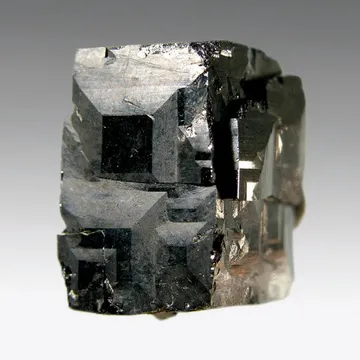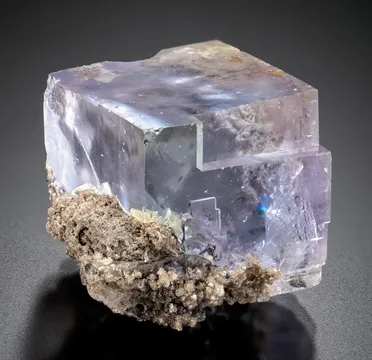
Walworth Quarry - western New York's classic locality yielding clear blue fluorite cubes on dolomite, prized for clarity, geometry, and collector appeal.
Key facts
Walworth Quarry is one of the modern classic mineral localities of western New York: an active dolostone aggregate quarry whose collector fame rests not on ore production, but on the vugs of the Silurian Lockport Group. In those hard, tan-gray dolostones, open cavities have yielded remarkably clean fluorite cubes, sparkling rhombohedral dolomite, calcite, sphalerite, celestine, gypsum var. selenite, galena, pyrite, marcasite, and occasional hydrocarbon coatings. The best Walworth pieces have a look that is instantly recognizable to collectors of northeastern North American carbonates: water-clear to pale blue fluorite cubes perched on a bright, sugary carpet of dolomite microcrystals, sometimes with scalenohedral calcite, orange-brown to golden sphalerite, or tarry black petroleum spots providing contrast.
Regional View
Country View
The quarry lies in the town of Walworth, Wayne County, east of Rochester, and belongs to the same collector province as Penfield and Lockport: western New York Lockport dolostone quarries where vug minerals were deposited in cavities, fractures, and fossil-related voids within Silurian carbonate rocks. Walworth’s strongest specimens are not usually imposing by the standards of Elmwood or Illinois fluorite; their power is in clarity, precision, and composition. A single undamaged blue-tinged cube on a glittering dolomite plate can be more desirable than a larger but bruised or cloudy example, and the locality is particularly prized by collectors who appreciate the austere geometry of fluorite in carbonate vugs.
Historically, Walworth also matters because many fine specimens entered collections during organized open-house collecting events. For years, regional clubs and collectors converged on the quarry in October, working freshly broken boulders and high-bench material for elusive fluorite. Those events made Walworth far better represented in private collections than many comparable active industrial quarries, and they helped establish the locality as a benchmark for clear New York fluorite.
Search for specimens: View all specimens from Walworth Quarry, USA
Walworth Quarry, also known in the mineral literature as the Dolomite Products Co. Inc. Quarry, is an active crushed-stone operation in Walworth, Wayne County, New York. The industrial product is dolostone aggregate rather than metallic ore, and the collectible minerals occur as secondary cavity fillings in the quarried carbonate rock. The host is Lockport Group dolostone of Silurian age, the same resistant carbonate belt that forms prominent escarpment and waterfall ledges across western New York. In quarry blocks the collector’s target is not a continuous vein or ore shoot, but discrete vugs, cavities, and mineralized seams within hard dolostone, especially in upper quarry levels and boulders derived from vuggy horizons.
The mineralization is best understood as a vug-filling assemblage deposited from mineralizing fluids that moved through porous and fractured dolostone after the rock had already acquired open space by dissolution and diagenesis. Collectors have long described the productive zones as pockety layers close to the upper part of the bedrock, where stromatolitic and fossiliferous textures, fractures, and solution cavities gave crystals room to grow. The most collectible pockets are lined with dolomite crystals and may carry fluorite, calcite, sphalerite, celestine, gypsum var. selenite, and minor sulfides. Petroleum and bitumen have also been recorded, and dark hydrocarbon droplets or coatings are part of the distinctive Walworth collecting experience; on some specimens they are distracting, but on others they give useful contrast to pale fluorite and dolomite.
Dolomite Products acquired the property at Atlantic Avenue and Tiffany Road in the 1960s, and the quarry has operated as a stone mine there since that period. Later regulatory and legal records document ongoing dewatering, without which the quarry would not be usable for mining, under New York State mined-land, stormwater, and water-withdrawal permits. The operation is therefore not an abandoned rockhound site; it is private industrial property, and any collecting must be treated as permission-only access under the owner’s current rules.
The classic collecting era was built around organized open-house events. Published field-trip notices and event listings record public mineral digs in which collectors arrived early for sign-in and a safety talk, worked the quarry for a few hours under strict protective-equipment requirements, and searched blasted or hammered boulders for vugs. The quarry address most often given for those events was 1200 Atlantic Avenue, Walworth, New York. Past open houses drew collectors from across the northeastern United States and Canada, with documented finds including clear to blue fluorite cubes, sphalerite, calcite, fossil corals, and abundant crystalline dolomite. As of the present, collectors should not assume that historic open-house access remains available; verify directly with the quarry operator or reputable local mineral clubs before making any plans, and never enter the property without explicit permission.
The best pockets are those in which the dolomite lining remained intact and the later minerals grew into open space rather than being jammed against the opposite wall. Fluorite is often very clear and can be visually elusive in the field, especially when it is colorless or only faintly blue. Productive collecting therefore required patience, strong lighting, and a habit of inspecting every dolomite-lined cavity from multiple angles. Because the host dolostone is exceptionally tough, successful extraction of better specimens often depended on wedges, chisels, saws, and careful trimming rather than casual hammering.
Walworth fluorite is the species that made the quarry famous: sharp cubic crystals, commonly colorless to water-clear and pale blue, more rarely with stronger bluish or purplish tones, set in vugs in tan dolostone and most often associated with dolomite, calcite, celestine, gypsum, bitumen, and sphalerite. Published descriptions and specimen records document typical crystal sizes around the centimeter scale, with fine cubes to several centimeters and notable examples reaching about 5 cm; the most desirable pieces combine transparency, undamaged cube edges, attractive isolation or clusters on sparkling dolomite, and enough matrix to show the vug environment without overwhelming the crystal. Because many cubes are nearly invisible against wet dolostone until light catches an edge, field collectors learned to hunt for reflections and internal blue ghosts rather than obvious color.
Walworth sphalerite is a prized accessory mineral rather than the locality’s headline species, occurring in vugs with dolomite, fluorite, calcite, celestine, gypsum, and occasional galena or sulfides. Collector accounts and specimen listings describe attractive red-brown, orange-brown, honey, and golden crystals, sometimes as lustrous isolated crystals or small clusters on white to pale dolomite; the best examples are bright, translucent, well exposed, and cleanly contrasted against the carbonate matrix. Pieces in which sphalerite shares a pocket with water-clear fluorite are especially desirable, while ordinary examples tend to be partly buried in dolomite, contacted against the cavity wall, or darkened by bitumen and iron staining.
Dolomite is both the host rock’s dominant mineral and the most abundant crystalline vug lining at Walworth, forming bright white to faintly pinkish rhombohedral crystals that coat cavity walls, bridge thin remnants of matrix between adjacent vugs, and provide the glittering base for the quarry’s finest fluorite specimens. Individual crystals are usually small, commonly under 1 cm, but the best specimens succeed through texture and architecture: clean, lustrous, evenly developed rhombs covering a sculptural piece of dolostone, or a dolomite-lined plate with fluorite, calcite, sphalerite, or celestine arranged naturally on top. Because collectors historically rushed past “just dolomite” while chasing blue cubes, fine dolomite-only specimens from Walworth are more interesting than their modest species name suggests.
Other documented Walworth minerals include calcite, celestine, gypsum var. selenite, anhydrite, galena, marcasite, pyrite, quartz, strontianite, petroleum, and bitumen. No verified type-locality mineral is documented for Walworth in the sources consulted, but the quarry has produced locality rarities that are important to specialists: prismatic golden celestine crystals reported to several centimeters, uncommon gypsum-on-celestine combinations, galena and marcasite represented in New York State Museum records, and specimens in which petroleum droplets or bitumen coatings sit directly on the vug minerals. Calcite is common enough to be part of the classic assemblage, especially as small scalenohedrons or “dogtooth” crystals, and fossil corals preserved in or around mineralized cavities give some specimens a hybrid mineral-fossil appeal.
The main authenticity issue with Walworth specimens is mislabeling, not systematic fakery. Clear fluorite on dolostone from Walworth can be confused with material from Penfield, Lockport, Niagara Falls-area localities, and other Lockport Group quarries, so old labels, field provenance, and matrix character matter. Walworth pieces are often described as having very clear to pale blue cubic fluorite on tan dolostone with white to slightly pinkish dolomite; by contrast, some other western New York quarries may be better known for different shades of fluorite, more strongly pink dolomite, or different calcite habits. A specimen simply labeled “New York fluorite” should not be upgraded to Walworth without documentation.
No credible, locality-specific industry of fabricated Walworth fluorite specimens is documented in the sources reviewed. Still, collectors should watch for assembled pieces: fluorite cubes artificially glued onto dolomite matrix would be unusually neat, may show adhesive in recesses, and often fail under close inspection with a loupe and side lighting. Because Walworth fluorite is typically cubic and often perched naturally in vugs, a convincing natural piece should show consistent pocket relationships: dolomite crystals growing around and under the fluorite, natural contact points, and matrix surfaces that make geological sense.
Condition is the decisive market factor. Fluorite cubes with bruised corners, cleaved faces, internal fractures from extraction, or dull etched surfaces drop sharply in desirability. The host dolostone is hard, and many specimens suffered during removal from large boulders; saw marks on the back or base are not automatically a problem if the display face is natural and undamaged. Calcite and selenite are softer and more vulnerable, while sphalerite may chip along exposed edges. Bitumen or petroleum coatings are a matter of taste: some collectors remove tarry films with suitable organic solvents, while others value the contrast and the locality character. Any cleaning should be conservative, as aggressive acid work can alter carbonate associations and destroy the subtle “as found” relationship between dolomite, calcite, and fluorite.
Walworth fluorite can be of interest to fluorescent-mineral collectors. Documented specimens show blue-white fluorescence under shortwave ultraviolet light, phosphorescence with a greener cast after ultraviolet exposure, and zoned luminescent responses within individual cubes. The behavior is not guaranteed for every specimen, so ultraviolet response should be considered a bonus characteristic rather than an assumed property. If testing, protect eyes and skin from shortwave UV, and remember that associated dolomite, calcite, and matrix may also respond.
On the market, Walworth material appears regularly but not abundantly. Small fluorite-on-dolomite specimens, dolomite plates, and mixed vug pieces circulate from past open-house finds, club collections, and estate material. The best pieces—transparent, undamaged blue or water-clear cubes attractively positioned on bright dolomite—are much less common than casual online listings imply. Sphalerite-rich pieces, celestine combinations, and well-documented older finds are specialist material and should be bought with attention to label history.
A Walworth open house in October 2016 began in classic upstate fashion: dreary weather, headlights on at 7 AM, and a line of collectors ready to descend into a working quarry. By the end of Saturday, 166 people from as many as seven states and two Canadian provinces had entered the quarry; another 70 came on Sunday morning. The mud did not stop them. Fred Haynes captured the mood with the kind of field-trip sentence only a collector would write: “Where else can grown men and women play in the mud and break things with hammers?” Among the Wayne County Gem and Mineral Club members, A. Brian McGrath came away with a cube still in its vug, Bill Chapman found one-inch cubes resting on small dolomites, and Dan Stanton recovered fluorite on larger bright white dolomites. Haynes himself did not have a fluorite to show that time, but he did leave with a Silurian Halysites colony—chain coral—and enough white crystalline dolomite to distribute at later events.
The same event had a family-show side that collectors remembered almost as fondly as the minerals. The Dolomite Group gave youngsters rides in a big quarry truck, which prompted Haynes to imagine borrowing such a machine for a weekend of collecting and then rolling up to the customs booth at Thousand Islands after a week in Ontario. That detail captures Walworth’s unusual status: a hard industrial quarry, full of equipment and safety rules, but for a short window turned into a social mineral hunt where clubs, families, and serious field collectors shared the same broken boulders.
The 2017 open house was larger still in spirit, with roughly 200 rockhounds coming from the northeastern United States and Canada. Wayne County Gem and Mineral Club provided donuts; Dolomite Products provided access and fresh rock. At one point, a Dolomite Products excavator hammered open a large boulder, drawing club members to the newly exposed possibilities. Glenn operated the saw on Saturday, Bill took over on Sunday, and by the end of the two-day event many fluorites, some sphalerite, fossil corals, and plenty of dolomite had left the quarry yard.
One of the most useful field stories about Walworth is not a single spectacular pocket, but the way collectors learned to see. Clear fluorite could be so transparent that it was difficult to spot. Successful searchers had to train their eyes to notice an edge, a flash, a cube corner, or a faint blue cast against pale dolomite and tan dolostone. The rock itself was another lesson. Walworth dolostone is tough enough that ordinary “tap and pry” collecting often failed; serious collectors brought crack hammers, chisels, wedges, sledges, hammer drills, feather-and-wedge sets, and sometimes gas rock saws. The reward for all that work might be a single floating golden sphalerite that had rolled free inside a pocket, a fluorite with a hairlike pyrite inclusion, or a tarry black droplet of petroleum sitting beside a clean cube like an accidental design element.
There is also a quieter Walworth story in the dolomite. During the annual fluorite hunts, many collectors moved from vug to vug hoping to see a transparent cubic corner shining back at them. If they did not see fluorite, they often walked on. Yet those same cavities were frequently lined with clean, bright rhombohedral dolomite, sometimes on both sides of thin matrix remnants between adjacent vugs. A good Walworth dolomite specimen can be a miniature landscape of sparkling white crystals, and the best examples tell the truth of the quarry as well as any fluorite: open space, patient growth, hard stone, and a moment of lucky exposure before the crusher.