






Victoria, Australia — a collector’s province known for iconic native gold from Bendigo, Ballarat and Woods Point, plus Mooralla smoky quartz geodes and a rich…
Key facts
Victoria is not a single mine locality in the usual specimen-label sense; it is a state-scale collector’s province whose mineral identity is anchored by two very different traditions. The first is the legendary Victorian gold province: Bendigo, Ballarat, Castlemaine, Maldon, Stawell, Clunes, Walhalla, Woods Point, Tarnagulla, Dunolly-Moliagul and dozens of smaller fields, where native gold was won from alluvial leads and from quartz reefs hosted largely by folded and faulted Palaeozoic turbidites of the Lachlan Fold Belt. The second is the quieter but scientifically rich mineralogy of Victorian granites, pegmatites, lava caves, meteorites, zeolite occurrences, basaltic gem fields and oxidized mine suites, which have produced type minerals, rare phosphates, attractive smoky quartz geodes and an unusually deep documentary record.
The specimens most collectors immediately associate with Victoria are native gold: buttery yellow, often high-fineness nuggets from central and western alluvial fields, and reef gold threading or splashing through white quartz from places such as Bendigo, Ballarat, Maldon and Woods Point. The best gold pieces are sculptural rather than merely heavy—hackly sheets, arborescent masses, fat rounded nuggets, or sharp flashes of metal frozen in white quartz, sometimes with pyrite, arsenopyrite, galena, sphalerite or bismuth-telluride associations depending on field. Victoria’s place in gold history is outsized: the colony’s 1850s rushes helped reshape Melbourne, pushed quartz-reef mining into industrial scale, and yielded some of the most famous nuggets ever recorded.
Regional View
Country View
For quartz collectors, Victoria offers a more intimate classic: Mooralla, in the Southern Grampians Shire, where rhyolitic geodes and cavities contain lustrous smoky quartz crystals, many of them doubly terminated or reverse-sceptred. These are not giant alpine-style plates; they are miniature to small-cabinet specimens with excellent form, high gloss and smoky brown to nearly black colour set against pale rhyolite and drusy quartz. A good Mooralla piece has an architectural quality: a crystal balanced in a pocket, a pair of terminations meeting in a hollow, or a dark smoky “floater” framed by pale geode lining.

Photo: Wikimedia Commons

Photo: Wikimedia Commons
Search for specimens: View all specimens from Victoria, Australia
Victoria’s collector material comes from several deposit families, but its central mineralogical theme is orogenic gold. The bulk of the historic reef gold formed in quartz veins emplaced into deformed Cambrian to Devonian sedimentary successions—especially sandstone, siltstone and shale turbidites—during major folding, faulting, metamorphism and later structural reactivation in the Lachlan Fold Belt. In central Victoria, these reef systems occupy saddle reefs, trough reefs, fault-vein arrays, bedding-parallel veins and dilational sites around fold hinges and reverse faults. Mesozonal systems such as Bendigo, Ballarat, Stawell, Walhalla, Maldon, Woods Point and Clunes supplied much of the classic reef-gold story, while younger epizonal systems such as Fosterville and Costerfield have become important in modern mining.
The state’s alluvial goldfields were generated by long erosion of those primary gold systems. Weathering liberated gold from quartz reefs and altered wall rock, then concentrated it in creek gravels, buried leads, cemented gravels and younger alluvium. This is why Victorian gold labels often divide naturally into “reef gold,” still locked in or on quartz, and “nugget gold,” rounded or sculpted by alluvial and eluvial processes. Ballarat, Bendigo and Castlemaine sit close to major primary gold systems; other prolific alluvial fields such as Creswick, Chiltern, Ararat and Beaufort are famous partly because their alluvial richness seems disproportionate to the modest primary sources exposed today. Central and western Victoria remain especially associated with nugget gold.
The ore mineralogy changes from field to field. Many central Victorian mesozonal veins are quartz-dominant, with only minor carbonate and a few percent sulphides, chiefly pyrite, pyrrhotite and arsenopyrite, with lesser chalcopyrite, sphalerite and galena. Maldon adds a distinctive bismuth-telluride-gold signature: the gold-bismuth mineral maldonite, Au2Bi, is named for the Maldon goldfield, and later study of Museum Victoria material documented a complex assemblage including native gold, bismuth, maldonite, joséite-A, joséite-B, jonassonite, hedleyite, aurostibite, bismuthinite and other Bi-Te-S phases. Costerfield is different again, being known for gold-antimony mineralization with stibnite, while Fosterville’s high-grade zones made visible gold famous in a modern mining context.
Mining history in Victoria begins before the great public rushes, but the decisive burst came in 1851. Clunes, Ballarat, Bendigo and Castlemaine drew diggers almost immediately, and within a few years Victoria was producing gold on a world scale. Ballarat’s shallow alluvials were extraordinarily rich in 1852 and 1853; Bendigo rapidly became a great reefing field; and by the 1860s underground quartz mining was established at Ballarat, Bendigo, Clunes and Walhalla. Later waves of discovery pushed into St Arnaud, Ararat, Stawell, Dunolly, Rutherglen, Chiltern, Jamieson, Blackwood, Woods Point and Walhalla. By the 1920s the great Ballarat and Bendigo mines had largely fallen silent, but high gold prices and improved technology revived exploration, metal detecting and commercial mining from the 1980s onward.
Modern Victoria still mines gold. Fosterville, owned by Agnico Eagle Mines, is the state’s flagship high-grade underground gold mine east of Bendigo. Costerfield, operated by Mandalay Resources, produces gold and antimony near Heathcote. Stawell Gold Mines operates at Stawell, a district with roots in the 1850s. Ballarat also returned to underground mining in the twenty-first century. These modern operations are industrial mines, not casual collecting localities, and specimen recovery is controlled by mine rules, safety requirements and company policy.
For today’s field collector, access is a patchwork. Recreational prospecting and fossicking in Victoria require a Miner’s Right, and the right does not override land status, private-property permission, heritage protections, mine leases, park restrictions, closed shafts, waterways where prospecting is prohibited, or environmental rules. Hand tools, pans, sluices and metal detectors may be allowed in permitted areas, but collectors must backfill holes, avoid protected features, keep clear of dangerous old workings, and confirm current rules before entering any site. The practical collecting landscape is therefore divided between legal fossicking grounds, state forest areas where prospecting is allowed, clubs and field trips, old dumps where access is permitted, dealer material, and museum-preserved specimens that can no longer be duplicated.
Several Victorian specimen sources deserve special attention. The Golden Triangle—roughly the gold country between Bendigo, Ballarat and Stawell—is the classic modern nugget-hunting region and has yielded many metal-detector discoveries since the 1980s. Moliagul-Dunolly is inseparable from the Welcome Stranger story. Ballarat produced the Welcome Nugget from depth in 1858. Tarnagulla’s Poseidon Lead produced a burst of large nuggets in 1906, some with quartz intermixed. Mooralla is the key locality for smoky quartz geodes and doubly terminated crystals in rhyolite. Lake Boga granite quarry and Wycheproof granite quarry are small, scientifically important phosphate localities, while the Skipton and Parwan lava caves produced unusual phosphate cave minerals.
Victorian gold ranges from tiny alluvial flakes and waterworn grains to museum-scale nuggets and reef specimens in white quartz, and the best collector pieces combine high colour, sculptural shape and reliable field provenance. Central Victorian alluvial gold is often bright yellow and rounded to knobbly, with the famous nugget fields around Ballarat, Bendigo, Castlemaine, Dunolly-Moliagul, Tarnagulla, Wedderburn, Kingower and adjacent ground giving pieces that may show smooth waterworn surfaces, folded edges, hackly cavities, ironstone staining or quartz remnants. Reef gold from Bendigo, Ballarat, Maldon, Woods Point and related districts is judged differently: the premium goes to natural, uncrushed specimens where gold visibly crosses milky quartz as leaves, wires, blebs or branching seams rather than being only a rich assay specimen. Maldon pieces may be of extra mineralogical interest because of the bismuth-telluride association and maldonite, while Costerfield and Fosterville material belongs more to the sulphide-rich modern mining story than to the old alluvial-nugget cabinet tradition.
Quartz is the structural and visual matrix of the Victorian goldfields: milky reef quartz filled the saddle reefs, trough reefs and fault veins that carried primary gold through folded sandstone and slate, and broken white quartz remains the common language of old mine dumps from Bendigo and Ballarat to Maldon, Clunes, Walhalla and Woods Point. Collectible quartz from the goldfields is usually valued less as a standalone crystal species than as context for gold—dense white quartz with visible native gold, sulphide casts, pyrite, arsenopyrite, galena, sphalerite, carbonate or limonite after sulphides—but Victoria also produces attractive quartz crystals from geodes, cavities and weathered veins. The strongest quartz specimens from the state are cleanly crystallized Mooralla geodes, gold-bearing reef quartz with natural faces or vugs, and pieces whose locality can be narrowed beyond “Victoria” to a named reef, lead, mine or field.
Victorian smoky quartz is most strongly represented by Mooralla, where quartz-lined cavities in rhyolitic material produce lustrous smoky brown to dark smoky crystals, commonly miniature to small-cabinet in scale and prized for doubly terminated crystals, reverse-sceptre growth, sharp form, transparency and attractive contrast against pale geode linings. Many Mooralla specimens are geodes rather than free-standing plates: the collector looks into a hollow lined with drusy quartz and sees one or more darker crystals suspended or perched inside. Good pieces show undamaged terminations, natural pocket context, distinct smoky colour zoning or clarity, and a balanced opening that displays the crystal without excessive trimming; ordinary pieces are broken geode fragments, iron-stained druse or incomplete crystals with little form. Mooralla is a classic Australian smoky quartz locality precisely because the specimens are distinctive and locality-specific, not because they are large.
Beyond gold and quartz, Victoria has a remarkable type-mineral and rare-phosphate record for a state better known to the public for nuggets. Newberyite, Mg(PO3OH) · 3H2O, is tied to the Skipton Caves at Mount Widderin. Maldonite, Au2Bi, is the signature named mineral of the Maldon goldfield. Wycheproof granite quarry yielded the hydrated sodium-aluminium-zirconium phosphate wycheproofite and the related alkali beryllium zirconium phosphate selwynite in phosphate-bearing pegmatite cavities. Lake Boga granite quarry is important for uranium, copper, bismuth and REE phosphates, including type-locality ulrichite, bleasdaleite and lakebogaite, together with associated saleeite, torbernite-group material and other secondary phosphates in small cavities. Parwan lava caves gave parwanite, a complex hydrated Na-Mg-Al phosphate cave mineral. Museums Victoria has also documented muonionalustaite on fragments of the Cranbourne meteorites, an example of rare post-fall alteration mineralogy rather than a mined Victorian ore occurrence.
The first rule with Victorian specimens is locality precision. “Victoria, Australia” is useful as a broad regional tag but weak as a serious collector label; “Mooralla, Southern Grampians Shire,” “Bendigo Gold Field,” “Maldon,” “Woods Point,” “Tarnagulla,” “Kingower,” “Lake Boga granite quarry,” or a named reef or mine is far better. For gold, the distinction between alluvial nugget, eluvial nugget, and reef gold in quartz matters both scientifically and commercially. Nuggets described only as “Australian” or “Victorian” may be genuine but are less valuable than pieces with an old label, collection history, mine association, or documented finder provenance.
Victoria’s famous giant nuggets create a special authenticity problem: nearly all of the greatest historic nuggets were melted, and museums preserve casts, models, drawings, photographs or later replicas rather than the original gold. Replicas of the Welcome Nugget, Welcome Stranger, Goldasaurus and other notable finds are part of the legitimate heritage of Victorian gold collecting, but they must be represented as replicas. Any supposed fragment of a famous named nugget should be treated with extreme skepticism unless accompanied by exceptional documentation.
Small Victorian gold nuggets on the market are usually valued near bullion plus specimen premium, but attractive crystalline, hackly, leaf-like or quartz-associated pieces can command much more. Be wary of nuggets with unnatural casting bubbles, solder seams, suspiciously uniform surface texture, or vague “Golden Triangle” provenance offered at a premium without weight, specific gravity, XRF, assay, or a reputable dealer history. Gold in quartz should be examined for glued additions, acid-cleaning damage, dyed or stained matrix, and crushed-and-reset presentation. Natural Victorian reef gold typically has a geological logic: gold follows fractures, seams, cavities or sulphide sites in the quartz rather than sitting randomly on the surface.
Condition issues are locality-specific. Gold is soft and easily burnished; high points on nuggets can be polished by handling, while quartz-matrix specimens chip along contacts. Old reef specimens may have bruised quartz from mining, crushing or trimming, and many historic pieces were broken simply to test richness. Mooralla smoky quartz is tougher chemically but vulnerable physically: terminations chip, geode rims spall, and iron-stained pocket linings are common. The best Mooralla pieces should be stored so the geode cavity does not grind against other specimens.
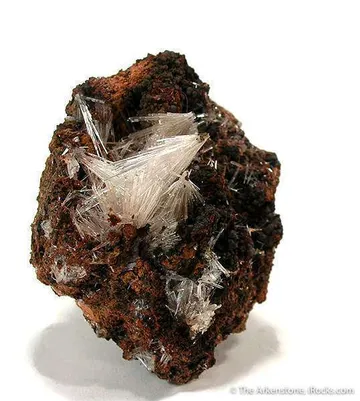
Rare Victorian phosphates require more care. Lake Boga uranium phosphates such as ulrichite, saleeite or torbernite-group material are generally tiny, fragile and potentially radioactive; they belong in labelled micro-mounts or sealed boxes, with sensible dust control and minimal handling. Some secondary phosphates and cave minerals are hydrated and may suffer if stored in very dry, hot or unstable conditions. Stibnite-rich Costerfield specimens, where encountered, are brittle and should be kept away from abrasion; arsenopyrite-bearing gold ores should be handled as arsenic-bearing sulphide specimens, not as lapidary material.
Market availability is uneven. Victorian nugget gold and small gold-in-quartz specimens appear regularly, though the best pieces with exact locality and aesthetic form are much scarcer than casual online listings suggest. Mooralla smoky quartz is available from Australian collectors, field collectors and dealers, commonly as miniatures and small geodes. Type-locality phosphate material from Lake Boga, Wycheproof, Skipton and Parwan is far rarer, usually micro-sized, and often locked in old collections or museum holdings rather than circulating as mainstream cabinet specimens.
The greatest Victorian collecting stories begin with people who were not expecting immortality. On 5 February 1869, John Deason was working near the roots of a tree at Bulldog Gully, near Moliagul, when his pick met something too stubborn for ordinary wash dirt. The mass lay only a few centimetres below the surface, close enough to daylight that generations of diggers could later wonder how it had survived so long. Deason and his mate Richard Oates, both Cornish miners, uncovered the Welcome Stranger, the largest alluvial gold nugget ever recorded. It was too large for the local scales and had to be broken up before it could be properly weighed and sold. The tragedy for mineral collectors is obvious: the world’s most famous Victorian nugget no longer exists as a specimen. Its survival is in engravings, replicas, measurements and the stubborn memory of a colossal piece of gold lying almost at grass-root depth.
Eleven years earlier, Ballarat had produced another monster. The Welcome Nugget was found in 1858 at the Red Hill Mining Company claim on Bakery Hill by a party of Cornish miners working deep underground. Unlike the shallow Welcome Stranger, this one came from the roof of a tunnel roughly 55 metres below surface. Accounts describe a jagged, pitted mass, horse-head-like in outline, weighing more than 2,200 troy ounces. It was exhibited, sold, resold and eventually melted in London. For the mineral collector, the Welcome Nugget is a reminder of a lost nineteenth-century instinct: a magnificent natural specimen was viewed first as wealth, only secondarily as natural history.
Tarnagulla’s Poseidon rush belongs to a later, more theatrical age. In 1906, renewed alluvial work on the Poseidon field produced large nuggets close to the surface, and the biggest was named after Poseidon, the Melbourne Cup-winning racehorse of that year. The timing gave the find an almost carnival quality: racing culture, gold fever and old-field hope all converged in one name. Further large pieces followed within days, including named nuggets such as Leila and Hazel, and reports from the field emphasized the quartz intermixed with the gold. For collectors, the Poseidon story is especially attractive because it sits at the hinge between the old rush era and the twentieth-century revival of old leads.
The Hand of Faith brought the romance into the metal-detector age. In September 1980, Kevin and Bep Hillier were prospecting near Kingower while living out of a bus at Bridgewater. Kevin had been recovering from a back operation and walking was part of the cure; detecting turned the walking into prospecting. The signal that changed their lives came from shallow ground behind the old Kingower school area. The nugget weighed 875 troy ounces, more than 27 kilograms, and became famous as the largest gold nugget found with a metal detector. The family reportedly kept the find quiet at first, even hiding it under their bed, before it was sold to the Golden Nugget casino group in Las Vegas. Its story explains why Victoria still draws detectorists: not because every trip is likely to pay, but because the ground has already proved that impossible things can sit within reach.
The quieter stories are in museum drawers. At Maldon, the mineral maldonite had long been a named Victorian species, but its actual occurrence at the type locality was poorly understood because original documentation and type material were problematic. Later work on several specimens retained in Museum Victoria’s collection revealed a far richer microscopic assemblage than the old name alone suggested: gold with bismuth and a suite of tellurides, sulphides and antimony-bearing phases. That kind of rediscovery is deeply Victorian. A specimen saved in the nineteenth century, perhaps because it looked odd or rich, becomes scientifically alive again under modern instruments.
Mooralla has a different rhythm. It is a field-collector’s locality rather than a gold-rush epic: broken rhyolitic geodes, smoky crystals tucked inside pale cavities, and the satisfying moment when a dull nodule opens to a dark glassy crystal. The specimens are modest in size, but they reward careful eyes. A sharp doubly terminated smoky crystal in a small geode can have more locality character than a much larger anonymous quartz point from elsewhere. That is why Mooralla specimens, when properly labelled, have become classics of Australian smoky quartz collecting.
.jpg)
