A collector's guide to Turt Mine, Romania: its geology, mining history and notable minerals, illustrated with the 112 specimens documented from this locality on EarthWonders.
Key facts
Turt is the northern, Oaș Mountains outlier of the Baia Mare–Maramureș metallogenic world: a Neogene epithermal Pb-Zn system where volcanic and volcano-sedimentary rocks were cut by thick polymetallic veins, some reported up to extraordinary mine scale. For collectors, the name is less about ore tonnage than texture. The best specimens have a distinctly Romanian combination of heavy metallic sulfides and late carbonates: bright galena and black-brown sphalerite under honey to brown siderite, white lenticular calcite rosettes, quartz and pale amethyst, with pyrite and chalcopyrite providing the brassy counterpoint. Turt’s most characteristic pieces are pseudomorphs and epimorphs—siderite replacing or casing earlier calcite rhombs, sometimes hollow, sometimes perched on galena or sphalerite matrix—and these are sufficiently distinctive that a good Turt siderite needs no label once you know the look.
Regional View
Country View
The mine is also important because it sits at the intersection of serious specimen mineralogy and modern ore-deposit research. The Ghezuri–Turț mineralization has been treated as part of the Baia Mare–Oaș hydrothermal district; its sphalerite chemistry, lead-zinc paragenesis, ilvaite-bearing high-temperature assemblage, and acid-mine-drainage footprint have all made it more than a dealer-label locality. On the specimen market, however, it is remembered most fondly for a relatively short window of high-quality finds in the 1990s and early 2000s, when miners and local networks released elegant carbonates, sulfides and quartz specimens from a mine that was otherwise an industrial Pb-Zn operation rather than a tourist-collecting venue.

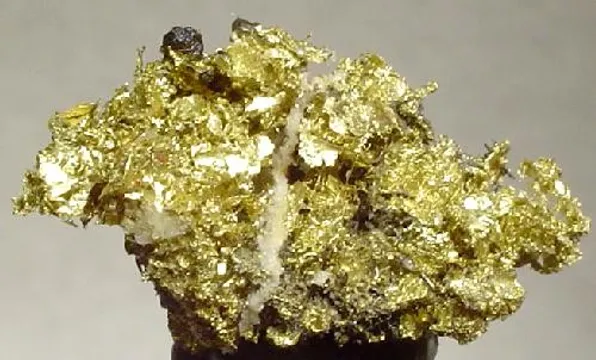
Photo: Wikimedia Commons

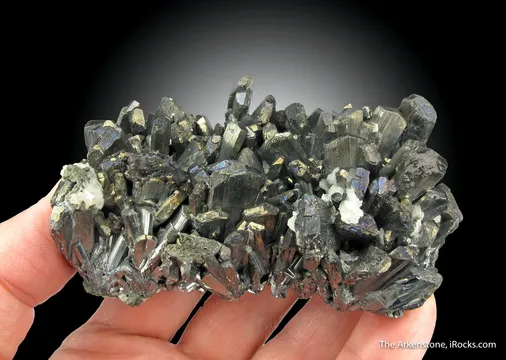
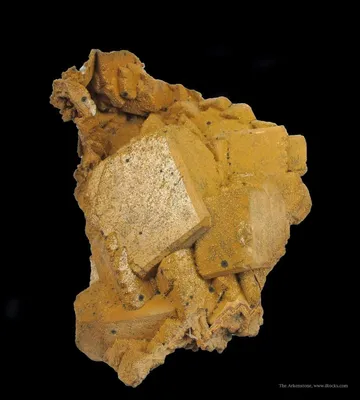
Photo: Mineral Auctions / The Arkenstone
Search for specimens: View all specimens from Turt Mine, Romania
Turt Mine, commonly linked in mineral literature with the Ghezuri Mine or Ghezuri–Turț deposit, lies near Turț in Satu Mare County, in the Oaș Mountains of northwestern Romania. It is part of the Neogene metallogenic province of the Eastern Carpathians and is positioned on the northern side of the broader Baia Mare mining region, a district long associated with Pb, Zn, Cu, Au and Ag production. The locality is not a single simple vein in collector usage: labels may read Turt, Turț, Ghezuri, Turț Băi, Ghezuri–Turț, Oaș Mountains, Satu Mare, or the older Maramureș regional usage, and good labels should preserve any original spelling rather than “correcting” away useful historical context.
Geologically, the deposit is an epithermal base-metal system connected to Neogene volcanic activity. The Oaș Mountains form the northwestern part of the volcanic chain inside the Romanian Eastern Carpathians and include Neogene volcanic and sedimentary rocks along the edge of the Oaș Basin, itself an eastern extension of the Pannonian Basin. Published descriptions relate the Pb-Zn mineralization to Upper Sarmatian–Lower Pannonian pyroxene microdiorites, pyroxene andesites and hyalodacites. Later ore-deposit work describes the Ghezuri–Turț mineralization as lying on the flanks of a laccolith, with intensely potassium-altered porphyry microdiorites and a distinctly base-metal character.
The ore assemblage is dominated by galena and sphalerite, with pyrite, chalcopyrite, marcasite, tetrahedrite-group minerals, quartz and calcite forming the principal vein paragenesis. More detailed work on sphalerite recognizes several associations at Ghezuri–Turț: an earlier pyrite–ilvaite–sphalerite–chalcopyrite–pyrrhotite–magnetite–adularia–chlorite assemblage; a pyrite–chalcopyrite–sphalerite–galena–quartz association; and a sphalerite–galena–pyrite–siderite–kaolinite association. This explains the dual personality of the specimens: some are massive, dark, heavy sulfide pieces, while the collector-grade material tends to show open-space late growth—white calcite, brown siderite, pale quartz, and metallic accents.
The Turt field includes Ghezuri and Turț Băi structures, and collector accounts often distinguish the broader area from nearby Penigher and Socia workings. The Ghezuri–Turț deposit is generally treated as the most significant of the local mines in both scale and mineralogical variety. A repeatedly cited feature of the deposit is the Viezuri vein zone, and Romanian ore literature notes that the Turț deposit contains very thick galena-rich veins, locally cited at up to about 20 m.
Mining in the region has roots in early silver workings. Historical accounts place the first silver mines in the area in the 17th century, while industrial-scale exploitation in the Turț Creek valley began in 1973. Production expanded quickly during the socialist and post-socialist industrial period: collector and locality summaries cite growth from 20,000 tonnes of ore in 1973 to 85,000 tonnes in 1975 and roughly 250,000 tonnes per year in the late 1980s, with the workforce rising dramatically by the 1990s. In 2000, Romanian government concession documentation listed the Tarna Ghezuri and Turt Penigher exploitation perimeters under the national mining company Remin S.A., the state-linked operator associated with much of the region’s non-ferrous metal mining.
Specimen production was uneven. Fabre Minerals’ locality notes make an important collector’s point: Turt was not “new” when collectors began noticing it, but high-quality specimens began to emerge from particular zones of the mine, and those finds were intermittent rather than constant. Around 1999–2005, several memorable specimen styles entered the market: bright galena on siderite over chalcopyrite-sphalerite matrix; white calcite rosettes on siderite or pyrite; baryte plates with galena, siderite and pyrite; pale violet amethyst on pyrite; and the now-classic siderite pseudomorphs after calcite or pyrrhotite. A May 2000 baryte-siderite-galena specimen, documented on Wikimedia from the Lavinsky/iRocks archive, is a good example of the crisp, late open-space crystallization that made collectors re-evaluate the mine.
Collecting access today should be treated as closed, industrial and unsafe unless a collector has explicit, current permission from the responsible landholder or authority. Published environmental work described the Pb-Zn mine as abandoned by the time of the 2005 drainage studies, and modern dealer descriptions routinely call Turt a closed or extinct locality for specimen production. The Turț Creek drainage has also been documented as Satu Mare County’s largest acid-mine-drainage-affected area, with mine-water leaks, spoil, and creek contamination forming a major post-mining concern. That is not a romantic “old dump” setting for casual collecting; it is a contaminated mining landscape where sulfide oxidation, unstable workings, heavy metals and legal restrictions all matter.
Siderite is the signature collector mineral of Turt, not because it occurs as large pristine single rhombs in the Panasqueira manner, but because it forms sparkling tan, honey-brown, brown-sugar to darker brown coatings, micro-rhombs, and especially pseudomorphs and epimorphs after earlier calcite. The classic pieces show sharp, flattened rhombohedral calcite forms that have been replaced or shelled by siderite, commonly with hollow casts and thin wall-like edges; documented examples range from small cabinet pieces with 2–3 cm former calcite rhombs to large cabinet plates, including a Mineralogical Record-indexed 30 x 50 cm specimen of epimorphs after calcite. Fine Turt siderite is best when the former calcite morphology is crisp, the siderite surface is bright and undamaged, and the piece keeps its contrast against galena, sphalerite, pyrite, quartz or chalcopyrite; ordinary pieces are darker, massive, bruised, incomplete, or so heavily crowded that the pseudomorph geometry is lost.
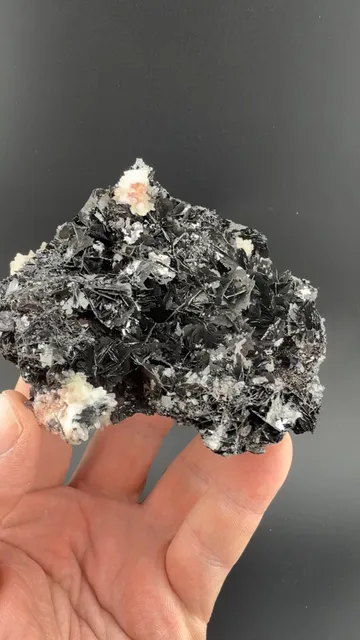
Calcite from Turt is most recognizable as snowy white to translucent, extremely flattened rhombohedra with curved faces and edges, often building rosette-like aggregates on pyrite, siderite or sulfide matrix. Fabre documented Turt calcites as flat rhombs forming white rosettes, with main crystals around 3.5 cm, and also as aggregates of lenticular calcite with minor shortwave fluorescence; some specimens carry earlier yellowish calcite generations beneath the later white plates. The finest calcites here are clean, bright, well-centered rosettes with intact curved rhombs and good contrast on dark sulfides or brown siderite, while lesser examples are merely crusty carbonate plates, damaged rhombs, or ambiguous white carbonates that need acid testing to distinguish calcite from dolomite or from brown siderite pseudomorphs after calcite.
Galena is the principal lead ore mineral at Turt and a major visual component of the best combination pieces. Specimens show bright steel-gray to lead-gray cubes, octahedra and cuboctahedra, commonly associated with siderite, sphalerite, pyrite, chalcopyrite, calcite and quartz; Mineralogical Record index entries note Turt cuboctahedrons to 2.5 cm on quartz and crystals to 5 cm with quartz and siderite, while documented dealer specimens show separate galena crystals to about 1.6 cm on clean brown siderite over massive chalcopyrite-sphalerite matrix. The best galenas from Turt combine sharp geometry, high metallic luster and open placement on pale quartz or brown siderite, whereas massive ore pieces, dull cleaved lumps, or pieces dominated by bruised sulfide matrix are less desirable even if they are geologically representative.
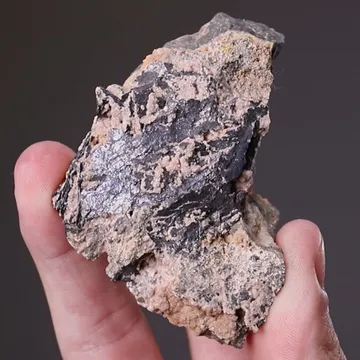
Sphalerite at Turt is generally black to brown, resinous to submetallic, and most often appears as matrix, intergrowths, or smaller well-formed crystals beneath the more showy galena, siderite, calcite, quartz and chalcopyrite. Modern analytical work on Baia Mare–Oaș sphalerites describes Ghezuri–Turț sphalerite as intergrown with galena, pyrite and chalcopyrite, associated in places with kaolinite, and containing variable Fe, with higher Fe in some Ghezuri material where pyrrhotite is part of the assemblage. Fine collector pieces are those where sphalerite is not just black ore but serves as a lustrous, crystallized base for contrasting chalcopyrite, galena or siderite; it is commonly reported as twinned or sharply faced on better specimens, but large standalone Turt sphalerite crystals are much less characteristic than combination pieces.
Quartz from Turt occurs both as colorless to slightly pinkish crystals in sulfide-carbonate assemblages and as pale violet amethyst, a scarce but highly collectible Turt style. Documented examples include elegant slightly pink quartz on quartz and sparkly golden pyrite matrix from a 2001 pocket, pale lilac amethyst crystals to about 4.5 cm on colorless quartz and pyrite from 2000, and an unusually large mindat-recorded amethyst crystal 21.5 cm tall. Fabre described Turt amethyst as pale violet crystals with a slight bulge on the sides, a habit regarded as typical for the locality; the best quartz pieces are airy, undamaged clusters with pyrite, siderite, galena or sphalerite as matrix and enough color or form to distinguish them from ordinary vein quartz.
Pyrite is widespread in the Turt paragenesis, from fine microcrystalline coatings to sharp cubic crystals and pseudomorphic material after pyrrhotite. It appears with calcite, quartz, siderite, galena and sphalerite, and Fabre singled out a 2005 occurrence as a unique find of high-quality cubic pyrite at the locality, with bright, damage-free cubes to about 1.4 cm partly coated by small siderite crystals. Other collector reports tie cubic pyrite with siderite to small pockets encountered around 2001. The best Turt pyrites have crisp cubic form, strong luster, and a balanced association with white calcite or brown siderite; dull granular pyrite, pyritized matrix, and oxidizing sulfide-rich material should be judged more cautiously.
Chalcopyrite is both an ore mineral and a collector accent at Turt, occurring as brassy crystals, polycrystalline growths, matrix with sphalerite, and as pseudomorphs after pyrrhotite rosettes. A well-documented Fabre specimen shows brilliant chalcopyrite crystals of good size, with curved edges and well-defined polycrystalline growths, implanted on twinned sphalerite; other records describe large lustrous twinned chalcopyrite crystals to about 5 cm on galena-sphalerite-pyrite matrix. The most desirable Turt chalcopyrite is bright, sculptural, and clearly crystallized rather than merely massive brass-colored ore; associations with black sphalerite, galena, pyrite and quartz are typical, and pseudomorphic pieces after pyrrhotite are especially interesting when the former hexagonal or rosette form remains legible.
Pyrrhotite is important at Turt less as fresh bronze plates than as a precursor mineral recorded in the high-temperature assemblage and preserved in pseudomorphic habits. Turt specimens include chalcopyrite after pyrrhotite rosettes with galena and minor sphalerite, siderite after pyrrhotite on galena, and pyrite or siderite-coated forms retaining pseudohexagonal pyrrhotite outlines; one documented siderite-after-pyrrhotite specimen from 2005 had pseudohexagonal groups to about 3.2 cm, while another cabinet pseudomorph preserved a 6.8 x 4.5 x 2.8 cm tabular intergrown former pyrrhotite cluster. The best pyrrhotite-related pieces are judged by pseudomorph clarity, three-dimensional form and surface stability, because fresh pyrrhotite and pyrite-after-pyrrhotite habits can be alteration-prone and visually confusing.
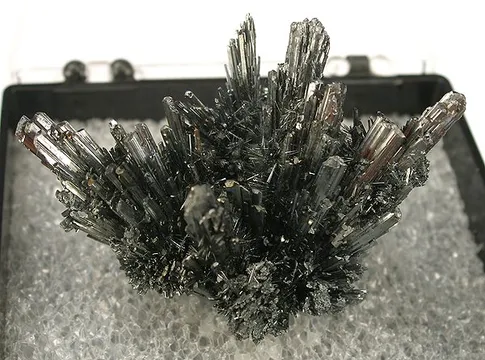
Beyond the major collector species, Turt has a rich but mostly subordinate suite: baryte, dolomite, fluorite, marcasite, arsenopyrite, cinnabar, cubanite, stibnite, native gold, native silver, proustite, pyrargyrite, polybasite, tetrahedrite-group minerals, boulangerite, jamesonite, semseyite, rhodochrosite, halloysite, kaolinite-like alteration material, valentinite, garnet-group minerals, ilvaite and wurtzite. The ilvaite is mineralogically notable because it belongs to an unusual hydrothermal/high-temperature assemblage with magnetite, pyrrhotite, chalcopyrite, cubanite, pyrite and native gold rather than to the more familiar skarn context. Turt “wurtzite” deserves special caution: published collector-mineralogical notes indicate that most material formerly called wurtzite from the mine is actually sphalerite paramorphs after wurtzite, so an old label may preserve an interesting growth history without being a reliable present-day species identification.
The main authenticity problem with Turt specimens is not a well-known trade in manufactured fakes; it is identification, labeling and condition. White, flat, curved rhombohedral carbonates from Turt can be calcite, and brown rhombohedral or hollow forms may be siderite after calcite. A documented mindat identity discussion began with a specimen sold as siderite from Turt; experienced respondents pointed out that the white color and acid reaction fit calcite, while the famous Turt siderite pseudomorphs after calcite are light to dark brown. For valuable specimens, especially isolated white rosettes or pale carbonate plates, simple carbonate testing and careful label review are worthwhile.
Siderite epimorphs after calcite are fragile. The very feature that makes them desirable—the thin hollow cast or shell—is also the source of much edge damage. Look carefully at rhomb corners, open cavities, and the underside of matrix plates. A specimen can still be excellent with small peripheral losses, but a good Turt pseudomorph should retain the geometry of the original calcite. Over-cleaning can also reduce the warmth and sparkle of siderite coatings or expose unattractive sulfide matrix.
Sulfide-heavy specimens require normal Pb-Zn handling care. Galena is lead sulfide: do not grind, trim or clean aggressively without appropriate precautions, and wash hands after handling. Pyrite-rich and pyrrhotite-related specimens should be kept dry and stable; any sulfurous smell, powdering, cracking or whitish/yellowish efflorescence is a warning sign. Pyrrhotite habits, pyrite pseudomorphs after pyrrhotite, and mixed sulfide matrix can be more prone to alteration than a simple quartz-calcite piece.
Fluorescence is a minor but real bonus in some Turt material. Fabre records minor shortwave fluorescence in some white calcites and long- and shortwave fluorescence in at least one baryte-bearing specimen, but Turt should not be bought primarily as a fluorescent locality. If fluorescence matters, ask for both longwave and shortwave photographs and confirm which mineral is responding.
Market availability is moderate for common combinations and low for top examples. Small to mid-sized siderite pseudomorphs, calcite rosettes, quartz-pyrite pieces and sulfide combinations appear periodically from older European and American collections, but the mine is no longer a steady producer of fresh specimen runs. Exceptional pieces—large hollow siderite-after-calcite plates, clean siderite on galena, fine amethyst, bright galena to several centimeters, and pyrrhotite pseudomorph combinations—are much scarcer and can perform strongly at auction when provenance is good.
Turt’s specimen story has the rhythm of an industrial mine that briefly became a collector’s mine by accident. The deposit had been active for years, and industrial exploitation had begun in 1973, but the collector market did not wake up all at once. Fabre’s Romanian reference notes put it plainly: Turt “was not really a new locality,” but what changed was that high-quality specimens began to appear. The crucial caveat was that the finds were “fairly infrequent” and depended on the part of the mine being worked. That is exactly how Turt specimens feel in old collections—bursts of distinct material rather than a long, uniform production line.
Around 2000 the mine produced several of the forms now regarded as classic. One baryte specimen, mined in May 2000, shows flattened transparent doubly terminated baryte crystals stacked in parallel on an iridescent galena and tan siderite matrix. The specimen is only 8.4 x 4.4 x 3.9 cm, but it captures a pocket environment: open space, late sulfate and carbonate growth, and enough metallic base to remind you that this was a Pb-Zn mine, not a simple carbonate vein.
The same period brought quartz and amethyst that were quietly extraordinary for a locality known mainly for siderite and sulfides. A 2001 quartz-pyrite specimen was described as “super-elegant,” with slightly pink quartz on a perfectly trimmed quartz and golden pyrite matrix; the caption wondered how the miners got it out of the pocket in that condition. Other amethyst specimens from 2000 carried pale lilac crystals to 4.5 cm on colorless quartz and pyrite, while one mindat-recorded Turt amethyst crystal reached 21.5 cm tall. The best amethyst pocket material is now recognized as a special side chapter in Turt collecting, not merely purple quartz from Romania.
In 2001, collector reports note a series of small pockets that produced nice calcites and cubic pyrite with siderite. Four years later, a 2005 find yielded bright cubic pyrite good enough for Fabre to call it a unique occurrence of high-quality cubic pyrite at the locality. Those pyrites were not giants—main cubes around 1.4 cm are documented—but they had what matters: luster, sharp cubic development, siderite association, and freedom from damage.
The pseudomorph story is even more specific. Turt’s most admired siderites preserve vanished calcite. In the best examples, glittering brown siderite microcrystals form thin shells around former calcite rhombs; broken back edges reveal hollow casts, while intact display faces show sharp geometric ghosts. One Wouter van Tichelen collection specimen measured 13.2 x 11.0 x 4.8 cm and carried intergrown former calcite rhombs to 4.0 cm on the diagonal, set on a heavy sulfide plate mostly composed of sphalerite with some galena and chalcopyrite. Another Herb Obodda specimen, a 10.0 x 7.5 x 6.0 cm cabinet piece from the 1990s, showed siderite epimorphs to 2.3 cm on edge, with white quartz between the brown shells and galena beneath; it sold at auction in 2024 for $2,500.
Turt also produced pseudomorphs after pyrrhotite, a less common but very telling paragenetic clue. A 2000 Fabre specimen showed chalcopyrite after pyrrhotite rosettes with galena and minor sphalerite, the whole specimen 10.5 x 8.5 cm. Another documented example, mined in 2005 and later from the Bill and Anne Cook collection, preserved pseudohexagonal pyrrhotite groups to 3.2 cm replaced by resinous tan siderite on galena. In these pieces, the old high-temperature sulfide history is visible as a shape rather than as fresh pyrrhotite.
The mine’s later environmental story is stark. Researchers studying Turț Creek in 2005 described the Tur River–Turț Creek drainage as the largest acid-mine-drainage-polluted area in Satu Mare County. They recorded earlier serious pollution events in 1996, 1997 and 1999, then another pollution episode in the summer of 2005. Their field area included the Penigher adit, where Tompei Creek washed through former mining ground and spoil, and a mine-water conduit running close to the creek. In July 2005, pH in the creek dropped as low as 2.5; downstream, the water chemistry and biological tests made clear that the abandoned Pb-Zn mine had left a legacy far beyond collectible galena and siderite.
Emanuel Clain and Reiner Haake, “Die Blei-Zink-Lagerstätte von Turț, Oasgebirge, Rumänien” [The Turț lead-zinc deposit, Oaș Mountains, Romania], Mineralien-Welt, 17(5), 52–64, 2006 — The key collector-mineralogical article for the locality, cited by mindat for a broad suite including amethyst, arsenopyrite, baryte, boulangerite, calcite, chalcopyrite, cubanite, dolomite, fluorite, galena, ilvaite, jamesonite, native gold, native silver, proustite, pyrargyrite, pyrite, pyrrhotite, quartz, semseyite, siderite, sphalerite, stibnite, valentinite and wurtzite.
Gheorghe Damian, Andrei Buzatu, Andrei Ionuț Apopei, Floarea Damian and Andreea Elena Maftei, “Hydrothermal Sphalerites from Ore Deposits of Baia Mare Area,” Minerals, 11(12), 1323, 2021 — Includes Ghezuri–Turț and Turț Penigher sphalerite chemistry, ore assemblages, reflected-light observations and a cross-section through the Turț Ghezuri ore deposit.
István Nagy-Korodi, Tamás G. Weiszburg, László Fodorpataki and András Bartha, “Environmental Impact of Mining Activity on the Turţ Creek, Eastern Carpathians, Romania,” Carpathian Journal of Earth and Environmental Sciences, 6(2), 195–207, 2011 — Documents the geology of the Oaș Mountains setting, the abandoned Pb-Zn mine drainage, acid-mine-water effects, and the pyrite-sphalerite-galena-chalcopyrite-marcasite-tetrahedrite-quartz-calcite paragenesis relevant to the mine’s environmental behavior.
G. Udubașa and M. Kovacs, introduction to Romanian Journal of Mineral Deposits, volume 77, supplement, 2000 — Summarizes the Baia Mare district and notes the Turț deposit’s very thick galena-rich veins and uncommon hydrothermal ilvaite.
V. Manilici, R. Jude, E. Volanski, O. Drăghici and S. Răuți, “Contributions to the knowledge of the Tarna Mare–Turţ mineralisation,” Economical Geology Studies, A:8, 8–23, Geological Institute, Bucharest, 1970 — Cited in later environmental and mineralogical work for the principal Turț paragenesis and the Tarna Mare–Turț mineralization.
R. Jude, The metallogeny associated to the Neogene volcanism in the north-western part of the Oaş Mountains, Editura Academiei Republicii Socialiste România, Bucharest, 132 pp., 1986 — A foundational Romanian monograph for the Neogene Oaș metallogeny, cited for the host rocks, paragenesis and high-temperature ilvaite-bearing Ghezuri assemblage.
Eric Marcoux, Luminița Grancea, Marian Lupulescu and Jean-Pierre Milési, “Lead isotope signatures of epithermal and porphyry-type ore deposits from the Romanian Carpathian Mountains,” Mineralium Deposita, 37(2), 173–184, 2002 — Regional isotope study cited by mindat for Turt galena and useful for placing the mine within the Romanian Carpathian epithermal-metallogenic framework.
The Mineralogical Record General Index, volumes 26–35 — Index entries document Turt collector records including siderite epimorphs after calcite, galena cuboctahedrons, chalcopyrite with galena-quartz-siderite, amethyst crystals, and baryte sheaves.
Mindat: Turț Mine (Ghezuri Mine), Turț, Satu Mare County, Romania — Essential locality page with coordinates, alternate names, mineral list, references and photo links.
Mindat gallery for Turt Mine — The best single visual archive for comparing Turt siderite pseudomorphs, calcite rosettes, galena, sphalerite, quartz, pyrite and chalcopyrite combinations.
Wikimedia Commons: Category Turt Mine — Openly licensed images of Turt specimens, including baryte-siderite-galena, calcite, calcite-siderite and quartz-pyrite examples.
Fabre Minerals: Reference Specimens from Romania — Important dealer reference page documenting Turt specimens, dates and collector-style descriptions from the main market period.
Mineral Auctions: Siderite pseudomorph after calcite with quartz on galena — Detailed auction record for a fine 1990s Turt siderite epimorph specimen from the Herb Obodda collection.
Mineral Auctions: Siderite pseudomorph after pyrrhotite on galena — Useful record for the less common pyrrhotite-pseudomorph style at Turt.
UC Minerals: Siderite after calcite from Turt Mine — Small-cabinet commercial example illustrating typical Turt siderite-after-calcite material and market availability.
Weinrich Minerals: Siderite after calcite with pyrite — Good dealer description of hollow siderite casts after calcite with pyrite from Turt.
Nagy-Korodi et al., 2011: Environmental Impact of Mining Activity on the Turţ Creek — Scientific paper on the mine’s geologic setting, acid mine drainage and environmental legacy.
Damian et al., 2021: Hydrothermal Sphalerites from Ore Deposits of Baia Mare Area — Open-access paper with Turț Ghezuri sphalerite chemistry, paragenesis and deposit cross-section.
Mineralien-Welt reference entry: Clain and Haake, 2006, “Die Blei-Zink-Lagerstätte von Turț” — Bibliographic record for the principal locality article.
Romanian Journal of Mineral Deposits PDF with Baia Mare district introduction — Context for Turț within the Baia Mare mining district and its galena-rich, ilvaite-bearing deposit style.