Turț, Romania — Oaș Mountains locality yielding galena, sphalerite, siderite, calcite rosettes, barite; famed for siderite-after-calcite and calcite flower spe…
Key facts
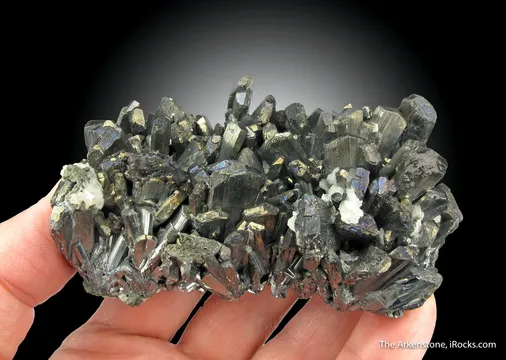
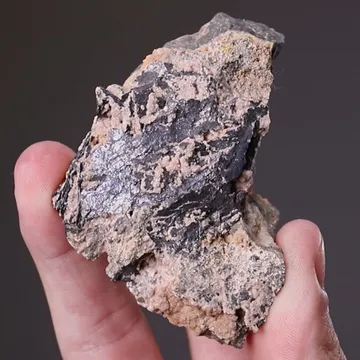
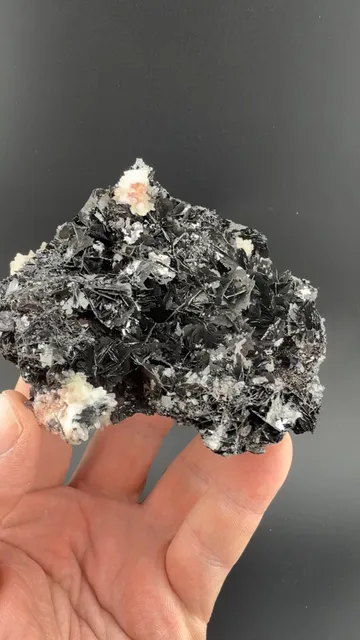
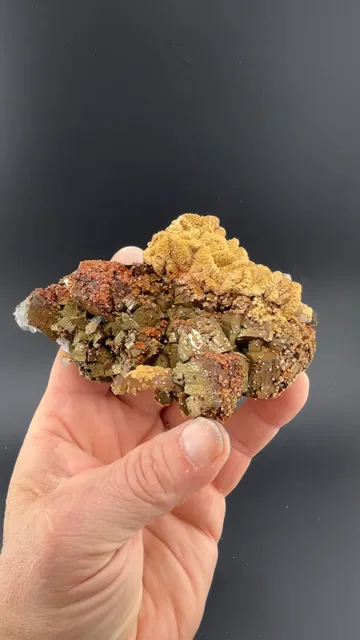
Turț is one of the distinctive specimen-producing localities of the Oaș Mountains in northwestern Romania, where the volcanic arc at the northeastern margin of the Pannonian Basin hosted epithermal lead-zinc mineralization. In collector language the name is usually shortened to “Turt Mine,” but the classic locality is the Turț Mine, also known as the Ghezuri Mine, near Turț village in Satu Mare County. Its best specimens have a look that is immediately recognizable: lead-gray galena and black sphalerite in sharp contrast with tan to reddish-brown siderite, snowy white calcite rosettes, clear to pale barite blades, pyrite, quartz, and occasional pale amethyst.
The deposit belongs to the Neogene metallogenic province of the Baia Mare–Oaș region. The ore system is not a simple single-species showpiece locality; it is a polymetallic hydrothermal vein deposit with Pb, Zn, Cu, Ag, Au, Sb, As, and Hg represented in its mineral suite. That is why Turț specimens so often reward close study. A cabinet piece that first reads as “galena with siderite” may also carry sphalerite, pyrite, chalcopyrite, quartz, barite, marcasite, or kaolinite in the matrix, and the mine’s more specialized labels include sulfosalts and rare silver minerals.
For collectors, Turț’s strongest identity rests on three specimen styles. The first is the famous siderite after calcite: hollow or shell-like epimorphs preserving the geometry of earlier calcite rhombohedra, often glittering tan to brown and sometimes sitting on galena, pyrite, or quartz. The second is the mine’s calcite: flattened rhombohedra in white, ivory, or translucent rosette clusters, the “flower” habit that made good Romanian calcites from the late 1990s and early 2000s highly sought after. The third is its sulfide and barite combinations: metallic galena crystals and cuboctahedra, black sphalerite, brassy pyrite or chalcopyrite, and transparent lamellar barite blades that may be doubly terminated and perched on dark sulfide-rich matrix.
Regional View
Country View
The locality’s collecting history is also tied to Romania’s modern mining story. Earlier mining in the area goes back to medieval activity and silver working in the 17th century, but industrial-scale exploitation at Turț began only in 1973. Much of the fine specimen material known to collectors appears to have entered the market during the later decades of underground production and in the strong export period for Romanian minerals around the 1990s and early 2000s. Today the mine is better treated as a closed historic specimen source than as an open collecting locality.

Photo: Wikimedia Commons
The finest Turț combinations are miniature to cabinet specimens with high contrast and strong sculptural form: pale barite blades across iridescent galena and tan siderite; pearly white calcite rosettes lifted from brown siderite; or bright galena cubes and cuboctahedra placed cleanly on sphalerite-rich matrix. As with many East European classics, the best pieces combine geology and aesthetics rather than size alone.
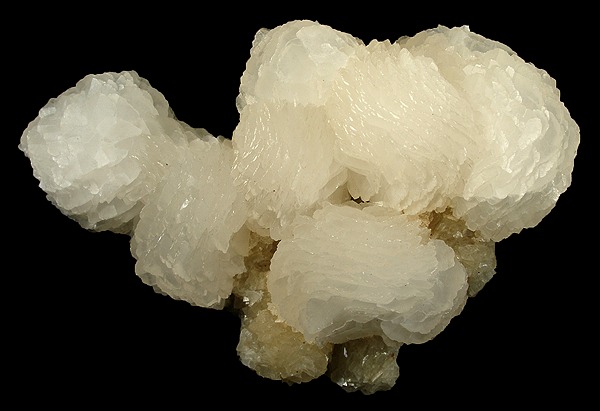
Photo: Wikimedia Commons
Search for specimens: View all specimens from Turț, Romania
The specimen locality is the Turț Mine, also recorded as the Ghezuri Mine, near Turț village in Satu Mare County, northwestern Romania. It lies in the Oaș Mountains, roughly northwest of Baia Mare and northeast of Satu Mare, within the wider Maramureș–Baia Mare mining region. Published locality data group the occurrence with the Ghezuri and Turț-Băi deposits or structures, and field descriptions also refer to the Penigher adit in the Turț Creek valley.
Geologically, Turț is an epithermal Pb-Zn deposit related to Neogene volcanic activity. The Oaș Mountains form the northwestern part of the volcanic chain on the inner side of the Romanian Eastern Carpathians, where Neogene volcanic and sedimentary rocks occupy the northwestern Oaș Basin, itself an eastern extension of the Pannonian Basin. The ore formation is associated with Upper Sarmatian to Lower Pannonian pyroxene microdiorites, pyroxene andesites, and hyalodacites, with vein zones and hydrothermal structures cutting volcanic and volcano-sedimentary rocks.
The principal ore minerals are galena and sphalerite, with pyrite, chalcopyrite, marcasite, tetrahedrite-group minerals, quartz, calcite, and siderite as important companions. Published environmental and mineralogical work records Pb, Zn, Cu, Au, Ag, Hg, Sb, and As as significant elements in the paragenesis. Collector pieces show the same chemistry in hand specimen: lead-gray galena, black to brown sphalerite, brassy pyrite or chalcopyrite, tan siderite, white calcite, quartz, and barite are the recurring field characters.
Mining in the district predates the modern mine. The first silver mines in the zone are recorded in the 17th century, and modern industrial exploitation in the Turț Creek valley began in 1973. The mineral market’s classic Turț material is closely associated with this modern mining period. Specimen descriptions from major dealers repeatedly cite finds around the late 1990s and early 2000s, and one well-documented barite-siderite-galena specimen was mined in May 2000. Fabre Minerals records Turt specimens from about 2001 and 2002, including barite with galena, siderite and pyrite, as well as calcite with siderite.
The collecting geology is pocket-and-vein geology. Open cavities and carbonate-rich stages produced calcite rhombohedra and the later siderite coatings or replacements that preserve those forms as hollow shells. Sulfide-rich zones furnished galena, sphalerite, chalcopyrite, pyrite, and marcasite, while later open-space growth gave barite blades and calcite rosettes their collector appeal. Some specimens show earlier honey-colored calcite beneath or beside later white flattened calcite rosettes, while others preserve siderite casts after dissolved calcite with quartz lining or filling parts of the former crystal space.
Access today should be regarded as closed and restricted. Published environmental work treats the Pb-Zn mine as abandoned, and market descriptions regularly refer to the mine as closed or to the supply as exhausted. The Turț Creek drainage is also a documented acid-mine-drainage setting, with polluted water and metal-bearing precipitates studied downstream of the former workings and conduits. For collectors this means Turț is primarily an old-stock locality: specimens are obtained from established collections, dealer inventories, and occasional auctions, not from casual field collecting.
Siderite is the signature collector mineral of Turț when it occurs as pseudomorphs or epimorphs after calcite rhombohedra: tan, brown, reddish-brown, or golden-brown glittering shells that preserve sharp calcite geometry while the original calcite has been partly or wholly removed. Good pieces show distinct hollow casts, crisp walls, and sculptural spacing rather than massive brown carbonate; the most desirable examples are perched on contrasting galena, pyrite, quartz, or sulfide matrix, with individual rhombohedral casts commonly in the 2–5 cm range on miniature to cabinet specimens. The association with galena and quartz is especially attractive, but pieces with intact hollow interiors and minimal edge wear are far scarcer than ordinary siderite-coated matrix from the mine.
Calcite from Turț is best known for white to ivory rosettes composed of very flattened rhombohedra, often with curved faces and edges, forming flower-like clusters on siderite or sulfide-rich matrix. The finest examples are sharply formed, lustrous, and architectural, with rosettes several centimeters across; documented cabinet specimens include multiple pearly rosettes and individual blooms over 6 cm across. Earlier honey-colored calcite may appear beneath later white rosettes, and some pieces carry pyrite, siderite, quartz, or galena; choice specimens are judged by the completeness of the rosettes, clean white color, sparkle, and freedom from bruised petal-like edges.
Galena at Turț forms metallic gray cubes, cuboctahedra, and intergrown crystal groups, commonly on sphalerite-rich matrix and associated with siderite, pyrite, chalcopyrite, quartz, calcite, and barite. The mine’s best galena specimens are not merely heavy ore masses: they have isolated, bright crystals with crisp edges, smooth reflective faces, and strong contrast against black sphalerite or brown siderite; documented examples include sharp cuboctahedra to about 2.5 cm and lustrous crystals to roughly 4 cm. Matrix-free galena groups exist, but the most characterful Turț pieces keep the sulfide-and-carbonate paragenesis intact, especially when a well-placed galena crystal is framed by siderite, quartz, or barite.
Barite from Turț occurs as pale, transparent to translucent lamellar crystals and parallel aggregates, commonly doubly terminated and set on dark sulfide matrix with siderite, galena, pyrite, or chalcopyrite. The classic habit is a sharp, bladed, flattened crystal or book-like cluster; a well-known example from May 2000 measured 8.4 x 4.4 x 3.9 cm, with flattened transparent barite blades grown in parallel on iridescent galena and tan siderite, while Fabre recorded a 6.6 x 4.1 x 2.4 cm barite association from about 2001. The best barites are airy, transparent, lustrous, and visibly terminated, with the pale blades standing cleanly above contrasting metallic and brown carbonate matrix.
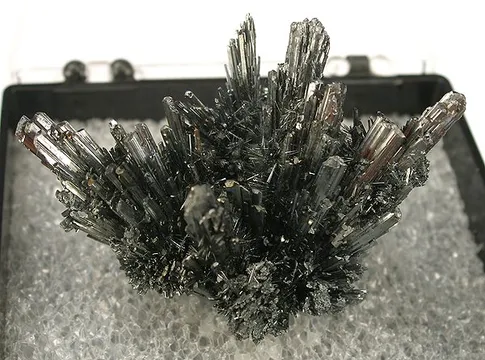
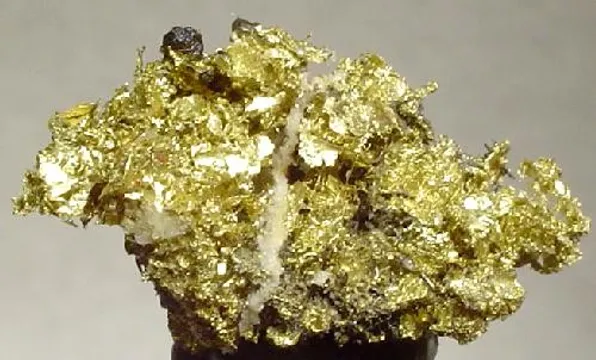
Beyond the four principal collector species above, Turț has a compact but interesting polymetallic suite. Documented minerals include sphalerite, chalcopyrite, pyrite, marcasite, arsenopyrite, pyrrhotite, cinnabar, cubanite, stibnite, boulangerite, jamesonite, semseyite, polybasite, proustite, pyrargyrite, native silver, native gold, tetrahedrite-group minerals, fluorite, dolomite, rhodochrosite, quartz, amethyst, chalcedony, halloysite, ilvaite, valentinite, and wurtzite. Two cautions matter to specialists: most “wurtzite” from the mine has been noted as sphalerite paramorphs after wurtzite, and the locality is not a classic type locality in the way nearby Baia Sprie is for several named minerals. Its rarities are instead paragenetic and occurrence-based: hydrothermal ilvaite in a Pb-Zn vein system, silver sulfosalts, native silver and gold, cinnabar, and well-developed Sb-bearing minerals in a compact Oaș Mountain assemblage.
Turț specimens should be bought with close attention to the precise style of mineralization. The most common confusion is not outright forgery but overbroad Romanian labeling: pieces from Baia Sprie, Herja, Cavnic, and Turț can all combine galena, sphalerite, pyrite, siderite, quartz, and calcite. Turț calcite rosettes, siderite after calcite casts, and barite-siderite-galena combinations have a distinctive appearance, but mixed sulfide specimens without strong locality character deserve old labels, provenance, or comparison with documented examples.
Siderite pseudomorphs after calcite need careful inspection. The desirable feature is a thin siderite shell or cast preserving calcite rhombohedral form, often hollow; ordinary siderite druse on matrix is much less significant. Look for intact edges, continuous walls, and natural sparkle. Fresh-looking broken rims, crumbly interiors, or repairs around the hollow casts can sharply reduce value. Some casts are naturally open and delicate, so a missing “center” is not necessarily damage; it may be the whole point of the epimorph.
Calcite rosettes are beautiful but vulnerable. The flattened rhombohedral “petals” bruise easily at the edges, and white calcite shows dirt, iron staining, and contact marks. Minor edge wear is common on older Romanian pieces, especially larger cabinet specimens. The best calcites have clean rosette outlines, pearly to sparkling luster, minimal rubbing, and pleasing contrast with brown siderite or dark sulfides. Several documented Turț calcites show fluorescence under UV, with reports of orange, minor, or shortwave response, but fluorescence varies by specimen and should not be assumed without testing.
Galena from Turț should be checked for oxidation, cleavage bruises, and greasy handling residue. Good galena has bright metallic faces and crisp crystal geometry; dull gray massive ore is far less collectible unless the association is exceptional. Barite blades, meanwhile, are fragile and often project from matrix. Check terminations and blade edges under magnification, because a specimen can look complete face-on while being chipped along the thin margins.
No well-documented, locality-specific fake industry is associated with Turț in the sources reviewed, but common mineral-market risks still apply: glued crystals, repaired barite blades, mislabeled Romanian mine names, and enhanced or cleaned carbonates. Because many Turț pieces now circulate as old collection material, labels from known collections—Gebel, Catmur, Whitmore, Obodda, Van Tichelen, Hefendehl, and other documented provenances—add confidence, especially for high-end pseudomorphs and calcite rosettes.
Market availability is intermittent. Ordinary sulfide matrix specimens appear occasionally, but excellent siderite after calcite, large clean calcite rosettes, and transparent barite-on-sulfide pieces are much less common. Auction records show that small but attractive examples can still be affordable, while top pseudomorphs with strong form, galena contrast, and old provenance can command much higher prices. For serious collectors, Turț is best approached as a finite old-stock locality: buy the specimen style, condition, and provenance rather than assuming another similar piece will appear soon.
The most vivid field story from Turț is not a collector’s pocket discovery but the afterlife of a sulfide mine in water, iron, and acid. In the Turț Creek valley, the old workings and waste did not simply become inert ruins after ore extraction. The creek rises near the Ukrainian-Romanian border and flows north to southwest through volcanic rocks, sediments, and the former mining area before joining the Tur River. Around the Penigher adit, one of the creek’s major tributary arms washed through dumped mine spoil, while an acid mine-water conduit ran sinuously along the creek at distances reported from zero to 30 meters.
Researchers working in 2005 described the mine drainage in concrete, almost visual terms: yellowish-brown, iron-rich water overflowing from the conduit or leaking directly into the creek without treatment. The purification station near Penigher could neutralize 5.5 liters per second of acid mine water, but technical problems meant it did not operate at full efficiency and was nearly nonfunctional during winter. Pollution events had already been recorded in 1996, 1997, and 1999, and the creek was polluted again in the summer of 2005.
The numbers from the 2005 fieldwork are stark. Acid mine drainage drove parts of Turț Creek down to nearly pH 3, and in July the pH was measured as low as 2.5. At that level, the authors reported that fish had vanished under lethal conditions. In September, electrical conductivity rose to eight times the normal value of about 240 µS cm-1. Fine material transported in the stream carried extremely high concentrations of Zn, Cu, Mn, Pb, Cd, and As; one suspended-residue sample from the main inflowing acid mine drainage showed 16,670 mg/kg Zn and 10,790 mg/kg Pb in September.
Under the microscope, the environmental story became mineralogical. Yellow-brown encrustations on pebbles contained tiny detrital particles of sphalerite, galena, barite, pyrite, quartz, goethite, muscovite, and ilmenite trapped in a poorly crystallized iron-rich matrix. X-ray and Mössbauer work indicated ferrihydrite, akaganeite, and possible schwertmannite-like phases—modern secondary iron phases acting like a chemical sponge for metals released from the old sulfide system.
Even the living organisms in the creek changed to fit the chemistry. In the acid drainage niche, researchers identified Euglena mutabilis, an acidophilic microalga, forming green mats in water with pH 2.9 and total dissolved solids of 9,772 mg/l. Test algae exposed to the polluted waters did not simply grow more slowly; their cells changed shape, becoming spherical instead of fusiform, with pale green fragmented chloroplasts. For collectors, it is a sobering reminder that every lustrous galena cube and elegant calcite rosette from Turț came from an active geochemical system that continued reacting long after the specimens left the mine.