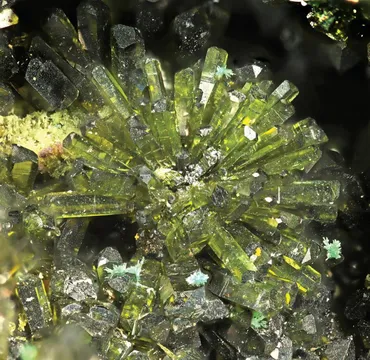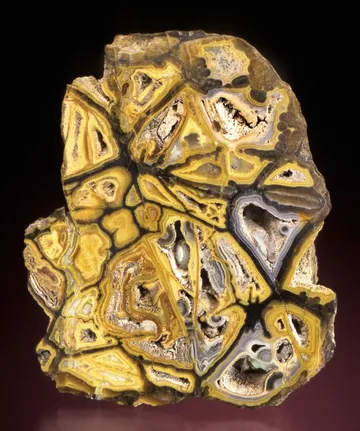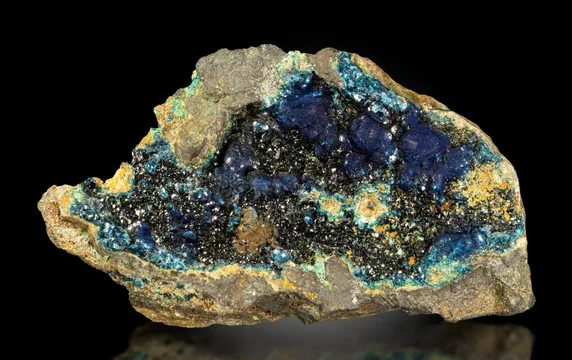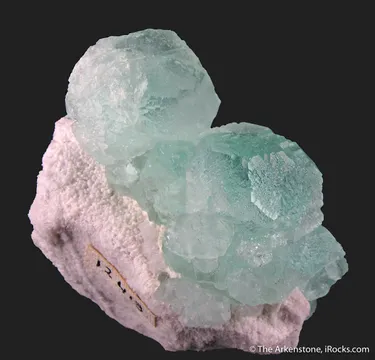
Thomas Range, USA — premier locality yielding topaz, bixbyite, red beryl from lithophysal cavities in rhyolite; crisp, glassy crystals prized by collectors.
Key facts
The Thomas Range in west-central Utah is one of the essential American mineral localities: a dry, pale, rhyolitic mountain range where miarolitic and lithophysal cavities have yielded sherry-colored topaz, black metallic bixbyite, red beryl, hematite, garnet, pseudobrookite, holfertite, and a suite of fluorine-rich volcanic rarities. For collectors, its importance is not simply that topaz is abundant here; it is that the specimens are instantly recognizable. The finest pieces are glassy amber to cognac, colorless, or pink topaz crystals rising from white to tan rhyolite, sometimes carrying sharp black bixbyite cubes, specular hematite, garnet remnants, minute red beryl, or bristling pseudobrookite. The look is crisp, dry, volcanic, and unmistakably Utah.
Geologically, the range belongs to the Basin and Range province and records a complicated history of Oligocene caldera volcanism, later extensional faulting, and Miocene fluorine-rich alkali rhyolite activity. The specimen-producing topaz occurrences are best understood as vapor- and fluid-phase mineralization in cavities of Topaz Mountain Rhyolite. Those cavities may be true vugs, hollow centers of lithophysae, or seams and fissures in hard rhyolite. The same broad volcanic-chemical system also made the Thomas Range and nearby Spor Mountain important for fluorite, uranium, and beryllium; the industrial beryllium deposits are a separate economic story, but they underscore the extraordinary enrichment in fluorine and lithophile elements that also gives collectors the range’s topaz-bixbyite-red beryl suite.
The locality has a long scholarly pedigree. Thomas Range topaz was noted in the nineteenth century, and by 1897 Samuel L. Penfield and H. W. Foote had described bixbyite as a new mineral from the range. Red beryl, historically called “bixbite,” was first recognized from this same Thomas Range setting in the early twentieth century. Later, uranium mineralogy added weeksite, and modern work added holfertite from Starvation Canyon. Few American collecting districts combine such easy public recognition with so many serious mineralogical firsts.
Regional View
Country View
Thomas Range specimens reward close inspection. A casual rockhound may see only hard, chalky rhyolite and bleached chips in a wash; an experienced collector sees flow bands, porous layers, lithophysal zones, fracture-controlled pockets, and the difference between a sun-bleached loose crystal and a fresh pocket specimen that still carries its sherry color. The best cabinet pieces preserve that pocket context: one or more terminated crystals still attached to matrix, with enough rhyolite left to prove origin and enough space around the crystals to let them read sculpturally.

Photo: Wikimedia Commons

Photo: Wikimedia Commons
Search for specimens: View all specimens from Thomas Range, USA
The Thomas Range lies in Juab County, Utah, in the western desert country west of Lynndyl and Delta. For specimen collectors, “Thomas Range” usually means the topaz-bearing rhyolite localities around Topaz Mountain, Topaz Valley or The Cove, Maynard’s Mine at Pismire Knolls, Searle or Starvation Canyon, Solar Wind, Garnet Basin, and related claims and outcrops. In a broader mining sense, the range also includes Spor Mountain, the fluorspar-beryllium-uranium district that made the area economically important far beyond the collecting world.
The collectible topaz deposits are not veins in the classic metal-mining sense. They are cavity deposits in volcanic rock, chiefly the Topaz Mountain Rhyolite and related alkali rhyolite flows and domes. Gas cavities and lithophysae formed as the rhyolite cooled; later fluorine-rich vapor and hydrothermal fluids deposited topaz and accessory minerals into open spaces. A productive pocket may be no more than a small hollow lined with topaz points, while a better cavity can yield groups, matrix specimens, and combinations with bixbyite, hematite, garnet, red beryl, or pseudobrookite.
The host rock is notoriously hard. Collecting fresh colored topaz generally means breaking white to light-gray rhyolite, following fractures, and opening cavities before the crystals have been weathered out and sun-bleached. Loose crystals occur in washes and sandy pockets around Topaz Mountain, but these are usually colorless because long exposure to sunlight destroys the common amber-brown color centers. Fresh pocket crystals are typically amber, sherry, cognac, or pale brown; some material from selected zones is pink, and some crystals are rendered dark or nearly black by dense hematite inclusions.
The old and modern locality names matter. Topaz Valley, also called The Cove, is the classic public collecting area at the south end of the range and has produced countless loose and matrix topaz specimens. Maynard’s Mine or Maynard’s Claim near Pismire Knolls is historically central: it is tied to Maynard Bixby, early topaz collecting, bixbyite, and some of the finest sherry topaz from the range. Searle Canyon, later widely called Starvation Canyon in the holfertite literature, is important for red beryl and holfertite. The Solar Wind claim is a modern collector locality noted for pinkish topaz, bixbyite, and pseudobrookite. Garnet Basin is aptly named for its garnet-bearing rhyolite assemblages.
Mining history in the Thomas Range divides into two overlapping worlds. The first is the collector-prospector history of topaz, bixbyite, red beryl, and small-pocket mineral recovery, beginning with nineteenth-century descriptions and the work of Maynard Bixby around the turn of the twentieth century. The second is the industrial history of Spor Mountain, where fluorspar attracted attention before and during the mid-twentieth century, uranium prospects such as the Autunite No. 8 claim were investigated, and beryllium-bearing tuff eventually became one of the world’s principal beryllium resources. Bertrandite, not gem beryl, is the major beryllium ore mineral at Spor Mountain, occurring in altered fluorite-bearing tuff with opal, chalcedony, calcite, and clay minerals.
Specimen production has come from both casual hand collecting and organized claim work. Topaz Valley has been worked by generations of rockhounds who broke boulders, screened washes, and searched the pale rhyolite ledges for pockets. Private claims have produced fresher and more aesthetic material, especially when blasting or mechanized exposure opened unweathered pocket zones. The 2009–2010 Collector’s Edge work at the Maynard Claim is a well-documented example of targeted specimen recovery: drilling, blasting, overburden removal, careful pocket extraction, and immediate wrapping of fragile topaz groups before their color and condition were compromised.
Access today is mixed. Parts of the Topaz Mountain area are managed by the Bureau of Land Management and are famous public rockhounding ground, but the Thomas Range also contains private lands, state lands, gemstone leases, and active or posted mining claims. Collectors must distinguish open BLM ground from claimed ground before digging. Hand collecting in the public area remains part of the Thomas Range tradition, but many of the most desirable modern specimens—topaz with strong color, bixbyite on matrix, red beryl associations, holfertite, and exceptional pseudobrookite—come from specific claims or controlled collecting sites where permission or paid access is required.
Thomas Range topaz is the mineral that made the locality famous: transparent orthorhombic prisms in rhyolite cavities, commonly glassy and well terminated, ranging from millimeter wash crystals to matrix groups and singles over 5 cm in the best documented pockets. Fresh crystals are typically amber, sherry, cognac, pale brown, or locally pink, while long-exposed crystals become water-clear; opaque gray to nearly black examples may contain abundant quartz or hematite inclusions and can look more rugged than gemmy. Topaz occurs in Topaz Valley, Maynard’s Mine, Garnet Basin, Solar Wind, Starvation Canyon, and other lithophysal rhyolite zones, with quartz, sanidine, hematite, bixbyite, garnet, pseudobrookite, fluorite, red beryl, opal, and rare uranium-bearing species. The best specimens are not merely loose transparent crystals; they are well-balanced matrix pieces with strong luster, protected color, complete terminations, minimal cleaving, and a recognizable volcanic association such as bixbyite or hematite.
Bixbyite from the Thomas Range is the classic material of the species and the locality’s black signature against pale rhyolite: sharp, lustrous, modified cubes, typically a few millimeters across but occasionally much larger, perched in cavities with topaz, quartz, sanidine, specular hematite, garnet, pseudobrookite, fluorite, and red beryl. The Maynard’s Mine–Pismire Knolls area is the historic type-locality association, while modern collectors also prize specimens from Solar Wind and other claims where fresh pockets have produced crisp crystals on matrix. Good pieces have bright metallic to submetallic luster, clean cubic geometry with beveled or modified edges, and undamaged exposure; ordinary examples are isolated dark grains, battered cubes, or crystals swallowed by rhyolite. Combination specimens with bixbyite on or beside topaz are especially desirable because they show the Thomas Range assemblage in one glance.
Hematite in the Thomas Range occurs most memorably as specular black to steel-gray crystals, plates, flakes, inclusions, and pseudomorphous material in the topaz-bearing rhyolite cavities. It appears with topaz at Maynard’s Mine, Topaz Valley, Starvation Canyon, Garnet Basin, and related pocket zones, and is important both visually and mineralogically: thin metallic crystals can decorate topaz groups, dense inclusions can darken topaz crystals to gray or black, and hematite after garnet is part of the Maynard’s Mine association. The best collector specimens show bright, sharply defined specular hematite in open cavities or as a clean contrast on pale matrix with topaz or bixbyite; lesser material is simply rusty staining, dull black smears, or inclusions that obscure rather than enhance the specimen.
Beryl from the Thomas Range is most famous as red beryl, the historic “bixbite” variety first recognized from this district, but it is a collector rarity rather than a common accessory. In the topaz rhyolite cavities it forms small hexagonal crystals, commonly red to pinkish red and usually only a few millimeters across, with larger reported pieces being exceptional; associations include topaz, bixbyite, hematite, garnet, pseudobrookite, quartz, sanidine, fluorite, and holfertite-bearing assemblages in places such as The Cove, Maynard’s Mine, Searle or Starvation Canyon, and other Thomas Range claims. Good specimens retain the tiny beryl crystal in matrix, ideally with recognizable topaz or bixbyite nearby; loose fragments, vague red specks, or pieces sold under the old name “bixbite” without clear locality and mineral identification deserve caution.
Garnet from the Thomas Range is a small but distinctive part of the rhyolite-pocket assemblage, usually reddish brown to dark brown and commonly referred to in the collecting literature as spessartine or garnet-group material, with almandine also reported from the range. Crystals are typically small dodecahedra or clusters in cavities with topaz, hematite, bixbyite, quartz, sanidine, pseudobrookite, and red beryl, and some of the most interesting Maynard’s Mine material involves hematite pseudomorphing garnet. The best garnet specimens are sharp, well-exposed clusters or clear association pieces that show the garnet’s relationship to topaz-bearing rhyolite; most material is small, dark, or partly replaced, so condition, exposure, and accurate identification matter more than size.
Beyond the headline minerals, the Thomas Range is unusually rich in rarities for a rhyolite locality. It is the type locality for bixbyite, weeksite, and holfertite, and it has produced notable pseudobrookite, quartz, sanidine, fluorite, opal including fluorescent hyalite, calcite, cassiterite, ilmenite, ferrocolumbite, durangite, cristobalite, niobian rutile, and uranium-bearing species tied to the Autunite No. 8 and related prospects. Holfertite is especially distinctive: yellow to orange uranyl-titanium-bearing crystals in lithophysal cavities at Starvation Canyon, associated with hematite, topaz, red beryl, quartz, sanidine, calcite, and bixbyite. Weeksite, a yellow radioactive potassium uranyl silicate, is another serious micromount and reference-specimen mineral from the range rather than a common cabinet species.
The first authenticity issue with Thomas Range material is locality precision. “Thomas Range” may be accurate for a specimen, but it can obscure whether the piece came from Topaz Mountain, Topaz Valley, Maynard’s Mine, Solar Wind, Starvation Canyon, Garnet Basin, Spor Mountain, or another claim. For ordinary topaz, broad labeling is common and often acceptable; for bixbyite topotypes, red beryl, holfertite, weeksite, pink topaz, and unusual black or hematite-included topaz, a more specific label carries real scientific and market value.
Color in Thomas Range topaz is a special concern. Fresh sherry and amber crystals can fade rapidly in direct sunlight, sometimes becoming colorless in a short time. Older cabinet specimens may have lost much of their original warmth if displayed in strong light. Keep colored topaz from this locality in the dark or in low, controlled light, and do not assume that a photographed amber crystal will remain that color in a sunlit display case. Conversely, colorless loose topaz from washes is not necessarily inferior or treated; it may simply be naturally bleached by desert exposure.
Bright blue topaz should not be considered characteristic Thomas Range specimen material. Blue topaz is common in the gem trade because of irradiation and heat treatment, but the classic Thomas Range specimen colors are sherry, amber, cognac, colorless, pinkish, or hematite-darkened. If a loose faceted or tumbled blue stone is being sold as “Utah topaz,” treat it as a gem-treatment and provenance question rather than as a normal field-collected Thomas Range specimen.
The old name “bixbite” is a persistent source of confusion. Bixbyite is a black manganese-iron oxide species; red beryl is beryl colored red by manganese and was historically called bixbite. Both names honor Maynard Bixby, and both are tied to the Thomas Range, but they are entirely different minerals. Serious labels should say “red beryl” for the beryl variety and “bixbyite” or “bixbyite-(Mn)” for the oxide species.
Condition is often the deciding factor. Topaz has good cleavage and many Thomas Range crystals show edge bruising, contacted bases, broken tips, or internal veils from extraction. Matrix specimens are vulnerable because the rhyolite is hard and the crystals may be perched delicately in small cavities; aggressive trimming can improve display but may also erase pocket context. Bixbyite is harder to damage visibly, but luster, sharp edges, and exposed faces separate fine examples from embedded black grains. Red beryl and holfertite crystals are tiny and easily lost or misidentified, so magnification is essential.
Collectors should also handle radioactive species responsibly. Weeksite, holfertite, autunite-related material, and uraniferous opal or hyalite from the range are not casual open-tray specimens for a child’s room or a dusty living-room shelf. Keep them labeled, boxed, and separate from food preparation areas; avoid inhaling dust from cutting or trimming; and treat fluorescent green opal or uranium minerals as specimens that deserve basic radiation-aware storage and handling.
Market availability remains strong for common Thomas Range topaz, especially small loose colorless crystals and modest matrix pieces. Fine sherry-colored matrix topaz, older Maynard’s Mine pieces with preserved color, topaz with sharp bixbyite cubes, strong pink topaz, good red beryl on matrix, and type-locality or well-documented holfertite and weeksite specimens are much less available and command a premium. As with most famous American localities, old labels from respected collections can add meaningful value when they preserve a precise claim name and collection history.
The Thomas Range has always asked collectors to earn their specimens. At Topaz Valley, the classic scene is not a mine tunnel but a pale amphitheater of rhyolite, desert light, and shattered boulders. Generations of collectors came looking first for sparkle: tiny water-clear topaz crystals flashing in gravel and washes after they had weathered from the rhyolite. The easy ground trophies were once so abundant that countless crystals were gathered from the surface, but that old abundance created today’s challenge. The valley still produces, but the collector now reads rock as much as sand—looking for porous white rhyolite, hollow lithophysae, and fractures that might open into a pocket of still-colored crystals.
Maynard Bixby’s name runs through the range like a vein. He was not simply a namesake in a mineral dictionary; he was an active prospector and collector who spent serious time in the Thomas Range, staked claims, and helped bring its minerals into the scientific record. The old Maynard ground near Pismire Knolls became tied to two of the locality’s great identity stories: bixbyite, the black oxide described in 1897, and red beryl, the rare red variety whose old name, bixbite, later caused so much confusion that collectors and gemologists largely abandoned it. It is rare for one district to hold two Maynard Bixby names so close together—and rarer still for both to remain meaningful on modern labels.
One of the most vivid written field accounts comes from Arthur Montgomery’s September 1933 trip to the northern Thomas Range. His purpose was direct and tantalizing: to relocate the old bixbyite locality from which the best early specimens had apparently come. That detail still resonates with collectors because it captures the Thomas Range problem in miniature. The locality was famous, but the pockets were small, scattered, and easy to lose in a landscape of similar rhyolite knobs and washes. In the Thomas Range, the difference between a barren boulder and a historic pocket zone may be a few feet of fracture, a slightly different texture, or an old claim cut half-filled by time.
The modern Maynard Claim story has its own drama. When Collector’s Edge worked the claim in 2009, the operation began on October 1 and continued into mid-December. This was not casual weekend collecting; it involved drilling, blasting, clearing overburden, exposing rhyolite, and then slowing down to the opposite pace when a pocket appeared. Photographs and notes from the project show the sequence collectors dream about: an exposed pocket containing topaz, crystals still in place, clusters just extracted, a handful of fresh groups, and the careful wrapping and carrying of specimens back to camp. Then winter arrived, covering the high desert workings in snow. The story is a reminder that the finest Thomas Range topaz is both ruggedly mined and delicately recovered.
The range’s smaller localities have produced their own collector lore. At a gray knob east of the Maynard Claim, prospecting yielded quartz-included topaz to several centimeters, small bixbyite crystals, occasional tiny holfertite prisms, and at least a couple of small red beryls. At Starvation Canyon, holfertite appears as yellow to orange prisms, sometimes hollow, perched on quartz-included topaz or near hematite and bixbyite. At Solar Wind, collectors reported pseudobrookite to 1.5 cm with small pink topaz, plus rumors of unusually large bixbyite crystals. Such accounts are not the language of mass production; they are the language of pocket collecting, where one blasted seam or one overlooked knob can define a claim’s reputation.
Even the less glamorous details have become part of the Thomas Range tradition. A successful day may involve breaking stubborn rhyolite for hours, seeing only tiny vugs, then suddenly opening a pocket with a sherry crystal still protected from sunlight. A disappointing day may still produce enough loose clear topaz to prove the geology is right. Collectors learn quickly that the range is both generous and withholding: easy enough to give a beginner a crystal, difficult enough that truly fine matrix topaz with bixbyite, red beryl, or pseudobrookite remains a prize.