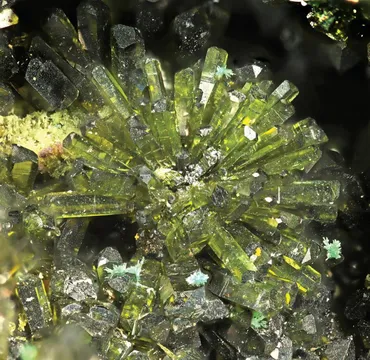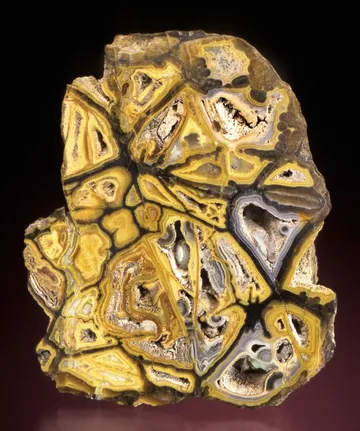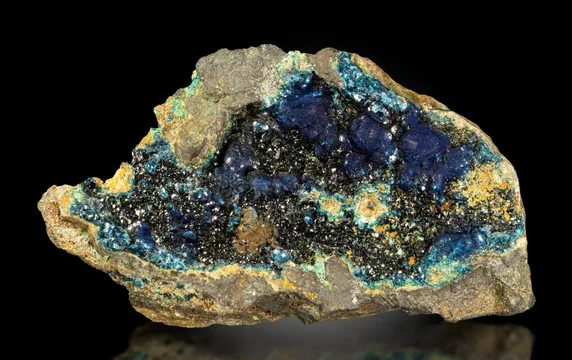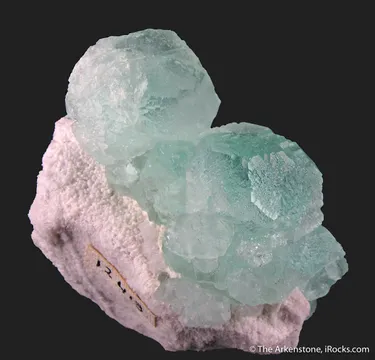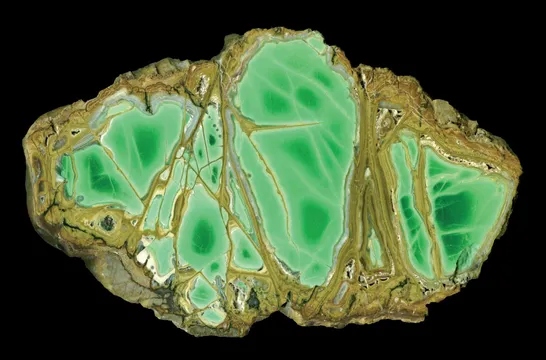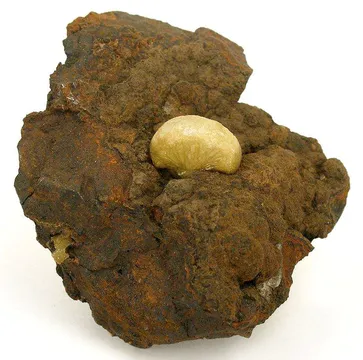
Sunnyside Mine, USA – a San Juan locality famed for pastel rhodochrosite on quartz, green fluorite, and manganese minerals that define collector appeal.
Key facts
Sunnyside is one of the defining Colorado localities for collectors who like their minerals with both beauty and a hard-rock mining story. The mine group lies high in the western San Juan Mountains of southwestern Colorado, around Bonita Peak, Gladstone, Eureka Gulch, and the historic Lake Emma area north of Silverton. Geologically it is a Miocene, intermediate-sulfidation polymetallic vein system hosted in the volcanic architecture of the San Juan–Silverton caldera complex, with steep fissure veins and fault-controlled ore shoots developed along the Eureka graben. Economically it was a gold-silver-lead-zinc-copper mine of exceptional importance; mineralogically it is remembered for pastel rhodochrosite, quartz, green fluorite, sulfides, gold-tellurides, and a suite of manganese minerals that give the locality a personality quite different from the later, more famous Sweet Home Mine.
To a collector’s eye, a good Sunnyside specimen usually has a cool, alpine vein look: pink to salmon rhodochrosite rhombs or rosettes set on sparkling white to colorless quartz, commonly with pale green fluorite, black sphalerite, brassy pyrite, chalcopyrite, galena, anhydrite, or gypsum. The best pieces are not simply “Colorado rhodochrosite”; they are distinctly San Juan specimens, softer in color than Sweet Home material, more likely to show fluorite, and often more complex in matrix. Fine cabinet pieces from old collections can be extraordinarily attractive, especially where lustrous rhodochrosite is balanced by clear quartz sprays or isolated fluorite octahedrons.
Regional View
Country View
Sunnyside also matters because it links specimen mineralogy to a well-studied ore system. The classic vein assemblages record repeated pulses of hydrothermal activity: early pyrite-quartz and quartz-sulfide stages, massive base-metal sulfides, a gold-telluride-quartz event, manganese-rich mineralization, and later quartz-fluorite-carbonate-sulfate vug filling. That late open-space stage is the one most collectors recognize, because it provided the cavities where rhodochrosite, fluorite, quartz, calcite, sulfides, anhydrite, and gypsum could crystallize freely rather than merely form ore.

Photo: Wikimedia Commons
Search for specimens: View all specimens from Sunnyside Mine, USA
The Sunnyside Mine group is in the Eureka Mining District of San Juan County, Colorado, northeast of Silverton and near the old camps of Gladstone and Eureka. In mineral-collection usage, “Sunnyside” commonly includes material from the interconnected mine group and associated workings such as the American Tunnel, Mogul, Washington, Belle Creole, Brenneman, Gold Prince, and related veins. Labels may vary between “Sunnyside Mine,” “Sunnyside Mine group,” and “American Tunnel,” but the collector’s meaning is usually the Bonita Peak–Gladstone–Eureka Gulch system.
The deposit is a fissure-vein and fault-vein system in the western San Juan volcanic field. The veins occupy steep faults and fractures associated with the Eureka graben, a structural zone tied to the resurgent and collapsed volcanic centers of the San Juan–Uncompahgre and Silverton calderas. The mine workings explored a vertical range of roughly 600 meters and a combined lateral length of about 2.1 kilometers along several veins. Older district descriptions record still larger practical mining ranges across the connected and adjoining workings. The important named veins and ore structures include the Sunnyside, Washington, Belle Creole, Brenneman, No Name, 2150, 2170, 2250, Spur, Mogul, Little Mary, and related systems.
Sunnyside’s ore history is complicated, but for collectors the paragenesis is especially useful. The published sequence recognizes six principal mineralizing stages: pyrite-quartz, banded quartz-sulfide, massive galena-sphalerite-chalcopyrite-bornite-hematite, gold-telluride-quartz, manganese ores, and a late quartz-fluorite-carbonate-sulfate stage. The base-metal ore was dominantly galena, sphalerite, chalcopyrite, pyrite, bornite, and related sulfides; the gold event included native gold, electrum, petzite, and calaverite; and the manganese suite brought pyroxmangite, rhodochrosite, huebnerite, helvine, tephroite, alleghanyite, spessartine, and related species into the system. Vugs and cavities in late-stage veinlets are responsible for many of the best crystallized specimens.
Historically, the operation began with the discovery of gold on the Sunnyside claim in 1873. Early work from the 1870s through the early 1890s was intermittent and relied on amalgamation and small stamp mills. Around 1890 J. H. Terry took over the property, and in 1896 a table-concentration plant was installed to recover lead-zinc concentrate. More than half a million tons of ore were treated before the Sunnyside Mining and Milling Company acquired the property in 1917. A 500-ton mill built in 1917 became one of the landmark flotation operations in North American base-metal mining, and by 1928 its capacity was increased to about 1,000 tons per day. Ore moved from the high mine terminal near Lake Emma down to the Eureka mill by an aerial tramway, a practical necessity in such steep alpine terrain.
The mine was one of the great long-running producers of the San Juan Mountains. Published summaries credit Sunnyside with more than 800,000 ounces of gold and 14 million ounces of silver by the time it closed in 1991, along with substantial lead, zinc, copper, and cadmium production. In the 1970s it was the leading gold producer in Colorado and, in 1973, ranked among the larger gold, lead, and zinc producers in the United States. During that period it also became a major specimen source: miners recovered rhodochrosite-fluorite-quartz combinations from the Washington vein and associated workings, and the Sunnyside name was strongly associated with Colorado rhodochrosite before the Sweet Home Mine’s specimen-mining era changed the market.
The American Tunnel is central to the modern history of the mine group. Standard Metals acquired or leased Sunnyside in the late 1950s and drove the tunnel system to reach deeper ore, with work from 1959 to 1962 extending it to roughly 11,000 feet and about 1,800 feet beneath older workings. The tunnel served as access, haulage, and drainage for later operations. After the Lake Emma flood in 1978, the mine required major rehabilitation; after a roughly two-year interruption, production resumed and continued until low metal prices made the operation uneconomic. Sunnyside Gold Corporation operated the mine in the late 1980s and early 1990s, and the last significant mine in the Bonita Peak Mining District closed permanently in 1991.
Collecting access today should be regarded as closed. The mine workings are dangerous, the area includes private patented claims and reclaimed or regulated sites, and the larger Bonita Peak Mining District is a major environmental and water-quality investigation area. Specimens in the market are therefore overwhelmingly old-stock pieces: miner-collected material from the 1960s through early 1990s, older Colorado collections, dealer inventories, and specimens recycled from collections that were assembled when the mine was active. Loose road-cut or dump material sometimes appears in casual circulation, but high-quality crystallized pieces with reliable labels are old-collection minerals, not a renewable collecting source.
Sunnyside rhodochrosite is prized for its pastel to salmon-pink color, rhombic crystals, rosette-like aggregates, and especially its association with quartz and green fluorite. The material most collectors seek came from late-stage vugs and cavities in the Sunnyside vein system, with notable 1970s specimen production from the Washington vein and American Tunnel workings; pieces range from small thumbnails and miniatures with scattered pink rhombs to cabinet specimens several centimeters across where rhodochrosite forms rounded rosettes, stepped rhombs, or drusy crusts on sparkling quartz. Good Sunnyside rhodochrosite is separated from ordinary material by luster, crystal definition, color saturation, balanced coverage, and undamaged three-dimensional habit; the most desirable examples add pale sea-green to gray-green fluorite, black sphalerite, brassy pyrite, chalcopyrite, galena, or gypsum without overwhelming the pink carbonate.
Quartz from Sunnyside is more than a background mineral: it is the structural stage on which many of the mine’s best display specimens were built. It occurs as drusy crusts, colorless to white prismatic sprays, milky vein quartz, fine vug linings, and distinctive quartz casts or pseudomorphs after anhydrite, commonly accompanied by pyrite and locally by rhodochrosite, fluorite, sphalerite, galena, chalcopyrite, calcite, anhydrite, or gypsum. The best quartz specimens here are not merely clean crystals; they are textural pieces, with sharp glassy sprays contrasting against pink rhodochrosite, casts preserving bladed anhydrite forms, or sparkling druses that give movement and light to otherwise dark sulfide-rich matrix.
Other documented Sunnyside minerals include native gold, electrum, native silver, native copper, acanthite, petzite, calaverite, galena, sphalerite, chalcopyrite, bornite, pyrite, pyrrhotite, alabandite, molybdenite, tetrahedrite-group and freibergite-group minerals, fluorite, calcite, kutnohorite, anhydrite, gypsum including selenite, barite, linarite, huebnerite, spessartine, tephroite, alleghanyite, pyroxmangite, helvine, friedelite, epidote, muscovite/sericite, kaolinite, adularia, and minohlite. The manganese silicate assemblage is particularly important historically: early reports described “rhodonite” or pink manganese spar from the district, but later work and modern Colorado mineral references emphasize pyroxmangite for much Sunnyside material formerly labelled as rhodonite. The mine is also a notable Colorado locality for gold-telluride mineralization, with native gold, petzite, calaverite, hessite-bearing material, and kutnohorite-rich associations represented in old collections.
The main authenticity issue with Sunnyside specimens is locality attribution, not treatment. Pink Colorado rhodochrosite on quartz is often casually assumed to be Sweet Home, Alma, or “San Juan County,” and older labels may use broader or outdated wording such as “Silverton,” “Eureka,” “American Tunnel,” “Sunnyside Mine,” or “Sunnyside Mine group.” For Sunnyside, the strongest visual clues are pastel pink to salmon rhodochrosite rather than the deep cherry-red Sweet Home look, common association with green fluorite, and a San Juan-style sulfide matrix with sphalerite, pyrite, chalcopyrite, galena, anhydrite, gypsum, or quartz druse. Those clues are useful but not conclusive; old labels, collection provenance, and comparison to documented Sunnyside specimens matter.
No widely accepted collecting literature treats Sunnyside rhodochrosite as a locality especially plagued by manufactured fakes or dyed material. Still, collectors should be alert to generic “Colorado rhodochrosite” labels being upgraded to Sunnyside, and to poorer massive rhodochrosite or pink carbonate being over-sold as crystallized mine material. The old “rhodonite” problem is more significant: pink manganese silicate from Sunnyside and neighboring mines has historically been misidentified, and tested material is often pyroxmangite rather than rhodonite. For serious species collectors, analytical confirmation is appropriate for manganese silicates, rare sulfates, tellurides, and small opaque ore minerals.
Condition is a major value factor. Sunnyside rhodochrosite commonly forms small, stepped rhombs and rosettes on exposed quartz; edge bruising, flattened high points, dull etched faces, and contact damage are common. Fluorite octahedrons may be cleaved, nicked, or partly etched, and late sulfates such as gypsum and anhydrite can be fragile. Quartz casts after anhydrite should be checked for broken blades and missing terminations. Specimens from sulfide-rich matrix should be stored dry and away from rapid humidity changes; pyrite and marcasite-like alteration are not the norm for every piece, but old San Juan sulfide specimens deserve conservative storage.
Market availability is modest but steady. Small rhodochrosite-on-quartz pieces, quartz druses, and fluorite-rhodochrosite combinations appear from old collections and dealer stock, while exceptional cabinet specimens with bright, undamaged pink rhodochrosite and well-placed green fluorite are much scarcer. Because the mine is closed and specimen production is historical, the best pieces are increasingly provenance-driven: ex-Kosnar, ex-Feinglos, Colorado dealer stock, miner-collected material, and older museum or teaching collection labels can add real confidence and value.
In the 1970s, before Sweet Home became the modern icon of Colorado rhodochrosite, Sunnyside was the San Juan name collectors talked about. The Washington vein was producing beautiful combinations of pink rhodochrosite, green fluorite, quartz, and sulfides, and the specimens moved through the mining community in the old-fashioned way: from miners’ lunch buckets, local dealers, and Silverton saloons into Colorado collections. At the same time, rich gold ore shoots were found in adjacent veins around 1972, and high-grading became a whispered part of Sunnyside lore. A single place could produce both pastel mineral-cabinet pieces and gold ore tempting enough to become contraband.
The mine’s most famous episode came on Sunday, June 4, 1978. Standard Metals had been mining near Lake Emma, a high alpine lake sitting above the workings at roughly 12,300 feet elevation. The company had stopped work in that area pending drainage after spring runoff, but the remaining rock barrier failed. The lakebed collapsed into mine workings and an old stope, sending an estimated 5 to 10 million gallons of silt- and tailings-laden water through the mine and down to the American Tunnel haulage level. The flood occurred on a Sunday, when miners were not underground, so a catastrophe that could have killed a shift instead became one of the great near-misses in Colorado mining history.
The aftermath was enormous. Water and debris blocked the roughly two-mile American Tunnel, which entered from Cement Creek at about 10,600 feet elevation, and the Terry Tunnel, which entered from Eureka Creek at about 11,500 feet. By the end of 1978 a cleanup force of about 118 workers had reopened the Terry Tunnel to the top of the Washington incline shaft and had cleared about 10,000 feet of the American Tunnel. The mine’s main hoisting equipment was buried, and Sunnyside lost roughly two years to cleanup and rehabilitation before ore production returned. For collectors, that disaster marks a dividing line: pre-flood material belongs to the classic active-mining era, while post-rehabilitation specimens come from a mine conscious of both opportunity and risk.
The longer industrial story is just as striking. Ore once left the high mine terminal near Lake Emma by a 2¾-mile aerial tramway down to the mill near Eureka, dropping from alpine workings into a processing operation that helped make Sunnyside a technological landmark. The 1917 mill is remembered as the first commercial lead-zinc selective-flotation plant in North America, and by 1928 it had been expanded to a 1,000-ton-per-day capacity. For a locality now seen through pink rhombs and green fluorite, Sunnyside was also a place of heavy engineering: tunnels measured in miles, ore shoots hundreds of feet long, and a mine camp economy tied to weather, metal prices, water, and the mountain itself.