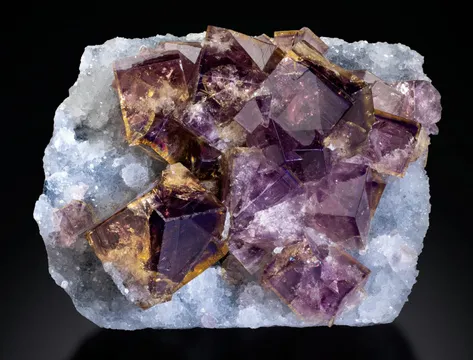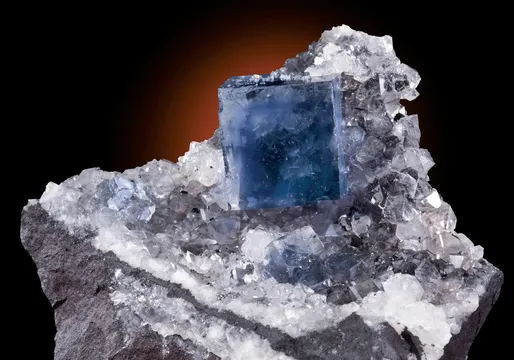
Stank Mine, UK — a Furness hematite locality prized for calcite crystals zoned by hematite, sharp scalenohedra on iron-ore matrix, sought by collectors.
Key facts
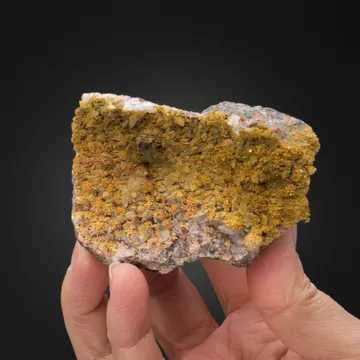
Stank Mine is one of the classic Furness hematite localities: not a prolific specimen factory in the West Cumberland manner, but a mine whose best calcites are instantly recognizable to collectors of old English material. The mine worked epigenetic hematite mineralization in the Lower Carboniferous limestone belt east of Barrow-in-Furness, where faults and favourable limestone beds focused iron-bearing solutions into veins and replacement bodies. In the Stank–Yarlside ground, the important ore was not a broad, open “flat” full of generous cavities, but mostly vein-like hematite in Urswick Limestone below drift and locally below the Gleaston Formation. That geological setting helps explain both the scarcity and the character of the specimens: Stank pieces are typically calcite groups born in iron-ore cavities, coloured and zoned by hematite, with occasional kidney-ore matrix and much rarer hematite pseudomorphs.
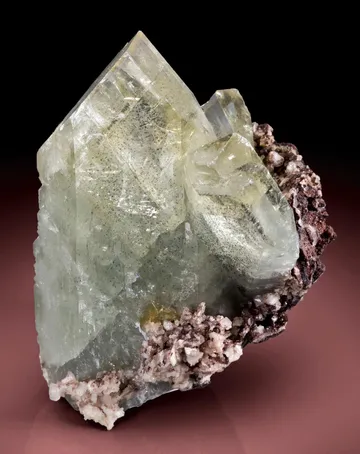
The collector’s Stank Mine is therefore a calcite locality first and an iron mine second. Fine examples show bright, sharp, elongated scalenohedra and prismatic-scalenohedral crystals, from colourless through creamy white to honey, yellow-brown, red-brown, and pinkish tones. The best are lively rather than merely “old”: transparent to translucent calcite with internal red hematite zoning, crystals standing free on brown iron-ore matrix, and groups that retain enough undamaged terminations to display well after more than a century of handling. Large cabinet specimens are exceptional; the great pieces sit in the same mental drawer as the classic English calcites from Egremont and Bigrigg, but with a distinctly Furness accent.
Regional View
Country View
Historically, Stank belongs to the industrial rise of Barrow. The Furness hematite orefield supplied high-grade red ore to the iron and steel works whose demand reshaped the district in the nineteenth century. Stank itself was active from the early 1870s until 1901, under the Barrow iron and steel interests, with multiple pits, deep pumping, long cross-cuts, and an orebody complicated enough to keep geologists and miners attentive. The surviving engine-house and mine buildings are now heritage structures in a settled landscape, so modern collecting is not a matter of casual dump picking; the specimens that circulate today are overwhelmingly old-time pieces from mining-era or long-dispersed collections.
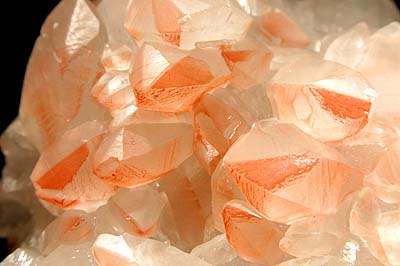
Photo: Wikimedia Commons
Search for specimens: View all specimens from Stank Mine, UK
Stank Mine lies near Barrow-in-Furness, in the Furness part of the south Cumbrian hematite orefield, formerly in Lancashire and now in Cumbria. The mineralization is part of the great suite of Cumbrian red hematite deposits hosted chiefly by Lower Carboniferous limestones. In the wider district, hematite occurs as veins along faults and joints, as bed-parallel replacement “flats,” and as the distinctive Furness “sops,” the roughly conical karstic hollows filled with iron ore. Stank’s collector material is tied to the vein-and-replacement environment rather than to large, specimen-rich open flats.
The principal Stank orebodies were the Stank Main Vein and South Vein, with related ground around Bowesfield and North Stank. The Main Vein followed a WNW–ESE fault and was mineralized where that structure passed through Urswick Limestone at depth. Geological Survey descriptions give the lateral extent of the Main Vein oreshoot as about 650 m from the Yarlside Fault eastwards towards Stank Farm, where it died out. The vein was worked to roughly −170 m OD in the western part from No. 3 Shaft, and to around −153 m OD from No. 1 and No. 5 shafts. Reported widths ranged from a few centimetres to as much as 10 m, with limestone lenses locally splitting the ore into narrower vein-like bodies. The South Vein, discovered by cross-cut from the Main Vein workings, was worked between about −90 m and −190 m OD and also lay in Urswick Limestone. The dip of the Main Vein was around 45° south; the South Vein around 55° south.
The geology is unusually well constrained because the Stank–Yarlside–Newton–Stainton area was studied from mine plans, boreholes, and cross-cuts. Drift cover over the solid rocks is commonly 10–20 m and locally up to 30 m, so many of the larger ore deposits in this part of Furness were found by boreholes rather than by obvious surface outcrop. The district structure is dominated by the Yarlside Fault, the southern continuation of the Park fault-system, with W–E and WNW–ESE faults branching from it and acting as channels for mineralising fluids. Economic ore was concentrated, with few exceptions, where these faults intersected the Urswick Limestone. Stank is important geologically because its productive veins lay at considerable depth beneath younger cover, whereas many other Furness veins were shallow where Urswick Limestone reached rockhead.
Mining began with the sinking of the first shaft in 1871. Recorded operators include the Barrow Iron Company in 1872 and the Barrow Haematite Steel Company through the main producing life of the mine. Stank became a substantial operation: contemporary and later mine-history sources record nine pits, a Cornish beam engine brought from Wheal Mary Ann near Menheniot in Cornwall, and production of about two and a half million tonnes of iron ore by 1885. In the best years near the end of the nineteenth century, the combined production of Yarlside and Stank was on the order of 70,000–80,000 tons per annum. In 1896, Stank employed 505 people, of whom 355 worked below ground and 150 at surface.
The mine finally closed in January 1901, with severe flooding recorded as a decisive problem for Stank No. 2 pit. That struggle with water is still legible in the remains: the listed engine house, mine building, manager’s office, and related structures stand as remnants of an enterprise built for deep pumping and heavy ore haulage. The surviving engine house is a semi-ruined square tower of rock-faced red sandstone with limestone dressings; associated mine buildings have been converted or incorporated into later residential use. The site is private land and includes listed industrial-heritage structures, so collectors should treat it as a closed historic locality unless explicit landowner permission is obtained. Loose provenance, old collection labels, and specimen style are therefore much more relevant to today’s market than any expectation of newly collected Stank material.
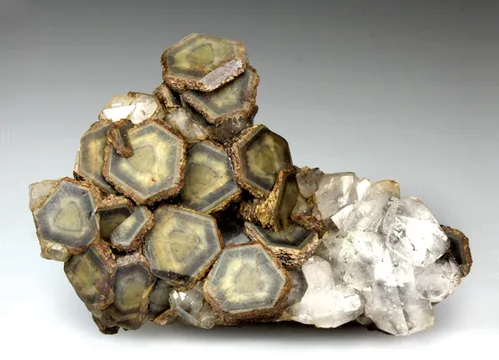
The pockets that matter to mineral collectors were the cavities or “loughs” in the iron ore and replacement ground, where calcite grew after or during the late stages of hematite deposition. Compared with West Cumbrian iron mines, Furness ores were less generous in open cavities, which is one reason Stank specimens have always been scarcer. Documented Stank specimens include bright scalenohedral calcite in red, yellow, and brown shades, calcite coloured by hematite inclusions, kidney-ore hematite beneath calcite, and hematite pseudomorphs after fluorite. Old dealer catalogues from the 1970s repeatedly list Stank calcites as display pieces with tapered, transparent to translucent crystals to about 1 inch, commonly on limonitic or iron-oxide matrix; those descriptions match the specimens still moving through advanced collections today.
Stank calcite is the mine’s signature collectible species: sharp, lustrous scalenohedral to prismatic-scalenohedral crystals, typically colourless, creamy, pale honey, pinkish, yellow-brown, or red-brown from hematite inclusions and staining. Individual crystals are commonly in the 5–30 mm range on documented specimens, with old catalogues describing crystals to about 1 inch; large cabinet plates and all-around groups are much scarcer. The best examples show transparent terminations, internal red zoning or oriented hematite inclusions, free-standing crystal coverage on contrasting brown iron-ore matrix, and minimal cleavage damage. Ordinary pieces are merely stained or crowded; choice Stank pieces have that unmistakable combination of old English sharpness, warm iron colour, and sculptural relief.
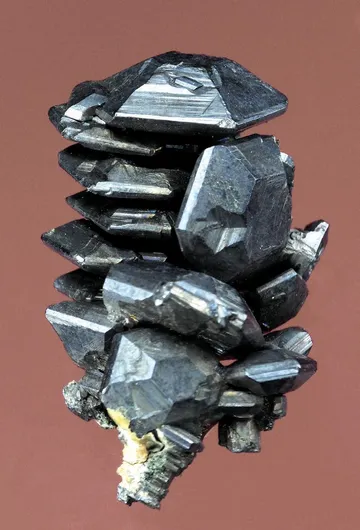
Hematite at Stank was the ore mineral and the visual engine behind the locality’s calcites, occurring as massive red hematite, botryoidal to mammillated “kidney ore,” inclusions in calcite, and reported pseudomorphs after fluorite and calcite. On specimen-grade pieces it is most often encountered as a brown to red-brown iron-oxide matrix or as a convex kidney-ore base from which calcite crystals radiate; standalone hematite specimens are much less available than calcite-with-hematite examples. Fine hematite pieces from Stank are judged by undamaged kidney-ore surfaces, convincing old provenance, and clear locality style, while hematite pseudomorphs are sought because they connect the mine to the replacement processes that shaped the orebody itself.
The verified mineral list for Stank Mine is short: calcite, hematite, and pyrolusite. Pyrolusite is the notable rarity in the formal record, reflecting the local association of iron and manganese oxides in the Furness ores, but it is not a common showy cabinet mineral from the mine. No verified type-locality mineral is documented for Stank in the standard locality records; its mineralogical importance rests instead on classic calcite with hematite inclusions and on the rarer hematite pseudomorph material recorded from the old workings.
Stank specimens should be approached as nineteenth-century and early twentieth-century classics, not as a modern production locality. Fresh-looking, abundant, inexpensive “Stank” material is inherently suspect unless supported by old labels, collection history, or unmistakable style. Legitimate old labels may read Stank Mine, Barrow, Furness, Ulverston or Ulverstone, North Lancashire, Lancashire, Cumberland, or Cumbria; those historical county and district names are not in themselves errors. Conversely, the material has been mislabelled outside Britain: at least one well-known large calcite with hematite inclusions was once labelled Michigan before being reattributed to Stank by collectors familiar with the locality. The diagnostic look is not just “red calcite,” but sharp English scalenohedra or prismatic-scalenohedra with hematite inclusions or staining on iron-ore matrix.
No specific treatment or manufactured-fake problem is documented for Stank Mine, but misattribution is a real concern because hematite-included calcites occur at several English and international localities. Egremont, Bigrigg, Pallaflat, and other West Cumberland iron-field calcites can be confused with Stank by non-specialist sellers. Stank pieces tend to be scarcer, often older, and frequently carry Furness or Barrow-related labels. Compare habit, matrix, and colour distribution: the strongest Stank pieces have oriented red inclusions or warm iron zoning rather than a simple external orange stain.
Condition matters severely. Calcite has perfect rhombohedral cleavage and Stank groups are often densely crystalized, so missing tips, edge bruising, and small cleaves are common. A few damaged crystals need not ruin a large old display specimen, but widespread crushed terminations, polished-looking contacts, or oil-darkened surfaces should reduce value sharply. Matrix is commonly iron oxide and can shed powder or soil labels and mounts; store pieces dry, avoid acids and aggressive cleaning, and use only gentle mechanical dusting. Some Stank calcite fluoresces under shortwave ultraviolet light and may show phosphorescence; documented examples also show minor fluorescence under longwave UV. UV response is a pleasant bonus, not a primary test of authenticity.
Market availability is intermittent. Good miniatures and small cabinets appear from old collections, dealer stock, and estate auctions; large, aesthetic cabinet groups are genuinely hard to replace. Modern auction records show cabinet Stank calcites in the several-hundred-dollar range when attractive but imperfect, while exceptional large or historically pedigreed specimens can command substantially more. The best buying opportunities are pieces with old British dealer labels, museum-deaccession history, or older European collection provenance, especially when the specimen still has sharp terminations and strong red hematite zoning.
The industrial story of Stank begins with a borehole. On the other side of the hill from Yarlside, the Barrow Haematite Steel Company was looking for coal and instead cut hematite. Their lease dates to 1871, and what followed was not a small trial but a serious mine with numerous pits and heavy pumping. The surviving Stank No. 1 engine house once housed a 40-inch Cornish engine; No. 2 was drained by a 72-inch Cornish engine; No. 5 up the hill used a 70-inch Cornish engine. Those figures explain the character of the mine better than any romantic phrase: Stank was deep, wet, capital-intensive work in ground where ore could pinch, swell, vanish, or reappear along faulted limestone.
The partnership with nearby Yarlside was not just geological. Yarlside was prone to inrushes of running sand, remembered in some accounts by the blunt miners’ phrase “pissing sand,” and its owners faced high pumping costs, royalties, and ore-quality problems. Sir Thomas Storey’s despair over Yarlside survives in a remarkable letter to the Duke of Buccleuch’s agent. He wrote that the mine owed him £70,000, “a large portion of which has been paid to you,” and complained that “some Duke cooly demands still more sacrifice at my hands.” The Barrow Haematite Steel Company took over Yarlside in 1892, removed the last of its ore by 1898, and kept pumps running until Stank itself was exhausted in March 1901. Seen from the specimen cabinet, Stank calcites are serene; seen from the mine accounts, they came from an expensive fight against water, sand, faults, and royalties.
The accident record puts human names to the red ore. Thomas Brewer, a labourer, was killed on 18 December 1882 when struck by timber while unloading it from a wagon. Samuel Cox, aged 23, died on 11 November 1885 when a protruding rib of rock on the hanging side fell as he and his mate prepared a second shot. James Henry Campion, only 14 and working as an ore picker, was injured on 1 May 1893 while trying to move a railway wagon and died three days later. Thomas Carter, aged 40, was killed on 23 March 1898 by a stone projected from a shot in an adjoining working; the usual firing signal had been given, but he thought he was in a safe position and did not move. These are not specimen stories in the narrow sense, but they are part of every honest label from Stank: the calcite came out of an operating iron mine, not a collecting pocket opened for pleasure.
A century later, Stank reappeared in the mineral world not as ore but as pedigree. In 2001, a newspaper item reprinted by the Cumbria Amenity Trust Mining History Society reported that American businessman Joseph Freilich sold part of his mineral collection at Sotheby’s in New York. Two of the 433 specimens in the auction were from the defunct Stank iron ore mine. The better of them, described as “Calcite with Hematite Inclusions,” measured 6¾ inches by 6 inches. A Sotheby’s spokesman called it “a magnificent group of modified scalenohedral calcites,” and it sold for $2,160, about £1,500. The other Stank lot, a calcite twin on a cluster of scalenohedral crystals, was expected to bring up to £1,000 but did not sell. It is a wonderfully Stank outcome: one superb old calcite brought international attention, while another good but less compelling example reminded everyone that condition, form, and visual life make the difference.
Field observers who visited the surface remains in 2014 found a mine reduced to masonry, engine beds, flooded shafts, and altered buildings. At No. 5 pit, an engine bed hung above a collapsed shaft. The old smithy, once fitted with six hearths, had been cleared for conversion. The Stank No. 1 engine house still stood in the background, the surviving physical anchor for labels written long before “Cumbria” became the usual collecting address. For collectors, that is the enduring romance of Stank: a quiet Furness landscape, a listed engine house, a closed iron mine, and calcites that travelled from wet nineteenth-century workings into museum rooms, dealer trays, and old cabinets around the world.