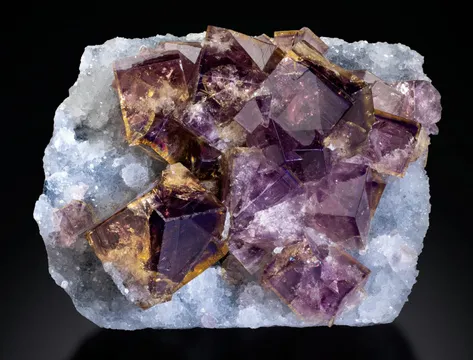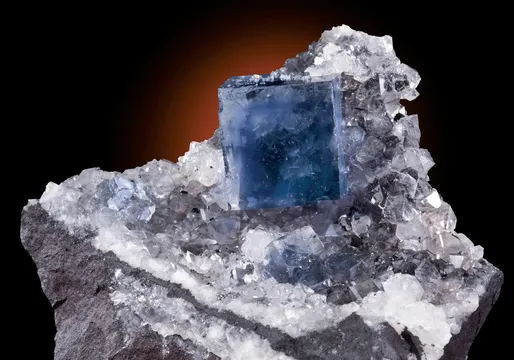
St Issey Wheal Phoenix, UK — historic lead-copper locality linked to Wheal Phoenix; prized copper-phosphate minerals chalcosiderite, libethenite, and cuprite.
Key facts
The name St Issey Wheal Phoenix needs careful handling in any serious collection record. The mine actually documented at St Issey is the old Carthew Consols lead-and-copper working near Carthew Farm, a small mid-19th-century operation with recorded galena, silver-bearing galena, and chalcopyrite. The specimens most collectors encounter under the EarthWonders locality name, however—chalcosiderite, libethenite, and cuprite—match the classic Wheal Phoenix of Phoenix United Mine at Minions, Linkinhorne, in the Caradon mining district of east Cornwall. That Linkinhorne mine is one of Britain’s great copper-phosphate localities: the type locality for chalcosiderite, a source of handsome libethenite, and a famed Cornish producer of red cuprite and chalcotrichite.
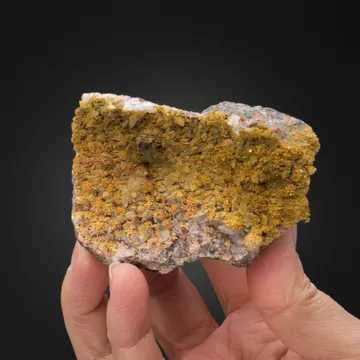
For collectors, the attraction is the old oxidized copper-tin lode material from Wheal Phoenix: iron-stained quartz and gossan carrying emerald to forest-green phosphate crusts, rounded chalcosiderite rosettes, glassy pseudo-octahedral libethenite, pseudomalachite, malachite, and local bright red cuprite. The best chalcosiderites are not large-crystal showpieces in the modern cabinet-mineral sense; they are classic British rare-species specimens, prized for richness, saturation of green colour, sparkling luster under magnification, and old provenance. The best cuprites are small but memorable—dark cherry-red, gemmy crystals in vugs, or blood-red hairlike chalcotrichite matted through iron oxide-rich gossan.
Regional View
Country View
The map point and locality name here should therefore be read with caution: the St Issey Carthew Consols mine is a real historic lead-copper locality, but the mineral suite represented by the featured EarthWonders specimens belongs mineralogically to the well-known Wheal Phoenix/Phoenix United Mine at Minions, Linkinhorne. Serious labels should preserve that distinction rather than collapsing two different Cornish mines simply because both carry the Phoenix name.

Photo: Wikimedia Commons

Photo: Wikimedia Commons
Search for specimens: View all specimens from St Issey Wheal Phoenix, UK
The St Issey mine recorded as St Issey Wheal Phoenix, also known as Carthew Consols, was a small lead-and-copper mine in the Wadebridge district, not the celebrated copper-phosphate locality at Minions. It was begun in 1847 and first worked with nearby Legossick Mine. Its sett comprised a north-south main lode and a south-west-trending caunter lode, opened from a shaft on the west slope of a narrow valley north-east of Carthew Farm. Workings reached 91 fathoms below surface, or 55 fathoms below adit. As Carthew Consols, the mine produced 139 tons of 70% lead ore and 120 ounces of silver between 1849 and 1852, plus 205 tons of 6.5% copper ore between 1850 and 1851. It was abandoned in 1853, then revived under the name St Issey Wheal Phoenix from 1862 until 1867.
That St Issey mineralization is a modest Cornish lead-copper vein occurrence: galena, including silver-bearing galena, with chalcopyrite. It does not, in the available locality records, carry the classic Wheal Phoenix suite of chalcosiderite, libethenite, cuprite, chalcotrichite, dufrénite, turquoise-group minerals, native copper, chalcocite, and cassiterite. Those species belong to Wheal Phoenix, Phoenix United Mine, Minions, Linkinhorne, roughly thirty miles to the east-southeast on the south-eastern edge of Bodmin Moor.
The Linkinhorne Wheal Phoenix is a quite different deposit and a much more important specimen locality. It formed part of the Phoenix United group, where copper and tin lodes were worked in close association on the Caradon side of Bodmin Moor. Contemporary and later mining accounts describe the unusual pairing of a copper lode and a tin lode side by side on an old fault plane, with workings reaching about 250 fathoms, or 1,500 feet, from surface. The mine began modern underground work in the 1830s under the Cornwall Great United Mines banner, was restarted in the 1840s as Phoenix or Wheal Phoenix, and later operated as Phoenix United. Copper production dominated at first, especially after rich copper ore was struck in 1852; by the mid-1860s, as copper reserves declined and prices shifted, William West and others pushed the mine toward tin. The later tin period left large dressing-floor and engine-house remains, including the Prince of Wales Shaft complex.
Phoenix United was one of East Cornwall’s great industrial mines. Heritage records give large output figures for the 19th century: more than 80,000 tons of copper ore and roughly 16,000 tons of black tin across the productive life of the group, depending on the source and accounting period. The last major attempt to revive the mine centred on the Prince of Wales Shaft from 1907 to 1914. A large 80-inch pumping engine by Holman Brothers of Camborne was installed, with associated winding and stamping plant, but water and poor ore values defeated the venture. The Prince of Wales workings reached the 200-fathom level and then closed in 1914.
For specimen collectors, the important material came from the oxidized zones, gossan, quartz veinstone, and phosphate-bearing cavities of the Linkinhorne mine, especially material historically associated with Wheal Phoenix and the Stowe’s section. Chalcosiderite occurs in small vugs and crusts on iron-stained quartz and goethitic matrix, commonly with dufrénite. Libethenite is reported from around the Count House and Stowe’s Shaft area, as lustrous dark green crystals and aggregates. Cuprite occurs both as crystals and as chalcotrichite, with old specimens showing native copper, chalcocite, malachite, quartz, and iron oxides. Modern collecting at the Phoenix United site is constrained by conservation: the area is a protected SSSI/SAC landscape valued for metallophyte bryophytes growing on metal-rich spoil. Any visit should be treated as a heritage and conservation visit first, and collecting should only be attempted where expressly permitted by the landowner and conservation rules.
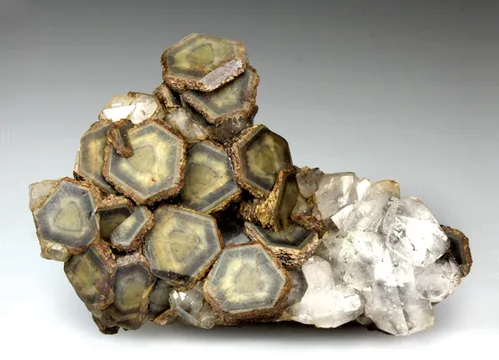
Chalcosiderite specimens sold or catalogued under the St Issey Wheal Phoenix name should be checked carefully, because the classic material is from Wheal Phoenix at Minions, Linkinhorne, the type locality for the species. There it occurs as deep emerald to forest-green microcrystals, pseudohexagonal plates, rounded “grape-like” radial aggregates, and rosettes lining vugs in quartz-rich gossan and iron-stained veinstone; documented specimen descriptions give individual crystals commonly under 1 mm, rosette or spheroidal aggregates around 4–5 mm, and cabinet-scale matrices with dense coverage. Quartz, goethite or limonite, dufrénite, and locally tourmaline are the characteristic associations. A good Wheal Phoenix chalcosiderite is judged less by crystal size than by continuity of coverage, fresh green colour, sparkle in the vugs, well-formed rosettes rather than dull powdery crust, and ideally an old British label or a provenance such as Couzens, Russell, Deyrolle, Folch, or another established collection.
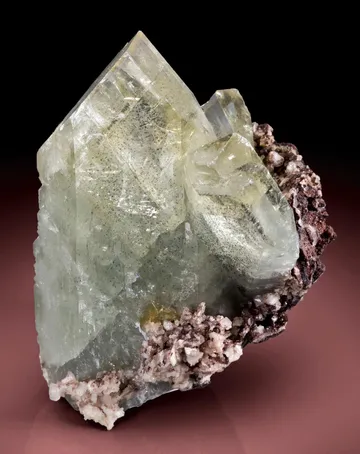
Libethenite attributed to this EarthWonders locality is likewise best understood as classic Wheal Phoenix, Linkinhorne material, where the species occurs in late-stage oxidized copper-phosphate cavities rather than in the documented St Issey Carthew Consols assemblage. The most characteristic pieces show dark, lustrous green pseudo-octahedral crystals and small spherical or clustered aggregates on pale to iron-stained quartz matrix; published and market records note crystals around 1 mm on vuggy quartz, 2 mm green spheres on older material, and a Stowe’s Shaft specimen with glittering crystals to 4 mm. Associations reported from the Phoenix material include pseudomalachite, malachite, cornubite coatings, quartz, and the broader phosphate suite. Fine examples separate themselves by sharp, glossy crystals with visible form, rich distribution across the matrix, and the unmistakable dark bottle-green colour that does not disappear under moderate magnification.
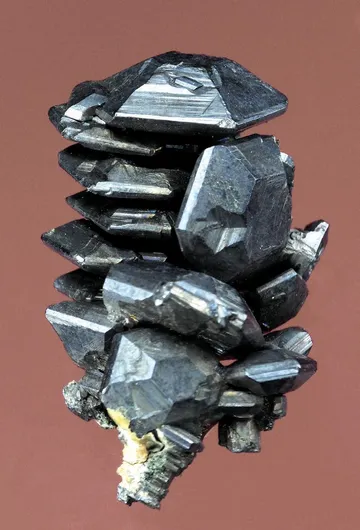
Cuprite from the classic Wheal Phoenix, Linkinhorne occurrence appears both as crystal cuprite and as the hairlike variety chalcotrichite; specimens bearing the St Issey Wheal Phoenix marketplace locality should therefore be scrutinized for this Linkinhorne identity. The best crystal specimens are vuggy quartz or gossan pieces carrying gemmy dark cherry-red to wine-red crystals, with one widely illustrated old-time example showing crystals to about 6 mm and another record noting an exceptional British Museum specimen measuring 8.8 x 6 cm and dated 1868. Chalcotrichite occurs as matted blood-red acicular cuprite in iron oxide-rich gossan and is one of the recognizable Cornish habits from the mine. Native copper, chalcocite, quartz, malachite, tourmaline, pyrite, brochantite, tenorite, and goethite are among recorded associations; top pieces have bright colour, intact crystal faces or undisturbed silky mats, minimal rubbing on exposed crystal tips, and a believable old Cornish provenance.
Other documented minerals from the Linkinhorne Wheal Phoenix/Phoenix United assemblage include cassiterite, chalcocite, native copper, chalcopyrite, dufrénite, goethite, kaolinite, malachite, pseudomalachite, quartz, siderite, tenorite, turquoise and rashleighite, connellite, cornwallite, chrysocolla, azurite, olivenite, and brochantite. The locality is also tied to two important historical phosphate problems: chalcosiderite as a type-locality mineral, and “andrewsite,” originally described from Wheal Phoenix but now discredited as a mixture involving hentschelite and rockbridgeite with minor chalcosiderite. Kidwellite has also been recorded from Phoenix material as small globules of radiating greenish-yellow fibres with chalcosiderite in a quartz-goethite matrix.
The central authenticity issue for this locality is mislocality, not treatment. A label reading only “Wheal Phoenix, Cornwall” can refer to the famous Linkinhorne/Phoenix United mine, whereas “St Issey Wheal Phoenix” or “Carthew Consols” points to a different, less mineralogically diverse lead-copper mine near Wadebridge. Chalcosiderite, libethenite, and classic cuprite/chalcotrichite should raise an immediate cataloguing question if the label says St Issey: the established published and database record for the St Issey Carthew Consols mine is galena, silver-bearing galena, and chalcopyrite, while the green phosphate and cuprite suite is characteristic of Wheal Phoenix at Minions, Linkinhorne.
No robust, locality-specific tradition of artificial treatments or systematic fakes was found for the Wheal Phoenix chalcosiderite-libethenite-cuprite suite. The more realistic problems are old-label ambiguity, dealer shorthand, duplicate “Phoenix” names in Cornwall, and specimens separated from their original collection cards. For rare-species chalcosiderite especially, buy the label as well as the mineral: a specimen with a clear old British, European dealer, museum, or named-collection trail is materially more desirable than a visually similar unprovenanced green crust.
Condition is often the limiting factor. Chalcosiderite and libethenite are small-crystal minerals on iron-stained vuggy matrix, so the best surfaces may be hidden in cavities and easy to bruise with a careless probe or brush. Avoid aggressive cleaning: iron oxide and gossan are part of the matrix context, and acids or ultrasonic cleaning can do more harm than good. Cuprite crystals are brittle and exposed terminations chip readily; chalcotrichite mats can be crushed by cotton wool, tissue, or foam pressing directly on the hairs. Store these pieces in boxes with rigid clearance above the display face, and treat thumbnail chalcotrichite as a no-touch specimen.
Rarity varies strongly by species and quality. Chalcosiderite from Wheal Phoenix is obtainable but not common as attractive old-time material; rich, bright, well-crystallized examples with full labels are genuinely collectible. Libethenite is scarcer in fine display pieces and is often a micromount or small miniature proposition. Cuprite is familiar as a species but Wheal Phoenix crystal and chalcotrichite examples with strong colour and provenance are much less available than generic Cornish cuprite. Current market appearances are sporadic and tend to come through British dealers, older collection dispersals, specialist auctions, or online platforms where locality verification is essential.
The most memorable modern field-note episode from Wheal Phoenix has the texture of a real collector’s day: good weather, a specific target, and the little defeats and reversals that make old mine dumps addictive. A Russell Society account from 2013 records a visit in which the collector arrived with gorceixite in mind after seeing that Steve Rust had added it to Mindat. The verdict came quickly—“Hah!”—but the day was not wasted. Some chalcosiderite turned up, Richard collected goethite, and after lunch the party thinned until Gerry and the writer were alone on the main Phoenix dumps.
They started near the Count House, precisely the area noted for libethenite, then shifted to the banks below the old mineral railway line. The finds accelerated: Gerry collected gemmy cassiterite in chlorite; the writer found meta-torbernite and checked it with a radiation counter, deciding it was “not that hot” and probably not meta-zeunerite; both found pseudomalachite and malachite; then Gerry found an “adamantine pristine cuprite.” The final broken rock of the day held good chlorite with many sparkling square faces. In the field it looked like anatase. Under later scrutiny it became another reminder that the Phoenix dumps still reward patience, but punish snap identifications.
The industrial story has an equally sharp ending. The Prince of Wales Shaft engine house looks imposing today, but it belongs to the mine’s last and least successful chapter. In 1910 the mine installed a new 80-inch pumping engine built by Holman Brothers of Camborne, along with a Robey two-speed horizontal winding engine and pneumatic stamps. Drainage remained difficult, ore values disappointed, and work stopped in 1914. A grand Edwardian plant, built to revive a fading mine, became one of the most visible monuments to the last gamble at Phoenix United.