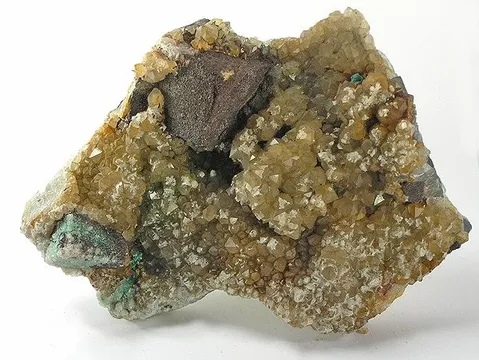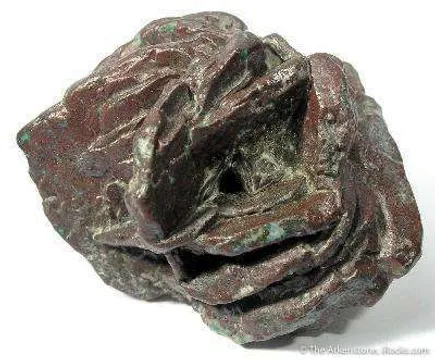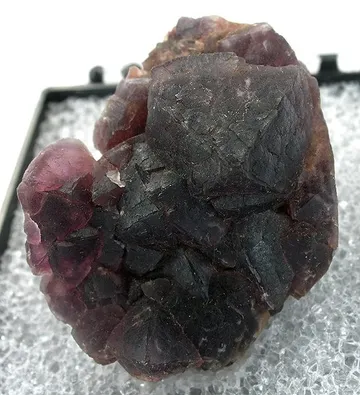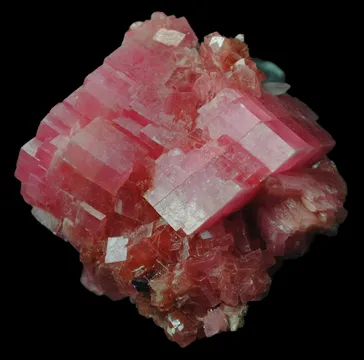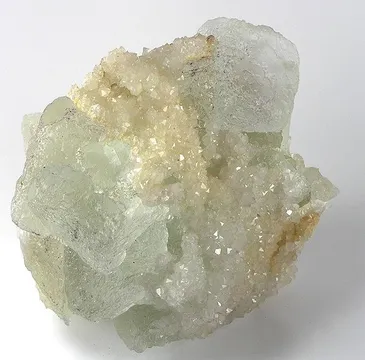
A collector's guide to Socorro County, USA: its geology, mining history and notable minerals, illustrated with the 27 specimens documented from this locality on EarthWonders.
Key facts
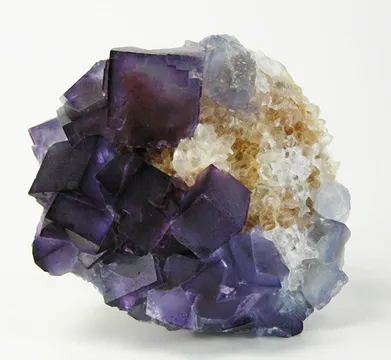
Socorro County sits in the hard, open center of New Mexico, where several very different mineral systems crowd into one collector’s name. For most specimen buyers, “Socorro County” first calls up the Hansonburg district near Bingham: a Rio Grande Rift–related, carbonate-hosted fluorite-barite-galena system famous for open-space crystallization in limestone breccias, solution cavities, and fissures. Its signature pieces are unmistakable—soft to intense blue, purple-edged, pale green, or pastel green-purple fluorite cubes and modified cubes on sparkling quartz, commonly with galena and barite. The best cabinet specimens from the Blanchard mine group have the sculptural looseness of cave mineralization rather than the massive look of ore.
A second, equally classic Socorro identity lies west of the Rio Grande in the Magdalena district, especially the Kelly mine. There the collector’s language changes from “Blanchard Blue” fluorite to apple-green, aqua, turquoise-blue, and brown smithsonite; from open-space MVT-style cavities to zinc-lead-copper-silver-gold replacement, vein, and skarn-related ores in the Mississippian Kelly Limestone and associated rocks. The county also includes smaller but scientifically important occurrences such as the Lemitar carbonatites, rare-earth-bearing Cambrian carbonatite dikes and veins north of Socorro, and numerous minor copper, manganese, barite, silver, and lead prospects.
Regional View
Country View
Historically, Socorro County bridges ore mining and specimen mining unusually well. The Magdalena district helped make New Mexico a zinc and lead producer; Hansonburg repeatedly frustrated commercial ore schemes because of grade, water, and remoteness, yet became a collector’s paradise precisely because its cavities yielded large, discrete crystals. Modern collecting lore in the county is still active: the 2023 Ice Cream Igloo pocket at the Blanchard mine produced major green and purple fluorite specimens, including the enormous “Blanchard Beast,” and reminded collectors that this is not merely an old locality traded from estate flats.

Photo: Wikimedia Commons

Photo: Wikimedia Commons
Search for specimens: View all specimens from Socorro County, USA
Socorro County’s specimen production is best understood as several districts under one county label rather than one mine or one orebody. The Hansonburg mining district, at the northern end of the Sierra Oscura near Bingham, is the principal source of Socorro County fluorite-galena-quartz specimens. Its carbonate-hosted deposits occupy fractured and locally karstified Pennsylvanian limestone, especially the Council Springs limestone, where mineralizing fluids deposited galena, barite, fluorite, and quartz as discontinuous pods, vugs, bands, and crystal-lined openings. The classic ore texture is layered or “coontail” ore: silicified limestone bordered by galena and aqua fluorite, with open spaces filled by tabular barite and later quartz druse.
The Hansonburg assemblage has long attracted geologists because it belongs to the southern Rio Grande Rift family of hydrothermal fluorite-barite-galena deposits. Fluid-inclusion studies at the Mex-Tex and related deposits show moderate-temperature, saline brines, with quartz, fluorite, barite, and galena preserving evidence of changing fluids through time. To a collector, that paragenesis shows up as repeated generations: early quartz and silicification, galena cubes, barite plates, fluorite in several colors and habits, late quartz druse, and an oxidation suite that can include anglesite, cerussite, brochantite, linarite, spangolite, wulfenite, murdochite, plattnerite, and scrutinyite.
The Blanchard mine group is the name most often attached to fine Hansonburg specimens. It includes workings and sublocalities such as the Portales adit, Sunshine No. 1 adit, South Cut Area, Hairpin Turn, Clarence Barrett workings, and the 2023 Ice Cream Igloo pocket. Older descriptions of the district note fluorite and galena cubes as much as two inches across and common barite tablets several inches long; later collector accounts document sky-blue, purple, and pale-green fluorite crystals to about 7 cm on edge from Blanchard-area workings, along with linarite crystals of exceptional size for the species. Modern finds can be very different in style from the older blue cubes: the Ice Cream Igloo material is noted for botryoidal-looking and stepped green to purple fluorite, quartz, gypsum, and galena, with specimens ranging from hand pieces to museum-scale masses.
Mining at Hansonburg began in the late nineteenth century and continued intermittently through the twentieth, but it never became the commercial success its promoters hoped for. The district had barite, fluorite, and lead, but low ore grades, aridity, difficult access, and water problems repeatedly hindered milling and large-scale exploitation. Its real afterlife has been as a specimen field. The Blanchard, Mex-Tex, and Royal Flush names have appeared for decades in collecting guides, field-trip accounts, museum labels, and specimen inventories, with access controlled by claim ownership, liability requirements, and arranged field collecting rather than casual public entry.
The Magdalena district, around Kelly and Magdalena west of Socorro, is the county’s great zinc-lead-silver mining district and one of the classic smithsonite localities of North America. The district was discovered in the 1860s, with major production beginning in the 1880s after improved transportation and smelter access. Ore bodies are chiefly polymetallic replacement, vein, and skarn-related deposits in favorable carbonate beds, especially the Kelly Limestone, with mineralized solutions rising along fractures and replacing limestone. Production centered on zinc and lead, with silver, copper, gold, and manganese also recorded. Important mines include the Kelly, Juanita, Waldo-Graphic, Hardscrabble, Ambrosia, Germany, and related workings.
The Kelly mine itself is a former lode Zn-Pb-Cu-Ag-Au mine with extensive underground workings, multiple levels, shafts, tunnels, drifts, crosscuts, and stopes. It was owned or operated at different times by Empire Zinc, the New Jersey Zinc Company’s Empire Zinc Division, and local operators. Commercial ore mining ended in the mid-twentieth century, but specimen activity continued, and the mine remains famous above all for botryoidal smithsonite in apple-green, aqua, blue-green, blue, brown, and white forms. Kelly material often occurs on limestone or barite-rich matrix with aurichalcite, calcite, rosasite, limonite, azurite, wulfenite, hydrozincite, goethite, and other supergene minerals. The most prized Kelly smithsonites are bright, glassy, translucent botryoidal crusts with undamaged rounded surfaces and strong color; many ordinary pieces are dull, abraded, chalky, or iron-stained.
Beyond Hansonburg and Magdalena, Socorro County includes the Lemitar Mountains carbonatites, Cambrian carbonatite dikes, veins, and stockworks intruded into Proterozoic rocks. These are of less importance to cabinet specimen collectors but significant scientifically for apatite, magnetite, carbonate minerals, barite-fluorite-sulfide veins, and rare-earth-element enrichment. Other districts—including Joyita Hills, Luis Lopez, Socorro Peak, Rosedale, and smaller prospects—add copper minerals, barite, fluorite, manganese oxides, quartz, precious-metal traces, and alteration minerals to the county list, but they have not matched Blanchard and Kelly in specimen fame.
Collecting access today should be treated as claim- and land-status dependent. Parts of the Hansonburg district have historically been fee-collecting or guided-access ground, while underground entry is dangerous and generally inappropriate without explicit permission and professional safety controls. The Blanchard-area material offered on the market commonly comes from claim-owner-sanctioned collecting, older hoards, field trips, or recent organized work. Kelly and Magdalena localities include private land, old mine hazards, and historically sensitive sites; dumps may be tempting, but serious collectors should verify permission, land status, and safety before assuming any site is open.
Socorro County fluorite is overwhelmingly associated in collectors’ minds with the Hansonburg district and especially the Blanchard mine group, where it occurs as cubic to modified cubic crystals, stepped and complex cubes, dodecahedral and hexoctahedral forms, and, in recent material, rounded-looking green-purple masses built from stepped crystal faces. Colors range from the classic soft to saturated “Blanchard Blue” through purple-edged blue, pale green, aqua, nearly colorless, and the pastel green-to-purple Ice Cream Igloo style. Older district descriptions record fluorite cubes up to roughly two inches across, later collector reports note Blanchard-area crystals to about 7 cm on edge, and the 2023 Ice Cream Igloo pocket produced medium to very large museum specimens with quartz, gypsum, and galena. The best Socorro fluorites are not merely blue cubes: they have open, undamaged crystal architecture, strong color zoning or color contrast, sharp luster, sparkling quartz support, and enough galena or barite association to lock the piece unmistakably to Hansonburg.
Galena from Socorro County appears both as ore and as specimen architecture, but the collector-grade galena most often comes from Hansonburg, where low-silver galena is one of the principal hypogene minerals with fluorite, barite, and quartz. In the classic carbonate cavities it forms cubes and modified cubes, historically reported to about two inches across, either nestled in quartz druse, partly enclosed by blue or green fluorite, or associated with tabular barite. Sharp, bright galena cubes perched visibly on Blanchard fluorite are more desirable than massive gray patches because much Hansonburg galena is etched, oxidized, coated, or altered toward anglesite and other lead minerals. Magdalena-district galena has greater ore-mining significance in lead-zinc-silver replacement systems, but for display specimens the sweet spot is an intact metallic cube or cube cluster in clean contrast with pale quartz and translucent Blanchard fluorite.
Quartz is the indispensable frame for many Socorro County specimens, especially at Hansonburg, where it occurs as early silicification of limestone, as larger crystals intergrown with galena, barite, and fluorite, and as late drusy coatings that line jugs or frost earlier minerals. On Blanchard pieces it is commonly white to milky, colorless, grayish, or slightly iron-stained, forming sparkling sugar druse over massive quartz or limestone matrix and giving blue or green fluorite cubes a bright, snowy ground. The 2023 Ice Cream Igloo find included major fluorite-and-quartz specimens and a 15 cm “360” fluorite and quartz on galena piece, showing that quartz is not merely background but part of the specimen’s three-dimensional structure. Fine Socorro quartz specimens are judged by how well the quartz supports the composition: lustrous, clean druse that contrasts with fluorite and galena is desirable, while dull silicified matrix, broken crusts, or iron-coated druse are more ordinary.
Other documented Socorro County minerals give the county unusual depth. The Blanchard/Hansonburg suite includes barite, linarite, brochantite, anglesite, cerussite, wulfenite, spangolite, murdochite, plattnerite, caledonite, chrysocolla, hemimorphite, calcite, sphalerite, chalcopyrite, pyrite, and the type-locality species scrutinyite, alpha-PbO2, from the Sunshine No. 1 adit/Blanchard area near Bingham. Kelly adds world-class smithsonite, aurichalcite, rosasite, azurite, malachite, hydrozincite, cerussite, wulfenite, and a modern micro-mineralogical note: aldridgeite, a cadmium analog in the serpierite group, was verified from Kelly material as only the second reported occurrence in the world. Kelly specimens may also incorporate fossiliferous Mississippian limestone—crinoid stems, brachiopods, and horn corals—sometimes partly replaced or coated by smithsonite, quartz, hemimorphite, calcite, malachite, goethite, or azurite.
The chief authenticity issue with Socorro County specimens is not outright fakery but sloppy locality precision. “Socorro County,” “Bingham,” “Hansonburg,” “Blanchard,” “Mex-Tex,” “Royal Flush,” “Kelly,” and “Magdalena” are not interchangeable labels. A blue fluorite on quartz with galena probably belongs to Hansonburg, often Blanchard or Mex-Tex, but a good old label naming an adit, cut, pocket, or collector can materially improve both scientific and market value. Likewise, Kelly smithsonite should not be lazily labeled just “Magdalena”; the best provenance notes distinguish Kelly mine, Juanita mine, Waldo-Graphic mine, or district-level material.
Condition matters intensely. Blanchard fluorite is visually robust but physically vulnerable: fluorite cleavage, bruised cube corners, broken stepped faces, and quartz-druse abrasion are common, especially because the host silicified limestone can be extremely hard and specimens often require heavy field extraction. Galena from Hansonburg may be etched, dull, or partly altered to anglesite; sharp lustrous cubes are scarcer than casual listings imply. Barite blades are easily cleaved or snapped, and linarite, brochantite, spangolite, and other copper-lead secondary minerals should be treated as fragile micro- to small-cabinet minerals rather than washable decoration.
Kelly smithsonite has its own condition vocabulary. The classic botryoidal surfaces show every scrape, bruise, dull patch, and contact, and the color that looks electric under show lighting may become merely pale blue-green in daylight. Top pieces should have glossy, undamaged botryoids with convincing translucency and saturated color. Brown smithsonite, fossil-associated “kellynoid” material, and pseudomorphs are legitimate but should be sold for what they are, not as substitutes for high-grade blue-green Kelly botryoidal specimens.
Fluorescence is sometimes reported for Blanchard fluorite, but it varies by specimen and should be tested rather than assumed. Lead-bearing and copper-bearing minerals such as galena, linarite, anglesite, cerussite, wulfenite, and scrutinyite call for normal mineral hygiene: do not lick, grind, or acid-clean them casually; wash hands after handling; and keep friable material away from children and pets. Avoid aggressive acids on mixed Hansonburg or Kelly pieces because carbonates, sulfates, and delicate oxidation products can be damaged or lost.
Market availability is uneven. Small to modest Blanchard fluorite-on-quartz pieces remain available from old collections, field-trip material, and recent collecting, while large, clean, color-rich, well-composed pieces are far scarcer and increasingly tied to named pockets or known collectors. Kelly smithsonite is common enough to be recognized by almost every serious collector, but fine undamaged old-time color is not common; truly top pieces are classic American cabinet specimens and are priced accordingly.
The most vivid modern Socorro County collecting story began at the Blanchard mine in March 2023, when Bradley Culebro and Michael Eggleton were granted surface-collecting access by claim owner Ray DeMark. What followed was not a routine weekend of tapping through dump rock. The first significant pocket, later named the Ice Cream Igloo, produced green and purple fluorite so unusual for the locality that experienced Blanchard people immediately recognized it as a major find.
The discovery had the improbable cast of a modern field-collecting tale. Culebro and Eggleton were young East Coast collectors with a background in skateboarding, not old mine hands from a mining family. They had crossed into mineral collecting through travel, online research, and the restless confidence of people willing to camp, dig, learn, and keep going. During a spring-break collecting trip, Christian Shackelford wandered higher on the mountain looking for cell service, noticed a promising crack under an overhang, and began finding excellent specimens within minutes. Maxwell Novetzke reached into the opening and pulled out a basketball-size, all-around fluorite specimen, later remembered as “like a disco ball.”
That first hit convinced Culebro and Eggleton not to leave. They pushed inward, ultimately tunneling about 10 to 12 feet and extending the working area roughly another 40 feet. The pocket opened into a small rounded room whose green fluorites suggested “ice cream scoops,” giving the find its name. The work was physical and sustained: Culebro and Eggleton returned from Virginia and Connecticut, respectively, and mining ran more or less continuously from April 23 to June 6, 2023, with Michael Sanders joining the work and Ray DeMark overseeing the claim-owner side of the effort. Specimens recovered during this period ranged from medium-sized pieces to very large museum candidates, chiefly fluorite and quartz, some with galena.
One specimen remained beyond ordinary collecting effort. The “Blanchard Beast” was estimated at roughly 1,100 pounds in the New Mexico Mineral Symposium abstract and between about 1,100 and 1,300 pounds in later reporting. It had been at the back of the pocket, on the ceiling, and extracting it required not only mineralogical nerve but machinery. Mel Huffman and Nancy Parsons of The Crystalary in Cincinnati helped fund the recovery, and Fred Ortega, a northern New Mexico collector and Taos Ski Valley equipment professional, operated a track hoe to remove it safely on June 22, 2023. The Beast was then displayed by the New Mexico Bureau of Geology Mineral Museum at the Denver Hard Rock Summit in September 2023 and became the centerpiece of a standing-ovation presentation at the 43rd New Mexico Mineral Symposium in Socorro that November.
The same Blanchard story also carries the cautionary edge that belongs to serious collecting in old mine country. The district’s romance is inseparable from rattlesnakes, unstable openings, hard limestone, steep roads, remote weather, and the long memory of accidents. Ray DeMark recalled crawling 20 or 30 feet into a gypsum cave south of Bingham when a rattlesnake started beside him, forcing a hasty retreat. Sam “Rattlesnake” Jones, a former Blanchard Rock Shop owner remembered in local collecting lore, reportedly returned and removed several prairie rattlers from the cave. The rule repeated to visiting collectors remains plain: “Never dig above your head.”
Kelly has a quieter but older collector mythology. The ghost town, mine structures, dumps, and limestone hills above Magdalena are the stage for one of America’s great smithsonite traditions. The best Kelly specimens are small miracles of color from an otherwise hard industrial past: zinc ore, lead ore, stopes, tunnels, shafts, and replacement bodies that also happened to leave blue-green botryoidal skins fine enough to sit beside Tsumeb, Laurion, and Sardinian classics in major collections. A Kelly smithsonite with crinoid stems or other fossil textures has an added Socorro flavor—the ore deposit, the fossiliferous Mississippian sea floor, and the later supergene mineralizing environment all occupying a specimen that fits in one hand.
G. F. Loughlin and A. H. Koschmann, 1942, “Geology and ore deposits of the Magdalena mining district, New Mexico,” U.S. Geological Survey Professional Paper 200 — The foundational USGS monograph for the Kelly/Magdalena lead-zinc-silver district.
S. G. Lasky, 1932, “The ore deposits of Socorro County, New Mexico,” New Mexico School of Mines, State Bureau of Mines and Mineral Resources Bulletin 8 — County-wide ore-deposit treatment with production figures, district geology, and historical context.
F. E. Kottlowski, 1953, “Geology and ore deposits of a part of the Hansonburg mining district, Socorro County, New Mexico,” New Mexico Bureau of Mines and Mineral Resources Circular 23 — Early detailed description of Hansonburg structure, ore bodies, and the barite-fluorite-galena-quartz assemblage.
E. Roedder, D. H. Heyl, and J. E. Creel, 1968, “Environment of ore deposition at the Mex-Tex deposits, Hansonburg district, New Mexico, from studies of fluid inclusions,” U.S. Geological Survey — Classic fluid-inclusion study of the Mex-Tex/Hansonburg hydrothermal system.
F. E. Kottlowski and R. S. Steensma, 1979, “Barite-fluorite-lead mines of Hansonburg mining district in central New Mexico,” New Mexico Geology — Useful historic and economic summary of Hansonburg mining and mineralization.
J. Rakovan and F. Partey, 2009, “Mineralization of the Hansonburg Mining District, Bingham, New Mexico,” New Mexico Geological Society Guidebook, 60th Field Conference, pp. 387–398 — Modern synthesis of Hansonburg structure, geochemistry, rift-related mineralization, and fluorite-barite-galena origins.
Ramon S. DeMark, 2003, “Fluorite from the Blanchard Mine Group, Hansonburg Mining District, Socorro County, New Mexico,” Rocks & Minerals, 78(6), 380–389 — Important collector-oriented article on Blanchard fluorite.
Erin Delventhal, 2019, “The Blanchard Mine: the little mine that couldn’t ore,” New Mexico Mineral Symposium abstract — Compact but information-rich account of Blanchard history, mineralogy, personalities, and collecting significance.
Michael R. Sanders, Bradley Culebro, Michael Eggleton, and Ramon S. DeMark, 2025, “A Major New Fluorite Find At the Blanchard Mine, Hansonburg Mining District, Socorro County, New Mexico, Spring 2023,” Rocks & Minerals, 100(1), 32–45 — Formal article on the Ice Cream Igloo pocket and the 2023 Blanchard fluorite discovery.
Michael Sanders, Bradley Culebro, Michael Eggleton, and Ramon DeMark, 2023, “A Major New Find of Fluorite at the Blanchard Mine, Socorro County, New Mexico,” New Mexico Mineral Symposium abstract — Short primary account of the Ice Cream Igloo discovery, extraction work, and Blanchard Beast recovery.
J. E. Taggart Jr., E. E. Foord, A. Rosenzweig, and T. Hanson, 1988, “Scrutinyite, natural occurrences of alpha PbO2 from Bingham, New Mexico, U.S.A., and Mapimi, Mexico,” The Canadian Mineralogist, 26, 905–910 — Original description of scrutinyite, with the Bingham/Hansonburg occurrence as type-locality material.
Nathalie N. Brandes and Paul T. Brandes, 2022, “New Mexico originals: Type locality minerals from the Land of Enchantment,” New Mexico Mineral Symposium abstract — Places scrutinyite in the context of New Mexico’s type-locality minerals.
Klaus Fuhrberger, 2019, “Aldrigeite and Kellynoids from the Kelly Mine,” New Mexico Mineral Symposium abstract — Documents aldridgeite at Kelly and the fossil-associated “kellynoid” specimen vocabulary.
Virginia T. McLemore and Robert M. North, 1983, “Mineralogy of the carbonatites and barite-fluorite-sulfide veins in the eastern Lemitar Mountains, Socorro County, New Mexico,” New Mexico Mineral Symposium abstract — Early summary of the Lemitar carbonatites and associated mineralogy.
Ethan B. Haft, Virginia T. McLemore, O. Tapani Ramo, and Jonas Kaare-Rasmussen, 2022, “Geology of the Cambrian Lemitar carbonatites, Socorro County, New Mexico: Revisited,” New Mexico Geological Society Guidebook, 72nd Field Conference, pp. 365–373 — Modern reevaluation of the Lemitar carbonatites, REE enrichment, and regional alkaline-carbonatite context.
Smithsonian Libraries and Archives, “Smithsonite Specimen” from the Kelly Mine — Museum page highlighting Kelly as a premier North American source of smithsonite.
Mindat: Socorro County, New Mexico, USA — Broad mineral locality index for the county and its sublocalities.
Mindat: Hansonburg District, Socorro County, New Mexico — Best starting point for the Blanchard, Mex-Tex, Royal Flush, and related fluorite-barite-galena localities.
Mindat: Blanchard Mine, Bingham, Hansonburg District — Detailed locality page for the county’s most famous fluorite-galena-quartz source.
Mindat: Ice Cream Igloo Pocket, Blanchard Mine — Locality entry for the major 2023 fluorite pocket.
Mindat: Kelly Mine, Magdalena Mining District — Essential locality page for Kelly smithsonite and associated Magdalena district minerals.
Mindat: Magdalena Mining District, Socorro County — District-level mineral list and historical framework for the Kelly/Magdalena mines.
New Mexico Bureau of Geology Rockhound Guide — Practical New Mexico collecting guide with access, safety, and locality information, including Hansonburg and Magdalena material.
New Mexico Magazine: “Unleashing the Blanchard Beast” — Vivid narrative account of the 2023 Ice Cream Igloo pocket and Blanchard Beast recovery.
Wikimedia Commons: Blanchard Mine media category — Open-image archive of Blanchard fluorite, galena, linarite, spangolite, and related specimens.
Wikimedia Commons: Smithsonite from the Kelly Mine — Freely licensed image of a classic aqua Kelly smithsonite.