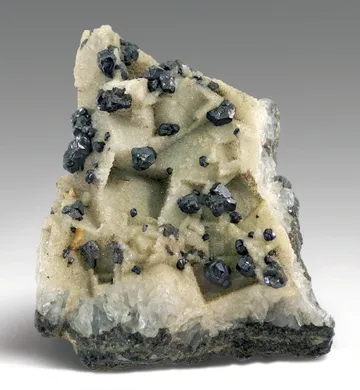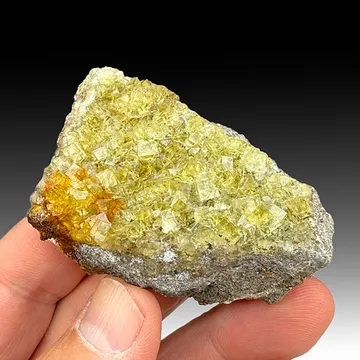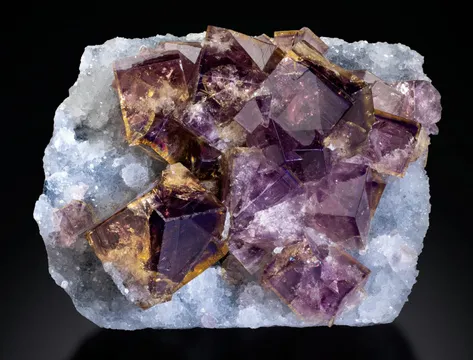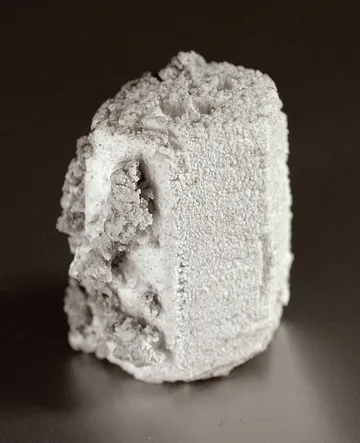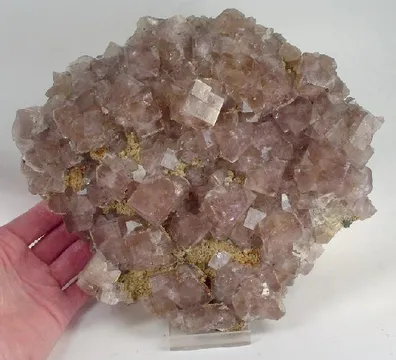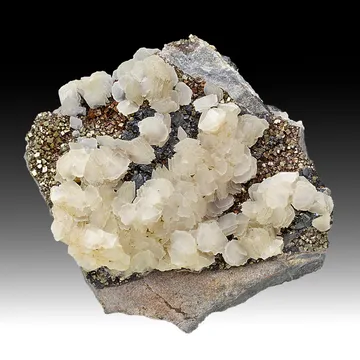
Smallcleugh Mine, UK - a classic Nenthead locality famed for galena, sphalerite, and calcite-rich flats; distinctive, vuggy ore bodies prized by collectors.
Key facts
Smallcleugh Mine is one of the classic collector localities of the Nenthead district, high in the North Pennines of Cumbria, and it matters for a reason that goes beyond attractive lead-zinc specimens. The mine exposes one of Britain’s best accessible examples of lead- and zinc-rich “flat” mineralization: stratabound metasomatic replacement deposits in the Carboniferous Great Limestone, developed between the Smallcleugh and Handsome Mea cross veins. Instead of producing only the narrow vein specimens familiar from many Pennine mines, Smallcleugh opened into broad, vuggy, bed-parallel ore bodies where galena, sphalerite, quartz, calcite, and iron-bearing dolomite-group carbonates grew in cavities left by replacement, dissolution, and volume loss in the limestone.
Regional View
Country View
For collectors, the look of Smallcleugh is distinctive: dark, metallic galena crystals, commonly isolated or grouped on sugary quartz and pale carbonate; black to brown-black sphalerite crystals, sometimes sharply perched on white calcite-coated fossiliferous matrix; cream saddle-shaped carbonate crystals traditionally labelled “ankerite” or “dolomite”; and occasional delicate post-mining sulphate and carbonate crusts that belong more to the micromount cabinet than the display shelf. The best specimens have a restrained, northern-English elegance rather than flamboyance: bright lead-grey galena against white quartz, black sphalerite sprayed over pale matrix, or quiet cabinet plates that preserve the vug geometry of the flats.

Photo: Helen Wilkinson / Wikimedia Commons
Historically, Smallcleugh belongs to the great Nenthead lead-zinc complex worked by the London Lead Company and later by zinc-focused operators. The Smallcleugh Horse Level appears to have been begun around 1770, with the mine gaining real momentum after London Lead Company work from about 1787 and after discovery of rich flats in the 1790s. In the nineteenth century it became one of the important lead producers of the district; later, as sphalerite became economically attractive, the Nenthead and Tynedale Lead and Zinc Company and the Vieille Montagne Zinc Company worked the area for zinc as well as lead. Underground mining had ceased by the early twentieth century, though dumps in the district were reprocessed for zinc during World War II.
Search for specimens: View all specimens from Smallcleugh Mine, UK
Smallcleugh Mine lies about half a kilometre east of Nenthead village, with the Horse Level entrance recorded around NY 7877 4290 and the broader mine locality commonly given near NY 788430. It is part of the Alston Moor sector of the Northern Pennine Orefield, where Carboniferous limestones, sandstones, mudstones, and thin coals overlie older basement and are cut by a dense pattern of mineralized faults. The important host at Smallcleugh is the Namurian Great Limestone, a thick, dark grey bioclastic limestone in which beds and shaly partings helped control the development of replacement mineralization.
The deposit is best described as vein-related, stratabound Pb-Zn replacement mineralization: the “Smallcleugh Flats” or “Handsome Mea Flats.” These flats occur in a horst-like block in the Great Limestone between the Smallcleugh Cross Vein and the Handsome Mea Cross Vein, a structure reported up to about 213 m wide, with the flats extending for roughly 1.1 km in the up-faulted ground. Unlike the fluorite-rich heart of Weardale or the baryte-rich outer zones of the orefield, Smallcleugh occupies an intermediate part of the North Pennine mineral zoning, where fluorite and barium minerals are uncommon to absent in the main flat assemblage and the chief gangue is quartz plus dolomite-group carbonate, historically called ankerite.
The ore-forming sequence is crucial to understanding the specimens. First, hot saline fluids altered the limestone, replacing it with iron-bearing dolomite-group carbonate, siderite, and fine silica. This made the rock hard, dark, and crystalline; collectors and underground geologists alike note that some of the altered limestone is tough enough to spark under steel. That alteration also generated porosity and vugs. Later lead- and zinc-bearing fluids deposited galena and sphalerite, commonly after the main carbonate alteration, along with quartz and later calcite in open cavities. Many vugs are small, but vugs over a metre across have been recorded in the flats, and the mine walls still expose bands and lenses of coarse galena and sphalerite in altered limestone.
Mining history begins with the Smallcleugh Horse Level, apparently started about 1770, probably in pursuit of the continuation of veins known elsewhere in the Nenthead system. The London Lead Company was the dominant nineteenth-century operator after work resumed in earnest around 1787. The first major flat deposits are recorded as having been discovered in the 1790s, and these rich, bedded replacement bodies became the economic heart of the mine. Published production figures are incomplete: Sir Kingsley Dunham recorded 4,999 tons of lead concentrates for 1848–1882, while noting that this was probably only a fraction of the true yield from the extensive flats. In 1882 the London Lead Company surrendered its Nenthead leases to the Nenthead and Tynedale Lead and Zinc Company, and in the 1890s the leases passed to the Belgian Vieille Montagne Zinc Company. A brief modern attempt to assess further ore reserves took place in 1963, but no significant renewed mining followed.
Smallcleugh’s named workings matter to specimen provenance. Collectors will encounter labels citing the Handsome Mea Flats, Smallcleugh Flats, North End Flats, Hydraulic Shaft, Wheel Flats, Zinc Flat, High Flats, Ballroom Flat, Proud’s Sump Flat, Hetherington’s Flat or Crosscut, Old Fan Flats, New Fan Flats, Incline Flats, and other modern explorer names. Not all of these are original mine names; several were coined after objects or features discovered in the workings, such as ore-cart wheels or fan remains. The Hydraulic Shaft area is especially important for sphalerite specimens: black crystals to about 1.5 cm on pale matrix, and rarer fossiliferous matrix coated by white calcite and sprinkled with black sphalerite, were reported from a replacement deposit above it. The flats generally produced the classic Smallcleugh galenas, including single crystals to several centimetres across from cavities in both flats and veins.
Access today is not casual collecting access. The Nenthead mine complex is protected for its geology and industrial archaeology, with parts of the area designated as a Site of Special Scientific Interest and Scheduled Ancient Monument. The Nenthead Mines Conservation Society manages much of the site and offers public and group access to selected areas, but Smallcleugh itself is an extensive, wet, complex abandoned mine with collapses, sumps, unstable ground, and route-finding hazards. Serious collectors should treat historic specimens and documented old finds as the normal route into the locality; any underground visit requires permission, competence, conservation awareness, and proper mine-exploration leadership. Delicate post-mining efflorescences and scientific exposures should not be collected.
The best documented collector find is the 1984 cavity described by Trevor F. Bridges and Roy E. Starkey. It lay on the southwest side of the first Handsome Mea Flat in the North End Flats area, about 60 m from the point where the horse level splits to run parallel with the veins. The opening was letterbox-like, but the emptied cavity measured about 80 cm wide, 50 cm deep, and 15 cm high. It yielded more than 120 loose pieces, from just under 20 cm down to about 10 mm, all entirely covered by primary mineral growth and not attached to the walls or to one another. Its contents—quartz laths and ribs, sphalerite, pyrite, cream saddle carbonates, minor calcite, and slight oxidation products—are one of the most illuminating records of how Smallcleugh’s vug specimens actually formed.
Smallcleugh galena is the locality’s classic display mineral: bright lead-grey crystals and crystal groups from vugs in the strata-bound flats and veins, with individual crystals reported to several centimetres and collector specimens showing sharp cubes, modified cubes, and particularly handsome dodecahedral crystals on white quartz and pale dolomite-group carbonate. The best pieces are not merely lumps of ore but open-vug specimens in which the galena stands cleanly above sparkling quartz or cream carbonate, often with black sphalerite nearby; ordinary pieces tend to be massive, bruised, or embedded in dark replacement rock, while the finest preserve lustre, crystal isolation, and the pale-on-dark contrast that makes Smallcleugh recognizable at a glance.
Smallcleugh sphalerite is typically iron-rich in appearance, forming dark brown to black crystals in the flats, commonly smaller than the galena and often under 1 cm, though exceptional pieces from the replacement deposit above the Hydraulic Shaft produced single complex black crystals to around 1.5 cm on white or pale matrix. Particularly desirable specimens show sharp, lustrous crystals scattered over microcrystalline quartz or white calcite-coated fossiliferous limestone; the rarest Hydraulic Shaft pieces have the almost graphic look of black sphalerite sprinkled on a pale fossil-textured surface, while more ordinary material is dull, crowded, or partly oxidized.
Dolomite from Smallcleugh must be treated carefully because much pale saddle-shaped carbonate from the mine was long labelled “ankerite,” and much material in old collections labelled “dolomite” or “ankerite” may be iron-bearing dolomite-group carbonate without analysis. Modern discussion of Smallcleugh and related North Pennine material shows that samples from streaks parallel to bedding in the Handsome Mea Flats can fall just inside the dolomite field, as Fe2+-rich and Mn2+-bearing dolomite, while other similar-looking saddle carbonates may be closer to ankerite; in hand specimen the desirable pieces are cream to slightly brown, curved rhombs or saddle crystals lining vugs with galena, sphalerite, quartz, or calcite, valued for fresh translucent surfaces and clean associations rather than for large individual crystal size.
Quartz at Smallcleugh is usually a supporting mineral rather than the headline species, but it is central to the best specimens: it forms drusy white to colourless crusts, thin laths, microcrystalline coatings on limestone, and unusual ribs or plates that appear to have formed in cracks before surrounding carbonate rock dissolved away. In the 1984 Handsome Mea cavity, quartz was interpreted as one of the earliest minerals, commonly encrusting rock fragments and occurring as thin pure laths with tiny pyramidal crystals rarely exceeding about 0.2 mm; cabinet-quality quartz specimens from Smallcleugh are therefore prized less for big crystals than for architecture—sparkling substrates carrying galena or sphalerite, or delicate free-standing ribs that record the dissolution history of the flat.
Beyond these collector staples, Smallcleugh has a serious micromineralogical side. Calcite is common in the broader assemblage and occurs as late crusts of minute nailhead crystals; pyrite and local chalcopyrite occur in small amounts; siderite is part of the replacement assemblage; and post-mining chemistry has produced hydrozincite, gypsum, epsomite, and melanterite in humid underground settings. Rarer secondary minerals documented from the mine include annabergite, serpierite, devilline, namuwite, schulenbergite, ktenasite, and brianyoungite, with several reported from old stopes in the Middlecleugh Sun Vein workings within the Smallcleugh system. These rarities are generally micromount or scientific specimens, not robust cabinet pieces, and some are products of oxidation and mine-atmosphere reactions after mining opened the workings.
The main Smallcleugh authenticity problem is not a plague of fakes but labels. Carbonate nomenclature is the trap: old labels saying “ankerite,” “dolomite,” or “dolomite/ankerite” may reflect field tradition rather than analysis. Cream, curved saddle carbonates from the Nenthead flats were historically called ankerite very broadly, but modern mineral nomenclature requires the dominant cation at the relevant structural site to separate dolomite from ankerite. Without analytical data, many Smallcleugh carbonates are best described cautiously as iron-bearing dolomite-group carbonate, or retained under the historic label only with that caveat.
Condition is the second issue. Galena from Smallcleugh is dense and generally stable, but crystals are easily edge-bruised, and a bright dodecahedron with clean faces is much more desirable than a larger but knocked specimen. Sphalerite can have excellent lustre but is commonly partly oxidized or dulled, especially where specimens came from damp mine environments. Quartz coatings are often sugary and can trap iron staining; heavy cleaning risks reducing the natural contrast between galena, sphalerite, and pale matrix. Carbonate crystals may be slightly iron-stained or brown-weathered and should not be over-cleaned into an unnatural chalky surface.
The post-mining minerals need special handling. Epsomite, melanterite, and some other efflorescent sulphates are humidity-sensitive and may dehydrate, dissolve, recrystallize, or contaminate adjacent specimens. Hydrozincite coatings can be powdery or fragile. These are best kept as micromounts or sealed study pieces, away from valuable sulphides and away from fluctuating humidity. Smallcleugh specimens are not bought for fluorescence in the way some fluorite-rich North Pennine localities are, though hydrozincite from zinc-rich environments may be worth checking under ultraviolet light when present.
On the market, Smallcleugh is available but not common in the way old Derbyshire or Weardale fluorite is common. Good galena and sphalerite pieces appear from old British collections, historic dealer stock, and more recent documented collections, with the best Hydraulic Shaft sphalerites and sharply isolated galena-on-quartz specimens attracting stronger interest. Micromount rarities are much harder to evaluate without provenance and analysis; names such as namuwite, schulenbergite, ktenasite, serpierite, and brianyoungite should be treated skeptically unless supported by reliable determination or an old, well-documented specialist collection.
The story that has made Smallcleugh famous beyond mineral collectors is the underground dinner in the Ballroom Flat. On September 2, 1901, twenty-eight members of a local Masonic lodge gathered not in a hotel dining room, but in a vast mined-out flat deep inside the Nenthead workings. The chamber had been opened because the ore there lay in a broad replacement body rather than a narrow vein, and enough rock had been removed to leave a space remembered ever since as the Ballroom. Modern visitors who have reached it describe a place difficult to light and hard to scale in photographs, with one explorer estimating walls around 20 feet high.
Getting there remains part of the legend. A 2013 exploration account set out with the Ballroom as the target, passing the Old Fan Flat, crawling through the Gullyback Crosscut into Smallcleugh Main Flat, stopping in the Main Flat to drink water and check the map, and then pushing through named passages, ore chutes, junctions, and the Wheel Flat. The first attempt ended short of the goal after two and a half hours underground, with major collapses ahead, a safety call deadline approaching, and energy running out. On a later trip the explorers reached the Ballroom by another route, but only after “a lot of hands and knees crawling.”
Another modern trip captures the mine’s strange mixture of industrial archaeology, hardship, and domestic absurdity. Paul Lydon’s 2011 account describes passing impressive dry-stone arching, squeezing through a partially blocked section, and heading toward the Ballroom Flats, only to meet a group with children whose adult guide apologised because they had been cooking bacon sandwiches underground. The smell of bacon filled the approach to the Ballroom; the author, hungry by then, had only a Mars Bar. The same trip continued past collapses, shallow water, sumps, and a memorable traverse on two old rails over a hole about 4 m deep, the rails supported by two timbers covered in fungal growth.
For mineral collectors, the 1984 cavity discovered by Trevor F. Bridges and Roy E. Starkey is the more important story. In the North End Flats area, about 60 m from the split in the horse level, they found a low, letterbox-shaped opening in the southwest side of the first Handsome Mea Flat. Behind it was a cavity only 15 cm high, yet it contained more than 120 loose pieces, all mineralized on every side and unattached to the walls or each other. Some were nearly 20 cm across; others were about 10 mm. The find was not a spectacular “pocket” in the American gem-mining sense, but something scientifically better: a compact record of how replacement, dissolution, fracture, and crystal growth operated inside the Smallcleugh flats.
The specimens from that cavity told their story in two-sided form. One side of a loose plate could be pristine, with quartz and cream carbonate that had once faced open space; the reverse might show rock with a thin crust of pyrite and carbonate, interpreted as the upper side after detachment. Another specimen had radiating ribs of quartz standing proud from the surface, probably because quartz filled cracks in the rock, after which the surrounding carbonate dissolved away. A thin quartz lath partly encrusted with sphalerite gave the same impression: mineral first, rock removed later, the piece freed into the cavity as the chemistry changed. The authors even proposed that strongly saline hydrothermal brines may have provided enough buoyancy for continued crystal growth without cementing the loose fragments together.