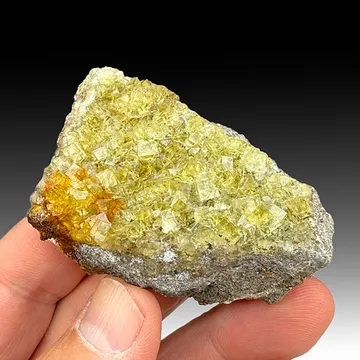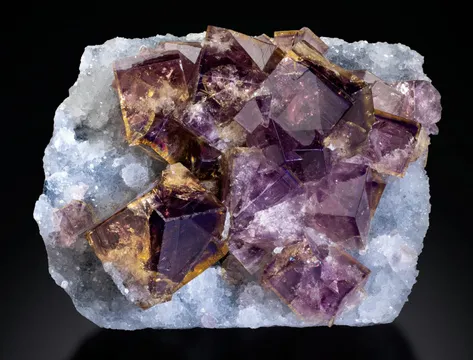
Alston Moor, UK - a classic Northern Pennine locality known for fluorite, barytocalcite and alstonite, with diverse ore geology and appealing collector specime…
Key facts
Alston Moor is one of the great classical names of the Northern Pennine Orefield: a high, wind-polished lead-zinc-fluorite-barium mining country around Alston, Garrigill, Nenthead, the Nent valley, Black Burn and the eastern flank of Cross Fell. For collectors, its importance lies in the way industrial ore geology and specimen mineralogy overlap. The mines worked steep veins and limestone-hosted replacement bodies, locally called flats, in Carboniferous limestones, sandstones and shales of the Alston Block. The best cavities were not random cracks but open spaces produced by faulting, repeated brecciation, dissolution of limestone and hydrothermal replacement, later lined by fluorite, galena, sphalerite, quartz, barite, witherite, ankerite, siderite and calcite.
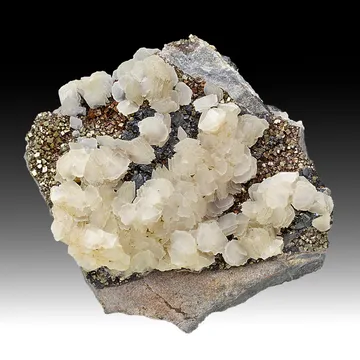
Alston Moor sits at a particularly instructive part of the orefield’s mineral zoning. Fluorite-rich deposits of the central zone overlap and give way toward barium-rich assemblages in which barite, witherite, barytocalcite and alstonite become important. That transition is why an old Alston Moor cabinet may contain purple fluorite from Rotherhope Fell, black sphalerite on white calcite from Smallcleugh, honey or grey-white barytocalcite from Blagill, white bipyramidal alstonite from Brownley Hill, and witherite from Nentsberry Haggs or Brownley Hill under the same broad locality tradition. Few British districts can offer that range while also carrying two historic type-locality claims of real mineralogical weight: barytocalcite at Blagill Mine and alstonite at Brownley Hill Mine, the latter shared with Fallowfield Mine in Northumberland.
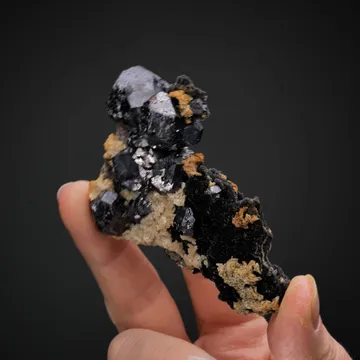
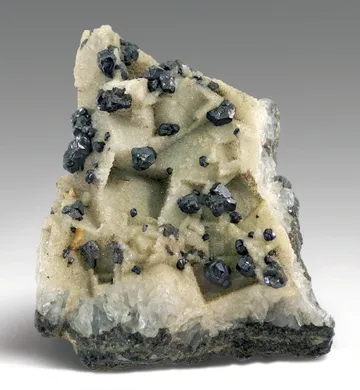
The appearance of the best specimens is distinctively Northern Pennine but less familiar to many collectors than Weardale. Rotherhope Fell fluorites can be lilac to purple, sometimes twinned, and may sit on lustrous black galena or sugary quartz. Rampgill pieces are admired for fluorite with black sphalerite, quartz epimorphs after fluorite, late siderite dustings and the occasional barium-mineral overprint. Smallcleugh’s classic look is darker and more textural: iron-rich sphalerite, galena, ankerite and calcite in cavities and flats, including fossiliferous material coated by calcite and sprinkled with black sphalerite. The barium-carbonate suite is quieter in colour but far rarer: witherite, barytocalcite and alstonite specimens from Alston Moor are the kind of pieces that make a British systematic cabinet feel serious.
Regional View
Country View

Photo: Wikimedia Commons
The locality name needs to be read with a collector’s caution. “Alston Moor” on an old label may mean the civil parish, the historical manor, or the wider Alston Moor mineral district used by nineteenth- and twentieth-century dealers. Fine specimens are often best understood by their specific mine: Rotherhope Fell, Rampgill, Smallcleugh, Brownley Hill, Nentsberry Haggs, Blagill, Tynebottom, Ayle Burn, Scraithole or one of the smaller levels and veins. A broad “Alston Moor” label is not worthless—many old cabinets used it honestly—but a mine-specific label adds both scientific and market value.
Search for specimens: View all specimens from Alston Moor, UK
The Alston Moor deposits belong to the Northern Pennine Orefield, a classic fluoritic Mississippi Valley-type district developed on the Alston Block. The host succession is a Carboniferous cyclothemic pile of limestones, sandstones, mudstones and thin coals resting above older basement and the hidden Weardale granitic batholith. The economically important lodes occupy steep fractures and faults, especially east-north-east, north-north-west and east-west vein sets. In hard limestones and sandstones the fissures opened cleanly enough to produce workable veins and crystal-lined cavities; in shale they tended to pinch, swerve or close. Where mineralizing fluids reacted with limestone adjacent to veins, they created horizontal replacement bodies—the flats—that were essential both to ore production and to specimen formation.
The mineralization is zoned. Central parts of the orefield are fluorite-rich and commonly carry quartz, galena, sphalerite, pyrite, marcasite and local chalcopyrite. Toward the outer and transitional zones fluorite gives way to barium minerals: barite, witherite and, at a few celebrated localities, barytocalcite and alstonite. Alston Moor’s best-known mines fall across this transition. Rotherhope Fell, on the Black Burn side, is strongly associated with fluorite; Rampgill shows a mixed fluorite-sphalerite-quartz assemblage with witherite and barite in places; Brownley Hill and Nentsberry Haggs are central to the barium-carbonate story; Blagill is the definitive barytocalcite mine.
The paragenesis is not a single tidy sequence repeated everywhere, but several features recur. Early alteration of limestones produced dolomite and ankerite, often with vuggy porosity. Main-stage mineralization deposited fluorite, quartz and sulphides, especially galena and sphalerite, in veins, vugs and replacement bodies. Later, cooler fluids introduced barite and related barium-rich assemblages in the outer parts of the system. The Alston Block as a whole produced enormous tonnages: lead, zinc, fluorite, barite and witherite were all worked commercially, with the stratabound flats contributing a significant share of the ore output as well as some of the most interesting specimens.
Mining was underway very early by British standards. Documentary evidence places mining on Alston Moor in the twelfth century, and medieval workings formed part of the “mines of Carlisle.” By the eighteenth and nineteenth centuries the district was a major lead producer. Greenwich Hospital controlled extensive mineral rights, and the London Lead Company became the dominant operator in the Nenthead area, especially after mid-eighteenth-century leases. At Nenthead the Rampgill Vein was discovered in 1690, the Rampgill Horse Level became one of the great access levels, and the mines, dressing floors, smeltmill, dams, leats, tramways and workshops developed into one of the most complete surviving lead-mining landscapes in the North Pennines.
The London Lead Company period is followed in many mine histories by a zinc chapter. As high-grade lead ore declined and zinc became more important, the Nenthead and Tynedale Lead and Zinc Company, then the Belgian Vieille Montagne company, took over major leases. Vieille Montagne arrived on Alston Moor in 1896 and used Nenthead as a technologically ambitious zinc-mining and ore-dressing centre. Zinc ore and any recovered lead were sorted, crushed and cleaned at Rampgill Mill, then shipped onward to the company’s works in Belgium. At its height the company’s Alston Moor and West Allendale operations supplied a major share of UK zinc output.
Rotherhope Fell Mine, also known as Rodderup Fell, is one of the essential collector localities. It worked veins and flats on Smittergill Hill Sun Vein, Rotherhope Fell Vein, Rotherhope Cleugh Sun Vein, Crag Green North Vein and Dowpot Sike Vein. Vieille Montagne purchased the lease in 1900. Recorded production includes substantial lead ore between 1913 and 1947 and a lifetime fluorspar output reported in the tens of thousands of tonnes. Underground lead working ceased in 1948, after which dump material was removed for fluorspar processing. The best fluorites are said to have come from flats in the Tyne Bottom Limestone below the Blackburn Level horizon, now flooded; important suites, especially 1930s material, are preserved in major institutional collections.
Smallcleugh Mine, just south-east of Nenthead, is a different sort of classic. Developed from 1770, it worked veins and flats associated with the Handsome Mea and Smallcleugh veins and later became a prolific source of collector material after access was regained. Smallcleugh is famous for galena, sphalerite, ankerite and calcite, with quartz, pyrite, dolomite and rarer secondary minerals. One of the best-known specimen-producing zones was the replacement deposit above the Hydraulic Shaft, discovered in the 1970s by David Lloyd and Richard Barstow when testing a level wall for hollow ground. The cavity yielded unusual fossiliferous specimens coated by white calcite and sprinkled with black sphalerite crystals.
Rampgill Mine is one of Nenthead’s most extensive and productive mines, and its portal lies close to the Nenthead Mines heritage area. Collectors know it for fluorite with sphalerite, galena and quartz; for quartz epimorphs after fluorite, sometimes with renewed fluorite growth; and for witherite, siderite, calcite, ankerite, barite and other carbonates in the mixed assemblage. Modern exploration and preservation work has kept parts of the mine in the collecting conversation, but underground access remains hazardous and controlled.
Brownley Hill Mine, reached by the Bloomsberry Horse Level, was not one of the mines developed by the London Lead Company in the same way as the core Nenthead operations, but mineralogically it is among the most important places on Alston Moor. Its veins include Carrs Vein, Wellgill Cross Vein, Brownley Hill Moss Cross Vein, West High Cross Vein, High Cross Vein and Jug Vein, with replacement orebodies associated with Middle Vein and nearby structures. Alstonite came from the High Cross Vein area, notably Holmes Rise, and the mine is also the type locality for brianyoungite. Vieille Montagne worked Brownley Hill for zinc from 1914 until 1936.
Blagill Mine, on the south side of Newshield Moss between the Nent and South Tyne valleys, is the barytocalcite locality. It was first a lead mine, perhaps with very old workings, but became exceptional in the nineteenth century as a commercial producer of barytocalcite. The principal veins included Slote, Thorngill-Lough, Shildwell or Whitwell, and Fistas Rake or Blagill Old, with smaller strings also tried. Once higher-barium witherite from nearby Nentsberry became available, Blagill’s commercial advantage faded, and no production is recorded after 1895. Today the site is protected as an SSSI and should be treated as closed to casual collecting.
Collecting access today is not the nineteenth-century free-for-all romanticized by old labels. Many workings are collapsed, flooded, gated, protected, on private land, scheduled as monuments, within SSSI boundaries, or accessible only through properly organized mine-exploration or conservation groups. Spoil heaps have also been reworked repeatedly for ore, fluorspar and collector material, so modern finds are usually isolated and modest compared with the great historical pockets. Serious collectors should buy well-provenanced specimens, respect landowner and conservation restrictions, and regard underground entry as a specialist activity requiring permission, competence and local guidance—not as specimen hunting.
Alston Moor fluorite is best represented by Rotherhope Fell and Rampgill material, with additional occurrences around Brownley Hill, Smallcleugh and other Nenthead mines. Rotherhope Fell produced the district’s most admired fluorites: lilac to purple cubes, locally twinned, sometimes with galena, quartz, pyrite or calcite, and occasionally showing the old Northern Pennine combination of translucent colour and slightly frosted faces. The finest pieces came from flats in the Tyne Bottom Limestone below Blackburn Level, a now-flooded source that explains why good Rotherhope fluorites are much less available than their reputation suggests. Rampgill fluorite is often paler yellow to purple and is prized when associated with black sphalerite, quartz casts after fluorite, siderite dustings or late barite; it can show purple fluorescence under longwave ultraviolet light. Good Alston Moor fluorite is judged by mine-specific provenance, undamaged cubic or twinned form, depth and zoning of colour, contrast with black sulphides or white quartz, and whether the piece preserves the matrix-and-association character rather than being a loose cleaved cube.
Sphalerite from Alston Moor is typically iron-rich, dark brown to jet black, and is a major collector species especially from Smallcleugh, Rampgill, Brownley Hill and Nentsberry Haggs. Smallcleugh is particularly important: dark sphalerite is extremely common there, occurring with quartz, calcite, dolomite, ankerite, galena, fluorite and siderite, and the best pieces show sharp complex crystals rather than merely massive ore. The Hydraulic Shaft replacement deposit produced highly distinctive specimens in which fossils in the limestone were coated with white calcite and sprinkled with black sphalerite crystals to about 1 cm, a style immediately recognizable to collectors of British classics. Rampgill sphalerite is also well known as black crystals with quartz and ankerite, often in association with fluorite and galena. Superior Alston Moor sphalerites combine bright lustre, discrete crystal form, strong contrast against white calcite or pale dolomite, and a precise mine or pocket attribution; dull massive blende without crystal faces is common ore material and far less desirable.
Quartz is not the glamour species of Alston Moor in the way fluorite and the barium carbonates are, but it is central to several of the district’s most diagnostic specimen styles. At Rampgill, quartz epimorphs after fluorite are a classic habit: cubic shells and casts marking the former position of fluorite, sometimes with later regrowths of fluorite, siderite and sphalerite. In the vein and flat assemblages quartz commonly occurs with galena, sphalerite, ankerite, calcite and fluorite, and in some deposits it belongs to the main fluorite-quartz-sulphide stage. Smallcleugh quartz appears in the dark sulphide-carbonate assemblage and can act as the matrix for sphalerite, galena and ankerite. Good Alston Moor quartz is therefore not usually collected as large freestanding rock-crystal points; it is valued when it documents local paragenesis—especially sharp cubic epimorphs after fluorite, sparkling quartz crusts on fluorite or sulphide plates, and pieces where quartz gives structure and contrast to black sphalerite or grey galena.
Galena was the economic backbone of Alston Moor mining and occurs throughout the district, but collector-grade crystals are most appreciated from Smallcleugh, Rampgill, Brownley Hill, Rotherhope Fell and related Nenthead workings. Smallcleugh galena is recorded as grey cubic to cubo-octahedral crystals, commonly around the 2.5 cm range, with reputed crystals to 10 cm from large cavities in replacement orebodies; it is associated with ankerite, sphalerite, pyrite, calcite, chalcopyrite, dolomite, siderite and rarer species. Rampgill galena occurs as grey cubes with sphalerite and fluorite, and Rotherhope Fell specimens can show bright black galena crystals as a dramatic matrix for purple fluorite. The best galena specimens from Alston Moor have sharp modified cubic form, fresh metallic lustre, and association with fluorite, sphalerite, calcite or witherite; ordinary pieces are heavy blocks of lead ore with bruised faces, oxidation, or little specimen architecture.
Calcite at Alston Moor is widespread but highly variable in specimen quality, occurring in the vein and flat assemblages at Smallcleugh, Rampgill, Brownley Hill, Rotherhope Fell and other mines. It appears as white coatings, pale crystals, late cavity linings and carbonate matrix for sphalerite, galena, quartz, ankerite and fluorite. Smallcleugh’s Hydraulic Shaft material is the most locality-specific collector style: fossils coated by white calcite and sprinkled with black sphalerite crystals, a combination valued far beyond ordinary calcite because it records replacement-mineralization textures in the Great Limestone. At Rampgill and associated Nenthead mines calcite may fluoresce red under shortwave ultraviolet and can phosphoresce, especially when discussed alongside witherite. Good Alston Moor calcite is judged less by large isolated crystals than by association, freshness and context—bright white calcite carrying sharp sphalerite or galena, calcite in barium-carbonate assemblages, or calcite that clearly belongs to a named cavity or flat.
Siderite is part of the iron-carbonate alteration and gangue story of the Alston Block and is recorded from Brownley Hill, Smallcleugh, Rampgill and other Alston Moor workings. In the wider orefield, sideritisation and ankeritisation of limestone were important processes, and oxidation of iron carbonates produced workable limonitic iron ores in some flats. As a collector mineral here, siderite is usually subordinate: small brown rhombs, coatings, or dustings on fluorite, quartz, sphalerite and calcite rather than large showy crystals. Rampgill specimens are especially worth watching for, because pale fluorite cubes may be partly coated with minute dark siderite crystals, and quartz epimorphs after fluorite can carry later siderite with sphalerite and renewed fluorite. Good Alston Moor siderite is a context mineral—best when it sharpens the paragenetic story and adds colour contrast without obscuring the fluorite or sulphide crystals.
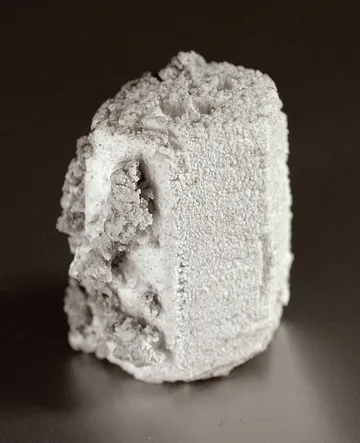
Witherite is one of the minerals that gives Alston Moor its international significance, because the Alston Block is one of the few regions where BaCO3 was abundant enough to be mined commercially. On Alston Moor it is best associated with Nentsberry Haggs, Brownley Hill, Rampgill, Blagill and related barium-zone deposits. Rampgill witherite is recorded as abundant, mostly massive and colourless to brown, with barrel-shaped radiating masses up to about 15 cm across and rudimentary hexagonal cross-sections in cavities. Nentsberry Haggs produced important witherite specimens during later barium and zinc working, and Brownley Hill witherite is mineralogically important for its association with alstonite and barytocalcite. Witherite may fluoresce white under shortwave ultraviolet and phosphoresce; collectors should also remember that witherite is a barium carbonate and should be handled sensibly, kept away from acids, and not abraded or ingested. The best specimens have distinct pseudohexagonal or radiating habit, clean surfaces, a named mine, and association with alstonite, barite, galena or sphalerite.
Barite—usually labelled “baryte” in British sources—is common in the barium-rich parts of the Alston Moor assemblage and becomes especially important around Brownley Hill, Nentsberry Haggs, Blagill and the fluorite-barium transition near Rampgill. In the broader Alston Block, barite is a late-stage mineral in many deposits and may overgrow or replace earlier phases. At Rampgill, purple fluorite cubes can be coated with globular secondary barite, vividly demonstrating the local overlap between the fluorite and barium zones. At Nentsberry Haggs, barite pseudomorphs after alstonite up to about 2.5 cm are recorded with sphalerite, galena and witherite. Blagill barytocalcite specimens are commonly on barite-rich matrix, tying barite directly to the district’s type-locality history. The most collectible barite specimens are not simply massive white heavy spar; they show bladed, tabular, globular or pseudomorphic habits and clear association with fluorite, witherite, barytocalcite, alstonite or sulphides.
Pyromorphite is not one of the dominant Alston Moor species, but it occurs as part of the district’s supergene lead-mineral suite and is sought mainly by locality specialists rather than by collectors expecting large Caldbeck-style displays. In the old lead workings and oxidized portions of veins, pyromorphite may occur as green to yellow-green crusts, small barrel-shaped to prismatic crystals, or earthy coatings with quartz, galena alteration products, iron oxides, cerussite and other secondary minerals. Specimens attributed broadly to Alston Moor should be checked carefully against mine-specific labels, because northern English pyromorphites from Caldbeck Fells, Dufton, Weardale and other districts can be confused in old collections. Good Alston Moor pyromorphite is valued for reliable provenance, visible crystal habit under magnification, and association with recognizably local matrix; massive green films on anonymous lead-mine quartz are best treated as locality pieces until the label can be strengthened.
Other minerals documented from Alston Moor include ankerite, dolomite, aragonite, cerussite, anglesite, smithsonite, hydrozincite, gypsum, pyrite, marcasite, chalcopyrite, bournonite, millerite, ullmannite, native sulphur, harmotome, strontianite, erythrite, brochantite, malachite, serpierite, melanterite, epsomite and several rare or locality-sensitive secondary species. The type-locality minerals are especially important: barytocalcite from Blagill Mine; alstonite from Brownley Hill Mine, shared historically with Fallowfield Mine; and brianyoungite from the Bloomsberry Horse Level of Brownley Hill Mine. Brownley Hill also produced the first UK occurrence of bottinoite as small platy crystals, and Smallcleugh and Brownley Hill are tied to work on the zinc analogue of ktenasite. For systematic collectors, the district’s quieter rarities can be as significant as its showier fluorite.
The first authenticity issue is locality precision. “Alston Moor” is a legitimate old collecting label, but it is broad. A specimen from Rotherhope Fell, Rampgill, Smallcleugh, Brownley Hill, Nentsberry Haggs or Blagill is more informative than one labelled only “Alston Moor,” and old dealer labels sometimes used the district name for material from mines around the edges of the historical moor. Conversely, modern relabelling can become too specific when sellers assign a mine name from appearance alone. Purple fluorite with galena may suggest Rotherhope Fell, black sphalerite on white calcite may suggest Smallcleugh, and witherite or alstonite may suggest Brownley Hill or Nentsberry Haggs, but visual style should not replace documentation.
The second issue is confusion with other northern English localities. Weardale fluorites, especially from Boltsburn, Heights, Blackdene, Rogerley and later commercial operations, are far better known internationally and sometimes resemble Alston Moor material to non-specialists. Caldbeck Fells and Dufton pyromorphites can be more attractive than Alston Moor pyromorphite and should not be casually accepted as Alston Moor without a strong label. Witherite has an additional historical complication: Alston Moor was long repeated as the type locality in older literature and labels, but modern work has challenged that assumption for the earliest witherite discovery, separating the historical type-locality story from genuine, well-documented Alston Moor witherite specimens.
No major, long-running class of treated or manufactured Alston Moor specimens is comparable to the known problems in some global specimen markets, but repairs and restorations are plausible in old British material, especially fluorite plates, barytocalcite sprays and fragile witherite groups. Examine purple fluorites for reattached cubes, filled contacts, bruised corners and cleaved edges. Sphalerite-rich plates often suffer from edge chipping and abrasion to the brightest faces. Galena can be bruised, dulled or altered on exposed corners. Barytocalcite and alstonite are rarer and more delicate than they look; old specimens may have broken terminations, lost crystals or later glue repairs from cabinet accidents.
Condition expectations should be species-specific. A fine Rotherhope Fell fluorite should have recognizable cubic or twinned form, reasonable lustre, and limited edge wear; a little bruising is common but should be reflected in price. Smallcleugh sphalerite should have bright faces and strong contrast; dull black granular ore is not the same thing. Witherite, barytocalcite and alstonite are best judged under magnification, where broken pyramids, rubbed blade edges and powdery alteration are easier to see. Some barium-carbonate specimens are old and historically important even when visually modest, but they need honest condition descriptions.
Fluorescence is a useful supporting feature, not a certificate of origin. Rampgill fluorite can fluoresce purple under longwave ultraviolet, and witherite may fluoresce white under shortwave ultraviolet and phosphoresce. Calcite from the district may show red shortwave fluorescence. These responses help characterize a specimen but are not unique to Alston Moor. Handle barium carbonates carefully, keep them away from acids, wash hands after handling powdery material, and avoid any action that could create ingestible dust.
Market availability is uneven. Smallcleugh sphalerite, galena and calcite combinations still appear with some regularity, though truly aesthetic pieces are much scarcer than ordinary mine material. Rampgill fluorite-sphalerite-quartz combinations and quartz epimorphs after fluorite are desirable and not abundant. Rotherhope Fell fluorite is distinctly scarcer, especially old, well-coloured, undamaged purple examples with galena or quartz matrix. Blagill barytocalcite, Brownley Hill alstonite and good Nentsberry Haggs witherite are specialist classics; they may be small or visually quiet, but strong provenance can make them more important than larger display minerals from common localities.
At Smallcleugh, one of the most repeated stories is not about a geologist with a hammer but about a wall that sounded wrong. In the 1970s, David Lloyd and Richard Barstow were exploring the mine when Lloyd tested the level wall for hollow sounds that might betray a hidden cavity. Part of the wall collapsed inward, opening a replacement deposit above the Hydraulic Shaft. The discovery was not just another vug of sphalerite: the deposit contained fossils coated in white calcite and sprinkled with black sphalerite crystals to about 1 cm. In a district already crowded with old lead-mining stories, that single accident of sound and stone created one of Smallcleugh’s most recognizable modern specimen styles.
Smallcleugh also has a social history as memorable as its mineralogy. In 1901, the local Masonic Lodge held a dinner underground in the so-called Ballroom Flats. The name alone has become part of the mine’s mythology: a worked-out subterranean space large enough to be remembered not as a stope or flat, but as a ballroom. For collectors who know only cabinet specimens, the story gives scale to the Smallcleugh flats—these were not merely narrow mineralized seams, but limestone-hosted spaces large enough to become part of community life after the ore had been won.
At Nenthead, the landscape reads like a machine spread across a valley. The Rampgill Horse Level began with the 1690 discovery of the Rampgill Vein, and by the London Lead Company period it formed part of an organized industrial complex of levels, dressing floors, workshops, leats, dams, tramways and a smeltmill. The first Nenthead smeltmill was built in 1737 and redesigned in 1745 after the London Lead Company took the site. In 1796 Cornish stamps were introduced to crush ore. A long flue ran about 1.1 km to a chimney on the fell, and in 1843 a Stagg condenser was added to recover lead from fumes. The mineral specimen and the ruined stonework belong to the same story: every cube of galena and every black sphalerite plate was once part of a landscape engineered to separate, crush, wash, smelt and ship metal.
Vieille Montagne changed the tone of Alston Moor mining when it arrived in 1896. The Belgian company did not come as a small local partnership but as an international zinc enterprise, buying leases, mines, royalties, mills, works and machinery. At Nenthead it brought capital, modern plant and workers of several nationalities, including Belgian, German and Italian miners and technicians. Zinc ore and recovered lead were cleaned at Rampgill Mill and then sent by road, rail and sea to Belgium. The company remained through two world wars and the inter-war depression, finally selling its leases, plant and equipment and leaving in 1949 after fifty-three years. The black sphalerites in modern cabinets are the mineralogical memory of that zinc chapter.
Blagill’s story is unusually specific: it is not just a lead mine that happened to yield a rare mineral, but a mine that became commercially tied to barytocalcite itself. The locality had older lead workings, perhaps reaching back to the fourteenth century, yet by the nineteenth century its unusual barium-calcium carbonate had become the product that made it unique. Then the market shifted. When higher-barium witherite from nearby Nentsberry became available, demand for the inferior Blagill material declined, and production records cease after 1895. A Blagill barytocalcite specimen is therefore more than a rare carbonate; it is a relic of a short-lived chemical-industrial niche that almost nowhere else in the world could have occupied.