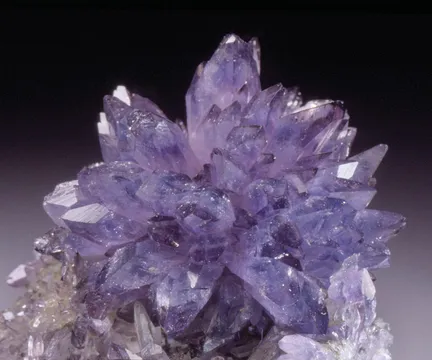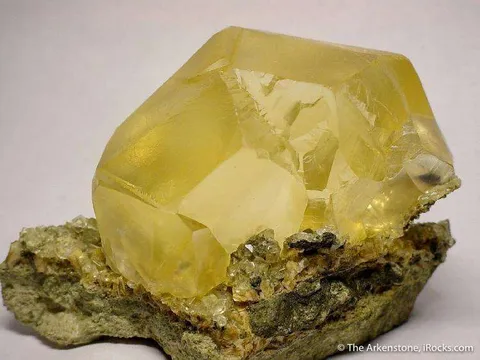
Sarbai Deposit, Kazakhstan - famed for golden calcite twins, orange stellerite balls, pink chabazite, and rare silver-bearing veins, a top collector locality.
Key facts
Sarbai is one of those rare localities whose specimen reputation grew out of a mine built for something entirely different. Industrially, it is a giant magnetite skarn iron deposit at Rudny in Kostanay Region, northern Kazakhstan, part of the Sokolov-Sarbai mining district of the Turgai belt. To collectors, however, “Sarbai” means a distinctive late-stage suite: golden, gemmy, complexly twinned calcite; bright orange to honey stellerite balls and sheaves; salmon-pink chabazite and related zeolites; and a much rarer silver-bearing vein assemblage that includes native silver, acanthite, dyscrasite, proustite, pyrargyrite, pearceite-group minerals, and the type-locality mineral cupropearceite.
The geological setting matters because it explains the odd pairing of iron-skarn scale and delicate pocket minerals. Sarbai’s main ore is magnetite formed by replacement of Carboniferous limestones, calcareous tuffs, and volcaniclastic rocks, with diopside, grossular-andradite garnet, actinolite, epidote, apatite, albite, scapolite, chlorite, calcite, pyrite, pyrrhotite, and chalcopyrite marking the skarn and sulfide overprints. Later hydrothermal episodes opened fractures and cavities that collectors know best: calcite-rich veins, zeolite pockets, and silver-bearing fissures superimposed on an enormous iron-ore system.
The best Sarbai calcites are instantly recognizable: sculptural, interpenetrating, golden-yellow twins, often transparent to gemmy, with a mixture of glassy and faintly frosted faces. The zeolites have an equally characteristic look. Stellerite forms lustrous orange balls and radiating sheaves, sometimes perched on small stilbite blades or surrounded by clear calcite, while chabazite occurs as sharp pink to salmon pseudo-cubic crystals that make vivid color contrasts with the stellerite. The silver specimens are a different collecting world: small but dramatic curling wires, dendrites, and silver-acanthite combinations from silver-bearing veins, old enough and scarce enough that provenance and correct labeling matter.
Regional View
Country View
Sarbai’s modern collector importance rests on several overlapping histories. It is a major Soviet and post-Soviet iron mine, a source of memorable 1990s calcite and zeolite finds, and a serious micromineralogical and ore-mineral locality because of the silver-bearing veins described by Igor Pekov and V. Yu. Karpenko and later cupropearceite work by Luca Bindi and coauthors. That combination is unusual: the same mine can satisfy a calcite specialist, a zeolite collector, a silver collector, and a systematic collector looking for a genuine type-locality sulfosalt.
Search for specimens: View all specimens from Sarbai Deposit, Kazakhstan
Sarbai lies near Rudny in Kostanay Region, in northern Kazakhstan, within the Valerianovka arc of the southern Urals. Together with the Sokolov and Kachar deposits it forms the best-known part of the Turgai magnetite belt, a district of giant iron-skarn deposits developed in Carboniferous volcanic, volcaniclastic, and carbonate rocks. The Sarbai-Sokolov intrusive series, made up principally of gabbroic to dioritic and granodioritic rocks, is spatially associated with the district, but the Sarbai ore bodies themselves are replacement bodies rather than simple contact ores sitting directly against a single intrusive wall.
The Sarbai ore system is a limestone-replacement magnetite skarn. The mineralization replaced a several-hundred-metre-thick package of bituminous limestones, calcareous tuffs, and tuffaceous sedimentary rocks of the Valerianovka Supergroup. The ore is described as conformable to the host fabric, with bedding-like magnetite layers inherited from the sedimentary and volcano-sedimentary rocks it replaced. That replacement texture is more than an academic point: Sarbai’s mineral specimens come from a mine where the late, open-space minerals are superimposed on a chemically active, strongly altered carbonate-volcanic pile, not from a simple basalt-amygdule zeolite locality or an ordinary carbonate vein mine.
The principal ore mineral is magnetite, accompanied by pyrite, pyrrhotite, and chalcopyrite. The skarn assemblage includes diopside, calcic garnet in the grossular-andradite range, epidote, actinolite or related calcic amphiboles, apatite, titanite, calcite, chlorite, albite, and scapolite. Sarbai also shows broad sodic alteration, notably albite and scapolite, extending beyond the immediate magnetite ore. Later phases include calcite-silica alteration, chlorite-prehnite alteration, zeolitization, and silver-bearing mineralization. These late mineralizing episodes are the reason a giant iron mine is also represented in fine-mineral cabinets by calcite, stellerite, chabazite, and native silver.
Published reserve figures underscore the mine’s scale. Sarbai was described with original combined reserves and resources of roughly 725 million tonnes of ore at about 45.6% Fe, with sulfur and phosphorus also reported in the bulk ore. The open pit has been described as approximately 2.4 km long north-south and about 1.7 km wide at its narrowest, with three main, generally north-south-trending ore lenses that are approximately concordant with the host fabric. Those lenses reach roughly kilometre scale in length and hundreds of metres in thickness, making the specimen-producing veins only small late features within a truly enormous iron system.
The mining history begins with one of the great discovery stories of Soviet mineral exploration. In February 1949, pilot Mikhail G. Surgutanov noticed abnormal compass behavior while flying over the Sarbai area. The magnetic anomaly led to geological investigation and confirmation of iron ore. The Sokolovsko-Sarbai Mining and Processing Production Association traces its institutional history to June 30, 1954, when exploration and development of the Bolshoi Turgai iron-ore reserves became the foundation for the enterprise and the town of Rudny. Overburden work at Sokolov began in 1955, the SSGOK construction project was approved in 1956, and mining in the district developed rapidly thereafter. Sarbai itself entered production in the Soviet period as part of the integrated Sokolov-Sarbai iron-ore complex.
Today Sarbai is not a casual collecting locality. It is an active industrial open-pit mine within the SSGPO iron-ore operation, part of Eurasian Resources Group’s iron division. Access is controlled by the mine operator, and meaningful specimen recovery has historically depended on mining exposure, worker finds, or material released through old collections and dealer networks. For collectors, most desirable pieces on the market are not newly collected field-trip specimens; they are older material from the 1990s calcite and zeolite finds, old silver production, and established private collections.
The best documented collector pockets fall into two overlapping categories. First are the zeolite-calcite pockets that produced orange stellerite, salmon-pink chabazite or chabazite-gmelinite material, stilbite, quartz, and clear to golden calcite. These are typically small-cabinet to miniature specimens, with stellerite balls from millimetre-scale sprays up to several centimetres across on the most impressive pieces. Second are the silver-bearing veins, which produced a much more systematic mineral assemblage: native silver, acanthite, allargentum, dyscrasite, mckinstryite, stromeyerite, pearceite-group minerals, polybasite, proustite, pyrargyrite, stephanite, xanthoconite, tetrahedrite-tennantite minerals, galena, sphalerite, chalcopyrite, arsenopyrite, baryte, calcite, quartz, siderite, and other gangue and alteration species.
Sarbai calcite is the deposit’s most recognizable cabinet mineral: golden-yellow to honey, transparent to gemmy crystals in complex interpenetrating twins and stacked sculptural groups, commonly in miniature to small-cabinet sizes and only more rarely on a substantial matrix. Good pieces show sharp modified forms, high luster, strong three-dimensionality, and the subtle contrast between glassy faces and lightly frosted or stepped surfaces; ordinary pieces tend to be chipped, dull, too massive, or visually flat. The classic material is associated with late calcite-rich openings in the skarn system and overlaps the zeolite suite, so calcite may occur with stellerite, chabazite or gmelinite, stilbite, quartz, and pale matrix. Some Sarbai calcites also show attractive light orange fluorescence, a useful bonus but not a substitute for fine form and condition.
Sarbai is a premier stellerite locality because its best specimens combine rich color, luster, and displayable scale: honey-yellow to deep golden-orange stellerite forms radiating balls, sheaves, and compact spherical aggregates, commonly perched on tiny beige stilbite blades, sparkling calcite, quartz, or skarn matrix. The documented collector material is especially associated with 1990s finds, and individual stellerite aggregates on known specimens range from small millimetre sprays to balls around 2 cm, with exceptional examples reported to about 3 cm across. The best pieces have undamaged, lustrous, translucent radiating groups with crisp “sheaf” structure and good separation on matrix; lesser pieces are crowded, bruised, powdery, or dominated by incomplete balls.
Native silver from Sarbai belongs to the deposit’s silver-bearing vein assemblage rather than to the main iron ore, and it is much scarcer on the market than the yellow calcite or orange stellerite. It occurs as curling wires, dendrites, leaves, and crystalline aggregates, commonly with black acanthite and sometimes with calcite, quartz, chalcopyrite, pearceite-group minerals, and other silver sulfosalts. Fine specimens are usually small but visually strong: a tight, sculptural loop or dendritic form with old patina, clear silver identity, and minimal breakage is preferable to a larger but massive or heavily altered seam. Because acanthite can coat native silver and because Sarbai’s silver suite includes several visually similar dark Ag-Cu-S and Ag-Sb-As minerals, serious silver specimens benefit from old labels, analytical confirmation, or association with a well-documented collection.
Sarbai chabazite is best known as a colorful zeolite associate of stellerite rather than as a common standalone species. It occurs as lustrous salmon-pink to pinkish pseudo-cubic or rhombohedral crystals, typically a few millimetres across and on documented pieces reaching roughly 1.2 cm, scattered among golden stellerite groups, calcite, quartz, and sometimes material described in the trade as chabazite-gmelinite. The strongest specimens use color contrast: pink chabazite crystals sharply set against orange stellerite and pale calcite or matrix. Because chabazite and gmelinite can be difficult to separate visually in this habit, the most desirable pieces are those with reliable provenance, sharp isolated crystals, intact faces, and labels that honestly preserve any chabazite/gmelinite uncertainty rather than forcing an unverified species name.
Beyond the four major collector species above, Sarbai is important for a much broader assemblage. The main skarn and ore minerals include magnetite, hematite after magnetite, pyrite, pyrrhotite, chalcopyrite, diopside, epidote, actinolite, garnet, apatite, albite, scapolite, chlorite, prehnite, gypsum, baryte, quartz, siderite, sphalerite, galena, arsenopyrite, löllingite, native bismuth, and greenockite. The silver-bearing veins are especially rich in systematic rarities, including acanthite, allargentum, dyscrasite, mckinstryite, stromeyerite, pearceite, pearceite-T2ac, polybasite, proustite, pyrargyrite, stephanite, xanthoconite, tetrahedrite-tennantite minerals, and cupropearceite. Cupropearceite, [Cu6As2S7][Ag9CuS4], is the standout type-locality mineral: it was described from Sarbai as subhedral to anhedral microscopic grains in the pearceite-polybasite group, making the locality important far beyond the handful of display minerals most often seen in cases.
Sarbai specimens are usually encountered under several label variants: Sarbai Deposit, Sarbaiskoe deposit, Sarbay Mine, Sarbai Mine, Sarbaisky open pit, Rudny, Kostanay Region, or older Soviet-style Kostanay/Kustanai/Qostanay spellings. These variants are normal, but confusion with nearby Sokolov or the broader Sokolov-Sarbai district is common. A label that simply says “Rudny, Kazakhstan” is not automatically wrong, but it is less precise; for serious locality suites, preserve every old label and avoid “upgrading” a vague Rudny label to Sarbai unless the specimen’s provenance supports it.
No famous, widely circulated fake series is attached to Sarbai in the way that some classic silver localities have suffered from obvious manufactured wire specimens, but several authenticity and description issues deserve attention. The yellow calcite is distinctive but can be misattributed to the nearby Sokolovskoe mine or generically to Kazakhstan. The stellerite-chabazite material is also sometimes sold with uncertain chabazite/gmelinite identification. The silver suite is the most analytically demanding: native silver, acanthite coatings, pearceite-group minerals, mckinstryite, stromeyerite, and dyscrasite-related material can be visually deceptive, especially on small dark specimens.
Condition is the central issue for calcite. Sarbai calcites cleave readily, and the best twinned golden crystals depend on pristine edges, undamaged terminations, and clean luster. Small nicks are common and sometimes acceptable on older pieces, but a heavily cleaved edge changes the specimen class dramatically. Strong sculptural form, transparency, and all-around completeness are more important than sheer size. Matrix is less common on the best twinned calcites and can add interest, provided it does not hide damage or make the specimen clumsy.
Stellerite and chabazite require gentler handling than the calcites. Stellerite balls are made of delicate radiating blades; individual blades can bruise, shed, or flatten at exposed high points. Chabazite crystals are less fragile in shape but can be chipped along edges or dulled by dust and careless cleaning. Avoid ultrasonic cleaning for zeolite specimens, and use only minimal air or a soft brush when necessary. Water is generally unwise for mixed zeolite-calcite pieces unless the specimen has already been tested and the matrix is stable.
Native silver from Sarbai should not be polished. Old patina and acanthite coatings are part of the specimen’s history and may even be integral to the mineral assemblage. Published work on acanthite formation on native silver from Sarbayskoye material shows that dark Ag2S coatings can form under ordinary atmospheric conditions in the presence of sulfides and fluctuating humidity, so surface appearance alone is not a simple guide to age or origin. Silver wires can also be bent or broken; avoid pressure, cotton fibers, and tight foam contact on projecting curls.
Market availability is uneven. Golden calcite appears with some regularity but fine, gemmy, undamaged 1990s-style twins have become noticeably less casual than they once were. Stellerite and chabazite-stellerite combinations are much less common, especially with rich orange color and intact radiating balls. Native silver is the scarcest of the four highlighted species in collector-grade examples, and the best pieces now tend to emerge from older private collections or high-end dealer inventories rather than from fresh mine production.
The story every Sarbai collector should know begins not in a quarry, but in the cockpit of an aircraft over the northern Kazakh steppe. Mikhail G. Surgutanov was flying over the Sarbai tract in February 1949 when his compass needle behaved strangely, swinging sharply enough to suggest a powerful magnetic anomaly below. Later accounts remember him as a pilot simply doing his job, even “flying for salaries” for geologists, when the instrument pointed toward one of Kazakhstan’s great iron-ore discoveries. Geologists followed the clue, confirmed the ore, and within a few years drilling rigs and barracks appeared in the steppe where Rudny would grow.
Rudny’s identity is inseparable from the mine. The Sokolov-Sarbai combine was not just an industrial plant placed near a town; the town grew around the plant. By the mid-1950s, the Soviet project had become a full-scale mining and construction campaign. The enterprise’s history records 1954 as the beginning of the Sokolov-Sarbai association, with the construction project authorized in 1956. Local histories of Rudny describe a workforce arriving to build a city, a processing complex, rail links, pits, and all the infrastructure needed to move iron ore from a remote steppe anomaly into the Soviet steel economy.
One later worker’s path captures the way Sarbai became a life rather than just a workplace. Andrey Gennadyevich Burnyashev came to the combine in 1979 after failing to enter an institute on his first attempt. His father, already working at SSGOK, helped him get a job as an apprentice mechanic. Burnyashev later recalled that he began as a mechanic in the drilling section of the Sarbai quarry, left for military service, returned, completed a workers’ faculty program as an open-pit mining engineer, and rose through the operation until he became director of the Sarbai quarry. In 2006 he moved into management, supervising the underground mine, the Sokolov, Sarbai, Kachar, and Kurzhunkul open pits, and the concentrating plants. The phrase “career in the quarry” is almost too neat, but in Rudny it was literal.
There is a specimen-collector parallel to that industrial story. The calcites and zeolites that now sit in mineral cabinets were not the point of Sarbai’s mining. They were incidental treasures exposed by the movement of iron ore on a vast scale: little pockets of honey stellerite, salmon chabazite, and golden calcite revealed inside a mine whose business was magnetite concentrate and pellets. That tension gives Sarbai specimens much of their character. They are not products of a small, carefully worked crystal mine; they are rescued flashes of color from one of the great iron-skarn systems of the former Soviet Union.