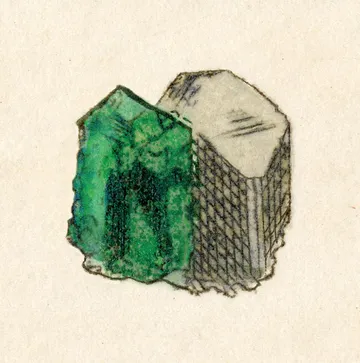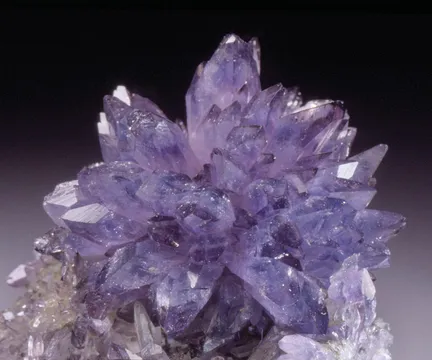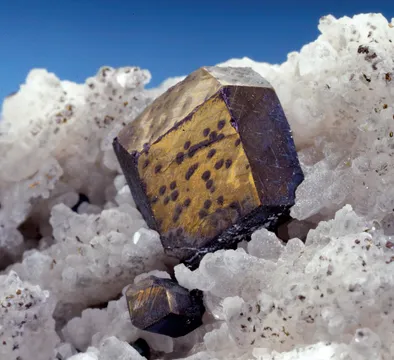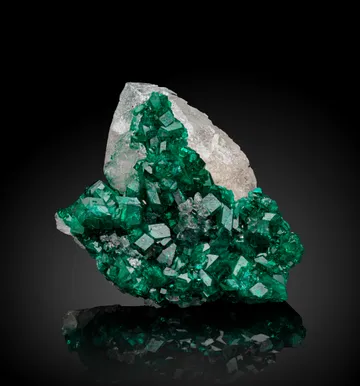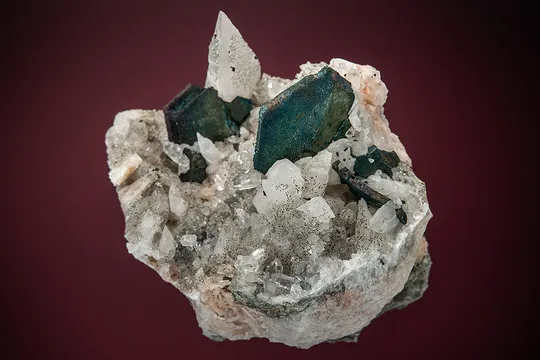
Kounrad Massif, Kazakhstan — bertrandite with rhodochrosite and smoky quartz, plus rare display specimens; collectors prize its limited production window.
Key facts
Kounrad Massif is one of those localities whose specimen fame sits on top of a much larger industrial story. To economic geologists it is the great Kounrad, Konyrat, or Qonyrat porphyry copper system north of Lake Balkhash, a Carboniferous subduction-related copper–gold–molybdenum deposit in the North Balkhash metallogenic belt of the Central Asian Orogenic Belt. To collectors, however, Kounrad means a very different and much rarer image: lustrous sprays and blades of bertrandite set with salmon to wine-red rhodochrosite, smoky quartz, small bright pyrite cubes, pale fluorite, calcite, and occasional tungsten minerals. The best specimens have a distinctly “Soviet classic” character—compact, complex, mineralogically odd, and far scarcer on the market than their beauty might suggest.
Regional View
Country View
The locality’s collector importance comes from a small window of specimen production rather than from the scale of the mine. Kounrad’s copper history began with Mikhail P. Rusakov’s discovery of the deposit in the late 1920s, and by the mid-1930s the ore was feeding the Balkhash metallurgical complex. Decades of open-pit mining exposed and discarded a tremendous volume of mineralized material, but fine display specimens were never abundant. The Kounrad pieces that entered Western collections in the early 1990s—especially bertrandite with rhodochrosite—became recognized almost immediately as unusually well-crystallized examples of bertrandite, a species that is far more often encountered as small alteration crystals than as showy, architectural sprays.

Photo: Rob Lavinsky, iRocks.com, via Wikimedia Commons

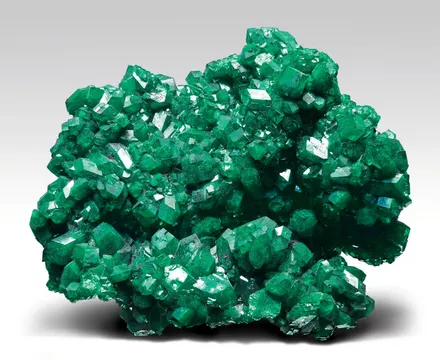
Photo: Rob Lavinsky, iRocks.com, via Wikimedia Commons
Kounrad’s mineralogy reflects several overlapping systems: a porphyry Cu-Au-Mo core with hypogene and supergene copper minerals; high-alumina and phyllic to argillic alteration; East Kounrad molybdenum–tungsten mineralization; and later open-space assemblages that yielded the collector specimens. That combination explains why a single hand specimen can look so unlike the expected “porphyry copper” rock: smoky quartz spires, etched violet fluorite, paper-thin calcite coatings, pyrite, rhodochrosite rhombs, and creamy to pinkish bertrandite may all appear together.
Search for specimens: View all specimens from Kounrad Massif, Kazakhstan
Kounrad Massif lies in the Balkhash area of Karaganda Region, central Kazakhstan, about 15 kilometers north of the city of Balkhash on the northern shore of Lake Balkhash. Older specimen labels may use Balqash, Balkash, Karatas, Prebalkhashie, Dzhezkazgan Oblast, Zhezqazghan Oblysy, Kounrad, Konyrat, Qonyrat, or Counrad. Those variants matter: many classic pieces arrived in Western collections with older Soviet-era or transliterated labels, and “Kounrad Massif” in specimen usage may encompass both the main Kounrad copper mine area and closely associated East Kounrad Mo-W mineralization.
Geologically, the main Kounrad deposit is a porphyry copper system related to calc-alkaline magmatism in a Carboniferous subduction setting. It is part of the North Balkhash metallogenic belt, itself within the immense Central Asian Orogenic Belt. The primary mineralization is associated with granitic to granodioritic bedrock and porphyritic intrusions, with sedimentary and volcanic country rocks including Devonian sandstones and Carboniferous andesite-basalt to andesite-dacite units in regional descriptions. Published summaries describe a northeast-elongated orebody with disseminated and stockwork hypogene mineralization, vertically and horizontally zoned from bornite–chalcopyrite-rich central parts outward to pyrite–chalcopyrite and polymetallic assemblages.
The oxidation profile is important both economically and mineralogically. At Kounrad, weathering and supergene enrichment produced an oxidized cap with hematite, limonite, manganese oxyhydroxides, malachite, azurite, cuprite, native copper, and chrysocolla; a leached zone; a chalcocite- and covellite-bearing supergene blanket; and a primary sulphide zone containing stockwork and disseminated pyrite, chalcopyrite, enargite, and chalcocite, with bornite, molybdenite, tetrahedrite-tennantite minerals, galena, sphalerite, arsenopyrite, and other accessory sulphides recorded in geological accounts. This is not the source of every fine cabinet specimen, but it is the larger geochemical engine that made Kounrad a famous mining district.
Industrial mining began in 1936. The open pit was operated by the state through the Soviet period, later by Kazakhmys, and the historic pit eventually ceased conventional mining after grades declined. The mined sulphide ores were suitable for flotation and were sent to the Balkhash metallurgical complex, while oxide material and lower-grade sulphide or mixed material were stockpiled in large dumps east and west of the pit. Central Asia Metals later developed Kounrad not as a new conventional mine, but as a dump-leach, solvent-extraction/electrowinning operation recovering copper from those historic waste dumps. First copper from the modern SX-EW plant came in April 2012, and the operation subsequently expanded from the Eastern Dumps to the Western Dumps.
For collectors, present-day access should be treated as industrial and restricted. Kounrad is an operating copper recovery site, and the surrounding dumps, ponds, solution lines, and SX-EW infrastructure are not casual collecting ground. Most collectible specimens in the international market are older pieces, especially material dispersed from Soviet and post-Soviet channels during the late 1980s and early 1990s. Dealer descriptions, museum specimens, and archived photographs consistently point to a short-lived supply of bertrandite–rhodochrosite specimens rather than a continuing stream.
The most desirable finds are those with a strong bertrandite component: sharp white, cream, or faintly pink blades and sprays perched on or around rhodochrosite, commonly with smoky quartz and pyrite. Some pieces show rhodochrosite as flattened rhombs or disc-like crystals; others show botryoidal to bubbly wine-red aggregates. Fluorite appears as pale lavender to purple crystals or etched octahedrons, and quartz ranges from translucent colorless crystals to light smoky spires. The finest specimens are not merely “pink mineral on quartz”; they are balanced association pieces with open-space crystallization, contrasting luster, and a crisp separation of species.
Kounrad rhodochrosite is best known in two collector forms: lustrous salmon-pink to dark pink rhombohedral crystals, often somewhat flattened or stepped, and rarer deep wine-red botryoidal or “bubbly” aggregates. Cabinet-scale association pieces are documented with rhodochrosite on smoky quartz, pyrite, fluorite, calcite, and especially bertrandite; one Carnegie Museum specimen measures 13.5 x 8.5 x 6.4 cm, while photographed private-collection pieces include a 5.5 x 4 x 3 cm deep red specimen and a 6.7 x 4.3 x 2.1 cm smoky quartz association with a 1.8 x 1.5 x 0.5 cm disc-shaped rhodochrosite crystal. The best Kounrad rhodochrosites have saturated color, glossy undamaged domes or sharp rhombohedral faces, and a purposeful association with bertrandite or quartz; ordinary pieces tend to be darker, bruised, massive, or visually lost in matrix.
Bertrandite is the species that gives Kounrad its highest collector distinction. Fine pieces show sharp thin blades, needles, fans, and sprays in white, cream, peachy, or unusually pinkish hues, commonly growing with rhodochrosite, smoky quartz, pyrite, and fluorite. Documented examples include a 5.3 x 4.6 x 3.2 cm small-cabinet specimen with a central seam of bladed bertrandite to 8 mm and a pale lavender fluorite on the reverse, and a 15.7 x 8.9 x 5.4 cm large-cabinet piece with individual needle-like crystals to 1.4 cm, fans to 0.4 cm wide, salmon rhodochrosite, pyrite, smoky quartz, and tabular wolframite-group crystals. Kounrad bertrandite was also noted in the mineral literature as pseudomorphs after fluorite octahedrons, so collectors should look for both free-standing blades and replacement textures; the best specimens have abundant, undamaged, lustrous bertrandite that reads as the main mineral rather than a minor white fringe.
Fluorite from Kounrad is not usually the primary attraction, but it is a key supporting species in the classic assemblage. It is recorded as pale lavender to purple crystals, including etched octahedrons with quartz, paper-thin calcite, and pyrite, and as a pale lavender crystal on the reverse of bertrandite-rich specimens. The finest fluorite-bearing pieces use fluorite as color punctuation: translucent violet faces tucked among white quartz, bright pyrite, and rhodochrosite, or included and partly replaced relationships with bertrandite. Because the crystals are commonly etched, partly obscured, or secondary in importance, value rises when fluorite is clearly identifiable, undamaged, and aesthetically placed rather than merely present as an indistinct purple patch.
Quartz is the structural backbone of many Kounrad display pieces. It occurs as translucent to lustrous colorless crystals, light smoky quartz spires, and massive smoky cores carrying rhodochrosite, bertrandite, pyrite, calcite, and fluorite. A photographed 8.8 x 6.5 x 5.5 cm Kounrad specimen shows translucent lustrous quartz preferentially coated by paper-thin calcite, with pyrite cubes and etched purple fluorite octahedrons; another small-cabinet smoky quartz specimen carries a sharp disc-shaped rhodochrosite and bertrandite. The best quartz specimens from Kounrad are not judged like Alpine quartz for absolute perfection of terminations; they are prized when the quartz provides height, transparency, and rhythm to an otherwise rare bertrandite–rhodochrosite association.
Other documented minerals from Kounrad and East Kounrad give the locality unusual depth beyond the four display species above. The copper system includes chalcocite, covellite, chalcopyrite, bornite, pyrite, enargite, tennantite-tetrahedrite group minerals, galena, sphalerite, malachite, azurite, chrysocolla, cuprite, native copper, and molybdenite. East Kounrad records add tungsten and molybdenum species such as hübnerite, scheelite, molybdenite, and koechlinite, as well as bismuth minerals and REE phosphates. Kounrad is also significant as the type locality for monazite-(La), LaPO4, a mineralogical footnote easily missed by collectors focused only on the showy rhodochrosite–bertrandite specimens.
Kounrad specimens are scarce enough that good labels matter. Desirable pieces should carry old Russian, Soviet, European, Tucson-era, or established dealer provenance when available, and the label should ideally use one of the recognizable variants: Kounrad Massif, Konyrat, Qonyrat, Kounrad mine, East Kounrad, Balkhash, Karaganda Region, Kazakhstan. Because the best-known collector pieces came out in small numbers decades ago, a fresh-looking “new find” label deserves scrutiny unless supported by a reliable chain of ownership.
The most common mislabelling issue is not a deliberate fake, but locality confusion. Bertrandite, rhodochrosite, fluorite, and quartz occur together at other deposits, and “Kazakhstan” alone is insufficient. Kounrad pieces have a recognizable style: bertrandite as bladed sprays or fans, rhodochrosite as salmon-pink flattened rhombs or wine-red botryoidal aggregates, smoky quartz, small pyrite cubes, and pale violet to purple fluorite. Specimens labelled only “Kounrad” may also need clarification as to whether they are from the main copper mine area or East Kounrad Mo-W workings, especially where wolframite-group minerals, hübnerite, or scheelite are present.
Condition is the main practical concern. Rhodochrosite is soft enough to bruise along edges and high points, bertrandite blades are delicate and easily chipped, fluorite is prone to cleavage damage, and smoky quartz points may have contacted tips. Many Kounrad pieces came from hard-rock or dump environments rather than carefully opened collector pockets, so some trimming, bruising, sawed bases, or edge contact should not automatically disqualify a specimen. On better pieces, however, the display face should retain undamaged bertrandite sprays and clean rhodochrosite faces.
Fluorite may show fluorescence, but Kounrad specimens are not primarily collected as fluorescent minerals, and any fluorescence claim should be checked specimen by specimen under both longwave and shortwave UV. Avoid aggressive cleaning: acids can attack carbonates such as rhodochrosite and calcite, and mechanical cleaning can destroy the fine bertrandite blades. Dust removal with gentle air and a soft brush is safer than wet cleaning.
Market availability is episodic. Fine bertrandite–rhodochrosite Kounrad specimens appear far less often than comparable-size rhodochrosite pieces from the famous Colorado, South African, Chinese, or Peruvian sources. Small specimens with minor bertrandite are obtainable from old collections, but rich, sharp, aesthetic bertrandite pieces—especially with strong rhodochrosite and smoky quartz—are competition pieces for collectors of rare species, Kazakhstan localities, and former Soviet mineral classics.
Kounrad’s best story begins before the specimens, with a geologist looking at low hills in the dry country north of Lake Balkhash and seeing a copper district of American scale. In the late 1920s Mikhail Petrovich Rusakov, working from fragmentary local information and field observations, recognized the copper-porphyry character of the Konyrat mineralization and compared its scale to Santa Rita in New Mexico, one of the great porphyry copper mines of the United States. In later retellings, he spoke of the discovery as something that could transform the Balkhash steppe itself: if Konyrat proved to be a second Santa Rita, the empty desert shore of the lake would become an industrial place.
The practical reality of that country was harsh enough to become part of the local legend. One account of the 1928 prospecting route describes a journey beginning at Karkaraly and following the Tokyrau stream, with construction materials and equipment moved over two weeks by camels and horses. Near the sacred mountain Bektau Ata, earlier travelers had reportedly left a warning tablet: “Compatriots! No more water, no grass! Go back! Otherwise, you will disappear with the cattle you have!” The line survives because it captures what a porphyry-copper discovery meant there—not only ore in the ground, but roads, water, a smelter, a workers’ town, and a new industrial geography imposed on a semi-arid steppe.
Rusakov’s discovery also carried the darker signature of Soviet scientific life. After receiving recognition for the copper discovery and reportedly traveling to the United States to study mining technology, he was later arrested under espionage accusations and sentenced to 25 years in a prison camp. He was rehabilitated after several years and returned to geological work. In Balkhash, his name remained attached not to the accusation but to the ore: the copper deposit that helped create the city, the metallurgical complex, and the industrial identity of the region.
The collector story is quieter but just as memorable to mineral people. Kounrad’s best bertrandite specimens did not come out as a steady commercial product; they appeared in small lots in the early 1990s and then largely vanished. One dealer description of a deep wine-red rhodochrosite noted that it came from a small batch shown at Tucson in the early 1990s and that similar material had not been seen for sale afterward. Another account of a large bertrandite–rhodochrosite–smoky quartz piece traced the material to an “old military tungsten mine,” said to have been collected in the 1980s or early 1990s and held before reaching the market. Those anecdotes fit the specimens themselves: complex, tungsten-tinged, and uncommon, with the feel of a brief accidental release from a much larger industrial landscape.