San Pedro Mine, USA — Santa Fe County locality noted for large chalcopyrite crystals, garnet skarn, calcite and quartz; a top North American collector site.
Key facts
San Pedro Mine is the classic New Mexico skarn locality that serious collectors tend to remember first for its contradictions: an old gold-and-copper mine in the dry San Pedro Mountains, a rugged working with miles of underground openings, and a specimen producer whose best pieces are far more elegant than the term “tactite” would suggest. The mine lies in the New Placers District of Santa Fe County, near Golden, in the San Pedro–Ortiz porphyry belt between Albuquerque and Santa Fe. Its ores formed where mineralizing fluids associated with monzonitic to quartz-monzonitic intrusive rocks reacted with Pennsylvanian Madera Formation limestone and shale, making garnet skarn, marble, hornfels, sulfides, calcite, quartz, and later oxidation products.
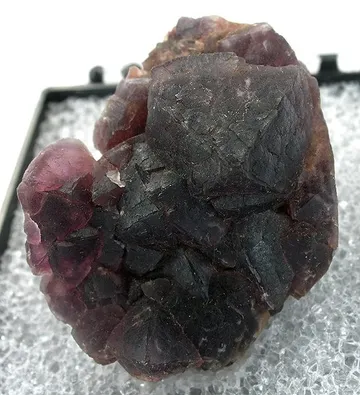
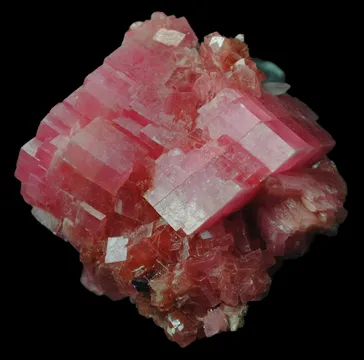
For collectors, San Pedro’s signature is the marble-line vug assemblage: sharp andradite-grossular garnets, brassy chalcopyrite crystals, pyrite, specular hematite, calcite, quartz, scheelite, and local native gold. The mine is especially important for large chalcopyrite crystals—among the best known from North America—and for distinctive Japan-law twinned quartz. Fine San Pedro pieces often have a pleasing “old mine” palette: honey to white calcite, iron-stained or amethystine quartz, glittering hematite rosettes, pyrite, altered chalcopyrite carrying green malachite, and, in the rarest examples, bright native gold resting in or against white calcite.
Regional View
Country View
Historically, San Pedro belongs to the oldest mining narrative of north-central New Mexico. The nearby placer fields were worked early, and nineteenth-century accounts tie the mine to Mexican-period claims, land-grant disputes, smelters, aerial tramways, copper booms, and repeated cycles of litigation, leasing, care-and-maintenance, and revival. Mineralogically, the mine’s importance is not simply that it produced copper, gold, and silver; it is that the skarn left abundant open spaces in which collector-quality crystals formed. That volume loss during replacement is the crucial specimen-making detail. Without the porous garnet beds and marble-line cavities, San Pedro would be only a historic producer. With them, it became one of New Mexico’s most characterful specimen mines.
Search for specimens:
San Pedro Mine is in the New Placers District, also historically called the Golden, Tuerto, or San Pedro District, in the western San Pedro Mountains of Santa Fe County, New Mexico. It lies about 2.1 air miles southeast of Golden and has also been described regionally as about 40 miles south of Santa Fe and 32 miles northeast of Albuquerque. The district sits within the San Pedro–Ortiz porphyry belt, a north-trending chain of intrusive centers that includes Los Cerrillos, the Ortiz Mountains, the San Pedro Mountains, and South Mountain. The San Pedro Mountains themselves are a small but geologically busy range dominated by intrusive rocks, tilted sedimentary units, marble, hornfels, and garnet skarn.
The deposit is a contact-metasomatic copper-gold-silver-tungsten skarn in limestone of the Pennsylvanian Madera Formation. The favorable section consists of alternating carbonate and shale beds dipping gently eastward, with ore localized in replaced carbonate horizons rather than in the intervening shale. Several descriptions emphasize that the ore bodies are stacked, tabular to irregular manto-like replacements along or near the “marble line,” the boundary between garnet skarn and unaltered or partly altered marble. This is the zone collectors care about most, because replacement of limestone by garnet reduced rock volume and created vugs. Those openings later received the calcite, quartz, chalcopyrite, pyrite, hematite, scheelite, and adularia that make the locality recognizable.
The geologic architecture is unusually clear. A rhyolite sill, historically called the Puzzle sill, lies above the mineralized beds and acted as a barrier to rising fluids; monzonitic to quartz-monzonitic intrusive rocks below and nearby supplied heat and metal-bearing solutions. One model places the hydrothermal source in the San Lazarus stock, whose molybdenum-bearing quartz veinlets mark it as part of the same mineralizing system. Another classic interpretation stresses an east-trending monzonite porphyry dike north of the mine that may have carried the mineralizing fluids into the favorable carbonate package. Either way, San Pedro is a skarn built by magmatic-hydrothermal fluids reacting with limestone, later overprinted by lower-temperature, hydrous alteration.
The mine’s mineralization is commonly described in stages. Early contact metamorphism made calc-silicate assemblages in marble and hornfels. Main-stage metasomatism replaced receptive limestone beds with massive garnet-chalcopyrite skarn. Later, a lower-temperature skarn-destructive stage partly broke down garnet and introduced or redistributed quartz, calcite, chlorite, specular hematite, pyrite, and chalcopyrite in cavities. That late open-space stage is the collector’s stage: euhedral garnet lining vugs, brassy chalcopyrite crystals—locally very large—calcite scalenohedrons and rhombohedrons, Japanese-twinned quartz, hematite rosettes, pyrite, and local wire gold. Subsequent oxidation produced malachite, azurite, chrysocolla, covellite, bornite, cuprite, limonite, and native copper in parts of the mine.
The workings were extensive. Historical summaries describe several miles of underground workings, a 300-foot, two-compartment Richman shaft, and a main adit about 1,600 feet long. Stopes were developed within the tactite and remained comparatively stable because the garnet skarn could stand well without timber. The important stopes lay close to the marble line, and published mine descriptions note that all stopes were within about 200 feet of that boundary. The mine was generally dry except toward the far eastern end, although oxidation did not extend very deeply.
San Pedro’s mining history spans a long sequence of owners and operators. Records point to activity in the early to mid-nineteenth century, with gold discoveries in the Ortiz Mountains in 1833 and the New Placers in 1839. By the late nineteenth century, control passed through land-grant complications and corporate ventures. The San Pedro and Cañon del Agua Company was involved around 1880; the Lewisohn family of New York later operated the mine intermittently as the Santa Fe Gold and Copper Company from 1889 to 1938. During the 1890s a small smelter treated ore at the village of San Pedro, and from 1900 until 1919 a 125-ton smelter stood near the mine. Ore and matte also moved by tramway, wagon haulage, and rail connections, a reminder that San Pedro’s distance from major transport repeatedly shaped its economics.
In 1938 the mine was purchased by Raskob Mining Interests, Inc. After exploration, the operation employed about 70 men and worked at roughly 110 tons per day in 1940 and 1941, using a 150-ton flotation mill on the property. During World War II, San Pedro drew attention for tungsten as well as copper, with scheelite recognized in the mine and federal agencies investigating reserves. Later work was intermittent, with small shipments, leases, and exploration. Published production figures vary depending on the period counted, but the mine produced millions of pounds of copper and substantial gold and silver; a modern geologic-map summary gives 26.5 million pounds of copper, 26,300 troy ounces of gold, and 365,000 troy ounces of silver from 470,000 short tons of Cu-Au-Ag-bearing material during 1889–1992, with total material mined including earlier work possibly exceeding 600,000 short tons.
Collector finds are best thought of by zones and habits rather than by one single pocket. The marble-line vugs produced the broad classic suite. The 24 Stope is represented in the market by Japan-law twinned quartz and quartz pseudomorphs after calcite. The 30 and Upper 30 stopes are tied to twinned and oddly surfaced calcites with hematite, chalcopyrite, and quartz. The 32 Stope appears repeatedly in recent specimen records for calcite, quartz with chlorite, and bornite-on-chalcopyrite material. Garnet Ridge has yielded iridescent andradite-grossular material. A restricted calcite-rich zone discovered earlier by Ira Young and collected in 1984 by Wayne Holland produced memorable gold-in-calcite specimens. The best finds are therefore not random dump pieces; they are products of specific vuggy skarn horizons where late fluids had room to grow display-quality crystals.
Collecting access today is not open. The San Pedro Mining Company still owns the mine property, and recent symposium accounts state plainly that collecting in the mine and on the property is forbidden. Abandoned-mine-safeguard work has also affected the area: documented closure plans included backfilling shafts and adits, installing bat-compatible gates and closures, fencing selected mine features, and reseeding disturbed ground. Collectors should treat San Pedro as a closed classic locality. Modern specimens are obtained through old collections, documented post-mining collections made with permission, museum deaccessions only where legitimate, and dealer stock with solid provenance—not by casual field collecting.
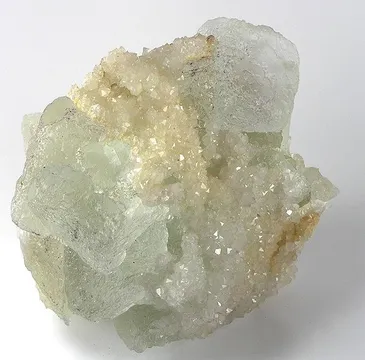
San Pedro calcite is a late vug mineral of the marble-line skarn, occurring with chalcopyrite, pyrite, quartz, specular hematite, garnet, malachite after chalcopyrite, and locally native gold. The locality is known for several habits: scalenohedrons, rhombohedrons, twins on the basal pinacoid, twins on rhombohedral planes, and rare sixling-like twinned scalenohedrons. Specimen records from the 30, Upper 30, and 32 stopes show crystals from miniature to cabinet scale, including large individual scalenohedrons, stacked later-generation calcite overgrowths following the geometry of earlier crystals, rhombs dusted by silvery hematite, and calcite partly sheathed in drusy quartz. Good San Pedro calcite is not merely “white skarn calcite”; it has architecture, association, and surface interest—especially bright crystals perched on sulfide-rich matrix, hematite-sparkled rhombs, calcite with malachite-altered chalcopyrite, and old pieces with orange-pink fluorescence.
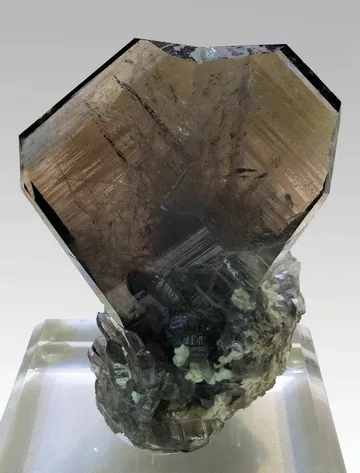
San Pedro quartz is prized chiefly for Japan-law twins and sceptered amethystine forms from the late open-space stage of the skarn. In certain mine areas, early collectors noted that essentially all quartz appeared as Japanese twins, and more recent specimen records from the 24 Stope describe plates so rich in Japan-law twinning that the untwinned crystals are easier to count than the twinned ones. Quartz also occurs as clear needle crystals with calcite, hematite, and chalcopyrite; as iron-oxide-stained groups; as chlorite-included quartz from the 32 Stope; as amethyst and smoky-to-amethyst scepters; as secondary amethystine growth on limonite-encrusted “alligator” quartz; and as quartz pseudomorphs after calcite. The best quartz pieces from San Pedro show unmistakable crystallographic character—sharp Japan-law twins, sceptered amethyst tips, strong contrast on skarn or calcite matrix, and clean association with the locality’s sulfide-carbonate suite.
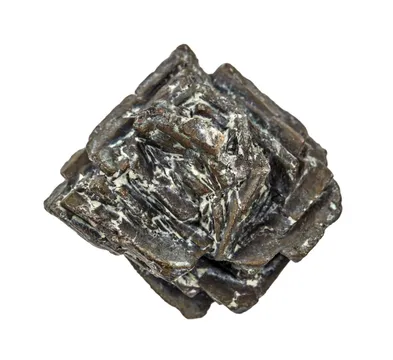
Beyond calcite and quartz, San Pedro’s collector mineralogy is broad and unusually instructive for a small skarn. The common display minerals are andradite-grossular garnet, chalcopyrite, pyrite, specular hematite, calcite, and quartz. Chalcopyrite is the great prestige species here, with crystals reported to about 10 cm across and older accounts noting crystals up to about 3 inches on an edge; many are partially altered or coated by malachite, bornite, covellite, or chalcocite. Native gold is rare but important, especially wire and crystalline gold in white calcite or associated with garnet and pyrite. Scheelite and powellite add tungsten-molybdenum interest, and adularia, ankerite, sphalerite, galena, idocrase, scapolite, epidote, titanite, anatase, allanite, laumontite, siegenite, tetradymite, smithsonite, brookite, brochantite, common opal, fluorite, talc, molybdenite, azurite, chrysocolla, cuprite, native copper, and other secondary copper minerals have all been reported or confirmed in the mine’s literature. San Pedro is therefore not a type-locality destination so much as a paragenetic locality: its value lies in showing, specimen by specimen, how a copper-gold skarn evolved from garnet replacement to open-space crystallization to oxidation.
The main authenticity risk with San Pedro specimens is locality precision. “San Pedro” is a widely reused mine and place name, and collectors should not confuse the New Placers District mine in Santa Fe County, New Mexico, with the San Pedro Mine at Pala, California, or with Mexican San Pedro labels attached to mimetite and other species from entirely different districts. Good labels should say San Pedro Mine, New Placers District, Santa Fe County, New Mexico, USA; the best will add a stope, collector, old collection, or publication history.
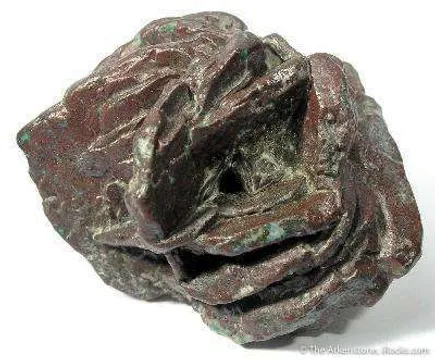
There is no well-known tradition of fabricated San Pedro calcite or quartz in the way some famous gem-crystal localities attract repairs, dyeing, or outright manufacture. The real problems are subtler: misattributed Japan-law quartz, generic skarn calcite sold without adequate provenance, and chalcopyrite specimens whose oxidation state is misunderstood. Malachite after chalcopyrite is a legitimate San Pedro style, and many chalcopyrite crystals naturally carry coatings or alteration products. Conversely, bright, fresh-looking chalcopyrite should be judged carefully for provenance, because the mine’s chalcopyrite is often at least partly altered in the oxidized zone, while a few excellent unoxidized crystals are documented from early mining and from specific collecting episodes.
Condition matters strongly. Calcite scalenohedrons and rhombs bruise easily along edges and terminations; drusy quartz sheaths can hide contact damage; Japan-law quartz plates from the 24 Stope commonly have broken or missing crystals; and malachite-replaced chalcopyrite forms can be rough, porous, or friable. Native gold in calcite should be handled as a high-value association: avoid acid cleaning, avoid aggressive mechanical trimming near gold, and preserve old surfaces where possible. Scheelite-bearing pieces should be checked under shortwave ultraviolet light, but collectors should not assume every fluorescent white mineral from San Pedro is scheelite; calcite from the locality can show attractive orange-pink fluorescence.
Market availability is uneven. Small calcite, quartz, and quartz-with-chlorite specimens from old or recent permitted collections appear from time to time at modest prices, especially from identified stopes such as 24, 30, 32, and Upper 30. Fine chalcopyrite, gold-in-calcite, and large aesthetic combination pieces are much scarcer and should command a premium when well documented. San Pedro is a closed classic, so the best specimens increasingly move as collection pieces rather than as new mine production. Provenance to collectors such as Ira Young, Jerry Simmons, Philip Simmons, Wayne Holland, the Dyke collection, or museum-published material adds meaningful confidence and value.
The most dramatic San Pedro story reads less like a mining report than a frontier stage scene. In 1880, a criminal group arranged for the Cañon del Agua grant to be resurveyed so that it included the San Pedro mine, then seized the property. M. A. Otero, a former governor of New Mexico and the mine owner at the time, sued to recover it. The gang fortified the mine. Otero’s answer was not a quiet legal filing but a night raid: he brought about a dozen armed men, entered the mine by sliding down a rope in a shaft, forced 162 miners out, and retook the workings. That one episode explains why San Pedro’s history is so tangled—mineral wealth, land-grant boundaries, corporate ambition, and armed possession all collided in a single mine.
The mine’s nineteenth-century boom also had a grander industrial face. A company connected to the district used the prestige of General U. S. Grant by electing him president, but when Grant learned that the company’s stock had jumped because his name was attached to it, he resigned. By 1887, after a renewed gold strike at San Pedro, the Golden Hydraulic Company repaired stamp mills, smelter works, pipelines, and reservoirs. Placer mining and work at the San Pedro mine put about 250 employees on the regular payroll. This was not a lonely prospector’s hole by then; it was a full mining camp with machinery, water systems, smelting, and a workforce large enough to reshape the little mountain district.
The Lewisohn era brought San Pedro into the orbit of big copper. The Lewisohn family of New York acquired control in 1889 and operated as the Santa Fe Gold and Copper Company. A 100-ton concentrator went in during 1891. During the 1890s, ore traveled by aerial tramway from the mine to the smelter at the village below. In 1900 a new smelter was built near the mine itself, only to be destroyed by fire in 1918. Matte had to be hauled 15.5 miles to the railhead at Cerrillos and then shipped to El Paso, while fuel came from the company’s own coal mine, from Madrid, and as Colorado coke. Those practical details explain why San Pedro, despite good ore, struggled economically: it had the metals, but every ton demanded logistics.
The mineral-collecting story has its own heroes. W. W. Atkinson, Jr. and Sherman P. Marsh later recalled that San Pedro fascinated them when they were teenagers, first as a place to explore and later as a source of crystals that helped pull them into geological careers. In 1956, Atkinson, Marsh, and Atkinson’s fiancée Carol Bambrook collected a chalcopyrite crystal measuring 3.5 inches; it was later donated to the University of New Mexico Geology Museum. San Pedro chalcopyrites are not casual brassy lumps. Many enclose pyrite cubes and pyritohedrons, some show unusual twinning, and the best rank among the great chalcopyrite crystals of North America.
Gold at San Pedro has a quieter but equally memorable collector history. Wire gold was deposited locally along the edges of large vugs, and collectors later recovered striking gold-in-calcite specimens. In 1984 Wayne Holland of Albuquerque collected gold in calcite and occasionally on garnet and pyrite from a restricted zone of abundant calcite, apparently an unusually vuggy area that Ira Young had discovered earlier. The visual formula is irresistible: bright native gold, white calcite, and the dark geometry of skarn. It is the kind of San Pedro specimen that compresses the whole mine—ore, vug, carbonate, and history—into one cabinet piece.
A later chapter belongs to the collectors and researchers who tried to document the mine before memory dissolved. Jerry Simmons described a long-running project to reconstruct ownership, stories, chronology, geology, and mineralogy, built from walking the property above and underground, photographing, collecting and cataloging, analyzing specimens, interviewing key people, leading tours, and combing the literature. The work continued to add species and refine old reports: smoky and amethyst quartz scepters, ankerite, anatase, brookite, brochantite, common opal, scheelite, and powellite all entered or strengthened the documented San Pedro list. That effort matters because San Pedro’s specimen mineralogy is not a simple checklist; it is a locality whose full story depends on labels, stopes, old miners, old collectors, and the careful correction of earlier assumptions.