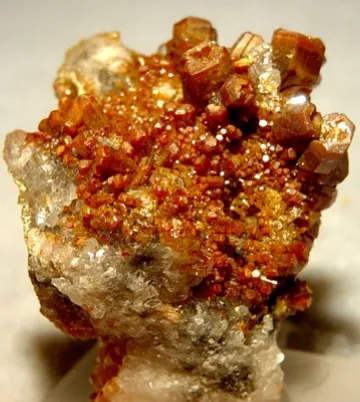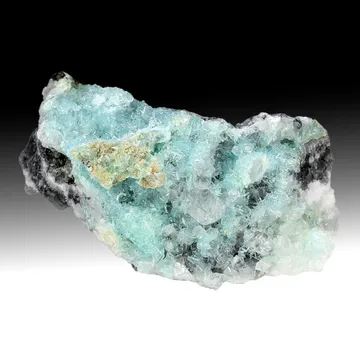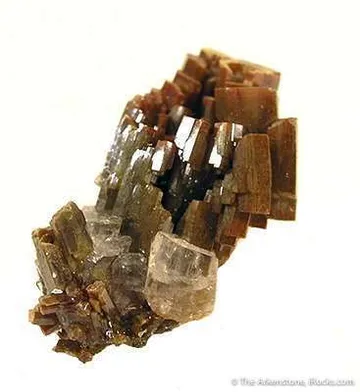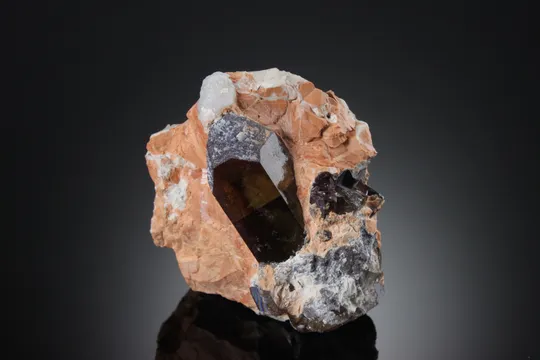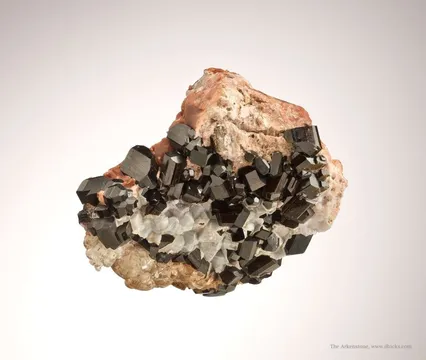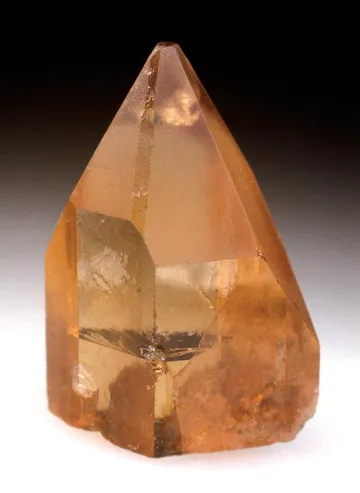
San Martin Mine, Zacatecas, Mexico — skarn locality yielding native silver on bornite, stibnite with berthierite, quartz and calcite; prized by collectors.
Key facts
San Martín is one of the great names of Mexican skarn mineralogy, but it is also a name that demands precision. The well-documented Mexican locality is the San Martín Mine of the San Martín-Sabinas District near Sombrerete, Zacatecas: a large underground Ag-Pb-Cu-Zn operation developed in and around the Cerro de la Gloria intrusive center, where Cretaceous marine carbonates were converted into garnet-pyroxene skarn and then invaded by sulfide-rich ore fluids. For the cabinet collector, the mine’s personality is not that of a colorful oxidized gossan like Ojuela, but of a deep skarn-and-sulfide system: native silver on bornite, terminated stibnite with berthierite, calcite, quartz, apophyllite- and zeolite-suite material, scheelite-powellite associations, and a scattering of rare tin, silver-antimony, and arsenic-bearing species.
The best Mexican San Martín specimens have an old-mining gravity to them. Native silver appears as sheets, wires, and stringers against dark, iridescent bornite and white calcite. Stibnite from the district can show thick, metallic, terminated prisms, commonly with brown berthierite epitaxy that once led collectors to speak loosely of “brown stibnite.” Quartz is not usually the headline mineral here, but it is a useful geological and aesthetic marker: quartz veinlets, silicification, frosted crystal groups, and epithermal textures sit at the bridge between the skarn ore body and the later vein stage. The locality’s fame is sharpened by the fact that San Martín is not just a specimen name; it is a mining town, an old silver district, a modern industrial operation, and a label field in which several different “San Martin” mines in the Americas have been confused.
Regional View
Country View

Photo: Wikimedia Commons
A serious San Martín label should be read with the district in mind. The Mexican mine belongs to the Sombrerete area of Zacatecas; the famous crystal rhodonite “San Martín” of the international specimen market belongs to Chiurucu, Huallanca, Peru. Because both names circulate heavily in mineral commerce, and because some modern database and dealer records compress accents, administrative levels, or even countries, the locality is best approached by paragenesis: Mexican San Martín specimens should make sense as skarn, sulfide, silver, calcite, quartz, zeolite, or antimony-suite material from Zacatecas, not as the classic Peruvian pink-red rhodonite sprays unless the label history explicitly explains the discrepancy.
Search for specimens: View all specimens from San Martin Mine, Mexico
The Mexican San Martín Mine is in the San Martín-Sabinas District near the town of San Martín, Sombrerete Municipality, northwestern Zacatecas. Modern technical reporting places the mining complex roughly 17 km from Sombrerete, with road access to Federal Highway 45 and onward connections to Fresnillo, Zacatecas city, and Durango. The mine is an underground operation with a flotation plant, historically producing lead, copper, and zinc concentrates with significant silver.
Geologically, San Martín is a polymetallic sulfide skarn centered on the Cerro de la Gloria intrusion. The principal sedimentary host is Upper Cretaceous Cuesta del Cura limestone, described as shallow-marine limestone interlayered with black chert, overlain by the Indura Formation of shale and fine-grained argillaceous limestone. Into this carbonate pile came the Cerro de la Gloria granodiorite to quartz monzonite–granite intrusive system. The contact reactions produced garnet- and pyroxene-rich skarn, including andradite-grossular and hedenbergite-clinopyroxene assemblages, followed by retrograde alteration, sulfide replacement, veining, silicification, and late carbonate events.
The principal ore-bearing structures are replacement veins and bodies close to the intrusive contact. The named main veins include San Marcial, Ibarra, and Gallo-Gallina; they trend broadly parallel to the intrusive contact and have been reported with widths from about 0.4 to 4 m and strike lengths up to about 1,000 m. Between and around these veins are larger replacement bodies and skarn-hosted zones with massive and disseminated sulfides. In older company descriptions, the central parts of the deposit are enriched in silver and copper, while upper and more distal portions carry more lead and zinc; deeper zones include chalcopyrite- and bornite-rich mineralization, locally with native silver.
The sulfide suite is the collector’s key to the mine. Industrially important minerals include sphalerite, galena, chalcopyrite, bornite, tetrahedrite-group minerals, pyrite, arsenopyrite, and stibnite. Molybdenite occurs in the deeper retrograde system, and Re-Os dating of molybdenite has been central to fixing the timing of the ore stage. The skarn and later veins also account for the locality’s more varied cabinet minerals: calcite, quartz, garnet, hedenbergite, scheelite, powellite, zeolites, native silver, and several rarities.
Mining history at San Martín is layered. The Sombrerete region belongs to the old silver belt of colonial Mexico, and San Martín has long been described as a very early discovery in the mid-sixteenth century. Modern industrial mining began in the twentieth century, with company histories commonly giving 1949 as the beginning of modern operations. The mine later became part of Industrial Minera México, S.A. de C.V. and the Grupo México/Southern Copper corporate system. Operations were halted by a major labor conflict beginning in July 2007. Company filings and government documents record the resumption of control and restart process in August 2018, followed by major rehabilitation of deteriorated facilities and a return to production in 2019. Labor litigation and the USMCA Rapid Response Mechanism case kept the mine in national and international news through 2023–2024, and company filings available in 2026 still describe the legal situation as active while operations continue.
Collecting access should be regarded as closed industrial access. This is not a public collecting locality, and old underground workings, active mine infrastructure, tailings, roads, and nearby claims require permission and formal safety control. Specimens on the market are therefore mostly historic mine-run pieces, material saved by miners or geologists, specimens that passed through Mexican and U.S. dealers, and recycled older collections. Labels may read San Martín, San Martin, Sombrerete, San Martín-Sabinas, or occasionally nearby district names. The related Sabinas Mine lies on the same broader skarn system, and some district specimens have historically been mislabeled as La Noria or La Noria de San Pantaleón; that matters when buying, because the mine name, level, and date can alter both scientific value and market value.
The notable specimen finds fall into a few recognizable families. Native silver on bornite and calcite is among the most dramatic, especially pieces from deeper levels where silver occurs as wires, sheets, or stringers on dark bornite. Stibnite and berthierite specimens, some of them sold in the early 1980s, are a distinctive antimony-suite classic from the mine. Calcite specimens from San Martín have been noted as lustrous twinned scalenohedrons and colorless transparent prisms, while quartz occurs as vein and cavity material and as a matrix for small rarities such as wickmanite. Recent public mineralogical updates also note limited wulfenite finds in 2025–2026, an interesting development in a district better known for sulfides and skarn species than for lead molybdate specimens.
Rhodonite is the locality-name trap at San Martín: the well-known, world-class rhodonite specimens described in the specimen trade as San Martín are the pink-red bladed sprays and rosettes from the San Martín Mine at Chiurucu, Huallanca, Peru, not the skarn mine at Sombrerete, Zacatecas; those Peruvian pieces typically occur as transparent to translucent pink, rose-red, or deeper red flattened blades, commonly in radial groups with quartz, calcite, pyrite, and dark sphalerite, and the best examples are sharply crystallized, lustrous, dimensional thumbnails to cabinet plates from the celebrated 1990s and 2007-era finds. For a rhodonite specimen carrying a “San Martin Mine, Mexico” label, the decisive collector question is provenance: it should be compared against the Peruvian rhodonite habit and associations, because the documented Mexican San Martín suite is a sulfide skarn assemblage and not a recognized classic source of crystal rhodonite.
Quartz from the Mexican San Martín Mine is best understood as a gangue and paragenetic mineral rather than the main collector prize: it appears in silicification adjacent to epithermal veins, in saccharoidal quartz-potassium feldspar and stockwork zones described in the skarn system, as quartz veinlets, and as frosted crystal groups that can host tiny rarity minerals such as wickmanite; district observations also note epithermal brecciation textures on Cerro de la Gloria, including quartz pseudomorphs after bladed calcite. A good San Martín quartz specimen earns its place by association and context—sharp or sparkling quartz with native silver-bornite-calcite, stibnite-berthierite, skarn silicates, or verified micro-minerals is far more meaningful than an isolated, ordinary quartz cluster with only a vague Sombrerete label.
Other minerals documented from the Mexican San Martín Mine include andradite, aragonite, arsenopyrite, baryte, berthierite, bornite, bournonite, calcite, chalcopyrite, conichalcite, datolite, ferrosalite, galena, grossular, hedenbergite, hematite, jamesonite, laumontite, löllingite, molybdenite, native copper, native silver, powellite, proustite, pyrite, pyrrhotite, scheelite, scolecite, sphalerite, stephanite, stibnite, tetrahedrite-group minerals, wickmanite, wulfenite, and xanthoconite. Stibnite with berthierite is the specimen classic, native silver on bornite is the most visually dramatic ore-mineral association, and wickmanite is the micro-mineral rarity to watch: it has been documented as tiny yellow crystals on frosted quartz, with some specimens confirmed by XRD and EDS. No type-locality mineral is convincingly tied to this Mexican San Martín Mine in the sources consulted.
The chief authenticity issue is locality confusion. “San Martin Mine” is not a unique label. Mexican San Martín, Zacatecas is a skarn and polymetallic sulfide locality near Sombrerete; Peruvian San Martín, Chiurucu is the famous rhodonite locality; other San Martín mines exist in Latin America as well. A pink-red bladed rhodonite specimen with quartz, calcite, pyrite, or sphalerite should be treated as Peruvian unless a rigorous provenance chain proves otherwise. Conversely, native silver on bornite, stibnite with berthierite, skarn minerals, and wickmanite on quartz fit the Zacatecas mine far better.
A second label problem is district-level misassignment within Sombrerete. Some specimens from the San Martín-Sabinas system, especially material that passed through the market in the 1990s, have been reported with “La Noria” or “La Noria de San Pantaleón” labels. La Noria is a real historic name in the district, but not every San Martín-Sabinas specimen with that name should be accepted literally. When a piece is valuable, ask whether the label refers to the San Martín Mine proper, the Sabinas Mine, La Noria, or the broader district.
Condition varies strongly by species. Native silver wires and sheets can be bent, clipped from matrix, artificially cleaned, or coated by bornite and sulfides in ways that hide attachment points. Stibnite is soft, brittle, and cleavage-prone; repaired or contacted terminations are common enough in the species that magnification is worthwhile. Berthierite epitaxy and tarnish can make stibnite specimens look altered or dirty, but the brown overgrowth is part of the classic San Martín character when present naturally. Calcite bruises easily and may show cleaved tips or edge wear; zeolites such as scolecite and laumontite require gentler handling, with laumontite especially prone to dehydration and deterioration in dry storage.
Fluorescence should not be the basis for buying most San Martín pieces. Calcite may respond variably, and scheelite can be screened with shortwave ultraviolet light, but the flagship associations are judged by crystallization, contrast, provenance, and paragenetic fit rather than fluorescence. For suspected wickmanite, visual identification is not enough; the crystals are submillimeter, and analytical confirmation adds real value.
Market availability is uneven. Stibnite-berthierite, calcite, native silver-bornite, and micro-rarity pieces appear mainly when old collections recycle. Fine native silver from San Martín is desirable and can be costly because of the combination of Mexican silver history, attractive bornite contrast, and scarcity. The mine’s modern industrial operation does not translate into open specimen supply, so new material tends to be sporadic, miner-saved, or tightly filtered through local contacts. Any specimen represented as a recent find from an active underground area should come with a credible path of ownership.
The San Martín story begins like many Mexican silver stories: with Juan de Tolosa, a Basque prospector-explorer working the northern frontier after the conquest of central Mexico. Later accounts credit him with discovering the rich San Martín silver mines in the mid-sixteenth century, though a more realistic reading gives the Indigenous population a central role in knowing and revealing the mineralized ground. San Martín’s old wealth belongs to the same broad historical world as Zacatecas, Sombrerete, Fresnillo, and the Camino Real de Tierra Adentro—a landscape where a silver strike could create a town, fund commerce, and alter politics far beyond the mine mouth.
The irony attached to Tolosa is memorable. He was no anonymous drifter; he became the son-in-law of Hernán Cortés. Yet the story repeated in later historical writing is that he did not manage his mineral fortune well and died in poverty before 1594. That biographical reversal—one of the early claimants to some of Mexico’s richest silver ground ending his life poor—has the ring of a cautionary tale familiar to anyone who has watched mineral wealth pass quickly from discovery to speculation to debt.
In specimen history, the best San Martín objects are those that retain the underground drama of their formation. One native silver-bornite specimen from Level 17 is described as tiny burnished silver wires scattered in clusters and stringers through purple-iridescent bornite, cut by a white calcite vein. Another, larger native silver piece is a thick sheet rather than a flimsy leaf, still attached to matrix, with bornite giving the silver an iridescent skin. A later documented silver specimen, obtained in 2020 by Peter Megaw from Wayne Leicht, reportedly came from the daughter of a one-time mine manager from the ASARCO era, probably before 1961; it carries the kind of provenance that turns an ore specimen into a historical artifact.
The modern mine’s public story is dominated by labor conflict. The San Martín strike began in July 2007 and became one of the longest-running mining disputes in Mexico. By 2018, the closure had lasted eleven years. News accounts described the mine as being “recovered” after an August 2018 police and military presence at the site, while company filings framed the same period as the legal end of an illegal stoppage and the authorization to restart operations. The result was not a tidy ending but a long legal afterlife: rehabilitation of deteriorated facilities, a 2019 production restart, further Mexican labor rulings in 2023, and a USMCA Rapid Response Mechanism dispute that reached an arbitration panel in 2024. For collectors, that history explains why San Martín specimens do not behave like steady modern mine output. The mine may operate, but specimen flow is shaped by labor history, access restrictions, and the long pause between 2007 and 2019.
Camprubí, A., González-Partida, E., Valencia, V. A., and Barra, F. (2015), “Geochronology of Mexican mineral deposits. I: the San Martín polymetallic skarn, Zacatecas,” Boletín de la Sociedad Geológica Mexicana, 67(1). The key modern geochronology paper; it reports Re-Os molybdenite ages of 43.7 ± 0.3 and 44.0 ± 0.2 Ma and places San Martín among Mexico’s major Eocene polymetallic skarns.
Rubin, J. N., and Kyle, J. R. (1988), “Mineralogy and geochemistry of the San Martín skarn deposit, Zacatecas, Mexico,” Economic Geology, 83, 1782–1801. A foundational Economic Geology study repeatedly cited for San Martín’s skarn mineralogy, geochemistry, and deposit model.
SRK Consulting / Southern Copper Corporation, “SEC Technical Report Summary – San Martín,” dated February 2024. Technical-report source for mine location, infrastructure, geology, mineralization, history, and resource context.
Southern Copper Corporation 2026 Form 10-Q, labor matters section for San Martín. Current corporate reporting on the post-2007 strike history, 2018 restart authorization, later labor rulings, and status of operations as of June 30, 2026.
Mindat.org locality page: San Martín Mine, San Martín-Sabinas District, San Martín, Sombrerete Municipality, Zacatecas, Mexico. Best single mineral-listing reference for the Mexican locality, including the current mineral list, coordinates, district hierarchy, and label cautions.
Mindat.org occurrence record: Wickmanite from San Martín Mine, Sombrerete, Zacatecas. Confirms wickmanite from the locality by XRD and gives a useful rarity-mineral anchor for micromount collectors.
Dakota Matrix Mineralpedia: Wickmanite from San Martín mine, Sombrerete, Zacatecas, Mexico. Dealer/micromineral reference describing San Martín wickmanite as tiny light-yellow crystals on frosted quartz with calcite.
Wikimedia Commons: Silver-Bornite-282229.jpg. Freely licensed image and description of a native silver-bornite-calcite specimen from San Martín, noted as Level 17 and ex Wes Parker Collection.
Wikimedia Commons: Silver-Bornite-214778.jpg. Freely licensed image of a larger native silver sheet with bornite from San Martín, useful for understanding the classic ore-specimen style.
Inside the San Martín Mine: The Strike That Halted Mexico's Silver — Cenizas de la Industria — A 2026 video overview of the Sombrerete mine’s history and the long labor conflict that shaped its modern production story.
Mining as told by the miners: San Martín Mine, Zacatecas (Part 2) — Rompeviento TV — A 2023 interview-focused labor and community perspective featuring José Núñez Velázquez of Section 201.
Mindat.org — San Martín Mine, Sombrerete, Zacatecas — Essential locality page for coordinates, district hierarchy, mineral list, specimen photos, and label warnings.
Mindat.org — San Martín-Sabinas District — Useful broader district page for understanding nearby mines, shared skarn mineralization, and locality relationships.
Boletín de la Sociedad Geológica Mexicana — Geochronology of the San Martín polymetallic skarn — Best open-access scientific treatment of the age and metallogenic setting of the deposit.
SRK / Southern Copper SEC Technical Report Summary — San Martín — Detailed technical report for geology, mining, infrastructure, resources, and operational context.
Major Mines & Projects — San Martin Mine — Concise mining-industry summary of ownership, deposit type, geology, and production setting.
U.S. Trade Representative — San Martín Mine Rapid Response Mechanism filing — Primary document for the 2023 USMCA labor dispute involving the mine.
Gob.mx — Mexican government statement on the San Martín labor conflict — Official Mexican government summary of the dispute and its legal framing.
Wikimedia Commons — Silver and Bornite from San Martín Mine — Freely licensed specimen image showing the classic native silver-bornite-calcite association.
Dakota Matrix — Wickmanite — Helpful visual and descriptive reference for San Martín wickmanite micromineral specimens on quartz.
Richard I. Gibson, “San Martin Mines” — Readable geologic and historical essay connecting the San Martín mine to Zacatecas silver history and skarn formation.