Tepetate, Mexico - a classic topaz locality famed for gemmy orthorhombic crystals in rhyolite cavities, notable for collectible specimens and locality history.
Key facts
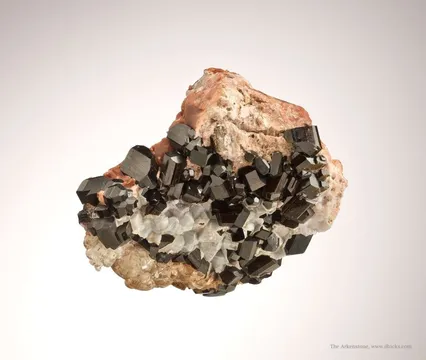
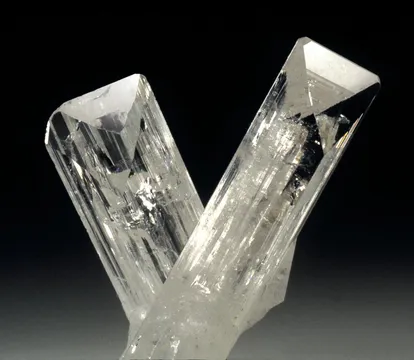
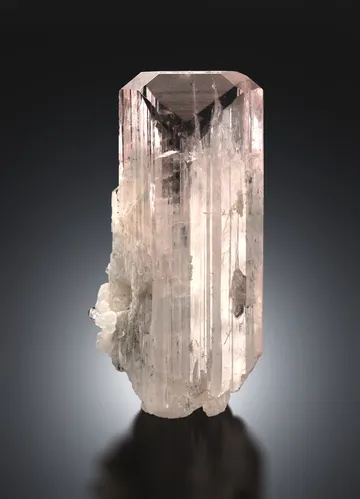
Tepetate is one of the essential Mexican topaz localities: a modest group of small diggings north-west of the village of El Tepetate in the Villa de Arriaga Municipality of San Luis Potosí, set in a fluorine-rich Cenozoic rhyolite-dome field on the south-eastern fringe of the Sierra Madre Occidental volcanic province. Its fame rests on a very focused specimen style rather than on species diversity. The best pieces show sharp, gemmy orthorhombic topaz crystals in cavities of pale volcanic rock, commonly sherry, champagne, reddish brown, honey-brown, or nearly colorless, sometimes with stronger color concentrated at terminations and edges. Fine examples are immediately recognizable: small glassy prisms projecting from cream to tan rhyolite, clusters lining vugs, or singly mounted crystals with pinacoidal terminations and occasional caps or beads of hyalite-like opal.
Regional View
Country View
For collectors, Tepetate’s importance is twofold. It is a classic specimen locality and a compact lesson in topaz-rhyolite mineralization: volatile-rich silicic magma, late vapor-phase crystallization, miarolitic cavities, silica minerals, minor tin mineralization, and the persistent problem of Mexican topaz locality attribution. Older labels may read simply “San Luis Potosí,” “Tepetate,” “Tepetates,” or “Mexico,” and modern work has emphasized that some Mexican topaz specimens formerly assigned to Tepetate actually came from other productive localities such as the Verónica workings in Zacatecas or the San Felipe area in Guanajuato. A fine Tepetate specimen should therefore be appreciated both as a mineral object and as a locality document.

Photo: Wikimedia Commons
The locality’s specimens are generally small, but the color and luster can be superb. Cabinet-size Mexican topaz crystals exist from Tepetate, and crystals as long as 15 cm have been reported, though such pieces are far outside ordinary market experience. The collector sweet spot is the balanced miniature or thumbnail: undamaged, transparent to translucent, bright-faced crystals to a few centimeters, preferably on matrix and preferably with attractive zoning or opal association.
Search for specimens: View all specimens from Tepetate, Mexico
The collector locality is at Tepetate, Villa de Arriaga Municipality, San Luis Potosí, Mexico, with the mineralized workings described as roughly north-west of the village of El Tepetate. The village lies south-west of the city of San Luis Potosí, in a high, semi-arid volcanic landscape where the local word “tepetate” also evokes altered, hardened volcanic tuff or waste rock. In the collecting literature the name has become shorthand for the topaz-bearing rhyolite diggings rather than for a conventional underground mine with a long roster of operators.
Geologically, Tepetate belongs to the San Luis Potosí volcanic field, where Oligocene silicic volcanism produced rhyolite flows and domes, including the San Miguelito rhyolite and associated dome structures such as Cerro El Gato and Cerro Silva. Geological studies of the Tepetate area describe highly differentiated, fluorine-rich rhyolites with quartz and sanidine phenocrysts, strong devitrification, lithophysal and miarolitic cavities, flow foliation, and vapor-phase minerals. Topaz is tied to this late, volatile-rich stage: it occurs in cavities and along structures in the rhyolite where fluorine-bearing fluids and vapor phases concentrated during cooling.
The deposit is best understood as a topaz-rhyolite occurrence with minor associated tin mineralization. The topaz-bearing rhyolites are rich in volatile components such as F and Cl and lithophile elements including Sn and Li. In the same broader mineralized area, tin mineralization has been described in breccias and fractures filled by cassiterite and hematite, and in rhyolitic settings with specular hematite. These are not the kind of ore bodies that built a major mining district; they are small, irregular, locally worked occurrences in a volcanic-dome environment.
Topaz extraction at Tepetate has historically been a small-scale activity rather than an industrial operation. Published descriptions characterize Mexican topaz mining as very limited, with commercial extraction taking place only intermittently and by a few people, using the practical tools of gambusino work: explosives, picks, shovels, and bars. The finest transparent stones have been faceted as gems, while crystals with good form, matrix, zoning, or associations have entered mineral collections.
The mining and collecting history is also a history of labels. Topaz from San Luis Potosí appeared in the nineteenth-century mineral literature before the Tepetate occurrence was clearly named, and an 1892 dealer note by Albert E. Foote praised San Luis Potosí topaz specimens as among the finest he had seen. Later publications and dealer labels helped establish Tepetate as a classic Mexican source, while modern reassessments have cautioned that Tepetate, Verónica, San Felipe, and smaller rhyolite-belt occurrences can be confused in trade. A credible Tepetate label is strongest when supported by old collection history, a reliable dealer chain, or a specimen style consistent with the locality.
Access today should be treated as permission-only field collecting. The productive material has come from small workings, not a public fee-dig, and conditions at old diggings can change with land status, local permission, road conditions, and safety concerns. Collectors should assume that blasting, trenching, or digging without local authorization is inappropriate, and that any modern field visit requires current local arrangements. Most collectors will encounter Tepetate through older collections, dealer stock, and occasional newly marketed parcels rather than through personal collecting.
The notable finds are the cavity specimens: topaz crystals growing in vugs of rhyolite, single prisms partly freed from matrix, clusters with reddish to honey-brown color, and rarer topaz with botryoidal opal or opal-AN. Small sharp crystals are commoner than large ones. Crystals over 5 cm are exceptional, and a highly transparent large crystal with good termination, minimal bruising, and strong natural color is a serious Mexican specimen.
Tepetate topaz occurs as euhedral orthorhombic prisms in cavities of fluorine-rich rhyolite, most often as small, sharp, lustrous crystals from millimeters to a few centimeters, with much larger crystals reported but genuinely large, undamaged specimens rare. The characteristic colors are champagne, sherry, honey, reddish brown, golden brown, and colorless; zoning is common enough to be a desirable locality feature, especially where the terminations are deeper than the prism bodies. Many crystals show simple prismatic habits with pinacoidal or pyramidal terminations, while the best miniature specimens preserve clusters in rhyolite vugs rather than isolated loose crystals. Associations include opal or opal-AN, sometimes as clear bead-like or botryoidal coatings, and rutile or iron-oxide inclusions have been invoked for the reddish-brown look of some material. Ordinary Tepetate pieces are small, etched, cleaved, or dinged singles; good pieces are bright, transparent, sharply terminated, on matrix, strongly colored, and carry a reliable label separating them from the visually related Verónica and San Felipe Mexican topaz localities.
Beyond topaz, Tepetate has a compact but interesting documented suite: opal and opal-AN, rutile, and bixbyite-(Mn) are recorded from the locality, while cassiterite and hematite are important in descriptions of the associated tin-bearing rhyolite mineralization in the broader Tepetate area. The opaline material is especially worth noting because older literature on “hyalite,” “iris-opal,” and natural iridescent glass from the Tepetate-Lourdes area intersects with the topaz story; some specimens show opal perched on or around the topaz crystals, and opal associations can add both fluorescence and rarity to an otherwise topaz-focused locality.
The main authenticity issue is not synthetic topaz but locality accuracy. Mexican topaz from Tepetate, the Verónica workings near El Copetillo in Zacatecas, San Felipe in Guanajuato, and other minor rhyolite-belt occurrences can be visually similar, and modern literature has specifically warned that specimens have been assigned to the wrong locality. Verónica material may show habits, inclusion density, and specular hematite associations that help separate it, but Tepetate and San Felipe can be more difficult. Buy provenance, not just appearance.
Condition matters greatly. Topaz has perfect basal cleavage and Tepetate crystals are commonly perched on fragile rhyolite or partly embedded in altered volcanic matrix. Expect many old pieces to have cleaved tips, small edge chips, bruised terminations, or repairs hidden by matrix. Strong magnification around terminations and contact points is worthwhile, particularly on clusters where a single missing tip can change both aesthetics and value. Loose singles should be examined for natural terminations versus cleavage faces.
Color is another serious consideration. The brown to sherry color in many topaz-rhyolite localities is light-sensitive, and Tepetate topaz has been reported as susceptible to sun bleaching. Do not display good pieces in direct sunlight or strong long-duration light. Store fine colored crystals in a shaded cabinet, and be wary of unusually intense color if the specimen has no provenance or if it resembles irradiated commercial gem rough rather than cavity-formed Mexican material.
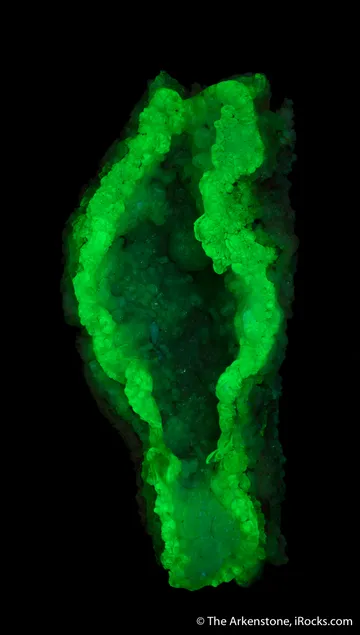
Opal-bearing Tepetate specimens deserve careful handling. Botryoidal opal or opal-AN coatings and caps can be delicate, and some specimens fluoresce a bright green to lime-green under ultraviolet light, a useful display feature but not a license for prolonged heat or UV exposure. Avoid ultrasonic cleaning, acids, aggressive brushing, and rapid temperature changes. Dust removal with air and a soft artist’s brush is usually safer than wet cleaning.
On the market, Tepetate remains available but uneven. Small matrix miniatures and thumbnails appear periodically, often from older collections. Exceptional examples—large, transparent, undamaged, deeply colored crystals on matrix, or topaz with attractive opal—are much scarcer than the name recognition of the locality might suggest. A truly fine Tepetate specimen should have sharp form, honest color, intact terminations, visible matrix context, and a label history that survives scrutiny.
In September 1962, Desert Magazine ran a field-trip account with the exuberant subtitle “Misadventures and Gay Times when 180 Mineral Collectors Invade Old Mexico.” Tepetate appears in the route not as a polished gem locality but as a hard, bright, high-country stop: collectors reached it “high in the mountains,” where the sand itself was described as glittering with little topaz crystals. The same account gives a wonderfully practical field contrast—topaz flashing in the sand while tin ore looked like dull, smooth bits of rock, rarely larger than a fingernail. It is exactly the kind of old collecting scene that explains why Tepetate specimens drifted widely through mid-century collections: small crystals, difficult ground, local diggers, and enough sparkle underfoot to keep a busload of rockhounds moving.
A different kind of story belongs to the opal. John Sinkankas examined Mexican hyalite specimens that had reached him through collectors and gem people in California, including material bought with parcels of brownish topaz. One small topaz crystal carried a mushroom-like growth of transparent hyalite on its termination, a detail that neatly captures the Tepetate-Lourdes association: not a broad ore suite, but tiny late silica growths perched on topaz in volcanic cavities. Sinkankas sliced and polished the material, watched weak spectral flashes appear under strong light, tested its density and refractive index, and heated smoky pieces until the color faded away. That investigation helped turn a dealer’s curiosity—odd clear opal bought with Mexican topaz—into a documented gemological problem.