Guanajuato, Mexico — historic silver district famed for epithermal veins and cabinet-worthy minerals, including acanthite and pyrargyrite.
Key facts
Guanajuato is one of the great old names in silver mineral collecting: a mountain city built directly on a mineralized fault system whose ores helped define colonial Mexican mining, epithermal vein geology, and the classic cabinet look of Mexican silver minerals. The collector’s Guanajuato is centered on the historic mining district around the city of Guanajuato, especially the Veta Madre, the “Mother Lode,” with its Valenciana, Rayas, Cata, La Sirena, San Vicente, Nopal, Peregrina, and related workings, together with the La Luz and Sierra–El Cubo systems nearby. Geologically, these are Oligocene epithermal precious-metal veins and stockworks hosted by older volcano-sedimentary rocks, Eocene red-bed conglomerates, and a thick volcanic pile of andesite to rhyolite. The veins are not just historically rich; they are texturally rich, too: quartz and calcite breccias, amethystine quartz, adularia-sericite alteration, open-space vugs, and repeated fracture-and-heal events that made room for silver sulfides and sulfosalts to crystallize.
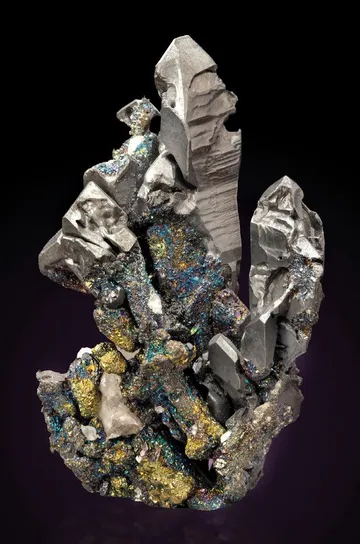
To collectors, Guanajuato means dark metallic silver minerals with old-mine gravity. The district’s best acanthites are sharp, lustrous, pseudo-cubic or pseudo-octahedral crystals after argentite, often from Rayas. Its pyrargyrites are the deep red-to-black “ruby silver” crystals of old European-cabinet mythology, with Valenciana among the localities that every serious pyrargyrite collector learns early. Polybasite, stephanite, proustite, pearceite, native silver, electrum, and gold belong to the same ore story, accompanied by quartz, calcite, siderite, rhodochrosite, sphalerite, galena, chalcopyrite, and pyrite. The district also gave mineralogy the distinctive K-feldspar variety valencianite, an adularia habit named for La Valenciana, and nearby Guanajuato localities are type localities for important selenium-bearing species including aguilarite, guanajuatite, and paraguanajuatite.
Regional View
Country View
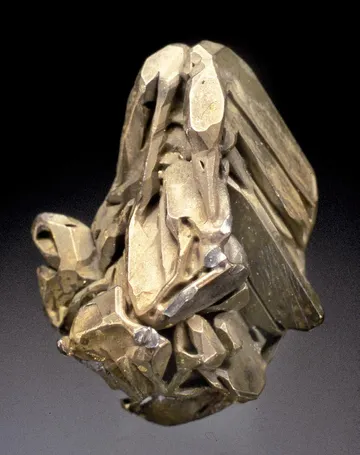
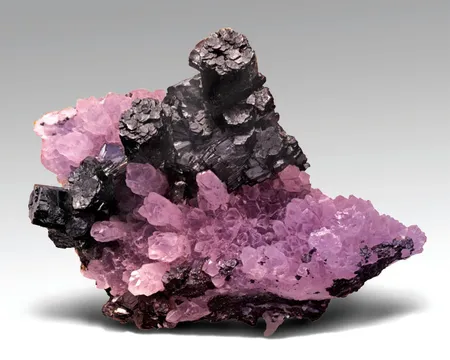
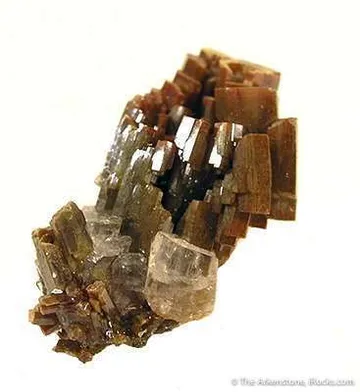
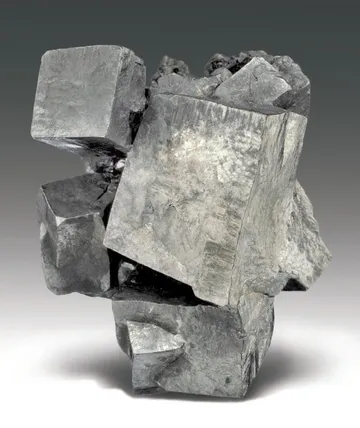
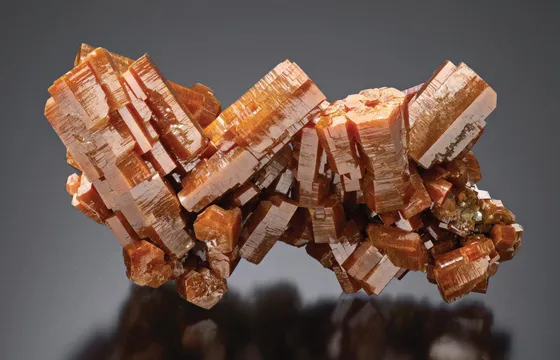
The visual signature of fine Guanajuato specimens is usually compact rather than flamboyant: dense metallic clusters, black pseudomorphs preserving earlier high-temperature or sulfosalt forms, silver minerals perched in pale quartz-calcite vein breccia, and porcelain-white valencianite plates that look almost architectural. Many of the finest pieces are small, but they carry the authority of a district that has been mined since the sixteenth century and studied continuously by geologists, mineralogists, economic historians, and collectors.

Photo: Wikimedia Commons

Photo: Wikimedia Commons
Search for specimens: View all specimens from Guanajuato, Mexico
The Guanajuato mining district lies in central Mexico, in and around the deeply incised hill country surrounding the city of Guanajuato. In modern economic-geology terms it is a silver-gold epithermal vein district, with mineralization grouped into three principal northwest- to north-northwest-trending systems: La Luz on the west, the central Veta Madre, and the Sierra system to the east, commonly associated with El Cubo. The Veta Madre is the dominant structure, a major normal-fault-hosted vein and breccia system with southwest dips commonly cited in the 35–65 degree range and very large displacement near the historic Valenciana and Las Torres areas. In practical collecting language, this means that “Guanajuato” labels may refer to a single mine, a connected mine complex, a vein system, the municipality, or the broader state; precise mine names matter.
The district’s host rocks are varied, which is one reason old labels and modern papers can seem bewildering. Mineralization is hosted in Mesozoic volcano-sedimentary and volcano-plutonic rocks, Eocene conglomerate of the Guanajuato red-bed sequence, and overlying Oligocene volcanic rocks. Ore fluids exploited faults, fractures, and breccia zones, then deposited quartz, calcite, adularia, sulfides, sulfosalts, electrum, native silver, and native gold. The large Veta Madre is generally treated as dominantly intermediate-sulfidation, while La Luz and Sierra–El Cubo are more characteristically low-sulfidation at present exposure levels. Radiometric work on adularia and illite places the principal events near the Oligocene, with La Valenciana adularia yielding ages around 30 Ma and Sierra-system illite somewhat younger, near 28.5 Ma.
The ore is famous not because every meter of vein was rich, but because rich ore shoots occurred within a huge structural system. Geological descriptions emphasize patchy and streaky silver-gold mineralization in quartz rather than a simple, uniform, banded ore body. Quartz is commonly amethystine, calcite is abundant, and breccia fragments may be pyritized while the economic silver minerals sit preferentially in the quartz-rich cement and vugs. The chief ore minerals described in classic studies include argentite/acanthite and native gold-silver alloys, with polybasite, pyrargyrite, argyrodite, galena, sphalerite, chalcopyrite, pyrite, and marcasite. For the collector, the vugs and late open-space surfaces are key: those are the places where larger sulfosalt crystals, acanthite pseudomorphs, and sharp gangue crystals could survive.
Mining began in the sixteenth century. Silver was recognized in the La Luz area in the 1540s, and an outcrop of the Veta Madre was found on the Rayas claim around 1550. The district grew from small workings into one of the great mining centers of New Spain. Valenciana became the emblem of the district’s peak: the mine was developed in the later eighteenth century under Antonio de Obregón y Alcocer, and at its height it accounted for a striking share of global silver production. The wealth of Valenciana and neighboring mines is still legible above ground in churches, shafts, haciendas, and the city’s urban fabric; Guanajuato’s historic town and adjacent mines were inscribed as a UNESCO World Heritage Site in 1988.
Modern mining has changed names and corporate structures several times. Historic workings at Valenciana, Cata, Rayas-Los Pozos, Promontorio, and Guanajuatito are today discussed together as the Valenciana Mines Complex. The district has also included important production from El Cubo, San Ignacio, Bolañitos, and other operations in the wider Guanajuato area. In the 2000s and 2010s, Great Panther and Endeavour Silver were prominent operators in parts of the district; in the 2020s, Guanajuato Silver Company became a key operator at El Cubo, Valenciana, San Ignacio, and associated processing facilities. Current industrial operations and active underground workings are not collecting localities in the casual sense. Access is controlled, safety regulations are real, and collectors should treat any active or gated mine property as private industrial ground unless formal permission is granted.
Specimen recovery has historically come from working mines, old collections, and occasional material leaving the district through miners, dealers, or mine-related tourism. The famous named mines remain the most desirable labels: San Juan de Rayas for acanthite and silver minerals; Valenciana for pyrargyrite, valencianite, acanthite/pyrargyrite pseudomorphs, and complex Ag-Se-Sb assemblages; La Sirena and Cata for acanthite and silver sulfosalts; El Cubo for selenium-bearing silver species including aguilarite and fischesserite; and La Luz/San Carlos for aguilarite and other silver-selenium minerals. Pocket-by-pocket documentation is uneven, especially for older pieces, but old labels from European and American collections often preserve the mine name, and those labels carry real value.
Acanthite is the species most collectors associate with Guanajuato at first glance. The best pieces are lustrous black to steel-gray, commonly preserving high-symmetry forms after argentite, the high-temperature cubic form of Ag2S. San Juan de Rayas specimens are especially admired: sharp pseudo-cubes, modified pseudo-octahedral groups, and compact clusters on quartz or carbonate matrix. Many pieces once labeled “argentite” in older collections are properly acanthite pseudomorphs after argentite, a normal consequence of Ag2S inversion on cooling.
Pyrargyrite, Ag3SbS3, gives Guanajuato its ruby-silver prestige. Fine crystals from Valenciana and related mines can show prismatic or blocky forms, deep red internal color on thin edges, and a black metallic-to-adamantine surface when thicker or tarnished. Truly fine crystallized pyrargyrite from Guanajuato is scarce, and important old specimens have circulated through major collections for generations. The species also matters because some Guanajuato pseudomorphs preserve pyrargyrite forms after replacement by acanthite, polybasite, or mixtures of silver sulfides and sulfosalts.
Polybasite and related pearceite-polybasite group minerals are essential to understanding Guanajuato labels. Polybasite can occur as platy pseudohexagonal crystals and as replacement material after earlier sulfosalts. Some specimens historically or commercially called “acanthite after pyrargyrite” prove on close examination to involve polybasite, and some are compound pseudomorphs with more than one replacement stage. This is not a minor labeling quibble: on fine thumbnails and miniatures the entire scientific and market interest may rest on whether the preserved form is after argentite, polybasite, or pyrargyrite, and whether the replacing mineral is acanthite, polybasite, or both.
Stephanite, Ag5SbS4, is another classic Guanajuato silver sulfosalt. It is documented from Valenciana, Rayas, Nopal, Cata, and other district localities, usually as black metallic crystals or compact aggregates. Proustite, Ag3AsS3, is less frequently seen as a display-quality Guanajuato specimen than pyrargyrite but belongs to the same silver sulfosalt family in the district. Pearceite, selenopolybasite, naumannite, aguilarite, and fischesserite bring selenium into the assemblage and make the district especially interesting to systematic collectors.
Aguilarite, Ag4SeS, is one of Guanajuato’s great mineralogical contributions. Its type locality is the San Carlos Mine in the La Luz area, and the mineral is named for Ponciano Aguilar, the Guanajuato mining engineer and mineralogist associated with its recognition. Aguilarite sits chemically between acanthite and naumannite in collector imagination: outwardly dark and metallic, but analytically a selenium-bearing silver sulfide. It is not a common show mineral, and many pieces require analysis or very strong provenance to justify the name.
Valencianite is perhaps the district’s most visually distinctive gangue mineral. It is not an IMA-approved mineral species, but a long-used variety name for adularia, a K-feldspar habit from La Valenciana. Good specimens show white to pale gray, lustrous, bladed to tabular crystals in crusts, sometimes with quartz and accessory ore minerals. Modern study has shown that valencianite has a complex structural character involving monoclinic and triclinic K-feldspar domains, while remaining compositionally close to potassium feldspar. For collectors, the name is valid as a historical and varietal label, not as a separate species.
Quartz is not incidental at Guanajuato. Amethystine quartz is a frequent and attractive gangue, and quartz is the main host for much of the visible metallic mineralization. Calcite, dolomite, siderite, and rhodochrosite provide the carbonate side of the assemblage. Pyrite is common as disseminations, altered fragments, and small crystals; chalcopyrite, galena, and sphalerite represent the base-metal component. Electrum and native gold occur in the ore system but are seldom the showiest minerals in hand specimens; native silver, when present as wires or curls, has strong collector appeal but is far less commonly seen in sharp, well-provenanced examples than acanthite.
Guanajuatite, Bi2Se3, and paraguanajuatite, also Bi2Se3, are important type-locality species from the Santa Catarina–Rancho Calvillo area in the Sierra de Santa Rosa, near Guanajuato but outside the familiar Veta Madre silver-cabinet suite. They are bismuth selenides and belong to a different collector category: rare, analytical, systematic minerals rather than the lustrous display silver specimens for which Rayas and Valenciana are famous. Their presence in the broader Guanajuato mineralogical province underscores the unusual selenium character that also appears in aguilarite, naumannite, selenopolybasite, and fischesserite.
The most important authenticity issue for Guanajuato is not outright fakery but precision of identification. Old labels often use “argentite,” but at room temperature those specimens are properly acanthite preserving argentite morphology. That usage is historically understandable and still common, but a careful modern label should say “acanthite after argentite” when the cubic habit is the point. Likewise, specimens after pyrargyrite or polybasite can be miscalled simply acanthite; some Guanajuato pseudomorphs are chemically and texturally more complicated than their labels suggest. If a specimen is expensive because it is “acanthite after pyrargyrite,” “polybasite after pyrargyrite,” or “aguilarite,” provenance and analytical confirmation matter.
Condition is often the limiting factor. Acanthite is soft and easily bruised, and high-luster faces show rubs quickly. Pyrargyrite is brittle and photosensitive enough that rich ruby-silver specimens should not be left in strong light for display. Thin edges and terminations are especially vulnerable; many old pyrargyrites are incomplete, contacted, or partly altered. Polybasite and stephanite can be splintery or micro-platy, and pseudomorphs may have granular or porous surfaces that attract dust. Quartz and calcite matrix from Guanajuato can be friable where brecciated, and old mine specimens may carry sulfide-rich edges that shed small grains.
Fluorescence is not a major selling point for the classic Guanajuato silver suite. Calcite may show modest response in some pieces, but collectors should buy Guanajuato for morphology, history, and ore mineralogy rather than ultraviolet display. Silver minerals should be handled sparingly; skin oils and repeated touching dull luster. Store pyrargyrite away from sunlight, and avoid aggressive cleaning of any sulfosalt-rich specimen. Even a light acid treatment intended to brighten calcite or remove iron staining can permanently damage associated sulfides, sulfosalts, and delicate pseudomorph textures.
Market availability is uneven. Small acanthite specimens from Rayas, Valenciana, La Sirena, and generic Guanajuato labels appear periodically, especially from old collections and dealer back stock. Attractive thumbnails are obtainable; sharp, undamaged, well-provenanced miniatures and cabinets are much harder. Fine pyrargyrite from Valenciana is scarce and can command strong prices when old provenance, size, luster, and crystal definition align. Valencianite appears less often than its fame would suggest, but good cabinet plates exist. Aguilarite, guanajuatite, paraguanajuatite, fischesserite, and other rare selenium species are specialist pieces: buy them as analyzed systematic minerals, not on appearance alone.
Because Guanajuato is both a working mining district and a tourist city, collectors should be cautious with souvenir “silver ore.” Heavy black pieces sold near mine tours may be real ore, slag, sulfide-rich vein material, or simply attractive dark rock. Some may be labeled with romantic names rather than mineral names. For a serious collection, prefer specimens with a mine name, an old collection label, a dealer who understands the district, or analytical data for rarer species. “Guanajuato, Mexico” alone is acceptable for an old thumbnail if the species is obvious, but for high-value pyrargyrite, aguilarite, or rare selenium minerals, locality precision is part of the specimen.
Guanajuato’s mining story begins with a landscape that still feels improbable: steep dry hills, narrow ravines, and a colonial city pressed into folds of rock above one of the richest silver systems in the Americas. The first discoveries in the region were not made in a modern exploration grid but in outcrops and old workings that gradually revealed the scale of the Veta Madre. The San Bernabé and Rayas discoveries drew miners into what became the Real de Minas de Guanajuato, and by the eighteenth century the district had become so productive that ore, money, architecture, and political power all seemed to pour from the same vein.
Valenciana is the district’s grand bonanza tale. Antonio de Obregón y Alcocer kept financing work on ground that had once been considered exhausted or unpromising. In the 1760s the gamble changed his life. Valenciana entered its great productive phase, and the mine became a symbol of what a single ore shoot could do to an empire. Its wealth was not abstract: it built churches, supported noble titles, reorganized labor, drew technical attention from Europe, and made Guanajuato one of the world’s leading silver centers. King Charles III granted Obregón the titles Viscount of the Mine and Count of Valenciana in 1780, a rare reminder that in colonial Mexico a rich mine could make aristocracy out of ore.
Alexander von Humboldt’s 1803 visit fixed Valenciana in the scientific imagination. He descended into the Guanajuato mining world not as a tourist but as a technical observer, measuring, comparing, and trying to understand how the mines worked as economic machines. Later writers remembered his amazement at the contrast between the rough mountain setting and the wealth above ground. The most memorable image from that world is not a mineral specimen but a shaft: the “Boca del Infierno,” the Mouth of Hell, a great opening associated with the district’s mining landscape and remembered in heritage descriptions as plunging hundreds of meters into the earth.
The War of Independence cut through the district’s prosperity. Guanajuato was not merely near the insurgency; it was one of its theaters. The Alhóndiga de Granaditas, originally a granary, became a battlefield in 1810, and mining operations were disrupted as workers, engineers, and owners were drawn into violence. Technical reports and historical accounts describe production ceasing and facilities being destroyed during the conflict. For collectors, this matters because it divides the old district into eras: colonial bonanza, nineteenth-century recovery and foreign capital, twentieth-century cooperative and company mining, and modern corporate consolidation.
The district’s living mining culture survived well into the modern period. Anthropological fieldwork in the 1990s recorded the Santa Fe Cooperative still operating historic properties on the Veta Madre, with miners not just as employees but as members of a cooperative tradition. At Valenciana, workers traveled before dawn from surrounding villages, met buses at familiar crossroads, and entered a mine that was simultaneously workplace, patrimony, and tourist symbol. One worker at the tourist entrance explained the appeal of mine stones with perfect collector psychology: to outsiders, the stones “have value” because a miner had taken them from the earth by hand.
Even the tourism story has a mineral-collector edge. Old entrances such as Bocamina San Cayetano were adapted so visitors could descend partway into the mine by steps rather than a shaft. Surface ruins were left rough enough that the Valenciana church could be seen through broken walls. Vendors sold stones. Guides translated dangerous labor into public memory. A mine once judged by tonnage, grade, and drainage became a place where people bought fragments of the district’s material identity—some meaningful, some dubious, all part of the complicated afterlife of a silver camp that never became merely historic.
Wilson, Ivan Franklin; Milton, Charles; Houston, Joseph Rollins. 1975. “A mineralogical study of the Guanajuato, Mexico, silver ores.” U.S. Geological Survey Open-File Report 75-70. A concise classic on the ore mineralogy: argentite/acanthite, native gold-silver, polybasite, pyrargyrite, argyrodite, base-metal sulfides, quartz-calcite breccia, and fluid-inclusion temperature.
Martínez-Reyes, Juan José et al. 2015. “Geochronology of Mexican mineral deposits: II: Veta Madre and Sierra epithermal vein systems, Guanajuato district.” Boletín de la Sociedad Geológica Mexicana 67(2), 349–355. Key age determinations for La Valenciana adularia and Sierra-system illite, and a useful synthesis of Veta Madre versus La Luz/Sierra sulfidation styles.
Solé, Jesús; Pi-Puig, Teresa; Ortega-Rivera, Amabel. 2021. “A Mineralogical, Geochemical, and Geochronological Study of ‘Valencianite’ from La Valenciana Mine, Guanajuato, Mexico.” Minerals 11(7), 741. The modern reference for valencianite as a K-feldspar/adularia variety, including structure, chemistry, morphology, and Ar-Ar dating.
Mindat: Guanajuato, Guanajuato Municipality, Guanajuato, Mexico. The most useful collector-oriented locality index for the city/district level, with mine-level mineral lists and references.
Mindat: Valenciana Mine, Guanajuato, Guanajuato Municipality, Guanajuato, Mexico. Mine-level page for one of the district’s most important collecting names, including acanthite, pyrargyrite, valencianite/adularia, aguilarite, naumannite, and related species.
Mindat: San Juan de Rayas Mine, Guanajuato, Guanajuato Municipality, Guanajuato, Mexico. Important reference point for classic acanthite and silver-mineral specimens from Rayas.
Mindat: El Cubo Mine, Guanajuato, Guanajuato Municipality, Guanajuato, Mexico. Useful for the eastern Sierra–El Cubo part of the district and selenium-bearing silver minerals such as aguilarite and fischesserite.
Mindat: Guanajuatite. Species page for Bi2Se3, named from the Guanajuato type locality.
Handbook of Mineralogy: Guanajuatite. Compact species data sheet for guanajuatite, including chemistry, crystallography, and occurrence.
Webmineral: Guanajuatite Mineral Data. Additional quick-reference data for the bismuth selenide species from the Santa Catarina and La Industrial mines near Guanajuato.
Mineralogical Record / Ikons supplement: Pyrargyrite, Valenciana Mine, Guanajuato, Mexico. Features a major 15 cm Valenciana pyrargyrite specimen and discusses its importance among classic ruby-silver specimens.
“Historic Town of Guanajuato and Adjacent Mines (UNESCO/NHK)” — UNESCO / NHK. Short heritage film connecting the mining landscape, architecture, subterranean streets, and the famous deep mine shaft imagery of Guanajuato.
“Guanajuato’s Silver Mining History [Mine Tours and Mexico’s Independence]” — Spanish and Go. Travel-oriented video introduction to Guanajuato’s mining history and its connection to the city’s independence-era sites.
“Touring the VALENCIANA MINE in Guanajuato City, Mexico | A Historic Silver Mine” — YouTube travel video. A visitor-level look inside the Valenciana mine tour, useful for visualizing the modern tourist presentation of the old workings.
UNESCO World Heritage Centre: Historic Town of Guanajuato and Adjacent Mines — Best official overview of Guanajuato’s mining landscape as world heritage, including the relationship between silver wealth, architecture, and urban form.
INAH: Centro histórico de la ciudad de Guanajuato y sus minas adyacentes — Mexican heritage entry with historical context for the early mining district, San Bernabé, La Bufa, and the city’s silver economy.
Servicio Geológico Mexicano: Carta Geológica-Minera Guanajuato F14-C43, 1:50,000 — Official geological-map metadata for the Guanajuato sheet, useful for regional geology and mine-system names.
Guanajuato Silver: Valenciana Mines Complex — Current operator’s project page for the Valenciana Mines Complex, including present processing arrangements, resources, and mine-complex description.
Guanajuato Silver: El Cubo Mines Complex — Current operator’s page for El Cubo, with production history, mine areas, processing details, and modern resource context.
Guanajuato Silver 2022 operations update — Useful corporate history of the acquisition and restart period, with concise descriptions of VMC, El Cubo, San Ignacio, and district logistics.
Guanajuato Silver 2025 corporate update — Current operational context for processing-route changes and the temporary closure of the Cata processing plant.
Major Mines & Projects: Valenciana Mines Complex — Independent mining-data summary of ownership, deposit style, mining method, and the mineral assemblage at the modern VMC.
Major Mines & Projects: El Cubo Mine — Independent summary of the El Cubo underground operation, ownership, and recent mining history.
Dave Bunk Minerals: Polybasite after Pyrargyrite, Valenciana Mine — Dealer archive illustrating the important Guanajuato labeling issue in which pseudomorphs routinely called acanthite may prove to be polybasite.
Fabre Minerals: Reference specimens from Mexico — Dealer reference page with Guanajuato examples of acanthite after argentite and acanthite after polybasite from Rayas and La Sirena.
Wikimedia Commons: Acanthite from San Juan de Rayas Mine — Open-license image of a sharp Rayas acanthite thumbnail, useful for recognizing the district’s classic pseudo-cubic habit.
Wikimedia Commons: Valencianite from Valenciana Mine — Open-license image of a large valencianite/adularia specimen from La Valenciana.
Wikimedia Commons: Milarite with adularia/valencianite from Valenciana Mine — Open-license image showing a rarer collector association from the Valenciana Mine.