San Luis Potosí, Mexico — a mineral province famed for Oligocene topaz in rhyolite cavities and Charcas’ dense calcite and rare borates; prized by collectors.
Key facts
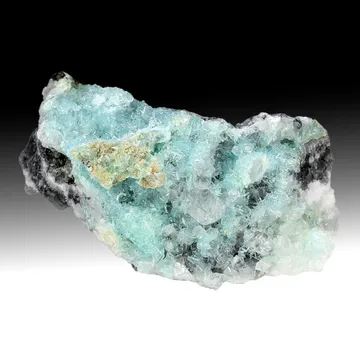
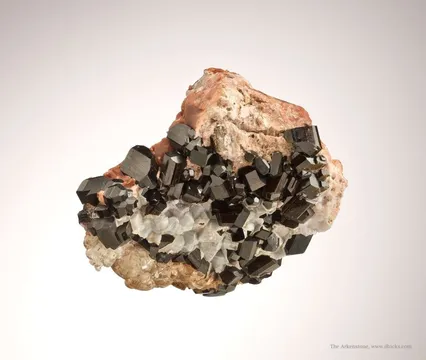
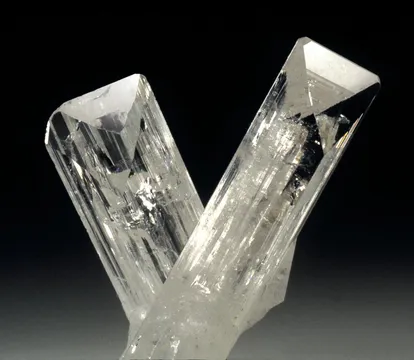
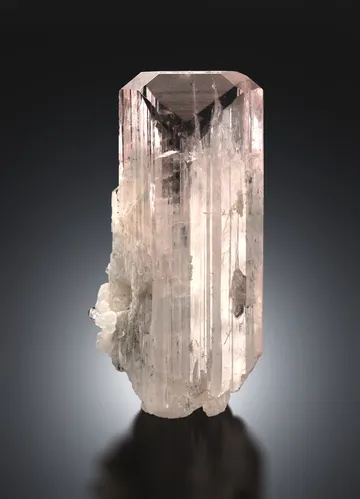
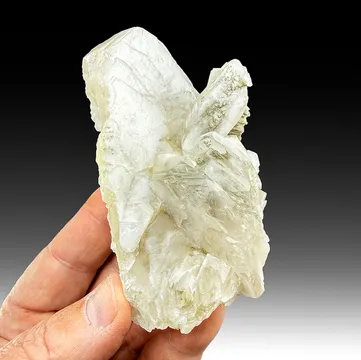
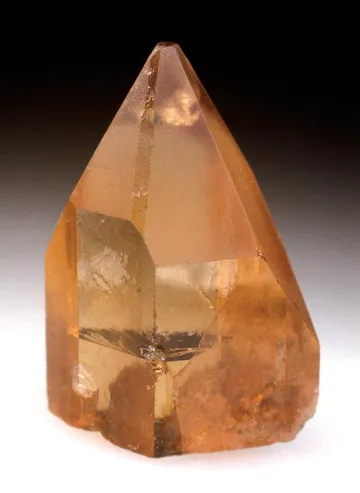
San Luis Potosí is not a single pocket locality so much as a compact mineralogical province: a high desert state where two very different specimen traditions meet. To the southwest of the capital, near Tepetate and Lourdes in the Villa de Arriaga area, Oligocene fluorine-rich rhyolite domes of the San Luis Potosí volcanic field produced Mexico’s classic topaz in cavities, fractures, and lithophysae. These are the memorable red-brown to sherry, honey, amber, pale yellow, and colorless crystals that collectors recognize on sight: stout to elongate orthorhombic prisms, often perched on pale rhyolite and, at their best, trimmed with clear bead-like opal-AN historically sold as “hyalite.” Farther north, the Charcas district is an old silver-lead-zinc-copper skarn and replacement camp, prized by collectors for sculptural “poker-chip” calcite, danburite, axinite-group minerals, datolite, and rare borates such as nifontovite from the Rey y Reina mine.
The collector significance of the state comes from that contrast. San Luis Potosí topaz belongs to the worldwide family of topaz rhyolite occurrences, comparable in broad geological idea to the Thomas Range and Spor Mountain of Utah, but with a Mexican look: warm-toned crystals in rhyolite, sometimes with red to brown inclusions, commonly small but occasionally far larger than expected for a vapor-phase volcanic occurrence. Charcas, by contrast, gives the collection cabinet the dense, mineralized feel of a carbonate-hosted polymetallic camp: calcite in flattened hexagonal stacks, old mine specimens from mid-20th-century finds, and boron-rich skarn minerals that record a metasomatic system as interesting chemically as it is visually.
Regional View
Country View
For display specimens, San Luis Potosí rewards close looking. A Tepetate topaz may be only a few centimeters, yet a good one has architectural clarity: a glassy prism, a sherry or honey body color, undamaged terminations, and a matrix that makes clear it came from rhyolite rather than pegmatite. A Charcas calcite, meanwhile, is about rhythm and stacking: flattened rhombohedra with hexagonal outlines, milky-white rims over clearer centers, and the slight translucency that gives the best old pieces their depth. The state also carries a species-level distinction: the Mexquitic de Carmona fluor-buergerite occurrence is the type locality for fluor-buergerite, the ferric, fluorine-dominant tourmaline species originally described as buergerite.

Photo: Wikimedia Commons

Photo: Wikimedia Commons
Search for specimens: View all specimens from San Luis Potosí, Mexico
The most specimen-famous geology of San Luis Potosí begins in the San Luis Potosí volcanic field, on the Mesa Central near the eastern limit of the Sierra Madre Occidental volcanic province. The topaz localities around Tepetate, Lourdes, Cerro El Gato, Cerro Silva, and Cerro El Lobo are hosted by fluorine-rich topaz-bearing rhyolites, especially units grouped with the San Miguelito rhyolite. These rocks are high-silica, alkali-rich, fluorine-enriched volcanic domes and flows related to mid-Tertiary extensional tectonism. Topaz is not a pegmatite product here; it is a vapor-phase and post-magmatic mineral formed in open cavities, tension fractures, lithophysae, and along flow-foliation structures in rhyolitic lava.
The San Luis Potosí topaz occurrences are especially instructive because the mineral distribution varies from dome to dome. Cerro El Gato produced both amber-colored and colorless topaz in voids and fractures; studies of color, habit, and chemistry have tied the amber material to lower-temperature crystallization below about 500 °C and to color centers, while the colorless material formed under hotter conditions. Cerro El Lobo is known for much smaller topaz, generally limited by smaller isolated vesicles and less evidence for fluid renewal. Cerro El Gato, with more open fluid pathways and circulation along structures near the dome margin, was better suited to larger crystals. The collector consequence is direct: most San Luis Potosí topaz is small, but the exceptional Tepetate and related Villa de Arriaga pieces combine crystal size, luster, sherry to amber color, and matrix in a way that made the locality a Mexican classic.
Tepetate lies about 30 km southwest of the city of San Luis Potosí. The best-known specimens have come from small diggings and surface workings in the rhyolite rather than from a large industrial mine. Nineteenth-century mineral dealers and mineralogists already knew “San Luis Potosí” topaz as a striking Mexican material, although early labels rarely gave the precise hill or village. A topaz crystal from the state was studied in Europe before the late 1860s, and by the early 1890s the Philadelphia dealer Albert E. Foote was praising topaz he obtained on a visit to San Luis Potosí as among the finest examples of the gem mineral he had seen. In modern collecting, however, the name “Tepetate” has sometimes been used too broadly for similar Mexican rhyolite-topaz specimens, including material from Zacatecas or Guanajuato; careful labels matter.
Charcas is a different system entirely. The Charcas mining district lies northwest of the town of Charcas, roughly 110 km north of the city of San Luis Potosí, and is a classic Mexican polymetallic district with silver, lead, zinc, and copper ores. The deposit is commonly described as a Tertiary polymetallic skarn and replacement system hosted by Jurassic-Cretaceous carbonate rocks and older sedimentary units, with intrusive activity supplying heat, fluids, and structural preparation. The district contains a notable calcium-boron metasomatic envelope: early datolite, later danburite, axinite-group minerals, and rare borates occur alongside the sulfide and carbonate assemblages. For the specimen collector, that skarn chemistry is what separates Charcas from a routine base-metal camp.
Charcas has a long mining history. Spanish-period mining in the district is traced to the sixteenth century, with silver discoveries attributed to Juan de Oñate and early work at the San Cristóbal mine, followed by the development of the Santa Isabel and Leones veins. Modern Charcas has been operated as an underground mining complex with a flotation plant producing zinc, lead, and copper concentrates with significant silver. The district has included mines and workings such as Rey y Reina, San Bartolo, San Sebastián, Potosí, and others, and published mineralogical work now recognizes dozens of species from the camp. Collector material has come both from historic mining and from later recoveries within specific levels and workings, especially the Rey y Reina mine for rare borates and associated calcite.
Access today varies sharply by sublocality. Tepetate-area topaz localities are small diggings and claims, and collecting should be treated as private or concession ground unless explicit permission is obtained. Charcas is an active or formerly active mining district with underground workings, industrial property, and significant safety hazards; casual collecting underground is not appropriate. Specimens reach the market through old collections, dealer inventories, Mexican miners and suppliers, and occasional modern discoveries. Las Cuevas, east of the state capital near Zaragoza, is a major industrial fluorite operation and should be understood primarily as a mining locality rather than an open collecting site.
Notable finds from the state have a few recurring signatures. Tepetate topaz specimens collected before the 1980s are often singled out by dealers and museums as especially desirable when they show larger, glassy, sherry-colored crystals with attached spheroidal opal. Charcas “poker-chip” calcite from 1960s- to 1980s-era production remains a market staple when old labels survive; these specimens typically show flattened hexagonal crystal stacks, sometimes color-zoned white and cream, sometimes with fluorescence. More recent Charcas interest has focused on nifontovite and related borates from Rey y Reina, where transparent to translucent crystals and large blades are far more collectible than the microscopic or unattractive material by which many rare borates are known elsewhere.
San Luis Potosí opal of collector importance is chiefly colorless to pale, glassy opal-AN historically labeled “hyalite,” found as botryoidal beads, spherical aggregates, coatings, and transparent crusts on rhyolite and on topaz from the Tepetate–Villa de Arriaga area; it also occurs in the Mexquitic fluor-buergerite occurrence and at La Ventilla in Villa de Reyes. The best Tepetate pieces are not precious opal in the play-of-color sense but association specimens: clear bead-like opal perched on or around sherry to amber topaz, sometimes coating chalcedony or rhyolite cavities, with a bright green fluorescence under shortwave ultraviolet light reported for good examples. Ordinary pieces are simply colorless silica blebs or loose hyalite masses; choice pieces show discrete rounded “balls,” glassy transparency, undamaged surfaces, strong fluorescence, and—most desirable of all—a balanced association with well-formed topaz on matrix.
Topaz is the defining collector mineral of the Tepetate and Lourdes rhyolite localities in Villa de Arriaga, where it formed in vapor-phase cavities, fractures, and lithophysae within fluorine-rich rhyolite domes such as Cerro El Gato and Cerro El Lobo. Crystals are orthorhombic prisms ranging from tiny millimeter specimens to uncommon centimeter pieces; published gemological work reports El Gato crystals to 4 cm, while museum and collector accounts note that rare San Luis Potosí crystals can be much larger. Colors range from colorless and pale yellow through honey, beeswax, sherry, amber, brown, and red-brown, with some crystals zoned or colored by inclusions and unstable color centers; the warm colors can bleach in strong sunlight. The best specimens combine glassy luster, intact terminations, warm saturated color, visible rhyolite matrix, and ideally an opal-AN association; loose, abraded, faded, or mislocalized Mexican rhyolite topaz is much less compelling.
Calcite from San Luis Potosí is most collectible from Charcas, where the classic habit is the flattened, pseudohexagonal rhombohedral aggregate known in the trade as “poker-chip” calcite. Good Charcas calcites occur as stacked tabular crystals, floater clusters, and matrix groups, typically white, cream, colorless, or faintly honeyed, with some examples showing milky rims over clearer centers and fluorescence under ultraviolet light. San Bartolo and broader Charcas district specimens from older 1960s- to 1980s-era production are especially prized when crystals are sharply bounded, lustrous, color-zoned, and minimally cleaved; Rey y Reina material can show different habits, including twins and calcite associated with borates or danburite. Ordinary pieces are abundant, chipped, chalky, or visually crowded, while the best have crisp geometry, sculptural isolation, transparency, and old provenance.
Beyond opal, topaz, and calcite, San Luis Potosí offers several minerals that serious collectors should know. Fluor-buergerite from near Mexquitic de Carmona is the state’s most important type-locality species, occurring in argillized rhyolite with quartz, feldspar, biotite, common opal, opal-AN, agate, and chalcedony. Charcas is the other deep well: danburite, datolite, axinite-group minerals, nifontovite, borcarite, cahnite, conichalcite, rhodochrosite, fluorite, sphalerite, galena, chalcopyrite, pyrite, arsenopyrite, and many secondary species have been documented there. Las Cuevas is one of the world’s great fluorite deposits, a carbonate-hosted, fault-controlled fluorite system east of the capital. Wadley and the Real de Catorce region add an antimony and silver heritage, including stibnite altered to stibiconite and related antimony minerals, while Real de Catorce remains historically important for silver-lead-zinc mineralization even when its specimen output is less familiar than Tepetate topaz or Charcas calcite.
San Luis Potosí labels deserve scrutiny. “Tepetate” has long been a convenient label for Mexican rhyolite-hosted topaz, but similar topaz specimens have also come from Zacatecas and Guanajuato, and older labels may say only “San Luis Potosí,” “Mexico,” or an imprecise spelling. The best locality attribution uses a specific place—Tepetate, Lourdes, Villa de Arriaga, Cerro El Gato, Cerro El Lobo, Charcas, Rey y Reina, San Bartolo, Mexquitic—and ideally preserves old collection history. For topaz, look for rhyolite matrix, compatible opal-AN or chalcedony associations, and habits consistent with Mexican topaz rhyolite; very different matrix or suspiciously generic Mexican labels should be treated cautiously.
Topaz condition is a major value factor. San Luis Potosí topaz has perfect basal cleavage, so termination chips, bruised edges, and cleaved bases are common. Many crystals are naturally etched or included, which is acceptable when the form and color are strong, but broken terminations are less forgivable. Warm sherry, honey, amber, and brown colors should be protected from prolonged direct sunlight because the color centers responsible for some topaz color can fade. Store display pieces away from windows and intense case lighting, and do not clean them aggressively in ultrasonic equipment if they are fractured or attached to delicate opal-AN.
Opal-AN from San Luis Potosí is frequently, and historically, called hyalite. That older name is not necessarily a sign of fraud, but the collector should understand what is being bought: most of the material is not precious opal and should not be priced as play-of-color Mexican fire opal. The better specimens are valued for glassy bead-like form, fluorescence, and topaz association. Avoid oily, resin-coated, or suspiciously glossy specimens unless treatment history is clear; natural hyalite-like opal already has a wet glass luster and should not need enhancement.
Charcas calcite is common enough that quality control matters. Expect minor edge wear on old pieces, but avoid heavily cleaved or sugary specimens unless they have exceptional form. The classic “poker-chip” habit can be confused in casual listings with flattened calcites from other Mexican or worldwide localities, so old Charcas labels, San Bartolo attribution, and correct habit are useful. Fluorescence can add interest, but the strongest collector value remains crystal form, condition, color zoning, and provenance.
Rare Charcas borates and unusual associated specimens demand mineralogical caution. Nifontovite, danburite, calcite, and colorless to white borates or silicates may be visually confusing, especially in photographs. Hardness, cleavage, crystal habit, and, for valuable pieces, analytical confirmation are important. Recent transparent nifontovite from Rey y Reina is attractive and marketable, but rare-mineral enthusiasm can lead to overconfident labeling. When buying expensive Charcas rarities, prefer specimens with a reliable dealer history, clear mine attribution, and, where appropriate, analytical documentation.
Market availability is uneven. Tepetate topaz and San Luis Potosí opal-AN still appear regularly, but the really good topaz—large, glassy, warm-colored, undamaged, and on matrix—is no longer casual material. Charcas poker-chip calcite remains available in many price ranges, with old, aesthetic, cabinet-size examples bringing stronger interest. Fluor-buergerite from Mexquitic is a connoisseur species: small, dark, and not broadly decorative, but important because of its type-locality status. Las Cuevas fluorite is geologically important and industrially famous, yet fine aesthetic specimens are less central to the market than the mine’s production significance might suggest.
The early history of San Luis Potosí topaz has the charm—and frustration—of old mineral labels. In the 1880s, European mineralogists were already studying topaz crystals from “San Luis Potosí,” but the locality information was loose enough that modern collectors cannot always tie those specimens to Tepetate. One crystal examined by Grünhut had passed through the Paris dealer Louis Sæmann, whose business was later absorbed by August Krantz in Bonn; if the original label history is correct, that specimen must date from before Sæmann’s death in 1866. For a locality now treated as a classic Mexican topaz source, that is a remarkable paper trail: a rhyolite crystal from central Mexico, moving through nineteenth-century European mineral commerce, carrying a broad state label rather than the precise volcanic dome collectors would want today.
Albert E. Foote added a more vivid American dealer’s voice in 1892. Writing after a visit to San Luis Potosí, he said he had secured some of “the best specimens of this very beautiful gem mineral ever seen.” The line has endured because it sounds exactly like a dealer proud of a find—but it also reveals how good the material must have looked in fresh supply. The San Luis Potosí topaz that excites collectors today is usually modest in size, so the memory of earlier larger and finer pieces gives old labels a special weight. A pre-1980s Tepetate topaz with sherry color, clean faces, and attached opal-AN is not just a pretty Mexican specimen; it is a remnant of the period when the locality’s best material was still circulating in quantity.
The Charcas story begins much earlier and with more violence. Spanish accounts trace mining there to the 1563 discovery of silver by Juan de Oñate, who named the first mine San Cristóbal in honor of his father. The settlement that grew around the mine had a prison, a foundry, a few houses, and a small Franciscan monastery. In 1574, King Felipe II authorized the founding of Santa María de las Charcas, its name echoing the great Charcas mining region of Bolivia. But this was Guachichil territory, and the first village did not survive: it was burned, then rebuilt in 1584 near the present town. For collectors handling a Charcas calcite or nifontovite, that deep mining history is easy to miss; the polished symmetry of a poker-chip calcite sits on top of a district whose origins belong to the earliest and hardest century of Spanish mining in northern Mexico.
Modern Charcas has its own quieter drama in the rare-borate world. Nifontovite was long a mineral most collectors knew, if at all, as a species name rather than a display specimen. At Rey y Reina, however, the boron-rich metasomatic environment produced crystals large enough and clean enough to become desirable cabinet minerals. Recent material from 2025 and 2026 has been described by dealers as a jump in transparency over earlier recoveries from the same mine. That kind of improvement is what keeps old districts alive in collectors’ minds: a mine known for calcite and danburite suddenly produces rare borate specimens that can stand on aesthetics rather than rarity alone.