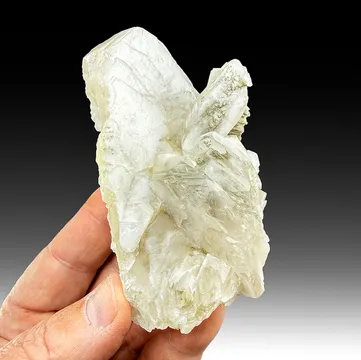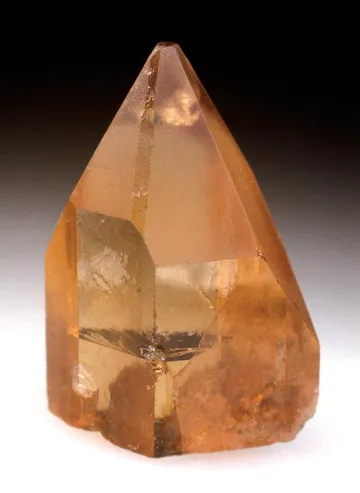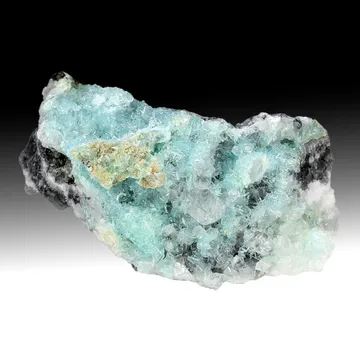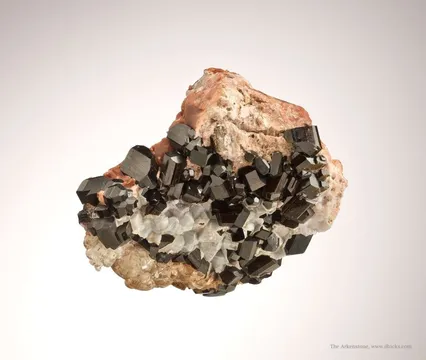
Charcas, Mexico — premier locality yielding danburite, calcite, datolite and more; architectural crystals and borates make it highly prized by collectors.
Key facts
Charcas is one of Mexico’s great specimen-producing mining districts: a long-lived Ag-Pb-Zn-Cu operation in the high, dry Central Mesa of San Luis Potosí where industrial ore mining has repeatedly intersected collector pockets of unusual quality. Its fame rests on a rare combination of “big mine” geology and delicate boron-rich crystallization. The ore system is a Tertiary polymetallic skarn and carbonate-replacement deposit related to the Charcas intrusive complex, with veins, mantos, replacement bodies, skarn, and late open-space mineralization developed in and around Jurassic-Cretaceous carbonate rocks and older Triassic clastic rocks.
For collectors, Charcas means glassy, chisel-terminated danburite first of all—colorless, white, and pale pink crystals that can be remarkably architectural. But the district is far more than a one-species locality. Its best calcites have the flattened, stacked “poker-chip” habit now closely associated with the name Charcas. Its datolite can be pale green and lustrous, often with pyrite or danburite. Its nifontovite changed the expectations for a mineral that had previously been a rarity of small or unattractive occurrences, producing large, transparent, terminated crystals that put the locality on the map for borate specialists. Charcas also supplies quartz in several guises—rock crystal, amethyst, citrine, and drusy coatings on danburite—alongside cinnabar, borcarite, apophyllite-group minerals, sphalerite, chalcopyrite, pyrite, galena, and a suite of uncommon borates and skarn minerals.
Historically, the district sits in the first rank of Mexican mining camps. Silver mining began in the Spanish colonial period, with early workings on the Santa Isabel and Leones veins and a town whose identity grew directly from the mines. Later operations moved from near-surface silver-rich oxidized ores into deeper primary zinc-lead-copper-silver ore, and the modern Charcas mine became a major underground base-metal producer. Specimen production has always been secondary to ore extraction, which gives the best pieces their particular character: they are not the result of a specimen quarry, but the lucky crystalline episodes opened by an operating mine.
Regional View
Country View
The finest Charcas specimens have a clean, luminous look: pale borosilicates against creamy calcite, bright pyrite accents on greenish datolite, or slender danburite prisms frosted by quartz. Cabinet groups can be spectacular, but many of the most satisfying pieces are smaller—single crystals with perfect chisel terminations, compact calcite sculptures, or rare borate thumbnails whose importance lies in species, transparency, and locality precision.

Photo: Wikimedia Commons

Photo: Wikimedia Commons

Photo: Wikimedia Commons
Search for specimens: View all specimens from Charcas, Mexico
The Charcas mining district lies northwest of the town of Charcas in San Luis Potosí, roughly north of the state capital. The modern operation includes the Aurora, San Bartolo, and Rey y Reina mines, exploiting several vein systems and carbonate-replacement-style orebodies, including Aurora, Rey, Reina, Santa Isabel, and Leones. The principal collector localities on labels are usually given as Charcas, Aurora Mine, San Bartolo Mine, Rey y Reina Mine, San Sebastian Mine, Bufa Mine, or a level or stope within one of those workings; older labels can be less precise and often simply read “Charcas, S.L.P., Mexico.”
Geologically, Charcas belongs to the belt of high-temperature, carbonate-hosted polymetallic deposits of northern Mexico. The district sits in the east-central part of the Mexican Central Mesa within the broader Sierra Madre metallogenic province. Its host rocks include Late Triassic shales, sandstones, and conglomerates; Jurassic limestones and related sedimentary units; and Cretaceous limestones, shales, and mudstones. These were folded and faulted, then intruded by the Charcas intrusive complex. The Temeroso stock and associated dikes are especially important in the local geology: they provided heat, fluids, structural preparation, and metasomatic alteration. The resulting mineralization is not a single simple vein, but a mixed system of fissure veins, mantos, replacement bodies, skarn, and late cavity growth.
The economic ore is dominated by sphalerite, galena, chalcopyrite, pyrite, and silver-bearing phases, with calcite and quartz as major gangue minerals. Published descriptions distinguish an earlier Ag-Pb-Zn-rich stage with abundant calcite and minor quartz and chalcopyrite, followed by a copper-silver stage with chalcopyrite, argentiferous galena, pyrite, and lesser sphalerite. Replacement bodies can be irregular or tabular, exploiting favorable beds and structures, while important veins such as Leones and Santa Isabel follow fault and fracture systems near contacts between limestone and intrusive rocks. The Rey and Reina replacement bodies are tied to the Leones-Santa Isabel structural trend; San Bartolo and Aurora are major names both geologically and in specimen labels.
The specimen assemblage reflects a boron-rich metasomatic environment superimposed on the ore system. Mindat’s locality summary describes a large Ca-B metasomatic envelope with early datolite and later danburite, with axinite-group minerals later and roughly contemporary with danburite deposition. That paragenesis explains why Charcas differs from many ordinary Mexican base-metal districts: here, the gangue is not just calcite and quartz, but a family of borosilicates and borates capable of forming collectible crystals—danburite, datolite, nifontovite, borcarite, cahnite, and related rarities.
Mining history is unusually deep. Colonial activity is tied to silver, with early exploitation of the Leones and Santa Isabel veins in the late sixteenth century. The town’s mining identity was established during Spanish rule, and the district’s near-surface oxidized ores were the earliest focus. By the nineteenth century, the accessible oxidized silver ores had been largely depleted, and mining shifted increasingly toward sulfide ores at depth. In 1911, Metalúrgica Nacional and the American Smelting and Refining Company acquired exploitation rights from Minera del Tiro General; in 1924, ownership passed fully to Asarco, which built a processing plant that began operating in 1925. In 1978, the operation became Industrial Minera México S.A. de C.V. The modern Charcas mine is operated under IMMSA, a wholly owned subsidiary of Southern Copper Corporation, and the plant has been described with a nominal capacity of 4,100 tons per day for concentrating zinc, copper, and lead minerals.
Charcas is not a public rockhounding locality. It is an active industrial underground mine district, and collecting access is controlled by the operating company and mine conditions. The specimens in the collector market have generally come through mine workers, local channels, dealers, collection dispersals, and occasional documented pocket discoveries encountered during mining. This matters for labels: a “Charcas” specimen may be genuinely from the district but lack mine-level precision, while the best documented modern pieces often carry Aurora, San Bartolo, Rey y Reina, Bufa, San Sebastian, a level number, or a stope name.
Notable specimen production spans several eras. Aurora is strongly associated with classic danburite, including single crystals and matrix pieces with calcite. San Bartolo is important for danburite with amethystine quartz, datolite, and rare borates. Rey y Reina has become especially important for nifontovite, including large transparent crystals and rare matrix groups. The Bufa name appears on classic poker-chip calcite labels. Localized finds have produced distinctive combinations: danburite with calcite, danburite with quartz coatings, amethyst on danburite, citrine on danburite, datolite with pyrite, cinnabar with calcite, and rare borate specimens that require analytical confirmation.
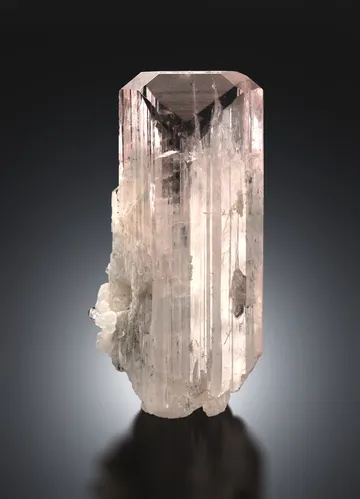
Charcas danburite is the locality’s signature mineral: prismatic, vertically striated crystals with wedge- or chisel-like terminations, commonly colorless to milky white and, in the most desirable examples, pale pink and partly gemmy. Single crystals are common on the market, but fine matrix pieces are much scarcer, especially those with calcite, quartz, pyrite, chalcopyrite, or amethystine quartz arranged rather than merely attached. Aurora Mine labels are classic, while San Bartolo is especially noted for danburite associated with amethyst and other boron-rich minerals; the San Sebastian name appears on very large cabinet groups. Collectors should look for sharp undamaged terminations, glassy luster, clean upper transparency, graceful proportions, and natural color; large size helps, but a bruised or dull prism is ordinary beside a smaller crystal with crisp form and bright glass.
Charcas calcite is best known for flattened, stacked “poker-chip” crystals—disc-like rhombohedral forms that can build into sculptural clusters, rosettes, towers, or two-sided floater groups. The usual palette is colorless, white, cream, pale yellow, honey, or lightly included brownish tones, with some specimens showing attractive fluorescence in the pink-to-red range. Calcite occurs both as an ore-gangue mineral and as a collector mineral in late cavities, and it is a common companion to danburite, where robust scalenohedra or flattened rhombohedra climb around pale borosilicate prisms. The best Charcas calcites are sharply stacked, lustrous, balanced, and free of edge bruising; ordinary examples can be chalky, contacted, or visually heavy, while elite pieces have the unmistakable repeated-plate rhythm that makes the locality recognizable across a room.
Charcas transformed nifontovite from a species curiosity into a serious collector mineral, especially through finds at Rey y Reina that produced unusually large, transparent to translucent, colorless crystals. Crystals may be prismatic to somewhat blocky, and recent market examples have included gemmy crystals several centimeters long, with matrix specimens notably less common than loose singles. The finest pieces show clean transparency, complete termination, minimal cleavage damage, and an elegant position on matrix; many lesser specimens are massive, cleaved, contacted, or visually confused with associated borates and borosilicates. Because nifontovite is a rare hydrated calcium borate and not an easy visual identification for most collectors, the most desirable Charcas examples are those with reliable provenance, analytical confidence, and a specific Rey y Reina or level attribution.
Quartz at Charcas is not merely background gangue: it appears as rock crystal, amethyst, citrine, and fine drusy coatings on danburite and calcite, giving the district some of its most distinctive combination specimens. The San Bartolo danburite-amethyst material is especially prized, because the lilac quartz adds color contrast to otherwise pale danburite and creates a recognizable substyle within the locality. Quartz also occurs with sulfide ore and calcite in the vein and replacement assemblage, and fine-grained coatings may give danburite a sugar-frosted surface. Good quartz from Charcas is valued less for isolated perfection than for association—amethyst on danburite, citrine on danburite, or sparkling microcrystalline quartz that enhances rather than obscures the host crystal; overgrown pieces can be interesting, but they must retain readable form and visual balance.
Charcas datolite is a classic borosilicate companion to danburite, commonly pale green to colorless or whitish, and it can form lustrous, blocky to prismatic crystals with a glassy surface. Documented specimens include pale green datolite with pyrite and danburite, and Charcas datolite is often tied to San Bartolo and Aurora labels. Paragenetically it belongs to the early Ca-B metasomatic envelope and may be overgrown by later danburite or quartz, which is why sharp, exposed, freestanding datolite crystals are more desirable than indistinct greenish masses. Fine pieces show clean pale green color, reflective faces, attractive sulfide accents—especially pyrite—and a clear relationship to the boron-rich assemblage; poor pieces can look massive, contacted, or difficult to distinguish without analysis.
Citrine from Charcas is best understood as a locality-specific quartz variety associated with the danburite-bearing system rather than as a standalone gem-crystal occurrence. Collector specimens are typically valued when pale yellow to honey quartz crystals occur on or with danburite, making a subtle warm contrast against white or pinkish borosilicate prisms. The material has been reported alongside amethystine quartz from the district, and the strongest pieces have natural-looking color, sharp quartz faces, and an association that is unmistakably Charcas rather than generic quartz. Because quartz color can be treated elsewhere in the market, provenance and context matter here: citrine on credible Charcas danburite is far more meaningful than an isolated yellow quartz crystal with only a vague Mexican label.
Cinnabar from Charcas is a minor but memorable part of the district’s specimen suite, known in small red crystals and grains, including examples associated with calcite. It belongs to the broader mineralized environment around Charcas rather than to the famous pale borosilicate display style, and it also appears in descriptions of nearby fracture-zone mineralization with calcite, quartz, gypsum, iron oxides, and occasional native sulfur. Good Charcas cinnabar specimens are uncommon and are judged by vivid red color, discrete crystal form, contrast against pale calcite or matrix, and honest labeling; small size is normal, while dark, massive, or rubbed material is less compelling. As with all cinnabar, handling should be sensible: avoid abrasion, dust, heat, or acid cleaning, and keep specimens away from children or uses that invite contact.
Borcarite is one of the most specialized Charcas borate species, reported from the San Bartolo Mine and important because it demonstrates how chemically unusual the Ca-B-CO3 metasomatic environment became in parts of the district. Specimens are rare, generally small, and usually of interest to systematic collectors rather than decorative display buyers. The best examples show recognizable crystals or crystal groups on matrix, not just pale massive material, and should be supported by a trustworthy source or analysis because several white to colorless borates and borosilicates can be visually deceptive. Good Charcas borcarite is therefore a label-and-verification mineral: locality precision, species confirmation, and association with the San Bartolo borate suite matter as much as aesthetics.
Amethyst from Charcas is most desirable when it occurs with danburite, especially the San Bartolo material that brought purple quartz into a locality otherwise dominated by white, colorless, pale green, and pale pink minerals. The amethyst is generally present as small crystals or coatings rather than huge isolated crystals, but its visual importance is high: lilac to purple quartz can form a base, accent, or partial druse on danburite, producing a distinctive Charcas combination. The best specimens have clean purple color, bright quartz luster, undamaged danburite terminations, and a composition in which the amethyst frames rather than smothers the borosilicate. Ordinary examples may be weakly colored, heavily coated, damaged, or too cluttered to show the danburite form.
Beyond the major collector species, Charcas has a substantial mineral list that reflects its mixed skarn, carbonate-replacement, vein, and boron-rich metasomatic history. Documented species include andradite, melanite, apophyllite-group minerals, aragonite, axinite-group minerals, bakerite, chalcopyrite, galena, sphalerite, pyrite, arsenopyrite, tetrahedrite, bornite, covellite, chalcocite, digenite, native silver, hematite, goethite, gypsum, celestine, natrolite, cahnite, conichalcite, rhodochrosite, and other rarities. Borcarite, conichalcite, cahnite, and rhodochrosite have been highlighted in recent locality work as additions to the Charcas species list. The district is also linked to the historic Charcas iron meteorite, formerly known as Descubridora, a separate meteoritic occurrence from the area rather than part of the mine’s skarn mineralization.
Charcas specimens are generally abundant enough that collectors can be selective, but not all species are equally available. Danburite singles remain the most common Charcas material on the market, followed by calcite and mixed danburite-calcite pieces. Fine matrix danburite, undamaged large groups, vivid amethyst-on-danburite, sharp datolite, and gemmy nifontovite are much scarcer. Borcarite and other rare borates are systematic-mineral purchases first and display specimens second.
The most common authenticity issue is not outright fakery but overgeneral labeling. “Charcas” may be correct at the district level while losing important information about whether the specimen came from Aurora, San Bartolo, Rey y Reina, San Sebastian, Bufa, or another working. For danburite, this is usually acceptable if the crystal is typical and the old label is credible; for nifontovite, borcarite, cahnite, or unusual borates, mine-level provenance and analytical support become much more important. Detached danburite crystals from Charcas can also be confused in casual trade with danburite from other countries, though the classic Charcas combination of pale color, chisel termination, vertical striation, and Mexican mine provenance is familiar to experienced dealers.
Condition is critical. Danburite terminations chip easily at the chisel edge, and even a tiny bruise can reduce the importance of an otherwise fine crystal. Many detached crystals have contacted bases, which is normal, but side bruising, rehealed-looking fractures, pocket clay in cracks, and dull etched surfaces should be weighed carefully. Calcite poker chips often suffer edge bruising and cleavage, especially on exposed rims. Datolite may be partly overgrown or visually masked by quartz and danburite, so check that the datolite crystals are actually present and not merely a greenish massive area. Nifontovite is especially prone to cleavage and may look deceptively good in photos; inspect terminations, side faces, and matrix attachment.
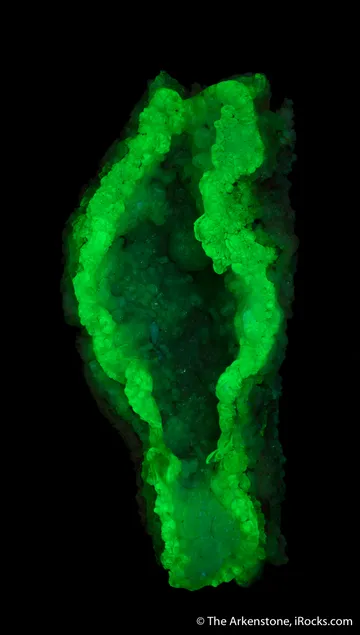
Fluorescence can add interest. Charcas danburite has documented examples that fluoresce green under midwave and shortwave ultraviolet light and cream to yellowish under longwave, while some calcite shows pink to red fluorescence. Fluorescence should be treated as a bonus rather than a substitute for form and condition. Do not expose heat-sensitive, mercury-bearing, or hydrated minerals to unnecessary heat, and avoid aggressive chemical cleaning on mixed specimens, especially those containing calcite, cinnabar, sulfides, hydrated borates, or delicate quartz coatings.
Treatments and repairs are possible in the general mineral market. For Charcas, the most plausible concerns are repaired danburite crystals, glued matrix attachments, acid-brightened calcite or quartz, and mislabeled quartz color varieties. Natural citrine and amethyst associations from Charcas are best bought as documented combination specimens rather than isolated colored quartz. With high-end danburite, ask specifically about repair or restoration; with rare borates, ask about analytical confirmation.
The Charcas story begins with silver and a frontier settlement rather than with danburite. In 1563, Juan de Oñate is credited with discovering silver in the district and opening the San Cristóbal mine, named for his father, don Cristóbal de Oñate. The first mining camp was more than a pit and a dump: it drew Franciscan monks, a small monastery, houses, a prison, and a foundry. In 1574, King Felipe II authorized the founding of Santa María de las Charcas, a name that looked across the Spanish empire to the famous mining province of Charcas in Bolivia. The settlement did not have an easy start. It stood in Guachichil territory, and the first village was burned; by 1584 it had been rebuilt at the present site of Charcas, with conflicts continuing to trouble the district into the mid-seventeenth century.
The early mines chased silver near the surface, but the twentieth-century district was transformed by deeper sulfide mining. In 1911, Metalúrgica Nacional and American Smelting and Refining Company took over exploitation rights from Minera del Tiro General. Asarco gained full ownership in 1924 and built a plant that came into operation in 1925. That shift from colonial silver camp to mechanized base-metal mine is the reason Charcas specimens look the way they do: modern collectors prize crystals that were accidental by-products of a major underground zinc-lead-copper-silver operation, not the output of a hand-dug specimen locality.
One unusually concrete glimpse underground comes from a University of Toronto graduate student field trip on Monday, September 28, 1981, organized by A. James Macdonald. Samples collected near Stope 4-156, from the Queen Stope, and from the King Stope showed the working face of Charcas as miners and economic geologists saw it: disseminated pyrite, galena, sphalerite, and chalcopyrite in sericitized intrusive rock; coarse sphalerite and galena in quartz-calcite matrix; and sulfide-rich veining cutting altered skarn. The ore was not picturesque in the way a danburite cabinet piece is picturesque, but it explains the district’s mineral wealth. One stope carried the name El Rey, another La Reina—the King and the Queen—names that later collectors would see echoed in labels for rare borate specimens from Rey y Reina.
The modern collector chapter has its own surprises. Charcas had long been known for pale danburite, but San Bartolo material with amethyst brought a new color into the district’s visual language. White or pale pink danburite, already desirable for its form, suddenly appeared with lilac quartz as an accent or coating. For collectors accustomed to Charcas specimens in cream, colorless, pinkish, and pale green tones, the purple contrast was instantly recognizable. The best examples are not merely “danburite plus quartz”; they are little sculptures in which amethyst provides a purple stage for chisel-terminated danburite.
Then came nifontovite. Before Charcas, the species was the sort of hydrated borate that only systematic collectors followed closely. The Charcas finds produced large, transparent, terminated crystals—so large and clean that dealer descriptions began treating nifontovite as a display species, not just a line in a micromount list. A published Mineralogical Record figure shows nifontovite crystals on matrix measuring 16.5 cm from the Rey y Reina mine, with another 5.2 cm crystal group from Level 16. Recent market examples have included colorless transparent crystals several centimeters long, often as loose singles, with matrix groups much rarer. For a collector, that is the kind of discovery that changes a species: after Charcas, “nifontovite” no longer means only rarity, but rarity with visible crystal quality.