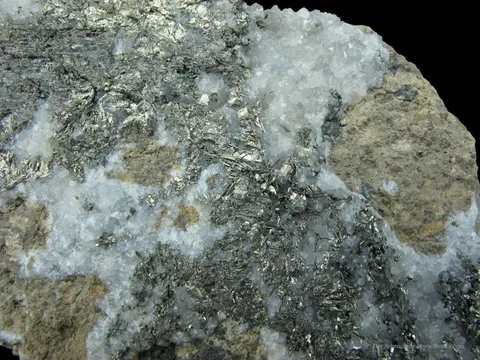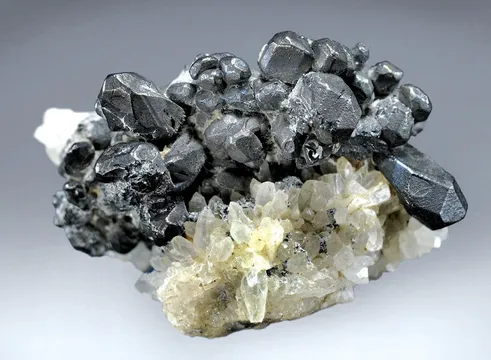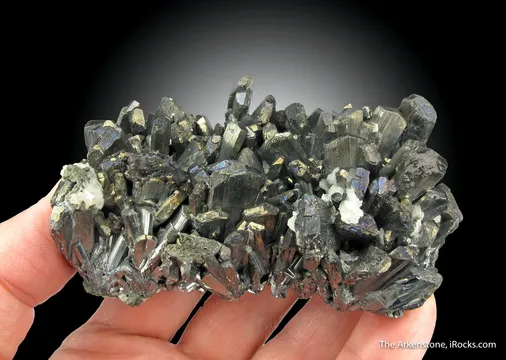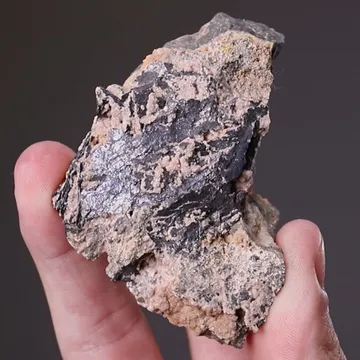
Roşia Montană, Romania — classic European gold locality known for Au-Ag epithermal veins, native gold and electrum specimens, and historic mining landscapes.
Key facts
Roşia Montană is one of the classic names in European specimen gold: a high-grade Au-Ag epithermal system of the Apuseni Mountains’ “Golden Quadrilateral,” worked under several names—Alburnus Maior in Roman records, Verespatak in Hungarian labels, Goldbach in German-language collections, and Roşia Montană today. For collectors, its importance rests on three overlapping reputations. First, it is a major breccia-hosted and vein-stockwork gold-silver deposit developed in Neogene volcanic rocks. Second, it is a historic source of native gold and electrum specimens: pale to mellow yellow leaves, mossy dendrites, skeletal crystalline plates, arborescent aggregates, wires, and small but sharp crystals perched on drusy white to milky quartz. Third, it is an extraordinary mining landscape where prehistoric, Roman, medieval, modern, and contemporary workings are superimposed in the same mountains.
The finest Roşia Montană specimens have a look that is difficult to confuse once seen: bright, thin, irregular sheets and feathery lamellae of native gold lying in or across quartz-lined vein cavities, sometimes standing upright from the matrix rather than merely coating it. Good pieces show three-dimensional gold, not just a smear; open quartz cavities, not sawn ore; and a balanced contrast between rich yellow metal and white quartz. Many old labels use Verespatak, Vöröspatak, or simply Transylvania/Siebenbürgen, and the best examples often entered collections long before modern Romanian locality names became standard.
Regional View
Country View

Photo: Wikimedia Commons
The mineralogy is broader than cabinet gold alone. Roşia Montană preserves early Au-(Ag) low-sulfidation assemblages and later Ag-Te-(Ge-Au) intermediate-sulfidation veins. Tellurides and sulfosalts give the locality unusual scientific weight: hessite, altaite, sylvanite, petzite, cervelleite, tetrahedrite-group minerals, pearceite, proustite, stephanite, polybasite, and Te-rich argyrodite have all been documented. The Cârnicel vein is the type locality for alburnite, Ag8GeTe2S4, a microscopic Ag-Ge-Te-S mineral whose name preserves the Roman place-name Alburnus Maior.

Photo: Wikimedia Commons
Search for specimens: View all specimens from Roşia Montană, Rosia Montana, Romania
Roşia Montană lies in Alba County, in the Metalliferous range of the Apuseni Mountains, roughly 7 km northeast of Abrud. The ore field is part of the South Apuseni Neogene metallogenic province, where volcanic and subvolcanic activity generated a cluster of epithermal gold-silver and related base-metal systems. At Roşia Montană, mineralization is hosted mainly by dacitic to rhyodacitic volcanic rocks, maar-diatreme breccias, vent breccias, hydrothermal breccia bodies, stockworks, and cross-cutting veins. Adularia ages reported for the system fall tightly around the late Miocene, approximately 12.78 to 12.71 Ma.
The deposit is best understood as a composite system rather than a single “mine vein.” Modern geological work recognizes several ore fields and ore bodies, including Cetate, Cârnic, Cârnicel, Coş, Văidoaia, Jig, Ţarina, Orlea, Igre, and Păru-Carpeni. Cetate and Cârnic are the large southern bodies familiar from modern resource discussions and from the visible open-pit landscape; Cârnicel is especially important mineralogically because the alburnite-bearing Cârnicel vein belongs there. Orlea, on the northern side of the historic mining landscape, contains accessible museum workings and was the subject of recent studies of the +730 m level, where mineralized structures in Vent Breccia include a flat-dipping rhodochrosite-gangue vein, a steep tectonic breccia dyke, and a steep base-metal vein.
The ore styles span disseminated pyrite-bearing dacite porphyry, subvertical breccia zones, quartz and carbonate veins, veinlet stockworks, and re-brecciated breccias. The larger Au-rich bodies show low-sulfidation characteristics, while later Ag-Te-Ge-bearing veins record a transition toward intermediate-sulfidation conditions. Gold occurs chiefly as native gold and Au-Ag alloy, with subordinate gold tellurides; silver is present in sulfides, sulfosalts, tellurides, and native or alloy phases depending on stage. Gangue minerals include quartz, adularia, calcite, rhodochrosite, rhodonite, siderite, and barite, with alteration dominated by adularia-sericite style assemblages and local carbonate and clay minerals.
The ancient mine was Alburnus Maior. Roman exploitation began after Rome’s conquest of Dacia in 106 CE and continued for roughly 166 years. The UNESCO-listed mining landscape preserves over 7 km of known Roman underground workings within a much larger network of later galleries, with Roman mining concentrated in the Cârnic, Lety, Orlea, and Cetate massifs. These workings include trapezoidal-section galleries, inclined communication passages with cut steps, helicoidal shafts, pillar-supported stopes, reverse-stair stopes, drainage adits, and chambers for treadmill-powered wooden water-lifting wheels. The Roman miners were highly selective, following rich zones and leaving lower-grade material for later periods.
Mining continued through medieval and early modern periods, when the Apuseni goldfields remained among Europe’s important precious-metal districts. From the 18th through 19th centuries, German, Austrian, Hungarian, and local Romanian mining traditions overlapped, and this is the period from which many old specimen labels and cabinet pieces originate. The 18th and 19th centuries are also crucial for scholarship: wax-coated Roman wooden tablets discovered in the mine galleries made Roşia Montană one of the key documentary sites for understanding Roman mining law, labor, business partnerships, loans, funerary societies, and daily life in Dacia.
Modern state mining culminated in open-pit extraction at Cetate, where large-scale surface work operated in the late 20th century and ceased in 2006. The state operator was connected with Minvest/Roşiamin; after the 1990s, the proposed Roşia Montană Gold Corporation project, involving Gabriel Resources and Minvest, sought to develop a much larger open-pit gold-silver operation centered on Cetate, Cârnic, Orlea, and Jig. That project became one of Europe’s most visible conflicts between mining development, archaeology, environmental risk, and heritage preservation. Roşia Montană was inscribed on the UNESCO World Heritage List in 2021 and simultaneously placed on the List of World Heritage in Danger.
For collectors today, Roşia Montană should be treated as a historic and protected locality, not an open field-collecting destination. Mining has ceased, ancient galleries and archaeological zones are protected, and access to underground workings is restricted. The public experience is through the Mining Museum and designated heritage routes, not specimen extraction. Most specimens available on the market are old-time pieces, material recovered during former mining operations, or estate specimens with historic labels. Freshly collected “mine-run” material should be regarded with caution unless the chain of custody is unusually clear and lawful.
Specimen-producing pockets were chiefly quartz-lined cavities and vein openings in Au-bearing structures, especially those that yielded leaf and dendritic native gold on quartz. Classic labels rarely preserve exact pocket names, but the Cârnicel vein is a documented source for native gold, electrum, quartz, rhodochrosite, rhodonite, sphalerite, galena, pyrite, chalcopyrite, tetrahedrite-group minerals, hessite, altaite, sylvanite, and alburnite. The collector literature and dealer records emphasize 19th-century finds of gold on quartz, many sold under Verespatak; later state mining and mine-dump recovery supplied additional specimens, but the most attractive pieces retain the old European cabinet character.
Gold from Roşia Montană is the locality’s signature collectible: typically pale to rich yellow native gold or electrum in lamellar, skeletal, mossy, arborescent, dendritic, and leaf-like aggregates on white to milky drusy quartz, with pyrite, sphalerite, barite, rhodochrosite, calcite, tetrahedrite-group minerals, and rare tellurides as documented associates. Romanian mineralogical summaries record gold crystals as cubes, ikositetrahedrons, needle-like forms, skeletal aggregates, and lamellae; the best cabinet pieces show upright, three-dimensional plates or feathery dendrites rather than flat films, and many fine old specimens range from thumbnail to cabinet size, with individual leaves or clusters commonly in the millimeter to centimeter range. The most desirable examples combine bright metal, open quartz texture, old Verespatak/Roşia Montană provenance, and undamaged delicate leaves; ordinary pieces are richer as ore than as specimens, with sparse gold flattened into massive quartz or breccia.
Quartz at Roşia Montană matters to collectors both as the classic matrix for native gold and as a locality mineral in its own right. In veins it forms white to milky druses, vein linings, and microcrystalline to small-crystal crusts that provide the contrast against which the leaf gold is displayed; in the host rhyodacites, quartz phenocrysts and paramorphs after high quartz occur as short bipyramids, often translucent, reported up to about 2–3 cm, and Roşia Montană/Verespatak is historically associated with the “Verespatak twin” law of high quartz. The best quartz-associated specimens are not simply quartz crystals from the district but gold-bearing quartz with clean, open cavities, sparkling druse, and visible sculptural gold; as standalone quartz, the locality interest is strongest where the specimen documents beta-quartz habit, Verespatak-style twinning, or host-rock context.
Beyond gold and quartz, Roşia Montană is a significant Ag-Te-Ge locality. The valid type-locality mineral is alburnite, Ag8GeTe2S4, discovered in the Cârnicel vein as microscopic rounded grains, veinlets, and irregular inclusions hosted chiefly by tetrahedrite, hessite, and rhodochrosite, associated with galena, pyrite, sphalerite, chalcopyrite, hessite, altaite, sylvanite, rhodochrosite, quartz, calcite, and rhodonite. The deposit also contains acanthite, alabandite, altaite, argyrodite, canfieldite, cervelleite, pearceite, petzite, polybasite, proustite, stephanite, uytenbogaardtite, pyrite, marcasite, sphalerite, galena, chalcopyrite, arsenopyrite, tetrahedrite-group minerals, rhodochrosite, rhodonite, adularia, calcite, barite, siderite, alunite, kaolinite, and several secondary sulfates formed in old galleries. Berthierite and helvite have been noted as especially rare for the Metaliferi Mountains, and rhodochrosite from the deposit is described in the literature as globular to reniform pink masses in open spaces among breccia fragments, veinlets, and cross-cutting veins.
Roşia Montană gold is one of the European native-gold types where provenance matters almost as much as aesthetics. Serious buyers should learn the old locality names—Verespatak, Vöröspatak, Vöröşpatak, Goldbach, and sometimes Transylvania or Siebenbürgen—and should also recognize their weakness: many 18th- and 19th-century Romanian gold specimens were labelled broadly by region, and later owners or dealers sometimes reassigned them to Roşia Montană because it is the famous name. A broad “Siebenbürgen” label is not proof of Roşia Montană. The best support is a period label specifically reading Verespatak/Vöröspatak/Goldbach, an old institutional or dealer pedigree, or morphology and matrix consistent with known Roşia Montană material.
A documented locality-confusion issue involves thick Romanian leaf gold with trigons and clear quartz/sphalerite/opal associations that had been attributed after the fact to Roşia Montană but was reassigned to the Trestia Mine in Hunedoara County. This is a useful warning: “Romanian leaf gold” is not automatically Roşia Montană. Pieces with unusual matrix, unusually thick leaves, large trigonal plates unlike the typical Verespatak style, or vague Transylvania-only labels deserve careful scrutiny.
I found no well-documented pattern of manufactured fake Roşia Montană gold specimens comparable to the artificial gold-on-quartz problems seen in some modern markets, but native gold is easy to manipulate physically. Thin leaves can be pressed, bent, glued back, or “improved” by trimming quartz. Inspect junctions between gold and quartz under magnification: natural gold should dive into cavities, wrap around quartz grains, or emerge from seams rather than sit as isolated foil on a flat surface. Repairs are especially important on upright leaf specimens, where a broken lamella can be tempting to reattach.
Condition is a major value factor. The most attractive Roşia Montană gold is delicate, and the very habits that make it desirable—thin sheets, mossy dendrites, wires, and feathery plates—are prone to flattening, abrasion, and edge loss. Old cabinet specimens may have dust in quartz druses, small bruises to exposed leaves, old glue on labels, or ancient trimming scars. These are not automatically disqualifying, but fresh breaks across bright gold leaves, shiny modern saw cuts, or flattened metal smeared into quartz should reduce confidence and price.
Fluorescence is not a central collecting feature for the classic gold-quartz specimens. Alburnite is reported non-fluorescent, and the major cabinet appeal is visual gold morphology rather than UV response. Handling should be conservative: avoid ultrasonic cleaning, aggressive acids, and repeated brushing. Quartz can tolerate more than the gold can; the gold leaves cannot.
Market availability is steady but not abundant. Small Roşia Montană gold-on-quartz pieces appear regularly through specialist dealers, online auctions, and estate dispersals, while fine old-time miniatures and cabinet specimens with sculptural gold and strong labels command a premium. Alburnite is not a practical hand-specimen species for collectors; it is microscopic and important chiefly as a type-locality and analytical mineral. Quartz-only specimens from Roşia Montană are far less sought after unless they document the high-quartz habit or carry exceptional historical provenance.
In Roşia Montană, the most famous specimens are not all minerals. Some are wooden. Between 1786 and 1855, miners breaking into old workings uncovered wax-coated Roman writing tablets—thin wooden triptychs that had survived underground while ordinary paper would have vanished. They recorded contracts, loans, associations, expenses, prices, and funerary-society business from the mining community of Alburnus Maior. The earliest known reference to the settlement is dated February 6, 131 CE, a date that still gives Roşia Montană a startlingly personal connection to Roman Dacia: not just a mine, but a town with names, debts, business partners, witnesses, and legal formulae scratched into wax.
One of the earliest recorded discoveries came in 1786, when George Iancu found a tablet in a mine on Igren Mountain belonging to a proprietor named Lorincz. The piece was reportedly broken in two and passed to mining official Daniil Gomboş before entering the Batthyaneum collection at Alba Iulia. Another tablet, found on May 20, 1788 in the St. Joseph mine on Letea Mountain, was written on February 9, 167 and concerned the liquidation of a burial society—a Roman miners’ mutual-aid association for death and funeral expenses. These tablets were not imperial proclamations; they were the paperwork of ordinary people living around a dangerous underground economy.
The greatest 19th-century excitement came in the 1850s. In 1854, Lajos Diószegi identified tablets in the Ohaba–Sfântul Simion gallery on the south slope of Cârnic. In 1855, an abandoned gallery of the Saint Catherine mine—today the Cătălina-Monulești system near Lety—yielded the largest surviving cache, with approximately 40 tablets reportedly found. The discoveries drew European scholarly attention to Transylvania; Theodor Mommsen, the great historian of Rome, personally visited the region. Around 50 Roman wax tablets are reported from Roşia Montană overall, though only a smaller number survived in museums in Romania and abroad. The rest were lost to decay, accident, restoration attempts, or the casual destruction that often followed sudden discoveries in working mines.
The engineering story is just as memorable. In Păru-Carpeni, archaeologists documented a Roman drainage system with a series of four, perhaps five, chambers for treadmill-powered wooden water-lifting wheels. Each wheel lifted mine water to a higher gallery, where another wheel could take over—an underground relay of human-powered hydraulics. A Roman wheel described from the system had a diameter of about 3.90 m and 27 buckets. The operator did not sit beside it; he climbed and trod the rim, using his body as the motor while hollow compartments picked up water at the bottom of the cycle and poured it into a wooden channel at the top.
Comparable Roman water-lifting installations were known elsewhere, but many had been destroyed by later mining before archaeologists could study them properly. Roşia Montană’s significance is that such systems survived in mine context, in chambers that could be excavated and read as working spaces. In Cătălina-Monulești, where tablets had made the mine famous in the 19th century, more recent excavations identified large Roman wooden objects and a drainage installation, bringing together the two most evocative forms of evidence: written contracts from the miners’ world and the timber machinery that kept their galleries from flooding.
The visible landscape carries scars from every era. Roman miners cut narrow, trapezoidal galleries with hammer and chisel. Later miners intersected them, widened them, drained them, abandoned them, and sometimes found their wooden records. At Cetate, 20th-century open-pit mining took the top off part of the historic mountain. The modern pit is a blunt reminder that Roşia Montană is not a frozen archaeological site but a place where each mining technology consumed some record of the one before it. For collectors, that tension is part of the aura of the specimens: a leaf of gold on milky quartz may have passed from a Miocene hydrothermal vein into a Roman mine, a Habsburg-era cabinet, a 19th-century German label, and finally a modern collection.
Stefan Wallier, Roger Rey, Kalin Kouzmanov, Thomas Pettke, Christoph A. Heinrich, Steven Leary, Gary O’Connor, Călin G. Tămaş, Torsten Vennemann, and Thomas Ullrich, “Magmatic Fluids in the Breccia-Hosted Epithermal Au-Ag Deposit of Roşia Montană, Romania,” Economic Geology, 101(5), 923–954, 2006. A key modern paper on the deposit-scale geology, fluid inclusions, magmatic input, and breccia-hosted epithermal model.
Călin G. Tămaş, Laurent Bailly, Lucreția Ghergari, Gary O’Connor, and Adrian Minuţ, “New occurrences of tellurides and argyrodite at Roşia Montană, Apuseni Mountains, Romania, and their metallogenic significance,” The Canadian Mineralogist, 44(2), 367–383, 2006. The essential study documenting hessite, altaite, sylvanite, petzite, cervelleite, and Te-rich argyrodite in Ag-rich veins.
Călin-Gabriel Tămaş, Bernard Grobéty, Laurent Bailly, Heinz-Juergen Bernhardt, and Adrian Minuţ, “Alburnite, Ag8GeTe2S4, a new mineral species from the Roşia Montana Au-Ag epithermal deposit, Apuseni Mountains, Romania,” American Mineralogist, 99(1), 57–64, 2014. The type-mineral description for alburnite from the Cârnicel vein.
Marcel Benea, Laurent Bailly, and Călin G. Tămaș, “New Data Concerning Mn Bearing Minerals From Rosia Montana, Metaliferi Mountains, Romania,” Studia UBB Geologia, 45(1), 67–78, 2000. A focused paper on rhodochrosite, rhodonite, adularia, and related gangue/alteration minerals.
Sergiu Drăgușanu, Călin G. Tămaș, and Béatrice Cauuet, “New geological data on Orlea mining field, Roşia Montană Au-Ag epithermal deposit, Apuseni Mountains, Romania,” Carpathian Journal of Earth and Environmental Sciences, 17(1), 159–170, 2022. Recent work on the Orlea +730 m level and its rhodochrosite-gangue, tectonic-breccia, and base-metal vein structures.
Călin Gabriel Tămaș, Mădălina Paula Andrii, Réka Kovács, Sergiu Drăgușanu, and Béatrice Cauuet, “Sphalerite Composition in Low- and Intermediate-Sulfidation Epithermal Ore Bodies from the Roșia Montană Au-Ag Ore Deposit, Apuseni Mountains, Romania,” Minerals, 11, 634, 2021. Useful for separating the deposit’s low- and intermediate-sulfidation ore styles and understanding sphalerite chemistry.
Mindat specimen record AK4-EDU, Native Gold and Quartz, Roşia Montană, Smithsonian Institution collection, photographed by Rock Currier. A useful reference image for classic gold-on-quartz material from an institutional collection.
Wikimedia Commons, “Gold-Quartz-159473.jpg,” Rob Lavinsky / iRocks.com, CC BY-SA 3.0. A freely licensed photograph of a cabinet gold-on-milky-quartz specimen from Roşia Montană/Verespatak.
“The Mining Museum,” Roșia Montană UNESCO Tour — A multimedia/audio-tour page introducing the Mining Museum, Roman Gallery, lapidarium, and local guides.
“VIDEO Superba lecţie de istorie ţinută în faţa unor elevi de ghidul Muzeului Mineritului de la Roşia Montană,” Adevărul / Dorin Ţimonea — Romanian news video featuring guide Dorin Rus presenting the museum galleries and mining history to students.
“Save Rosia Montana,” European Water Movement — Advocacy media from the heritage/environmental campaign surrounding the proposed open-pit mine.
Mindat: Roşia Montană, Roșia Montană, Alba County, Romania — The most useful collector-facing locality page, with mineral list, sublocalities, references, and photo links.
UNESCO World Heritage Centre: Roșia Montană Mining Landscape — Authoritative overview of the World Heritage property, Roman workings, protection status, coordinates, and List of World Heritage in Danger status.
ICOMOS Evaluation: Roșia Montană Mining Landscape — Detailed heritage evaluation with descriptions of the Roman galleries, waterwheel systems, archaeological features, and historical landscape.
Roșia Montană UNESCO Tour — Visitor-oriented heritage route with accessible explanations of the museum, galleries, historic houses, tablets, and mining landscape.
Minvest Deva: Muzeul Mineritului Roșia Montană — Official museum page for the Roșia Montană Mining Museum and its Roman gallery/lapidarium context.
FOLIA: Alburnite type description — Repository page for the American Mineralogist description of alburnite, the type-locality mineral from the Cârnicel vein.
RRUFF: Canadian Mineralogist paper on tellurides and argyrodite — Open PDF of the 2006 paper resolving the occurrence of tellurides and Te-rich argyrodite at Roşia Montană.
ETH Research Collection: Wallier et al. 2006 — Open-access record for the Economic Geology paper on magmatic fluids in the breccia-hosted epithermal deposit.
Digital Commons: Benea, Bailly, and Tămaș 2000 — Study of Mn-bearing gangue and alteration minerals, especially rhodochrosite, rhodonite, and adularia.
Wikimedia Commons: Mining in Roșia Montană — Freely licensed images of the mine landscape, Roman galleries, museum material, and historic mining features.