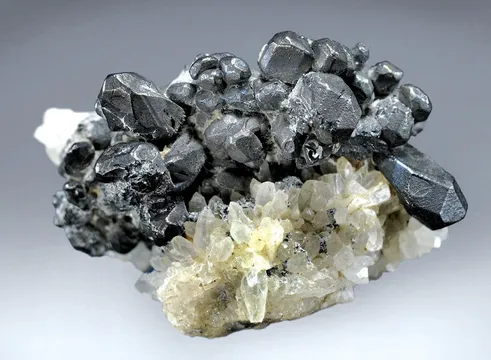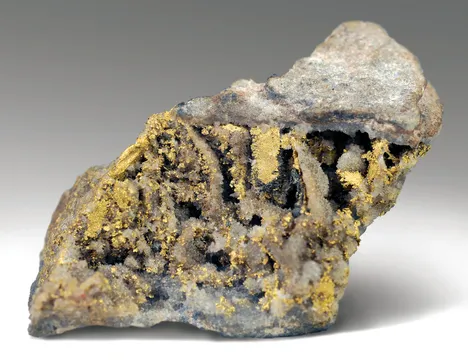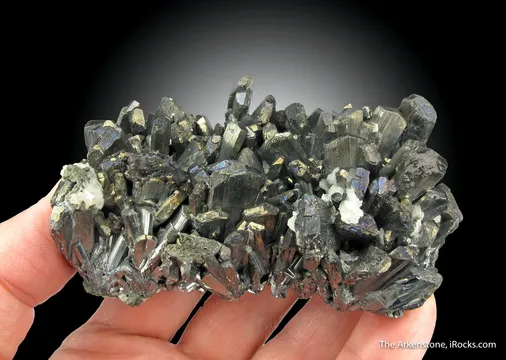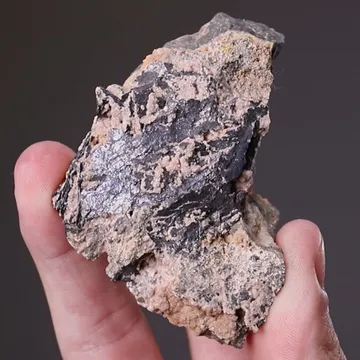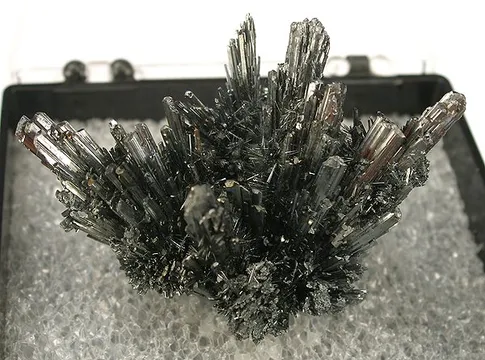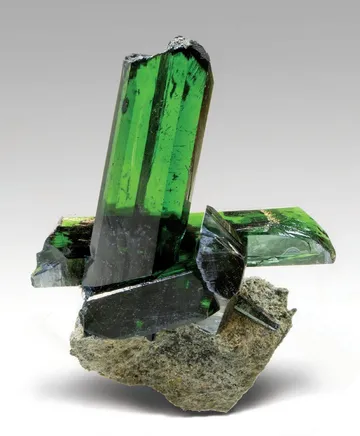
Baia de Arieș, Romania — type locality of sylvanite; epithermal Au-Ag-Te veins in the Metaliferi Mountains produce striking dendritic sylvanite on quartz.
Key facts
Baia de Arieș is one of the indispensable names in the old European telluride canon: the Transylvanian mining town once known to collectors as Offenbánya, Aranyosbánya, or Offenburg, and the type locality of sylvanite, AgAuTe4. For collectors, that single fact would be enough. Yet the locality is more than a type-locality footnote. It sits in the north-eastern corner of the Metaliferi Mountains’ “Golden Quadrilateral,” the Neogene Au-Ag-Te province of the southern Apuseni Mountains where epithermal veins, stockworks, and breccia pipes delivered some of the classic gold and telluride specimens of European mineralogy. At Baia de Arieș, the best pieces are not merely metallic smears in quartz; they are old-time, high-character specimens showing silvery to pale brass sylvanite in graphic, dendritic, skeletal, or flattened bladed growths on quartz, calcite, barite, and altered volcanic matrix.
The deposit is mineralogically distinctive because its gold and base-metal ores are spatially separated. In the Afiniș structure, telluride-bearing veins occupy the eastern and south-eastern part of the system, while telluride-poor gold veins are concentrated more to the north-west. Classic vein names recorded in the literature include Danieli, Sylvanite, Silberkluft, Goldkluft, Neuekluft, Karoly or Carol, Kiesskluft, Ferdinand, and Antoniu. These veins are narrow to locally broad epithermal structures, commonly only hand-specimen scale in the collector’s imagination but substantial in the mine: reported with dips of roughly 20–50 degrees, thicknesses from about 1 to 30 m, and lengths up to about 150 m. The famous Sylvanite vein is the exceptional one, noted for monomineralic sylvanite aggregates in quartz and barite, a phenomenon that explains why Baia de Arieș specimens can look so different from the more disseminated telluride ores of many other districts.
Regional View
Country View
The strongest Baia de Arieș specimens have a very particular visual language: bright, flattened telluride blades lying almost like metallic script on pale quartz or calcite, sometimes forming branching “graphic” networks and sometimes standing as more individual skeletal crystals. This “Schrifterz” character is the locality’s calling card. Good hand-sized examples are overwhelmingly old material, commonly attributed to nineteenth-century mining rather than modern collecting, and they carry a premium when accompanied by old Offenbánya, Aranyosbánya, or Transylvania labels.
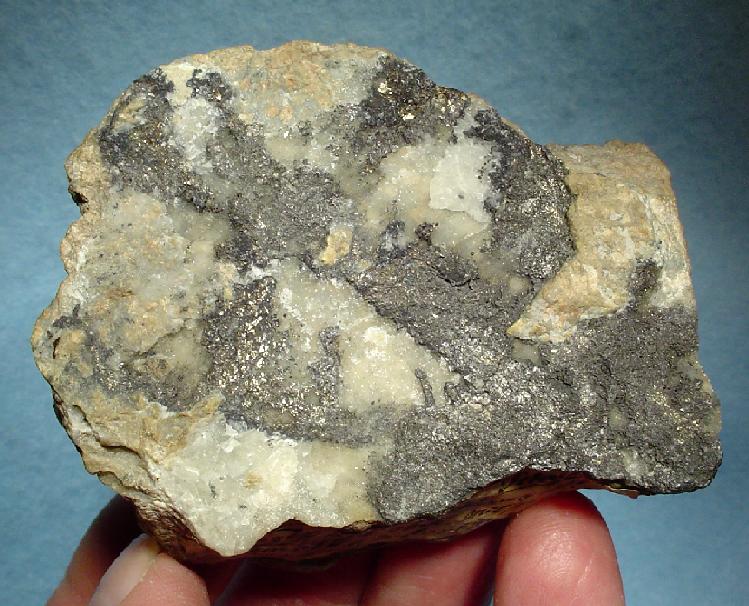
Photo: Wikimedia Commons
Search for specimens: View all specimens from Baia de Arieș, Romania
Baia de Arieș is best understood as a Neogene epithermal Au-Ag-Te and polymetallic mining district developed around the Afiniș and Ambru metallogenic fields. The regional framework is the southern Apuseni Mountains, where Neogene volcanism and older crustal structures focused hydrothermal fluids into veins, stockworks, breccia bodies, and metasomatic replacement zones. The basement includes metamorphic units of the Baia de Arieș Series—mica schists, paragneisses, amphibolites, manganiferous quartzites, and crystalline limestones—cut and overprinted by Neogene andesitic to quartz-andesitic magmatism. Hydrothermal alteration in the volcanic rocks includes propylitic assemblages, followed by adularia-sericite-argillic-silicic alteration around the precious-metal structures.
The collector-relevant gold-telluride mineralization is concentrated in the Afiniș field. Mineralization there is related to Barza hornblende ± pyroxene andesite intrusions and includes stockworks, veins on the south-eastern fringe of the Afiniș column, and gold-bearing breccia bodies including Concordia, Combinat, Aeraj, Ștefana, Crăișor, Nicolae, and breccia body no. 4. The telluride-bearing veins in the eastern and south-eastern Afiniș area host quartz, rhodochrosite, calcite, and barite with sylvanite and other Au-Ag tellurides, native gold, subordinate sulphides, and sulphosalts. The Goldkluft vein is singled out in older literature as unusually rich in native gold for the telluride-bearing vein group and also recorded with argentite, pyrargyrite, and stephanite.
The Ambru field is a different expression of the same mining node. Its mineralization is associated with hornblende-biotite quartz-andesites and occurs as lenses, hydrometasomatic bodies, irregular breccias, and less commonly veins cutting or following the structure of crystalline limestones. The named bodies and zones include Iosif, Iosif Nou, Plumbul Nou, Valea Lacului, Feredeu, Buturoasa, Pleșu, and Baia Roșie. This side of the district is more polymetallic in character, with Pb-Zn-Cu-pyrite mineralization and less direct specimen fame than the Afiniș sylvanite material, but it is part of the broader locality name that appears on older labels.
Mining at Baia de Arieș is very old. Archaeological and historical summaries place gold working in the area in Roman times, and medieval mining was already important by the thirteenth century. One historical account notes that in the thirteenth century, gold mining at Zlatna and Baia de Arieș was sufficiently active that 36 ore-smelting furnaces were operating. Later geological and mining descriptions came from nineteenth- and early twentieth-century workers including von Cotta, Grimm, Pošepny, Horn, Ghițulescu, and Socolescu, and the deposit remained part of Romania’s modern mining industry into the early 2000s.
Modern operation ended with Romania’s post-communist mine-closure program. Baia de Arieș mining activity ceased in 2003–2004, and the mines were closed in 2004 after being judged uneconomic by the government. The former operation was associated with Minvest Deva and Ariesmin, and closure and environmental rehabilitation became part of the same national transition that shuttered many historic Romanian gold and polymetallic mines. For collectors, this means that worthwhile Baia de Arieș material on the market is mostly old mine production, museum deaccession-era or estate material, historic dealer stock, and recycled collection specimens; it is not a locality that can be treated as a casual contemporary collecting ground. Underground access is unsafe, legally restricted, and environmentally sensitive, and permission from landowners, authorities, and mineral-right holders would be essential before any field activity.
The most famous specimen-producing zone remains the Sylvanite vein and related telluride-bearing veins of Afiniș. Historic pockets produced graphic sylvanite plates and skeletal to dendritic aggregates on quartz, calcite, and barite. Old labels may use Offenbánya, Offenbanya, Offenburg, Aranyosbánya, Transylvania, Siebenbürgen, or Baia de Arieș, and several of the finest examples in museums and private collections preserve that nineteenth-century label history. The best pieces are instantly recognizable: bright metallic sylvanite with open growth, contrast, and readable crystal habit, rather than dull telluride seams lost in dark ore.
Sylvanite is the signature species and type-locality mineral of Baia de Arieș, and the finest examples show why the old name “graphic tellurium” stuck: flattened, silvery to pale brass crystals form script-like, dendritic, skeletal, or branching aggregates on quartz, calcite, barite, and altered matrix. Documented Baia de Arieș pieces range from small thumbnail-scale sprays and vein fragments to unusually rich hand specimens, including reported crystals to around 2 cm and old cabinet pieces in the 7–8 cm range. The classic associations are quartz, calcite, barite, native gold, stibnite, rhodochrosite, marcasite, altaite, tellurantimonite, tetradymite, krennerite, and clay minerals. The most coveted pieces have lustrous, clearly crystallized metallic growths with pale gangue contrast and old provenance; ordinary examples are more massive, tarnished, or visually confusing telluride patches that require analysis or strong label history to carry the same collector confidence.
Quartz from Baia de Arieș matters chiefly as the stage on which the precious-metal tellurides perform. The Afiniș telluride veins are quartz-rich, and classic specimens show white, gray, or drusy quartz vugs carrying flattened sylvanite crystals, native gold, stibnite, calcite, barite, and locally rhodochrosite. In collector terms, quartz is most desirable here when it is clean enough to contrast with the metallic tellurides, open enough to preserve vug texture, and not so heavily coated by dark sulphides or iron oxides that the sylvanite is visually lost. Fine Baia de Arieș quartz specimens are therefore judged less as standalone quartz crystals than as well-balanced telluride matrices: pale, compact, and structurally supportive, with cavities or surfaces that display the graphic sylvanite rather than burying it.
Native tellurium attributed to Baia de Arieș must be treated with more caution than sylvanite. The locality is unquestionably tellurium-rich in the geochemical and mineralogical sense because of its Au-Ag telluride assemblage, and museum literature records a notable native tellurium specimen from Baia de Arieș; however, modern locality databases mark the Baia de Arieș native tellurium entry with uncertainty, and specialists have questioned whether some old “Transylvania” native tellurium labels actually belong to other classic Apuseni tellurium localities such as Fața Băii or Săcărâmb. When accepted, Baia de Arieș tellurium is expected as small metallic gray to tin-white masses, grains, or aggregates in telluride-bearing quartz rather than large free crystals. The best collector pieces need unusually strong provenance or modern analytical confirmation, because visual distinction among native tellurium, sylvanite, altaite, and other pale metallic tellurides is not reliable from appearance alone.
Gold from Baia de Arieș is a classic companion to the tellurides, especially in quartz-rich Afiniș material. Museum descriptions emphasize lamellar and skeletal gold, commonly associated with quartz, and Baia de Arieș examples may show delicate crystalline dendrites or reddish-yellow aggregates in grayish quartz rather than the broad foil-like leaf gold more typical of some Roșia Montană specimens. Analyses of two museum gold samples from Baia de Arieș gave high but variable gold contents, with significant silver and detectable iron, which fits the locality’s Au-Ag telluride environment and helps explain subtle color variation. Fine pieces show visible crystallized gold in an undisturbed quartz or telluride matrix, ideally with sylvanite association or old label documentation; lesser pieces are small specks in quartz or ambiguous metallic grains that can be hard to separate from pyrite, chalcopyrite, or telluride minerals without magnification and analysis.
Other minerals documented from Baia de Arieș include altaite, arsenopyrite, baryte, chalcopyrite, galena, krennerite, muthmannite, nagyágite, native arsenic, pyrite, rhodochrosite, sphalerite, stibnite, and tennantite-subgroup minerals, with pitticite and evansite also listed from the broader locality record. X-ray work on Gold Museum material has identified tetradymite and tellurantimonite in Baia de Arieș specimens, and museum descriptions record sylvanite associated with altaite, marcasite, tellurantimonite, tetradymite, krennerite, palygorskite, and illite. Sylvanite is the locality’s confirmed type-locality species; other celebrated Transylvanian type minerals, including nagyágite, krennerite, muthmannite, stützite, native tellurium, and tellurite, belong to nearby Golden Quadrilateral localities rather than Baia de Arieș itself.
The first rule with Baia de Arieș is provenance discipline. Serious specimens should have a plausible old locality name—Offenbánya, Offenbanya, Aranyosbánya, Offenburg, Transylvania, Siebenbürgen, or Baia de Arieș—and the mineral association should fit the locality: sylvanite in graphic to skeletal metallic growths on quartz, calcite, or barite; gold in quartz; and possible stibnite, rhodochrosite, or base-metal sulphides. Because neighboring Romanian telluride localities produced superficially similar material, labels can drift. Săcărâmb, Boteș, Fața Băii, Stănija, and Baia de Arieș all appear in the same old collections, and vague “Transylvania” or “Siebenbürgen” labels should not automatically be upgraded to Baia de Arieș without supporting evidence.
There is no well-documented cottage industry of fabricated Baia de Arieș sylvanites comparable to the better-known fakery problems for some brightly colored collector minerals, but misidentification is a real concern. Sylvanite, altaite, hessite, native tellurium, calaverite, krennerite, galena, and tarnished metallic sulphides can be visually deceptive in old ore specimens. Modern analytical support—XRD, SEM-EDS, or a trusted historic collection context—is especially valuable for expensive pieces, for native tellurium attributions, and for specimens sold as type-locality sylvanite when the visual habit is massive rather than graphic.
Condition is usually about preservation of the metallic surface. Sylvanite is relatively soft and can be damaged by rubbing, trimming, or aggressive cleaning; its flattened crystals are easily bruised at exposed edges. Old specimens may show natural tarnish, iron staining, broken quartz edges, or detached label glue, none of which is unusual, but heavily abraded surfaces reduce both aesthetics and evidentiary value. Avoid acid cleaning unless the identity of all associated minerals is secure. Calcite-bearing pieces may be harmed by acid, and old telluride matrices are often too historically important to risk for cosmetic brightening.
Fluorescence is not a major reason to collect Baia de Arieș material. Calcite, if present, may respond, but the locality’s value lies in visible telluride habit, gold association, type-locality status, and old provenance. Handle specimens over a tray, store them in stable, dry conditions, and keep old labels physically associated with the piece. For this locality, an original label can be nearly as important as a small increase in metallic coverage.
Market availability is limited and uneven. Small sylvanite specimens appear periodically, especially as old European collections are dispersed, but rich cabinet pieces with graphic sylvanite on pale quartz or calcite are scarce and are usually competed for by telluride specialists, type-locality collectors, and collectors of classic European ores. Gold specimens from Baia de Arieș are much less common than gold from the better-known Romanian gold localities, and native tellurium labels should be scrutinized carefully. A modest but well-provenanced example is preferable to a visually richer but uncertain “Transylvania” specimen.
The most evocative Baia de Arieș story is written in its old names. A collector handling a nineteenth-century label may read Offenbánya, Aranyosbánya, Offenburg, Siebenbürgen, or simply Transylvania, and each name belongs to the same complicated mining landscape at the edge of the Apuseni gold country. In old European cabinets, a Baia de Arieș sylvanite was not just a Romanian telluride; it was a relic of the place that gave sylvanite its name, a specimen from the province whose Latin name—Transylvania—became embedded in the mineral itself.
One surviving old-time specimen photograph shows why label history matters here. The piece is a 7.6 x 6.0 x 4.1 cm sylvanite from Baia de Arieș with lustrous dendritic aggregates of flattened golden-silvery crystals on calcite-coated matrix. Attached to it is an old German paper label dated 1854. That date is extraordinary in specimen terms: only nineteen years after Necker gave sylvanite its present name in 1835. In other words, some Baia de Arieș specimens circulating in old collections are not merely “classic”; they are nearly contemporary with the mineral’s formal entry into mineralogical literature.
The underground archaeology of the district adds another layer. Historical mining research in difficult-to-access galleries at Dealul Vânăt, Dealul Afiniș, Dealul Băilor, and Baia Roșie confirmed extensive work from the sixteenth and seventeenth centuries onward. The objects reported from those workings are wonderfully concrete: old mining lamp lights, chisels, jars for storing oil, rail systems with guiding rods in two galleries, and a large ladder carved from a single tree trunk. Such details are reminders that the classic specimens were not abstract “mine products.” They came from narrow, dark, hand-driven workings where miners followed metallic seams through volcanic and metamorphic rock by oil light, wood, iron, and endurance.
The modern ending was much less romantic. Baia de Arieș mining stopped in 2003–2004, and the closure of Ariesmin left hundreds of miners without work. Contemporary Romanian reports describe the former mine buildings after closure, the bankruptcy disputes around assets, and the social shock in a town whose identity had long been bound to mining. For collectors, that closure fixed Baia de Arieș as a historical locality: a place whose great mineral specimens now move mainly through old labels, museum drawers, and private collections rather than new underground discoveries.