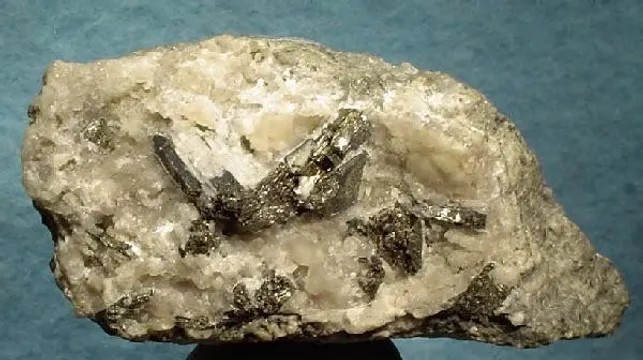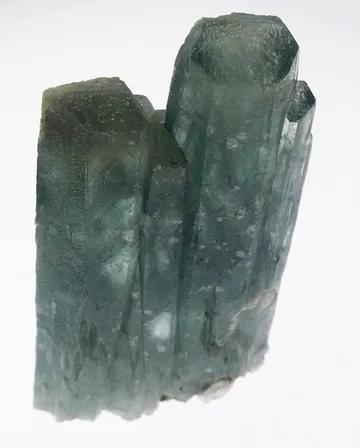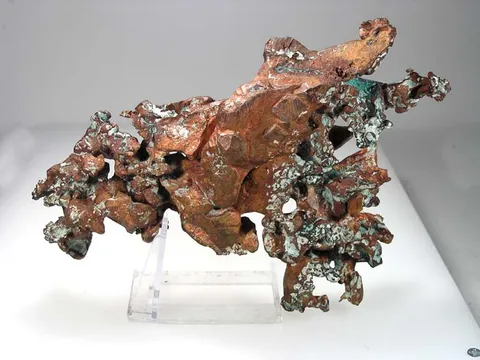
A collector's guide to Pikes Peak, Teller County, USA: its geology, mining history and notable minerals, illustrated with the 76 specimens documented from this locality on EarthWonders.
Key facts
Pikes Peak in the collecting world is more than a summit name. On old labels it often stands for a wide sweep of the Pikes Peak batholith on and around the mountain’s western flank, including Teller County occurrences tied to the Lake George–Crystal Peak mineral belt and related pegmatites. The collector significance of the locality rests on granitic pegmatites and miarolitic cavities in a Mesoproterozoic, A-type granitic batholith: small open pockets, seamlike pegmatites, and clay-filled cavities that allowed feldspar and quartz to grow as sculptural crystals instead of ordinary intergrown granite.
The classic assemblage is unmistakable: blue-green amazonite, ordinary cream to tan microcline, smoky quartz, clear and milky quartz, albite as cleavelandite, fluorite, goethite, hematite, topaz, phenakite, columbite-group minerals, zircon, and a long accessory suite enriched in fluorine and rare elements. The most coveted cabinet pieces show the Colorado contrast at its best—sharp, glassy to satin smoky quartz rising from lustrous robin’s-egg to deep blue-green amazonite, often with white albite rosettes or cleavelandite sheaves tucked between the feldspar blocks. Good specimens have honest pocket architecture: crystals set naturally, not merely loose singles glued into a pleasing arrangement, with little or no restored termination damage.
Historically, the Pikes Peak label is inseparable from nineteenth-century mineral collecting in Colorado. By the early 1880s, Whitman Cross and W. F. Hillebrand could already write that Pike’s Peak was known around the world for large, perfect amazonstone crystals in major collections, while also warning that much of the material was being assigned to the broad “Pike’s Peak” region because the mountains and drainages around the granite were sparsely named and incompletely explored. That old-label problem remains part of the locality’s character: Pikes Peak, Teller County is a legitimate and collectible label, but the finest modern pieces are far stronger when tied to named sublocalities such as Crystal Peak, Lake George area, Two Point, Smoky Hawk, Take Five, Dreamtime, or Glen Cove.
Regional View
Country View
The best Pikes Peak specimens look made for a mineral cabinet: bold color, simple geometry, and strong contrast. Amazonite crystals are typically blocky, perthitic microcline, commonly blue-green rather than emerald green, with color that may be even, patchy, zoned, or capped by white microcline. Smoky quartz ranges from pale brown to deep root-beer and near black; many crystals are sharp and lustrous, but naturally dinged terminations are common because pockets collapsed long before collectors reached them. Albite, when present as cleavelandite, softens the color scheme with snow-white blades and rosettes, while goethite and hematite supply black to bronze iron-oxide accents and, in some pockets, pseudomorphs after siderite.

Photo: Wikimedia Commons

Photo: Wikimedia Commons
Search for specimens: View all specimens from Pikes Peak, Teller County, USA
The collector deposit is a pegmatite-and-miarolitic-cavity occurrence within the Pikes Peak batholith, not an orebody in the usual metallic-mining sense. The batholith is a large, roughly 1.08-billion-year-old A-type granitic system of the central Colorado Front Range, dominated by coarse-grained biotite ± amphibole syenogranite and related late-stage intrusions. In the Teller County collecting belt, the pockets are chiefly in Pikes Peak Granite and associated late textural variants around the Lake George intrusive center and Crystal Peak district. The ordinary granite is pink to reddish and made mostly of feldspar, quartz, and mica; the specimens come where late, volatile-bearing pegmatitic portions concentrated enough water, fluorine, alkalis, and trace elements to leave open spaces lined with crystals.
For collectors, the important “ore bodies” are pocket-bearing pegmatite lenses, seams, and dikes. At Two Point, detailed mine observations recorded narrow pegmatites that could begin as pencil-thin seams, swell into biconvex graphic-granite lenses, open into cavities, and then taper out again within meters. Productive lenses commonly sat near structural intersections, especially where pegmatites met north-south fault or joint systems. A high-quality lens at Two Point was described as roughly 3 m across and about 40 cm thick, with a potential pocket opening as much as 2 m in diameter but only 10–20 cm high. The pocket itself might be open airspace at depth, but near the surface it was commonly collapsed, packed with clay, stained by iron oxides, invaded by roots, and broken into a puzzle of loose crystals and plates.
The mineralization is famous for the amazonite–smoky quartz association. In the broader batholith, many pegmatites yield common microcline with smoky quartz; the most celebrated Teller County pockets produce amazonite of strong blue-green color, quartz ranging from clear to smoky, and white albite as cleavelandite. Fluorite appears occasionally as clear, green, blue, or purple cubic crystals, sometimes as a small accent on quartz–feldspar plates. Goethite and hematite are common pocket companions and may occur as coatings, sprays, blades, or pseudomorphs after siderite. Topaz and phenakite are documented but much less common than quartz and feldspar in the classic amazonite pockets.
Mining history in the Pikes Peak region is older than most surviving labels suggest. Collecting activity in the Lake George–Crystal Peak area began in the 1870s, when gold prospectors, sightseers, and early mineral dealers searched the hills for crystal souvenirs. Early attention was often on topaz and quartz; amazonite, now the emblem of the district, was at times treated as an oddity and left on dumps. Albert Whitmore’s work at the old Gem Mines helped make Colorado amazonite internationally famous, with specimens reportedly displayed at the Chicago World’s Fair in the 1890s. The Foote Mineral Company also figures in early Crystal Peak collecting history, and nineteenth-century Pike’s Peak labels still surface from the A. E. Foote era.
Modern specimen mining has been dominated less by ore production than by patient pocket exploration. Some claims and operators used only hand tools; others used bulldozers, backhoes, front-end loaders, excavators, limited blasting, ground-penetrating radar, and professional reclamation. Collector’s Edge worked the Two Point Mine under lease in 1996–1997 and documented the Tree Root Pocket, one of the benchmark amazonite–smoky quartz finds of the region. The Dorris family and Glacier Peak Mining developed the Smoky Hawk trend after years of prospecting, with mechanized work beginning around 2000 and production from permitted operations beginning in 2003. The Smoky Hawk trend was mapped across a narrow belt of pegmatites and became one of the modern district’s most productive sources of vivid blue-green amazonite with smoky quartz.
The district is still collectible in the market but not freely collectable everywhere on the ground. Much of the best ground around Crystal Peak, Lake George, and related Teller County occurrences is private, patented, claimed, or otherwise controlled; many productive pockets are on active unpatented mining claims within public-land boundaries. Permission from the landowner or claim holder is essential before removing material. Recreational hand collecting may be possible on some open public lands where it is permitted and unclaimed, but the collector must verify land status, claim status, seasonal closures, road access, and local rules before digging. Mechanized disturbance, commercial removal, road work, and blasting require far more than casual collecting etiquette; they involve claims, permitting, reclamation plans, and financial bonding.
Named finds matter greatly. The Tree Root Pocket at Two Point, discovered in June 1997, produced more than 100 cataloged amazonite–smoky quartz groups, hundreds of single crystals and smaller groups, and a famously difficult restoration challenge because the pocket had collapsed into a clay-filled “sandwich.” The Smoky Hawk trend produced a succession of named pockets including Dragon’s Mouth, Legacy, Majestic, Smithsonian, Lucky Monday, Chuck’s, and Icon. The 2012 Icon pocket yielded the huge Smoky Hawk King plate, assembled from a large kite-shaped cavity and placed at the Denver Museum of Nature & Science. Other sublocality names—Take Five, Dreamtime, Jack Rabbit, Dry Hole, Key Hole Pocket at the Ten-Percenter claim, Yucca Hill, Clarence Coil claims, Glen Cove, and Crystal Creek—should be preserved whenever documented, because they transform a broad Pikes Peak specimen into a sharply placed historical object.
Pikes Peak quartz is the backbone of the locality’s pocket mineralogy, occurring as clear, milky, smoky, and sceptre crystals in miarolitic pegmatites of the batholith. The best examples are not massive vein quartz but free-grown crystals and groups from clay-filled cavities, commonly associated with microcline, amazonite, albite, goethite, hematite, fluorite, and rarer accessories. Clear quartz from the district may be overlooked beside the smoky and amazonite combinations, yet old Pikes Peak pieces can show elegant sceptre growths, caplike milky overgrowths, or clean glassy terminations on darker cores. Good quartz specimens from here separate themselves by sharpness, luster, intact terminations, and credible pocket context; ordinary pieces are abundant as loose singles, broken shards, iron-stained fragments, or quartz-only pocket debris without the color contrast that defines the finest Teller County plates.
Microcline from Pikes Peak occurs as blocky feldspar crystals in pegmatite pockets, ranging from cream, white, tan, and pinkish microcline to blue-green amazonite. On broad Pikes Peak labels, ordinary microcline with smoky quartz is commoner than true top-color amazonite, and the distinction matters: many batholith pockets produce serviceable feldspar crystals, while only select zones—especially parts of the Crystal Peak–Lake George system and the Smoky Hawk trend—yield the vivid blue-green material that commands strong collector attention. Pikes Peak microcline crystals can be several centimeters across in ordinary hand specimens and much larger in major pocket plates; they are valued for blocky form, luster, color zoning, white caps or stripes where present, and natural association with smoky quartz and albite. Good pieces retain coherent pocket arrangement and display clean feldspar faces; lesser ones are etched, bleached, stained, heavily cleaved, or detached single crystals without strong locality character.
Amazonite is the signature mineral of the Pikes Peak batholith, and Teller County specimens are judged first by color, then by form, luster, association, and provenance. The finest crystals are blue-green microcline, commonly blocky and perthitic, ranging from light robin’s-egg blue-green to the deep saturated color seen in the best Smoky Hawk and historic Crystal Peak-area pockets. Smoky Hawk material is especially noted for vivid blue-green amazonite, occasional white microcline caps or stripes, and strong pairings with dark smoky quartz; Two Point’s Tree Root Pocket produced more than 100 cataloged amazonite–smoky quartz groups, some with snow-white albite balls to about 4 cm. Good Pikes Peak amazonite has even or attractively zoned color, fresh faces, minimal edge bruising, and a natural quartz or albite association; ordinary pieces are pale, mottled, iron-stained, cleaved, or loose crystals with little pocket architecture.
Smoky quartz from Pikes Peak is prized for its deep brown to black color and its dramatic contrast against amazonite. In Teller County pockets, crystals may occur as loose singles, parallel groups, plates, or dark prismatic points tucked among microcline and cleavelandite; the Tree Root Pocket quartz was described as gemmy, sometimes flawless, medium to deep root-beer brown, averaging around 6 cm and reaching about 17 cm in length. Smoky Hawk quartz is noted for dark to black color, satin to glassy luster, and in some pockets a tendency toward tapered terminations, including forms reminiscent of tessin habit. The collector’s premium belongs to smoky quartz that is sharp, lustrous, undamaged, and naturally placed with bright amazonite; common field pieces are broken, naturally bruised, overcoated by iron oxides, or detached from feldspar plates during ancient pocket collapse.
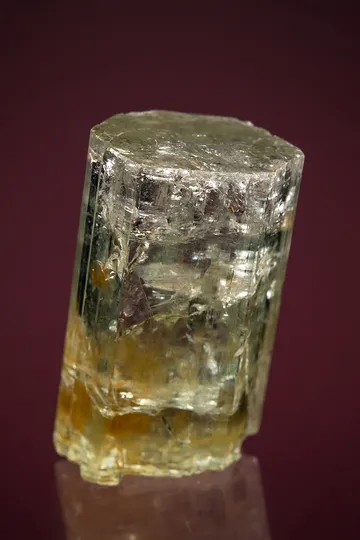
Topaz is a real but scarce Pikes Peak batholith mineral compared with quartz, microcline, and amazonite. In the Crystal Peak–Lake George–Pikes Peak collecting belt it occurs in miarolitic pegmatites and is most often reported as isolated crystals or small pocket finds rather than abundant cabinet plates. Documented Teller County topaz may be colorless to pale beige, grayish, or blue-gray, with chisel-like terminations and a glassy appearance; some pieces carry embedded amazonite or occur in the same mineralized environment as smoky quartz, feldspar, cleavelandite, mica, and fluorite. Because topaz is far less common here than amazonite or smoky quartz, well-formed, transparent, undamaged crystals with reliable old provenance are sought after, while vague “Pikes Peak topaz” labels deserve careful scrutiny unless the habit, association, and chain of ownership support the attribution.
Other documented Pikes Peak and closely related Teller County batholith minerals include albite as cleavelandite, fluorite, goethite, hematite, siderite and goethite/hematite replacements after siderite, phenakite, cassiterite, columbite-(Fe) and columbite-series minerals, zircon, xenotime, monazite-group minerals, bastnäsite, bertrandite, milarite, rutile, calcite, genthelvite, muscovite, biotite, and lithium-bearing mica historically labeled zinnwaldite in some district literature. The wider Pikes Peak batholith is also important for unusual aluminofluoride and rare-earth mineralization, particularly in the Mount Rosa–St. Peters Dome area, where elpasolite is a type-locality mineral and cryolite, pachnolite, thomsenolite, gearksutite, prosopite, weberite, bastnäsite, fluorite, riebeckite, astrophyllite, pyrochlore, xenotime, thorite, and monazite are recorded from complex pegmatites and related mineralization. Those rare-fluoride assemblages should not be automatically assigned to ordinary amazonite pockets, but they explain why the Pikes Peak region is much more than a two-mineral locality.
Pikes Peak specimens reward disciplined labeling. A broad “Pikes Peak, Teller County” label is acceptable for older material when that is all the history preserves, but it should not be silently upgraded to Smoky Hawk, Two Point, Tree Root Pocket, Crystal Peak, Take Five, Dreamtime, or any other named claim or pocket. The difference can be enormous in both scientific and market value. Modern high-end pieces should ideally carry the claim, pocket name, collector or operator, year, and any repair or preparation notes.
Repairs are common and not automatically disqualifying. Many important amazonite–smoky quartz pockets collapsed naturally before discovery, and extraction often recovers plates in fragments. The Tree Root Pocket is the classic example: specimens were cataloged, cleaned, reassembled where possible, and in many cases explicitly labeled as repaired. A well-documented, honest repair on a major Pikes Peak pocket piece is normal; undisclosed assembly, added quartz crystals, glued-on loose amazonite, or a vague “repaired” note without provenance is a different matter. Examine junctions between quartz and feldspar, look for unnatural glue lines in cleavelandite, check whether crystals share matching matrix and clay staining, and be wary of compositions that look too symmetrical for the broken, cramped pockets of the district.
Condition problems are predictable. Amazonite cleaves, chips, and loses corners easily; smoky quartz terminations are commonly bruised from ancient pocket collapse; iron-oxide coatings can hide or mimic luster; cleavelandite blades may be friable; and pocket clay can remain in crevices. Cleaning can greatly improve specimens, but aggressive acid or abrasive work may dull feldspar surfaces or remove useful pocket context. On dark smoky quartz, look carefully for repaired tips and contact bruises along prism edges. On amazonite, inspect the terminations and edges under strong light, because small chips can disappear against intense blue-green color.
Treatment concerns center less on modern irradiation and more on identity, repair, and locality inflation. Amazonite color in feldspar is natural in the district and tied to trace chemistry and structural water, but color varies widely; pale greenish microcline should not be marketed as top-grade amazonite simply because it comes from the Pikes Peak batholith. Likewise, “smoky topaz” is a common lay misnomer: most dark prismatic crystals in these pockets are smoky quartz unless the crystal form and testing support topaz. Fluorite, topaz, phenakite, and rare accessories from the region need careful identification, especially when detached from matrix.
Fluorescence is not a primary selling feature for the classic assemblage. Some associated fluorite may respond to ultraviolet light, but Pikes Peak amazonite–smoky quartz specimens are bought for color contrast, crystal form, and locality history rather than fluorescence. Handling should be conservative: support large plates from below, avoid pressure on quartz points and feldspar corners, keep friable cleavelandite away from repeated brushing, and store repaired specimens where vibration will not stress old joins.
Market availability is steady but stratified. Common Pikes Peak smoky quartz, microcline, and amazonite fragments appear regularly; attractive small combinations are obtainable; fine named-pocket pieces are far scarcer; and major, damage-free amazonite–smoky quartz plates with strong color, dark quartz, albite contrast, and documented claim or pocket history are premium American classics. The best examples compete not merely as Colorado specimens but as world-class feldspar–quartz combinations.
The old Pike’s Peak label began as a kind of shorthand for a mineral province that was bigger than anyone’s map. Cross and Hillebrand captured the problem in 1885: the mountain’s name had become famous for amazonstone crystals that had reached “almost every mineral collection of importance,” yet a visitor ascending from Manitou might see no sign of the celebrated mineral. The surrounding granite country was broad, rugged, sparsely inhabited, and only partly named; crystals from remote spots were often labeled simply “Pike’s Peak.” That habit created generations of beautiful but geographically blurred specimens. For today’s collector, those old labels are part charm and part warning.
The Lake George–Crystal Peak story took a sharp turn in the late nineteenth century when Albert Whitmore worked the old Gem Mines, about 2 km southeast of the later Two Point Mine. His amazonite helped carry the district’s reputation beyond Colorado. At the Chicago World’s Fair in the 1890s, specimens from claim Number 8 of the old Gem Mines reportedly astonished European viewers who had not seen Colorado’s particular pairing of blue-green feldspar and dark quartz. What earlier diggers had sometimes treated as dump oddity became a mineral fashion, and then a collecting obsession.
In the 1970s and early 1980s, the district still had a frontier flavor. Jerry and Thelma Hurianek owned property near Crystal Peak where collectors could pay to dig. Jerry used a backhoe to open promising pegmatite spots, and visitors finished the close work by hand. Thelma Hurianek was credited with helping discover the Museum Pocket, later reconstructed and displayed at the Denver Museum of Natural History. That reconstruction matters because Pikes Peak pockets are rarely found as open, undisturbed crystal caverns; they are commonly collapsed, clay-filled, and broken. Rebuilding a pocket was not simply cosmetic—it was a way of preserving the geological event.
The Two Point Mine entered modern collecting legend in June 1997. Collector’s Edge had leased the small claim from John O. Buckner, who had originally discovered, claimed, and named Two Point in 1956. The mine sat about 8 km northeast of Lake George, on steep, forested ground in Pike National Forest, surrounded by a patchwork of claims and old diggings. The 1996 season had produced useful geology and some pockets, but also disappointment. Ground-penetrating radar anomalies proved misleading where decomposed granite, solid bedrock, and boulders confused the instrument. Pit B reached about 3 m before hard rock stopped the dig. Pit C, about 20 ft down, exposed stacked pegmatites and yielded several small high-quality amazonite–smoky quartz pockets.
Then came Pit D. On the first day of digging in mid-June 1997, a few small deep blue-green amazonite fragments—local diggers called such fragments “color”—lay on the dump of an old shallow hole. The crew deepened the hole, found the pegmatite that had shed the color, and followed it as it dipped into the hill at about 25 degrees. At roughly 2 m below the surface, the pegmatite flattened, widened into a lens, and began spilling thousands of quartz and blue-green amazonite fragments. Within 30 minutes, the edge of a major pocket was visible.
A tree had helped lead them in. A root followed the narrow pegmatite seam downward and entered the cavity; old prospectors knew this trick and sometimes searched by following roots. But the same root that guided the miners had also damaged the treasure. The Tree Root Pocket lay only 2 m below the surface beside a large tree, and its roof had collapsed long before discovery. Graphic-granite roof plates had dropped straight down onto plates growing from the floor, making what the miners described as an amazonite “sandwich” with clay filling every open space. The opening was cramped—about 16 cm high in one close view, never more than about 20 cm high even after a week of work—while the pocket eventually opened to more than 2 m wide and about 1.7 m deep, shaped roughly like a kidney bean.
The first material looked discouraging. Several single amazonite crystals came out damaged. Then small groups appeared, also damaged, and within a couple of hours two very fine groups emerged. By the end of the first day, the crew had recovered four “killer specimens.” The true color was still hidden under limonite and clay; the pieces had to wait for the Collector’s Edge lab in Golden before anyone could judge them fully. Each day, four or five superb specimens came out, and for every fine group roughly 50 broken pieces followed. For about eight days the crew played a daily contest: was today’s great piece better than yesterday’s?
Back in Golden, the pocket became a months-long puzzle. Every piece had been grouped and marked by its position in the pocket. The first cleaning was only water and patience, removing heavy clay to expose the feldspar. After six weeks of careful work, the repair-worthy pieces were complete, and fitting fragments together took two months. About half of the final specimens were repaired, most with a single repair, and the best were cataloged with permanent numbers and repair labels. Only then did the real surprise emerge: the amazonite color was deep blue-green all the way to the crystal cores. The quartz was gemmy, root-beer brown to smoky, sometimes flawless, averaging around 6 cm and reaching 17 cm. Several plates carried snow-white albite balls to 4 cm, and two pieces held 1.5 cm cassiterite crystals. In September 1997, the Tree Root Pocket specimens debuted at the Denver Gem and Mineral Show.
The aftermath was sobering. After the show, a program was assembled to drill and blast 30 ft below the Tree Root Pocket, but not a single additional pocket appeared at depth. Pit B was drilled and shot extensively too, again with no material. By mid-October, the blasting work ended; pits were reclaimed, reseeded, and replanted. The Tree Root Pocket had not opened a rich vertical ore shoot. It had been a single improbable intersection of pegmatite, structure, surface weathering, collapse, roots, clay, and luck.
The Smoky Hawk story carried the district into the television age. Joe Dorris and his family filed the Smoky Hawk claim in December 1998 after years of prospecting and eventually mapped a pegmatite belt now called the Smoky Hawk trend. Mechanized exploration began in 2000, permitted mining began in 2003, and the family’s work centered on a small but unusually rich area. The trend proved extraordinarily pockety. By the mid-2010s, more than 900 pockets had been excavated in one account, and more than 1,000 in a later abstract, though only a small fraction qualified as major, exceptional pockets. Names such as Dragon’s Mouth, Legacy, Majestic, Smithsonian, Lucky Monday, Chuck’s, and Icon entered the district vocabulary.
At Smoky Hawk, mechanized mining did not replace hand collecting; it made hand collecting possible at depth. Two excavators and limited blasting opened deeper pegmatites, with operations reaching 60 ft but commonly averaging 30 ft or less. Once a pocket appeared, the tools became water and screwdrivers. The deeper mining also changed the market. For roughly the first century, most diggers had worked with picks and shovels in shallow ground. Modern operators could reach pegmatites that earlier collectors never touched, and modern lab work could save specimens from ruptured pockets that old-timers might have abandoned as broken rubble.
The Icon pocket, discovered in the summer of 2012, became Smoky Hawk’s headline event. The Dorris family uncovered a large kite-shaped cavity about 6 ft wide by 8.5 ft long. It produced roughly one ton of amazonite and smoky quartz crystals. From that material, the largest assembled plate measured nearly 3 ft by 2 ft and became known as the Smoky Hawk King. The discovery was stretched over the end of June and through July because High Noon Productions was filming the extraction for the television series Prospectors. The result was unusual for a mineral find: a major American specimen whose discovery was not merely remembered by the miners but filmed as it unfolded.
Whitman Cross and W. F. Hillebrand, “Minerals from the neighborhood of Pike’s Peak,” in Contributions to the Mineralogy of the Rocky Mountains, U.S. Geological Survey Bulletin 20, 1885. The foundational nineteenth-century account of Pikes Peak-region amazonstone, quartz, fluorite, cryolite-group minerals, topaz, phenakite, zircon, and elpasolite. USGS Publications Warehouse
E. E. Foord and R. F. Martin, “Amazonite from the Pikes Peak batholith,” The Mineralogical Record, vol. 10, 1979, pp. 373–384. A core collector reference on Colorado amazonite color, occurrence, and Pikes Peak batholith specimens. Collector’s Edge reference list
R. M. Pearl, “Minerals of the Pikes Peak granite,” The Mineralogical Record, vol. 5, 1974, pp. 183–189. An important collector-oriented summary of the Pikes Peak granite mineral suite and collecting localities. Collector’s Edge reference list
Edwin B. Eckel, Robert R. Cobban, Shirley K. Mosburg, and Eugene E. Foord, Minerals of Colorado, Fulcrum Publishing, 1997. A standard Colorado mineral reference repeatedly cited for Crystal Peak, Florissant, Glen Cove, Pikes Peak batholith, and Teller County species records. Mindat Teller County bibliography context
D. R. Smith, J. Noblett, R. A. Wobus, D. Unruh, J. Douglass, R. Beane, C. Davis, S. Goldman, G. Kay, B. Gustavson, B. Saltoun, and J. Stewart, “Petrology and geochemistry of late-stage intrusions of the A-type, mid-Proterozoic Pikes Peak batholith (Central Colorado, USA): implications for petrogenetic models,” Precambrian Research, vol. 98, 1999, pp. 271–305. The key modern petrology paper for the batholith’s A-type granitic framework and late-stage intrusions. ScienceDirect
Diane R. Smith, J. Noblett, R. A. Wobus, D. Unruh, and K. R. Chamberlain, “A Review of the Pikes Peak Batholith, Front Range, Central Colorado: A ‘Type Example’ of A-Type Granitic Magmatism,” 1999. Useful overview of the batholith’s potassic and sodic series and its significance as an A-type granitic system. Trinity University Digital Commons
Donald E. Kile and Peter J. Modreski, “Crystal growth mechanisms in miarolitic cavities in the Lake George ring complex and vicinity, Colorado,” 1999. Scientific treatment of amazonite and smoky quartz crystal-size distributions and growth in Crystal Peak-area miarolitic pegmatites. U.S. Geological Survey
Joseph Dorris, “Amazonite and Smoky Quartz Pegmatites of the Smoky Hawk Trend, Teller County, Colorado,” in Second Eugene E. Foord Pegmatite Symposium, Colorado School of Mines, 2016, pp. 29–30. Primary modern summary of Smoky Hawk trend pegmatites, pocket frequency, named pockets, amazonite color, smoky quartz habit, and mining methods. Friends of Mineralogy Colorado
Joseph Dorris, “Amazomite and Smoky Quartz Mining on the Smoky Hawk Claim, Teller County, Colorado,” 36th Annual New Mexico Mineral Symposium, 2015, pp. 11–12. Abstract documenting the 2012 Smoky Hawk King discovery, High Noon Productions filming, approximately 185 acres of claims, and the Icon pocket. New Mexico Bureau of Geology & Mineral Resources
Collector’s Edge Minerals, “Two Point Amazonite Mine, Teller County, Colorado,” and “Two Point Amazonite Mine, Teller County, Colorado, Part 2.” Detailed operator account of the 1996–1997 Two Point work, Tree Root Pocket geology, recovery, repair, and specimen characteristics. Part 1 and Part 2
Carl R. “Bob” Carnein, Philip M. Persson, and Markus B. Raschke, “An occurrence of cryolite and related aluminofluoride minerals near the Lake George ring complex, Pikes Peak batholith, central Colorado,” Mineral News, 2021. Documents cryolite and related aluminofluoride minerals near the Lake George ring complex and emphasizes the wider fluorine-rich mineralogy of the batholith. PDF
Smithsonian National Museum of Natural History type-material record for elpasolite, NMNH 83302, Cincinnati Mine, St. Peter’s Dome, Pikes Peak, Colorado. Important museum record tying the Pikes Peak region to the type occurrence of elpasolite. Smithsonian Contributions to Earth Sciences PDF
“Mining Colorado Amazonite and Filming Prospectors — Joe Dorris — 2016 Dallas Mineral Collecting Symposium,” The Arkenstone / Dallas Mineral Collecting Symposium. A collector lecture on Crystal Peak District mining, the Dorris family’s deeper pegmatite work, pocket structures, specimen recovery, preparation, and filming for Prospectors. https://vimeo.com/413820626
“Pikes Peak minerals: beyond amazonite and smoky quartz; Part 2,” Ed Raines, Colorado School of Mines repository. A lecture-style media resource on the broader mineralization of the Pikes Peak batholith beyond the classic amazonite–smoky quartz pairing. https://repository.mines.edu/entities/publication/306c1b4e-d6f9-419d-9bcd-79419c4dfff6
“Colorado Pikes Peak Batholith Blue Amazonite and Smoky Quartz Crystals,” davealex / YouTube. Field-collector media showing Pikes Peak batholith amazonite and smoky quartz material in a modern rockhounding context. https://www.youtube.com/watch?v=c-i3QxMGLzI
Mindat: Pikes Peak, Teller County, Colorado, USA — Core locality page for the broad Pikes Peak, Teller County label used by collectors and museums.
Wikimedia Commons: Minerals of Pikes Peak, Teller County, Colorado — Useful gallery of verified open-license specimen photographs tied to the Pikes Peak, Teller County locality.
Colorado Geological Survey: Gemstones — State-survey overview of Colorado gems, including amazonite and Pikes Peak batholith context.
Colorado Geological Survey: Prospecting — Practical land-status and permission guidance for collecting and prospecting in Colorado.
Colorado Geological Survey OF-03-19: Geologic Map of the Manitou Springs Quadrangle — Geological background on Pikes Peak Granite, pegmatites, Crystal Park, St. Peters Dome, and specimen-mineral occurrences.
U.S. Geological Survey: Crystal growth mechanisms in miarolitic cavities in the Lake George ring complex and vicinity, Colorado — Technical paper on amazonite and smoky quartz growth in Crystal Peak-area miarolitic pegmatites.
Collector’s Edge: Two Point Amazonite Mine, Teller County, Colorado — Detailed narrative of Two Point history, geology, operations, and the 1997 Tree Root Pocket discovery.
Collector’s Edge: Two Point Amazonite Mine, Teller County, Colorado, Part 2 — Follow-up with specimen examples, associated minerals, and references for the Tree Root Pocket and district.
New Mexico Mineral Symposium: Joseph Dorris, Smoky Hawk Claim abstract — Primary abstract for the Smoky Hawk King, Icon pocket, and Smoky Hawk trend production.
Friends of Mineralogy Colorado: Second Eugene E. Foord Pegmatite Symposium abstracts — Includes Joseph Dorris’s Smoky Hawk trend paper and other Colorado pegmatite contributions.
Mindat article: TGMS 2008 — Pikes Peak — Photo-rich show report documenting Pikes Peak and Teller County amazonite–smoky quartz specimens in major displays and collections.
Bureau of Land Management: Rockhounding — Federal overview of where casual collecting is and is not allowed, including restrictions on active mining claims.
Bureau of Land Management: Can I Keep This? — Plain-language federal guidance on collecting rocks, gemstones, and other natural objects on public lands.