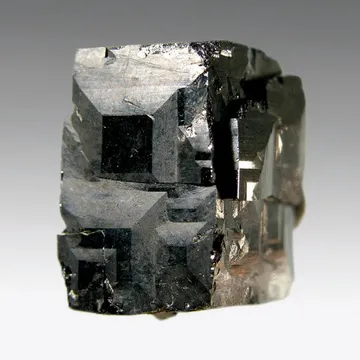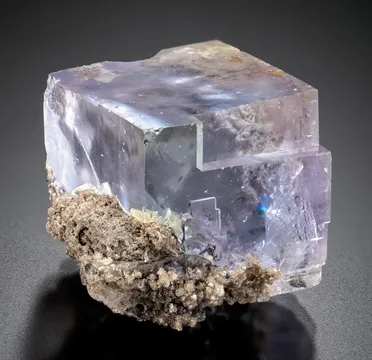
A collector's guide to Penfield Quarry, USA: its geology, mining history and notable minerals, illustrated with the 68 specimens documented from this locality on EarthWonders.
Key facts
Penfield Quarry is one of the classic western New York collecting localities in the Silurian Lockport carbonates east of Rochester, a working crushed-stone operation whose specimen reputation rests on mineralized vugs rather than ore production. The quarry cuts hard, gray, petroliferous Lockport dolostone and associated Lockport Group strata; the best pockets occur where solution cavities, stylolites, fossil coral heads, and stromatoporoid fabrics gave later mineralizing fluids room to grow free crystals. For collectors, Penfield means sharp white to pale pink dolomite rhombs, dogtooth calcite, transparent selenite, reddish-brown sphalerite, celestine, marcasite and pyrite, but above all gemmy cubic fluorite perched on sparkling dolomite in open vugs.
The visual signature is unmistakable: pale blue, colorless, yellowish, greenish, or violet fluorite cubes standing proud on a snow-white dolomite carpet, sometimes with internal zoning and phantom-like banding; clear gypsum enclosing earlier crystals; and scalenohedral calcite crystals that can look almost architectural when balanced on a double-sided vug plate. Penfield specimens are not showy because of brute size, although large pockets and occasional large crystals are documented. They are showy because of contrast, clarity, and the clean, three-dimensional growth that open carbonate cavities can provide.
Regional View
Country View
The locality is also geologically important beyond mineral collecting. Penfield Quarry exposes a strong section through the Lockport Group and its contact with the underlying Clinton Group, and it was used in mid-20th-century stratigraphic work that gave the Penfield name to a local Lockport unit. Later field-guide work recognized that the quarry records shallow, sandy, wave-winnowed carbonate environments grading upward into more fossiliferous, vuggy Eramosa beds—the same beds that furnished many of the collector minerals.
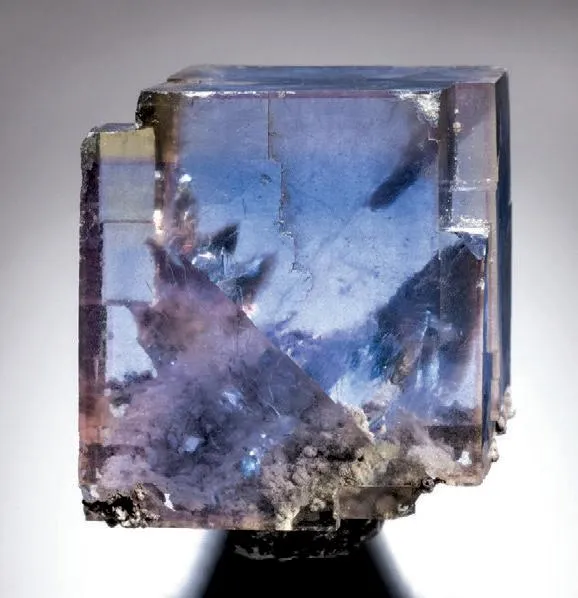
Photo: EarthWonders / Jeff Scovil
Search for specimens: View all specimens from Penfield Quarry, USA
Penfield Quarry is at 746 Whalen Road in Penfield, Monroe County, New York, just east of Rochester. It is an active aggregate quarry operated by Dolomite Products Company / The Dolomite Group, now part of the CRH family of companies. Its commercial product is crushed dolostone used for road construction, asphalt, concrete aggregate, fill, and landscaping stone rather than metal ore. The quarry has long been known to mineral collectors because the same blasting and benching that make crushed stone also expose fresh vugs in the Lockport dolostone.
The rock is dense, hard, dark gray to brownish gray, and characteristically bituminous when broken. Older guides describe the freshly fractured stone as giving off a crude-oil odor, with residual asphaltic coatings, globules, films, and greasy hydrocarbon material in cavities. This petroleum association is not incidental color; it is part of the diagenetic history of the Lockport carbonates and also explains why some Penfield specimens, fossils, and patches of rock can fluoresce bluish white to orange under long-wave ultraviolet light.
Stratigraphically, the quarry exposes a substantial section of the Lockport Group and the underlying upper Clinton Group. Field-trip descriptions record the Gates Member of the Rochester Shale in the lowest accessible parts, overlain by DeCew dolostone and then the sandy dolostones and dolomitic sandstones historically treated as Penfield Member or Penfield Formation equivalents within the lower Lockport. The upper quarry beds include fossiliferous, vuggy dolostones now assigned to the Eramosa Formation. These upper vuggy horizons, especially beds rich in corals and stromatoporoids, are the main specimen-bearing zones.
The mineralization is best understood as low-temperature carbonate-hosted MVT-style mineralization. It is not a vein mine in the western American sense, nor a pegmatite, nor a skarn. The minerals line open cavities, fissures, stylolites, and former fossil voids in dolomitized limestone. Bassett and Kinsland emphasized the resemblance to Mississippi Valley-type deposits: simple mineralogy, carbonate host rock, absence of a nearby exposed igneous source, sphalerite-galena-sulfide associations, evidence of solution activity, and crystallization in open spaces. Later work on fluid inclusions in Lockport fluorite placed mineralizing temperatures around the 137–150°C range, high enough to imply warm basinal or hydrothermal brines but still far removed from high-temperature igneous mineralization.
The paragenesis is one of the locality’s charms. Dolomite commonly forms the vug lining and visual stage. Calcite is often later, perched on dolomite. Gypsum may enclose earlier dolomite or celestine, producing striking “crystals-in-glass” specimens when the selenite is clean. Marcasite and pyrite can dust or spike the dolomite surfaces. Sphalerite occurs both as fissure fillings and as curved to fan-shaped brown crystals in vugs. Galena is generally much rarer, commonly as seams or rock fillings and only rarely as free-standing cubes. Fluorite, the prize species, occurs as isolated cubes or groups, with the best pieces standing free on white dolomite rather than buried in massive gypsum or broken out of dense rock.
Penfield’s commercial history reaches back to the early 20th century. Local historical and collecting accounts place the quarry’s establishment in the 1920s, and Mindat records it as established in 1928 by Dolomite Products Company. By the 1950s it was already a standard stop in New York State Geological Association field trips, where geologists noted the mineral-bearing secondary cavities in the upper quarry levels. By the 1970s it had become a staple eastern U.S. collecting locality, and by the late 20th century its better fluorites were firmly established as classics of the northeastern American collector market.
Collecting access has changed sharply. For many years, Dolomite Products opened the quarry to collectors during organized open-house days, commonly with early morning check-in, a safety talk, hard hats or bicycle helmets for children, eye protection, sturdy footwear, strict stand-off distances from quarry walls and drop-offs, and a noon exit deadline. Recent public open-house notices and community reports indicate that modern events may be community tours rather than collecting opportunities, and at least one recent notice explicitly stated that gem collecting would not be allowed for safety reasons. Penfield is an active industrial quarry; access must be treated as permission-only, not as a public collecting site.
Notable finds have tended to come from freshly blasted or fallen blocks from mineralized horizons, especially upper vuggy beds in the quarry walls that were not safe to approach directly but could be examined as broken material on benches. Older field guides describe 20–50 cm vugs and cavities at several horizons, with some cavities completely filled by gypsum or anhydrite and others open enough to produce cabinet-worthy plates. The best pockets were not continuous; guides repeatedly note that quality and abundance varied as the quarry workings advanced through productive or barren zones.
Penfield fluorite is the locality’s signature mineral: cubic, very clear, and most often colorless to pale blue, with less common yellow, green, deeper blue, and purple tones. Older collecting guides reported crystals from sub-millimeter size to roughly 10 cm on an edge, though most attractive collectible cubes fall in the 1–2 cm range, and Mindat summarizes documented crystals to about 65 mm. The best specimens are not merely loose cubes; they are free-standing fluorite crystals in dolomite-lined vugs, where the white rhombs make the pale color and internal zoning read clearly. Fine pieces may show three-dimensional color banding, glassy luster, and little damage to cube corners. Ordinary examples are etched, embedded, contacted, or lack the clean contrast of fluorite on dolomite; elite Penfield examples are gemmy, sharply cubic, and visibly “placed” in the vug rather than merely present in the rock.
Dolomite is both the host rock and the principal display matrix at Penfield. In cavities it forms sharp to slightly curved rhombohedral crystals, usually white, colorless, or faintly pink, with a pearly to bright luster; classic guides describe typical crystals around 0.5–1 cm, positioned so faces are visible, while larger hand specimens can be essentially clusters or plates of sparkling rhombs. Penfield dolomite is especially important because it creates the visual ground for the fluorite, calcite, marcasite, pyrite, sphalerite, and gypsum assemblage. The most desirable dolomite pieces are not simply sugary crusts but intact vug linings with individual rhombs, clean surfaces, and good contrast with later minerals; dull, iron-stained, bruised, or heavily calcite-coated material is much more common and less collectible.
Gypsum from Penfield occurs as white massive material filling cavities and as exceptionally clear selenite in pockets, commonly grading from or replacing anhydrite. Field guides describe selenite masses up to about 0.3 m long, with the best clear material approaching optical quality, and note that gypsum can enclose earlier-formed dolomite and celestine. That enclosing habit is what makes the finest Penfield gypsum specimens distinctive: rather than being just a soft white cavity fill, they can preserve celestine laths or dolomite rhombs suspended in transparent gypsum. Collectors should favor clear, undamaged selenite with visible included or associated crystals and avoid overcleaning; the mineral is soft, easily scratched, and vulnerable along cleavage, while massive white gypsum is abundant but rarely display-grade unless it preserves strong associations.
Penfield calcite is best known as white, yellowish, golden, or smoky scalenohedral “dogtooth” crystals on dolomite-lined vugs, with older guides noting common sizes of 2–5 cm and occasional crystals to about 15 cm, while modern locality summaries document crystals to about 9 cm in pockets. The most elegant specimens show calcite standing cleanly on dolomite, sometimes as doubly terminated crystals attached at their midpoint or as groups of parallel scalenohedra. Calcite also occurs as very clear rhombohedral microcrystals with marcasite on dolomite. Fine examples have complete terminations, bright luster, limited bruising, and balanced placement in the vug; many otherwise attractive pieces suffer from broken tips, cleaved faces, iron staining, or crowding by later cavity fill.
Other documented Penfield minerals include anhydrite, aragonite, baryte, celestine, galena, marcasite, native sulfur, pyrite, quartz, sphalerite, and strontianite. Celestine is among the more attractive rarities, occurring as white to pale blue elongate crystals, sometimes enclosed in clear gypsum; older guides record crystals from millimeters to about 0.3 m. Sphalerite is a characteristic accessory, ranging from yellowish to red-brown to dark brown depending on iron content, with curved, thick, fan-shaped crystals often around a centimeter or more. Galena is rare as free-standing cubes, more often appearing as seams or embedded fissure material. Marcasite occurs as tiny bristles, cockscomb masses, or small iridescent crystals, and pyrite as small cubes and pyritohedra. The “type” importance of Penfield is stratigraphic rather than mineralogical: the quarry served as the type section for Zenger’s Penfield Member, but it is not known as the type locality for a valid mineral species.
Penfield specimens require careful locality discipline. The nearby Walworth Quarry and other western New York Lockport quarries produce visually related assemblages—fluorite, dolomite, calcite, sphalerite, celestine, and gypsum—and pieces can be confused when old labels are vague. A credible Penfield label should ideally name Penfield Quarry, Penfield, Monroe County, New York, and provenance from an established collector, club field trip, or older dealer. “Rochester,” “Lockport Dolomite,” or “western New York” alone may be true regionally but is not enough to prove Penfield.
No well-documented Penfield-specific forgery tradition is evident in the literature, but there are real identification pitfalls. Baryte and celestine can be difficult to separate visually when colorless, and older guides stress flame testing or X-ray diffraction for certainty. Anhydrite can resemble baryte or gypsum in hand specimen; specific gravity and texture help. Marcasite from Penfield has reportedly been misidentified as rutile in the past, especially when it occurs as dark bristle-like crystals on dolomite or calcite. Selenite, gypsum, and anhydrite transitions can also be confusing because cavities may contain all gradations from anhydrite to gypsum.
Condition is the central issue. The host dolostone is extremely hard, and collecting usually involved breaking blasted blocks; many crystals were bruised before a collector ever saw the pocket. Fluorite cubes chip at corners and edges, calcite loses dogtooth tips, gypsum scratches and cleaves, and marcasite or pyrite coatings can be delicate. A small, clean, undamaged Penfield fluorite on bright dolomite is often more desirable than a larger but contacted cube. For calcite, complete terminations matter. For gypsum, clarity and lack of bruising matter more than size.
Hydrocarbon residue is a characteristic Penfield issue. Old guides mention black films, greasy coatings, asphaltic blobs, and petroleum-like material in cavities, with very hot water sometimes sufficient to remove greasy residue. Collectors should be conservative: aggressive solvents, acids, and ultrasonic cleaning can damage gypsum, loosen sulfides, dull luster, or destabilize fragile vug plates. Dilute acid is useful only as a test for calcite versus dolomite or quartz on inconspicuous spots; it is not a general cleaning strategy for mixed Penfield specimens.
Fluorescence can be interesting but should not be oversold. Some minerals, fossils, and hydrocarbon-bearing areas of the rock fluoresce bluish white to orange under long-wave ultraviolet light, a response tied to petroleum-type hydrocarbons. This is a locality feature rather than a guarantee that every specimen will be a dramatic fluorescent display. For handling, store gypsum away from abrasion, keep sulfide-bearing specimens dry and stable, and avoid exposing labels to oil-stained matrix surfaces.
Market availability is finite and increasingly label-driven. Penfield was once replenished by organized open-house collecting and active quarrying, but modern collecting access is restricted and may not include mineral collecting at all. Good older fluorite specimens, especially gemmy pale blue or colorless cubes on white dolomite, remain available through old collections, auctions, and specialist dealers, but fine undamaged examples are much less common than ordinary dolomite, calcite, or massive gypsum pieces.
In the old collecting days, Penfield began before breakfast. Collectors were expected at the gate around 6:45 a.m., early enough to sign in, hear the safety talk, and be ready when the quarry released them to a collecting level. The rules were industrial, not romantic: hard hats for adults, bicycle helmets acceptable for children, eye protection, sturdy footwear, no climbing, a 20-foot stand-off from walls and drop-offs, and everyone out by noon. The reward was a brief morning in a working quarry where each blasted block might be barren gray dolostone—or might split into a vug of fluorite, calcite, selenite, sphalerite, and dolomite.
Fred Haynes captured the feel of a 2017 open house with the practical eye of an experienced field collector. The Dolomite Group opened the quarry for one Saturday morning in May; visitors arrived before 7:00 a.m., received the welcome and safety meeting, and then descended to the assigned level for a 7:00 a.m.–noon collecting window. The dolostone, he warned, was “hard, no, it is very hard,” the kind of rock that makes ordinary hammers unsafe and proper chisels, sledges, and patience mandatory. His prize image was the Penfield ideal: a large, transparent, colorful cubic fluorite sitting in a vug, perhaps accompanied by bright white rhombohedral dolomite.
One local name recurs in modern Penfield lore: Bob Hiler. Haynes described Hiler as a Wayne County Gem and Mineral Club member who grew up on a fruit farm in Penfield and had collected the quarry for much of his life. Hiler’s western New York fluorites were important enough to be featured in the Mineralogical Record’s Mineral Collections in the American Northeast. The photographed Penfield fluorite associated with that account measured 3.8 cm on an edge and sat on white dolomite—a succinct example of why Penfield fluorite is judged by clarity, balance, and matrix as much as by size.
The older New York State Geological Association guides have their own field-note poetry. In 1973, Bassett and Kinsland wrote that the availability and quality of Penfield minerals changed as the quarry workings passed through favorable zones. That one sentence explains the locality better than any sales label: Penfield did not produce evenly. A collector’s success depended on where the quarry had blasted, which horizon was exposed, whether the vugs were open or filled, and whether a cavity broke kindly. The same guide noted dolomite crystals embedded in clear gypsum, celestine penetrating transparent gypsum, and fluorite cubes standing free on white dolomite—small observations that still define the locality’s best specimens.
A more recent collector account gives a vivid sense of the physical reality behind these cabinet pieces. A dogtooth calcite vug specimen was cut from an exposed cavity in a roughly 10-ton boulder, with the largest calcite about 3.5 cm. The writer described hammer-and-chisel work on Lockport dolostone as essentially futile and removed the piece with a 12-inch concrete saw, leaving a flat base that turned a field extraction into a ready-made display specimen. That story is a useful corrective to romantic collecting images: many Penfield pieces survived because someone understood both minerals and masonry.
Penfield also produced paleontological surprises. A 1994 NYSGA guide recorded a spectacular occurrence of more than 1,000 complete Dimerocrinites crinoids in the Gates Member portion of the quarry. That discovery belongs to the quarry’s broader scientific value rather than to the fluorite market, but it shows why Penfield has attracted both mineral collectors and stratigraphers. The same quarry that yielded pale blue fluorite cubes also exposed a nearly complete Lockport Group section, storm-influenced bedding, sandy shoal facies, coral-stromatoporoid vug horizons, and fossil pavements remarkable enough to be singled out in a regional guidebook.