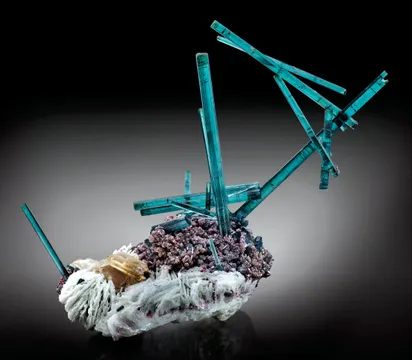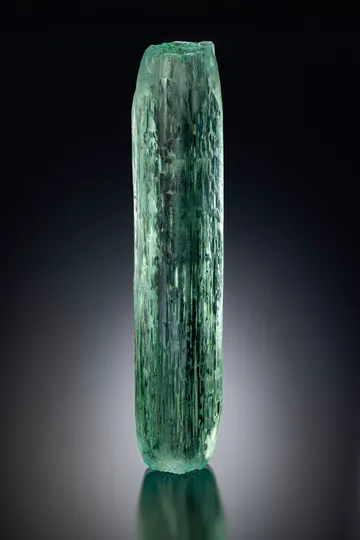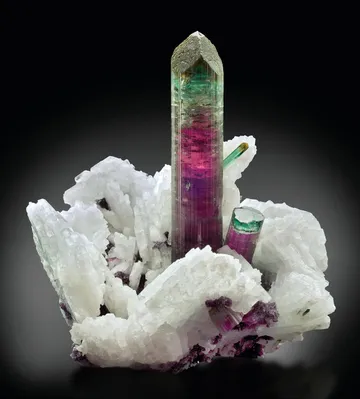
Padre Paraíso, Brazil — a Minas Gerais pegmatite locality famed for aquamarine, heliodor, goshenite, topaz, and quartz; prized glassy prisms and historic gems.
Key facts
Padre Paraíso sits in northeastern Minas Gerais, within the great Eastern Brazilian Pegmatite Province, a belt whose name is almost shorthand for beryl, topaz, quartz, mica, chrysoberyl, and the complex history of Brazilian gem mining. For collectors, “Padre Paraíso” is best understood in two overlapping ways: as the municipality used on many specimen labels, and as part of the broader Padre Paraíso–Catuji / Ponto do Marambaia pegmatite district that supplied a long run of aquamarine, heliodor, goshenite, common beryl, colorless to blue topaz, smoky and clear quartz, chrysoberyl, and mica specimens to the Teófilo Otoni trade.
The geology is not the lithium-rich, tourmaline-spectacle style of the most famous Araçuaí or São José da Safira pegmatites. Padre Paraíso’s classic pegmatites are small to medium, commonly simple to modestly zoned, and hosted in the Caladão Granite and the Padre Paraíso Charnockite of the Aimorés intrusive suite. Their collector identity is Be-F rich rather than tourmaline-dominated: beryl and topaz are the minerals that give the district its voice. The finest specimens are elegant, glassy, and architectural—long golden heliodor prisms with etched faces and complex terminations, pale aquamarine prisms on feldspar or smoky quartz, colorless to sky-blue topaz on orthoclase, and cabinet-scale smoky quartz from the late silica-rich stages of the pegmatites.
Regional View
Country View
Padre Paraíso also has historical weight far beyond the number of specimens that reach the market today. The Marambaia valley and adjacent pegmatites produced some of the most famous aquamarine stories in Brazil, including the Papamel crystal of 1910 and later named large aquamarines such as Marta Rocha. Even when those giant gem crystals are geographically assigned to Ponto do Marambaia or nearby Caraí rather than strictly to the municipality of Padre Paraíso, they belong to the same gem-mining corridor and to the same collector tradition that made the district famous among dealers moving material through Teófilo Otoni.
The best modern Padre Paraíso specimen is usually not a huge matrix piece; it is a refined single crystal or small floater with superb surface character. Heliodor may show a deep honey-yellow body with a paler aquamarine cap, dissolution channels, beveled pinacoids, and sharply pyramidal terminations. Aquamarine tends toward blue to greenish blue, often fractured or etched, but fine examples retain translucent to transparent cores. Topaz is commonly colorless or pale blue and is valued most when it remains intact enough to show the form rather than simply the gem rough. Quartz, especially smoky quartz and morion, appears as both companion and indicator—an expression of the final silica-rich fluids that followed beryl and topaz crystallization.
Search for specimens: View all specimens from Padre Paraíso, Brazil
The Padre Paraíso collecting locality is centered in northeastern Minas Gerais, north of Teófilo Otoni, in the Eastern Brazilian Pegmatite Province. Published work treats the district as a set of beryl-bearing pegmatites related to late to post-collisional granitic magmatism of the Araçuaí orogen. The important host rocks are the Caladão Granite and the Padre Paraíso Charnockite, both belonging to the Aimorés intrusive suite and dated broadly around 520–500 Ma in regional syntheses. The pegmatites are typically residual bodies derived from evolved granitic melts and fluids, enriched enough in Be and F to crystallize beryl and topaz but generally less evolved, less Li-rich, and less tourmaline-rich than the more complex LCT pegmatites farther west in the Araçuaí–Itinga and São José da Safira districts.
The individual bodies are not great continuous veins on the scale of the world’s largest pegmatite mines. Achtschin’s district work described pegmatites in the Padre Paraíso and Ponto de Marambaia area as decimetric to metric in thickness, extending for tens of metres, with simple zoning and tabular to amoeboid forms. Contacts with the enclosing granitic rocks may be sharp or gradational, and the bodies do not show a single, obvious structural control. Studied pegmatites included Duas Barras and Zé do Bananal in Padre Paraíso, and Leondinhas, Dema, Arnaldo, and Eduardo in the Ponto de Marambaia area.
At Ponto do Marambaia, a key district locality, the pegmatites are hosted by the Caladão Granite. They may be homogeneous or zoned. Their primary assemblage includes K-feldspar, quartz, plagioclase, biotite, muscovite, beryl in the gem varieties aquamarine, heliodor, and goshenite, topaz, schorl, and magnetite. Secondary and accessory minerals include sericite, kaolinite, goethite, Mn oxides, and additional topaz. The productive parts of the pegmatites are especially associated with K-feldspar–quartz graphic zones, megacrystic feldspar and quartz, and late cavities or “caldeirões” in which quartz, morion, beryl, and topaz developed after brittle fracturing.
The beryl mineralization is the defining feature. Aquamarine, heliodor, and goshenite were all studied from the district, along with mica and feldspar chemistry. Many beryls are classified between alkali-free and sodium-rich types, and gem beryl from the district can be visually homogeneous even where trace components vary subtly. Achtschin’s work found that V and Cr ratios were more diagnostic than total Fe for distinguishing some heliodor and aquamarine samples, an important caution for collectors who try to read variety only from color.
Mining has always had a strong garimpo character here. The district’s gems entered commerce through small pits, eluvial and alluvial workings, and pegmatite tunnels rather than a single continuously operating industrial mine famous under one owner’s name. Older production from the Marambaia valley was already important by about 1900. The 1980s trade still described eluvial deposits in the Ponto de Marambaia region producing aquamarine, colorless topaz, chrysoberyl, cat’s-eye chrysoberyl, colorless beryl, occasional morganite, and even diamonds. More recent specimen labels and database records preserve smaller locality names such as Córrego Vermelho, Faísca claim, Alemão claim, and Sítio do Paraíso.
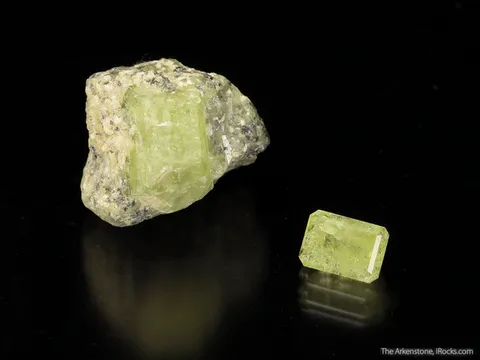
Córrego Vermelho is especially important for modern heliodor labels. It is documented as a source of heliodor and beryl from Padre Paraíso, and many of the best collector crystals from the municipality are golden beryl singles or floaters: slender, lustrous, etched, deeply yellow to greenish-yellow prisms, sometimes with pale blue aquamarine caps. The Faísca claim is recorded for aquamarine and topaz, and the Alemão claim is recorded for chrysoberyl. These claim-level names matter; a specimen labeled only “Padre Paraíso” can still be entirely legitimate, but the closer the label gets to Córrego Vermelho, Faísca, Sítio do Paraíso, or another named occurrence, the more useful it becomes scientifically and commercially.
Collecting access today should be assumed to be private, informal, and variable. The productive pits and pegmatite workings are claims, farms, or small mining areas, not public fee-collecting sites. The safest route for collectors is through documented dealer material, old Teófilo Otoni labels, or modern specimens with named-claim provenance. Field collecting without explicit local permission is inappropriate, and abandoned pegmatite tunnels or pits should be treated as unstable.
The classic finds fall into three categories. First are the historic large aquamarines of the Marambaia valley, prized as gem material more than as intact specimens. Second are the beryl-topaz pegmatite specimens: aquamarine or heliodor with feldspar, smoky quartz, muscovite films, and, more rarely, topaz. Third are the small but refined modern crystals—etched heliodor floaters, pale blue topaz on orthoclase, smoky quartz groups, chrysoberyl twins, and occasional crystallized lepidolite that appears on the collector market under the Padre Paraíso label.
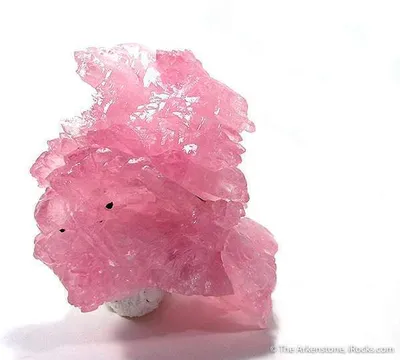
Lepidolite from Padre Paraíso is a minor but attractive collector category rather than the district’s classic published signature. The pieces now seen on the market are typically small crystallized purple to lavender mica groupings, often miniature scale around 3 cm, valued for sculptural all-around form, pearly sparkle, slight translucency on thin edges, and clean condition rather than for large matrix associations. Because the best-documented Padre Paraíso pegmatites are beryl-topaz systems with muscovite and biotite as the studied micas, locality labels for lepidolite should be read cautiously and preserved exactly; good pieces here are those that show discrete crystallized mica habit, saturated lilac-purple color, fresh luster, and intact edges, not ordinary massive purple mica sold only under a broad Minas Gerais label.
Heliodor is the modern specimen emblem of Padre Paraíso, especially from Córrego Vermelho and Sítio do Paraíso labels. The best crystals are slender to moderately stout hexagonal prisms in golden yellow to greenish yellow, commonly transparent to gemmy at the margins or terminations, with etched prism faces, dissolution channels, complex pyramidal terminations, and occasional pale aquamarine caps. Miniatures of 4–7 cm are common in high-grade dealer descriptions, while exceptional crystals exceed 10 cm and may be described as world-class for color and termination quality. Ordinary pieces are merely pale yellow beryl shards or incomplete gem rough; strong collector heliodor from Padre Paraíso needs deep natural-looking saturation, luster, complete or doubly terminated form, and the etched surface texture that identifies a real pegmatite crystal rather than a cuttable fragment.
Beryl from Padre Paraíso spans common beryl, goshenite, heliodor, aquamarine, and occasional mixed-color crystals, and it is the mineral through which the district has been most thoroughly studied. The pegmatites at Duas Barras, Zé do Bananal, Leondinhas, Dema, Arnaldo, Eduardo, Córrego Vermelho, and related occurrences produced prismatic hexagonal crystals in colorless, yellow, blue, and greenish-blue varieties, commonly associated with K-feldspar, quartz, biotite, muscovite, topaz, and iron-manganese oxides. Gem beryl may be chemically subtle despite obvious color differences, and many crystals show brittle fracturing, etched surfaces, or clean central zones with more fractured ends. The strongest collector beryls from Padre Paraíso are complete prisms or floaters with readable crystal form, attractive color zoning, and old locality specificity; ordinary pieces are broken pale beryl rough with no pocket character or precise claim name.
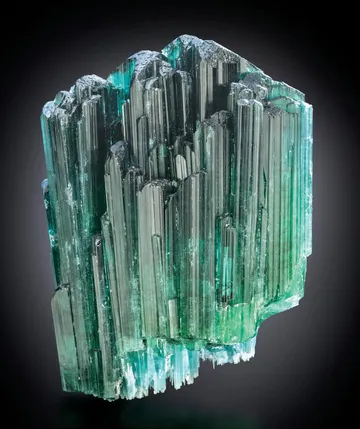
Aquamarine from the Padre Paraíso district is tied most strongly to Ponto do Marambaia, Faísca, and the Marambaia valley tradition, where blue to greenish-blue beryl occurs with K-feldspar, quartz, topaz, smoky quartz or morion, and mica. Well-formed crystals may reach decimetric size, but many show internal fissuring, especially toward the ends, leaving the cleanest gem zones in the middle of the prism. Published descriptions emphasize prismatic crystals with developed prism faces, small pyramidal terminations on some pieces, and striations parallel to the crystal length. A fine specimen should retain natural faces, termination geometry, and association with feldspar or quartz; otherwise much of the district’s aquamarine is better understood as gem rough from historically important mining rather than as cabinet-quality crystal specimens.
Topaz from Padre Paraíso is part of the district’s Be-F signature and occurs chiefly as colorless to pale blue crystals in pegmatites and related eluvial deposits, notably in the Padre Paraíso–Ponto do Marambaia–Catuji region and the Faísca claim. In the pegmatites it is associated with K-feldspar, quartz, biotite, muscovite, beryl, schorl, magnetite, goethite, and Mn oxides, and in some specimens it appears on orthoclase or with aquamarine. Crystals can be decimetric, but topaz here is prone to internal fissuring and may break into many pieces during extraction, so intact crystals are significantly more desirable than loose fragments. Collector-grade pieces are lustrous, sharply formed, pale blue or colorless crystals with minimal cleavage damage; heavily fractured or treated gem rough is far less appealing as a specimen.
Quartz from Padre Paraíso is more than background matrix: clear quartz and smoky quartz to morion mark the late silica-rich stages of the pegmatites and may occur as decimetric to metric crystals or masses in the core and pocket zones. In the Ponto do Marambaia model, giant quartz and morion crystals occupy the “caldeirões” near the pegmatite core, growing after beryl and topaz during the final residual-fluid stage. Good collector quartz from Padre Paraíso is valued when it carries locality context—smoky crystals with aquamarine, heliodor, feldspar, or topaz, or clean morion crystals with sharp terminations and little bruising. Ordinary massive quartz from the district is common; the premium belongs to specimens that show pocket growth, association, and the distinctive beryl-topaz paragenesis.
Other minerals documented from Padre Paraíso include chrysoberyl, including material from the Alemão claim and broader district occurrences, fluorapatite, smoky quartz, muscovite, biotite, K-feldspar, albite, schorl, magnetite, goethite, Mn oxides, sericite, and kaolinite. Chrysoberyl is the standout rarity for collectors, especially cyclic twins and cat’s-eye material from the Padre Paraíso–Ponto de Marambaia region. The locality is not presently known as an accepted type locality for a mineral species, so its importance rests instead on gem beryl history, heliodor specimens, topaz production, and the district’s role in the wider Eastern Brazilian Pegmatite Province.
The principal authenticity issue for Padre Paraíso specimens is locality precision. “Padre Paraíso” is often used broadly in the mineral trade for material from the municipality, nearby claims, or the Padre Paraíso–Catuji / Ponto do Marambaia district. That is not automatically wrong, but serious collectors should distinguish a simple regional label from a named occurrence such as Córrego Vermelho, Faísca claim, Alemão claim, Sítio do Paraíso, or Ponto do Marambaia. A crystal labeled “Padre Paraíso” with no claim can still be desirable, but its scientific value is lower than a comparable specimen with claim-level provenance.
Color treatment is the next concern. The district produces colorless and pale blue topaz, and Brazilian colorless topaz is commonly irradiated and heated to make stronger commercial blue material. Padre Paraíso-region topaz has been specifically discussed in the context of color improvement, especially for blue topaz production. Treat any unusually saturated blue topaz from the area as suspect unless sold explicitly as natural-color and supported by reliable provenance or testing. Colorless beryl from the Ponto de Marambaia region has also been reported as material that could be irradiated to golden color, so vivid golden beryl without crystal context, without old label history, or with gem-cutting trade provenance should be examined carefully before being accepted as natural heliodor.
Aquamarine may also be heated in the gem trade, usually to reduce yellowish or greenish components and improve blue. For mineral specimens, this is less common than for cut stones, but detached rough and polished pieces from the district can blur the line between specimen and gem material. A natural, etched, terminated aquamarine on feldspar or quartz is usually more trustworthy as a specimen than a loose, glassy, unnaturally even blue prism fragment.
Condition matters greatly. Beryl from Padre Paraíso is commonly etched, and that should not be mistaken for damage; in fact, dissolution texture is part of the locality style. Actual problems are bruised prism edges, rehealed but unattractive internal fracturing, broken or sawed bases, cleaved terminations, and contacts disguised by trimming. Many aquamarines and topazes from the district have internal fissures from brittle deformation or extraction, so a piece with a clean central zone and fractured ends is normal. For topaz, watch for cleavage breaks and repaired crystals. For lepidolite, expect mica flaking; intact rosettes or all-around crystallized clusters are much better than rubbed masses.
Fluorescence is not a major selling point for the classic Padre Paraíso assemblage. Handling should be conservative: avoid ultrasonic cleaning for lepidolite, mica-rich matrix, or fractured beryl; do not acid-clean specimens with unknown secondary oxides without testing; and protect topaz from hard knocks because of its perfect basal cleavage. Heliodor and aquamarine color is generally stable under normal display conditions, but prolonged intense sunlight is never advisable for gem beryl specimens.
Market availability is uneven. Small to medium heliodor singles from modern finds appear periodically and are the most recognizable Padre Paraíso specimens in the current collector market. Aquamarine from the broader district is historically abundant as gem material but less common as attractive matrix specimens. Topaz is available, but fine intact crystals are much scarcer than fragments or treated gem rough. Lepidolite under the Padre Paraíso label is available in small crystallized clusters, but because it is not the district’s classic published species, provenance should be weighed carefully. Good chrysoberyl, especially attractive twins or cat’s-eye material with convincing locality history, is much less common and should not be treated as routine.
The great story of the district begins in the Marambaia valley, where aquamarine was already known around 1900 and where small-scale diggings were turning up beryl long before mineral specimens became the polished commodity they are today. In late June 1910, miners made the find that would become one of the legendary events of Brazilian gem history: the Papamel aquamarine. It came from the Papamel mine on the Marambaia River, about 20 km east of the village of Ponto de Marambaia, and it was not a pretty cabinet specimen in the modern sense but a stupendous gem crystal—an abraded, waterworn, doubly terminated hexagonal prism weighing 110.5 kg, about 48.5 cm long and 38 cm in diameter.
The detail that makes the Papamel story irresistible is how close it came to being missed. The Syrian Tanuri brothers found it less than a metre below the bottom of a colluvial-alluvial pit that another miner had just abandoned “in disgust.” The crystal was reportedly so transparent that print could be read through it from end to end. Two German gem dealers, August Klein and Viktor Bohrer-Borges, were in the area and bought it; George Kunz later reported the purchase price as the equivalent of US$25,000 and estimated that the crystal could yield 200,000 carats of finished gems.
Getting the Papamel crystal out of the interior was almost a second discovery. Klein’s transport took 20 days. The huge beryl was hauled 72 km by mule through jungle to Araçuaí, then floated by canoe down the Araçuaí and Jequitinhonha rivers to the coast. From there it went by coastal steamer to Bahia, now Salvador, and then by German steamer to Germany. In collector terms, that journey is part of the specimen’s identity: an aquamarine born in a small Brazilian valley became a world object by mule, canoe, coastal boat, and transatlantic steamer.
Marambaia did not become a one-story locality. Later named aquamarines entered the lore, including Marta Rocha, usually given at about 33.9 kg, and Cachacinha, listed in museum notes at 65 kg. The names matter because they show how Brazilian gem culture treated extraordinary crystals almost as personalities. A very large gem beryl was not just weighed and sold; it was baptized, remembered, and folded into the commercial mythology that linked the mines of Minas Gerais to Teófilo Otoni, Idar-Oberstein, and the wider gem world.
A different snapshot comes from a 1989 Gems & Gemology field report. One visited eluvial deposit in the general Ponto de Marambaia area, roughly 65 km north of Teófilo Otoni, was producing aquamarine and colorless topaz almost exclusively. Another, more extensive set of diggings about 20 km east of Três Barras, was producing cat’s-eye chrysoberyl and aquamarine; the report noted a fine 30-gram piece of cat’s-eye chrysoberyl and several aquamarines over 100 grams each. The same report recorded colorless beryl that was reportedly irradiated to golden color, along with alexandrite, cat’s-eye alexandrite, colorless topaz, occasional morganite, and some diamonds. That is the Padre Paraíso collector lesson in one paragraph: the district is not a single-mine locality but a gem field where alluvial pits, pegmatites, dealers, and treatment practices intersect.
Keith Proctor, “Gem Pegmatites of Minas Gerais, Brazil: Exploration, Occurrence, and Aquamarine Deposits,” Gems & Gemology, Summer 1984, Vol. 20, No. 2, pp. 78–100 — Essential English-language account of Minas Gerais gem pegmatites, including the Papamel aquamarine and the Marambaia valley.
Adriana Borrelli Achtschin, “Caracterização geológica, mineralógica e geoquímica dos pegmatitos do distrito pegmatítico de Padre Paraíso, Minas Gerais, e suas variedades de berilo,” summarized in Geonomos 9(1–2), 2001 — The key district-scale study of Padre Paraíso beryl pegmatites, including Duas Barras, Zé do Bananal, Leondinhas, Dema, Arnaldo, and Eduardo.
T. G. R. D. Araújo, A. H. Horn, J. Karfunkel, and collaborators, “A cathodoluminescence-assisted LA-ICP-MS study of topaz from different geological settings,” Brazilian Journal of Geology, 2018 — Includes Ponto de Marambaia topaz from the Padre Paraíso Pegmatite Field and summarizes its Caladão Granite / Padre Paraíso Charnockite setting.
A. C. Pedrosa-Soares et al., “Late Neoproterozoic–Cambrian granitic magmatism in the Araçuaí orogen (Brazil), the Eastern Brazilian Pegmatite Province and related mineral resources,” Geological Society, London, Special Publications 350, 2011 — Regional framework for the granitic magmatism and pegmatite province to which Padre Paraíso belongs.
G. Morteani, C. Preinfalk, and A. H. Horn, “Classification and mineralization potential of the pegmatites of the Eastern Brazilian Pegmatite Province,” Mineralium Deposita 35, 2000 — Broad classification study frequently cited for the Eastern Brazilian Pegmatite Province and its gem-bearing pegmatite districts.
Gem News, “Brazil update,” Gems & Gemology, Fall 1989 — Field-trade notes on Ponto de Marambaia-area eluvial deposits, aquamarine, colorless topaz, chrysoberyl, and treatment practices.
MM Gerdau / Google Arts & Culture, “Berilo var. Água Marinha,” Andrea Ferreira, 2021 — Museum specimen entry for aquamarine from Padre Paraíso, noting the 110.5 kg Marambaia aquamarine and named large crystals Marta Rocha and Cachacinha.
“Beryl (variety heliodor) from Sitio do Paraiso, Padre Paraiso, Minas Gerais, Brazil” — Fabre Minerals — Short specimen video of a lustrous golden heliodor crystal with sharp form, internal dissolution channels, and uniform yellow color.
“SM20-358 - Heliodor - iRocks.com” — The Arkenstone / iRocks.com — Video presentation of a Padre Paraíso heliodor specimen handled by The Arkenstone.
Mindat: Padre Paraíso, Minas Gerais, Brazil — Current locality database entry with documented minerals, named sublocalities, and specimen-photo references.
Mindat: Beryl from Córrego Vermelho, Padre Paraíso, Minas Gerais, Brazil — Occurrence record for beryl and heliodor from the important Córrego Vermelho sublocality.
Mindat: Papamel claim, Ponto do Marambaia, Caraí, Minas Gerais, Brazil — Locality record for the famous Papamel aquamarine discovery in the Marambaia valley.
Brazilian Journal of Geology: Topaz from different geological settings — Technical study that places Ponto de Marambaia topaz within the Padre Paraíso Pegmatite Field.
Geonomos 9(1–2), 2001 dissertation abstracts — Includes the Achtschin summary on Padre Paraíso beryl pegmatites and related gem-mineral studies from Minas Gerais.
GIA: Gem Pegmatites of Minas Gerais, Brazil — Classic article for the Papamel story and the broader Minas Gerais aquamarine context.
GIA: Gems & Gemology Fall 1989 — Contains a useful field-report snapshot of Ponto de Marambaia-area gem production and treatment notes.
Recursos Minerais de Minas Gerais: Gemas e minerais de coleção — Portuguese overview of Minas Gerais gem and collection-mineral resources, including the Padre Paraíso district.
Serviço Geológico do Brasil / CPRM: Padre Paraíso Folha, SE.24-V-C-II — Geological mapping and mineral-resource report for the Padre Paraíso sheet.
MM Gerdau / Google Arts & Culture: Berilo var. Água Marinha — Museum entry for an aquamarine specimen from Padre Paraíso with notes on major Marambaia aquamarines.