Onganja Mine, Namibia — a copper locality famed for cuprite crystals, often with malachite; yields gem-quality cuprite prized by collectors.
Key facts
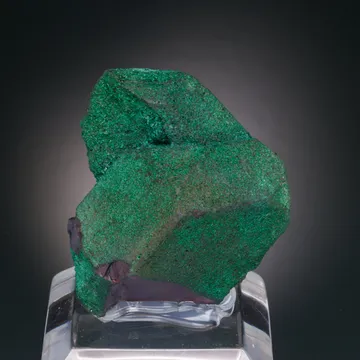
Onganja is one of those copper localities whose best specimens can be recognized across a room: dark red to nearly black cuprite forms, commonly skinned in velvety malachite, with the red interior flashing only where a chip, edge, or strong backlight reveals it. In present-day geographic terms the mine is at Helen Farm 235 near Seeis, northeast of Windhoek in Namibia; older labels may read South West Africa, and collector labels also use Emke, Emka, Ogonja, or Otjisongati. The “South Africa” usage attached to some marketplace and older southern African catalogue records should therefore be read as a legacy or platform locality convention rather than the modern political country.
Mineralogically, Onganja matters because it produced some of the world’s classic cuprite specimens and some of the few sizeable, gem-quality cuprite crystals suitable for cutting. The deposit is not the usual carbonate-hosted oxidized copper occurrence familiar from many cuprite districts; it is a copper-bearing quartz-calcite vein system in metamorphic rocks of the Kuiseb Formation within the Southern Zone, or Khomas trough, of the Damara Orogen. Primary hydrothermal mineralization included chalcopyrite, chalcocite, pyrite, magnetite, apatite, molybdenite, and native gold in central calcite-rich and more peripheral quartz-rich veins, later overprinted by supergene copper minerals. That overprint made the mine famous to collectors: cuprite, native copper, malachite, calcite, quartz, chalcotrichite, and a short list of rarities that turn up mostly as old pieces from 1970s and early-1980s collections.
Regional View
Country View
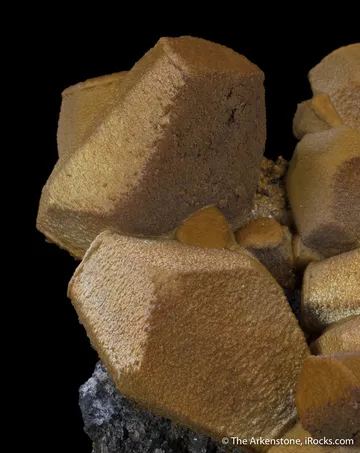
The best Onganja cuprites are not simply “large red crystals.” Their character lies in the contrast between geometry and surface: modified octahedra and cubo-octahedral forms that may look matte green from malachite alteration until an exposed edge shows wine-red to cherry-red cuprite beneath. Some crystals are almost sculptural singletons; others sit with white calcite, pale quartz, or native copper. Chalcotrichite pieces take the locality in a completely different direction, with hairlike red Cu2O locked inside transparent to translucent calcite, commonly rising from copper.

Photo: Australian Museum
Search for specimens: View all specimens from Onganja Mine, South Africa
Onganja Mine is the principal collector locality within the Onganja mining area near Seeis, in the Windhoek Rural part of the Khomas Region of Namibia. The mine is on Helen Farm 235 and is also widely labelled Emke Mine, Emka Mine, Ogonja Mine, and Otjisongati Mine. The broader Onganja mining area consists of quartz-calcite-copper-molybdenum veins and associated mines distributed across roughly 40 km² in the upper Swakop River catchment, with workings and prospects on farms including Helen 235, Klein Onganja 148, Asgard 192, Midgard 191, Okamuvia 144, Onganja West 71, Otjizonjati 69, and others. Mindat maps place the mine at about 22° 5' 58" S, 17° 27' 41" E.
Geologically, the deposit is a sheeted vein complex hosted by quartz-biotite-plagioclase schists of the Kuiseb Formation in the Damara Orogen. The vein complex is described as roughly 3500 by 1800 meters and situated in the core of a shallow-plunging D3 antiform. In the classic genetic model, the central parts are more calcite-dominant, while the peripheral veins are more quartz-dominant. Primary ore and gangue assemblages include pyrite, magnetite, chalcopyrite, apatite, molybdenite, native gold, calcite, and quartz, with albite, scapolite, and biotite alteration in adjacent rocks. Later oxidation and supergene enrichment introduced the minerals that collectors know best: cuprite, native copper, malachite, chalcotrichite, tenorite, chrysocolla, and associated secondary copper minerals.
The named collector-producing vein system is the Voitskopf-Maygift system. Onganja Mine exploited the Voitskopf vein on Helen Farm 235, and that vein is continuous with the Maygift vein across the boundary with Klein Onganja 148. Specimen descriptions and auction records repeatedly associate the finest native copper and cuprite material with this Voitskopf-Maygift system. This is important for labelling: “Onganja Mine,” “Emke Mine,” and “Voitskopf-Maygift vein” may all describe substantially the same collector provenance when attached to old material, but “Onganja mining area” can be broader.
Mining in the district reaches back far beyond the modern specimen era. Published locality summaries note that several copper mines in the broader Onganja area date as early as about 1650 AD, while documented copper-concentrate production belongs to the twentieth century, beginning in 1904 and continuing intermittently into the early 1970s. Geological summaries also note small-scale mining at Onganja from about 1960. By 1987, older reserve estimates for the mine were modest, under 300,000 tonnes at about 2% copper, which fits the character of a vein-controlled copper district rather than a giant open-pit orebody.
The great specimen events belong to the 1970s. The famous cuprite crystals were recovered in 1973, followed in 1974 by fine, non-pseudomorphous malachite crystals. A celebrated 1976 pocket produced malachite-on-cuprite specimens of exceptional quality; one 13.7 cm example later became one of the “Ikons” pieces, and published dealer histories record that a large portion of that pocket was acquired by Walter Kahn. The mine was later described in Mineralogical Record as closed and flooded, making further specimen recovery unlikely. More recent government environmental records show renewed exploration and underground mining activity on Mining Licenses 84A, 84B, and 84C by Onganja Mining Company, including construction of an ore-crushing and beneficiation plant for copper concentrate. For collectors, however, access should still be treated as private, controlled, and potentially hazardous; no visit should be attempted without explicit permission from the landholder and mineral-rights holder, and old underground workings, flooded areas, and active mining infrastructure are serious safety concerns.
Onganja cuprite is the mine’s signature species: large modified octahedra, cubo-octahedra, and rarer dodecahedral-looking forms, commonly with a thin, matte to velvety green malachite coating over deep red to wine-red Cu2O. Published and museum examples include individual crystals around 3 to 5 cm, with notable larger specimens and a famous 13.7 cm malachite-on-cuprite piece from the 1976 pocket; some material is translucent to gemmy and supplied the locality’s rare faceted cuprite stones. Good specimens here are judged first by complete crystal form and size, then by the quality of the malachite skin, the visible red cuprite at edges or attachments, and the presence of calcite, quartz, or copper matrix; ordinary pieces are broken partial crystals, dull lumps, or altered forms whose geometry is no longer crisp.
Native copper from Onganja is less famous than the cuprite but is a serious collector suite in its own right, especially from the Voitskopf-Maygift vein system. It occurs as arborescent and dendritic growths, spinel-law twins, sharp octahedral to dodecahedral-looking crystallized aggregates, and copper frameworks that may carry calcite, cuprite, chalcotrichite, malachite, or quartz. Many fine pieces are small-cabinet to cabinet specimens rather than thumbnails, and dealer records document airy, well-defined copper sprays up to several centimeters across. The best Onganja copper combines crystallographic sharpness with an open, sculptural form and minimal crushing or flattening; pieces with calcite or red chalcotrichite inclusions have added locality character, while heavy cleaned masses without well-developed crystals are much less desirable.
Onganja malachite occurs in several collectible modes: as the thin green coating or partial replacement on cuprite, as pseudomorphs after cuprite or azurite, and as rare non-pseudomorphous “primary” crystals recovered notably in 1974. The non-pseudomorphous material may form acicular, fibrous, velvety sprays, or blocky lustrous green crystals on calcite, with documented fine examples in the 1 to 3 cm crystal range and larger pseudomorphs after azurite known from the broader Onganja material. The finest pieces are those where malachite enhances rather than obscures the original mineral drama: crisp cuprite geometry under a green skin, lustrous primary crystal groups with calcite, or large sharply defined pseudomorphs; weak pieces are merely green crusts without form or pieces where cleaning has left patchy, unattractive remnants.
Calcite at Onganja is important less as a stand-alone species than as the stage on which the copper minerals perform. The central parts of the vein system are calcite-dominant, and collector specimens show colorless to white calcite with cuprite, native copper, malachite, and especially chalcotrichite inclusions. Transparent or translucent calcite crystals containing red acicular chalcotrichite, or perched above crystallized copper, are among the most distinctive Onganja combinations; one public auction example described a 1.5 cm calcite crystal growing from a nest of sharp spinel-twinned copper crystals. Quality depends on transparency, lack of bruising on exposed calcite edges, visibility of inclusions, and compositional balance with copper minerals; plain calcite without inclusions or associated copper species is rarely sought under an Onganja label.
Chalcotrichite, the hairlike variety of cuprite, is one of Onganja’s most elegant rarities. It is documented as red acicular Cu2O, most memorably included in calcite and commonly associated with native copper; Mindat photo associations also record calcite, copper, malachite, and quartz with the Onganja material. These are generally not big “show” specimens in the cuprite-crystal sense, but they can be superb under magnification or as small-cabinet combination pieces when the red needles are sharply visible in clear calcite. The best examples show bright, undamaged red hairs suspended or radiating in transparent calcite, ideally rising from crystallized copper; lesser examples are cloudy, iron-stained, or so included that the chalcotrichite cannot be appreciated without strong lighting.
Molybdenite belongs to the primary hydrothermal assemblage at Onganja and is mineralogically important because Re-Os dating of molybdenite from the veins yielded late Damaran mineralization ages of about 517 to 518 Ma. Specimen material is much scarcer in collector circulation than cuprite or copper and tends to be grey metallic flakes, plates, or foliated masses associated with biotite-bearing wall rock or chalcopyrite rather than the colorful oxidized copper suite. Good Onganja molybdenite is therefore a locality-specialist specimen: it should show recognizable metallic MoS2 in a well-documented host, preferably with old labels or analytical context, while unattributed grey micaceous-looking plates can be difficult to separate visually from other platy minerals without provenance.
Quartz is part of the gangue and the peripheral quartz-dominant vein assemblage at Onganja, and it appears on collector specimens chiefly with cuprite, copper, malachite, calcite, and rare chalcotrichite. Onganja quartz is not generally pursued as a pure quartz locality; its value lies in contrast, especially white quartz matrix carrying red cuprite forms or copper crystallization. A notable specimen record describes bright reddish cuprite crystals with neat dodecahedral form on white quartz, published as a new discovery in Rivista Mineralogica Italiana in 2009. The best quartz-bearing pieces offer clean, stable matrix and visual contrast without overwhelming the copper species; ordinary quartz fragments with sparse copper staining are of little locality significance.
Other documented Onganja minerals include albite, apatite or fluorapatite, azurite, biotite, chalcopyrite, chalcocite, chlorite-group minerals, chrysocolla, dolomite, goethite, hematite, magnetite, native gold, native silver, pyrite, rutile, scapolite, siderite, and tenorite. The rarities most relevant to collectors are not type-locality species—no valid Onganja type-locality mineral is a standard part of the mine’s reputation—but rather the uncommon accessories in a cuprite-copper district: native gold in the primary assemblage, molybdenite important to geochronology, apatite once confused with quartz on old material, and tenorite as a thin coating noted in the literature.
Onganja specimens require especially careful locality reading. The correct modern country is Namibia, but older labels may say South West Africa, and some marketplace records place Seeis or Onganja under South Africa. Synonyms and misspellings are common: Emke, Emka, Ogonja, Onganja, Otjisongati, Helen Farm 235, and Voitskopf-Maygift vein can all appear on labels. Misattribution with Tsumeb is also documented in the collector literature, particularly for native copper; Tsumeb is vastly more famous and label drift in older Namibian collections is not rare, so crystallized copper pieces should be judged by provenance as much as appearance.
The most important treatment issue is removal or partial removal of malachite from cuprite. Many Onganja cuprites originally had thin malachite skins; some specimens have been stripped to reveal the dark red cuprite below, producing a more dramatic “red” crystal but changing the historical surface. Such pieces are not necessarily fake, but the cleaning should be disclosed, and collectors should distinguish naturally exposed red cuprite on edges or contacts from broadly stripped surfaces. Backlighting is commonly used in photography to show the red internal color of otherwise nearly black cuprite; that is a legitimate way to reveal the mineral’s character, but photographs can make a specimen appear more red and gemmy than it will look in ordinary room light.
Condition is crucial. Cuprite is brittle and relatively soft for a showy crystal species, and Onganja crystals often have edge bruising, attachment damage, or missing corners hidden under malachite. The malachite skin can be thin and powdery to velvety, so avoid abrasion and do not scrub. Chalcotrichite-in-calcite pieces should be handled as delicate calcite specimens: keep them away from acids, avoid ultrasonic cleaning, and expect cleavages, small bruises, or internal fractures to be significant value factors. Some calcite from Onganja is reported as fluorescent under both longwave and shortwave ultraviolet light, but fluorescence is a bonus, not a defining feature of the locality.
Availability is finite at the specimen-collector level. The classic 1970s cuprite and malachite pieces are old-stock minerals, typically moving through auctions, established dealers, and collection dispersals. Small malachite-coated cuprite crystals and lower-grade fragments appear with some regularity, but complete, sharp, large crystals with attractive malachite, matrix, and old provenance are genuinely scarce. Fine crystallized copper and chalcotrichite-in-calcite combinations are also less common than their EarthWonders specimen counts might suggest, because many are tightly held once acquired.
The collector story of Onganja begins with a flash of red under green. In 1973, miners recovered the huge, well-formed cuprite crystals that made the mine internationally famous. The typical specimen was visually paradoxical: a copper oxide crystal that collectors knew should be red, but which often arrived wearing a green malachite coat. Where the coating was thin or broken, the inside could show the wine-red to cherry-red color that made Onganja one of the very few localities capable of producing facetable cuprite. In 1974, the mine added another surprise: non-pseudomorphous malachite, not merely malachite replacing another copper mineral, but well-formed green crystals in their own right.
The 1976 pocket became the legend. One 13.7 cm malachite-on-cuprite specimen later published in the Mineralogical Record’s Ikons supplement was described as coming from the famous pocket, among a find of a few hundred pieces. A large part of the pocket was bought by Walter Kahn, and the Kahn family reportedly held one specimen back as the finest of them all before it passed through the Eric Asselborn, Wayne Thompson, and Rob Lavinsky sphere of top-level mineral trading. That is the route by which an African copper pocket became a “contemporary masterpiece” in the international collector canon: mine, pocket, dealer, private collection, publication, and finally near-mythic status.
The Australian Museum preserves another part of the Onganja story through the Albert Chapman Collection. One specimen, a cuprite on calcite measuring 8.5 x 4.5 x 4 cm, carries a cuprite crystal about 5 x 2.4 cm and was collected around 1973. Albert Chapman purchased it in 1975 from the Luis T. Leite Collection, and it entered the museum as a specimen with both scientific and collector weight: a large Onganja cuprite, visibly geometric, coated in malachite, and still sitting on calcite. The same museum group includes a 55 ct dark-red Onganja cuprite gemstone, a reminder that some of the mine’s best crystals crossed the boundary between mineral specimen and gem material.
Onganja even stepped outside mineral collecting and into quantum optics. Researchers working on light-based quantum simulation used a natural cuprite crystal from Onganja, polished it until it was only about 0.03 mm thick, and placed it between ultra-reflective mirrors. The point was not the display case beauty of the cuprite but its optical behavior: the experiment created Rydberg polaritons in a semiconductor crystal, with the Onganja material serving as the rare natural cuprite source. The detail collectors remember is delightfully improbable: the research team reportedly managed to obtain the crucial Onganja crystal on eBay.