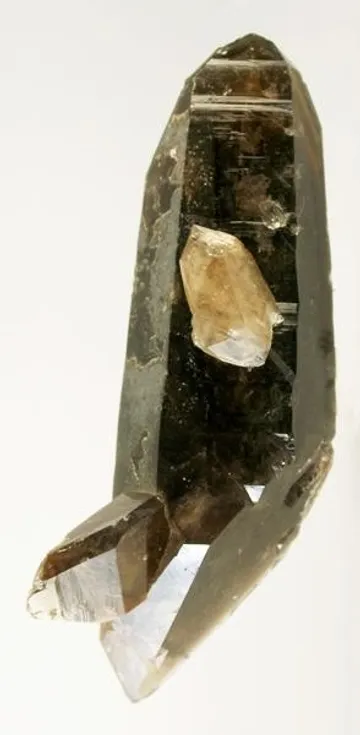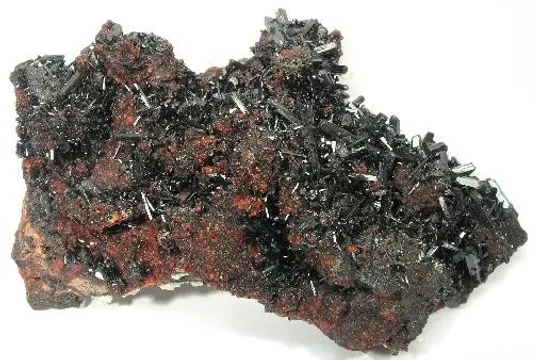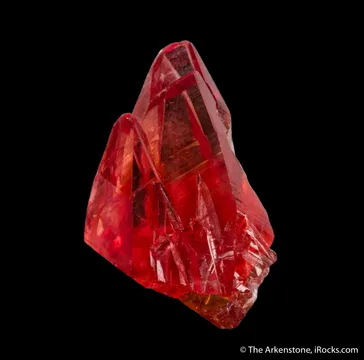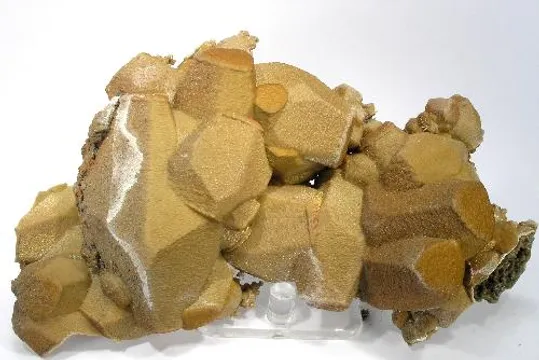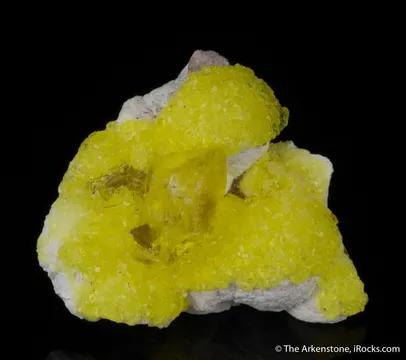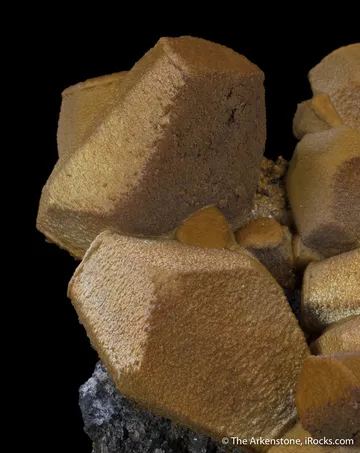
Kalahari Manganese Fields, South Africa - famed locality for dramatic manganese specimens, including rhodochrosite on black manganite, hematite, hausmannite.
Key facts
The Kalahari Manganese Fields of South Africa are one of the very few mineral localities whose importance is equally large in economic geology and in the top tier of specimen collecting. The field lies in the Northern Cape near Hotazel, Black Rock, Kuruman, and the broader John Taolo Gaetsewe District, where manganese ores are hosted by the Paleoproterozoic Hotazel Formation of the Transvaal Supergroup. In mine terms it is a vast stratiform manganese deposit; in collector terms it is the source of some of the most dramatic manganese-suite specimens ever recovered: cherry-red rhodochrosite on black manganite, mirror-lustrous hematite plates and prisms, jet-black hausmannite, yellow ettringite, lavender to purple sugilite, pink-to-tan olmiite, and a long roster of rare borates, silicates, sulfates, and unusual oxide associations.
The geological contrast that makes the field so productive for collectors is the contrast between ordinary sedimentary ore and the later altered zones. Much of the manganese resource is fine-grained, carbonate-rich Mamatwan-type ore: invaluable to industry, but generally unrewarding as specimen matrix. The celebrated collector minerals are concentrated in hydrothermally altered, fault-influenced Wessels-type ore in the northwestern part of the field, especially around Wessels, N’Chwaning, Black Rock, and Gloria. There, old carbonate-rich manganese sediment was leached, recrystallized, opened by fractures and dissolution cavities, and converted into a hard, dark, oxide-rich rock capable of hosting open-space crystal growth.
The classic look of a Kalahari specimen is unmistakable. The matrix is often black, metallic, and heavy, with manganite, hausmannite, hematite, braunite, or jacobsite providing a dark stage. Against that background, rhodochrosite appears as translucent red dog-tooth scalenohedra, wheatsheaf bundles, botryoidal plates, or stalactitic masses; ettringite and sturmanite add yellow to honey-colored prismatic crystals; calcite ranges from water-clear to milky white or pale blue; and olmiite forms soft, warm pinkish-tan aggregates that were once commonly confused with poldervaartite. The best pieces are not simply rare species samples. They are sculptural objects made by a chemically strange orebody: color, luster, contrast, habit, and unmistakable provenance all matter.
Regional View
Country View
Historically, the field entered the collecting world in stages. The Black Rock outcrop gave the region its first obvious clue, but the full scale of the hidden manganese resource emerged only through twentieth-century exploration and mining. Hotazel rhodochrosite in the 1960s first drew serious specimen attention, and the late-1970s N’Chwaning I discoveries turned Kalahari rhodochrosite into a world classic. Later, systematic work at Wessels and N’Chwaning revealed that the field was also a type-locality powerhouse, yielding species that are still identified with this single ore district.

Photo: Wikimedia Commons

Photo: Wikimedia Commons
Search for specimens: View all specimens from Kalahari Manganese Fields, South Africa
The Kalahari Manganese Fields occupy a broad ore district in the Northern Cape, developed in Paleoproterozoic chemical sediments of the Hotazel Formation. The ore-bearing succession consists of manganese-rich layers interbedded with banded iron formation, hematite lutite, and carbonate-bearing rocks. In simplified collector language, there are two great specimen environments here: the widespread, fine-grained sedimentary manganese ore, and the hydrothermally upgraded Wessels-type ore that made the district famous for rare and aesthetic minerals.
The principal manganese beds occur as stratiform seams. Published descriptions of the main field describe three manganese ore seams extending over a large area, with the lowermost seam by far the most important economically. In the south, near Mamatwan, the lower seam is thick and relatively low-grade, producing the carbonate-rich Mamatwan-type ore. Northward and northwestward, toward Wessels, Black Rock, Gloria, and N’Chwaning, the ore is thinner but locally much more intensely altered. Normal faults and associated fluid pathways were essential: they created the conditions for leaching, recrystallization, and open-space mineral growth.
Mamatwan-type ore is generally a fine-grained intergrowth dominated by braunite and manganese carbonates such as kutnohorite and Mn-rich calcite, with subordinate hematite, hausmannite, and related phases. It is the immense industrial foundation of the field, but it is not the main source of elite mineral specimens. The collector’s Kalahari is mostly the high-grade Wessels-type ore: coarse, porous, dark, oxide-rich material containing hausmannite, hematite, braunite, bixbyite, manganite, and a suite of calc-silicate, borate, sulfate, carbonate, and rare manganese minerals. Dissolution vugs, fracture openings, and late-stage cavities in this rock produced the display specimens.
Mining history began with the conspicuous Black Rock manganese outcrop, a rare natural exposure in a region otherwise masked by Kalahari sand, calcrete, and sparse thornbush vegetation. Black Rock mining began in 1940, with underground operations following soon after. Devon opened in the 1950s, Smartt followed later that decade, and the discovery and development of higher-grade Hotazel ore brought Hotazel, Langdon, Wessels, Mamatwan, Gloria, and the N’Chwaning mines into the broader history of the district. The field’s modern industrial landscape includes South32’s Hotazel Manganese Mines, with Mamatwan as an open-cut mine and Wessels as an underground mine, and Assmang’s Black Rock operations, including the N’Chwaning and Gloria underground complexes. Other large manganese operations in the broader Kalahari field, such as Tshipi Borwa, belong more to the modern bulk-ore story than to the classic specimen tradition.
From a collecting perspective, individual mine attribution matters greatly. Hotazel produced early rhodochrosite, including drusy material with gypsum and later fine scalenohedra. N’Chwaning I produced the legendary late-1970s rhodochrosites: deep red crystals, wheatsheaf forms, and sculptural masses on black manganese oxides. N’Chwaning II became famous for a wide variety of later specimen minerals, including ettringite, calcite, hematite, hausmannite, olmiite, bultfonteinite, shigaite, gaudefroyite, and many rare associations. Wessels is the great rare-mineral laboratory of the field, famous for sugilite, poldervaartite, wesselsite, effenbergerite, hennomartinite, kornite, and other unusual species. Black Rock, Gloria, Langdon, Smartt, and Mamatwan also have their own mineralogical signatures, though they are less frequently represented in the highest-end collector market.
Collecting access today should be understood as market access, not field access. These are active or former industrial mines, and the classic pockets were recovered in the course of mining, not by casual collecting. Serious specimens reach collectors through old collections, dealer inventories, mine-connected recoveries, and auction dispersals. Provenance is therefore part of the specimen itself. A Kalahari label that distinguishes Hotazel from N’Chwaning I, N’Chwaning II, Wessels, Black Rock, or Gloria is more than an administrative nicety; it affects interpretation, rarity, value, and scientific usefulness.
Rhodochrosite is the species that announced the Kalahari Manganese Fields to the wider collecting world. Early Hotazel specimens included drusy coatings on high-grade manganese ore with gypsum, followed in 1964–1967 by scalenohedral crystals reported to about 4 cm; the great N’Chwaning I finds of 1977–1978 surpassed them in quantity, color, and habit, with dark red scalenohedra to roughly 7 cm, sharp dog-tooth forms, wheatsheaf bundles, smooth spheres, and stalactitic aggregates with concentric internal structure. The classic association is black manganite with todorokite, gypsum, chalcedony, quartz, and related manganese oxides, giving the finest specimens their red-on-black theatrical contrast. Good Kalahari rhodochrosite is judged by saturated cherry to wine-red color, translucency, wet luster, undamaged terminations, three-dimensional placement on matrix, and old, mine-specific provenance; ordinary pieces are paler, drusy, massive, edge-worn, or broadly labeled without a defensible mine attribution.
Hematite from the Kalahari Manganese Fields is one of the district’s great underappreciated species because it is both an ore mineral and, in the best vugs, a world-class display mineral. In Wessels-type ore it occurs with hausmannite as a major constituent, but open dissolution cavities produced brilliant black to steel-gray crystals with exceptional metallic luster, including thick pseudohexagonal plates, complex scalenohedral and prismatic forms, pseudocubic crystals, and twins; published accounts note crystals to about 30 cm across. Wessels yielded important large platey finds in October 1996 and May 1998, some partly coated with red andradite, while N’Chwaning I, N’Chwaning II, and Black Rock produced handsome material with associations including hausmannite, andradite, calcite, gaudefroyite, baryte, and celestine. The best pieces have mirror-bright faces, minimal edge bruising, sharp geometry, and a contrasting association rather than a dull oxide mass.
Olmiite, CaMnSiO3(OH), is one of the important modern name-corrections in Kalahari collecting: much material first circulated as poldervaartite before the Mn-dominant species was described from the field in 2007. It is best known from N’Chwaning II and Wessels, where it forms pinkish-tan, salmon, pale brown, or cream-colored spherical to sheaflike aggregates of prismatic crystals, commonly on calcite or in association with bultfonteinite, oyelite, hematite, celestine, sturmanite, baryte, datolite, andradite, caryopilite, and gageite. Good specimens show separated, lustrous radial balls or crystal clusters with attractive color and clean contrast on matrix; lesser pieces are chalky, crowded, rubbed, or carry obsolete poldervaartite labeling that has not been analytically or paragenetically reconsidered.
Calcite is probably the most common collector mineral across the Kalahari Manganese Fields, but common here does not mean unimportant. It occurs in many habits and colors: small pseudocubes, simple rhombohedra, elongated scalenohedra, water-clear complex crystals, milky-white translucent crystals, pale blue forms, and crystals stained yellow or red by iron oxides; large groups exceeding 30 cm are documented, and most Kalahari calcites fluoresce strong orange, while Mn-bearing calcite may fluoresce darker red. N’Chwaning II produced notable calcite events, including July 1996 sprays of elongated white crystals with hematite, hausmannite, and andradite; a 1998 footwall cavity with blue elongate crystals, some arranged like candelabras and studded with yellow ettringite; and 2000 water-clear twinned crystals, along with opaque white twinned calcites described as larger than a football. Fine calcite from this locality is valued when it is more than matrix: sharp, undamaged, three-dimensional, fluorescent, and tied to a distinctive Kalahari association.
Beyond those four species, the Kalahari Manganese Fields are one of the world’s great type-locality districts. Wessels and N’Chwaning are especially important for rare manganese, calcium, barium, strontium, boron, and copper-bearing minerals, including sturmanite, wesselsite, effenbergerite, hennomartinite, kornite, poldervaartite, vonbezingite, nchwaningite, olmiite, orlymanite, and a large suite of late-stage rarities. The district is also famous for hausmannite, andradite, gaudefroyite, sugilite, ettringite, sturmanite, thaumasite, inesite, datolite, brucite, baryte, celestine, shigaite, bultfonteinite, oyelite, and todorokite. Several species remain intimately tied to individual pockets or narrow zones, which is why old labels, analytical work, and mine-level provenance are unusually important here.
Kalahari specimens reward careful labeling. The most common locality problem is not outright fakery, but misattribution. Many classic red rhodochrosites were historically sold under broad labels such as “Hotazel,” “Kalahari,” or “N’Chwaning,” and later sorting has shown that numerous specimens attributed to N’Chwaning II or III are more properly N’Chwaning I material from the late-1970s finds. That distinction matters. The finest red dog-tooth and wheatsheaf rhodochrosites are strongly associated with N’Chwaning I, whereas N’Chwaning II and Wessels rhodochrosite is often paler, more rhombohedral, drusy, or tied to different parageneses.
Olmiite and poldervaartite are another locality-specific caution. Older labels may say poldervaartite for material that modern literature and collector practice would treat as olmiite, especially for N’Chwaning II. Unless a specimen has analytical support, the safest approach is to evaluate it by mine, habit, association, and the date of the label. The same caution applies to some rare Kalahari silicates and borates: visually similar pink, tan, white, or acicular species may require analysis, not just dealer tradition.
Documented treatments are not a dominant theme for classic Kalahari display specimens, but repairs, trimming, and stabilization should be watched for. Rhodochrosite crystals can be cleaved, edge-chipped, or reattached; black manganese-oxide matrix can hide repairs well; and some old rhodochrosite plates were cut or trimmed from larger cavity material. Hematite and hausmannite are hard-looking but can have bruised metallic edges that flash gray under light. Ettringite, sturmanite, oyelite, bultfonteinite, and some associated hydrous phases are more delicate and should be kept dry, handled minimally, and protected from abrasion.
Fluorescence can add value and diagnostic interest, especially in calcite and Mn-bearing carbonates. Kalahari calcite commonly shows strong orange fluorescence, while Mn-rich calcite can respond darker red; some rhodochrosite specimens may also show red fluorescence, but fluorescence alone is not a substitute for locality verification. Avoid prolonged intense light, heat, or humidity for hydrous sulfate and silicate associations, and avoid aggressive cleaning: the district’s best aesthetics often depend on fragile contrasts between soft pale minerals and black oxides.
Market availability is uneven. Common calcite, andradite-coated matrix, small hausmannite, minor hematite, and modest olmiite can be found with patience. Fine old N’Chwaning rhodochrosite is scarce, expensive, and usually comes from established collections or high-end dealers. Exceptional hematite, ettringite, sturmanite, sugilite, rare type-locality species, and well-composed multi-mineral Kalahari plates are not regular commodities; they appear episodically, and provenance can be the difference between a merely attractive specimen and a serious collection piece.
The most striking beginning to the Kalahari story is how little of it was visible. Across a vast semi-arid plain of windblown sand, calcrete, thornbush, grasses, and scattered acacia, the orebody barely announced itself. One small hill, Black Rock, rose less than 100 meters above the plain and gave the district its name in the collector imagination. In 1907 it was described but underestimated, regarded as a ferruginous manganese occurrence of modest importance. Only later, during intensive exploration in the 1940s, did geologists and mining men realize that the inconspicuous outcrop was the exposed edge of one of the largest land-based manganese accumulations on Earth.
The rhodochrosite story has the pace of a slow revelation. In 1963, the old Hotazel open pit yielded the first Kalahari rhodochrosite specimens. They were not yet the dazzling red crystals that collectors now picture: mostly thin crusts of small crystals on high-grade manganese ore, commonly associated with clear gypsum. Then, from 1964 to 1967, the same mine began producing scalenohedral rhodochrosite crystals to about 4 cm. Those pieces were good enough to carry the name Kalahari into collections around the world, but they were only the overture.
The great act followed at N’Chwaning I in 1977 and 1978. During the opening years of the mine, pockets produced a quantity and variety of rhodochrosite that later finds have never fully matched: dark red scalenohedra to about 7 cm, glittering dog-tooth crystals on black manganite, wheatsheaf bundles, smooth spheres, and stalactitic forms with concentric interiors. The combination was almost theatrical: glowing red carbonate on glossy black manganese oxides, with habits so distinctive that seasoned collectors can often recognize them across a room. Some old specimens still carry the atmosphere of that moment, when material came out before modern specimen recovery standards had fully developed and before every pocket was documented with the precision collectors now wish for.
One of the field’s famous individual rhodochrosites, “The Snail,” shows how quickly a mining specimen can become a mineral-world icon. The specimen is an 8 cm N’Chwaning I rhodochrosite on manganite, recorded as collected in 1976, and its curled, sculptural presence made it far more than a representative example of the species. Kalahari rhodochrosites are not usually gigantic compared with some Colorado or Peruvian examples, but the finest ones achieve importance through intensity: flame-red color, translucency, black contrast, and a sculptural habit that seems specific to this one manganese field.
The calcite stories are quieter but no less vivid. At N’Chwaning II in July 1996, miners recovered large sprays of strongly elongated white calcite crystals with hematite, hausmannite, and andradite. In 1998, a footwall cavity produced only a handful of specimens, but they were memorable: blue elongate calcite crystals, some arranged like candelabras, some set with brilliant yellow ettringite. Then in 2000 came water-clear twinned calcites from the same mine, and shortly before that, opaque white twinned calcites described as larger than a football. These are the sorts of finds that explain why Kalahari calcite, despite being common in the field, can still belong in serious cases.
The Wessels story is different again: less about one spectacular color and more about the orebody as a natural laboratory. Tiny blue wesselsite plates were found embedded with sugilite, xonotlite, quartz, and pectolite, eventually becoming a new gillespite-group mineral named for the mine. The name itself reaches back to Hendrik Wessels, honored by geologist Dirk Roos in 1917 when the locality name was established. That layered naming history is typical of Kalahari mineralogy: mine names, family names, company history, rare species, and microscopic crystal chemistry are tangled together in the labels of specimens that may be only a few centimeters across.