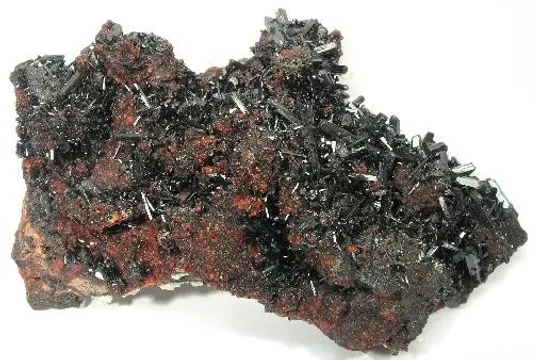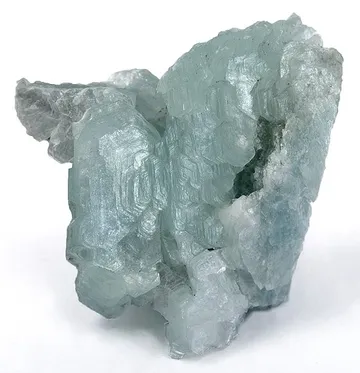
Artonvilla Mine, South Africa — blue quartz inclusions (ajoite, papagoite, shattuckite), striking pocket specimens, revived digs, and provenance notes.
Key facts
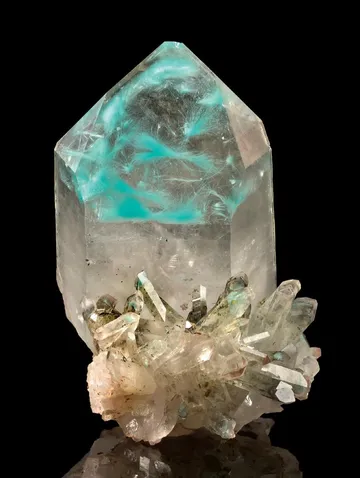
Artonvilla is the eastern anchor of the old Messina copper-mining line near Musina in Limpopo, and for specimen collectors it is no ordinary South African copper locality. Its reputation rests on a rare marriage of hard-rock ore geology and breathtaking pocket mineralogy: copper mineralization introduced into high-grade Limpopo Belt gneisses, intensely altered to albite-, sericite-, chlorite- and epidote-rich assemblages, then opened by brecciation and veining to make cavities lined with sharp quartz. Into some of those quartz crystals went the blues that made the district famous—ajoite, papagoite and shattuckite—appearing not as crusts on the outside, but as suspended sprays, phantoms, streaks and clouds inside transparent to translucent quartz.
Collectors know the classic look immediately: colorless to smoky-white quartz points, often lustrous and sharply terminated, with internal blue-green ajoite, darker royal-blue papagoite or vivid shattuckite needles; red to black hematite and pale kaolinite add the characteristic Messina-Artonvilla “weather” inside the crystals. Artonvilla matters especially because important post-closure surface diggings revived a locality many collectors had assumed was finished after the old Messina copper mines closed. The best Artonvilla specimens combine three qualities that seldom coincide—sharp quartz, visible unpolished inclusions, and a precise blue mineral identity that can be supported by provenance or analysis.
Regional View
Country View
Artonvilla is also a locality where labels deserve careful reading. Older dealer and collection labels may simply say “Messina Mine,” “Messina District,” or “Musina,” while later labels may specify Artonvilla Mine, Razor Pocket, Fireworks Pocket, or “Artonvilla diggings.” Those distinctions matter: they separate the celebrated 1980s No. 5 shaft material from the later Artonvilla surface finds, and they help explain differences in habit, inclusion style and market value.
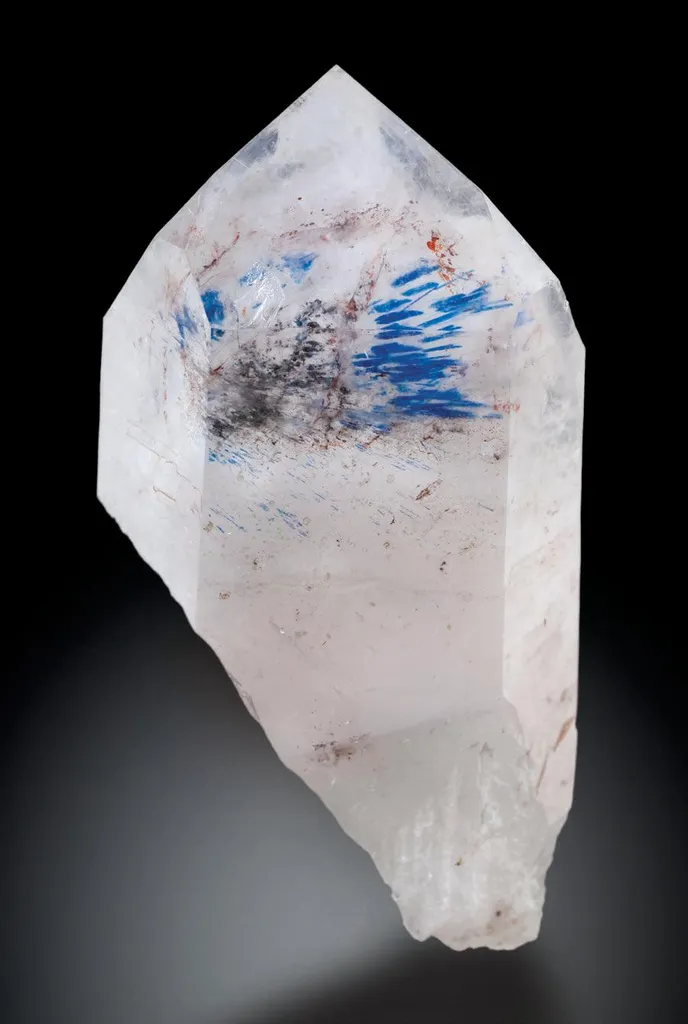
Photo: EarthWonders specimen 3472
Search for specimens: View all specimens from Artonvilla Mine, South Africa
Artonvilla Mine lies near Musina in the Vhembe District Municipality of Limpopo Province, northern South Africa. It forms part of the historically important Messina copper-mining district, a roughly linear group of mines that included Artonvilla, Spence, Messina, Harper and Campbell. The district’s European-era workings were sunk on or beside older African copper diggings, and the industrial mines operated through much of the twentieth century before final closure in the early 1990s.
Geologically, Artonvilla is the classic example of the disseminated replacement style within the Messina system. The copper mineralization is hosted by Archean granulite-facies metamorphic rocks of the Limpopo Belt and is aligned with other orebodies along a northeast-trending structural line. Across the district, copper occurred in breccia pipes, fissure deposits and disseminated replacement bodies; at Artonvilla the disseminated replacement bodies are especially well developed, with four named lodes: Watson, Frost, Emery and Reggie.
The alteration pattern at Artonvilla is one reason its specimens are so distinctive. The ore zones are concentrically arranged: outer sericitized cordierite-biotite-garnet gneiss passes inward through zones of albitization, chloritization and epidotization, with more intensely mineralized central portions. In the Emery lode, the zonation has been described outward to inward from sericite-quartz-pyrite-magnetite assemblages through albite-chalcopyrite-bornite-chlorite and albite-epidote-chlorite-specularite-bornite-chalcocite assemblages to central goethite-prehnite-albite-chlorite-chalcocite-native copper assemblages. Quartz-lined cavities occur chiefly in veins within an inner zone of vuggy albitite, commonly with minor prehnite, calcite, epidote and analcime.
The principal ore minerals of the Messina copper mines were bornite, chalcocite and chalcopyrite, commonly zoned within the orebodies. Artonvilla’s collector minerals represent the later and more visually arresting part of the story: euhedral quartz growing in open spaces created by brecciation, then enclosing or displaying secondary copper silicates and related minerals. Ajoite and papagoite are the marquee species, with shattuckite, native copper, hematite, kaolinite-like white inclusions and other alteration minerals contributing to the most attractive specimens.
Mining at the Messina copper mines began in the early twentieth century and ended in 1992, when the district was widely regarded by collectors as exhausted for new ajoite-bearing quartz. That assumption changed with later surface diggings at Artonvilla, especially finds reported from 2007 onward. The Razor Pocket is noted for bright, high-quality ajoite-included quartz, and the Fireworks Pocket produced quartz with vivid shattuckite inclusions. The most extraordinary Artonvilla recovery described in the literature was a gigantic ajoite-included quartz mass originally weighing about 1,000 kg, later trimmed to a still-formidable specimen measuring about 1.35 meters by 90 cm and weighing roughly 400 kg.
Collecting access today should be treated as closed unless explicit, current permission exists from the landholder or lawful authority. The old Messina workings are defunct, and collector-grade Artonvilla specimens on the market come from historical mine production, documented post-closure surface diggings, dealer stocks and private collections rather than routine legal collecting by visitors.
Artonvilla quartz is prized less as plain quartz than as a transparent host that preserves a copper-silicate scene inside the crystal: sharp points, miniature to cabinet clusters, and occasional much larger plates or masses may show blue ajoite, darker papagoite, shattuckite needles, native copper, hematite, specularite and pale kaolinite-like inclusions. The best pieces come from vuggy albitite and late quartz cavities associated with the altered copper lodes, including named finds such as the Razor and Fireworks pockets; they are judged by sharpness, luster, freedom from bruising, transparency into the included zone, and whether the inclusions are naturally visible rather than exposed by polishing.
At Artonvilla, ajoite is the coveted pale blue to blue-green copper aluminosilicate inclusion in quartz, usually appearing as wispy sprays, soft clouds, blue-tipped phantoms, fine tufts or internal streaks rather than as free-standing crystals; it is commonly seen with quartz, hematite, kaolinite-like white inclusions and, in some specimens, papagoite or shattuckite. The post-closure Artonvilla finds, especially the 2007 surface discovery and the 2010 Razor Pocket material reported in the trade, are important because they produced bright, aesthetic, collector-quality ajoite quartz after the main Messina mines were thought to be finished; the finest pieces show saturated color concentrated near terminations or phantom outlines, in sharp quartz with minimal damage and no need for polished windows.
Papagoite from Artonvilla is rarer than ajoite and generally more intensely blue, forming deep blue to royal-blue inclusions in quartz, commonly concentrated along phantom edges, near terminations or as striking internal patches visible through clear faces. Documented Artonvilla associations include quartz, calcite, native copper, ajoite and epidote-rich material, but fine papagoite specimens are valued above all for an unambiguous dark-blue inclusion visible without recutting, a sharp and complete quartz host, and strong contrast between the papagoite and paler ajoite, hematite or cloudy quartz; rich papagoite-in-quartz pieces from the Messina-Artonvilla suite are scarce enough that even small, well-displayed examples command serious collector attention.
Other documented Artonvilla minerals include albite, analcime, biotite-group mica, bornite, calcite, chalcocite, chalcopyrite, chlorite-group minerals, clausthalite, clinozoisite, native copper, cordierite, epidote, fluorapatite, garnet-group minerals, muscovite and sericite, prehnite, pyrite, shattuckite, sphalerite, tangeite and zoisite. For collectors, the most important of these after ajoite and papagoite are shattuckite as vivid blue inclusions in quartz, native copper as filamentary or metallic internal accents, hematite/specularite as red-black phantom material, and the gangue and alteration species—albite, epidote, prehnite, calcite and analcime—that explain the cavity environment in which the quartz formed.
Artonvilla specimens live or die by provenance. “Messina,” “Musina,” “No. 5 shaft,” “Artonvilla,” “Razor Pocket” and “Fireworks Pocket” are not interchangeable labels, even though older labels often compress the whole district into a single name. A specimen attributed to Artonvilla should ideally have a chain of custody, a named pocket, an old dealer label, a published photograph, or mineralogical confirmation supporting the attribution.
Identification of the blue inclusions is the central authenticity issue. Color alone is not a reliable separator among papagoite, shattuckite and ajoite, and pale blue-green material in quartz can be overcalled as ajoite in the marketplace. Papagoite is typically darker and more royal blue; ajoite is often softer blue-green; shattuckite may appear as sharper, more fibrous or acicular blue inclusions. Those are useful visual tendencies, not proof. For high-value specimens, especially where the label claims papagoite or a named Artonvilla pocket, Raman, X-ray diffraction or comparable analytical confirmation is worth far more than confident color-based naming.
Condition is unusually important because the inclusions are internal. Edge bruises, contacted terminations, rehealed breaks and internal veils can either reduce value or, in a few cases, add geological character. Look closely for polished faces or sawn windows: some Messina-Artonvilla quartz has been polished to reveal inclusions, and that is not the same market category as a crystal whose blue mineral is naturally visible through original growth faces. A naturally sharp, unpolished crystal showing strong inclusion color near the termination is the premium form.
The best Artonvilla pieces are not abundant. Ajoite-included quartz appears periodically from old collections and dealer reserves, while fine papagoite-included quartz is much less common. Shattuckite-included quartz from named Artonvilla pockets is also a specialized target. Small included crystals remain obtainable, but sharp, bright, undamaged, naturally displayed examples with credible Artonvilla provenance are increasingly connoisseur specimens rather than casual purchases.
The modern collecting story begins with a paradox: the European mining camp was built on a copper field already known. The early twentieth-century expedition associated with Lt. Colonel J. P. Grenfell “discovered” the deposits in the colonial mining sense, and several shafts in the district later carried names connected with that party, but the workings themselves were positioned on or near older African diggings. For collectors, that older history is not a decorative footnote; it explains why the mines follow a line of long-recognized copper occurrences rather than a random twentieth-century prospecting grid.
Before Artonvilla became the name attached to the later great finds, the blue-in-quartz phenomenon had its dramatic public entrance through the Messina district as a whole. Rob Smith of African Gems and Minerals recalled visiting the mine area from 1971, when family connections brought him into contact with miners and included quartz was already being set aside. The decisive moment in his telling came when Jimmy Townsend introduced him to Harper Shaft miner Ertjies Jansen, who showed him turquoise-colored ajoite-in-quartz crystals. At Jansen’s farm, the crystals were laid out on a shaggy white carpet—about eighty of them, enough to make Smith write, “THIS IS WHERE IT ALL STARTED!” In 1986, Smith brought the material to Tucson; the first two pieces he sold reportedly went for $15 each in a cold, muddy tent, and later that same show the material caught the attention of Wendell Wilson of The Mineralogical Record.
The mine closure in 1992 seemed to end the story. For years, collectors assumed new ajoite quartz would appear only when old collections were dispersed. Then Artonvilla changed the expectation. In 2007, surface digging at the eastern Artonvilla mine yielded some of the finest ajoite-included quartz known from the district. The most astonishing recovery was not a thumbnail, miniature or even a cabinet plate, but a quartz mass said to have weighed about 1,000 kg when extracted. It was later reduced to a still-enormous specimen about 1.35 meters by 90 cm and approximately 400 kg—an almost architectural survival of the same inclusion style collectors prize in hand specimens.
The named Artonvilla pockets have since become shorthand among specialists. The Razor Pocket is remembered for especially bright ajoite-included quartz, including clusters where multiple tips carry blue inclusions. The Fireworks Pocket name is apt for shattuckite-included quartz: the best examples show electric-blue internal sprays that look less like stains than like tiny bursts frozen inside clear quartz. These pocket names are not just romantic marketing language; they are practical provenance clues for a locality where “Messina” can mean several shafts, several decades, and very different specimen histories.