






A collector's guide to North Carolina, USA: its geology, mining history and notable minerals, illustrated with the 101 specimens documented from this locality on EarthWonders.
Key facts
North Carolina is not a single-mineral locality in the way a famous pocket quarry or a single stope is; it is a collecting province. Few American states compress so many specimen traditions into one map: emerald and hiddenite from the hydrothermal quartz veins of Alexander County, spodumene and rare phosphates from the Kings Mountain tin-spodumene belt, mica-book pegmatites and high-purity quartz from the Spruce Pine district, kyanite-bearing quartzites and schists in the Piedmont and Blue Ridge, almandine garnets in mica schist and pegmatite, rutile both free and enclosed in quartz, and a gold history that begins with the first authenticated gold discovery in the United States. For collectors, the state’s appeal lies in that overlap of gemstones, pegmatites, metamorphic minerals, and old American mining history.
Geologically, the most important specimen-producing areas sit in the Blue Ridge and Piedmont, where ancient metamorphic belts were intruded by granitic and pegmatitic bodies and later cut by mineralized fractures. Around Spruce Pine, coarse pegmatites and related alaskitic rocks yielded mica, feldspar, kaolin, and quartz on an industrial scale, while also giving collectors muscovite books, smoky quartz, beryl, garnet, tourmaline, and occasional uranium and phosphate rarities. Southward near Kings Mountain, lithium-rich pegmatites carry spodumene with quartz, albite, microcline, muscovite, and a remarkable late-stage phosphate suite. In Alexander County, the Hiddenite district is different again: its best emeralds and hiddenite occur in open pockets and cavities in quartz veins, with rutile, siderite, dolomite, muscovite, pyrite, and smoky quartz providing the classic specimen associations.
At their best, North Carolina specimens have a distinct, old-American look. Hiddenite emeralds can be pale mint to vivid green, sometimes perched improbably on smoky quartz. Rutile from Alexander County is wine-red to nearly black, sharply striated, and prized when it rises as a clean prism or threads through transparent quartz. Spruce Pine and Ray Mine quartz is commonly smoky, etched, stepped, or associated with feldspar and mica, while muscovite appears as silvery to pale-green books and plates from pegmatite bodies. The great North Carolina emerald specimens are not Colombian-style clusters; they are tougher, rarer, and more geological-looking—green crystals in pegmatite or quartz, often with biotite, schorl, smoky quartz, or carbonate minerals as a reminder of the host environment.
Regional View
Country View
The state’s collector reputation rests heavily on three districts. The Hiddenite area of Alexander County is the classic American locality for natural emerald-green spodumene and some of the largest emeralds known from North America. The Spruce Pine district, across Mitchell, Avery, and Yancey counties, is a major mica-feldspar-quartz province and an enduring source of pegmatite specimens. The Kings Mountain district in Cleveland and Gaston counties anchors North Carolina’s lithium story, with spodumene pegmatites that were economically important and scientifically exceptional for their rare late-stage minerals.

Photo: Wikimedia Commons

Photo: Wikimedia Commons

Photo: Wikimedia Commons
Search for specimens: View all specimens from North Carolina, USA
North Carolina’s specimen localities belong mainly to three geological families: pegmatites, hydrothermal quartz veins, and regional metamorphic rocks. Pegmatites dominate the Spruce Pine and Kings Mountain stories. In the Spruce Pine district, coarse granitic pegmatites and alaskitic bodies intrude metamorphic country rocks of the Blue Ridge. These bodies supplied muscovite, feldspar, kaolin, and quartz, and their dumps and pockets produced collector material including muscovite books, smoky and clear quartz, beryl, garnet, tourmaline, and uncommon phosphate or uranium minerals. In the Kings Mountain tin-spodumene belt, lithium-bearing pegmatites occur along the west flank of the Kings Mountain shear zone, a structural boundary separating higher-grade Inner Piedmont rocks from lower-grade rocks of the Kings Mountain belt. The typical ore assemblage is spodumene with quartz, albite, microcline, and muscovite, with accessory cassiterite in parts of the belt and a rich secondary phosphate suite in fractures and vugs.
The Hiddenite district in Alexander County is more pocket-oriented and more gem-oriented. The celebrated emeralds and hiddenite occur in mineralized zones near Hiddenite and Stony Point, where quartz veins and pegmatitic bodies cut Piedmont rocks and where pockets yielded loose crystals in red, gravelly clay as well as attached crystals on quartz or carbonate matrix. The old Hiddenite mine area was described as having open-cut workings in weathered red soil over mineralized bedrock, with the pocket assemblage including hiddenite, emerald, rutile, quartz, siderite, dolomite, muscovite, pyrite, and feldspar. It is this intimate pocket association—green spodumene or emerald with smoky quartz, rutile, siderite, and mica—that gives Alexander County pieces their unmistakable identity.
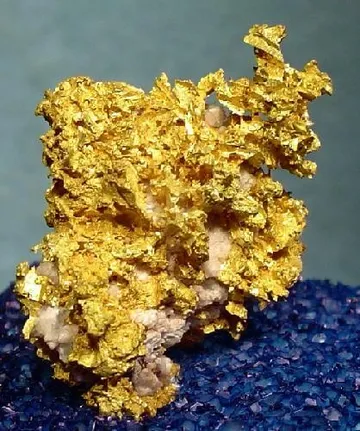
Mining history in North Carolina reaches back beyond the specimen trade. The Reed Gold Mine in Cabarrus County began the state’s gold era after Conrad Reed found a 17-pound nugget in Little Meadow Creek in 1799, and gold mining spread through the Carolina Slate Belt long before California’s rush. Mica became a major western North Carolina industry in the nineteenth and twentieth centuries, particularly in the Spruce Pine region and in other Blue Ridge pegmatite districts. Feldspar, kaolin, and quartz mining followed, with Spruce Pine becoming one of the most important industrial-mineral districts in the country. Its high-purity quartz later became strategically important for glass, optical, and electronics applications, while muscovite and feldspar built the earlier economic base.
Lithium mining in the Kings Mountain district developed later. Spodumene-bearing pegmatites were recognized before their full economic importance was understood; wartime and postwar demand made the Kings Mountain area a major hard-rock lithium source. Solvay and then Foote Mineral Company worked the Kings Mountain deposits, and the Foote mine became a cornerstone locality for lithium pegmatite mineralogy. Although commercial lithium production shifted away from North Carolina hard rock by the late twentieth century, the Foote mine remains a major name in mineral collections because of its spodumene, phosphates, and type-locality species.
Collecting access today is mixed and must be approached carefully. Many famous historical mines are private, reclaimed, flooded, built over, or operated as industrial mineral sites where collecting is not allowed. North Carolina state parks prohibit removal of rocks and minerals without an approved scientific or educational permit, and National Park Service lands are generally closed to recreational mineral collecting. Some National Forest situations are more nuanced, but local rules, posted restrictions, and surface-only limitations matter; collectors should not assume that an old locality listed in a guidebook is legally open. Commercial pay-to-dig operations, especially around Hiddenite and Spruce Pine, are the practical route for many visitors, but serious collectors should distinguish native dig material from enriched tourist buckets.
Notable specimen-producing localities include the Emerald and Hiddenite mine area, Adams farm, Rist mine/North American Emerald Mine, Emerald Hollow Mine, Wooten-Rutledge and related Alexander County sites, the Crabtree Emerald Mine on Crabtree Mountain in Mitchell County, Ray Mica Mine near Burnsville in Yancey County, the Spruce Pine district mines, the Foote Lithium Co. mine near Kings Mountain, and kyanite-bearing rocks in the Crowders Mountain–Pinnacle region and Yancey/Mitchell County Blue Ridge localities. The best pockets were often small and sporadic: a few cavities with sharply crystallized rutile and quartz, a single emerald-bearing quartz pocket, or a pegmatite zone rich enough in mica books and smoky quartz to reward patient trimming.
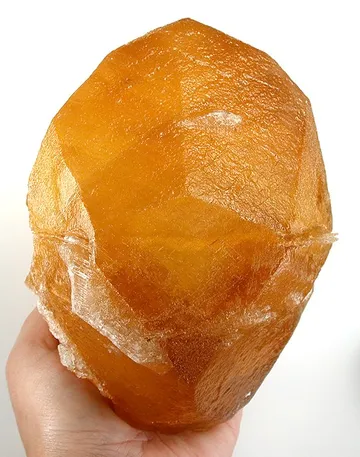
North Carolina quartz ranges from industrially important high-purity material in the Spruce Pine district to cabinet-worthy crystals from pegmatites and quartz veins around Hiddenite, Ray Mine, and other western counties; collector pieces may be colorless, champagne, smoky, amber, rose, or rutilated, with the most desirable examples showing glassy, well-terminated points, stepped or etched faces, sharp luster, and strong associations with rutile, muscovite, beryl, feldspar, or carbonate minerals. Alexander County quartz is especially valued when it carries wine-red rutile needles or crystals, emerald, hiddenite, or siderite, while Ray Mine and Spruce Pine material is more typically pegmatitic—smoky quartz with feldspar, mica books, garnet, or beryl. Ordinary North Carolina quartz is abundant and often iron-stained or massive; the premium specimens are undamaged crystals with real locality character, visible inclusions or attached associates, and a label tying them to a historic mine rather than simply “western North Carolina.”
Rutile is one of the defining collector minerals of the Hiddenite district, occurring as deep red, reddish brown, wine-red, or nearly black crystals, as hairlike inclusions in quartz, and as sharp prismatic crystals associated with smoky quartz, muscovite, siderite, biotite, dolomite, emerald, and hiddenite. Classic Alexander County rutile can be surprisingly refined: slender striated prisms, small lustrous crystals implanted on pocket matrix, or clean needles locked inside transparent quartz. Historical descriptions emphasize rutile in open pockets with gems and quartz crystals, sometimes abundant enough to dominate the pocket contents. Fine North Carolina rutile is separated from common rutilated quartz by crystal sharpness, wine-red translucency at the edges, complete terminations, minimal bruising, and a secure Hiddenite-area pedigree.
Muscovite is both an industrial mineral and a specimen mineral in North Carolina, most famously from the Spruce Pine district and from pegmatite mines such as Ray Mine, where feldspar, smoky quartz, and muscovite are dominant constituents. Specimens occur as books, plates, pseudohexagonal aggregates, silvery sheets, pale-green mica, and mica groups perched with quartz, rutile, siderite, dolomite, beryl, or garnet. In the Spruce Pine pegmatites, mica was concentrated in shoots and zones, especially near pegmatite borders and quartz cores, and many old workings were driven for sheet and scrap mica before the collector market mattered. The best collectible muscovite pieces are not simply large books; they have bright, undamaged faces, attractive stacking or rosette form, matrix balance with quartz or feldspar, and a locality label from Ray Mine, Spruce Pine, Hiddenite, or a named mica mine rather than a vague regional tag.
Spodumene in North Carolina belongs to two very different collecting traditions: massive to crude pale spodumene from the Kings Mountain lithium pegmatites, and the emerald-green gem variety hiddenite from the Hiddenite district of Alexander County. At Kings Mountain, spodumene occurs in quartz-microcline-albite-muscovite pegmatites and was mined as lithium ore rather than saved as aesthetic crystals, so sharply crystallized collector specimens from Foote and related mines are far scarcer than the industrial scale of the deposit suggests. In Alexander County, hiddenite crystals are typically slender, vertically striated, strongly cleavable, and pale yellow-green to vivid emerald green, associated with quartz, emerald, rutile, muscovite, siderite, and carbonates in small pocket systems. Better North Carolina spodumene pieces show distinct crystal form, natural green color where sold as hiddenite, intact terminations or cleavages, and precise mine provenance.
North Carolina kyanite is a metamorphic mineral of the Piedmont and Blue Ridge, appearing as blue, blue-gray, greenish, white, or gray blades in mica schist, gneiss, and aluminous quartzite, with notable occurrences in the Crowders Mountain–Pinnacle region and in western mountain localities of Yancey and Mitchell counties. At Crowders Mountain the kyanite is tied to aluminous quartzite formed from altered silica- and alumina-rich rocks that were later metamorphosed, giving blue-gray blades in resistant quartzitic material rather than loose gem crystals. Western North Carolina specimens can show sharper blue blades in quartz or mica schist, sometimes with garnet, biotite, or muscovite. The best pieces are well-colored, lustrous, sharply bladed crystals with minimal splintering and an attractive schist or quartz matrix; ordinary material is commonly flattened, bruised, gray, or locked in unattractive massive rock.
Almandine garnet is widespread in North Carolina’s metamorphic and pegmatitic terrains, turning up in mica schist, gneiss, pegmatite, and emerald-bearing matrix from districts including Spruce Pine, Hiddenite, Ray Mine, and Mitchell-Yancey area localities. It commonly appears as deep red to reddish brown dodecahedral or rounded crystals in muscovite- or biotite-rich schist, and as smaller garnets embedded in pegmatite with quartz, feldspar, schorl, and beryl. Crabtree emerald matrix often contains reddish garnets with black tourmaline, gray quartz, feldspar, and small emerald crystals, producing a distinctive polished or specimen appearance. High-quality North Carolina almandine is judged by crystal definition, color, size, and matrix contrast; most field material is fractured, opaque, weathered, or only partially exposed, while display specimens show crisp faces or attractive red crystals set cleanly in bright mica or pegmatite.
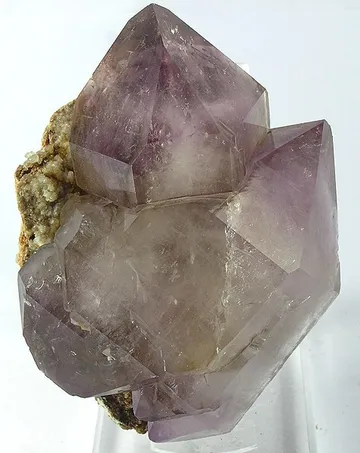
Smoky quartz is one of North Carolina’s most collectible quartz varieties, with documented occurrences from the Hiddenite area, Ray Mine in Yancey County, Brindletown in Burke County, areas north of Looking Glass Falls in Transylvania County, Davidson County, and other pegmatite and vein settings. Hiddenite smoky quartz is especially desirable when it hosts or carries rutile, emerald, siderite, muscovite, or other pocket minerals, and some old specimens show water-clear interiors with smoky zoning, stepped faces, and embedded wine-red rutile. Ray Mine and Spruce Pine area pieces tend to have a pegmatitic character, associated with feldspar, mica, beryl, and garnet. Good smoky quartz from the state has transparency, balanced color rather than muddy opacity, sharp terminations, limited bruising, and visible locality-specific associations; ordinary pieces are abundant iron-stained vein quartz or cloudy fragments without display presence.
Hiddenite, the green variety of spodumene that made Alexander County famous, is the most locality-sensitive North Carolina collector stone: true classic material comes from the Hiddenite area and related Alexander County occurrences, where crystals occur in pocket systems with emerald, quartz, rutile, siderite, dolomite, muscovite, pyrite, and feldspar. The crystals are generally slender, prismatic, vertically striated, and strongly cleavable, with color ranging from pale yellow-green to vivid emerald green; some historical crystals were large enough to become legendary, but most collectible specimens are small thumbnails or miniatures. The best pieces combine natural color, transparency, recognizable crystal form, intact ends or attractive cleavage surfaces, and old labels from Adams farm, the Emerald and Hiddenite mine, Rist/North American Emerald Mine, or closely related Hiddenite-area workings. Because green spodumene from other countries may be irradiated, faded, or marketed loosely as hiddenite, precise Alexander County provenance is central to value.
Siderite is a classic accessory mineral of the Hiddenite district, where it occurs with hiddenite, emerald, quartz, rutile, muscovite, biotite, dolomite, feldspar, and pyrite in mineralized pockets and veins. North Carolina siderite specimens are typically brown to tan rhombohedral crystals or aggregates, sometimes forming attractive contrasts with pearly muscovite, smoky quartz, or pale carbonate minerals. The Adams mine and North American Emerald Mine area have produced collector siderite, including twins and mixed carbonate specimens, but the mineral is usually valued here for association and locality context rather than sheer crystal size. Better pieces show lustrous, well-defined rhombs, undamaged edges, and balanced assemblages with quartz, mica, dolomite, calcite, or rutile; ordinary siderite is dull, weathered, massive, or easily confused with iron-stained carbonate without supporting provenance.
Emerald is North Carolina’s official precious stone and one of the state’s most historically important collector minerals, with major occurrences at Hiddenite in Alexander County, Crabtree Mountain in Mitchell County, and the Old Plantation mine area in Cleveland County. Crabtree emeralds occur in pegmatite, commonly as small green hexagonal prisms or sections in feldspar-quartz-biotite-schorl matrix, and collector slabs from the mine are famous for green emerald cross-sections against pale pegmatite and dark tourmaline. Hiddenite-area emeralds occur in hydrothermal quartz veins and pockets and have produced some of North America’s largest and most valuable emeralds, including major crystals and cut stones from the Rist/North American Emerald Mine and Adams farm area. For specimens, the best North Carolina emeralds show recognizable crystal form, saturated green color, and natural matrix—especially quartz, smoky quartz, biotite, schorl, or carbonate—while cuttable clarity is less common and provenance is critical because tourist mining areas may also sell enriched material from outside the state.
Beyond the headline species, North Carolina is extraordinary for rarities and type-locality minerals. The Foote Lithium Co. mine at Kings Mountain is a type locality for numerous rare phosphates and related minerals, including eakerite, earlshannonite, fanfaniite, ferraioloite, footemineite, jasonsmithite, kayrobertsonite, kingsmountite, lithiomarsturite, mangangordonite, swinefordite, switzerite, tetrawickmanite, and others listed in modern type-locality databases. The state’s wider type-mineral roster also includes species from outside the featured districts, reflecting its range of metamorphic, pegmatitic, ultramafic, and ore settings. Collectors should also watch for beryl varieties, schorl, aquamarine, cassiterite, monazite, autunite, torbernite, columbite-group minerals, feldspar, rhodochrosite, dolomite, calcite, pyrite, staurolite, sillimanite, corundum, ruby, sapphire, and pyrophyllite, but these should be bought with locality precision: “North Carolina” alone is rarely enough for a serious specimen.
North Carolina labels need scrutiny. A specimen marked simply “NC” or “Hiddenite” may be perfectly genuine, but the state has many tourist-oriented gem operations where buckets can be enriched with nonlocal material. Serious collectors should distinguish native mine-run material, creek finds, and documented old-mine specimens from salted or mixed buckets. This matters especially for emerald, ruby, sapphire, topaz, aquamarine, garnet, and brightly colored foreign stones that may appear in commercial sluice bags but have no meaningful North Carolina provenance.
Hiddenite is the major authenticity problem. In the collector trade, classic hiddenite means natural green spodumene from the Hiddenite area of Alexander County. Green spodumene from Afghanistan, Pakistan, Brazil, Madagascar, or other sources may be sold as hiddenite in a broader gem-trade sense, and some green material may owe its color to irradiation or may fade. A credible North Carolina hiddenite specimen should have a specific Alexander County locality—Adams farm, Emerald and Hiddenite mine, Rist/North American Emerald Mine, Emerald Hollow area, or another documented Hiddenite district occurrence—and ideally an older label, known collection history, or analytical support for important pieces.
Emerald labels are also commonly overbroad. Crabtree emerald matrix has a different look from Hiddenite emerald: Crabtree material is typically emerald in pegmatite with feldspar, quartz, biotite, schorl, and garnet, whereas Hiddenite emeralds are tied more strongly to quartz-vein pockets and associated smoky quartz, rutile, siderite, dolomite, and hiddenite. Colombian, Brazilian, Zambian, or synthetic emeralds are visually unlike most North Carolina matrix specimens to an experienced eye, but loose small green fragments from tourist operations are harder to evaluate. Good crystal form, matrix compatibility, and provenance are more important than hopeful color alone.
Condition issues are typical of pegmatite and pocket minerals. Spodumene has perfect cleavage and breaks into sharp splinters; many old hiddenite crystals are contacted, cleaved, or repaired, and even natural cleavage faces can be mistaken for damage. Emerald from North Carolina is commonly fractured or matrix-bound, with gem clarity being exceptional rather than expected. Rutile prisms are hard but can be slender and edge-bruised; look for intact terminations and undisturbed striations. Muscovite books split easily and may shed sheets if handled roughly. Smoky quartz from old pockets may be iron-stained, etched, contacted at the base, or internally healed; none of those are fatal if the crystal has luster and form, but heavy bruising on terminations sharply reduces value.
Fluorescence is not the primary selling point for most featured North Carolina species, but the state’s pegmatites do include minerals that respond to ultraviolet light, and lithium pegmatite suites may include phosphates or uranium minerals requiring correct identification. Any torbernite, autunite, uraninite-bearing, or other radioactive specimen from Spruce Pine, Ray Mine, Foote, or similar pegmatite environments should be stored thoughtfully, kept dry and labeled, and handled with normal radioactive-mineral precautions.
Market availability varies sharply by species. Quartz, smoky quartz, muscovite, kyanite, and almandine are generally obtainable, though fine old labels and named-mine matrix pieces command premiums. Rutile from Hiddenite is scarcer in sharp, aesthetic crystals than casual listings suggest. Spodumene from Foote is not rare as ore material but is uncommon as a good crystallized specimen. True North Carolina hiddenite is genuinely scarce, and attractive crystallized pieces from old Alexander County pockets are far harder to replace than ordinary green spodumene. North Carolina emeralds span a wide range, from small Crabtree matrix pieces to exceptional Hiddenite-area stones with museum-level significance.
Access is a collecting risk as well as a legal issue. Many historically listed mines are on private land, in active industrial areas, reclaimed, flooded, or under rules that have changed since old guidebooks were printed. North Carolina state parks do not allow casual mineral removal, and state recreation lands, historic sites, and National Park Service lands should be treated as closed unless written permission says otherwise. For current field collecting, verify land ownership, operating status, permits, digging rules, and whether the material offered is native before assuming a classic locality is available.
The first great North Carolina mineral story begins not with a trained geologist but with a boy and some “greenish-colored rocks.” In Alexander County, George Washington Warren came across the stones while plowing on his family’s farm. They were curious enough to keep, but not yet precious; the story preserved by the state has the young Warren using some of the pieces in a slingshot before the family was advised to have them examined. By 1879 the stones had drawn mineralogical attention, and they proved to be a green gem variety of spodumene. William Earl Hidden, sent south while investigating mineral prospects for Thomas Edison, entered the story soon afterward. The gem would take his name, and the little community would eventually take the name of the gem.
The early Hiddenite workings had all the ingredients of an American mineral boom in miniature: a rare new gem, emeralds in the same district, Northern capital, and the hope that red Piedmont clay might conceal a fortune. In 1881 the Emerald and Hiddenite Mining Company began systematic work. During the 1881–1885 period, roughly 100 employees were reportedly involved, a remarkable workforce for a pockety gemstone deposit. The largest hiddenite crystal described from that era measured 8.5 inches long and weighed 9 ounces. The economics never matched the romance for long; the mine eventually closed, reopened in 1907 under Edward Turner, and after Turner’s death in 1926 the property remained part of the collecting world through Ruby Turner Adams, who still admitted hopeful prospectors as late as 1974.
North Carolina’s gold story is even older and more improbable. In 1799, twelve-year-old Conrad Reed found a heavy yellow rock in Little Meadow Creek on his family’s Cabarrus County farm. It weighed 17 pounds. For three years, the Reed family used it as a doorstop. Only later was the object recognized as gold, and the Reed property became the starting point of America’s first gold rush. The story did not end with that doorstop: before the end of the early placer-mining period, an enslaved boy named Peter found a 28-pound nugget at the mine, one of the most extraordinary gold discoveries documented in the United States. For mineral collectors, Reed is a reminder that North Carolina’s specimen history is not only pegmatites and gems; it is also the place where American gold fever first took hold.
The emerald chapter kept producing record-book moments long after the nineteenth-century Hiddenite boom. In 1969, the Rist mine at Hiddenite yielded a 1,438-carat emerald crystal, widely cited as the largest emerald crystal found in North America at the time. From the same district came the “Carolina Emerald,” a 13.14-carat cut stone associated with Tiffany & Co., helping establish Hiddenite as something more than a curiosity locality. Later, the North American Emerald Mine revived the district’s reputation with important pocket finds, including a 71-carat emerald crystal that produced major cut stones known as the Carolina Queen and Carolina Prince.
Then came the Carolina Emperor. In August 2009, Terry Ledford found a 310-carat emerald crystal at the Adams farm site in the Hiddenite district. The crystal was large enough that Ledford reportedly said it looked like an empty 7-Up bottle. It was cut into a 64.83-carat emerald, named the Carolina Emperor, and became North America’s largest faceted emerald. Today the stone belongs to the public story of the state as much as to the gem trade, displayed at the North Carolina Museum of Natural Sciences as a reminder that the old Hiddenite ground was not exhausted of surprises.
Crowders Mountain tells a different sort of mineral story. Its blue-gray kyanite-bearing quartzite was attractive to mining companies because kyanite is valuable for heat-resistant ceramics and other refractory uses. In the early 1970s, exploration threatened the mountain and the nearby Pinnacle with a fate similar to the heavily mined Henry’s Knob just across the South Carolina line. Local conservation efforts helped turn the area into Crowders Mountain State Park in 1973. For collectors, that history cuts two ways: the kyanite is real and geologically significant, but the park status also means the mountain is now protected ground, to be studied and admired rather than collected.


_3_(24151200547).jpg)