A collector's guide to Neudorf, Germany: its geology, mining history and notable minerals, illustrated with the 60 specimens documented from this locality on EarthWonders.
Key facts
Neudorf, now a district of Harzgerode in Saxony-Anhalt, is one of the canonical German mineral localities: a compact Lower Harz lead-silver mining field whose fame among collectors rests far more on specimen quality than on tonnage. The mines worked the Straßberg-Neudorf vein system, a long, fault-controlled hydrothermal lode tract in the Harzgerode complex, where argentiferous galena and freibergite occur with quartz, calcite and siderite, and where fluorite, sphalerite, chalcopyrite, bournonite, tetrahedrite-group minerals, wolframite-group minerals and a suite of secondary lead-copper species add mineralogical breadth. The surrounding country rock is Devonian to Lower Carboniferous slate, greywacke and greywacke-schist, locally cut by lamprophyres, and the ore was concentrated in lenses separated by barren stretches rather than in one continuous productive vein.
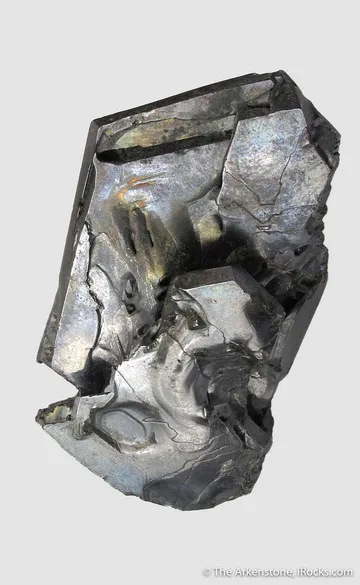
For collectors, Neudorf means the classic triad: steel-gray galena, honey- to clove-brown siderite and milky quartz. The finest pieces have a visual grammar that is immediately recognizable: sharply modified, highly lustrous galena crystals—often combining cube, octahedron and rhombic dodecahedron faces in the celebrated “Neudorf habit”—set on warm, translucent rhombohedra of siderite over sparkling quartz. Cabinet specimens with galena crystals of exceptional size and condition are among the great European classics; smaller miniatures can still have enormous presence when a single metallic crystal is cleanly perched on a lustrous siderite plate.
Regional View
Country View
The classic specimens came chiefly from the Meiseberg and Pfaffenberg mines, active during the great nineteenth-century period of the Neudorf district. By 1903 the principal Neudorf mines were closed, and the modern supply is therefore overwhelmingly old collection material: pieces with antique German, French, British or American labels; specimens that passed through major European dealers; and occasional museum or institutional deaccessions. That old provenance is part of the locality’s appeal, because Neudorf was already a coveted mineral name in nineteenth-century collections.

Photo: Wikimedia Commons

Photo: Wikimedia Commons
Search for specimens: View all specimens from Neudorf, Germany
Neudorf lies in the Lower Harz, about 4 km south-southwest of Harzgerode, within a historically important but relatively small lead-silver district. The collector locality is best understood as a group of mines and shafts around the village—especially Pfaffenberg, Meiseberg, Glücksstern, Hasenschacht and the Birnbaum shafts—rather than as a single pit. The principal ore structures belong to the Straßberg-Neudorf vein system, which extends for roughly 15 km from west of Straßberg toward Königerode and dips northward at about 45–60 degrees. The lodes are fault-zone fillings: irregular, lensy mineralized sections alternate with barren ground, and documented vein widths locally reached tens of metres.
The principal economic ore was argentiferous galena. Freibergite also contributed silver, while sphalerite, chalcopyrite and other sulfides and sulfosalts formed part of the ore assemblage. Gangue minerals include quartz, calcite, siderite and fluorite; at Glasebach, on the same Straßberg-Neudorf lode tract, fluorite-quartz-calcite is emphasized as the main vein filling, with chalcopyrite, arsenopyrite, galena, sphalerite, wolframite, scheelite and siderite occurring more irregularly. The regional origin of these Harz vein systems has been treated in modern geochemical work as hydrothermal mineralization by saline brines moving along reactivated fault zones, with base-metal sulfide and later fluorite-barite mineralization developed during Mesozoic fluid-flow events. Older local interpretive material also emphasizes the influence of the Ramberg granite massif as a heat and fluid source in the popular explanation of Neudorf’s ores.
Mining around Neudorf has medieval roots. A smelter below the Pfaffenberg is recorded by the mid-fifteenth century, and the Meiseberg workings were important early in the district. The mines rose to particular prominence from the late eighteenth century into the early nineteenth century, when Neudorf developed as a mining village and the Pfaffenberg and Meiseberg workings became among the most important mines of the Harzgerode region. The Anhalt-Bernburg mining administration, later associated with the director Johann Ludwig Carl Zincken, oversaw the district during its most celebrated collecting era. A steam engine was installed for mine drainage at Pfaffenberg in 1823, an early and conspicuous marker of the effort required to keep the deepening Neudorf mines workable.
Water control was the chronic technical problem. The Herzog-Alexis-Erbstollen, begun on 22 April 1830, was intended to drain the Harzgerode and Neudorf workings more effectively. By 26 May 1862 the main drive had reached a length of 2,134 m, but the ambitious scheme never fully reached the Pfaffenberg counter-drive, and the Neudorf mines remained difficult and expensive to operate. The Pfaffenberg and Meiseberg mines were closed in 1903, after which the classic specimen era was effectively over. Later attempts in the 1930s and 1950s to revive ore mining in the region were unsuccessful.
Today, Neudorf is not a productive collecting locality in the nineteenth-century sense. The old underground workings are closed, and collectors should not treat historical mine sites or dumps as open-access collecting ground without explicit permission from landowners and relevant authorities. The district is, however, unusually well presented as mining landscape: the Neudorf historical mining circular trail links the village with sites such as Grube Glasebach, Birnbaumteich, Teufelsteich and the Stahlquelle, while interpretive boards and “Bergbautannen” markers in and around the village identify former mining features. The nearby Glasebach Mine is operated as a mining museum and show mine, preserving underground workings and water-management technology from several phases of Lower Harz mining.
The notable specimen finds were made while the Meiseberg and Pfaffenberg mines were active. These workings produced the famous galena crystals and the finest siderite-quartz plates; old accounts and modern locality summaries cite galena crystals with the Neudorf habit reaching very large sizes, bournonite crystals up to several centimetres, tetrahedrite-group crystals of notable size, and scheelite associated with wolframite-group crystals. The result is a locality whose economic history closed more than a century ago but whose mineral specimens still define what many collectors mean by “German classic.”
Neudorf siderite is the warm-toned stage on which the locality’s best drama is played: sharp rhombohedra in honey, amber, clove-brown and darker fudge-brown shades, commonly translucent at the edges and prized for a resinous to almost wet lustre. It occurs as plates and druses on milky to sparkling quartz, with galena as the premier association and calcite, chalcopyrite and sphalerite appearing on some pieces. Individual rhombs on market specimens are commonly in the millimetre to 1.5 cm range, though the impact of a piece depends less on size alone than on luster, freedom from bruising, and how well the brown siderite contrasts with white quartz or frames a metallic galena crystal; ordinary Neudorf siderites are attractive, but the best examples have clean, undamaged rhombs with enough translucency and spacing to give the surface life rather than a dull crust.
Quartz from Neudorf is rarely the headline species, yet it is essential to the locality aesthetic: it forms white, milky, colorless or sparkling microcrystalline beds and stubby crystals that underlie siderite, galena and calcite. On classic specimens it provides the pale, reflective matrix that makes the brown siderite and gray galena read so strongly from across a case, and on some pieces later quartz partially coats siderite or lines small cavities. Good Neudorf quartz specimens are therefore judged by association and composition—clean quartz plates supporting lustrous siderite rhombs, isolated galena crystals, or both—rather than by unusually large quartz crystals; the most desirable quartz is fresh, bright and not stained into visual muddiness by iron oxides or handling grime.
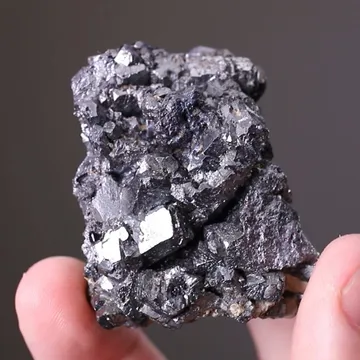
Galena is the signature ore mineral of Neudorf and the reason the locality occupies such a high rank among European classics. The finest crystals are bright metallic, sharp and highly modified, displaying the “Neudorf habit” in which cube, octahedron and rhombic dodecahedron faces are developed together; old records and locality summaries describe exceptional crystals reaching impressive sizes, while fine market specimens more commonly show isolated or grouped crystals from under 1 cm to several centimetres across. Associations with golden-brown siderite on quartz are the standard of excellence, and a top piece is not merely a galena crystal from Neudorf but a balanced sculptural combination: crisp faces, strong luster, minimal edge wear, a natural seat on siderite, and enough separation from neighboring crystals to show the modified form clearly.
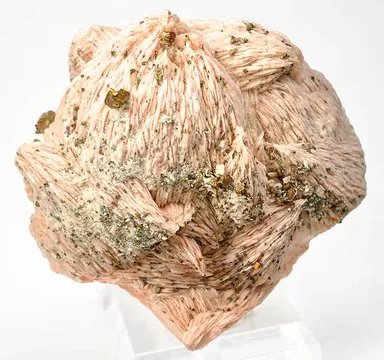
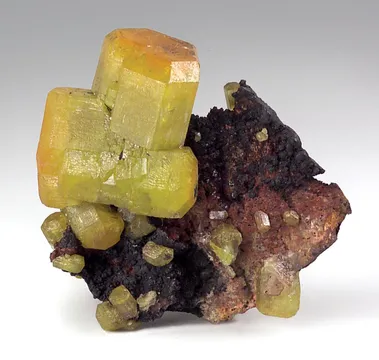
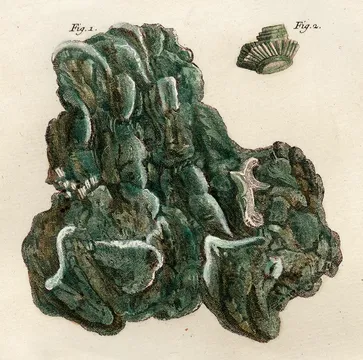
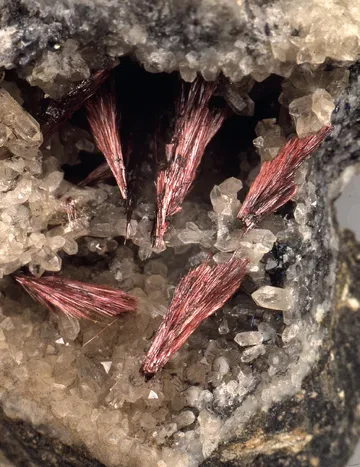
Beyond the three classic species, Neudorf is important for bournonite, sphalerite, chalcopyrite, pyrite, calcite, fluorite, tetrahedrite- and tennantite-subgroup minerals, freibergite, acanthite, anglesite, cerussite, pyromorphite, wulfenite, wolframite-group minerals, ferberite, hübnerite, scheelite, stibnite, arsenopyrite, cobaltite, millerite and a range of secondary copper-lead minerals including anilite, digenite, malachite, azurite, posnjakite and serpierite. The locality’s rarity story is especially strong in the tungsten suite: Neudorf is repeatedly singled out in regional interpretive material for tungsten ore, unusual in the Harz context, and historical collections preserved wolframite from Neudorf as scientifically significant district material. Bournonite deserves special notice as a true collector classic here, with old references praising large crystals from the Neudorf mines in association with quartz and siderite.
Neudorf specimens are classic, finite and provenance-sensitive. The best material was mined before 1903, so any large, clean galena-siderite-quartz specimen should be approached as an old collection piece unless there is specific evidence otherwise. Old labels from German collections, nineteenth- or early twentieth-century dealers, the Zincken/Anhalt collecting tradition, or later well-known collections add meaningful value and credibility. Specimens without provenance are not automatically suspect, but the locality is sufficiently famous that vague labels such as “Harz, Germany” should be tightened only when the mineralogical style supports it: modified galena of the Neudorf habit, lustrous honey-brown siderite rhombs, milky quartz matrix and the appropriate lead-silver vein associations.
No widely documented, locality-specific fake industry is associated with Neudorf, but repairs and reattachments are a real concern, especially on the showiest galena-on-siderite pieces. A single brilliant galena crystal perched on siderite is exactly the aesthetic collectors want, and it is also the kind of architecture most vulnerable to old glue, repaired contacts or disguised restorations. Examine junctions between galena and siderite with magnification; look for unnatural adhesive films, dust-filled seams, mismatched oxidation, or a galena crystal that appears mechanically set rather than grown. Several modern dealer descriptions of Neudorf pieces explicitly state “no recorded repairs,” which tells you that repair status is part of the normal due diligence for this locality.
Condition is critical. Galena is soft and heavy, and Neudorf galena crystals often show small edge nicks, bruised corners or contact marks from more than a century of collection handling. Siderite rhombs chip and abrade easily along edges; even high-quality pieces may have minor peripheral wear, but face damage in the display area should affect price substantially. Quartz druse is tougher but can trap dust, and old specimens may have cabinet grime that dulls the contrast between white quartz and brown siderite. Avoid aggressive cleaning: galena can lose surface quality, siderite can react to acids, and old labels or matrix coatings may be more important than a cosmetically brighter surface.
Fluorescence is not a major buying criterion for classic Neudorf galena-siderite-quartz specimens. Handling considerations are more practical: galena is lead sulfide and should be treated with ordinary mineral hygiene—wash hands after handling, keep fragments and dust away from children, and do not grind, saw or ultrasonically abuse specimens. Siderite is an iron carbonate and may slowly oxidize or stain if stored damp; keep pieces dry and stable. Because the market supply consists almost entirely of old material, high-grade miniatures and cabinets appear irregularly, often through major dealer inventories, estate collections and auctions. Fine siderite-only pieces remain more obtainable than top galena combinations; true cabinet specimens with sharp, lustrous Neudorf-habit galena on undamaged siderite are substantially rarer and command strong prices.
In 1801 a young Friedrich Mohs took work as a Steiger in the Neudorf mining district. He was not yet the textbook name every mineral collector learns, not yet the man whose hardness scale would give mineralogy one of its most durable field tools. He was a mine official in the Harz, close to the practical world of ore, water, timbering, veins and miners’ judgments. The setting is easy to overlook because Mohs is usually remembered in the abstract—as a scale from talc to diamond—but Neudorf places him in a real mining landscape, where the difference between theory and working rock was measured in wet shafts and ore carts.
A generation later, Johann Ludwig Carl Zincken made the district part of a much more deliberate scientific enterprise. Zincken became director of the Anhalt-Bernburg mining and smelting works on 1 January 1821 and lived at Mägdesprung in the Selke Valley. In the same year, the duke approved his collecting for a newly enlarged ducal mineral collection. Zincken did not merely gather pretty display pieces; through the Harzgerode mining office and the Neudorf mining administration he had a roughly 600-specimen “Gangsammlung” assembled as a deposit collection, documenting the veins of the district. An accompanying “Anhaltischer Gangatlas” recorded vein structures as they could be observed in the 1830s and 1840s. The atlas later disappeared, and the neglected gang collection was ultimately destroyed in the twentieth century, but the surviving record shows how seriously Neudorf was being read as geology while the mines were still alive.
The engineering story is just as memorable. Neudorf’s deepening mines were rich enough to pursue but wet enough to torment. In 1823, Pfaffenberg received a steam engine for drainage—the first such installation in the district according to local histories—and in 1829 Zincken proposed a far more ambitious solution: a new drainage adit for the Harzgerode and Neudorf mines. Work on the Herzog-Alexis-Erbstollen began on 22 April 1830. The tunnel advanced for decades; on 26 May 1862, after 32 years, it had reached 2,134 m. Yet the grand design remained incomplete. The Pfaffenberg counter-drive of 288 m was never reached, and the planned total length of 7.2 km remained unrealized. It is a useful corrective to the beauty of Neudorf specimens: behind every lustrous galena on siderite was an enterprise fighting water, depth and diminishing ore.
One of the darkest episodes in Neudorf’s mining history came on 9 February 1848, when two hated mining officials were murdered. Local histories describe the event as a prelude to the 1848 Revolution in Anhalt. That single date puts Neudorf into a broader political landscape: not just a mineral locality, but a mining village where labor, authority and scarcity could reach a breaking point before the revolutionary year had fully unfolded across the German states.
Then there is the afterlife of the specimens themselves. By the nineteenth century, Neudorf pieces were already coveted: galena, siderite, quartz, sphalerite and bournonite from the district entered important collections, including the Zincken-associated holdings now represented at Schloss Bernburg. Modern collectors sometimes speak of needing “a Neudorf” in the same way earlier connoisseurs did—one specimen to represent an entire old European mining district. That tradition is visible in the best pieces: not just minerals, but objects carrying the memory of mines closed for more than a century.